
Introduction
Mindset psychology is the study of how beliefs, attitudes, and patterns of thinking influence emotions, behaviors, motivation, and personal development. A person’s mindset affects how they interpret challenges, respond to failure, learn new skills, and manage difficult experiences. Psychological research shows that thoughts and beliefs do not exist separately from behavior; they can shape the decisions people make and the habits they develop. Understanding mindset psychology helps explain why some people approach obstacles as opportunities for growth while others experience them as limitations. By developing awareness of thought patterns and practicing healthier responses, individuals can strengthen resilience, emotional wellbeing, and long-term personal growth.
This idea reinforces why Mindset Matters, as beliefs and thought patterns often influence behavior, resilience, and long-term personal development.
By Your Daily Thrive | Self-Improvement & Personal Growth Expert
Quick Summary
- Mindset psychology explains how beliefs and thought patterns influence behavior, emotions, motivation, and resilience.
- Growth mindset and fixed mindset are two widely recognized concepts associated with psychologist Carol Dweck.
- A healthier mindset involves developing psychological flexibility, self-awareness, and adaptive responses to challenges.
- Mindset changes usually require consistent practice, reflection, and behavior-based strategies rather than positive thinking alone.
What Is Mindset Psychology?
Mindset psychology refers to the psychological study of how mental frameworks, beliefs, and assumptions influence the way people perceive themselves, others, and their environment. A mindset acts as a filter that affects interpretation, motivation, decision-making, and responses to experiences.
In simple terms, mindset psychology examines the connection between what people believe and how those beliefs influence what they do.
A mindset can affect areas such as:
- How someone responds to criticism
- Whether they continue after setbacks
- How they approach learning new abilities
- How they manage uncertainty
- How they interpret success and failure
Psychologists study mindsets through concepts related to cognition, motivation, behavior, emotional regulation, and learning. These concepts help explain why two people may experience the same situation but respond in completely different ways.
For example, one person may view a difficult task as evidence that they lack ability, while another may see the same task as an opportunity to improve. The difference often comes from underlying beliefs about learning, effort, and personal capability.
How Mindsets Influence Thoughts, Emotions, and Actions
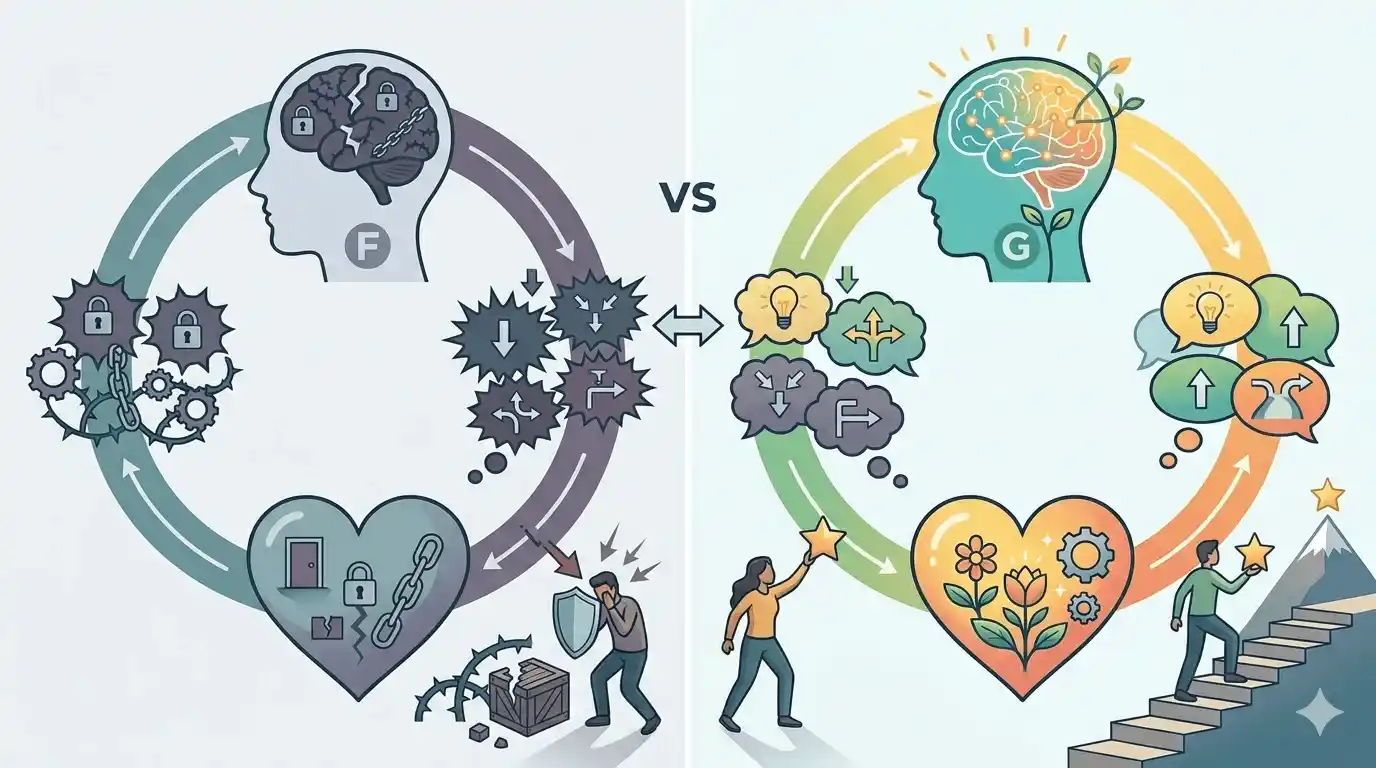
Mindsets influence the meaning people assign to experiences. The same event can create different emotional reactions depending on a person’s beliefs.
A person with a flexible mindset may interpret failure as information that helps them adjust their approach. Someone with rigid beliefs may interpret failure as proof that improvement is impossible.
Common areas influenced by mindset include:
- Motivation: Beliefs about ability and success influence willingness to take action.
- Emotional responses: Mindsets can affect whether challenges create stress, curiosity, or avoidance.
- Problem-solving: Flexible thinking supports exploring different solutions.
- Relationships: Beliefs about communication and conflict influence interpersonal behavior.
Your Daily Thrive’s practical observation from helping readers explore personal growth is that many mindset challenges are not caused by a lack of motivation but by unexamined beliefs about what is possible.
Mindset Psychology vs General Psychology
Mindset psychology is one area within the broader field of psychology. General psychology studies many aspects of human behavior and mental processes, while mindset psychology focuses more specifically on belief systems and cognitive patterns.
| Area | Main Focus | Example Question |
| Mindset psychology | Beliefs and mental frameworks | How do beliefs influence behavior? |
| Cognitive psychology | Thinking and information processing | How do people interpret information? |
| Behavioral psychology | Observable behaviors | How are habits developed? |
| Positive psychology | Strengths and wellbeing | How can people improve flourishing? |
Understanding these differences helps clarify that mindset psychology is not a replacement for all psychological approaches. Instead, it provides a framework for understanding how internal beliefs influence experiences and actions.
The Different Types of Mindsets in Psychology
Mindsets describe common patterns of thinking that influence how people approach challenges, learning, and personal growth. Although psychologists use different frameworks, several mindset categories are commonly discussed in personal development and behavioral science.
Growth Mindset and Fixed Mindset
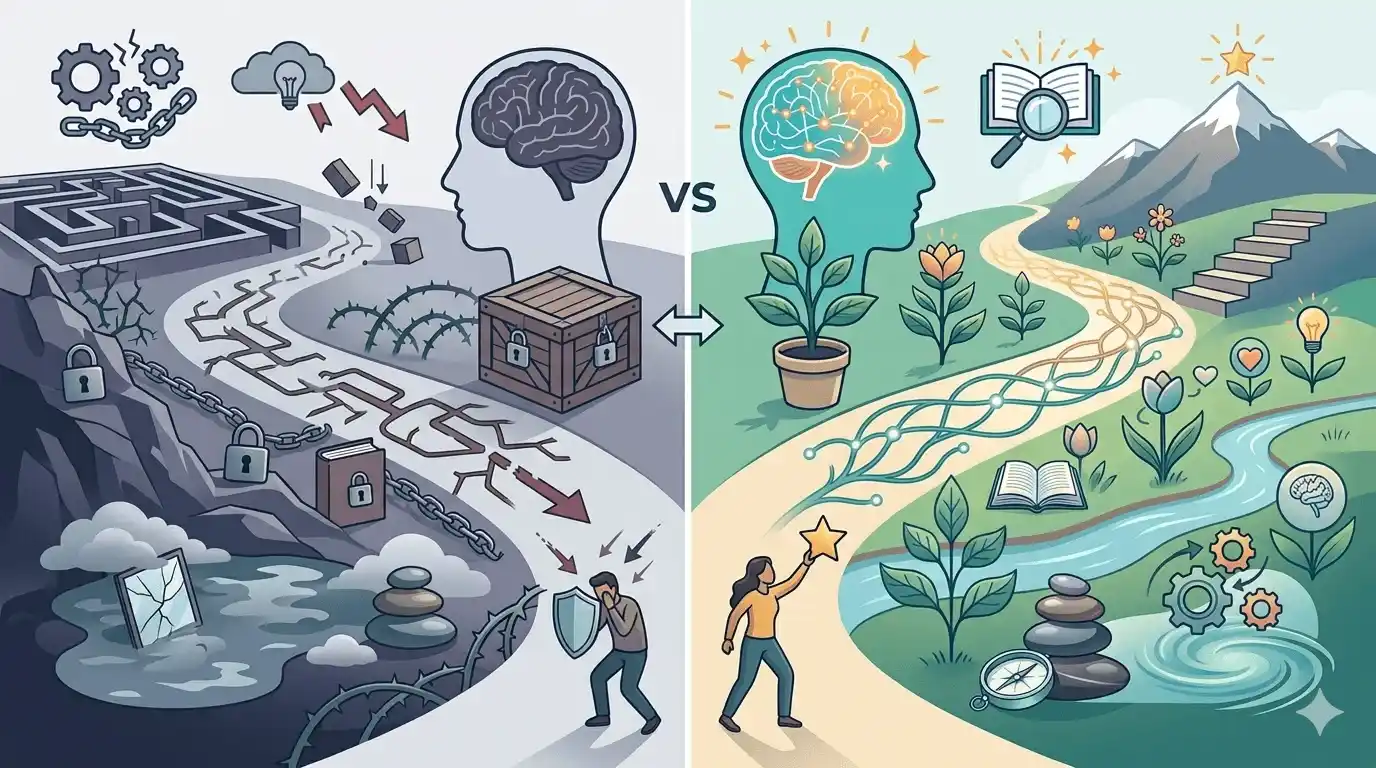
A growth mindset is the belief that abilities, skills, and intelligence can develop through learning, effort, feedback, and practice. A fixed mindset is the belief that abilities are mostly unchangeable traits.
The growth mindset concept became widely known through the research of Carol Dweck and her book Mindset: The New Psychology of Success.
Understanding Why a Growth Mindset Is Important can help explain why learning, effort, and persistence are strongly connected to long-term success.
| Growth Mindset | Fixed Mindset |
| Views skills as developable | Views abilities as fixed |
| Sees mistakes as learning opportunities | Often avoids mistakes |
| Values improvement and effort | Focuses on proving ability |
| Responds positively to feedback | May view feedback as criticism |
A growth mindset does not mean believing anyone can achieve anything instantly. Instead, it means recognizing that improvement is possible through appropriate strategies, learning, and persistence.
Other Common Psychological Mindset Patterns
Beyond growth and fixed mindsets, people may experience other patterns that influence behavior.
Examples include:
- Resilient mindset: Focuses on adapting after setbacks.
- Learning mindset: Prioritizes curiosity and skill development.
- Scarcity mindset: Focuses heavily on limitations and lack.
- Abundance mindset: Focuses on possibilities and available resources.
- Protective mindset: Develops as a response to perceived threats or past experiences.
These patterns are not permanent personality labels. People can develop different mindsets depending on circumstances, experiences, and intentional practice.
How Mindset Psychology Affects Mental Health and Wellbeing
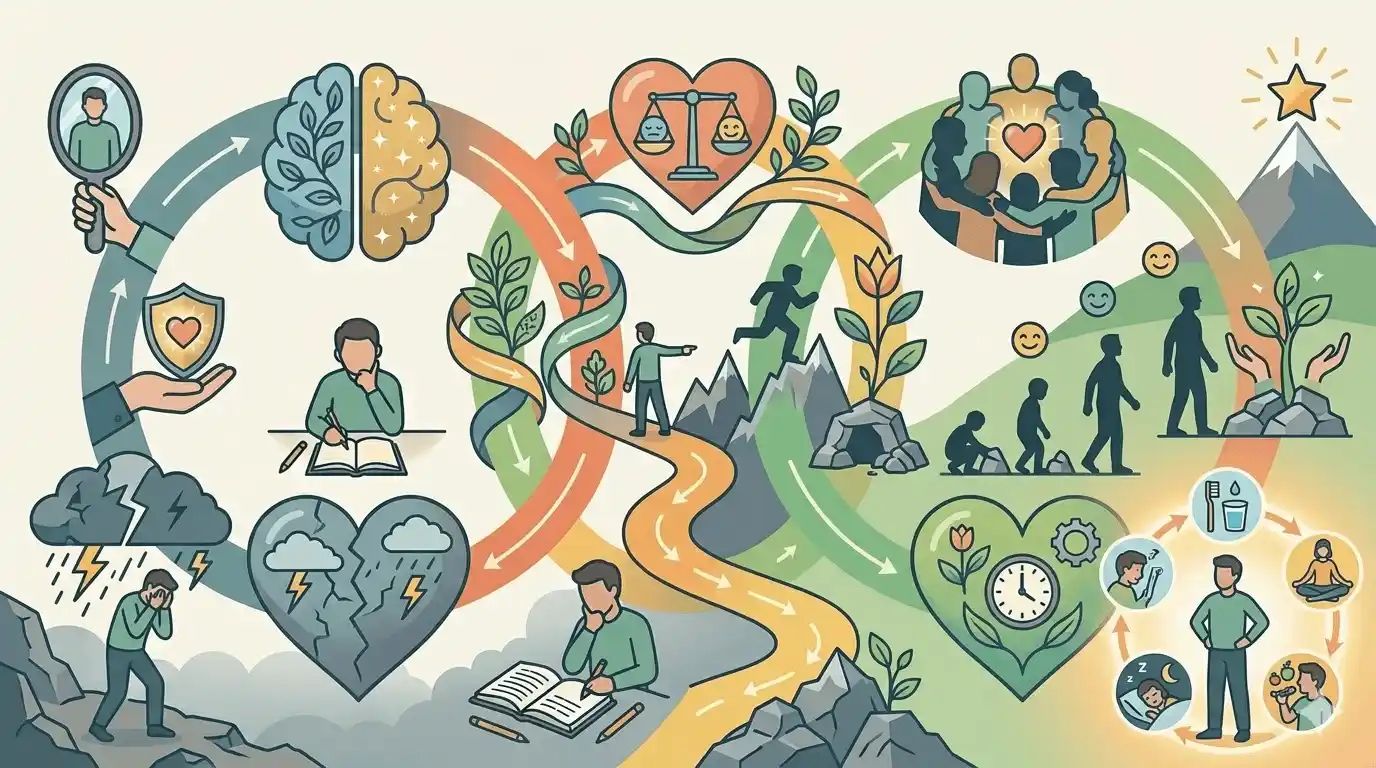
Mindset psychology affects mental health by influencing how people interpret experiences, regulate emotions, and respond to stress. Healthier thinking patterns can support psychological flexibility, resilience, and overall wellbeing.
Research in psychology shows that beliefs about personal ability, control, and change can influence motivation and coping behaviors.
Can Changing Your Mindset Improve Mental Health?
Changing mindset can support mental wellbeing by helping individuals develop more balanced interpretations of challenges. However, mindset changes are not a substitute for professional treatment for mental health conditions.
A healthier mindset may support:
- Better emotional awareness
- More adaptive coping strategies
- Increased willingness to seek support
- Greater resilience during stressful periods
For example, replacing “I always fail” with “I can learn from this experience” creates a more flexible interpretation of setbacks.
As of 2026, many evidence-based self-improvement approaches continue emphasizing psychological flexibility, self-compassion, and behavior change rather than unrealistic positive thinking.
Mindset Psychology and Emotional Resilience
Emotional resilience refers to the ability to adapt and recover when facing stress, uncertainty, or adversity.
Mindset influences resilience by affecting:
- How people interpret difficult situations
- Whether they seek solutions or avoid problems
- How they respond emotionally to setbacks
Building resilience often involves developing awareness of automatic thoughts and creating healthier responses.
How Mindset Psychology Is Used in Therapy and Mental Health Treatment
Mindset psychology is used in therapy by helping people identify, understand, and change unhelpful beliefs, thought patterns, and interpretations that influence emotions and behavior. Mental health professionals often explore mindset-related patterns as part of broader evidence-based approaches that address cognition, coping skills, emotional regulation, and personal growth.
Therapy does not focus on simply replacing negative thoughts with positive ones. Instead, many therapeutic approaches help individuals examine whether their thoughts are accurate, useful, and aligned with their goals.
Common therapeutic areas connected with mindset work include:
- Understanding limiting beliefs
- Developing healthier coping strategies
- Improving emotional awareness
- Building confidence and self-efficacy
- Processing difficult experiences
- Creating more flexible responses to challenges
Your Daily Thrive recommends viewing mindset development as a practical skill-building process rather than a quick mental shift. Sustainable change usually comes from awareness, repeated practice, and applying new behaviors in real situations.
Mindset Psychology and Trauma Therapy
Mindset patterns can sometimes develop from past experiences, including stressful or traumatic events. Trauma may influence beliefs about safety, trust, self-worth, or personal control.
Trauma-focused therapy approaches may help individuals process these experiences and develop healthier interpretations of themselves and their circumstances.
Some people explore approaches such as:
- Cognitive Behavioral Therapy (CBT)
- Trauma-focused therapies
- Eye Movement Desensitization and Reprocessing (EMDR)
- Mindfulness-based approaches
Individuals searching for specialized support may look for terms such as PTSD therapist, EMDR therapists, or EMDR near me when seeking professionals trained in trauma-related care.
It is important to choose licensed mental health professionals who have appropriate education, training, and experience for specific concerns.
Finding Mental Health Professionals Who Use Mindset-Based Approaches
Choosing a therapist involves considering several factors beyond a specific keyword or approach.
Important considerations include:
- Professional licensing and credentials
- Experience with specific concerns
- Therapeutic approach
- Communication style
- Availability and accessibility
- Insurance compatibility
Some individuals search for providers such as Aetna therapists when they need professionals who accept specific insurance plans.
The goal is not simply finding someone who discusses mindset, but finding qualified support that matches an individual’s needs and circumstances.
Examples of Mindset Psychology in Everyday Life
Mindset psychology appears in everyday decisions, habits, relationships, and responses to challenges. A person’s beliefs often influence behavior before they consciously recognize those beliefs.
Understanding common examples makes mindset concepts easier to apply.
Mindset Examples in Learning and Career Growth
In learning environments, mindset affects how people approach improvement.
Examples include:
Fixed mindset response:
- “I am not naturally good at this, so there is no point continuing.”
Growth mindset response:
- “I do not understand this yet, but I can improve with practice and better strategies.”
In professional settings, mindset can influence:
- Willingness to learn new skills
- Response to workplace feedback
- Ability to adapt to change
- Long-term career development
A growth-oriented approach encourages individuals to view skills as developing rather than permanently limited.
Mindset Examples in Relationships and Personal Challenges
Mindset also affects interpersonal situations.
Examples include:
- Viewing disagreements as opportunities for communication rather than personal attacks
- Recognizing emotions without immediately reacting to them
- Accepting that relationships require learning and adjustment
A flexible mindset can support healthier communication because it allows people to consider different perspectives.
How to Develop a Healthier Mindset Using Psychology Principles
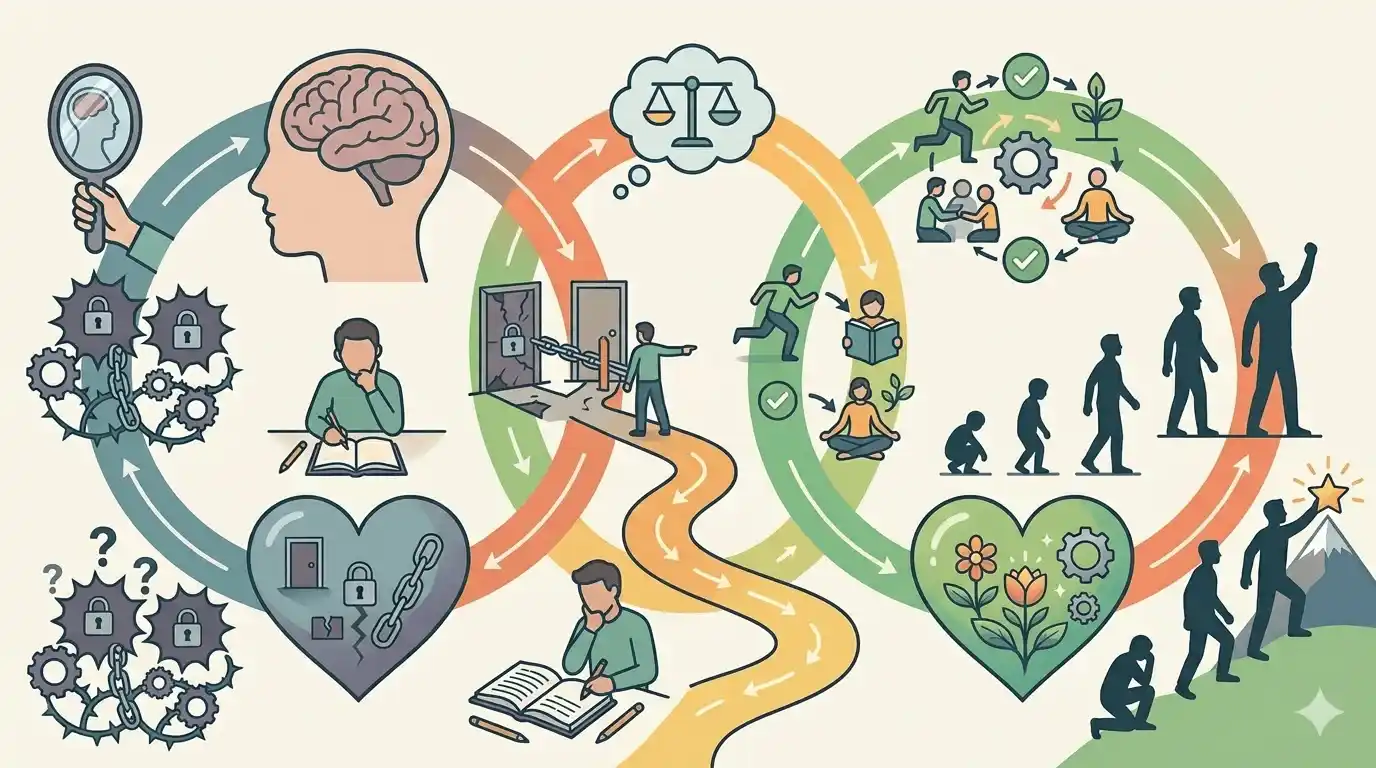
Developing a healthier mindset involves identifying existing thought patterns and intentionally practicing more adaptive ways of thinking and responding.
A healthier mindset does not mean ignoring problems. It means approaching problems with greater awareness, flexibility, and psychological balance.
Steps for Building a Healthier Mindset
Useful strategies include:
- Identify automatic thoughts: Notice repeated beliefs that influence emotions and actions.
- Question limiting assumptions: Ask whether a belief is accurate, helpful, or based on outdated experiences.
- Practice self-reflection: Review reactions and identify patterns.
- Set realistic goals: Focus on progress rather than perfection.
- Use feedback constructively: Treat feedback as information for improvement.
- Develop emotional awareness: Recognize feelings without allowing them to control every decision.
These practices align with established psychological concepts such as cognitive restructuring, self-efficacy, and behavioral reinforcement.
Daily Practices That Support Positive Mindset Development
Consistent habits often support long-term mindset development.
People who are new to personal development often benefit from practical Positive Mindset Tips for Beginners that encourage healthier thinking habits and emotional resilience.
Examples include:
- Writing down daily reflections
- Tracking progress toward goals
- Practicing gratitude
- Reviewing challenges and lessons learned
- Setting weekly improvement goals
- Building supportive relationships
Your Daily Thrive’s practical experience with personal growth content shows that simple routines are often more sustainable than dramatic changes. Small repeated actions create stronger long-term habits.
Common Mistakes People Make When Trying to Change Their Mindset
Changing mindset can be challenging because beliefs are often connected to past experiences, habits, and emotional patterns. Many people struggle because they approach mindset change with unrealistic expectations.
Treating Mindset as Simple Positive Thinking
One common mistake is assuming mindset psychology means ignoring negative experiences or forcing optimism.
Healthy mindset development involves:
- Recognizing difficulties realistically
- Understanding emotional responses
- Creating constructive solutions
- Developing resilience
Positive thinking alone does not create lasting change. Effective mindset work combines awareness with action.
Expecting Immediate Psychological Transformation
Mindset change usually develops gradually.
Common unrealistic expectations include:
- Believing one motivational message will permanently change thinking
- Expecting confidence without practice
- Assuming setbacks mean failure
Behavioral science shows that repeated practice helps strengthen new patterns over time.
Ignoring Underlying Mental Health Challenges
Some difficulties require professional support rather than mindset strategies alone.
Examples may include:
- Persistent anxiety symptoms
- Trauma-related distress
- Depression symptoms
- Severe emotional difficulties
Mindset practices can complement professional care, but they should not replace appropriate mental health treatment.
Mindset Psychology Compared With Related Concepts
Mindset psychology overlaps with several areas of personal development and behavioral science, but each concept has a different focus.
| Concept | Main Focus | Key Difference |
| Mindset psychology | Beliefs and mental frameworks | Examines how beliefs influence behavior |
| Positive thinking | Optimistic interpretation | Focuses mainly on outlook |
| Motivation psychology | Drive and goal pursuit | Explains why people take action |
| Cognitive behavioral approaches | Thoughts and behaviors | Uses structured methods to change patterns |
| Self-improvement | Personal development | Covers broader lifestyle changes |
Understanding these differences prevents confusion between mindset psychology and general motivational advice.
Mindset Psychology vs Motivation
Motivation and mindset are connected but different.
Motivation focuses on the energy or desire to act. Mindset influences how someone interprets the action and whether they believe improvement is possible.
For example:
- Motivation may encourage someone to start exercising.
- Mindset influences whether they continue after missing a workout.
Both factors can contribute to sustainable behavior change.
Regional and Professional Contexts of Mindset Psychology
People often search for mindset psychology information alongside location-based terms when looking for professionals, services, or educational resources.
Searches may include:
- mindset psychology NYC
- mindset psychology Atlanta
- mindset psychology Stevensville MI
- therapists in Atlanta GA
- therapists Atlanta
- therapist Atlanta Georgia
- clinical psychologist in Atlanta GA
- clinical psychologist Atlanta
Location-based searches usually reflect a desire to find nearby professionals rather than a different definition of mindset psychology.
When evaluating psychological services, people should consider:
- Professional qualifications
- Areas of specialization
- Treatment methods
- Accessibility
- Personal fit
Mental health care quality depends more on professional competence and compatibility than location alone.
Difficulty and Time Investment for Developing a New Mindset
Developing a new mindset requires ongoing awareness, practice, and behavioral adjustment. The difficulty level depends on a person’s existing beliefs, life experiences, environment, and willingness to examine familiar thought patterns.
Mindset development is generally:
- Beginner-friendly: Learning to notice thoughts, reflect on reactions, and practice healthier interpretations can be started by most people.
- Moderately challenging: Changing deeply established beliefs often requires consistent effort and repeated practice.
- More complex: Mindsets connected to trauma, significant emotional challenges, or long-standing patterns may require professional support.
Factors that influence the difficulty of mindset change include:
- Previous experiences and learned beliefs
- Current stress levels
- Social environment
- Access to support systems
- Personal motivation and consistency
A common mistake is assuming mindset change only requires understanding a concept. Psychological change usually requires applying new behaviors repeatedly until they become more natural.
Results Timeline: How Long Does Mindset Change Take?
Mindset change usually happens gradually rather than instantly. Some people notice increased awareness of their thoughts quickly, while deeper changes in beliefs and habits often develop over weeks or months.
Typical progress patterns may include:
| Time Period | Common Developments |
| Early stages | Increased awareness of thoughts and reactions |
| Several weeks | More intentional responses and improved self-reflection |
| Several months | Stronger habits, improved emotional regulation, and greater flexibility |
The pace of change depends on factors such as:
- Consistency of practice
- Complexity of existing beliefs
- Personal circumstances
- Support and accountability
- Ability to apply new strategies in daily life
As of 2026, many evidence-based personal development approaches continue emphasizing sustainable behavior change rather than quick transformations. Long-term improvement is generally associated with realistic goals, repetition, and adaptation.
Practice Guide: Building a Sustainable Psychology-Based Mindset
Building a sustainable mindset requires regular practice, reflection, and the ability to adjust strategies when challenges appear.
A practical mindset development routine may include:
Daily or Weekly Mindset Practices
Useful practices include:
- Reflecting on challenging situations and identifying lessons learned
- Writing down recurring thoughts and beliefs
- Reviewing personal goals regularly
- Practicing gratitude and self-awareness
- Identifying areas where new skills can be developed
These activities support psychological concepts such as self-reflection, cognitive flexibility, and self-regulation.
Mindset and Motivation Requirements
A sustainable mindset depends on understanding that progress is not always linear.
Helpful approaches include:
- Focusing on improvement rather than perfection
- Accepting temporary setbacks
- Celebrating consistent effort
- Creating realistic expectations
Motivation naturally changes over time, so relying only on motivation may make habits difficult to maintain. Systems and routines often provide more stability.
Tools, Tracking, and Accountability Methods
Some people find structured tools helpful, including:
- Habit trackers
- Journaling systems
- Goal-setting frameworks
- Progress reviews
- Support from trusted individuals or professionals
Tracking should be used to increase awareness, not create unnecessary pressure.
Common Obstacles to Consistency
People commonly struggle with:
- Expecting immediate results
- Returning to old thought patterns during stress
- Comparing their progress with others
- Setting unrealistic goals
A useful adjustment is to reduce the size of the habit while maintaining consistency. Small actions repeated over time often create stronger behavioral patterns.
Long-Term Sustainability Considerations
A sustainable mindset is adaptable. Life circumstances change, so effective practices should adjust to different situations, including:
- Academic demands
- Career transitions
- Family responsibilities
- Health challenges
- Major life changes
The goal is not maintaining a perfect mindset but developing the ability to recognize patterns and respond intentionally.
Conclusion: The Role of Mindset Psychology in Personal Growth and Wellbeing
Mindset psychology explains how beliefs, thought patterns, and mental frameworks influence emotions, behaviors, motivation, and personal development. By understanding how mindsets work, individuals can become more aware of the beliefs shaping their decisions and responses to challenges.
Concepts such as growth mindset, psychological flexibility, resilience, and self-awareness show that people can develop healthier ways of thinking through intentional practice. However, meaningful change involves more than positive thoughts. It requires consistent behaviors, reflection, learning, and realistic expectations.
Mindset psychology provides a useful framework for understanding personal growth because it connects internal beliefs with everyday actions. A healthier mindset does not eliminate challenges, but it can help people approach challenges with greater awareness, adaptability, and confidence.
The key takeaway is that mindset is not simply something people have; it is something they can continue developing through learning, practice, and informed choices.
Developing a Future Mindset can help individuals focus on long-term growth, adaptability, and opportunities rather than short-term limitations.
Frequently Asked Questions About Mindset Psychology
What is mindset psychology?
Mindset psychology is the study of how beliefs, attitudes, and thought patterns influence emotions, behaviors, motivation, and responses to life experiences. It explores how mental frameworks shape learning, decision-making, resilience, and personal development.
What are the four types of mindset in psychology?
The four types of mindset commonly discussed vary depending on the framework used, but examples often include growth mindset, fixed mindset, positive mindset, and resilient mindset. Different psychological models may categorize mindsets differently based on their research focus.
What is the difference between a growth mindset and a fixed mindset?
A growth mindset is the belief that abilities can improve through learning, effort, feedback, and practice. A fixed mindset is the belief that abilities are mostly unchangeable. The difference affects how people respond to challenges, mistakes, and opportunities to learn.
Can mindset psychology improve mental health?
Mindset psychology can support mental wellbeing by helping people develop healthier interpretations of experiences, improve coping strategies, and build resilience. However, mindset practices are not a replacement for professional treatment when someone experiences a mental health condition.
How can someone develop a healthier mindset?
A healthier mindset can be developed by identifying unhelpful thought patterns, practicing self-reflection, setting realistic goals, learning from feedback, and consistently applying new behaviors. Long-term change usually requires repetition and patience.
Is mindset the same as positive thinking?
No. Mindset and positive thinking are related but different concepts. Positive thinking focuses mainly on maintaining optimistic thoughts, while mindset psychology examines deeper beliefs about ability, change, challenges, and personal identity.










3 Responses