
Introduction
Support for every stage of life refers to a coordinated system that helps individuals manage health, emotional wellbeing, and practical needs across different life phases. This includes preventive healthcare, chronic illness management, palliative care, hospice care, and grief support services. Understanding comprehensive care meaning, palliative care definition, and hospice care meaning helps individuals and families make informed decisions during stressful transitions. Support systems are designed to improve quality of life, reduce caregiver burden, and ensure timely care. When people understand how these services connect, they can better navigate illness progression, end-of-life planning, and emotional recovery with clarity and confidence.
Quick Summary
- Comprehensive care integrates physical, emotional, and social support across life stages
- Palliative care improves quality of life during serious illness and can start early
- Hospice care focuses on comfort during advanced or terminal illness
- Family and community support reduce caregiver stress and improve recovery outcomes
- Early planning leads to better decision-making and reduced crisis situations
What Does “Support for Every Stage of Life” Mean?
Support for every stage of life means providing continuous care that adapts as a person’s physical, emotional, and social needs change over time. It ensures individuals receive the right level of care at the right moment.
Key elements include:
- Preventive care during healthy stages
- Support during chronic or serious illness
- Emotional and psychological care during stress or transition
- End-of-life comfort care when needed
This approach improves every stage of life outcomes by reducing fragmented care and ensuring long-term stability.
What Is Comprehensive Care?
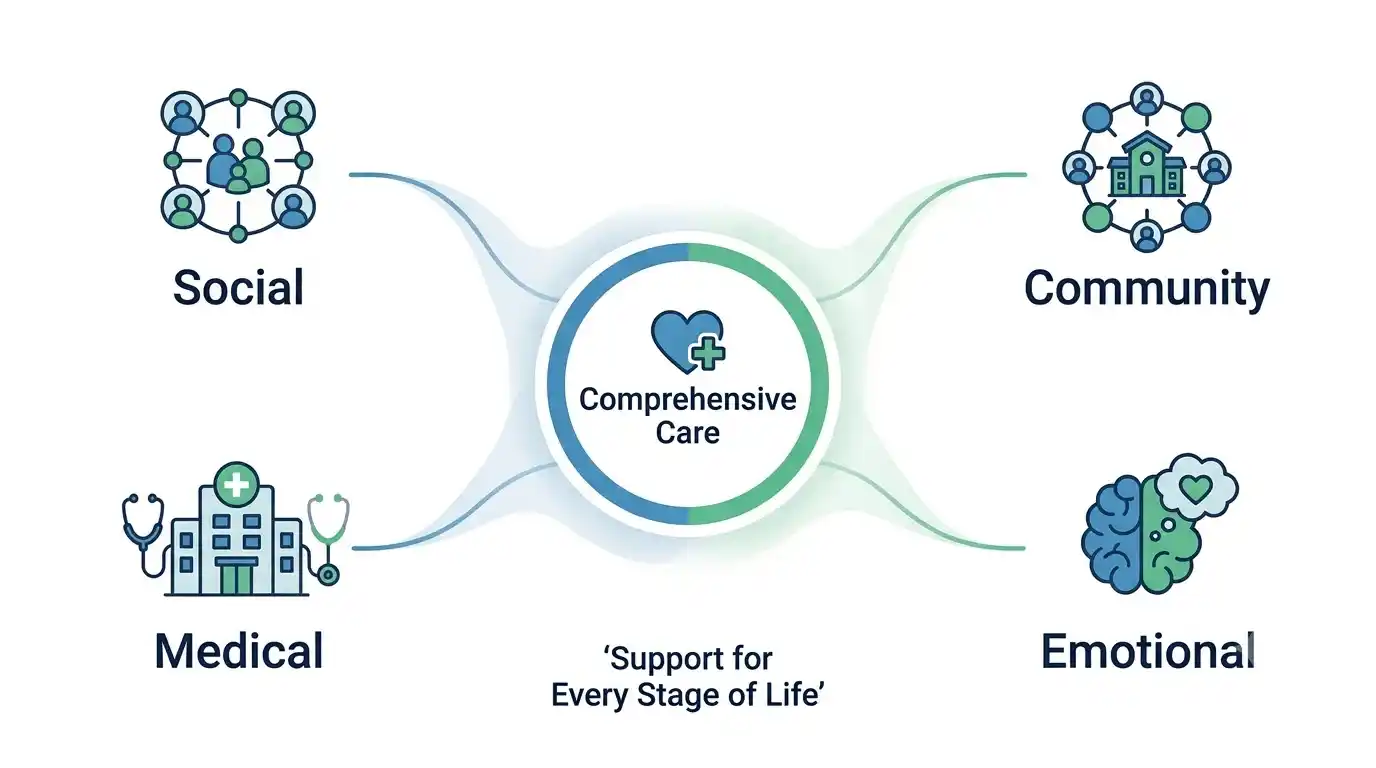
Comprehensive Care Definition
Comprehensive care is a coordinated healthcare model that addresses a person’s medical, emotional, psychological, and social needs together.
Why Comprehensive Care Matters
Comprehensive care is important because fragmented treatment often leads to delays, confusion, and incomplete recovery support. Coordination improves outcomes and reduces caregiver burden.
Comprehensive Care Example in Real Life
A patient with heart disease may receive:
- Medical treatment and monitoring
- Mental health support
- Nutrition and lifestyle counseling
- Family caregiver education
- Community resource referrals
This improves recovery and long-term stability.
Understanding Palliative Care
What Is Palliative Care?
Palliative care is specialized medical support focused on relieving symptoms, pain, and emotional stress during serious illness while continuing active treatment.
Who Can Benefit from Palliative Care?
Anyone with serious illnesses such as cancer, kidney disease, or neurological conditions can benefit at any stage.
Is Palliative Care Only for End-of-Life Situations?
No. Palliative care is not limited to end of life care and can begin at diagnosis alongside treatment.
Is Palliative Care at Home or Hospital?
It can be provided in hospitals, clinics, nursing facilities, or at home depending on patient needs.
Key benefits include:
- Symptom management
- Emotional support
- Care coordination
- Family guidance
What Are the Stages of Palliative Care?
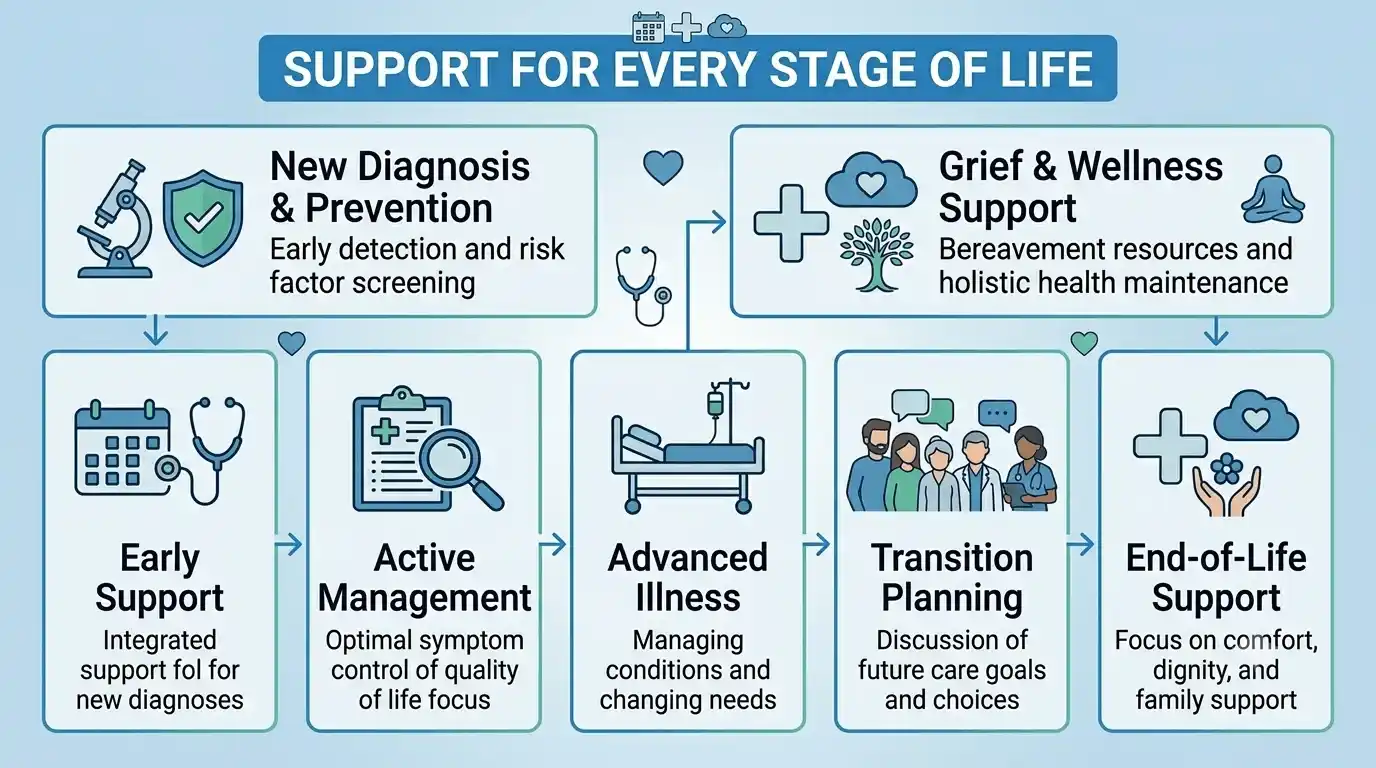
| Stage | Primary Focus | Typical Needs |
|---|---|---|
| Early Support | Diagnosis & planning | Education & symptom control |
| Active Management | Ongoing treatment | Coordinated care |
| Advanced Illness | Increased symptoms | Complex symptom support |
| Transition Planning | Future decisions | Family discussions |
| End-of-Life Support | Comfort care | Emotional & physical support |
These palliative care stages reflect how needs evolve over time rather than a fixed timeline.
What Is Hospice Care?
Hospice Care Explained
Hospice care is comfort-focused support for individuals with terminal illness when curative treatment is no longer effective.
What Does Hospice Care Do?
Hospice care provides:
- Pain and symptom relief
- Emotional and psychological care
- Spiritual support
- Family caregiver assistance
- Bereavement services
Hospice Care Examples
Hospice care may include home visits, counseling, and 24/7 symptom support.
When Is Hospice Care Recommended?
Hospice care is recommended when a condition is advanced and the focus shifts from treatment to comfort.
Signs It May Be Time to Consider Hospice
- Frequent hospital admissions
- Rapid physical decline
- Limited treatment effectiveness
- Increased focus on comfort care
Common Misconceptions About Waiting Too Long
Families often delay hospice due to fear or misunderstanding, reducing quality of remaining life.
Questions Families Should Ask
- What is the expected progression?
- What comfort services are available?
- How can care be managed at home?
Hospice vs Palliative Care: What’s the Difference?
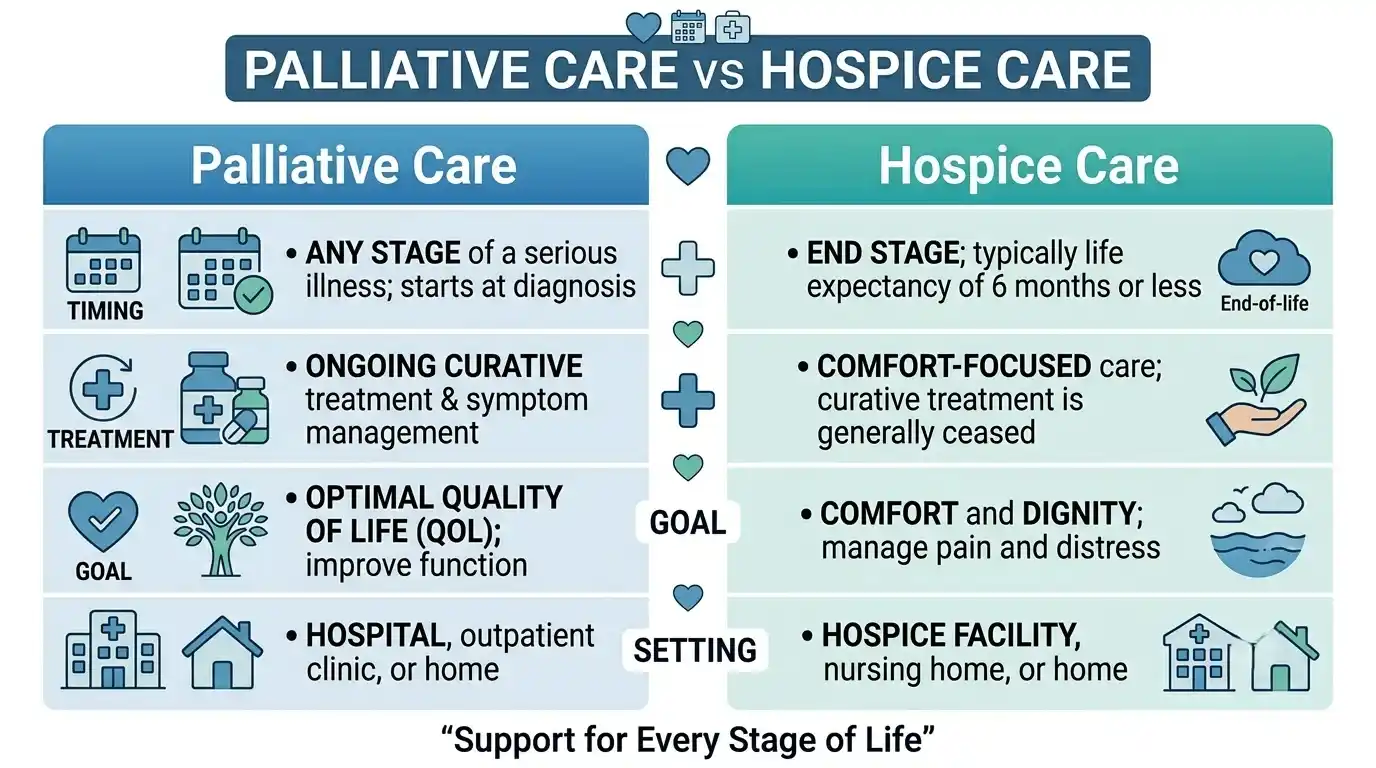
Difference between palliative care and hospice:
Palliative care supports quality of life at any stage of illness, while hospice care focuses on comfort during terminal illness when curative treatment stops.
| Feature | Palliative Care | Hospice Care |
|---|---|---|
| Goal | Quality of life | Comfort care |
| Treatment | Ongoing treatment allowed | Curative treatment stops |
| Timing | Any stage | End-stage illness |
| Setting | Hospital/home/clinic | Home or hospice facility |
Medicare, Coverage, and Care Planning Considerations
How Coverage May Differ
Coverage depends on eligibility and care type, with hospice often covering more comprehensive end-of-life services.
Why Early Planning Matters
Early planning reduces emotional stress and ensures smoother transitions between care stages.
Questions to Discuss With Healthcare Providers
- What services are covered?
- When should care transition begin?
- What support is available for caregivers?
The Four Stages of End-of-Life Care
- Stable Phase: symptoms managed
- Unstable Phase: sudden changes occur
- Deteriorating Phase: increasing dependency
- Final Days: comfort-focused care
These stages help families prepare emotionally and practically.
Family, Grief, and Community Support Throughout Life
Emotional recovery and family coping are strongly influenced by communication patterns and relationship awareness, similar to concepts discussed in why is empathy important in relationships, how to be present in a relationship, and fair fighting rules.
Support systems extend beyond medical care into emotional recovery and community engagement.
Organizations such as Everystep, Amanda the Panda, Sip and Savor, Kavanagh House Des Moines, and The Giving Tree Thrift Store provide grief counseling, caregiver support, and community healing services.
Key areas include:
- Bereavement support
- Caregiver assistance
- Social connection programs
- Long-term emotional recovery
Why People Struggle to Seek Help at Different Life Stages
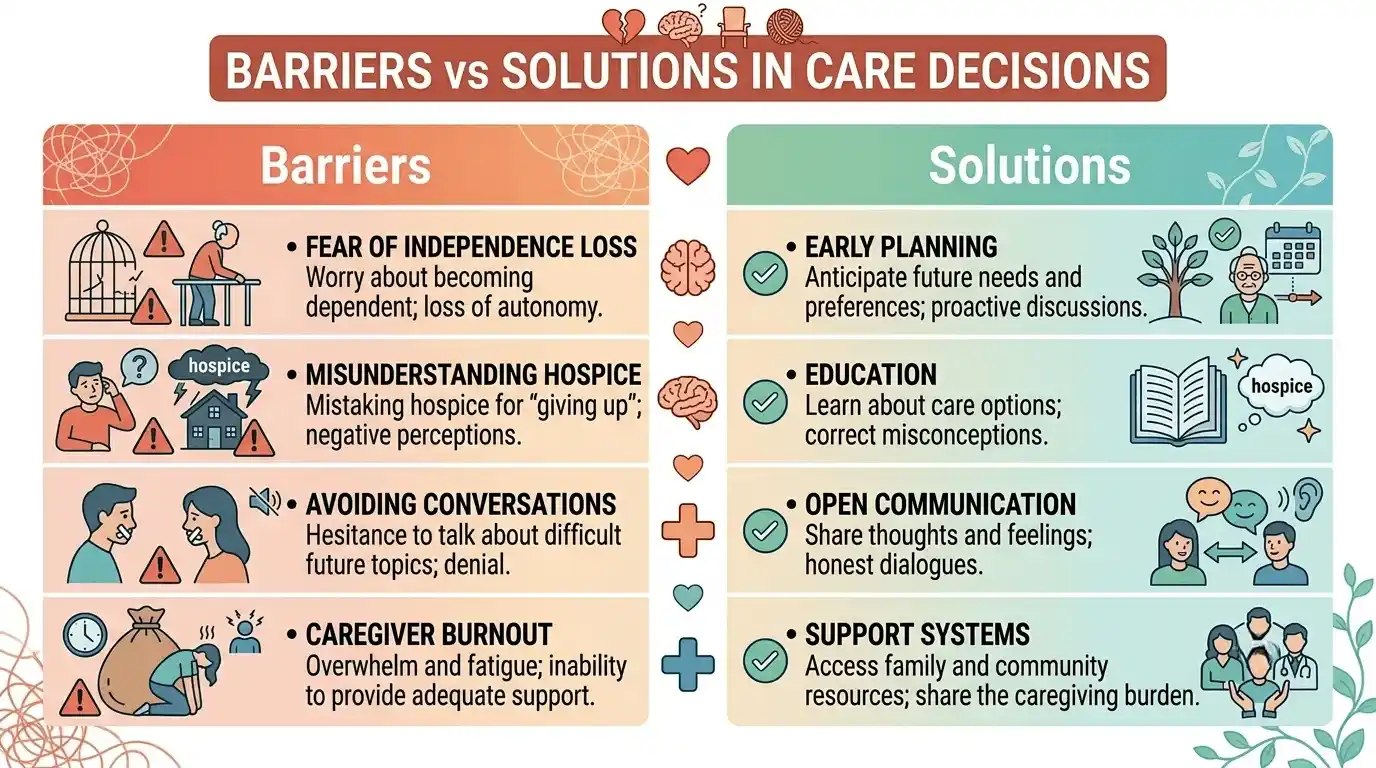
Families often postpone planning until crisis points. This is closely related to emotional resistance, lack of awareness, and difficulty managing long-term wellbeing, which is often explored in how to live a better life, positive mindset tips for beginners, and why do I lack motivation.
Fear of Losing Independence
People avoid support due to perceived loss of control.
Misunderstanding Palliative and Hospice Care
Confusion leads to delayed care decisions.
Avoidance of Difficult Conversations
Families postpone planning until crisis points.
Caregiver Burnout and Overwhelm
Stress reduces clarity and decision-making ability.
Practical Steps to Build a Lifelong Support System
Building a lifelong support system is closely linked to daily behavioral structure, habit consistency, and long-term mindset shifts discussed in how to build good habits in 30 days, small habits that changed my life, and personal growth action.
- Assess current health and emotional needs
- Plan for future care early
- Build a medical and emotional support network
- Include family in discussions
- Reassess regularly
| Common Mistake | Better Approach |
|---|---|
| Waiting for crisis | Early planning |
| Avoiding discussion | Open communication |
| Medical-only focus | Holistic support |
| Reactive decisions | Proactive planning |
Conclusion
Support for every stage of life is a continuous system that combines medical care, emotional wellbeing, and community resources. Understanding comprehensive care, palliative care, and hospice care helps individuals make informed, timely decisions. The most effective strategy is early planning, clear communication, and using support systems before crises develop.
FAQs
What is comprehensive care?
Comprehensive care is a coordinated system that addresses physical, emotional, and social needs together.
What is the difference between hospice and palliative care?
Palliative care can begin early during illness, while hospice care focuses on comfort at the end of life.
Does palliative care mean death?
No. It focuses on improving quality of life and can be provided alongside treatment.
When is hospice care recommended?
Hospice is recommended when illness is advanced and treatment is no longer effective.
What are the five stages of palliative care?
They include early support, active management, advanced illness care, transition planning, and end-of-life support.
Why do families delay hospice care?
Fear, misunderstanding, and emotional difficulty often delay timely decisions.