

Introduction
Growth mindset Carol Dweck quotes capture a core idea from decades of psychological research: abilities and intelligence are not fixed traits, but qualities that can be developed through learning, effort, effective strategies, and persistence. Carol Dweck, a Stanford psychologist, introduced this framework after years of studying how people respond to challenges, setbacks, and failure. Her quotes have become widely referenced in education, leadership training, career development, and personal growth communities because they distill complex psychological findings into memorable, actionable language. Understanding the meaning behind these quotes—rather than simply reading them—helps readers apply the underlying principles in real situations, from classrooms to workplaces to personal goal-setting.
Quick Summary
- Carol Dweck’s growth mindset emphasizes learning, persistence, and continuous improvement rather than fixed ability.
- The most impactful growth mindset quotes encourage embracing challenges, mistakes, and lifelong learning.
- Understanding the context behind each quote makes it easier to apply in school, work, and personal development.
- Comparing growth and fixed mindsets helps explain why mindset influences motivation and achievement.
What Is a Growth Mindset According to Carol Dweck?
How Carol Dweck Defines a Growth Mindset
A growth mindset is the belief that abilities, intelligence, and talents can be developed over time through dedication, effort, and effective strategies, rather than being fixed traits a person is simply born with. This is what Carol Dweck says about growth mindset: people who hold this belief tend to view challenges as opportunities to improve rather than threats to their self-image.
Dweck’s research, developed over decades at Stanford University, found that the way people interpret failure and effort strongly shapes their long-term achievement. In her framework, effort is not a sign of inadequacy—it is the mechanism through which skills and intelligence expand. This is how Carol Dweck defines a growth mindset in practical terms: a person actively seeks feedback, adjusts their strategies, and treats setbacks as information rather than judgment. Understanding this distinction also explains why a growth mindset is important for long-term achievement, not just short-term motivation.”
According to Dweck, mindset is not simply a matter of attitude or positivity. It is a belief system that influences how a person sets goals, responds to obstacles, and interprets their own performance. This distinction matters because a genuine growth mindset from Carol Dweck’s perspective requires action and strategy adjustment, not just optimistic self-talk.
Growth Mindset vs Fixed Mindset
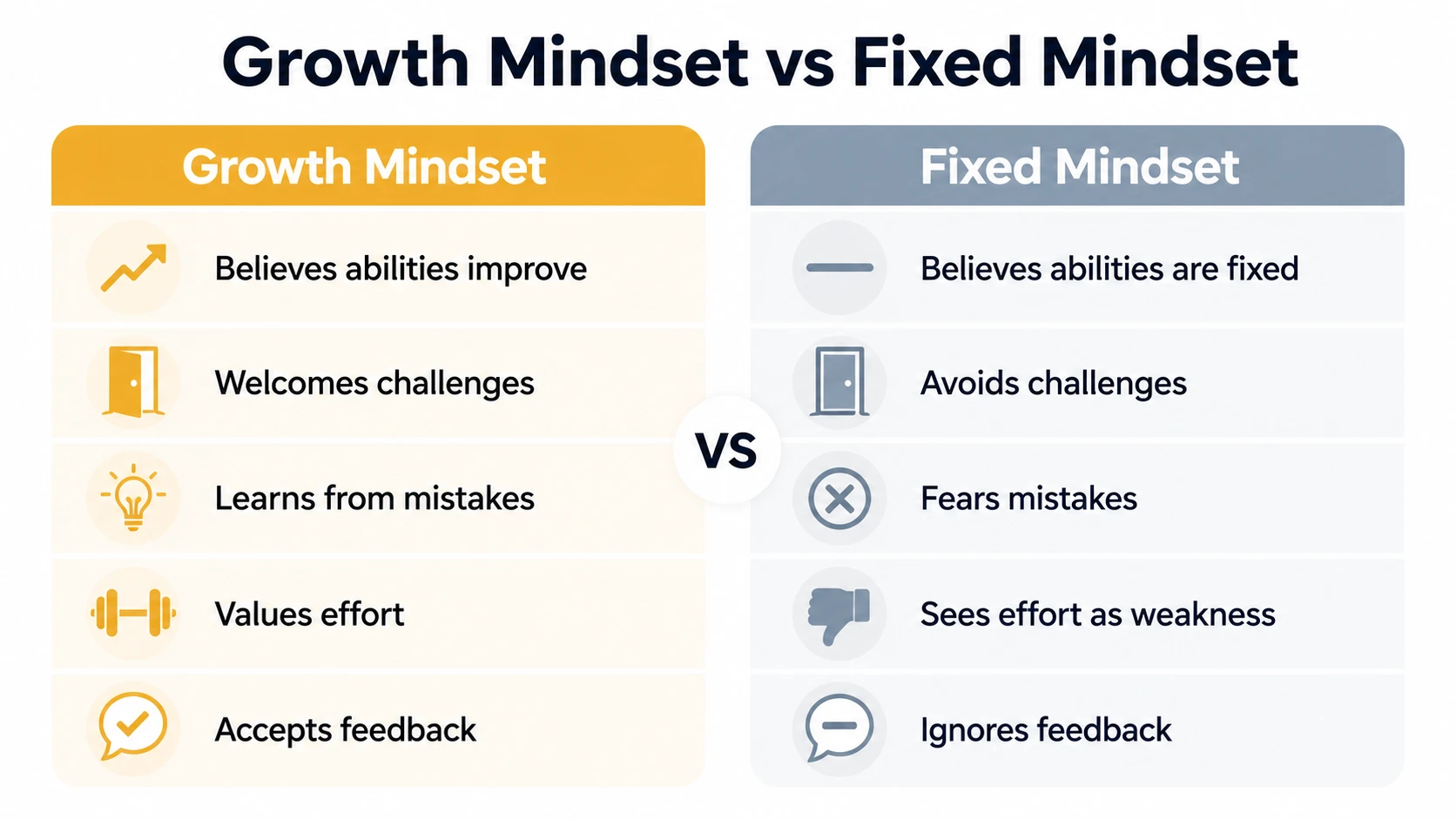
The difference between a growth mindset and a fixed mindset lies in how a person interprets ability and effort. Someone with a fixed mindset believes intelligence and talent are static, so they tend to avoid challenges that might expose limitations. Someone with a growth mindset believes ability can expand, so they are more willing to engage with difficulty.
These beliefs show up clearly in everyday behavior. A student with a fixed mindset may avoid a difficult class to protect their grade average, while a student with a growth mindset may choose the difficult class because it offers more room to develop skill. In the workplace, an employee with a fixed mindset might avoid asking for feedback out of fear it will reveal weakness, while a growth-minded employee actively requests feedback to identify areas for improvement.
| Growth Mindset | Fixed Mindset |
|---|---|
| Believes abilities improve | Believes abilities are fixed |
| Welcomes challenges | Avoids challenges |
| Learns from mistakes | Fears mistakes |
| Values effort | Sees effort as weakness |
| Accepts feedback | Ignores constructive criticism |
Carol Dweck’s Most Influential Growth Mindset Quotes
The Most Well-Known Growth Mindset Quotes
Several growth mindset Carol Dweck quotes are frequently cited because they capture her research in a single, memorable line. One widely referenced idea from her work is that challenges should be seen as exciting rather than threatening—a mindset shift that changes how people approach difficulty. Another well-known theme in her writing centers on the phrase “not yet” instead of “failing,” reframing a shortfall as a stage in progress rather than a final outcome.
A quote about growth mindset that is often shared in classrooms and workplaces emphasizes that the passion for stretching oneself, and sticking with it even when things go poorly, is the true hallmark of a growth-oriented approach. This quote on growth mindset highlights that persistence through difficulty—not just talent—is what drives long-term development.
When people ask what is Carol Dweck’s best growth mindset quote, the “not yet” reframing is often cited as the most practically useful, because it can be applied instantly to almost any situation involving a skill still in progress.
Why These Quotes Continue to Inspire People
Growth mindset quotes remain popular because they connect to well-established psychological principles: self-efficacy, resilience, and intrinsic motivation. When a person internalizes the idea that effort leads to improvement, they are more likely to persist after setbacks instead of disengaging.
Educators and professionals frequently reference these quotes because they translate abstract psychological research into language that is easy to apply in the moment—during a difficult exam, a challenging project, or a personal setback. The repetition of these ideas across different environments reinforces their credibility and keeps them relevant across generations of learners and professionals.
How Growth Mindset Quotes Can Change the Way You Think
Building Resilience Through Mindset
Resilience develops when setbacks are interpreted as temporary and specific rather than permanent and personal. Growth mindset quotes reinforce this by framing failure as feedback rather than a verdict on someone’s worth or potential. Over time, this reframing reduces the emotional intensity of setbacks and makes it easier to try again.
This shift also affects confidence and adaptability. When effort is seen as a controllable factor rather than talent being a fixed limit, individuals feel more agency over their outcomes. This sense of control makes it easier to adapt strategies after a failed attempt instead of abandoning a goal altogether.
Developing Better Learning Habit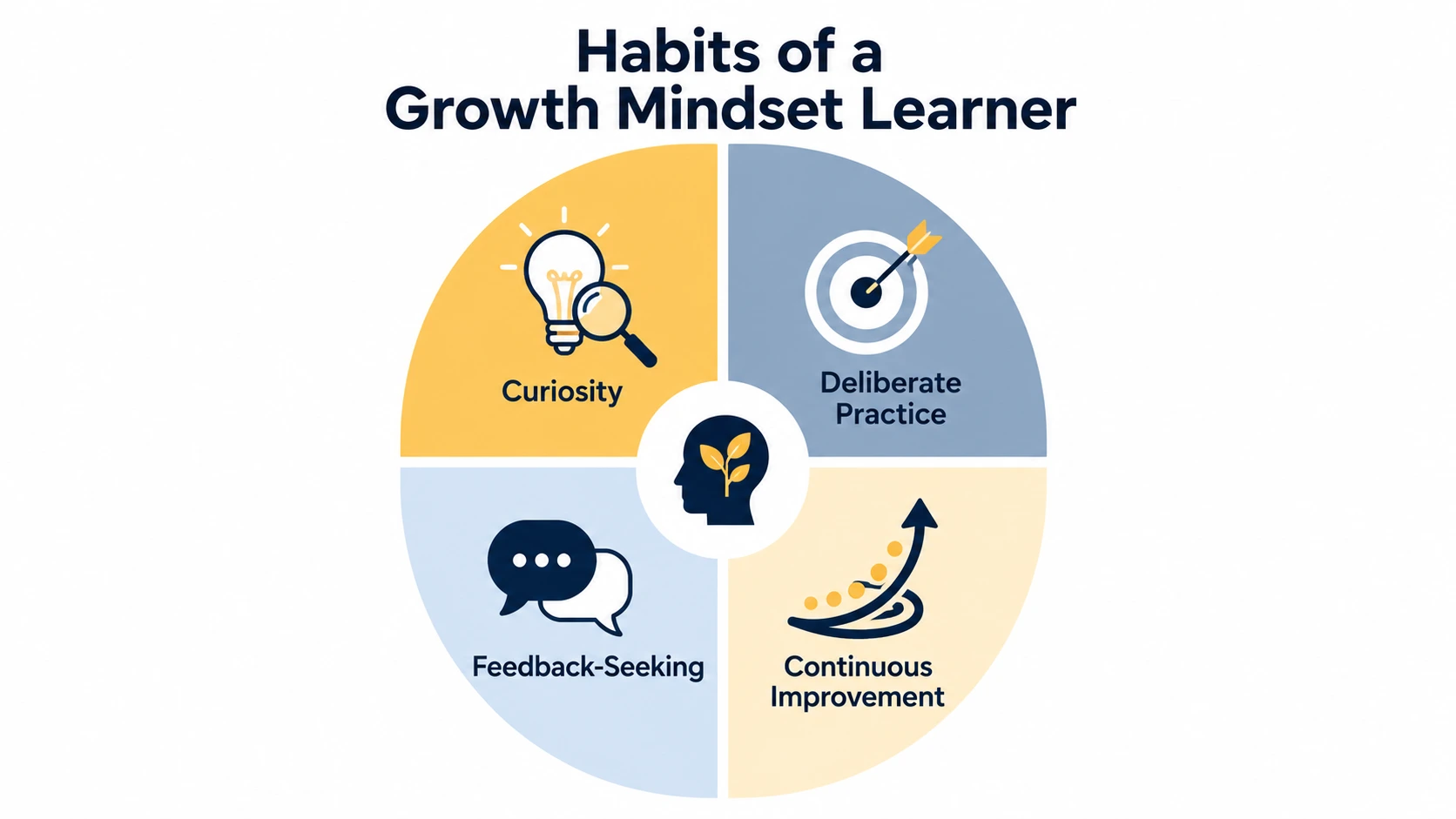
Growth mindset principles directly support better learning habits, including:
- Curiosity — approaching new information with interest rather than anxiety about being wrong
- Deliberate practice — focusing effort on specific weak areas rather than repeating comfortable tasks
- Feedback-seeking — actively requesting input to identify blind spots
- Continuous improvement — treating skill development as an ongoing process rather than a fixed endpoint
These habits translate psychological theory into daily behavior, making the growth mindset framework practical rather than purely motivational.
Growth Mindset Quotes for Different Situations
Growth Mindset Quotes for Students
Growth mindset quotes for students are often used to shift focus away from grades and toward the learning process itself. This reframing helps reduce fear of failure during exams, since mistakes are treated as part of skill-building rather than evidence of inadequacy. Teachers frequently use these quotes to build academic confidence, especially with students who avoid challenging material out of fear of underperforming.
Positive Growth Mindset Quotes
Positive growth mindset quotes emphasize optimism grounded in effort rather than blind positivity. These quotes encourage self-belief paired with realistic strategy—the expectation that consistent effort over time leads to measurable improvement. Unlike generic positivity, this category of quote ties optimism directly to actionable behavior. Readers who want to reinforce this optimism daily often pair these quotes with growth mindset affirmations as a consistent practice.
Motivational Mindset Quotes
Motivational mindset quotes are often used to sustain effort during difficult stretches of a goal. A key theme in this category distinguishes motivation, which fluctuates, from discipline, which remains consistent regardless of mood. These quotes are frequently used to reinforce daily consistency rather than relying on short bursts of inspiration.
Mindset Quotes for Everyday Inspiration
Short mindset quotes are commonly used as daily reminders in workplaces, planners, and personal goal-tracking. These brief mindset quotes are effective because they are easy to recall in the moment—during a stressful meeting, a difficult workout, or a personal setback—making them practical tools for maintaining consistency in daily habits.
Growth Mindset Quotes by Famous People Compared with Carol Dweck’s Ideas
Similar Themes Across Influential Thinkers
Growth mindset quotes by famous people—including athletes, entrepreneurs, and authors—often echo similar themes found in Dweck’s research: persistence, learning from failure, and continuous improvement. These quotes about mindset and attitude frequently emphasize discipline and long-term effort, even though the individuals expressing them were not necessarily building on Dweck’s specific academic framework.
It’s worth noting that these thinkers did not create the growth mindset theory itself; rather, their observations about persistence and resilience align with, and popularize, similar principles.
What Makes Carol Dweck’s Perspective Different?
What distinguishes Carol Dweck’s perspective is that her conclusions are grounded in controlled psychological research rather than personal anecdote alone. While many motivational figures share inspiring observations based on individual experience, Dweck’s framework emerged from studies examining how students and adults respond to challenge, feedback, and failure across varied settings. This evidence-based foundation is why her work is frequently cited in academic, educational, and organizational contexts.
Common Misunderstandings About Growth Mindset
Growth Mindset Is Not Just Positive Thinking
A common misconception is that growth mindset simply means staying positive or telling oneself “I can do it.” In reality, Dweck’s research emphasizes effort paired with effective strategy—not optimism alone. Positive thinking without strategy adjustment or feedback rarely leads to meaningful skill development. Genuine growth mindset requires evaluating what isn’t working and changing approach accordingly.
Why Simply Reading Quotes Is Not Enough
Reading an inspiring quote can create a temporary motivational boost, but lasting change requires converting that inspiration into action. This involves structured reflection, deliberate habit formation, and consistent skill development over time. Without this follow-through, growth mindset quotes function only as short-term encouragement rather than tools for real behavioral change.
Practical Ways to Apply Growth Mindset Quotes Every Day
Daily Reflection Exercises
Simple reflection practices help translate mindset quotes into behavior:
- Journaling prompts that ask what was learned from a specific challenge that day
- A brief weekly review identifying one area of effort and one area needing adjustment
- Self-assessment questions that separate effort from outcome when reviewing performance
Applying Quotes at School, Work, and Home
Growth mindset principles apply across different roles:
- Students can reframe difficult assignments as skill-building opportunities rather than threats to their grades.
- Professionals can request feedback proactively instead of waiting for formal reviews.
- Parents can praise effort and strategy rather than innate ability when guiding children.
- Teams and leaders can normalize discussing setbacks openly to encourage collective learning.
Turning Quotes into Habits
In our experience helping readers build better habits, quotes are most effective when paired with structure. This includes setting specific, measurable goals, habit stacking a reflection practice onto an existing daily routine, and tracking progress consistently. Adding an accountability partner or regular check-in further increases the likelihood that inspiration translates into lasting change.
Common Challenges When Developing a Growth Mindset
Fear of Failure
Fear of failure often stems from associating mistakes with personal inadequacy rather than viewing them as part of the learning process. This fear can be reduced by deliberately choosing lower-stakes challenges to practice tolerating setbacks, and by reframing failure as data rather than judgment. Prevention strategies include setting process-based goals instead of outcome-based ones, which reduces the pressure tied to any single attempt.
Loss of Motivation
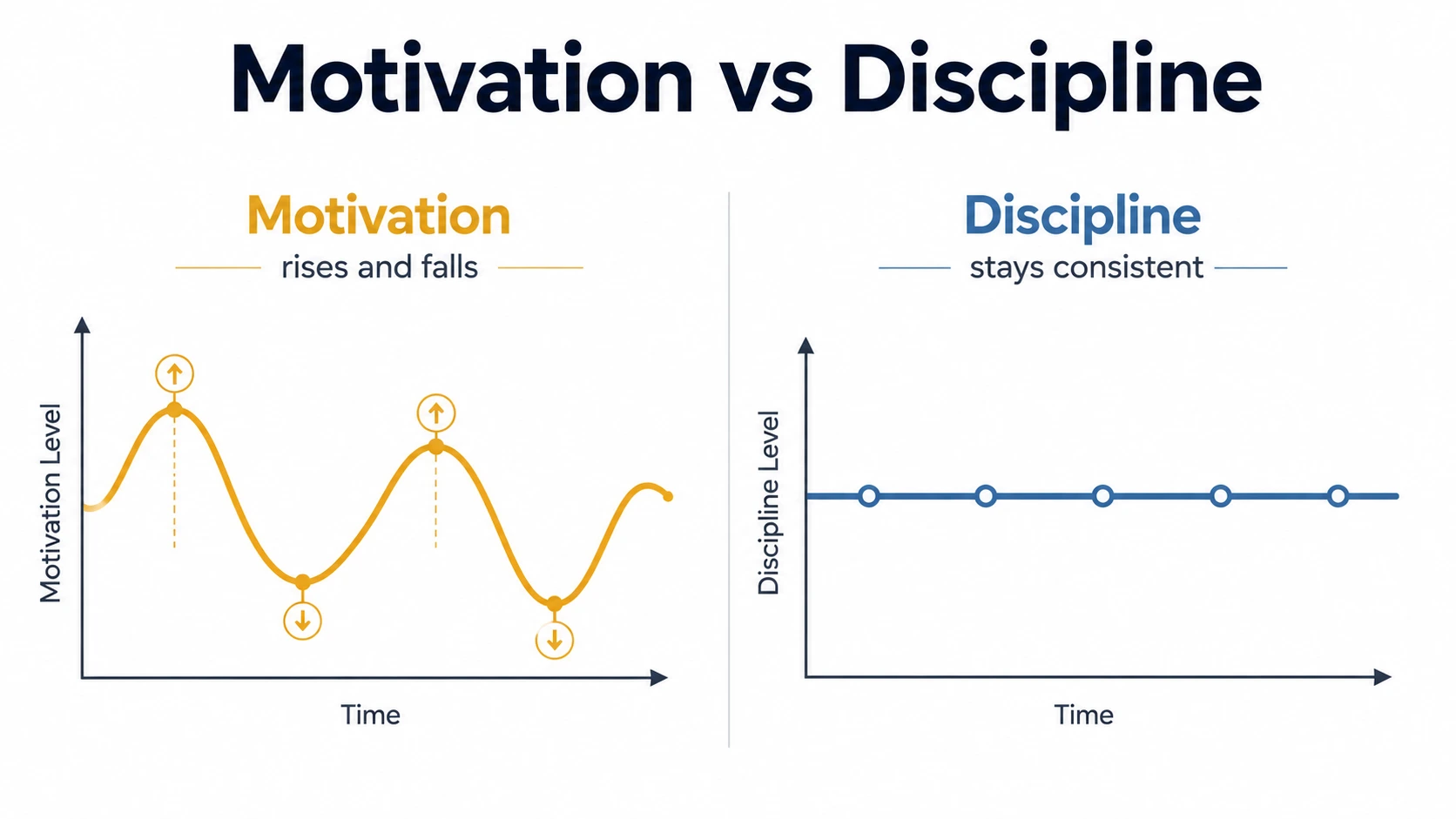
Motivation naturally fluctuates, which is why relying on it exclusively often leads to inconsistency. Discipline—built through routine and habit—provides a more stable foundation for progress. Your Daily Thrive recommends anchoring growth mindset practices to a fixed daily or weekly schedule rather than waiting for motivation to appear. For a deeper breakdown of building consistency when motivation fades, see how to build discipline without motivation.
Negative Self-Talk
Negative self-talk often reflects fixed-mindset language, such as labeling oneself as simply “bad” at something rather than acknowledging a skill still in development. Reframing this language—replacing “I can’t do this” with “I can’t do this yet”—is a direct, practical application of Dweck’s research and can meaningfully shift how setbacks are processed.
Beginner Mistakes When Using Growth Mindset Quotes
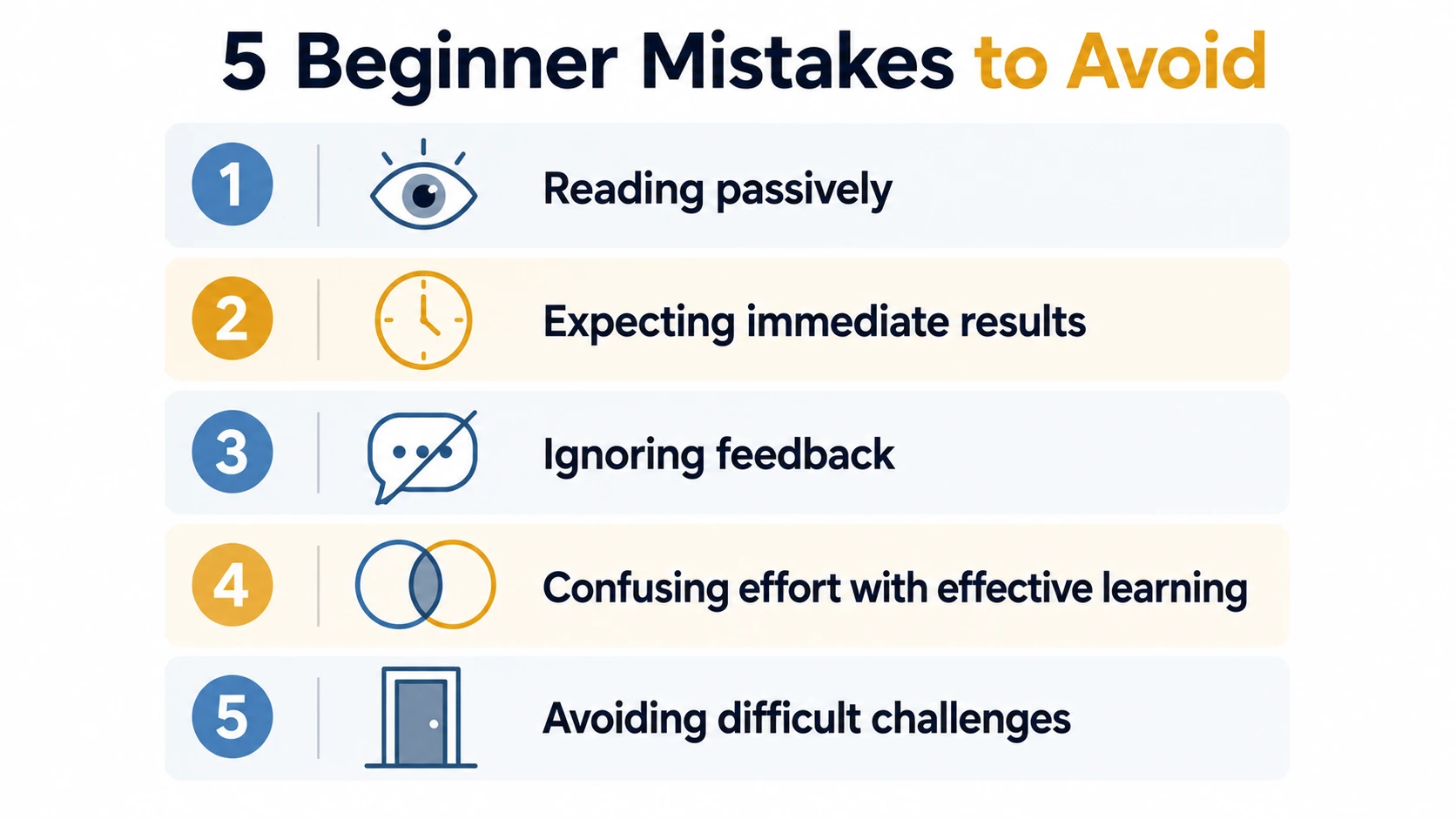
Common mistakes people make when first engaging with growth mindset quotes include:
- Reading quotes passively without applying them to a specific goal or habit
- Expecting immediate results instead of gradual, incremental improvement
- Ignoring feedback that could inform a more effective strategy
- Confusing effort with effective learning, without adjusting approach when progress stalls
- Avoiding difficult challenges despite believing in the growth mindset concept
Addressing these mistakes early helps readers move beyond passive inspiration toward measurable, lasting behavioral change—an area often underexplored in general overviews of the topic.
Frequently Asked Questions About Carol Dweck and Growth Mindset
What does Carol Dweck say about growth mindset?
Carol Dweck’s core theory holds that abilities and intelligence can be developed through effort, effective strategies, and persistence, rather than remaining fixed from birth.
How does Carol Dweck define a growth mindset?
Dweck defines a growth mindset as the belief that talents and skills can be cultivated over time through dedication and learning, which shapes how people respond to challenges and setbacks.
What is Carol Dweck’s best growth mindset quote?
The reframing of failure as “not yet” rather than a final outcome is widely regarded as one of her most practically useful and frequently cited ideas.
Why are growth mindset quotes popular in education?
They help students focus on learning and effort rather than fixed ability, which supports persistence, reduces fear of failure, and can improve long-term academic performance.
Can adults develop a growth mindset?
Yes. Neuroplasticity research supports the idea that the brain continues adapting throughout life, meaning adults can develop new skills and shift their mindset with consistent effort and practice.
How can I use growth mindset quotes in everyday life?
Pair quotes with concrete action, such as setting specific goals, reflecting on setbacks as feedback, and building consistent habits around learning, feedback, and improvement.
Conclusion
Growth mindset Carol Dweck quotes offer more than motivational language—they summarize decades of psychological research showing that effort, strategy, and persistence shape long-term achievement more than fixed talent alone. Understanding the distinction between a growth mindset and a fixed mindset helps explain why some people persist through setbacks while others disengage. Applying these lessons requires more than reading inspiring quotes; it requires consistent reflection, feedback-seeking, and habit-building across school, work, and personal life. Ultimately, a growth mindset is not something adopted overnight—it is developed through intentional, ongoing practice over time.