
Introduction
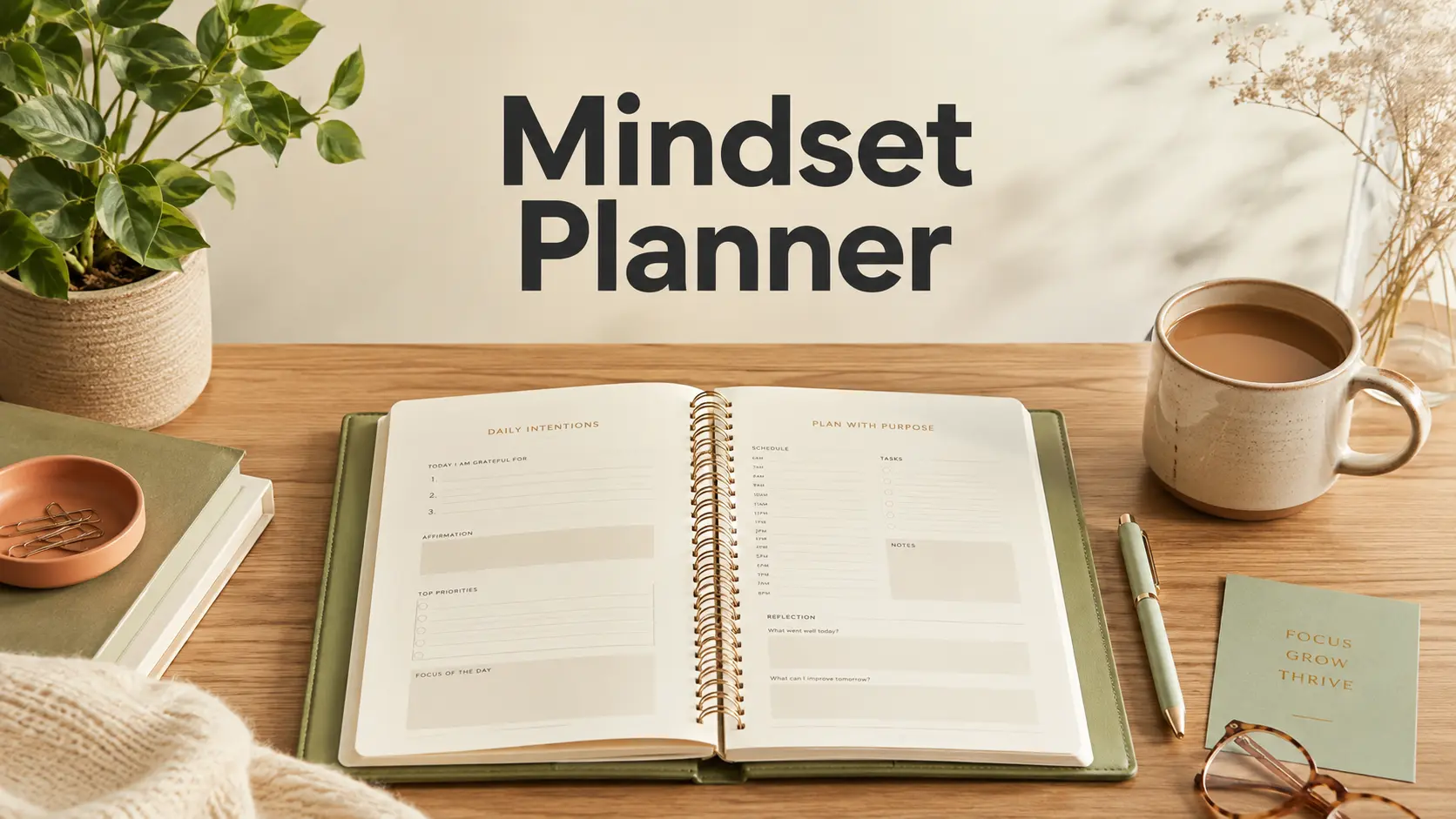
A mindset planner is a structured tool that pairs everyday task planning with intentional mindset development, such as reflection, gratitude, and goal-setting. Unlike a standard to-do list, a mindset planner is built around the idea that how you think directly shapes what you accomplish. The meaning of a mindset planner centers on this dual function: organizing your day while training your thinking patterns.
Mindset planners come in several formats to fit different lifestyles. A daily mindset planner focuses on short-term focus and habits, a weekly mindset planner balances planning with reflection, and a monthly mindset planner supports longer-term goal tracking. You can also choose based on format preference: a digital mindset planner works well for tech-first users, while a mindset planner pdf or mindset planner printable suits people who prefer paper-based reflection. Many people also start with a free mindset planner template before committing to a specific system.
Quick Summary
- A mindset planner helps organize tasks while encouraging positive thinking, reflection, and intentional goal setting.
- Mindset planners are available as printable templates, PDFs, digital planners, and traditional notebooks.
- The best planner depends on your goals, habits, schedule, and preferred planning style.
- Consistent use can improve productivity, self-awareness, motivation, and long-term habit formation.
What Is a Mindset Planner?
Definition and Core Purpose
A mindset planner is a planning tool that combines practical scheduling with structured mindset exercises, such as affirmations, gratitude prompts, and reflection questions. The meaning of a mindset planner goes beyond simple organization: it treats thought patterns as something that can be deliberately shaped through daily practice, alongside tasks and goals.
A standard planner typically tracks appointments, deadlines, and to-do items. A notebook mindset planner adds a psychological layer, prompting users to examine beliefs, emotions, and motivation before or after planning their day. This connects planning behavior directly to mindset, based on the idea that consistent thought patterns influence consistent actions.
How a Mindset Planner Supports Personal Growth
Mindset shapes several areas of daily functioning, including:
- Decision making — a clearer, more intentional mindset reduces impulsive or reactive choices
- Habits — daily reflection reinforces awareness of repeated behaviors
- Confidence — tracking small wins builds a sense of capability over time
- Productivity — clarity of purpose reduces procrastination
- Resilience — reflection prompts help reframe setbacks constructively
- Goal achievement — writing intentions down increases follow-through
These connections align with broader self-improvement principles, where sustained behavior change is understood to depend on both structure (planning) and internal beliefs (mindset).
How a Mindset Planner Works
The Core Components
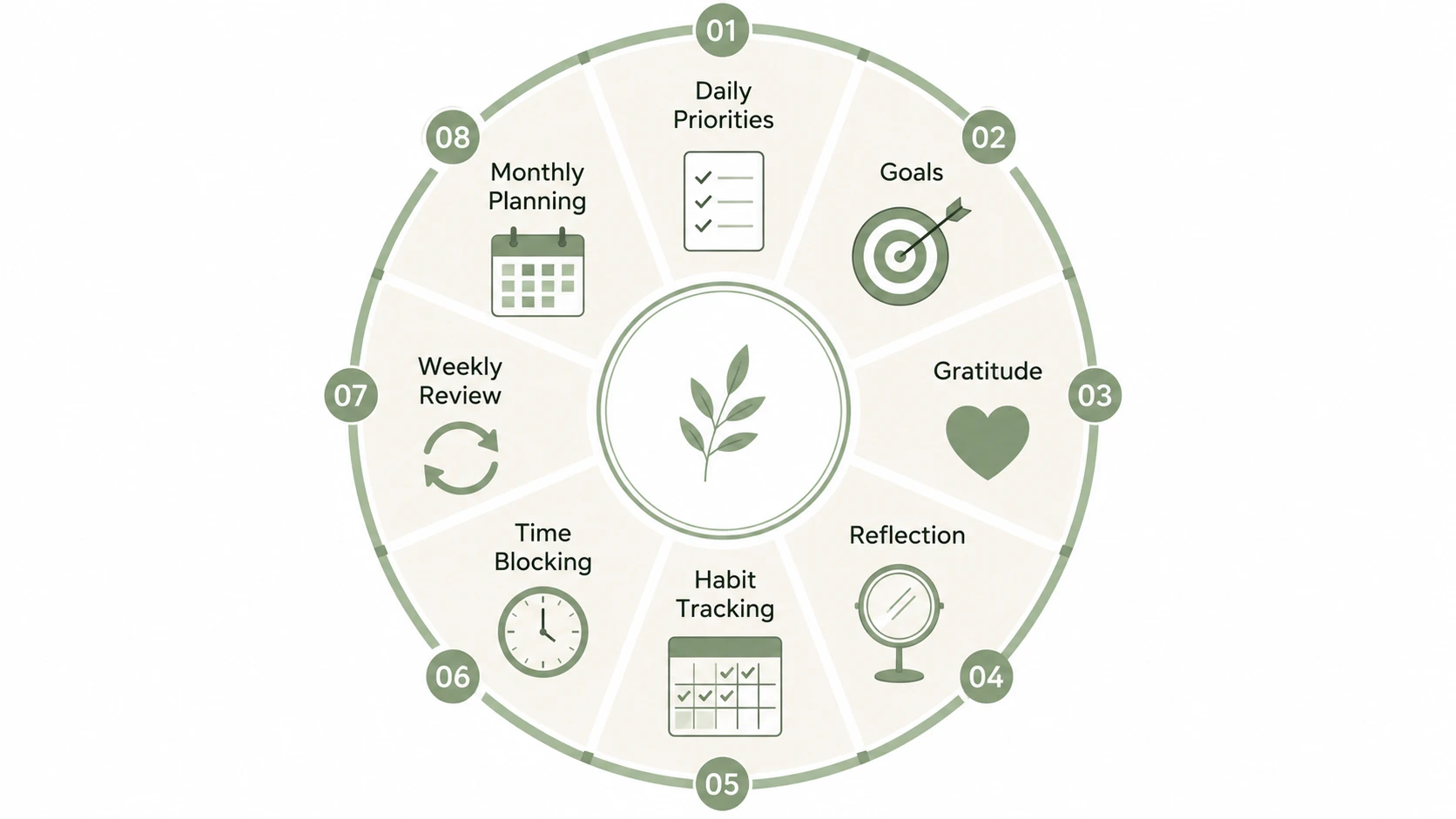
Most mindset planners include a consistent set of sections designed to combine practical planning with reflective practice:
- Daily priorities
- Goal tracking
- Gratitude prompts
- Reflection questions
- Habit tracking
- Time blocking
- Weekly review
- Monthly planning overview
A daily mindset planner typically emphasizes priorities, gratitude, and short reflection. A weekly mindset planner adds a structured weekly review section to evaluate progress and adjust habits. A monthly mindset planner shifts focus toward longer-term goals, patterns, and habit consistency across several weeks.
Why Combining Planning with Mindset Improves Results
Planning without intention often produces a list of tasks with little context for why they matter. Intentional planning connects each task to a broader goal or value, which increases motivation and follow-through.
Behavioral science research on written goals suggests that documenting objectives increases the likelihood of accountability and completion, partly because writing forces clarity about what success looks like. A mindset planner builds this accountability into the process itself, since reflection and goal-tracking sections require regular engagement rather than one-time goal-setting.
Types of Mindset Planners
Paper vs Digital Mindset Planners
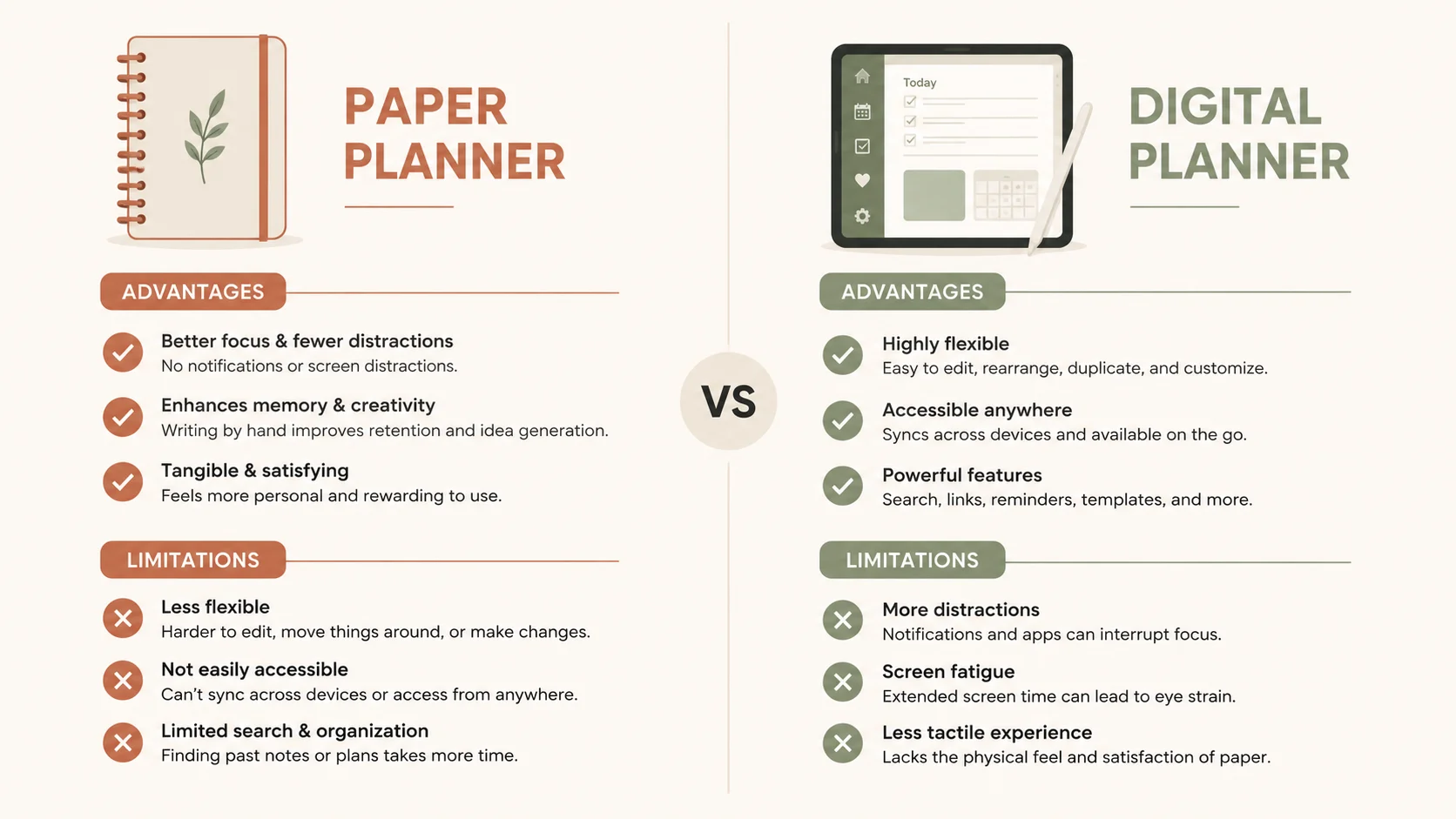
| Planner Type | Best For | Advantages | Limitations |
|---|---|---|---|
| Notebook planner | Tactile, distraction-free planning | No screen time, easy to personalize | Not portable digitally, no reminders |
| Printable planner | Flexible, reusable planning | Low cost, customizable, print as needed | Requires printer access |
| PDF planner | Digital note-taking apps (e.g., tablets) | Combines paper-like feel with digital storage | Requires a compatible device or app |
| Digital mindset planner | Tech-first users, remote schedules | Reminders, syncing, searchable entries | Can increase screen time |
Daily, Weekly, and Monthly Formats
| Format | Best Use | Time Commitment |
|---|---|---|
| Daily mindset planner | Building consistent daily habits | 5–10 minutes per day |
| Weekly mindset planner | Balancing planning with reflection | 15–20 minutes per week |
| Monthly mindset planner | Tracking long-term goals and patterns | 20–30 minutes per month |
Daily formats work best for habit-building and short-term focus. Weekly formats suit people who want structured reflection without daily commitment. Monthly formats are most useful for tracking broader progress and adjusting long-term goals.
Printable Templates and PDF Versions
What Is a Mindset Planner PDF?
A mindset planner pdf is a downloadable digital file, typically formatted for printing or for direct annotation on a tablet or note-taking app. PDFs can be either static (print-only) or editable, allowing users to type directly into designated fields. A productivity planner pdf works similarly but generally emphasizes task management over reflective prompts.
Printable Templates vs Editable Templates
A printable planner is designed to be printed and filled in by hand, offering a tactile planning experience. Reusable templates, by contrast, are designed for repeated printing or digital reuse across multiple weeks or months. A mindset planner template that is editable allows digital customization, such as adjusting sections or resizing habit trackers, before printing or saving.
Different Mindset Planning Approaches
Growth Mindset Planning
A growth mindset planner emphasizes learning from mistakes and viewing challenges as opportunities for development, rather than fixed limitations. This approach is grounded in the psychological concept of growth mindset, which contrasts believing abilities can improve with practice against believing they are fixed traits. Some formats, such as an ADHD growth mindset planner, adapt this structure with simplified layouts, visual cues, or shorter sections to reduce overwhelm and support executive functioning. Many users pair this section with growth mindset affirmations to reinforce learning-oriented thinking throughout the day.
Positive and Abundance Mindset Planning
A positive mindset planner centers on gratitude, optimism, and reframing negative thoughts. An abundance mindset planner extends this to beliefs about opportunity and resources, often including sections for tracking wins and challenging scarcity-based thinking. A money mindset planner (sometimes referred to as “my money mindset planner”) applies these same principles specifically to financial beliefs, tracking spending patterns alongside beliefs about money and security.
Specialized Mindset Approaches
Some planners are built around specific philosophies or audiences:
- Millionaire mindset planner — focused on wealth-building habits, financial discipline, and long-term financial goal tracking
- Warrior mindset planner — emphasizes discipline, resilience, and mental toughness, often used for fitness or high-performance goals
- Monk mindset planner — centers on minimalism, focus, and intentional living, often incorporating mindfulness practices
These specialized formats retain the core planner-plus-mindset structure but adjust prompts and themes to match their intended audience.
How to Choose the Right Mindset Planner
Choosing the right planner depends on several personal factors:
- Planning style — structured vs. flexible layouts
- Schedule — daily availability for planning and reflection
- Goals — habit-building, productivity, or emotional growth
- Personality — preference for detail vs. simplicity
- Digital vs. paper — screen comfort vs. tactile preference
- Customization — need for adjustable sections or templates
- Portability — a small mindset planner may suit users who plan on the go, while larger formats suit desk-based use
A digital mindset planner suits users who want reminders and syncing across devices, while a notebook mindset planner suits users who prefer distraction-free, screen-free planning.
Common Features Found in Effective Mindset Planners
| Feature | Purpose | Benefits |
|---|---|---|
| Goal setting | Clarifies short- and long-term objectives | Improves focus and direction |
| Affirmations | Reinforces positive self-belief | Supports confidence and motivation |
| Gratitude prompts | Encourages appreciation of progress | Improves emotional well-being |
| Journaling space | Provides room for open reflection | Supports self-awareness |
| Habit tracker | Monitors consistency over time | Reinforces routine-building |
| Reflection prompts | Encourages review of thoughts and actions | Builds insight and adjustment |
| Productivity pages | Organizes tasks and priorities | Improves daily efficiency |
| Vision planning | Connects daily actions to long-term goals | Increases motivation |
Mindset Planner vs Productivity Planner
| Mindset Planner | Productivity Planner |
|---|---|
| Emphasizes reflection, gratitude, and beliefs | Emphasizes task completion and scheduling |
| Focuses on psychological growth | Focuses on efficiency and output |
| Includes affirmations and journaling | Includes to-do lists and time blocks |
| Best for long-term habit and mindset change | Best for short-term task management |
A mindset planner and a productivity planner (such as the productivity planner format popularized in task-focused systems) can overlap, particularly around daily priorities. The core difference lies in emphasis: a productivity planner pdf typically prioritizes output, while a mindset planner prioritizes the thinking patterns that drive that output.
Beginner Mistakes When Using a Mindset Planner
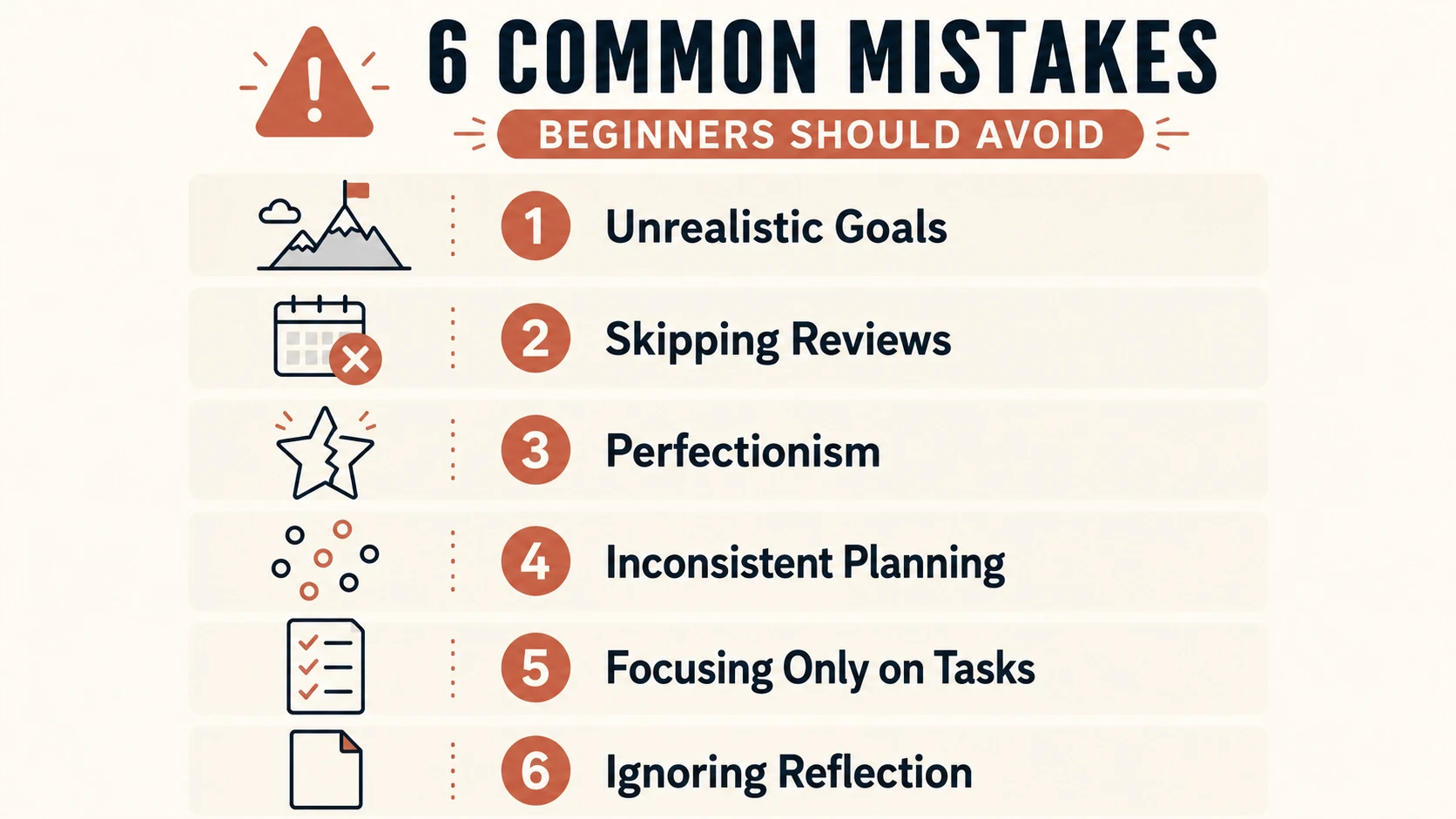
Setting unrealistic goals. This often happens when beginners try to overhaul multiple habits at once. It can be fixed by starting with one or two specific, achievable goals and preventing it by reviewing progress weekly before adding new objectives.
Skipping reviews. Weekly and monthly reviews are often skipped due to time constraints or lack of perceived value. This can be fixed by scheduling a fixed 10-minute review slot, and prevented by treating reviews as a non-negotiable part of the planning routine rather than an optional extra.
Perfectionism. Beginners sometimes abandon planners after missing a single day. This can be fixed by reframing missed days as normal rather than failures, and prevented by focusing on overall consistency rather than an unbroken streak.
Inconsistent planning. Irregular use often stems from planning at different times each day. This can be fixed by anchoring planning to an existing routine, such as morning coffee, and prevented by keeping the planner visible and accessible.
Focusing only on tasks. Some users fill in to-do lists but skip mindset sections entirely. This can be fixed by intentionally completing gratitude or reflection prompts first, and prevented by treating mindset sections as equally important as task lists.
Ignoring reflection. Reflection prompts are sometimes left blank due to uncertainty about what to write. This can be fixed by using simple starter prompts, such as “One thing that went well today,” and prevented by keeping reflection questions short and specific.
Practical Tips for Building a Sustainable Planning Habit
- Start small with just one or two planner sections before using the full layout
- Use habit stacking by attaching planning to an existing daily routine
- Set a consistent planning time, such as morning or before bed
- Conduct a short weekly review to track progress and adjust goals
- Build accountability through a friend, coach, or shared tracking method
- Adjust goals as circumstances change, rather than abandoning the planner
- Avoid planner burnout by simplifying sections during busy periods
In our experience helping readers build better habits, the planners that stick long-term are rarely the most detailed ones. They’re the ones simplified enough to complete consistently, even on busy days. For a more structured approach, see how to build good habits in 30 days for a step-by-step habit-formation framework.
Difficulty and Time Investment
Mindset planners are generally beginner-friendly, requiring no prior experience with journaling or goal-setting frameworks. Daily use typically takes five to ten minutes, while weekly reviews take fifteen to twenty minutes. Beginners often benefit from starting with a simplified daily format before expanding to weekly and monthly planning layers. Your Daily Thrive recommends adjusting planning depth based on available time and current life demands, rather than following a fixed template exactly as written, since flexibility supports long-term consistency.
Results Timeline
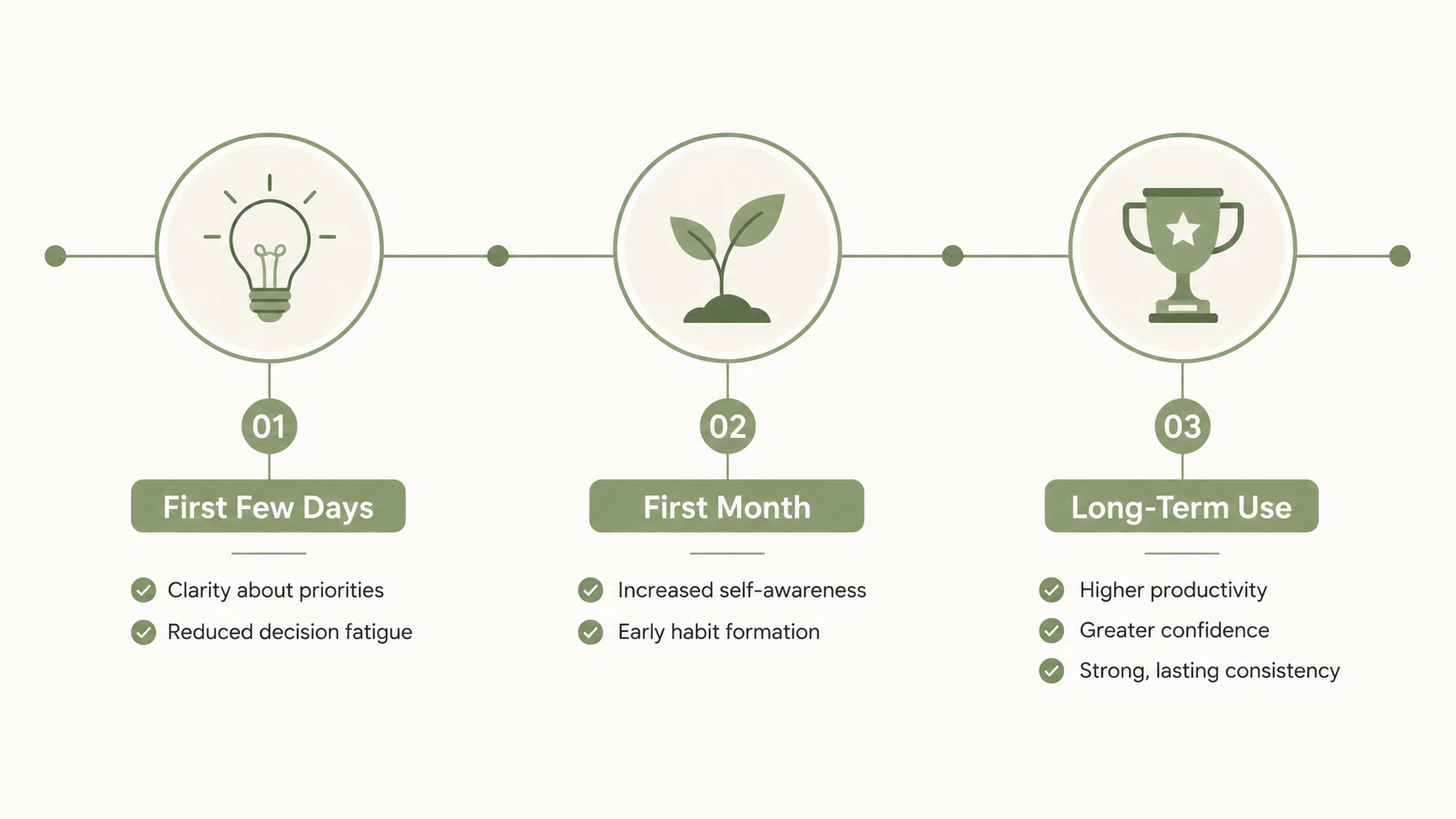
In the first few days, most users notice increased clarity around daily priorities and slightly reduced decision fatigue. Within the first month, consistent use typically leads to improved self-awareness and early habit formation, particularly around gratitude and reflection practices. With long-term use, spanning several months, many people report measurable improvements in productivity, confidence, and consistency in pursuing goals.
Results vary based on factors such as planning consistency, the specificity of goals, and how closely reflection prompts are engaged with rather than skipped.
Practice Guide
A sustainable mindset planning practice generally includes: If reflection prompts feel repetitive, rotating in journal prompts for self growth can keep daily entries fresh.
- Daily planning routine — reviewing priorities and completing a brief reflection or gratitude entry
- Weekly review process — evaluating progress, adjusting goals, and identifying patterns
- Monthly reflection — assessing broader trends in habits, mindset, and goal progress
- Motivation techniques — revisiting long-term goals or values during low-motivation periods
- Tracking habits — using habit trackers to visualize consistency over time
- Maintaining consistency — anchoring planning to existing daily routines
- Adapting the planner — adjusting sections or formats as goals and circumstances evolve
As of mid-2026, many mindset planning approaches increasingly emphasize flexible, adaptable layouts over rigid daily structures, reflecting a broader shift toward sustainable, low-friction habit systems.
Conclusion
A mindset planner combines practical daily planning with intentional reflection, gratitude, and goal-setting to support both productivity and personal growth. Whether used as a daily mindset planner, weekly mindset planner, or monthly mindset planner, and whether in notebook, printable, PDF, or digital format, the core value lies in connecting daily actions to underlying thought patterns. Choosing the right mindset planner depends on individual goals, schedule, and planning style, while consistent use over time supports meaningful improvements in self-awareness, motivation, and habit formation.
Frequently Asked Questions
What is the difference between a mindset planner and a regular planner?
A mindset planner includes reflection, gratitude, and psychological prompts alongside task planning, while a regular planner focuses primarily on scheduling and to-do lists.
Can I use a mindset planner digitally?
Yes, digital mindset planners are available as apps, editable PDFs, or note-taking templates, offering reminders and cross-device syncing.
Are printable mindset planners as effective as physical planners?
Printable mindset planners can be equally effective, since effectiveness depends more on consistent use than on the specific format chosen.
How often should I update a mindset planner?
Most people update daily sections each day, while weekly and monthly sections are typically reviewed and updated at the end of each respective period.
Is a mindset planner suitable for beginners?
Yes, mindset planners are generally beginner-friendly, and starting with a simplified daily format is a common recommended approach.
Can a mindset planner improve productivity and habits?
Yes, combining task planning with reflection and goal-tracking supports both short-term productivity and longer-term habit formation.
What sections should every mindset planner include?
Core sections typically include daily priorities, goal tracking, gratitude, reflection, and a habit tracker, with weekly and monthly reviews added for longer-term planning.