
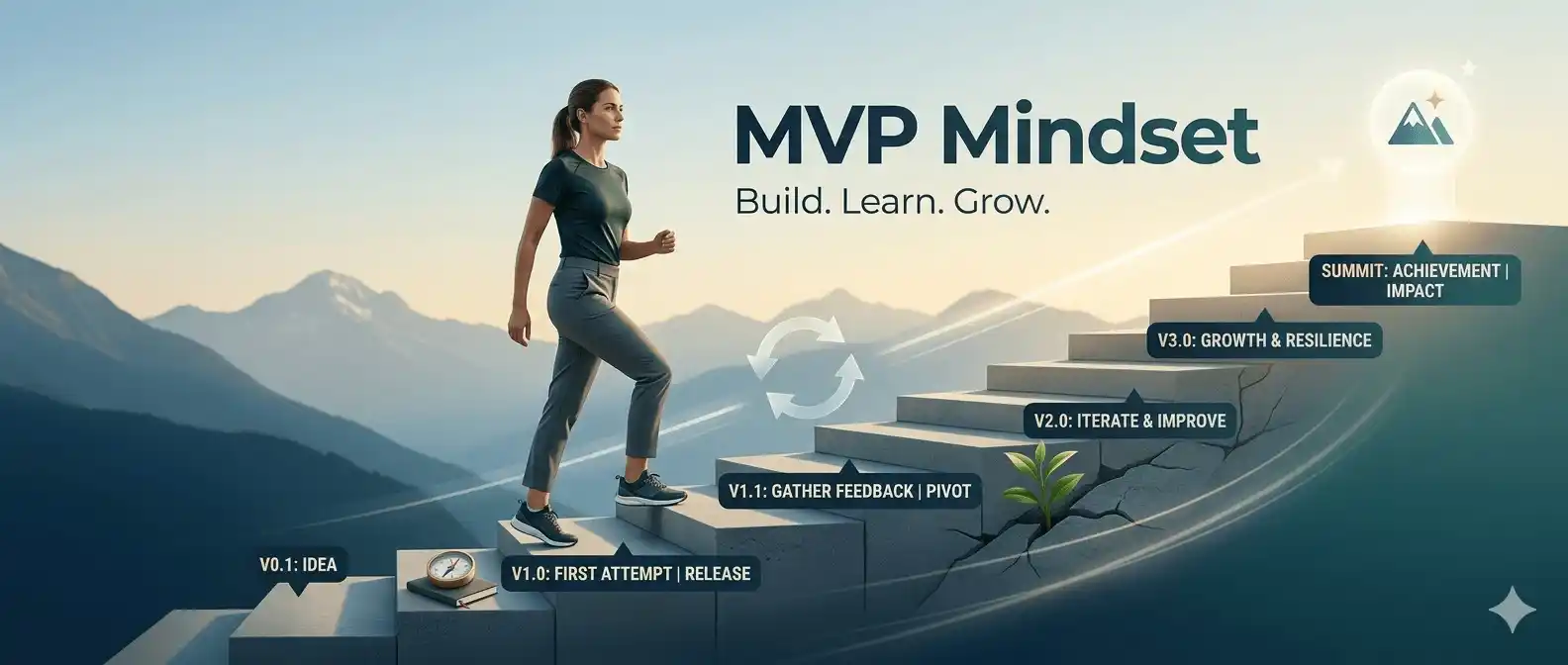
Introduction: What Is an MVP Mindset and Why Does It Matter?
An MVP mindset is a way of thinking that focuses on continuous improvement, intentional practice, adaptability, and meaningful progress through focused action. It encourages people to move beyond perfectionism by taking action, learning from results, and improving through experience. The concept can have different meanings depending on context, including the “Most Valuable Player” approach used in performance environments and the business concept of a minimum viable product. In this article, MVP mindset refers to the personal development and performance psychology approach that helps people strengthen habits, resilience, productivity, and long-term growth.
By Your Daily Thrive, we have observed that sustainable progress usually comes from consistent improvement systems rather than waiting for perfect conditions.
Quick Summary
- An MVP mindset is a performance-focused approach built around improvement, consistency, learning, and purposeful action.
- It helps people focus on progress over perfection by testing, adapting, and refining their skills.
- Athletes, professionals, and students can use MVP mindset principles to improve discipline, confidence, and long-term results.
- Developing this mindset requires clear goals, deliberate practice, resilience, and the ability to learn from setbacks.
What Does MVP Mindset Mean?
An MVP mindset means approaching growth with the belief that progress comes from taking action, evaluating results, and making improvements over time. Instead of focusing only on achieving a perfect outcome immediately, this mindset emphasizes learning, experimentation, and refinement.
The phrase combines two useful interpretations of MVP:
- Most Valuable Player mindset: A performance-oriented approach focused on excellence, contribution, discipline, and reliability.
- Minimum Viable Product principles: A method of creating, testing, receiving feedback, and improving an idea instead of waiting for a flawless final version.
The broader meaning of MVP mindset is not simply becoming “the best.” It is about developing the habits and thinking patterns that allow continuous improvement.
The mvp mindset meaning can be summarized as a commitment to:
- Taking purposeful action
- Learning from feedback
- Improving skills gradually
- Adapting strategies when needed
- Building sustainable progress
Understanding what is mvp depends on the context. In personal development, MVP represents a practical approach to becoming more effective through consistent learning and improvement.
MVP Mindset Meaning in Personal Development
In personal development, an MVP mindset helps people replace all-or-nothing thinking with a process-focused approach. Instead of asking, “How can I become perfect immediately?” the focus becomes, “What is the next improvement I can make?”
This approach supports several important growth principles:
- Taking action before everything is perfect: Progress often requires starting with available resources and improving along the way.
- Learning through feedback: Results provide information that can guide future decisions.
- Building repeatable systems: Consistent routines create long-term behavioral change.
- Focusing on high-impact behaviors: Small actions that produce meaningful improvements are prioritized.
Behavioral science research on habit formation supports this approach because repeated behaviors in consistent environments are more likely to become automatic over time.
Difference Between MVP Mindset and a Fixed Mindset
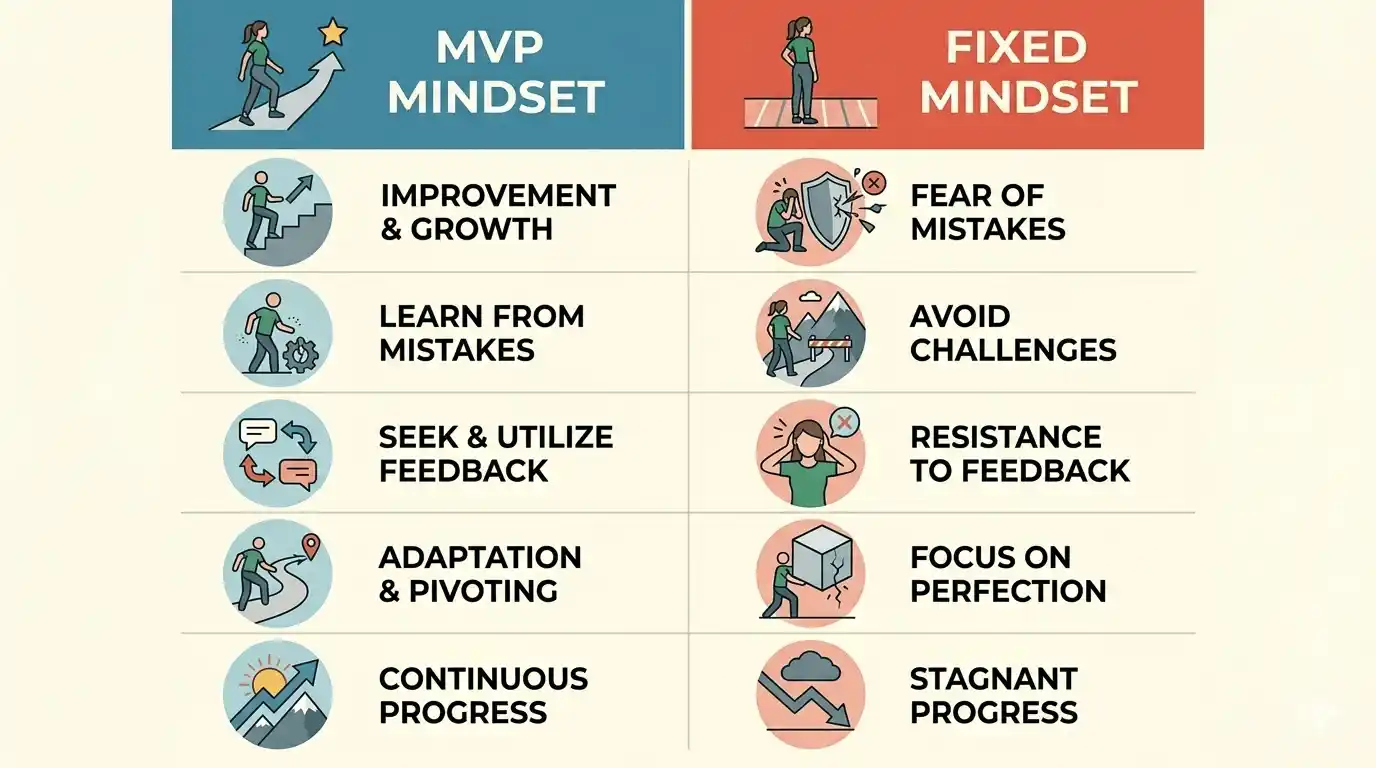
A fixed mindset focuses on protecting existing abilities and avoiding situations where failure might occur. An MVP mindset focuses on development, experimentation, and learning.
Readers interested in learning more about development-focused thinking may benefit from exploring influential Growth Mindset Books that explain how beliefs affect performance and learning.
Mindset influences how people respond to challenges, mistakes, and opportunities for growth.
| MVP Mindset | Fixed Mindset |
| Focuses on improvement | Focuses on proving ability |
| Learns from mistakes | Avoids mistakes |
| Uses feedback | Rejects criticism |
| Values progress | Values perfection |
People with an MVP mindset generally view challenges as information. A setback is not simply a failure; it is feedback that can reveal what needs to change.
Core Principles of an MVP Mindset
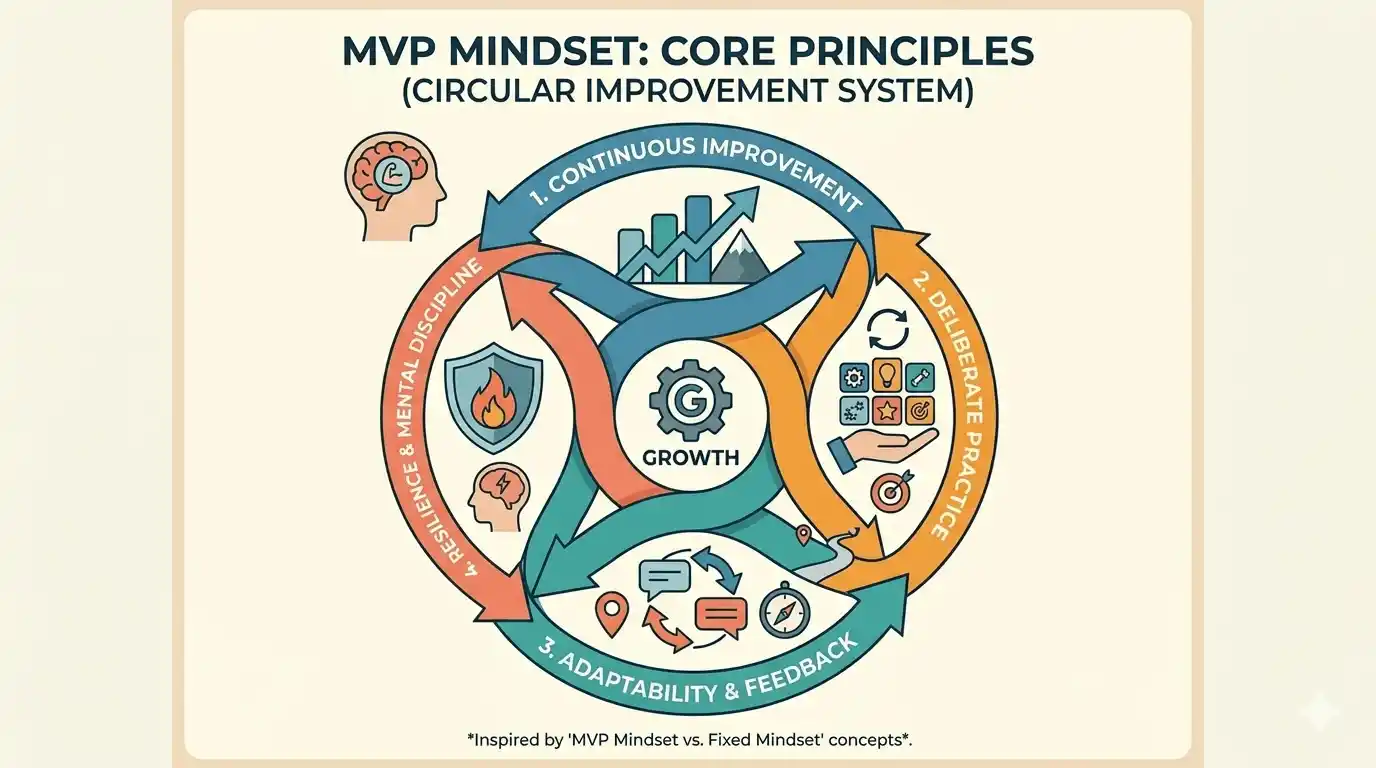
An MVP mindset is built on several foundational principles that support personal growth, performance, and resilience. These principles answer the question: “What are the core principles of MVP?”
The main ideas include continuous improvement, deliberate practice, adaptability, and mental discipline.
1. Continuous Improvement Over Perfection
Continuous improvement means focusing on gradual progress instead of waiting for ideal conditions. Perfectionism can delay action because people may avoid starting until they believe everything is ready.
An MVP mindset recognizes that improvement happens through repeated cycles of action and adjustment.
This principle connects strongly with:
- Habit formation
- Skill development
- Productivity systems
Practical examples include:
- Improving a workout routine one adjustment at a time
- Developing a study habit through consistent practice
- Refining professional skills through regular feedback
Your Daily Thrive recommends focusing on measurable improvements rather than unrealistic standards. Small improvements repeated consistently can create significant long-term changes.
2. Deliberate Practice and Skill Development
Deliberate practice is a structured approach to improving performance through focused effort, feedback, and correction. It differs from simple repetition because it requires awareness of weaknesses and intentional improvement.
An MVP mindset uses deliberate practice by encouraging people to:
- Identify areas that need improvement
- Practice specific skills
- Measure progress
- Adjust techniques
For athletes, this may involve refining a specific movement. For professionals, it may involve improving communication, technical skills, or decision-making.
3. Adaptability and Learning From Feedback
Adaptability is the ability to adjust strategies based on new information. High performers do not simply repeat the same approach; they evaluate what works and make changes when necessary.
An MVP mindset treats feedback as a valuable resource.
Examples include:
- An athlete reviewing performance after competition
- A student changing study methods after identifying weaknesses
- A professional adjusting workflows after receiving feedback
Feedback creates a learning loop:
- Take action
- Observe results
- Identify improvements
- Apply changes
This process allows continuous development.
4. Resilience and Mental Discipline
Resilience is the ability to recover from difficulties and continue working toward meaningful goals. Mental discipline supports consistency when motivation decreases.
Learning How to Build Discipline Without Motivation can help people maintain progress even when enthusiasm temporarily fades.
An MVP mindset strengthens resilience by helping people:
- Handle failure constructively
- Maintain motivation during challenges
- Recover after setbacks
Rather than viewing obstacles as proof of inability, this mindset encourages people to see challenges as part of the improvement process.
MVP Mindset in Sports Performance Psychology
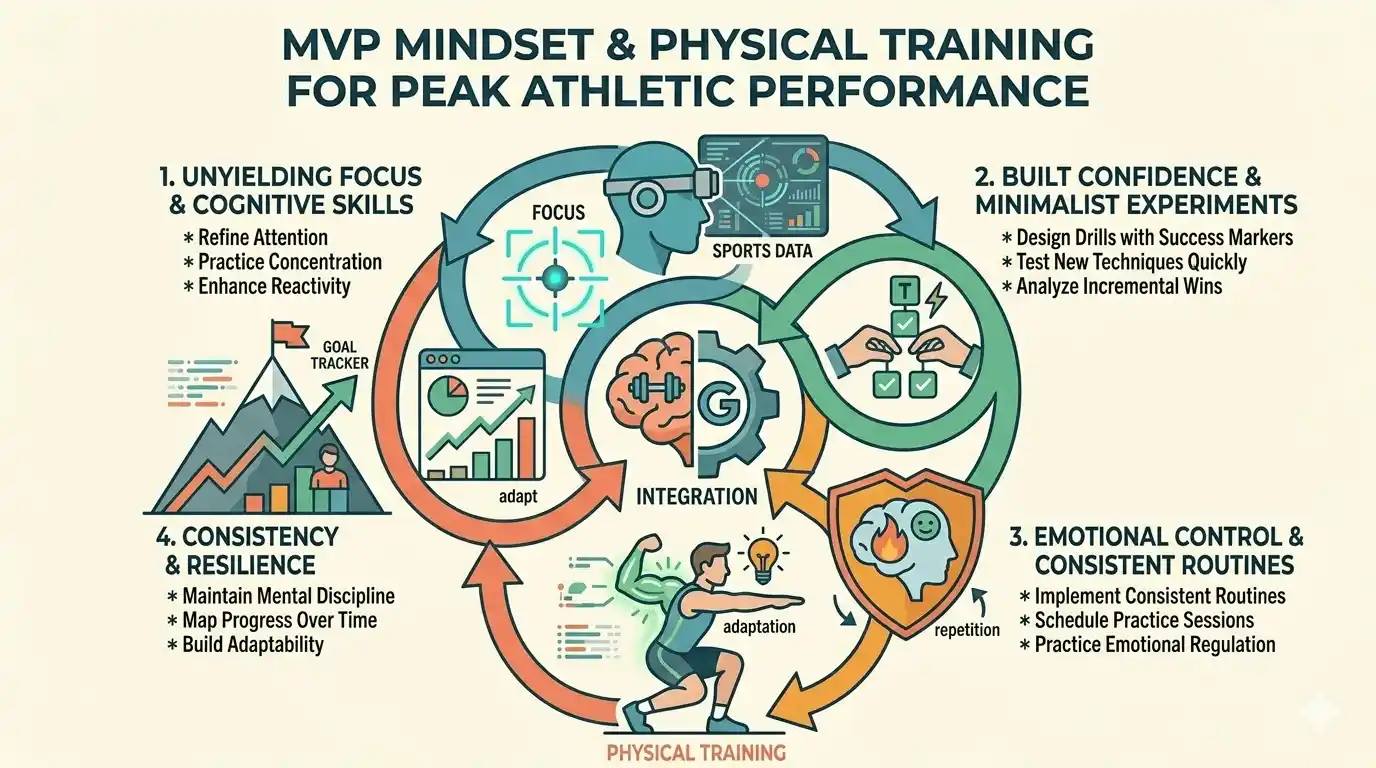
The connection between mvp mindset sport performance psychology is based on the mental skills that help athletes perform consistently under pressure. Physical ability is important, but psychological factors often influence preparation, decision-making, and recovery.
Many of these performance principles overlap with an Athlete Mindset, which emphasizes discipline, focus, resilience, and continuous improvement under pressure.
An MVP mindset in sports emphasizes:
- Focus
- Confidence
- Emotional control
- Consistency
Athletes who develop this approach understand that excellence comes from both physical training and mental preparation.
How Athletes Develop an MVP Mindset
Athletes develop an MVP mindset through structured training methods that combine physical practice with psychological preparation.
Common approaches include:
- Setting measurable goals
- Reviewing performance
- Building consistent routines
- Practicing under pressure
Goal-setting frameworks help athletes create clear targets. Performance reviews allow them to identify strengths and weaknesses. Training routines create consistency, while pressure-based practice prepares them for challenging situations.
Mental preparation also helps athletes maintain focus when outcomes are uncertain.
MVP Mindset Examples Across Sports and Disciplines
An MVP mindset can be applied across many performance environments because the underlying principles remain the same: practice intentionally, adapt quickly, and maintain discipline. Different activities require different skills, but improvement depends on similar psychological foundations.
Examples include:
- Gymnastics: A gymnast develops an MVP mindset by repeatedly refining techniques, reviewing performance details, and improving consistency under pressure. Small adjustments in movement, timing, and focus can create major improvements over time.
- Martial arts disciplines: Practitioners develop this mindset through structured training, repetition, discipline, and learning from mistakes. Progress often comes from improving technique, awareness, and emotional control.
- Team sports: Athletes use MVP mindset principles by focusing on teamwork, communication, accountability, and continuous skill development.
Across these areas, the goal is not only winning but becoming more capable through consistent improvement.
The Role of Mental Training in Athletic Success
Mental training complements physical preparation by helping athletes develop psychological skills needed for high performance.
Important mental training practices include:
- Visualization: Creating a mental image of successful performance can improve preparation and confidence.
- Confidence building: Confidence develops through preparation, practice, and evidence of improvement.
- Managing competition anxiety: Emotional regulation techniques help athletes remain focused during stressful situations.
Sports psychology recognizes that performance depends on the interaction between physical ability, mental skills, and environmental factors.
MVP Mindset Training: How to Build This Way of Thinking
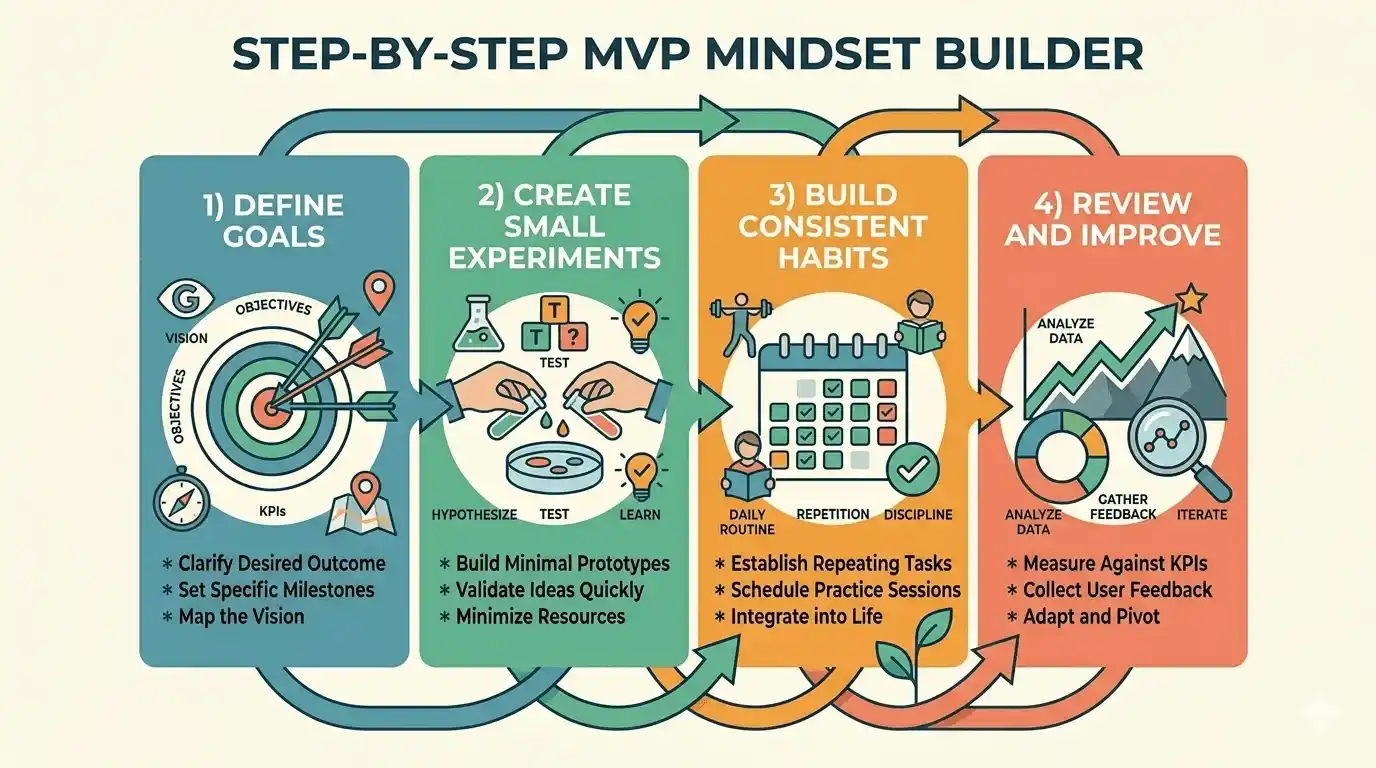
Developing an MVP mindset requires intentional practice. It is not created through motivation alone; it develops through repeated behaviors, reflection, and improvement cycles.
The goal of MVP mindset training is to create a system where progress becomes part of everyday actions.
Step 1: Define a Clear Goal and Desired Outcome
A clear goal provides direction and allows progress to be measured. Without a defined outcome, improvement becomes difficult to evaluate.
Effective goal-setting includes:
- Creating specific targets
- Tracking progress
- Establishing short-term milestones
For example, instead of setting a general goal such as “improve fitness,” a person might define a measurable goal related to training frequency, endurance, or skill development.
Goal-setting frameworks such as SMART goals are commonly used because they encourage clarity and accountability.
Step 2: Create Small Experiments and Improvement Cycles
MVP thinking encourages experimentation. Instead of making large changes without evidence, people can test small improvements and evaluate results.
The improvement cycle follows four steps:
- Try a new approach
- Measure the results
- Learn from the outcome
- Improve the next attempt
This approach reduces fear of failure because mistakes become information rather than final judgments.
For example, someone improving productivity might test a new scheduling method, evaluate whether it improves focus, and adjust based on results.
Step 3: Build Consistent Habits
Habits provide the foundation for long-term improvement. An MVP mindset recognizes that repeated small actions often create stronger results than occasional intense effort.
Many people strengthen this process by following structured approaches that focus on How to Build Good Habits in 30 Days through small, repeatable actions.
Useful habit-building strategies include:
- Creating realistic routines
- Designing supportive environments
- Using accountability systems
Consistency is especially important because behavior change depends on repetition. A person is more likely to maintain progress when new behaviors fit naturally into daily life.
Step 4: Review Progress and Adjust Strategies
Regular review helps identify what is working and what needs improvement.
Performance reviews can include:
- Identifying weaknesses
- Changing ineffective approaches
- Recognizing improvement
Your Daily Thrive recommends using reflection as a learning tool rather than as self-criticism. The purpose of review is to understand progress and make better decisions.
Understanding the 4 C’s of Performance and Their Connection to MVP Mindset
The 4 C’s of performance are commonly used in sports psychology to describe important mental skills that influence achievement. They connect closely with MVP mindset principles because they support consistent improvement and effective performance.
Confidence
Confidence is the belief that a person can perform a task successfully through preparation and effort.
An MVP mindset builds confidence by focusing on:
- Evidence of improvement
- Skill development
- Preparation
Confidence is strengthened when people recognize progress rather than only focusing on final outcomes.
Concentration
Concentration refers to the ability to maintain attention on relevant tasks while ignoring distractions.
An MVP mindset supports concentration through:
- Clear goals
- Focused practice sessions
- Intentional attention management
Strong concentration allows people to improve skills more efficiently.
Control
Control involves managing emotions, thoughts, and reactions during challenging situations.
People with an MVP mindset develop control by practicing:
- Emotional regulation
- Calm decision-making
- Stress management
This is especially important in competitive environments where pressure can affect performance.
Commitment
Commitment is the ability to continue working toward goals despite challenges.
An MVP mindset strengthens commitment through:
- Consistent routines
- Long-term thinking
- Discipline
Commitment transforms improvement from a temporary effort into a sustainable practice.
MVP Mindset vs Other Improvement Approaches
Different personal development approaches focus on different aspects of growth. Understanding their differences helps clarify where an MVP mindset is most useful.
| Approach | Main Focus | Best Used For |
| MVP Mindset | Progress through testing and improvement | Performance and personal growth |
| Growth Mindset | Belief that abilities can develop | Learning and skill development |
| Perfectionism | Avoiding mistakes | Quality control but can slow action |
| Goal-Oriented Mindset | Achieving specific outcomes | Structured achievement |
An MVP mindset overlaps with a growth mindset because both emphasize development. However, MVP mindset places additional focus on action, experimentation, feedback, and practical improvement cycles.
Perfectionism can sometimes support quality, but excessive perfectionism may prevent people from starting or adapting.
Common MVP Mindset Mistakes and How to Overcome Them
Developing an MVP mindset requires avoiding common mistakes that can limit progress.
Mistake 1: Confusing Progress With Immediate Success
Many people expect rapid results and become discouraged when improvement takes longer than expected.
Progress often develops gradually because skills, habits, and behaviors require repetition.
Solutions include:
- Tracking small wins
- Focusing on consistency
- Measuring improvement over time
Mistake 2: Trying Too Many Improvements at Once
Changing too many behaviors simultaneously can reduce focus and make habits difficult to maintain.
A better approach is to:
- Prioritize one improvement area
- Create manageable routines
- Build gradually
Focused improvement often produces better results than constant adjustment.
Mistake 3: Ignoring Feedback
Feedback is essential because it reveals areas that need attention. Ignoring feedback prevents learning and slows improvement.
Better strategies include:
- Conducting regular reviews
- Seeking outside perspectives
- Using feedback as guidance rather than criticism
MVP Mindset in Different Life Contexts
An MVP mindset is not limited to athletes. It can support growth in education, careers, entrepreneurship, and personal development.
For Students
Students can apply MVP mindset principles to improve learning habits and academic performance.
Applications include:
- Testing different study methods
- Tracking learning progress
- Improving weak areas
- Building consistent study routines
Instead of focusing only on grades, students can focus on developing effective learning systems.
For Professionals
Professionals can use an MVP mindset for career development, leadership, and problem-solving.
Examples include:
- Improving workplace skills through feedback
- Testing more efficient workflows
- Developing leadership abilities
Continuous improvement helps professionals adapt to changing environments.
For Entrepreneurs and Creators
In business contexts, MVP refers to a minimum viable product, which is an early version of a product created to test an idea and collect feedback.
Entrepreneurs use MVP principles by:
- Testing ideas before large investments
- Learning from users
- Improving products based on evidence
Although business MVP and personal MVP mindset have different meanings, both share the principle of learning through action.
Difficulty and Time Investment: How Long Does It Take to Develop an MVP Mindset?
Developing an MVP mindset is a gradual process rather than an immediate transformation. The difficulty depends on personal habits, experience, environment, and willingness to adapt.
Beginners can start with simple practices:
- Setting clear goals
- Reviewing progress regularly
- Practicing reflection
More advanced applications may involve:
- Performance analysis
- Structured skill development
- Advanced feedback systems
Personal circumstances also influence progress. Someone with strong support systems and consistent routines may develop these behaviors more easily than someone managing frequent external challenges.
Results Timeline: When Do MVP Mindset Improvements Appear?
The timeline for developing an MVP mindset varies, but progress often appears in stages.
Early changes may include:
- Greater awareness of habits
- Improved decision-making
- More willingness to experiment
Medium-term improvements may involve:
- Stronger routines
- Better consistency
- Improved skill development
Long-term changes can include:
- Increased resilience
- Better performance
- More effective problem-solving
Environmental factors, available resources, and personal commitment influence how quickly these improvements appear.
Practice Guide: Daily Habits for Strengthening an MVP Mindset
Building an MVP mindset requires regular practice. Simple routines can reinforce improvement-focused thinking.
Developing a positive outlook can also support long-term consistency, which is why many people explore Positive Mindset Tips for Beginners alongside performance-focused strategies.
Helpful practices include:
- Daily reflection on progress
- Goal tracking
- Skill practice sessions
- Regular feedback reviews
- Accountability systems
Common obstacles include:
- Losing motivation
- Burnout
- Lack of visible progress
To maintain consistency:
- Keep goals realistic
- Adjust routines when circumstances change
- Focus on sustainable improvement
Long-term growth depends more on consistency than short periods of intense effort.
Frequently Asked Questions About MVP Mindset
What is an MVP mindset?
An MVP mindset is an approach to growth that focuses on continuous improvement, learning from feedback, adaptability, and consistent action rather than waiting for perfection.
What are the core principles of MVP mindset?
The core principles include continuous improvement, deliberate practice, adaptability, feedback, resilience, and disciplined action.
How can I develop an MVP mindset?
You can develop an MVP mindset by setting clear goals, taking small actions, reviewing results, learning from feedback, and continuously improving your approach.
Is MVP mindset only useful for athletes?
No. MVP mindset can help athletes, students, professionals, entrepreneurs, and anyone seeking personal growth through consistent improvement.
What is the difference between MVP mindset and growth mindset?
A growth mindset focuses on the belief that abilities can improve, while an MVP mindset adds practical improvement methods such as testing, feedback, and refinement.
How does MVP mindset improve sports performance?
MVP mindset improves sports performance by strengthening focus, confidence, discipline, adaptability, and mental preparation.
Conclusion: Building an MVP Mindset for Continuous Growth
An MVP mindset is a practical approach to personal and professional development based on progress, learning, and adaptability. It encourages people to take action, evaluate results, and improve continuously instead of waiting for perfect conditions.
The strongest elements of an MVP mindset include:
- Focusing on progress rather than perfection
- Learning from feedback
- Adapting strategies when needed
- Building sustainable habits
Whether applied to sports, education, careers, or personal goals, an MVP mindset helps people develop resilience and improve performance over time. Continuous growth comes from consistent actions, thoughtful adjustments, and a commitment to becoming better through experience.