
Introduction
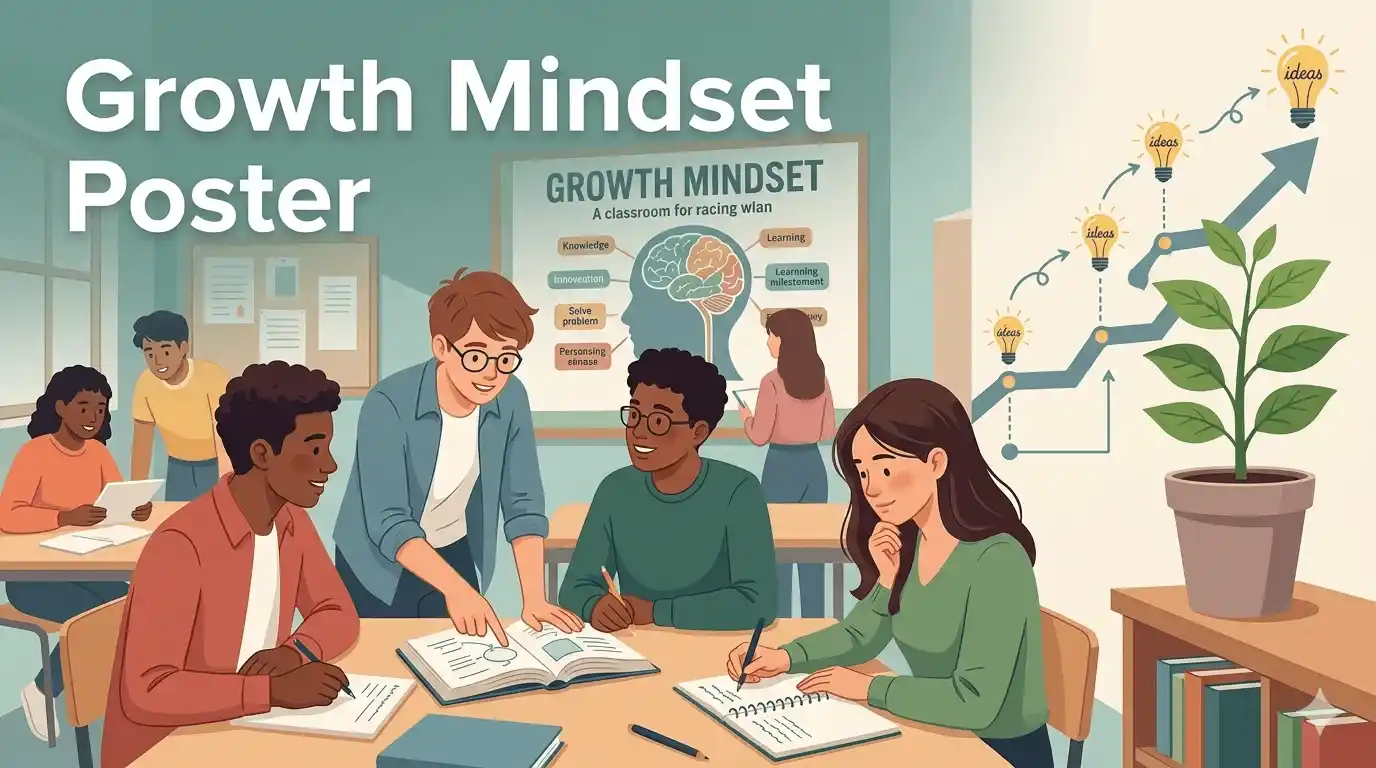
A growth mindset poster is a visual tool designed to remind people that abilities, intelligence, and skills can improve through effort, learning, and practice. Based on the research of psychologist Carol Dweck, growth mindset principles help individuals replace limiting beliefs with a focus on progress. A mindset poster, growth poster, or collection of growth posters can support behavior change by making positive learning messages visible every day. These visuals are commonly used in classrooms, learning spaces, and child development environments because repeated reminders can influence confidence, persistence, and the way people respond to challenges.
Quick Summary
- A growth mindset poster encourages learners to believe abilities can improve through effort, practice, and learning.
- Visual reminders reinforce positive thinking patterns and help develop resilience.
- Growth mindset posters are widely used in classrooms, bulletin boards, and learning environments.
- Effective posters focus on progress, learning from mistakes, persistence, and continuous improvement.
What Is a Growth Mindset?
Growth Mindset Definition and Meaning
A growth mindset is the belief that abilities and intelligence are not fixed but can develop through learning, practice, feedback, and consistent effort. The growth mindset meaning is based on the idea that improvement happens through a process rather than being limited by natural ability.
In simple terms, a growth mindset means believing:
- Skills can be developed over time.
- Mistakes provide information for improvement.
- Challenges create opportunities to learn.
- Effort combined with effective strategies leads to progress.
Understanding what is a growth mindset helps people recognize that success is often connected to persistence, adaptability, and willingness to improve.
A growth mindset affects learning because people who believe they can improve are generally more likely to attempt difficult tasks, seek feedback, and continue after setbacks.
What Is a Fixed Mindset?
A fixed mindset is the belief that abilities, intelligence, or talents are permanent and cannot significantly change. The fixed mindset meaning involves seeing skills as something people either have or do not have.
Common fixed mindset beliefs include:
- “I am either good at this or I am not.”
- “Making mistakes means I failed.”
- “If I need effort, I must not be talented.”
- “Feedback shows my weaknesses.”
A fixed mindset can limit growth because it encourages avoidance of challenges. When people focus on protecting their image rather than improving their skills, they may miss opportunities for learning.
Why Mindset Influences Success and Learning
Mindset influences success because beliefs affect actions. When people believe improvement is possible, they are more likely to practice, experiment, and recover from mistakes.
Mindset influences success because beliefs affect actions. The thoughts people repeatedly practice can shape their responses to challenges, which is why learning how to change your thoughts can support a healthier and more growth-focused perspective.
The brain’s ability to adapt through learning is often connected to neuroplasticity, which refers to the brain’s capacity to form and strengthen connections through experience.
A growth-focused approach supports:
- Greater resilience after failure.
- More willingness to practice difficult skills.
- Better response to constructive feedback.
- Increased confidence through progress.
Effort alone does not guarantee success, but effort combined with effective strategies, feedback, and reflection improves the likelihood of growth.
Growth Mindset vs Fixed Mindset
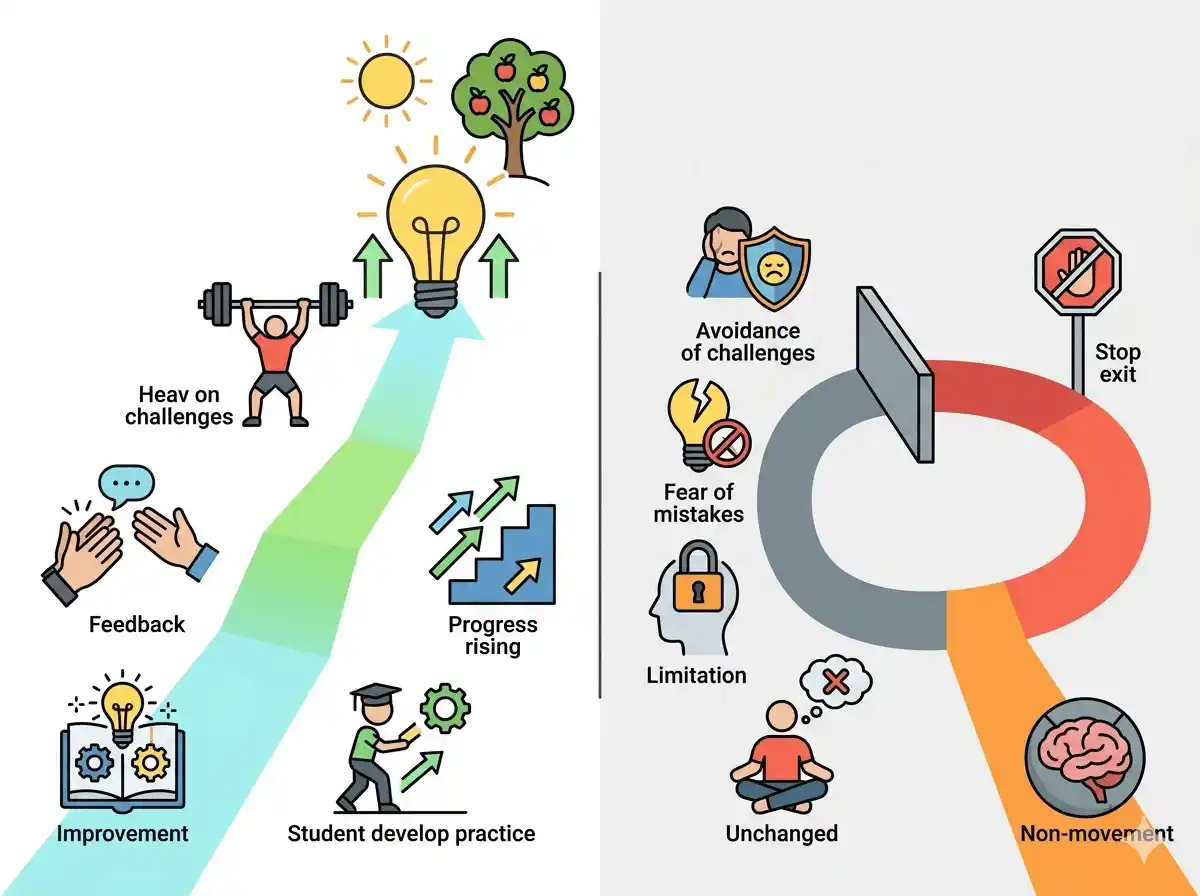
Key Differences Between Growth and Fixed Mindsets
| Growth Mindset | Fixed Mindset |
| Believes abilities can improve | Believes abilities are fixed |
| Sees mistakes as learning opportunities | Avoids mistakes |
| Values effort and practice | Focuses on natural talent |
| Embraces challenges | Avoids challenges |
| Learns from feedback | Takes feedback personally |
The difference between a growth mindset vs fixed mindset is mainly about how people interpret challenges and setbacks.
A growth mindset views difficulty as part of the learning process, while a fixed mindset often views difficulty as evidence of inability.
Related concepts include:
- Fixed vs growth mindset.
- Growth vs fixed mindset.
- Mindset fixed vs growth.
- Mindset growth vs fixed.
- Fixed and growth mindset.
- Growth and fixed mindset.
Common Real-Life Examples
A student struggling with mathematics may think, “I am bad at math,” which reflects a fixed mindset. A growth mindset response would be, “I need more practice and a different strategy.”
Examples include:
- Student learning challenges: A learner improves by reviewing mistakes and adjusting study methods.
- Skill development: A beginner improves through repetition and feedback.
- Sports: An athlete develops performance through training rather than relying only on natural ability.
- Creative activities: Artists and writers improve through experimentation.
Growth mindset thinking increases academic confidence because progress becomes the focus instead of immediate perfection.
Why Growth Mindset Posters Work
The Psychology Behind Visual Reminders
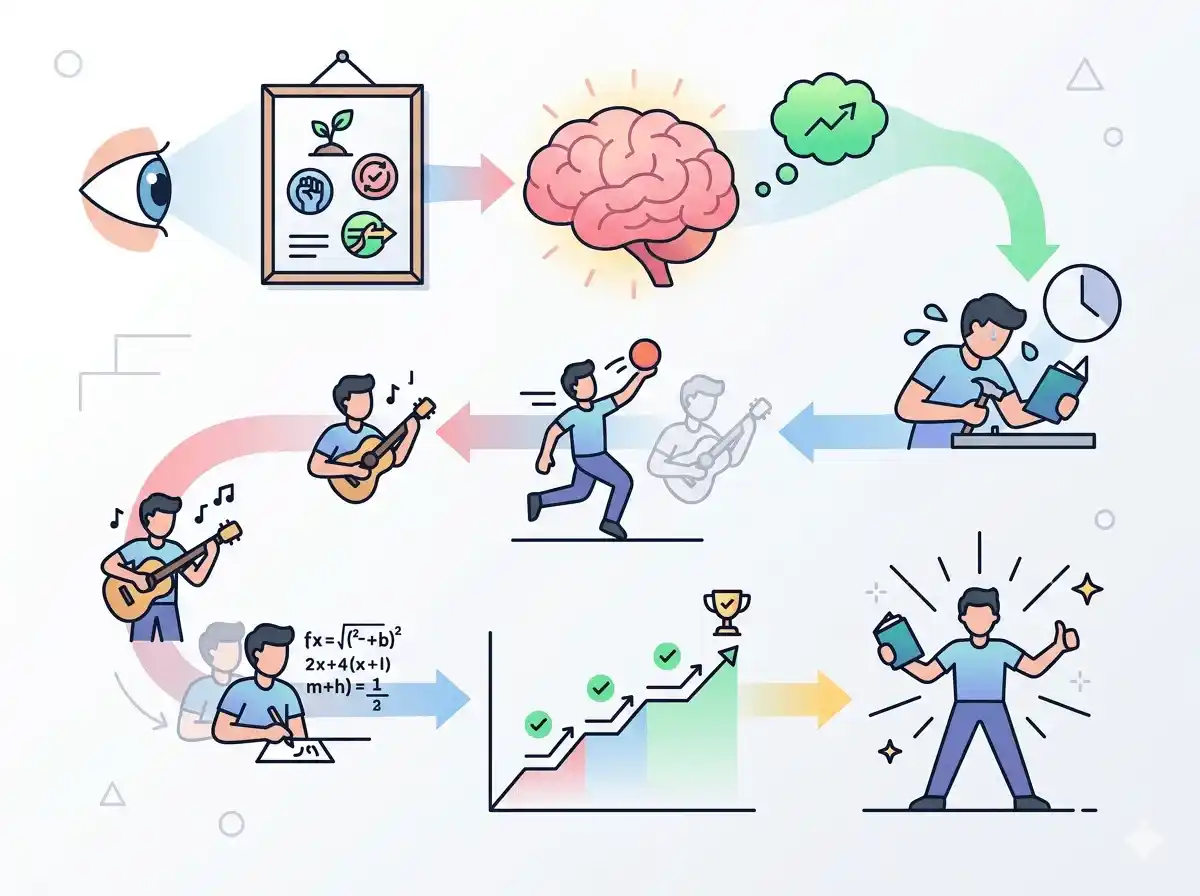
Visual reminders work because the environment influences behavior. A message that appears repeatedly can become a mental cue that directs attention toward a desired behavior.
Growth mindset posters can support learning by:
- Reinforcing positive beliefs.
- Creating environmental reminders.
- Encouraging reflection.
- Making abstract concepts easier to remember.
Repetition strengthens familiarity with ideas. When learners repeatedly see messages about effort, improvement, and resilience, those concepts become easier to apply.
How Posters Influence Daily Thinking
A well-designed poster can influence daily thinking by changing the language people use with themselves.
Instead of thinking:
- “I cannot do this.”
A learner may begin thinking:
- “I cannot do this yet, but I can improve.”
Posters encourage:
- Positive self-talk.
- Reduced fear of mistakes.
- Greater persistence.
- Identity-based growth.
Identity-based habits are powerful because people are more likely to maintain behaviors that match how they see themselves.
Why Children Respond Well to Visual Learning
Children often respond well to visual learning because images and short messages are easier to remember and understand.
Growth mindset visuals help children by:
- Using simple language.
- Creating emotional connections.
- Supporting repeated learning.
- Reinforcing classroom expectations.
A growth mindset poster for kids can make concepts like effort, patience, and resilience easier to understand.
Essential Elements of an Effective Growth Mindset Poster
Messages That Promote Growth
Effective messages focus on improvement rather than perfection.
Examples include:
- “I can improve.”
- “Mistakes help me learn.”
- “I am not there yet.”
- “Effort helps my skills grow.”
The phrase “not yet” is valuable because it changes failure into a temporary stage of learning.
Design Features That Improve Impact
A useful poster should be:
- Easy to read.
- Appropriate for the audience.
- Visually clear.
- Focused on one main message.
Good design improves attention because learners can quickly understand the message without unnecessary complexity.
Common Poster Mistakes to Avoid
Common mistakes include:
- Using overly complex wording.
- Creating unrealistic positivity.
- Relying only on motivational slogans.
- Failing to connect messages with real actions.
A poster should encourage specific behaviors, not just provide general inspiration.
Growth Mindset Poster Ideas for Different Learning Environments
Growth Mindset Poster for Kids
A growth mindset poster for kids should use simple language, engaging visuals, and encouraging messages.
Useful ideas include:
- Learning from mistakes.
- Celebrating effort.
- Trying new challenges.
- Building confidence.
Growth Mindset Poster for Students
For students, posters can focus on:
- Academic perseverance.
- Study habits.
- Exam preparation.
- Learning goals.
They can remind students that improvement comes from consistent practice and effective strategies.
Growth Mindset Classroom Posters
Growth mindset classroom posters help create a learning culture where students feel comfortable asking questions and making mistakes.
They support:
- Group learning.
- Collaboration.
- Participation.
- Positive classroom behavior.
Subject-Specific Poster Ideas
Growth mindset messages can be adapted for different subjects:
- Math growth mindset poster: Focus on problem-solving and persistence.
- Reading and literacy: Encourage practice and exploration.
- Science: Promote curiosity and experimentation.
- Creative arts: Support creativity and revision.
Growth Mindset Bulletin Board Ideas
Creating an Interactive Growth Mindset Bulletin Board
A growth mindset bulletin board can become an active learning tool instead of a simple decoration.
Ideas include:
- Student reflection activities.
- Progress tracking.
- Goal-setting displays.
- Learning achievements.
Interactive displays encourage students to notice improvement over time.
Bulletin Board Themes That Encourage Growth
Effective themes include:
- Learning journeys.
- Mistake-to-success stories.
- Challenge tracking.
- Weekly wins.
These approaches help students recognize that progress happens through repeated effort.
Growth Mindset Bulletin Board vs Traditional Displays
| Growth Mindset Bulletin Board | Traditional Bulletin Board |
| Interactive | Passive |
| Focuses on improvement | Focuses on outcomes |
| Encourages reflection | Shares information |
| Reinforces behavior change | Reinforces awareness |
A growth mindset bulletin board, growth bulletin board, or mindset bulletin board can influence classroom culture by making progress visible.
How to Make a Growth Mindset Poster
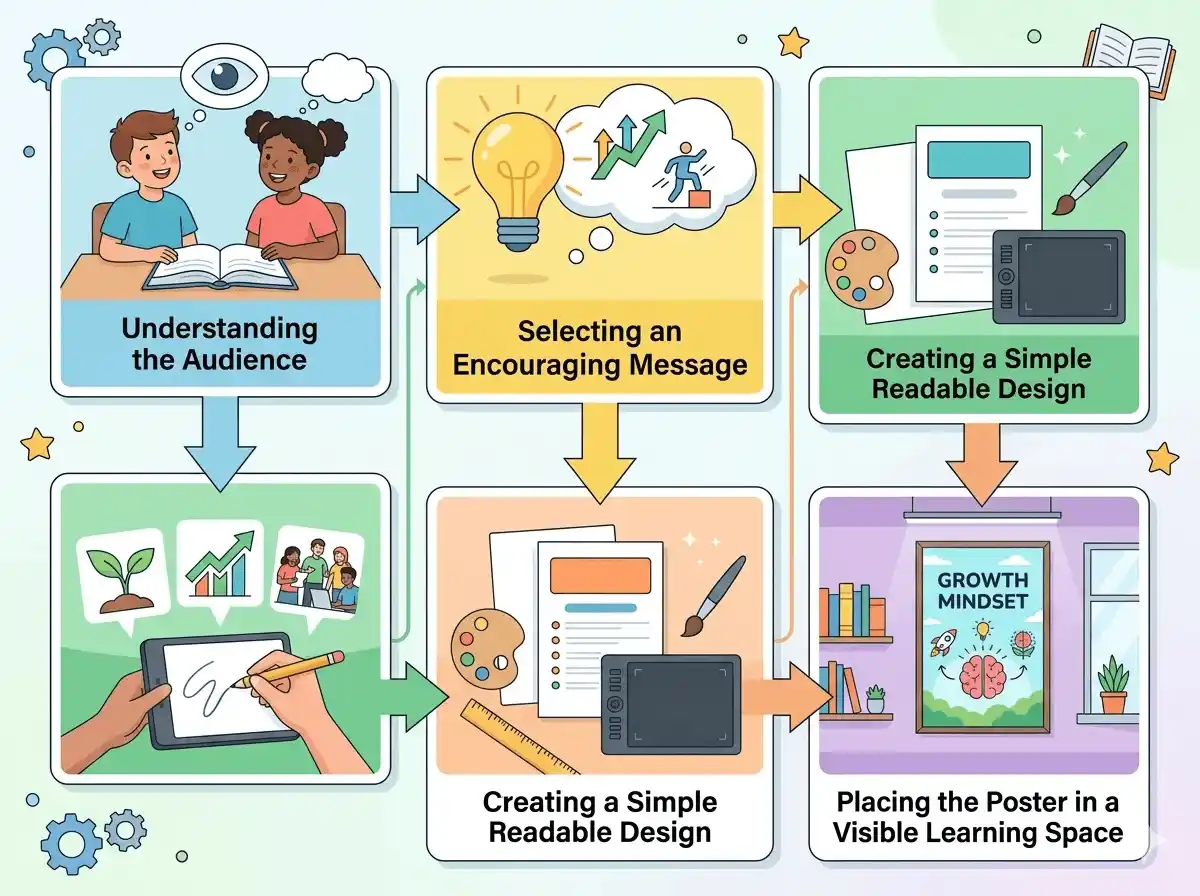
Step-by-Step Poster Creation Process
To make a growth mindset poster:
- Define the audience.
- Choose a growth-focused message.
- Select supportive visuals.
- Keep wording concise.
- Place posters where they are frequently seen.
The goal of a growth mindset poster drawing or design process is not only appearance but creating a reminder that supports daily behavior.
Using Templates and Printables
Templates can help organize poster creation while allowing customization.
A growth mindset poster template can support:
- Consistent design.
- Easy classroom adaptation.
- Faster creation.
- Personalized messages.
Printable growth mindset posters can be adjusted for different ages and learning environments.
Practical Ways to Use Growth Mindset Posters Daily
Developing a growth mindset becomes easier when combined with consistent routines and intentional behaviors. Learning how to build good habits in 30 days can help turn positive mindset principles into lasting daily actions
Building Positive Learning Habits
Posters become more effective when combined with daily habits.
Helpful practices include:
- Daily reflection.
- Recognizing effort.
- Reviewing progress.
- Focusing on consistency over perfection.
Small repeated actions create stronger learning behaviors.
Motivation vs Discipline in Mindset Development
Building a growth mindset also requires discipline because improvement depends on repeated effort, not temporary motivation. Understanding whether self-discipline is a skill can help people develop stronger learning habits.
| Motivation | Discipline |
| Emotion-driven | System-driven |
| Fluctuates daily | Remains consistent |
| Short-term energy | Long-term progress |
| Depends on feelings | Depends on habits |
Posters often support discipline more than motivation because they reinforce systems and routines even when enthusiasm decreases.
Consistency vs Intensity
| Consistency | Intensity |
| Sustainable | Difficult to maintain |
| Encourages long-term growth | Often leads to burnout |
| Builds habits | Relies on bursts of effort |
| Creates lasting results | Creates temporary results |
Long-term mindset development depends more on repeated practice than occasional intense effort.
Common Challenges When Developing a Growth Mindset
Why People Struggle With Change
People often struggle with mindset change because familiar beliefs feel safer.
Common barriers include:
- Fear of failure.
- Fear of judgment.
- Comfort zones.
- Negative self-beliefs.
Changing mindset requires awareness and repeated practice.
Overthinking and Perfectionism
Perfectionism can prevent growth because people may avoid action until conditions feel ideal.
Common problems include:
- Analysis paralysis.
- Unrealistic expectations.
- Delayed action.
- Self-criticism.
Progress improves when people focus on learning rather than flawless performance.
Burnout and Motivation Loss
Burnout often develops when people rely on constant pressure without recovery.
Causes include:
- Mental fatigue.
- Excessive expectations.
- Lack of rest.
- Unsustainable routines.
Sustainable growth requires balance between effort and recovery.
What Actually Works for Building a Growth Mindset
Reflection is an important part of personal development because it helps people recognize progress, identify challenges, and adjust their approach. Using journaling prompts for self-growth can make this reflection process more structured and meaningful.
Science-Backed Strategies
Effective strategies include:
- Neuroplasticity-based learning.
- Deliberate practice.
- Reflection and feedback.
- Incremental improvement.
Growth happens when people repeatedly practice skills, analyze results, and adjust their approach.
Real-Life Growth Mindset Scenarios
Examples include:
- Beginner learner: Focuses on small improvements instead of immediate mastery.
- Struggling student: Uses feedback to change study methods.
- High achiever facing setbacks: Learns from challenges instead of avoiding them.
- Long-term skill development: Builds progress through consistent practice.
Myths About Growth Mindset
Common myths include:
- Positive thinking alone creates success.
- Effort guarantees results.
- Failure is always beneficial.
- Growth mindset develops instantly.
A growth mindset requires action, reflection, and improved strategies.
Table-Friendly Framework for Applying Growth Mindset Principles
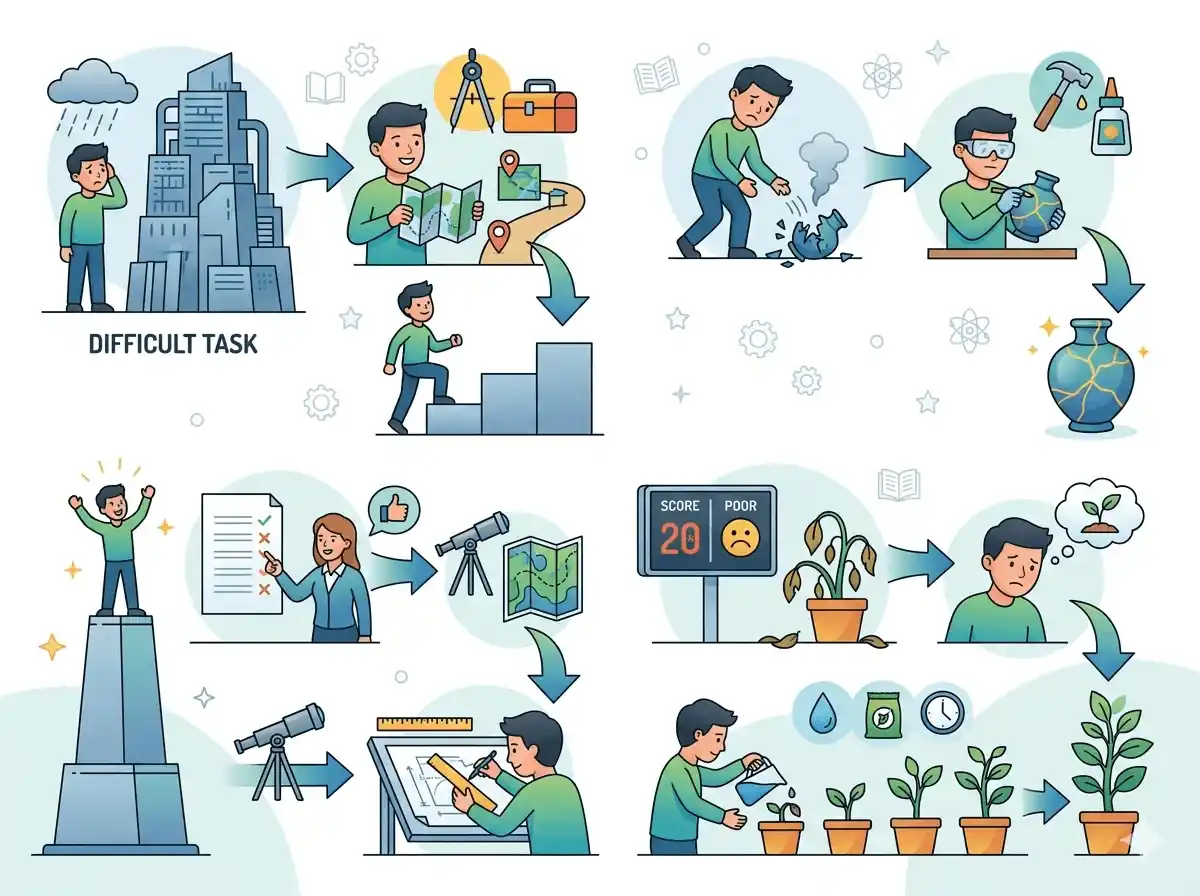
| Challenge | Fixed Mindset Response | Growth Mindset Response | Better Outcome |
| Poor test result | “I’m not smart.” | “I need a different strategy.” | Improved learning |
| Difficult task | Avoid it | Practice and improve | Skill development |
| Critical feedback | Feel discouraged | Learn from feedback | Faster growth |
| Mistakes | Fear them | Use them as lessons | Greater resilience |
This framework shows how mindset changes behavior. Instead of reacting automatically to challenges, people can choose responses that support improvement.
Conclusion
A growth mindset poster is more than decoration—it is a behavioral reinforcement tool that supports learning, resilience, and continuous improvement. Effective posters help individuals reframe mistakes, embrace challenges, and focus on progress rather than perfection. Whether used in classrooms, bulletin boards, or personal learning spaces, growth mindset visuals can strengthen positive habits when paired with consistent action. The most effective approach combines visual reminders, deliberate practice, reflection, and a commitment to long-term growth.
Frequently Asked Questions (FAQs)
What is a growth mindset poster?
A growth mindset poster is a visual reminder that encourages people to believe abilities can improve through effort, practice, feedback, and learning.
How does a growth mindset poster help students learn?
A growth mindset poster helps students by reinforcing positive beliefs about challenges, mistakes, and improvement. It encourages persistence and reflection.
What is the difference between a growth mindset and a fixed mindset?
A growth mindset views abilities as developable, while a fixed mindset views abilities as permanent and unchangeable.
Why do children benefit from growth mindset classroom posters?
Children benefit because visual reminders make abstract ideas about effort, resilience, and learning easier to understand and remember.
How can I create my own growth mindset poster?
Create one by choosing a simple growth-focused message, adding clear visuals, designing for the audience, and placing it where it will be seen regularly.
What should be included on a growth mindset bulletin board?
A growth mindset bulletin board can include goals, reflections, progress tracking, student achievements, and messages about learning from mistakes.
Do growth mindset posters actually change behavior?
Posters alone do not change behavior, but they can support behavior change by reinforcing ideas that are practiced consistently.
How can I encourage a growth mindset at home or in the classroom?
Encourage it by praising effort, discussing learning strategies, normalizing mistakes, and focusing on progress.
Why do people struggle to maintain a growth mindset?
People often struggle because old beliefs, fear of failure, perfectionism, and lack of consistent practice can interfere with change.
What are the best growth mindset messages for kids?
Effective messages include reminders that mistakes help learning, effort creates improvement, and skills develop through practice.