

Introduction
An investment mindset is the set of beliefs, habits, and decision-making patterns that shape how a person approaches long-term wealth building. It matters as much as financial knowledge, because even well-informed investors can make poor choices when fear, greed, or impatience take over. This mindset is not limited to stocks — it applies equally to mutual funds, real estate, small businesses, and other long-term assets. At its core, an investment mindset is built on patience, discipline, and evidence-based decisions rather than short-term reactions to market noise.
Quick Summary
- An investment mindset focuses on long-term value rather than short-term market movements.
- Successful investors rely on discipline, risk awareness, and consistent decision-making instead of emotions.
- Anyone can develop an investment mindset through education, planning, and practical habits.
- A healthy investment mindset balances growth opportunities with realistic expectations and risk management.
What Is an Investment Mindset?
Investment Mindset Meaning
Investment mindset meaning refers to the way a person thinks about growing wealth over time rather than seeking quick, unpredictable gains. It differs from simple saving, which prioritizes safety and liquidity, because investing accepts calculated risk in exchange for potential growth. This mindset also has a psychological dimension: it requires comfort with uncertainty, the ability to delay gratification, and confidence in a long-term plan even when short-term results are unclear. So, what is a healthy investment mindset? It is one where decisions are grounded in research, goals, and risk tolerance rather than fear or excitement.
Why Mindset Matters More Than Market Predictions
No one can consistently predict short-term market movements, which is why emotional control often matters more than forecasting skill. Investors who stay consistent through market ups and downs tend to outperform those who chase quick profits based on trends or tips. Common cognitive biases — such as overreacting to news or assuming past performance predicts future results — frequently derail otherwise sound strategies. A steady, process-driven approach reduces the influence of these biases over time.
Core Characteristics of a Healthy Investment Mindset
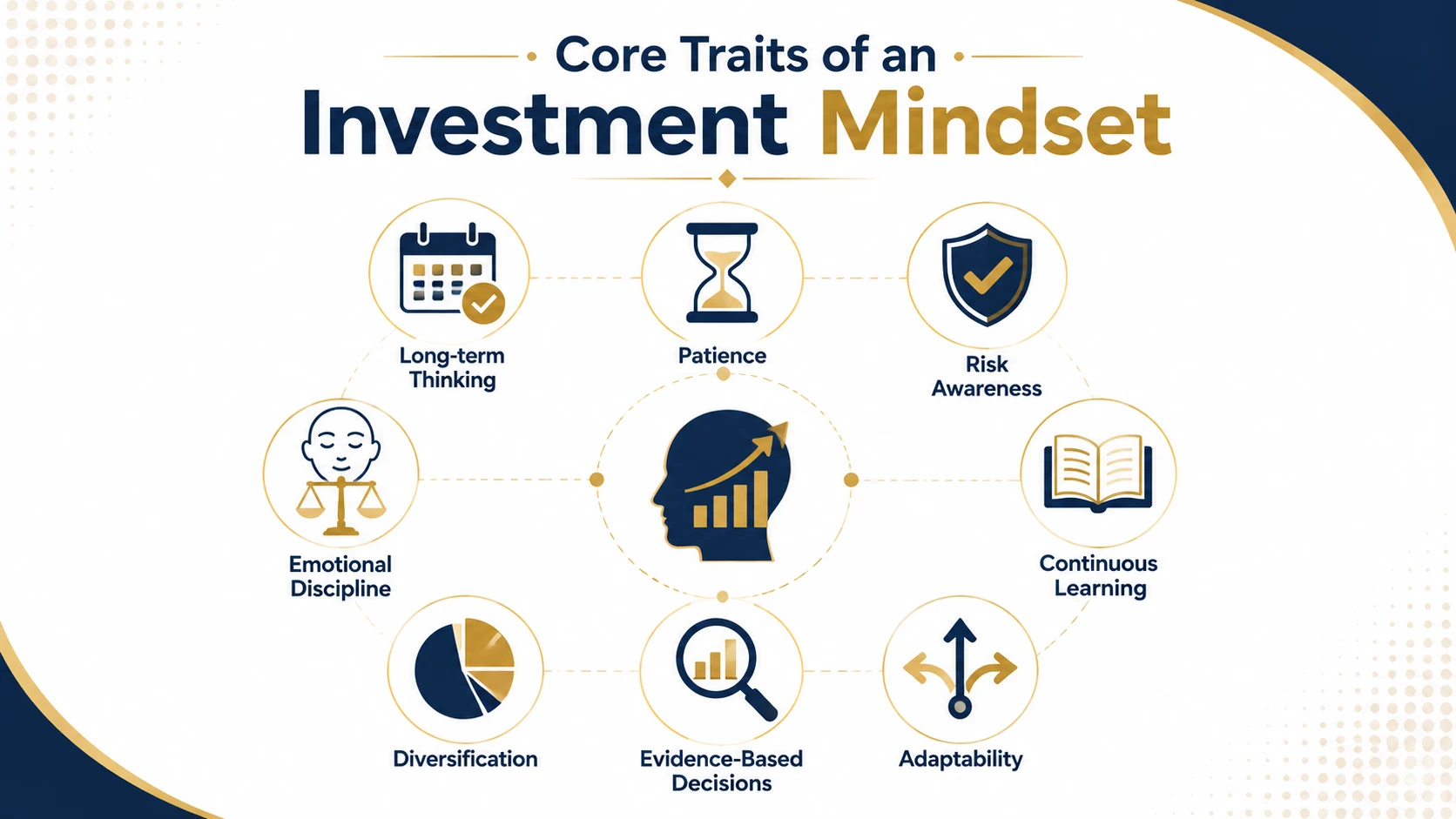
Disciplined investors tend to share a consistent set of traits that support long-term success: Building this kind of discipline doesn’t require constant motivation — see our guide on how to build discipline without motivation for practical techniques that apply directly to investing consistency.
- Long-term thinking — prioritizing years or decades over days or weeks
- Patience — allowing investments time to grow and compound
- Risk awareness — understanding potential downsides before committing capital
- Emotional discipline — avoiding impulsive decisions driven by fear or excitement
- Continuous learning — staying informed about markets, assets, and strategies
- Diversification mindset — spreading risk across multiple asset types
- Decision-making based on evidence — relying on data and research over speculation
- Adaptability during changing markets — adjusting strategy without abandoning core principles
A healthy investment mindset and a long term investment mindset both depend on these traits working together rather than in isolation.
Investment Mindset vs Trading Mindset
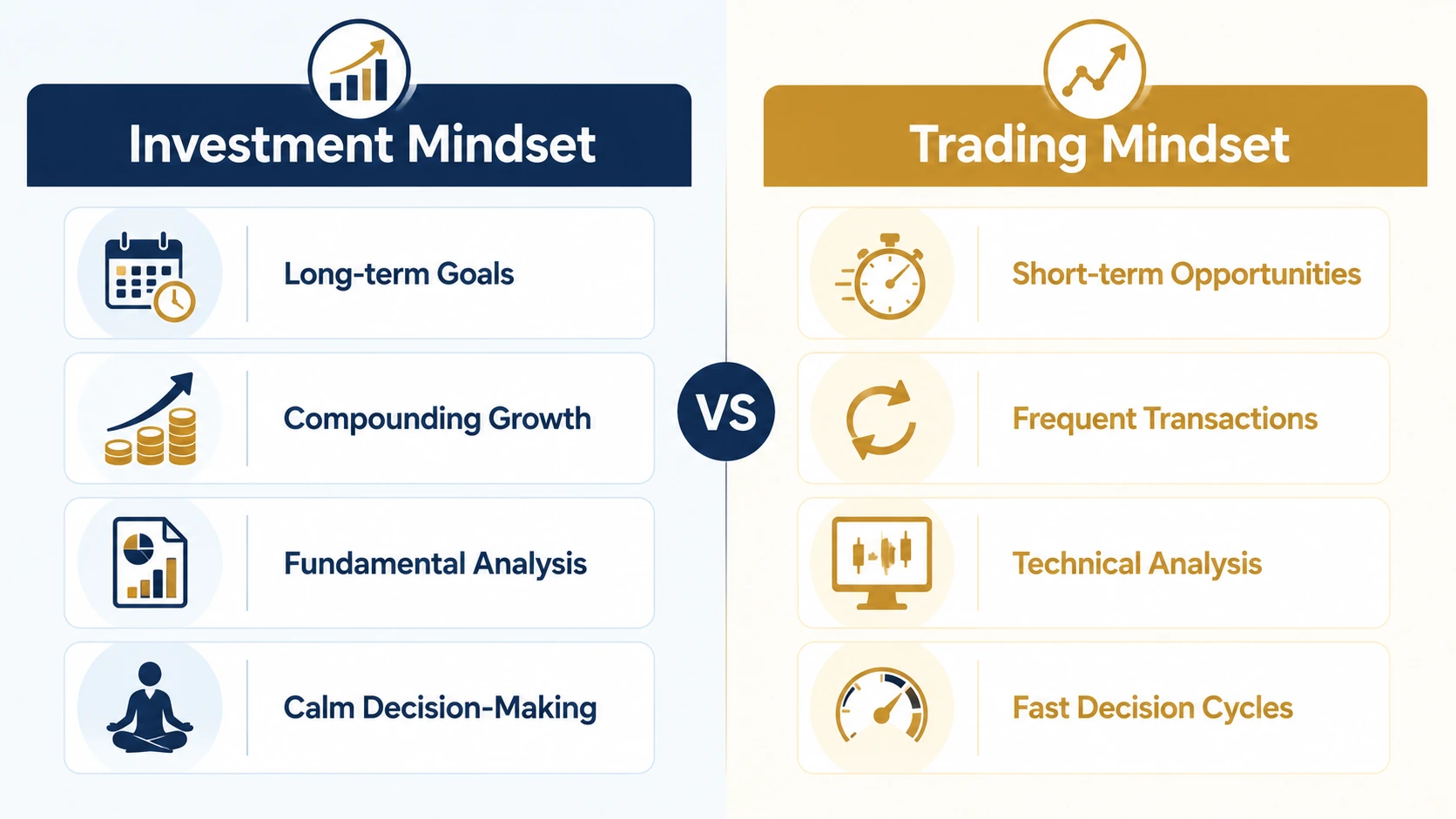
Key Differences
| Investment Mindset | Trading Mindset |
|---|---|
| Long-term goals | Short-term opportunities |
| Compounding focus | Frequent transactions |
| Lower emotional reactions | Faster decision cycles |
| Fundamental analysis | Technical analysis emphasis |
Investing generally suits individuals seeking gradual, compounding growth with lower time commitment, while trading suits those willing to actively monitor markets and accept higher short-term risk. A common misconception is that trading is simply “faster investing” — in reality, the two require different skills, risk tolerances, and time horizons. Trading typically carries higher risk of losses due to frequent, reactive decisions, while investing spreads risk over a longer period.
Investment Mindset Examples in Real-Life Situations
Beginner Investor
A beginner investor might start with a small, diversified index fund allocation, prioritizing learning and consistency over chasing high returns.
Long-Term Retirement Investor
A retirement-focused investor typically automates contributions to retirement accounts and avoids reacting to short-term market volatility, trusting the long-term growth process.
Business Owner Investing Profits
A business owner reinvesting profits often balances growing the business with diversifying personal wealth outside the company to reduce concentrated risk.
Real Estate Investor
A real estate investor evaluates long-term property value, rental income potential, and market cycles rather than short-term price fluctuations.
Index Fund Investor
An index fund investor focuses on broad market exposure and low costs, relying on long-term market growth rather than picking individual winners.
These investment mindset examples show decision-making processes rather than specific recommendations, illustrating how the same core principles apply across different situations.
Long-Term Investment Mindset and the Power of Compounding
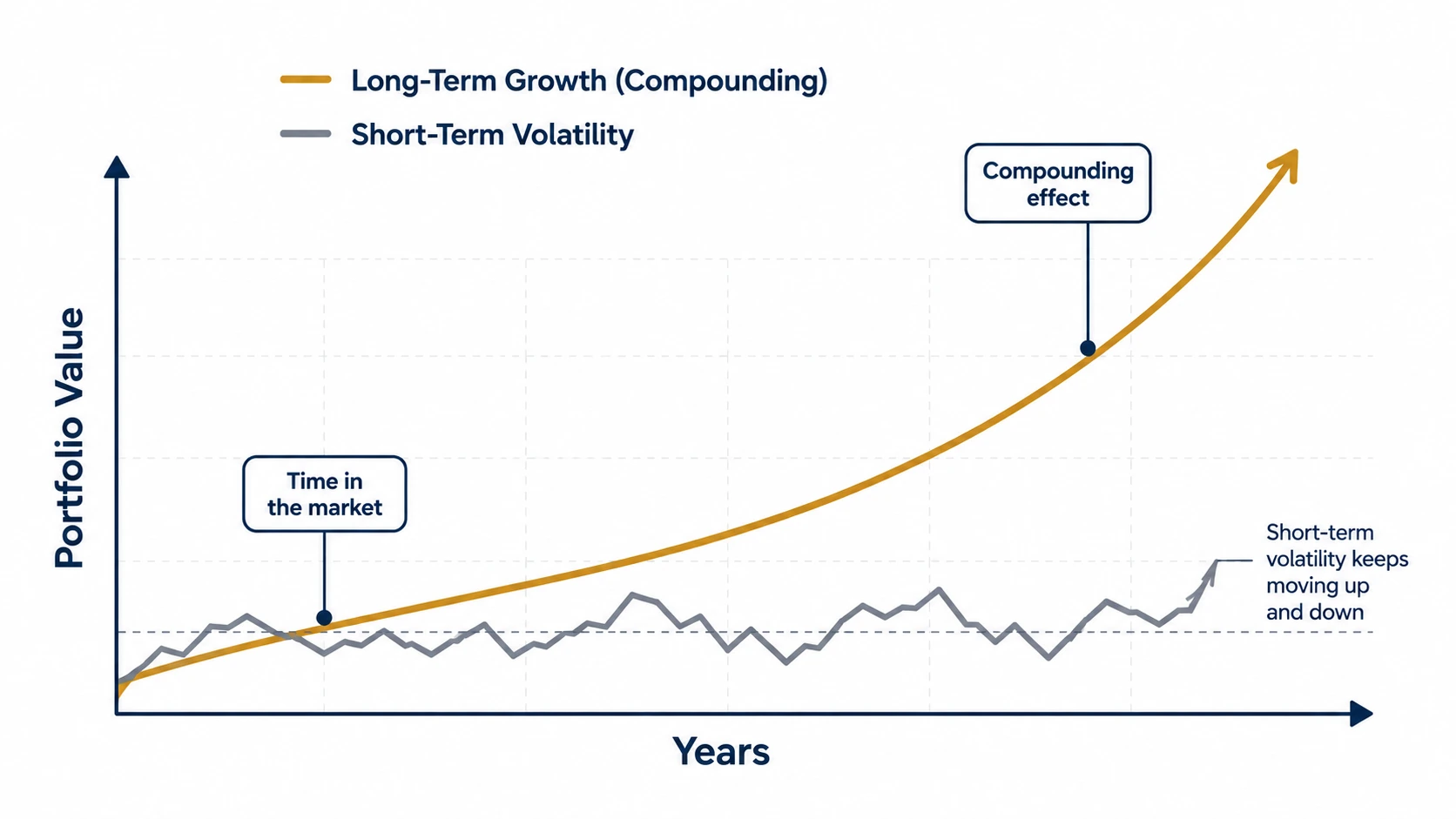
Why Long-Term Thinking Often Produces Better Outcomes
Compounding allows investment returns to generate their own returns over time, meaning growth accelerates the longer money remains invested. A long term investment mindset takes advantage of this by prioritizing time in the market over attempts to time the market perfectly.
Short-Term Volatility vs Long-Term Growth
Markets fluctuate frequently in the short term, but historically, long-term trends have shown growth despite periodic downturns. Reacting to short-term volatility can interrupt the compounding process and lock in losses that might otherwise have recovered.
The Role of Patience During Market Declines
Staying invested during downturns, rather than panic-selling, is often what separates long-term successful investors from those who lose value. Patience during declines requires realistic expectations and a plan established before volatility occurs.
Common Psychological Biases That Affect Investors
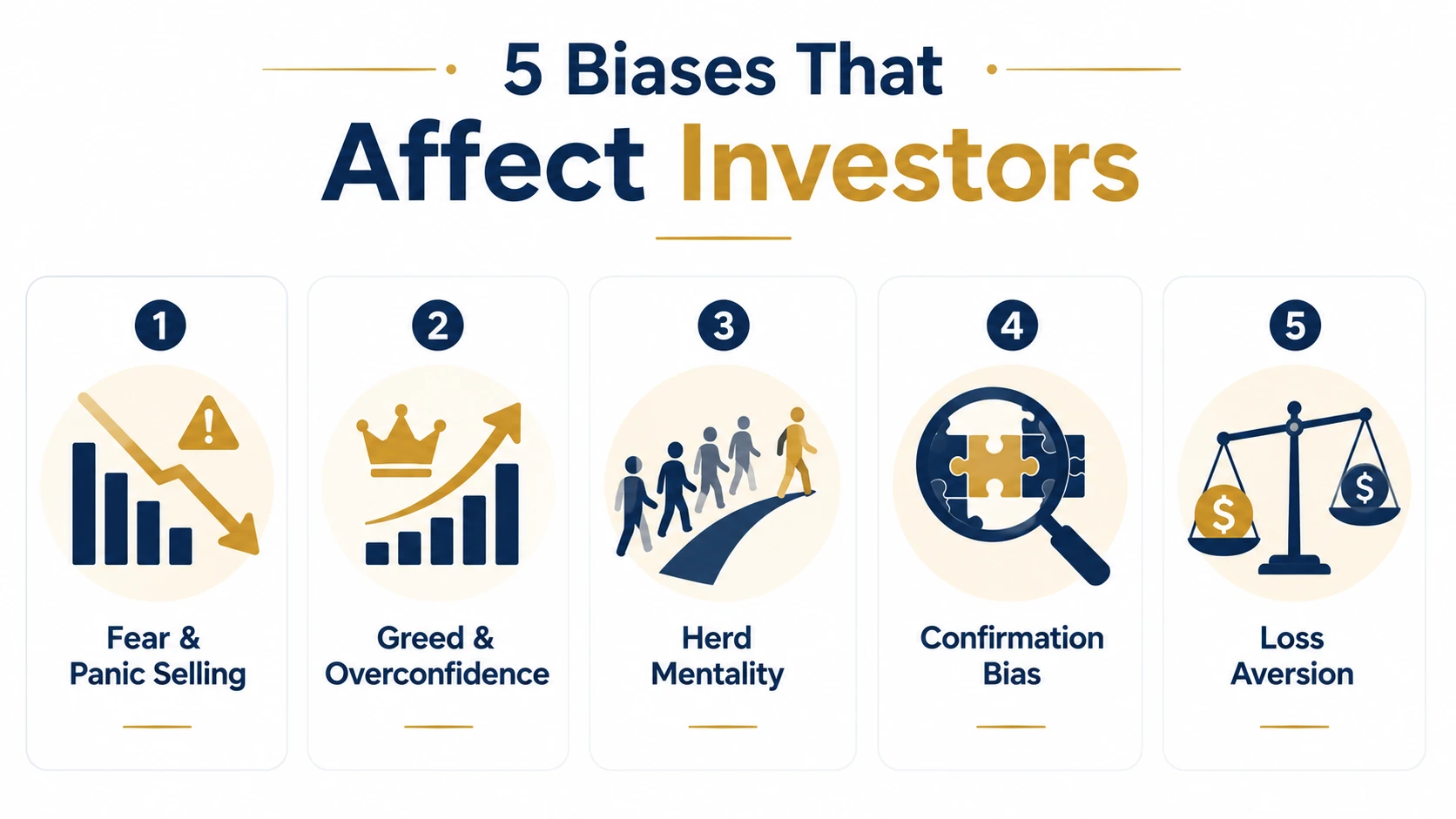
Fear and Panic Selling
Fear often triggers selling during downturns, locking in losses that could have recovered over time. Setting a plan in advance and reviewing it during volatility helps reduce panic-driven decisions.
Greed and Overconfidence
Greed can push investors to take excessive risks or chase high returns without proper research. Overconfidence often follows a string of gains, leading to underestimating risk.
Herd Mentality
Following the crowd into popular investments without independent analysis can lead to buying at inflated prices. Relying on personal research rather than trends reduces this risk.
Confirmation Bias
Investors often seek information that supports existing beliefs while ignoring contradictory evidence. Actively seeking opposing viewpoints helps create a more balanced perspective.
Loss Aversion
Loss aversion describes the tendency to feel losses more intensely than equivalent gains, which can lead to overly cautious or reactive decisions. Recognizing this bias helps investors evaluate outcomes more objectively.
How to Develop an Investment Mindset
Set Clear Financial Goals
Defining specific, measurable goals provides direction and helps evaluate whether an investment strategy aligns with long-term needs. The good news is that self-discipline is a skill you can strengthen over time, just like any other habit-driven behavior.
Learn Before Investing
Building foundational knowledge about asset types, risk, and markets reduces reliance on guesswork or hype.
Create an Investment Plan
A written plan outlining goals, risk tolerance, and strategy provides a reference point during uncertain market conditions.
Focus on Process Rather Than Daily Results
Evaluating decisions based on process and reasoning, rather than daily price movements, supports more consistent long-term outcomes.
Review Decisions Regularly
Periodic reviews — rather than daily monitoring — help investors stay on track without becoming reactive to short-term noise.
Practical steps to reinforce this mindset include:
- Create a written investment strategy.
- Define acceptable risk.
- Diversify investments.
- Automate contributions where possible.
- Track progress periodically instead of daily.
In our experience helping readers build better habits, those who automate contributions and review progress monthly — rather than daily — tend to report significantly less stress around market fluctuations.
Return on Investment Mindset: Looking Beyond Financial Returns
A return on investment mindset can extend beyond money. Applying investment principles — patience, research, and long-term focus — to other life areas often produces meaningful results:
- Education — time invested in learning compounds into career opportunities.
- Skills — consistent practice builds expertise over time.
- Health — sustained habits produce long-term wellbeing.
- Relationships — consistent effort builds trust and connection.
- Business decisions — thoughtful, long-term choices often outperform reactive ones.
- Time management — prioritizing high-value activities compounds productivity.
Your Daily Thrive recommends viewing personal growth through this same lens: consistent, evidence-based effort over time typically outperforms short bursts of intense but inconsistent action.
Lessons from Well-Known Long-Term Investors
Warren Buffett’s Investment Mindset
Warren Buffett investment mindset principles are widely referenced in personal finance discussions and include several recognizable concepts:
- Value investing — focusing on the underlying worth of an asset rather than short-term price movements.
- Patience — holding investments for extended periods to allow compounding.
- Circle of competence — investing primarily in businesses or areas that are well understood.
- Long-term ownership — treating investments as ownership stakes rather than short-term trades.
- Avoiding emotional decisions — maintaining discipline regardless of market sentiment.
These principles illustrate how a consistent, research-based approach can support long-term success across market cycles.
Investment Mindset in Different Contexts
Personal Finance
In personal finance, an investment mindset supports goal-based planning, such as saving for major life milestones or retirement.
Business Ownership
Business owners often apply investment thinking when deciding how to reinvest profits, expand operations, or diversify revenue streams.
Cryptocurrency Investing
A good crypto investment mindset is one that treats digital assets with the same discipline as traditional investments — including research, risk management, and avoiding decisions driven by hype or social media trends, given the asset class’s higher volatility.
Investing for Retirement
Retirement investing typically emphasizes long time horizons, gradual risk reduction as retirement approaches, and consistent contributions over decades.
How Cultural and Economic Factors Shape Investment Mindsets
Family Financial Beliefs
Attitudes toward saving, debt, and risk are often shaped early by family financial habits and beliefs passed down through generations.
Income Stability
Stable income can support a higher risk tolerance, while variable income often encourages more conservative investment approaches.
Risk Tolerance
Cultural attitudes toward uncertainty and financial security influence how comfortable individuals are with market volatility.
Investment Mindset in India
Investment mindset in India has historically been shaped by a strong savings culture, growing financial literacy, and increasing awareness of inflation’s impact on idle cash. The india middle class investment mindset has evolved in recent years toward greater participation in mutual funds and equity markets, alongside traditional preferences for physical assets like gold and real estate, reflecting a broader shift toward long-term wealth building.
Common Beginner Mistakes and How to Avoid Them
- Expecting quick profits — happens due to unrealistic expectations; addressed by focusing on long-term goals.
- Investing without goals — happens without clear planning; addressed by defining specific objectives first.
- Following market hype — happens due to social pressure or trends; addressed through independent research.
- Ignoring diversification — happens when concentrating on a single asset; addressed by spreading investments across categories.
- Emotional buying and selling — happens during volatility; addressed with a predefined plan.
- Lack of research — happens due to time constraints or overconfidence; addressed through consistent learning habits.
- Unrealistic expectations — happens from comparing to outlier success stories; addressed by setting evidence-based benchmarks.
Practical Habits That Strengthen an Investment Mindset
- Reading regularly about markets, personal finance, and economics.
- Reviewing investments periodically rather than constantly.
- Maintaining an emergency fund to avoid forced selling during downturns.
- Journaling investment decisions to track reasoning over time.
- Limiting emotional reactions to market news and headlines.
- Continuing financial education through books, courses, or trusted sources. If you’re starting from scratch, our how to build good habits in 30 days framework can help you establish these routines faster.
Investment Mindset Compared with Other Financial Mindsets
| Mindset | Primary Goal | Time Horizon | Decision Focus |
|---|---|---|---|
| Investment | Wealth growth | Long-term | Value creation |
| Saving | Capital preservation | Short to medium | Security |
| Speculation | High returns | Short-term | Opportunity |
| Spending | Consumption | Immediate | Lifestyle |
Each mindset serves a distinct financial purpose. Saving supports short-term security, speculation targets high-risk short-term opportunity, spending addresses immediate needs, and investing supports long-term wealth growth. Understanding which mindset applies to a given financial decision helps individuals allocate resources more effectively.
Difficulty and Time Investment
Developing an investment mindset has a moderate learning curve for beginners, primarily involving foundational financial concepts rather than complex technical skills. The greater challenge is often emotional discipline — understanding risk intellectually is easier than remaining calm during real market volatility. Progress depends on factors such as prior financial exposure, available time for learning, and consistency of practice. There is also a meaningful difference between understanding investment concepts and consistently applying them under real market pressure.
Results Timeline
Mindset changes generally occur gradually rather than immediately. In the first few weeks, individuals typically focus on foundational learning and goal-setting. Over several months, consistent habits — such as regular reviews and disciplined contributions — begin to feel more natural. Over years, the compounding effects of both financial growth and behavioral consistency become more apparent. External factors, such as major life events or significant market volatility, can influence the pace of this progress.
Practice Guide
Building a lasting investment mindset benefits from a structured, ongoing approach:
- Weekly learning routine — dedicate time to reading financial news or educational resources.
- Goal reviews — revisit financial goals periodically to ensure alignment with life changes.
- Reading financial reports — build familiarity with company or fund performance data.
- Tracking decisions — maintain records of investment choices and the reasoning behind them.
- Accountability methods — consider discussing strategy with a trusted advisor or accountability partner.
- Long-term sustainability — build habits that remain manageable over years, not just weeks.
- Adjustments for different income levels and life stages — risk tolerance and contribution amounts often shift as income, responsibilities, and goals evolve.
Conclusion
An investment mindset is built on long-term thinking, patience, emotional discipline, and continuous learning — traits that matter as much as technical financial knowledge. Recognizing common psychological biases, understanding the difference between investing and trading, and applying evidence-based habits all support more consistent decision-making over time. Rather than reacting to short-term market movements, a strong investment mindset focuses on informed, sustainable progress toward long-term financial goals. As of mid-2026, financial educators increasingly emphasize behavioral discipline alongside technical knowledge as a core part of building a resilient investment mindset.
Frequently Asked Questions
What is an investment mindset?
An investment mindset is a long-term, disciplined approach to growing wealth that prioritizes patience, research, and consistent decision-making over short-term market reactions.
What is a healthy investment mindset?
A healthy investment mindset balances realistic expectations with informed risk-taking, relying on evidence-based decisions rather than fear or excitement.
Why is a long-term investment mindset important?
A long-term investment mindset allows investments to benefit from compounding growth and helps investors avoid losses caused by reacting to short-term volatility.
How can beginners develop an investment mindset?
Beginners can develop an investment mindset by setting clear goals, learning foundational concepts, creating a written plan, and reviewing progress periodically rather than daily.
What are common psychological mistakes investors make?
Common mistakes include panic selling during downturns, overconfidence during gains, following herd behavior, and ignoring diversification.
Is an investment mindset different from a trading mindset?
Yes, an investment mindset focuses on long-term compounding and fundamental analysis, while a trading mindset emphasizes short-term opportunities and technical analysis.
How does Warren Buffett’s investment mindset differ from average investors?
Warren Buffett’s investment mindset emphasizes value investing, staying within a circle of competence, and long-term ownership, whereas many average investors react more frequently to short-term market movements.
Can an investment mindset be applied outside financial investing?
Yes, the principles of patience, research, and long-term focus that define an investment mindset can also apply to education, skill-building, health, and relationships.