
Introduction
A book about growth mindset teaches a simple but powerful idea: abilities, intelligence, and talent can be developed through effort, strategy, and persistence rather than being fixed traits a person is born with. This concept, popularized by psychologist Carol Dweck, has become a cornerstone of learning psychology, resilience training, and personal development. Reading the right book on this topic can strengthen confidence, improve learning habits, and support long-term success in school, work, and relationships. Recommendations vary by audience — adults, students, children, teens, and educators each benefit from different approaches, examples, and reading levels suited to their stage of life.
Quick Summary
- Growth mindset books teach that abilities can improve through learning, effort, and persistence.
- Different books are suitable for adults, students, children, teens, and educators.
- Understanding the difference between fixed and growth mindsets helps readers choose books that match their goals.
- The best growth mindset books combine scientific research with practical real-life applications.
What Is a Growth Mindset?
Definition of a Growth Mindset
A growth mindset is the belief that skills, intelligence, and talents can be developed over time through dedication, practice, and effective learning strategies. This concept centers on continuous learning: rather than viewing setbacks as proof of a fixed limitation, a growth-minded person treats challenges as opportunities to build new skills. It draws a clear distinction between intelligence as something innate and ability as something learned — a growth mindset assumes ability is a moving target, shaped by consistent practice rather than a fixed starting point.
What Is the Growth Mindset Theory?
The growth mindset theory originates from psychologist Carol Dweck’s decades of research on motivation and learning at Stanford University. Her studies found that a person’s underlying beliefs about their own abilities directly shape how they respond to failure, feedback, and difficulty. Dweck’s research showed that students who believed intelligence could grow performed better over time than those who believed it was fixed. This theory has since been applied across education, where it informs teaching methods; the workplace, where it shapes leadership and team development; and personal development, where it guides habit formation and goal-setting.
Growth Mindset vs Fixed Mindset
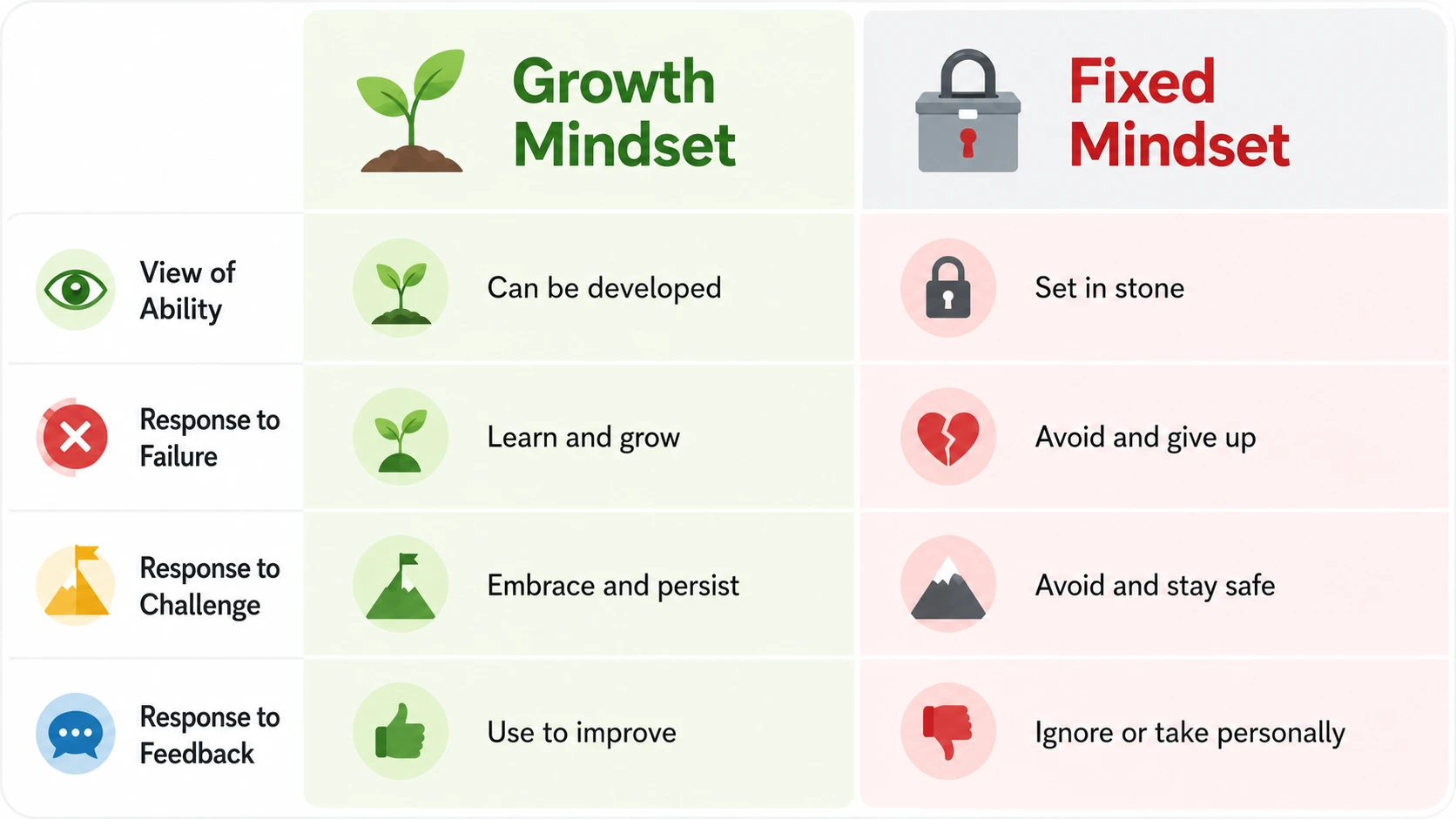
The core difference between these two mindsets lies in how a person interprets ability, effort, and failure. A growth mindset treats ability as something that expands with effort, while a fixed mindset treats ability as a static trait. These beliefs shape behavior: growth-minded individuals seek challenges and treat feedback as useful information, while fixed-minded individuals may avoid difficulty to protect their self-image. Over time, this difference in beliefs and behaviors produces very different outcomes in learning, career progress, and resilience.
| Category | Growth Mindset | Fixed Mindset |
|---|---|---|
| View of ability | Ability can be developed through effort and learning | Ability is a fixed, unchangeable trait |
| Response to failure | Sees failure as feedback and a learning opportunity | Sees failure as evidence of personal limitation |
| Response to challenge | Seeks out challenges to grow | Avoids challenges to prevent looking incompetent |
| Response to feedback | Uses criticism to improve | Perceives criticism as a personal attack |
| Long-term outcome | Continued skill development and resilience | Stalled growth and reduced risk-taking |
Why Read a Book About Growth Mindset?
Reading a book on this topic offers practical benefits that extend across learning, career, and emotional wellbeing. Growth mindset books translate psychological research into everyday strategies readers can apply immediately, which supports academic performance, workplace advancement, and personal confidence.
- Better problem-solving through a willingness to try new approaches
- Improved motivation by reframing setbacks as part of the learning process
- Greater resilience when facing obstacles or criticism
- Increased confidence rooted in demonstrated progress rather than innate talent
- Lifelong learning habits that extend beyond any single skill or subject
What Makes a Great Growth Mindset Book?
Characteristics of High-Quality Books
The strongest growth mindset books share several traits that separate them from surface-level self-help content:
- Evidence-based advice grounded in psychological research
- Practical exercises readers can apply immediately
- Real-life examples that illustrate abstract concepts
- Age-appropriate language suited to the intended reader
- Actionable lessons rather than vague encouragement
Choosing Books Based on Your Goals
Different readers approach growth mindset books with different objectives. A book chosen for personal growth may emphasize daily habits and self-reflection, while one chosen for career success may focus on skill-building and adaptability at work. Parents often look for books that help them model and teach growth mindset concepts to children, while educators seek classroom-ready frameworks. Readers focused on leadership typically want case studies on team development, and those pursuing academic achievement benefit most from books centered on study habits and learning confidence.
Best Books About Growth Mindset
The books below represent some of the most widely recognized titles in this category, each offering a distinct angle on how mindset shapes learning and achievement.For a deeper dive into our top picks across every category, see our full roundup of the best growth mindset books.
Best Book About Growth Mindset Overall
Mindset: The New Psychology of Success by Carol Dweck is widely regarded as the definitive book on this topic. It introduces the research foundation behind growth and fixed mindsets and applies the concept across parenting, education, business, and relationships, making it a strong starting point for nearly any reader.
Books on Mindset and Success
Books in this category connect mindset principles directly to achievement and performance, often drawing on research in sports psychology, business leadership, and high-performance learning to show how belief systems influence long-term results.
Books to Read for Growth Mindset
For readers seeking a broader library beyond the foundational text, additional titles expand on specific applications — including habit formation, emotional resilience, and workplace adaptability — giving readers multiple entry points into the concept.For an expanded, regularly updated list, see our complete guide to books to read for growth mindset.
Books That Talk About Growth Mindset
Some books address growth mindset as part of a larger discussion on motivation, willpower, or behavioral psychology, weaving the concept into broader frameworks for personal effectiveness rather than treating it as a standalone topic.
Books About Having a Growth Mindset
These titles focus specifically on the day-to-day practice of adopting a growth mindset, offering structured exercises, journaling prompts, and reflection questions designed to help readers build the mindset incrementally.
| Book Category | Best For | Main Focus | Difficulty Level |
|---|---|---|---|
| Foundational research text | General adult readers | Psychological theory and application | Moderate |
| Career-focused titles | Professionals and leaders | Workplace adaptability and performance | Moderate |
| Habit-focused titles | Readers building daily practices | Actionable routines and tracking | Beginner-friendly |
| Academic-focused titles | Students and educators | Study habits and classroom application | Beginner-friendly |
Carol Dweck’s Mindset Book Explained
Why Carol Dweck’s Book Is So Influential
Dweck’s book is influential because it translated years of controlled psychological research into an accessible framework that non-specialists could apply to their own lives. Its scientific foundation, built on studies of students, athletes, and professionals, gives the book credibility that purely anecdotal self-help titles lack.
Key Lessons Readers Learn
Readers come away understanding that praise focused on effort rather than innate talent produces better long-term motivation, that setbacks can be reframed as data rather than failure, and that mindset is not fixed for life — it can shift with awareness and practice. The book also clarifies a common misconception: growth mindset does not mean ignoring real limitations, but rather approaching them with a learning-oriented strategy.
Who Should Read It?
This book suits readers across nearly every context, including parents, teachers, managers, students, and anyone interested in the psychology of motivation and learning. Its practical applications make it relevant well beyond an academic audience. Readers looking for the book should access it through legitimate retailers, publishers, or libraries; unauthorized PDF copies raise copyright concerns and are not a recommended way to access the material.
Growth Mindset Books for Adults
Personal Development
Adult readers often use growth mindset books to reframe self-limiting beliefs, build better habits, and approach personal setbacks — from health goals to relationships — with a more constructive outlook.
Career Growth
In professional settings, growth mindset books help readers approach skill gaps, promotions, and career transitions as learnable challenges rather than fixed limitations, which supports long-term career adaptability.
Leadership and Business
Leaders use growth mindset principles to build teams that treat mistakes as learning opportunities, encourage experimentation, and maintain motivation through organizational change.
Building Resilience
Growth mindset books for adults frequently address resilience directly, offering frameworks for recovering from setbacks in habits, relationships, and skill development. In our experience helping readers build better habits, the adults who see the most consistent progress are those who track setbacks as data points rather than personal failures.
Growth Mindset Books for Students
Elementary Students
At this age, books typically use simple language and relatable stories to introduce the idea that effort leads to improvement, often through characters who struggle and improve at a specific skill.
High School Students
Titles for this age group address motivation, academic pressure, and identity, helping teens connect mindset principles to exam preparation and long-term goal-setting.
College Students
Books aimed at college students often focus on independent learning, time management, and resilience in the face of academic and social challenges during a major life transition.
Improving Study Habits
Growth mindset books for students commonly cover motivation, learning confidence, exam preparation, and academic resilience, framing study setbacks as a normal part of the learning process rather than a sign of low ability.
Growth Mindset Books for Children
Picture Books About Growth Mindset
Picture books introduce the concept through simple visuals and short narratives, making abstract ideas about effort and persistence concrete for young readers.If you’re specifically shopping for a younger reader, our dedicated guide to growth mindset books for kids covers age-by-age picks in more depth.
Children’s Books About Growth Mindset
Beyond picture books, early chapter books extend the concept with slightly longer stories that still center on a character learning through practice and persistence.
Books for Kids
General children’s titles on this topic often use relatable school or family settings to demonstrate how effort and a positive response to mistakes lead to improvement.
Books for 10-Year-Olds
At this age, books can introduce slightly more nuanced ideas, such as the difference between fixed and growth mindset language, while still using accessible storytelling.
Teaching Fixed vs Growth Mindset Through Stories
Storytelling is an effective way to teach this contrast because it shows, rather than tells, how a character’s mindset shapes their choices and outcomes — making the concept memorable for young readers.
Bubble Gum Brain and Other Popular Titles
Bubble Gum Brain is a well-known picture book that uses the metaphor of a flexible “bubble gum brain” versus a rigid “brick brain” to teach children the difference between growth and fixed thinking in an engaging, age-appropriate way.
| Age Group | Recommended Book Type | Learning Focus |
|---|---|---|
| Ages 3–6 | Picture books | Simple effort-and-persistence stories |
| Ages 7–9 | Early chapter books | Character-driven growth narratives |
| Ages 10–12 | Middle-grade fiction and nonfiction | Fixed vs growth mindset language |
| Parents/teachers | Classroom and read-aloud guides | Applying stories to real situations |
Growth Mindset Books for Teens
Building Confidence
Teen-focused books connect mindset principles to self-esteem, helping readers separate their self-worth from immediate performance or outcomes.
Developing Healthy Learning Habits
These books encourage teens to view study and skill-building as ongoing processes, reducing the anxiety that often comes with equating grades to fixed intelligence.
Preparing for Future Success
By addressing identity, motivation, and goal-setting together, growth mindset books for teens help readers approach major life decisions — such as college or career paths — with adaptability rather than fear of failure.
Fiction vs Nonfiction Growth Mindset Books
Benefits of Fiction
Fiction communicates growth mindset concepts through character journeys, making the ideas emotionally resonant and memorable, particularly for younger or reluctant readers.
Benefits of Nonfiction
Nonfiction offers direct access to research, data, and structured frameworks, which appeals to readers who want explicit strategies and scientific grounding.
Which Is Better for Different Readers?
Neither format is universally better; the right choice depends on the reader’s age, learning style, and goals.
| Category | Fiction | Nonfiction |
|---|---|---|
| Learning style | Best for narrative and visual learners | Best for analytical and research-oriented learners |
| Examples | Character-driven stories showing mindset shifts | Research studies, frameworks, and exercises |
| Age fit | Especially effective for children and teens | Especially effective for adults and educators |
| Retention | Emotional connection aids memory | Structured frameworks aid application |
How to Choose the Right Growth Mindset Book
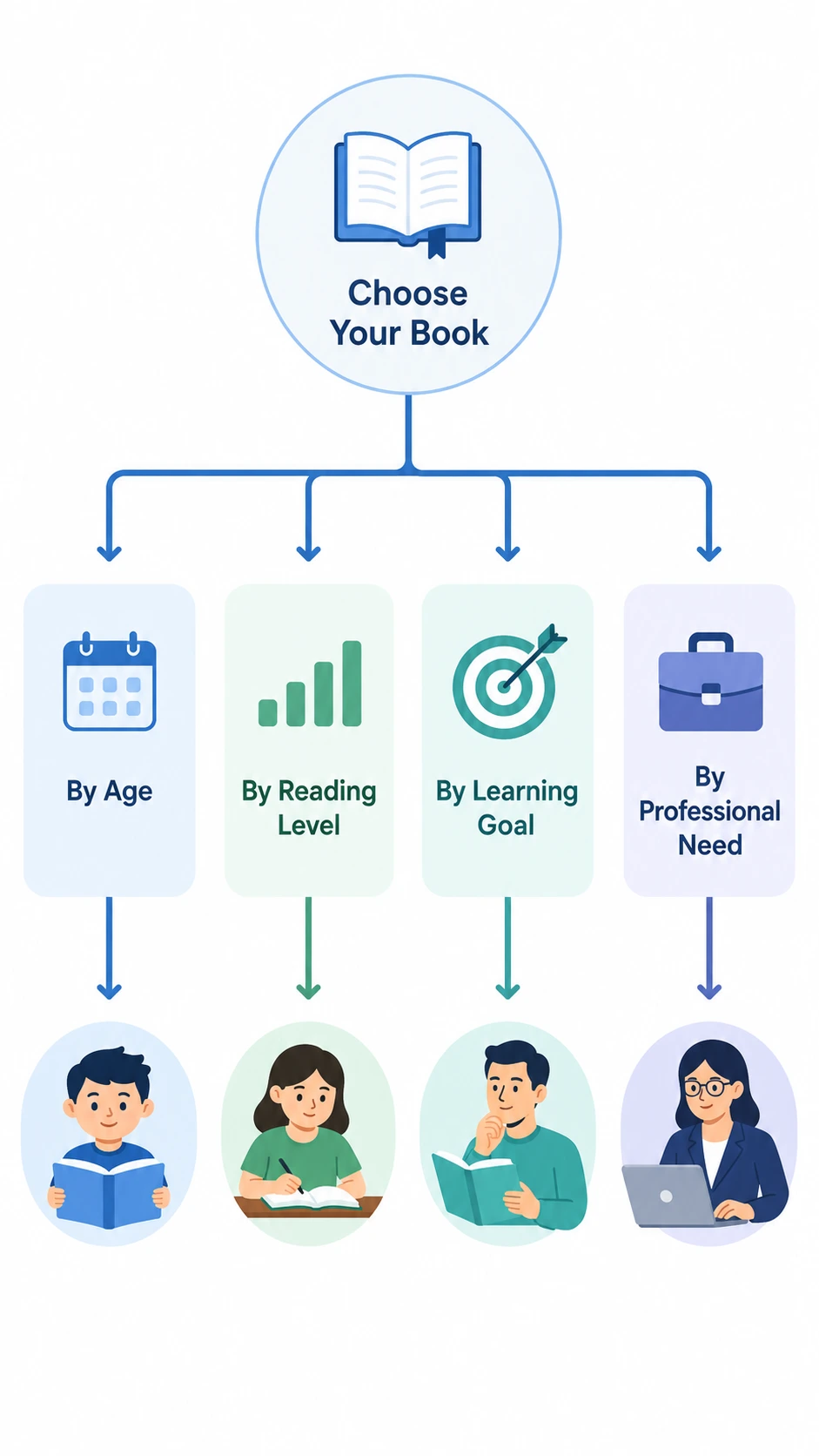
By Age
Match the book’s language complexity and examples to the reader’s age group, from picture books for young children to research-based texts for adults.
By Reading Level
Consider whether the reader prefers simple, story-driven content or denser, concept-heavy material, since this affects engagement and comprehension.
By Learning Goal
Identify whether the goal is personal development, academic improvement, parenting guidance, or professional growth, and select a book whose focus aligns with that goal.
By Professional or Educational Need
Educators and managers should look for books with practical frameworks they can apply directly in classrooms or teams, rather than purely personal-development-focused titles.
Common Misconceptions About Growth Mindset Books
Growth Mindset Is Not Just Positive Thinking
A growth mindset is often mistaken for simple optimism, but it is a specific belief about the malleability of ability, not a general attitude of positivity. Positive thinking alone does not necessarily lead to skill development.
Effort Alone Is Not Enough
Many readers misunderstand growth mindset books as suggesting that effort guarantees success. In reality, effort must be paired with effective strategies and honest self-assessment to produce meaningful improvement.
Why Practice and Feedback Matter
Growth mindset research emphasizes that deliberate practice and constructive feedback are what convert effort into actual skill growth — a distinction many competing summaries of the concept overlook.
Common Beginner Mistakes When Applying Lessons From Growth Mindset Books
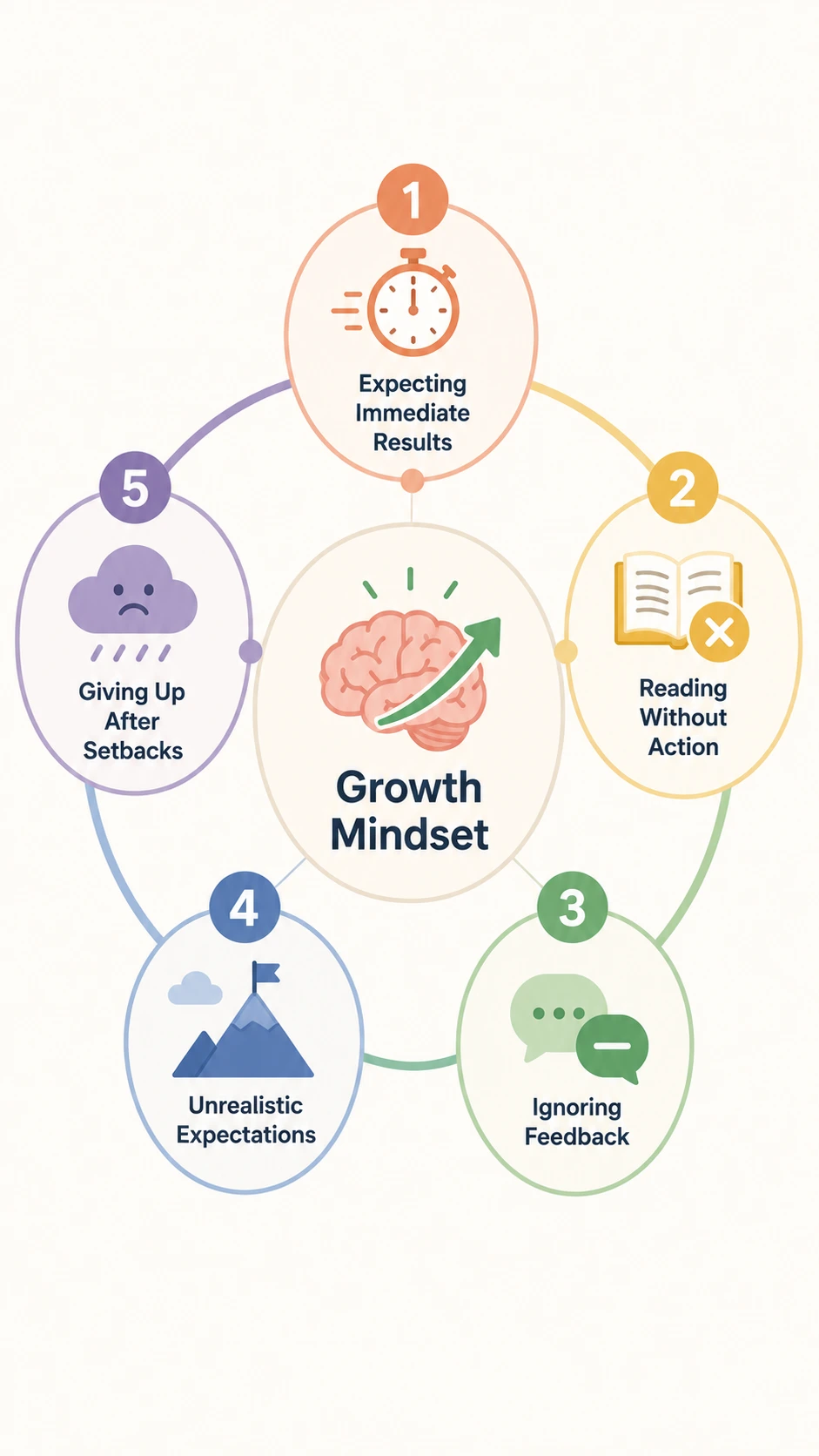
Readers new to this concept often make predictable mistakes when trying to apply what they’ve learned:
- Expecting immediate results: This happens because readers underestimate how long skill development takes. It can be addressed by setting realistic, incremental milestones instead of expecting overnight change.
- Reading without implementation: This occurs when readers treat the book as passive inspiration rather than an action plan. Pairing each chapter with a specific practice exercise helps prevent this.
- Ignoring feedback: Some readers apply growth mindset language without actually changing how they respond to criticism. Actively seeking out feedback, rather than merely tolerating it, helps correct this pattern.
- Setting unrealistic expectations: This mistake stems from misunderstanding growth as effortless; setting specific, measurable goals prevents discouragement.
- Giving up after setbacks: This often happens because a setback is misread as proof the approach isn’t working. Reviewing what specifically went wrong, rather than abandoning the effort entirely, prevents this cycle.
Practical Ways to Apply Lessons From Growth Mindset Books
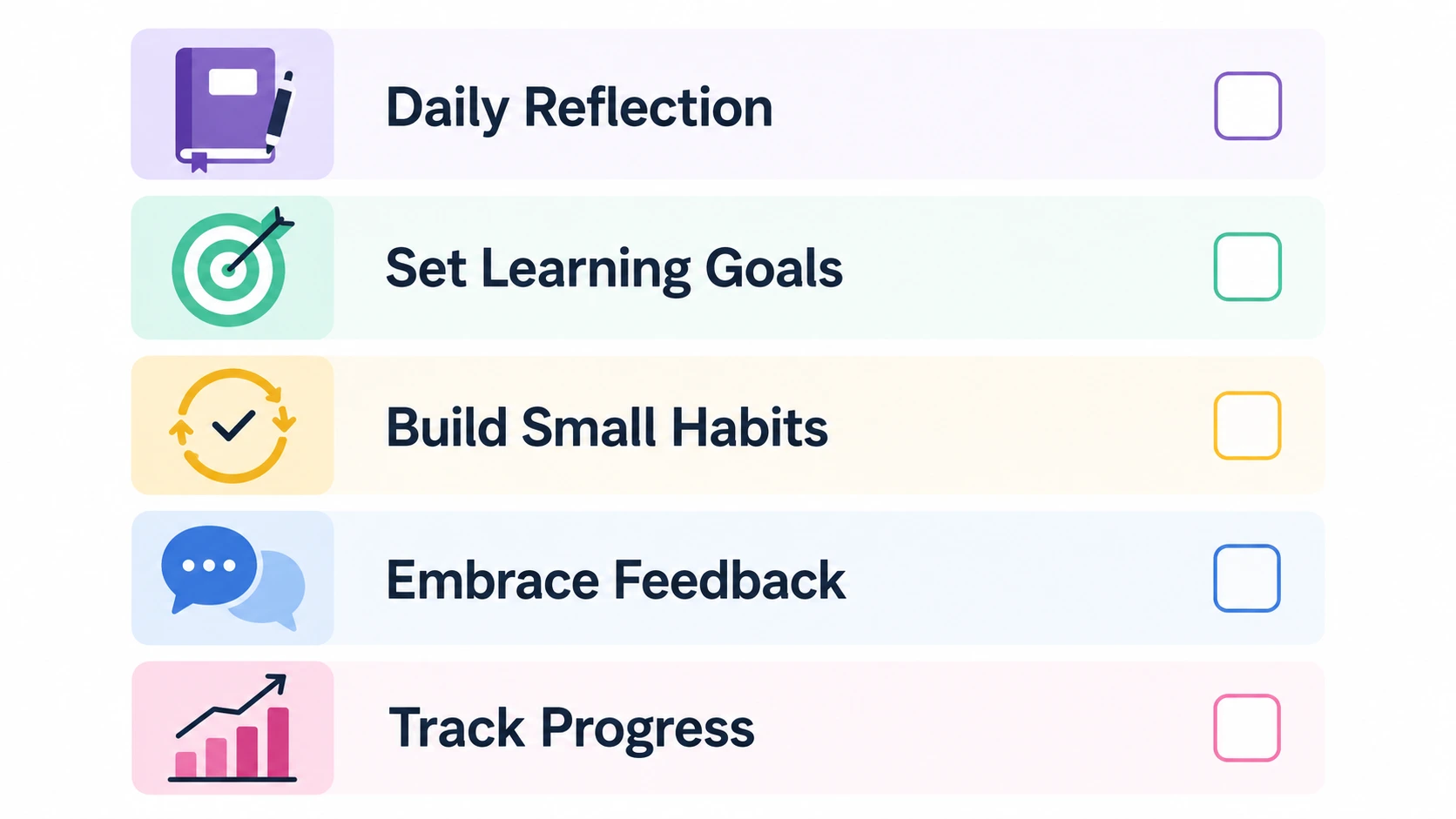
Daily Reflection
Brief daily reflection on what was learned and what could improve reinforces the habit of viewing each day as a learning opportunity.
Learning Goals
Setting specific, skill-based learning goals — rather than vague outcome goals — helps readers focus on process and improvement.
Habit Building
Small, consistent habits tied to a specific skill are more sustainable than large, infrequent efforts, and they build momentum over time.
Embracing Constructive Feedback
Actively requesting feedback, rather than waiting for it, accelerates the learning process described in most growth mindset books.
Tracking Progress
Your Daily Thrive recommends keeping a simple log of challenges attempted and lessons learned, since visible evidence of progress reinforces growth-oriented thinking far more effectively than memory alone.
Growth Mindset Books Compared by Reader Type
| Reader | Recommended Book Category | Primary Benefit |
|---|---|---|
| Adults | Personal development and career-focused titles | Habit change and career adaptability |
| Students | Study-habit and academic resilience titles | Improved learning confidence |
| Children | Picture books and story-driven titles | Early introduction to effort-based thinking |
| Parents | Parenting-focused and classroom-ready titles | Modeling growth language at home |
| Teachers | Classroom application frameworks | Practical teaching strategies |
| Professionals | Leadership and workplace-focused titles | Team development and adaptability |
Frequently Asked Growth Mindset Quotes and Concepts
What Is a Growth Mindset Quote?
A growth mindset quote is a short statement that captures the core idea that effort, learning, and persistence — not fixed talent — drive improvement, often used to reinforce the concept in classrooms, workplaces, or personal practice.
Why Quotes Inspire Learning
Quotes distill complex psychological research into memorable phrases, making them useful reminders during moments of difficulty or self-doubt.
How to Apply Growth Mindset Principles Beyond Quotes
While quotes can motivate, lasting change comes from pairing that inspiration with concrete practices such as goal-setting, reflection, and deliberate skill-building described throughout growth mindset books.
Availability and Reading Formats
Print Books
Print remains a popular format for growth mindset books, particularly for readers who prefer note-taking, highlighting, or reading with children.
E-books
E-books offer portability and searchability, making them convenient for readers who want quick access to specific sections or exercises.
Audiobooks
Audiobooks suit readers who prefer to absorb content during commutes or daily routines, and many growth mindset titles are available in this format.
Libraries and Legal Digital Access
Public libraries, licensed e-book platforms, and official publisher channels offer legitimate ways to access growth mindset books at no or low cost. As of 2026, many libraries also offer digital lending apps that provide free, legal access to popular titles. Unauthorized PDF downloads raise copyright concerns and are not a recommended way to access this content.
Conclusion
A book about growth mindset offers more than motivational reading — it provides a research-backed framework for approaching learning, setbacks, and long-term development with resilience. Choosing the right title depends on the reader’s age, goals, and preferred learning style, whether that means a picture book for a young child, a research-driven text for an adult, or a story-based title for a teen. The most important step is not simply reading about growth mindset, but consistently applying its lessons through reflection, practice, and openness to feedback. Readers who treat these books as active guides rather than passive inspiration are the ones most likely to see lasting change in how they learn and grow.
Frequently Asked Questions
What is the best book about growth mindset?
Mindset: The New Psychology of Success by Carol Dweck is widely considered the best overall book about growth mindset, as it introduces the foundational research and applies it across education, business, and personal development.
Which growth mindset book is best for adults?
Adults benefit most from books that connect mindset research to career growth, leadership, and personal habits, since these titles apply the concept directly to real-world professional and personal challenges.
Which books help children develop a growth mindset?
Picture books like Bubble Gum Brain and other story-driven titles help children develop a growth mindset by using relatable characters and simple language to show how effort leads to improvement.
What is the difference between a growth mindset and a fixed mindset?
A growth mindset views ability as something that can be developed through effort and learning, while a fixed mindset views ability as a static trait that cannot meaningfully change.
Are fiction books effective for teaching growth mindset?
Yes, fiction is effective for teaching growth mindset because character-driven stories make abstract psychological concepts emotionally relatable, especially for children and teens.
How can students benefit from growth mindset books?
Students benefit by learning to view academic setbacks as part of the learning process, which improves study habits, exam preparation, and overall academic resilience.
How do I choose the right growth mindset book for my age?
Choose a book based on age-appropriate language and complexity, your specific learning goal, and whether you prefer story-driven fiction or research-based nonfiction content.