Introduction
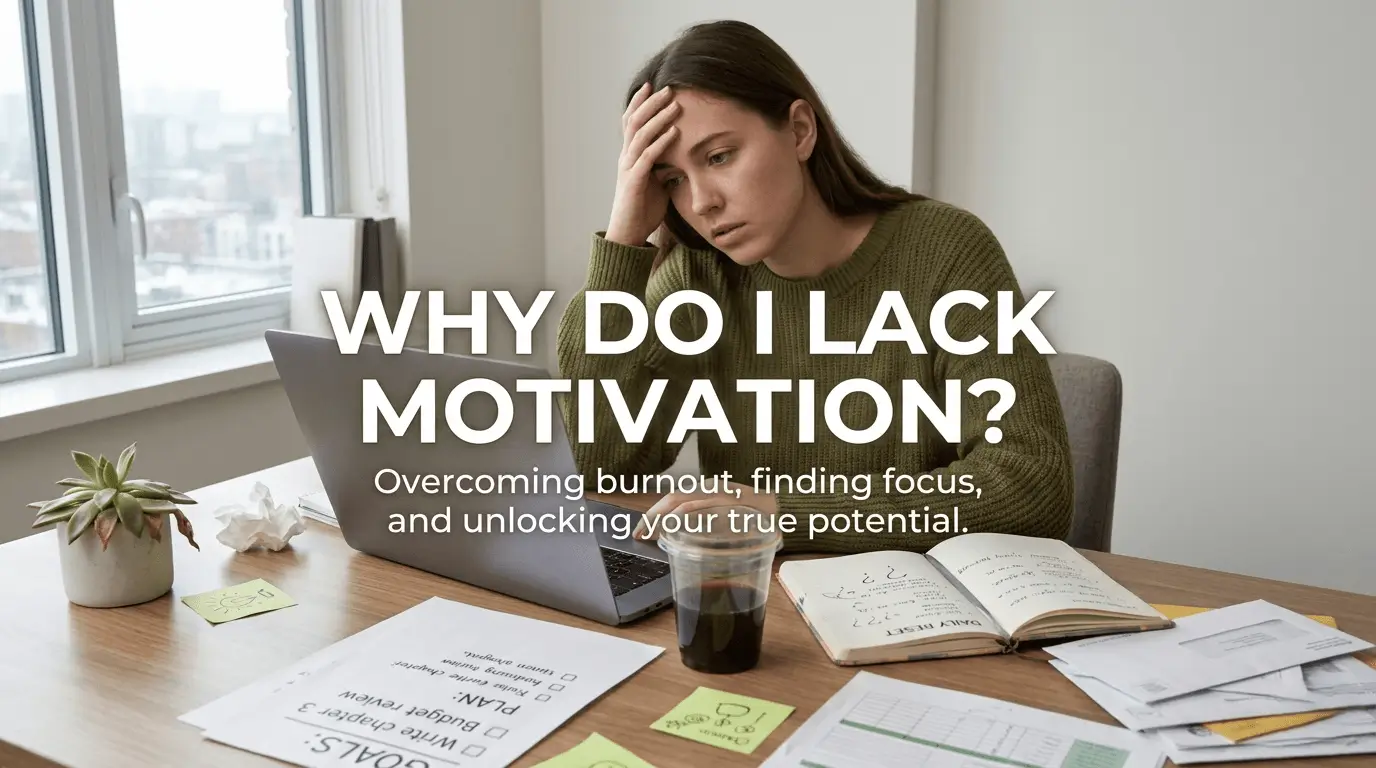
Many people eventually ask themselves, why do I lack motivation when tasks that once felt manageable suddenly become difficult to start. Motivation is the mental and emotional energy that helps people take action toward goals, responsibilities, and personal growth. However, a lack of motivation does not necessarily mean laziness, weakness, or a lack of ambition. If you find yourself wondering why do I have no motivation to do anything, why do I lack motivation and energy, or why do I lack motivation to do things, the answer often lies beneath the surface. Motivation challenges can result from psychological, behavioral, emotional, physical, or environmental factors that make action feel harder than usual.
Quick Summary
- Lack of motivation is often a symptom of underlying mental, physical, emotional, or behavioral challenges.
- Low energy, burnout, stress, poor habits, and unclear goals can reduce motivation even when you genuinely want to succeed.
- Motivation usually follows action rather than preceding it.
- Building systems, routines, and momentum is more reliable than waiting to feel motivated.
- Sustainable progress comes from consistency, not temporary bursts of inspiration.
What Does It Mean to Lack Motivation?
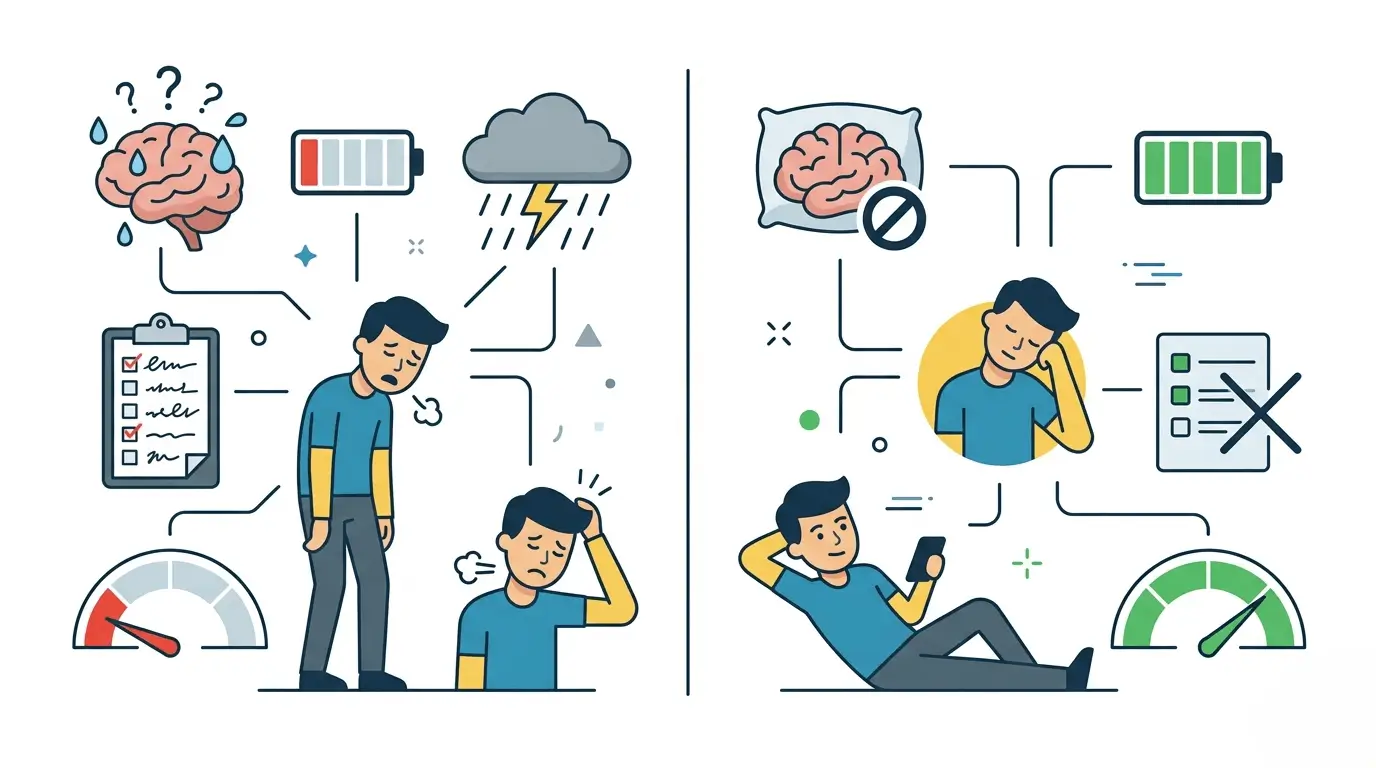
Lacking motivation means experiencing reduced desire, energy, or willingness to take action toward a task, responsibility, or goal.
It is important to distinguish between temporary and chronic lack of motivation. Temporary motivation loss is common and often occurs after stressful periods, poor sleep, illness, disappointment, or major life changes. Chronic lack of motivation lasts longer and tends to interfere with daily functioning.
Motivation naturally fluctuates because human energy, emotions, stress levels, and life circumstances constantly change. No one feels motivated all the time.
People often ask why do I not have motivation, feel not motivated to do anything, or wonder why do I lack motivation for everything. In many cases, the issue is not laziness. Instead, it is a combination of low energy, mental fatigue, emotional strain, or unclear direction.
Key Points
- Motivation is not a constant state.
- Everyone experiences periods of low drive.
- Consistent lack of motivation usually has identifiable causes.
- Motivation and energy are closely connected.
The Most Common Reasons People Lack Motivation
Mental Exhaustion and Decision Fatigue
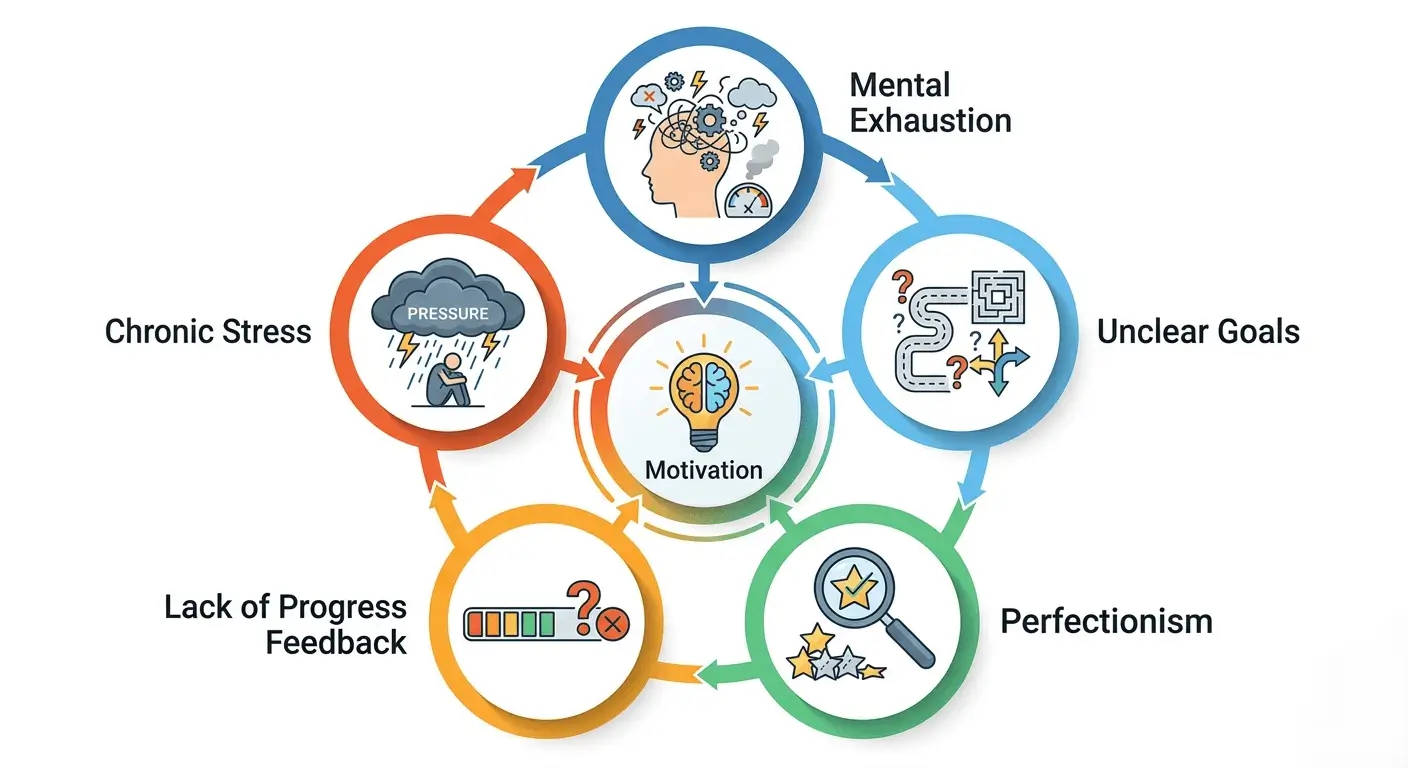
Modern life requires constant decision-making. From work responsibilities to personal obligations, the brain is continuously processing information.
This can create:
- Information overload
- Cognitive burnout
- Reduced focus
- Mental fatigue
- Lower self-control
When mental resources become depleted, motivation often decreases because the brain prioritizes conserving energy.
Lack of Meaningful Goals
Motivation is closely tied to purpose.
When goals are unclear or disconnected from personal values, effort becomes difficult to sustain. People are far more motivated when they understand why a goal matters and how it contributes to a meaningful outcome.
Without direction, tasks can feel pointless, making procrastination more likely.
Fear of Failure and Perfectionism
Many people avoid tasks they deeply care about because failure feels threatening.
Perfectionism often creates:
- Overthinking
- Self-doubt
- Analysis paralysis
- Delayed action
When expectations become unrealistic, starting feels risky, which reduces motivation.
Lack of Progress Feedback
The human brain responds positively to progress.
Visible improvements provide psychological rewards that reinforce behavior. Without measurable progress, effort can feel disconnected from results.
Small wins matter because they:
- Increase confidence
- Reinforce action
- Build momentum
- Strengthen motivation
Why Am I Always Tired and Have No Energy?
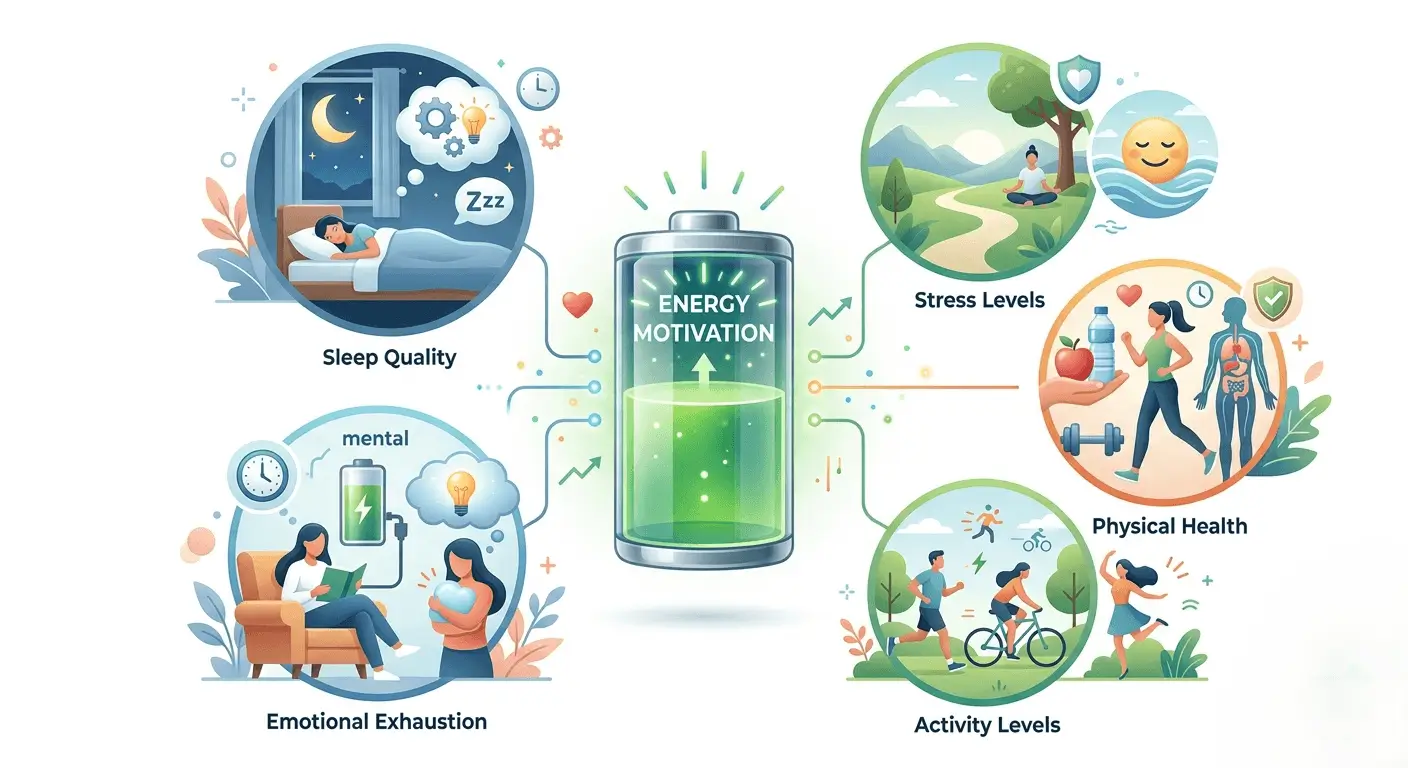
Many people searching for motivation problems are actually struggling with energy problems.
Questions such as why am I always tired and have no energy, tired all the time no energy, constantly tired and unmotivated, lack of energy and motivation, no motivation no energy, and no energy no motivation are extremely common.
Poor Sleep Quality
Sleep affects nearly every aspect of performance.
Poor sleep can reduce:
- Attention
- Focus
- Emotional regulation
- Memory
- Motivation
Even mild sleep deprivation can significantly affect productivity.
Chronic Stress and Burnout
Long-term stress places the body in a continuous state of pressure.
Over time, this can lead to:
- Mental exhaustion
- Emotional fatigue
- Reduced concentration
- Lower motivation
Physical Health Factors
Several physical factors can contribute to low energy, including:
- Nutritional deficiencies
- Chronic health conditions
- Hormonal imbalances
- Medication side effects
Persistent fatigue should be evaluated by a healthcare professional.
Sedentary Lifestyle and Low Activity Levels
Physical movement supports energy production and mood regulation.
Ironically, inactivity often contributes to feeling more tired rather than less tired.
Emotional Exhaustion
Relationship difficulties, caregiving demands, financial concerns, and ongoing emotional stress can drain psychological resources and reduce motivation.
Key Takeaways
- Low energy often appears before low motivation.
- Motivation becomes difficult when the body lacks recovery.
- Physical and mental health strongly influence productivity.
Why Do I Have No Motivation to Do Anything but I’m Not Depressed?
Many individuals experience no motivation to do anything but not depressed.
A lack of motivation does not automatically indicate depression.
Common causes include:
- Burnout
- Chronic stress
- Life transitions
- Lack of direction
- Mental overload
- Habit disruption
- Recovery after prolonged effort
Signs It May Be Motivation-Related Rather Than Depression
- Interest returns occasionally.
- Motivation varies depending on the task.
- Energy improves after rest.
- Certain activities still feel enjoyable.
The Connection Between Motivation, Depression, and Mental Health
Terms such as lack of motivation depression, lack of motivation and depression, depression zero motivation, depression lack of motivation, and depressed no motivation are frequently searched because depression can significantly affect motivation.
Depression often involves:
- Persistent sadness
- Emotional numbness
- Reduced pleasure
- Fatigue
- Difficulty initiating tasks
While normal demotivation usually improves when circumstances improve, depression-related motivation loss often persists across situations and time periods.
Professional support may be beneficial when symptoms consistently interfere with daily life.
| Challenge | Typical Pattern | Impact on Motivation |
|---|---|---|
| Burnout | Mental exhaustion | Reduced drive |
| Stress | Constant pressure | Avoidance behaviors |
| Depression | Persistent emotional symptoms | Difficulty initiating tasks |
| Lack of goals | No clear direction | Reduced effort |
| Poor sleep | Low energy | Reduced action-taking |
Why Do I Lack Motivation to Study, Work, or Exercise?
Motivation for Studying
People asking why do I lack motivation to study often struggle with delayed rewards.
Common causes include:
- Academic overwhelm
- Lack of engagement
- Fear of failure
- Excessive workload
Motivation for Work
Those wondering why do I lack motivation to work may experience:
- Repetitive responsibilities
- Lack of autonomy
- Weak connection to purpose
- Minimal progress feedback
Motivation for Exercise
Questions like why do I lack motivation to workout, why do I lack motivation to exercise, and why do I lack motivation to do hard things often involve high starting resistance.
Common reasons include:
- Unrealistic expectations
- All-or-nothing thinking
- Immediate discomfort
- Lack of routine
Real-Life Examples
Student struggling to begin assignments: Overwhelmed by workload and unsure where to start.
Professional procrastinating important projects: Avoiding tasks because of pressure and fear of mistakes.
Beginner repeatedly quitting fitness routines: Starting too aggressively and burning out quickly.
Why Do I Have No Motivation to Do the Things I Love?
Many people wonder why do I have no motivation to do the things I love.
This often occurs because enjoyment alone does not guarantee energy or mental capacity.
Possible causes include:
- Burnout from overexposure
- Emotional depletion
- Excessive pressure
- Turning hobbies into obligations
- Reward system fatigue
Common Myth
Myth: If you truly love something, you’ll always feel motivated.
Reality: Even enjoyable activities require energy, recovery, and mental capacity.
The Psychology of Motivation
Understanding lack of motivation psychology helps explain why behavior changes over time.
Intrinsic vs Extrinsic Motivation
Intrinsic motivation comes from personal satisfaction and enjoyment.
Extrinsic motivation comes from external rewards such as money, recognition, or achievement.
Intrinsic motivation generally produces more sustainable behavior.
Dopamine and Anticipation
Dopamine is strongly associated with anticipation and pursuit.
The brain becomes motivated when it expects meaningful progress or rewards.
Identity-Based Behavior
People are more consistent when actions align with identity.
Examples:
- “I work out” becomes “I am an active person.”
- “I study” becomes “I am a learner.”
Habit Loops and Behavioral Triggers
Behavior often follows a simple cycle:
- Trigger
- Action
- Reward
Designing effective triggers can improve consistency.
Science-Backed Insights
- Motivation often follows action.
- Small wins create momentum.
- Consistency strengthens behavioral pathways.
- Environment influences behavior more than willpower alone.
Motivation vs Discipline: Which Matters More?
While motivation can help you start, long-term consistency often depends on discipline. If you want practical strategies, read our guide on How to Build Discipline Without Motivation.
| Motivation | Discipline |
| Emotion-driven | System-driven |
| Inconsistent | Reliable |
| Depends on feelings | Depends on habits |
| Short-term boost | Long-term sustainability |
Motivation is useful for getting started.
Discipline is useful for continuing when motivation disappears.
People who rely entirely on motivation often become inconsistent because emotions fluctuate. Discipline creates stability through routines and habits.
Consistency vs Intensity in Personal Growth
Many successful behavior changes begin with small, repeatable actions rather than dramatic transformations. See examples in Small Habits That Changed My Life.
| Consistency | Intensity |
| Sustainable | Often temporary |
| Builds habits | Can cause burnout |
| Easier to repeat | Harder to maintain |
| Creates long-term results | Produces short-term spikes |
Long-term success usually comes from repeated small actions rather than occasional extreme effort.
Common Motivation Problems and How to Fix Them
Procrastination
Why It Happens
- Fear
- Uncertainty
- Overwhelm
How to Fix It
- Reduce task size
- Create clear next actions
How to Prevent It
- Use daily planning systems
Lack of Motivation
Why It Happens
- Goal disconnect
- Burnout
- Low energy
How to Fix It
- Clarify purpose
- Lower activation energy
How to Prevent It
- Build habit systems
Overthinking
Why It Happens
- Fear of mistakes
- Perfectionism
How to Fix It
- Take action before feeling ready
- Use time limits
How to Prevent It
- Focus on progress instead of perfection
Burnout
Why It Happens
- Excessive pressure
- Lack of recovery
How to Fix It
- Rest
- Recovery cycles
How to Prevent It
- Sustainable routines
Fear of Failure
Why It Happens
- Identity attachment
- Negative self-evaluation
How to Fix It
- Reframe mistakes as learning opportunities
How to Prevent It
- Practice growth mindset principles
How to Rebuild Motivation Step by Step
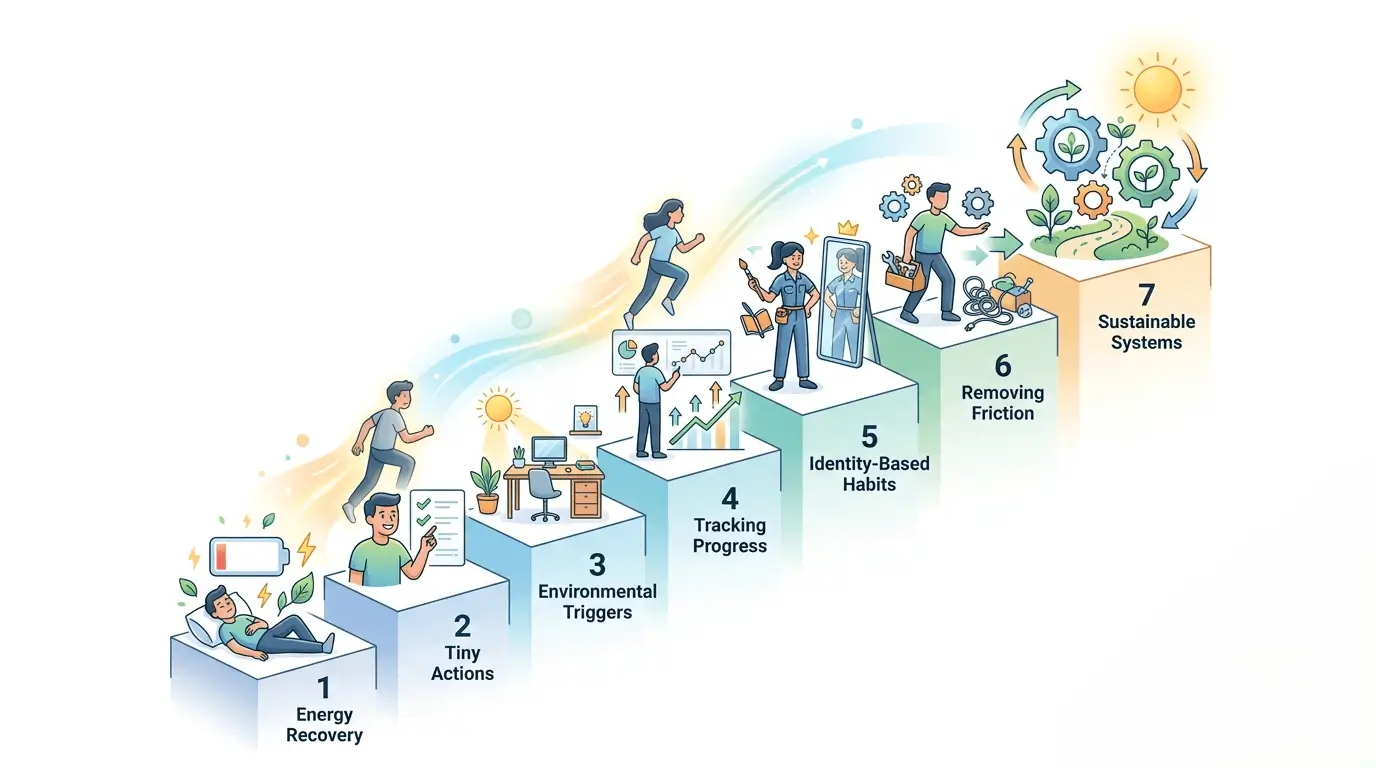
Building motivation becomes easier when positive behaviors become automatic. Our guide on How to Build Good Habits in 30 Days explains how to create sustainable routines.
Step 1: Improve Energy Before Motivation
Prioritize sleep, nutrition, stress management, and recovery.
Step 2: Focus on Tiny Actions
Start with actions so small they feel easy to complete.
Step 3: Create Environmental Triggers
Design your environment to make desired actions easier.
Step 4: Track Small Wins
Visible progress reinforces behavior.
Step 5: Build Identity-Based Habits
Focus on becoming the type of person who consistently performs the behavior.
Step 6: Reduce Friction and Barriers
Remove obstacles that make action difficult.
Step 7: Create Sustainable Systems
Systems create consistency when motivation fluctuates.
Action Framework
- Start smaller than necessary.
- Make actions obvious.
- Reward consistency.
- Review progress weekly.
- Optimize systems, not moods.
Practical Examples of Regaining Motivation in Daily Life
Scenario 1: Student With No Motivation to Study
Barrier: Academic overwhelm.
Solution: Break studying into 15-minute sessions and focus on one topic at a time.
Scenario 2: Professional With No Motivation to Work
Barrier: Burnout and decision fatigue.
Solution: Prioritize high-value tasks and schedule recovery periods.
Scenario 3: Person With No Motivation to Exercise
Barrier: High starting friction.
Solution: Commit to five minutes of exercise daily and build gradually.
Scenario 4: Person With No Motivation to Clean or Take Care of Themselves
People struggling with no motivation to clean or do anything or no motivation to take care of myself often feel overwhelmed by task size.
Effective solutions:
- Clean one area at a time.
- Use short timers.
- Focus on progress, not perfection.
- Build simple daily routines.
What Actually Works vs What Sounds Good
What Sounds Good
- Waiting for motivation
- Massive life changes
- Extreme productivity hacks
What Actually Works
- Consistent routines
- Small daily actions
- Habit stacking
- Environment design
- Recovery and sleep optimization
Conclusion
Lack of motivation is usually a signal rather than the root problem itself. Low energy, stress, burnout, unclear goals, emotional exhaustion, and psychological barriers often contribute to feeling stuck. Sustainable motivation is built through systems, habits, and consistent action rather than waiting for inspiration. The most effective way to regain motivation is to improve energy, reduce friction, focus on small actions, and create momentum that compounds over time.
FAQ
Why do I lack motivation even when I want to succeed?
A desire to succeed does not automatically create action. Stress, burnout, fear of failure, low energy, and unclear goals can interfere with motivation even when your intentions are strong.
Why do I have no motivation to do anything but I’m not depressed?
Burnout, chronic stress, life transitions, mental overload, and disrupted habits can all reduce motivation without indicating depression.
Why am I always tired and have no energy or motivation?
Poor sleep, emotional exhaustion, chronic stress, inactivity, and physical health issues can contribute to both fatigue and reduced motivation.
Why do I struggle to stay motivated to study?
Studying often involves delayed rewards. Breaking study sessions into smaller tasks and tracking progress can improve consistency.
Why do I lose motivation for things I used to enjoy?
Burnout, emotional depletion, excessive pressure, and overexposure can reduce enjoyment and motivation even for activities you once loved.
How can I stay disciplined when motivation disappears?
Build systems, routines, and habits that reduce dependence on feelings. Discipline works best when behaviors become automatic.
Is lack of motivation a sign of burnout?
Yes, it can be. Burnout commonly causes mental exhaustion, emotional fatigue, lower productivity, and reduced motivation.
Why do hard tasks make me lose motivation?
Difficult tasks increase uncertainty, effort, and fear of failure, which can create resistance and avoidance behaviors.
How do I rebuild motivation after a long period of procrastination?
Start with small actions, track progress, and focus on consistency. Momentum is built through repeated action.
What should I do if I have no motivation and no energy every day?
Begin by evaluating sleep, stress levels, recovery, physical activity, and overall health. If symptoms persist, professional guidance may be helpful.