

Introduction
A mindset is the collection of beliefs and assumptions that shape how a person interprets challenges, effort, and setbacks. The best book to change your mindset is not a single universal title — it depends on your specific goals, whether that’s building confidence, improving finances, or developing resilience. Mindset books influence thinking patterns, habits, emotional regulation, and decision-making by combining psychological research with practical exercises. As of 2026, personal development readers increasingly favor books that pair evidence-based concepts, such as those popularized in behavioral psychology and success literature, with actionable frameworks rather than motivation alone. This guide breaks down how to evaluate, categorize, and apply mindset books for lasting change.
Quick Summary
- Mindset books help reshape beliefs, habits, and decision-making through evidence-based ideas and practical exercises.
- The best book depends on whether your goal is success, happiness, confidence, finances, relationships, or career growth.
- Psychology-based books explain why thinking patterns form, while practical books focus on applying new habits.
- Consistent reading and implementation matter more than simply finishing a book.
What Is a Mindset and Why Does It Matter?
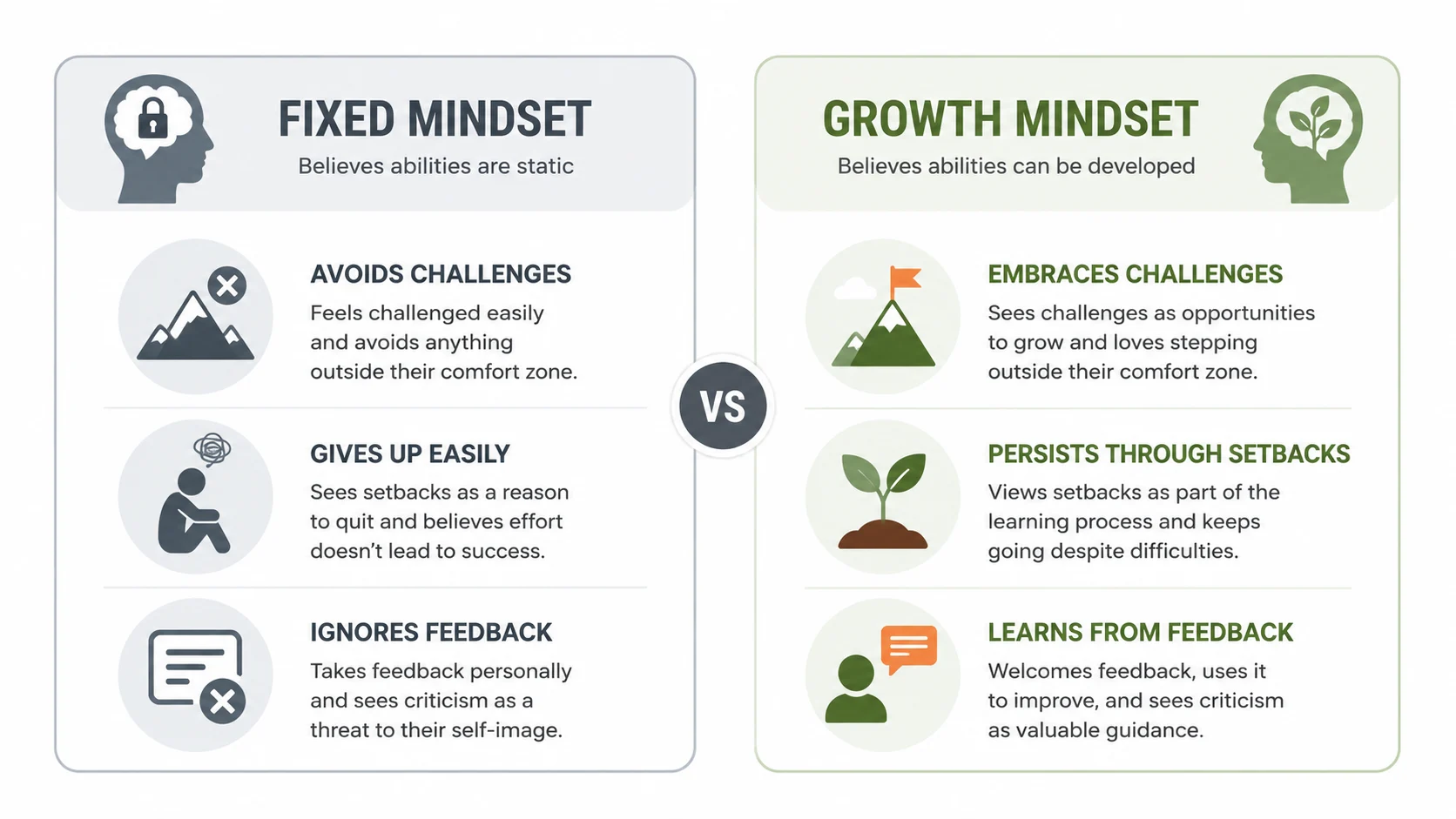
A mindset is the underlying belief system that determines how a person responds to effort, failure, and opportunity. Psychologist Carol Dweck’s research popularized the distinction between a fixed mindset, where abilities are viewed as static, and a growth mindset, where abilities are viewed as developable through effort and learning. This distinction matters because mindset shapes daily decisions — from whether someone attempts a difficult task to how they interpret criticism. Understanding why a growth mindset is important helps explain why so many personal development books build their frameworks around this single distinction.
In our experience helping readers build better habits, the readers who benefit most from a psychology best book to change your mindset are those who understand why their thinking patterns exist before trying to change them. Books on mindset and success consistently emphasize that beliefs precede behavior: change the belief, and behavior tends to follow.
How Mindsets Shape Everyday Behavior
- Habits: Beliefs about self-discipline influence whether new habits stick.
- Emotional responses: A growth-oriented mindset reduces defensive or avoidant reactions to setbacks.
- Goal achievement: Confidence in one’s ability to improve increases persistence.
- Relationships: Beliefs about conflict and communication shape relationship patterns.
- Career development: A learning-oriented mindset supports skill acquisition and adaptability.
What Makes the Best Book to Change Your Mindset?
Rather than ranking specific titles, it is more useful to evaluate mindset books against consistent criteria. The best book to change your mindset typically demonstrates scientific credibility, includes practical exercises, uses clear storytelling to illustrate concepts, remains readable for its target audience, and offers advice that translates into daily action.
Characteristics of High-Quality Mindset Books
- Evidence-based insights grounded in psychology or behavioral science
- Clear explanations free of jargon or oversimplification
- Real-world examples that illustrate abstract concepts
- Reflection prompts that encourage self-assessment
- Action plans that translate ideas into specific steps
How Different Readers Define “Best”
- Beginners often prioritize accessibility and simple language.
- Experienced readers look for deeper psychological nuance.
- Professionals value books connecting mindset to performance and leadership.
- Students benefit from books linking mindset to learning and academic resilience.
- Lifelong learners prefer books offering ongoing frameworks rather than one-time fixes.
Types of Mindset Books and Who They Help
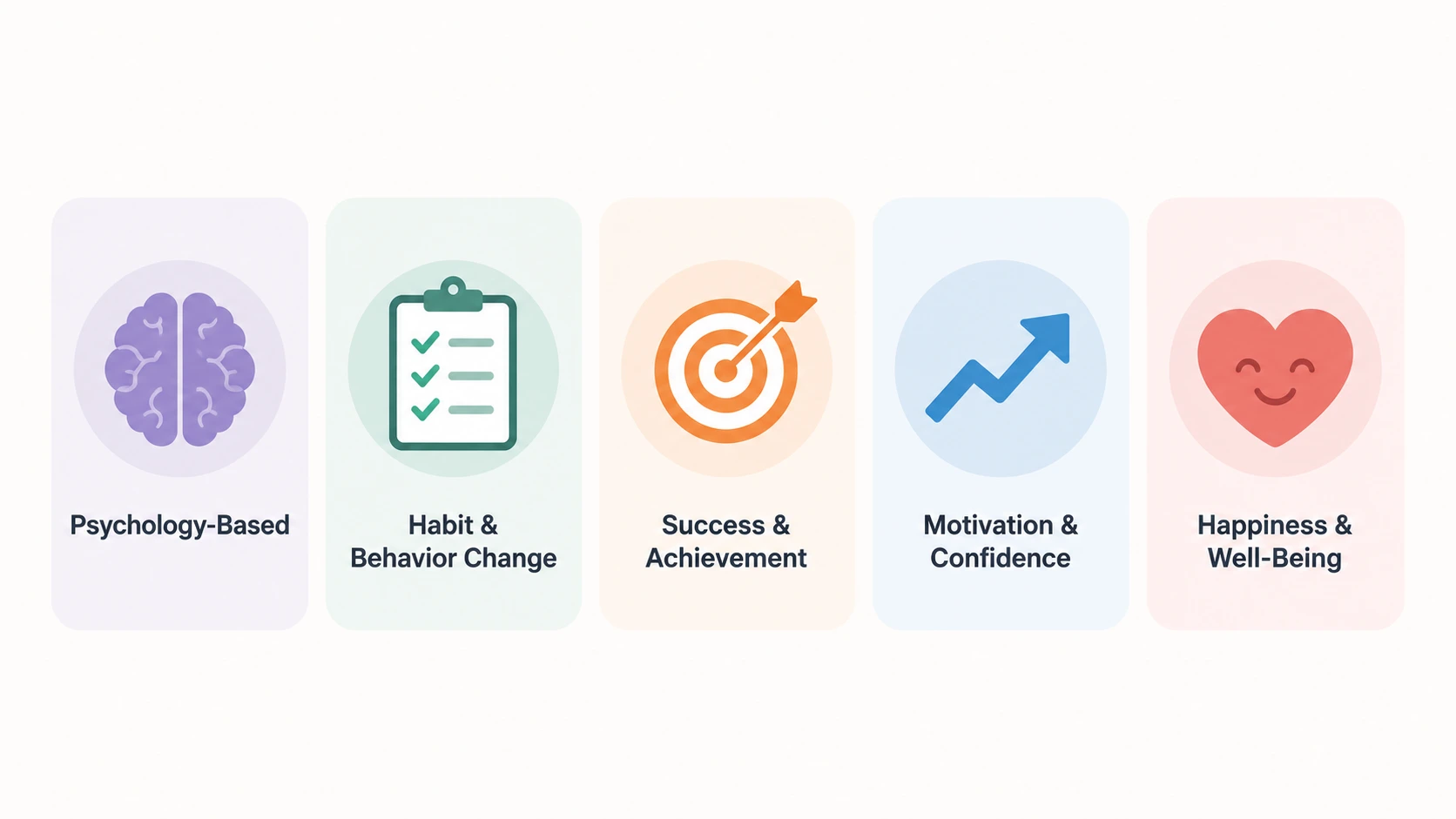
Mindset books generally fall into several overlapping categories, each suited to different goals.
Psychology-Based Mindset Books
These books explain the science behind thought patterns, drawing on cognitive and behavioral psychology. They suit readers who want to understand why mindset shifts occur, not just how to apply them.
Habit and Behavior Change Books
Focused on the mechanics of habit formation, these books on how to change your mindset emphasize small, repeatable actions that compound into lasting change.
Success and Achievement Books
These titles connect mindset to goal-setting, productivity, and long-term achievement, making them useful for readers pursuing career or business growth.
Motivation and Confidence Books
Designed to build self-belief and reduce self-doubt, these books work well for readers facing confidence gaps or fear of failure.
Happiness and Emotional Well-Being Books
These focus on emotional regulation, gratitude, and life satisfaction rather than achievement alone, appealing to readers seeking the best books to change your life and mindset from an emotional-wellness angle.
Best Mindset Books for Different Life Stages
Different life stages come with different mindset challenges, so the best book to change your mindset for young adults will differ from one suited to established professionals.
Best Book to Change Your Mindset for Young Adults
Young adults often benefit from books addressing identity formation, career direction, and building confidence during major life transitions.
Best Book to Change Your Mindset for Adults
Adults managing careers, families, and long-term goals often respond well to books balancing psychological depth with practical time-management strategies.
Books for Professionals and Entrepreneurs
These readers typically prioritize books linking mindset to leadership, risk tolerance, and business resilience.
Books for Lifelong Personal Growth
Readers committed to ongoing development often prefer books that function as long-term references rather than single-read guides.
Mindset Books for Specific Goals
Building Confidence
Confidence-focused books emphasize reframing self-talk and building evidence of competence through small wins.
Improving Happiness
Books addressing how to change your mindset to be happy typically focus on gratitude practices, present-moment awareness, and reducing comparison-driven thinking.
Developing a Success Mindset
These books connect mindset directly to goal pursuit, discipline, and long-term vision. Pairing a mindset book with daily growth mindset affirmations can reinforce the concepts between reading sessions.
Creating a Positive Money Mindset
The best book to change your money mindset typically addresses limiting beliefs about wealth, scarcity thinking, and financial decision-making patterns.
Strengthening Relationships
A family relationship best book to change your mindset approach usually covers communication patterns, empathy, and conflict resolution rooted in mindset shifts.
How to Choose the Right Mindset Book for Your Needs
Choosing effectively requires matching a book to personal circumstances rather than popularity alone.
Questions to Ask Before Choosing a Book
- What specific challenge am I trying to address?
- Do I prefer scientific explanation or motivational tone?
- Is my reading time limited, requiring a shorter or more concise book?
- Do I want theory, practical steps, or both?
When a Workbook May Be More Helpful
A workbook best book to change your mindset option suits readers who learn through structured exercises rather than passive reading, offering built-in accountability through prompts and tracking sections.
Comparison Table — Popular Types of Mindset Books
| Book Type | Best For | Primary Focus | Learning Style | Ideal Reader |
|---|---|---|---|---|
| Psychology-Based | Understanding root causes | Cognitive and behavioral science | Conceptual reading | Analytical readers |
| Habit-Focused | Building consistency | Small daily actions | Step-by-step application | Beginners needing structure |
| Success-Oriented | Career and achievement | Goal-setting and discipline | Strategic planning | Professionals and entrepreneurs |
| Motivational | Building confidence | Self-belief and mindset shifts | Inspirational reading | Readers facing self-doubt |
| Workbook Format | Structured practice | Guided exercises | Active, hands-on | Readers who need accountability |
How to Actually Change Your Mindset After Reading
Understanding how to really change your mindset requires moving beyond reading into consistent application. Reading alone rarely produces change; implementation does.
Daily Reflection Practices
Short daily check-ins reinforce awareness of thought patterns and progress.
Habit Building
Applying one concept consistently builds the neural and behavioral pathways needed for lasting change.
Journaling
Writing about challenges and insights strengthens self-awareness and tracks growth over time. If you’re not sure where to start, these journal prompts for growth mindset offer a simple daily structure.
Goal Tracking
Measuring progress against specific goals clarifies whether mindset shifts are translating into results.
Applying One Lesson at a Time
Readers asking how can we change your mindset effectively often see better results focusing on one principle at a time rather than attempting complete transformation immediately.
Common Mistakes People Make When Reading Mindset Books
- Reading without action: Treating books as entertainment rather than a guide for change.
- Expecting overnight results: Mindset change is gradual, not instant.
- Information overload: Reading multiple books simultaneously without applying any.
- Switching books too often: Abandoning a book before its concepts are internalized.
- Ignoring self-reflection: Skipping exercises or reflection prompts reduces long-term impact.
- Comparing progress with others: Individual timelines for mindset change vary significantly.
Common Challenges and How to Overcome Them
Loss of motivation Why it happens: Initial enthusiasm fades without visible results. How to fix it: Reconnect with the original reason for change and revisit key concepts. How to prevent it: Set small, measurable milestones.
Inconsistent habits Why it happens: New behaviors lack structure or reminders. How to fix it: Attach new habits to existing routines. How to prevent it: Use tracking tools to maintain visibility.
Lack of visible progress Why it happens: Mindset shifts are internal before they show externally. How to fix it: Track qualitative changes, not just outcomes. How to prevent it: Set realistic expectations from the start.
Self-doubt Why it happens: Old belief patterns resurface under stress. How to fix it: Use reflection to identify and reframe doubt-driven thoughts. How to prevent it: Build a consistent reflection practice.
Negative thinking returning Why it happens: Mindset change is not always linear. How to fix it: Revisit foundational material and reapply core exercises. How to prevent it: Maintain ongoing practice rather than a one-time read.
Burnout from trying to change too much at once Why it happens: Attempting multiple shifts simultaneously overwhelms capacity for change. How to fix it: Focus on one area of mindset change at a time. How to prevent it: Build gradual, sustainable routines.
Difficulty and Time Investment
Mindset change through reading is generally beginner-friendly, though the depth of commitment varies by individual. Reading pace can range from a few chapters per week to a full book in a single sitting, depending on comprehension goals. Practice commitment typically requires 10–20 minutes daily for reflection or journaling. Individual learning differences affect how quickly concepts are absorbed, and applying concepts in real situations takes longer than reading alone.
Results Timeline
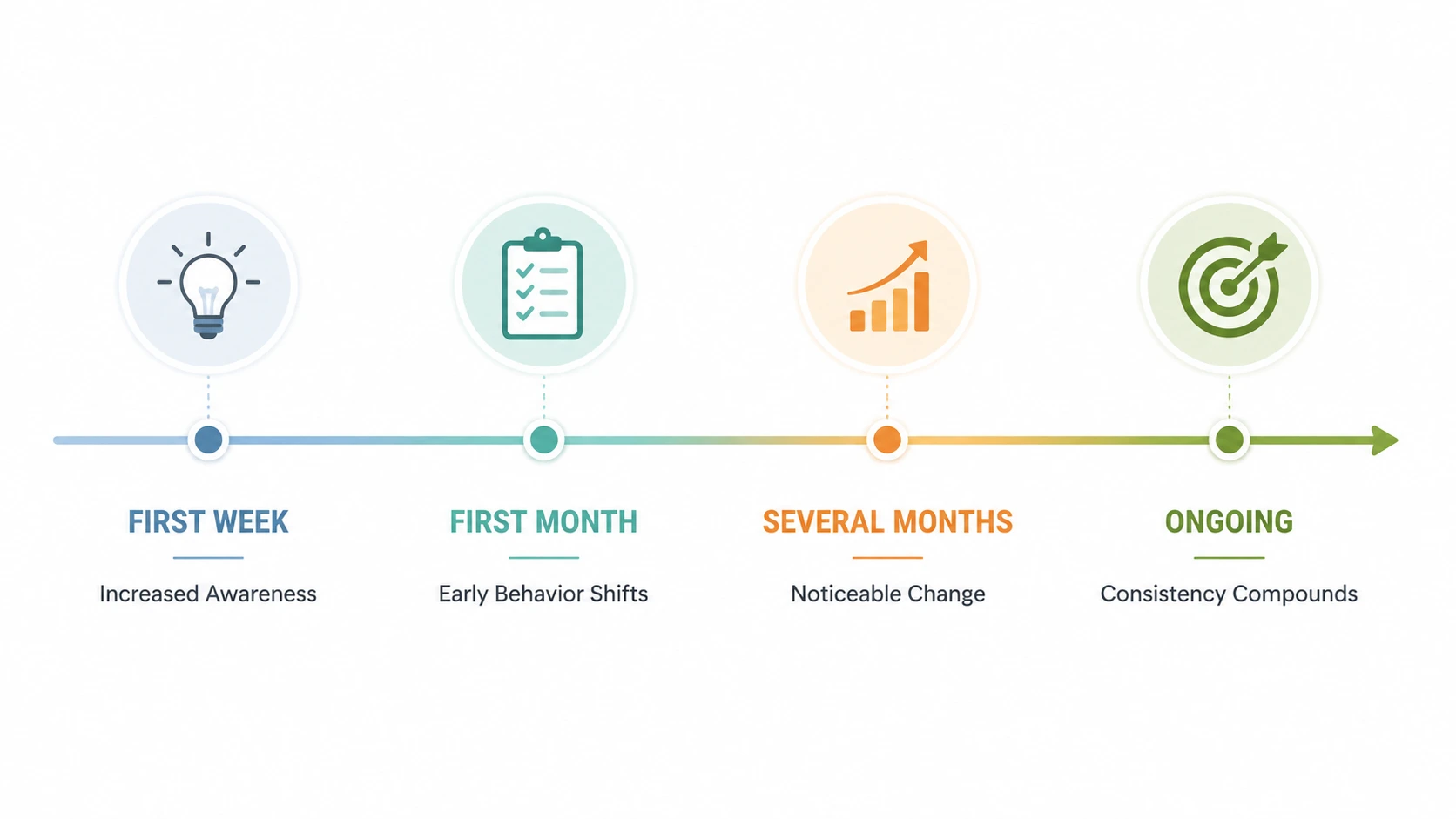
Results from mindset books tend to follow a gradual pattern rather than immediate transformation.
- First week: Increased awareness of existing thought patterns.
- First month: Early shifts in self-talk and small behavioral changes.
- Several months: Noticeable changes in habits, confidence, or emotional regulation.
- Factors affecting progress: Consistency, life circumstances, and depth of application.
- Importance of consistency: Sustained practice produces more durable change than intensive but short-term effort.
Practice Guide for Long-Term Mindset Change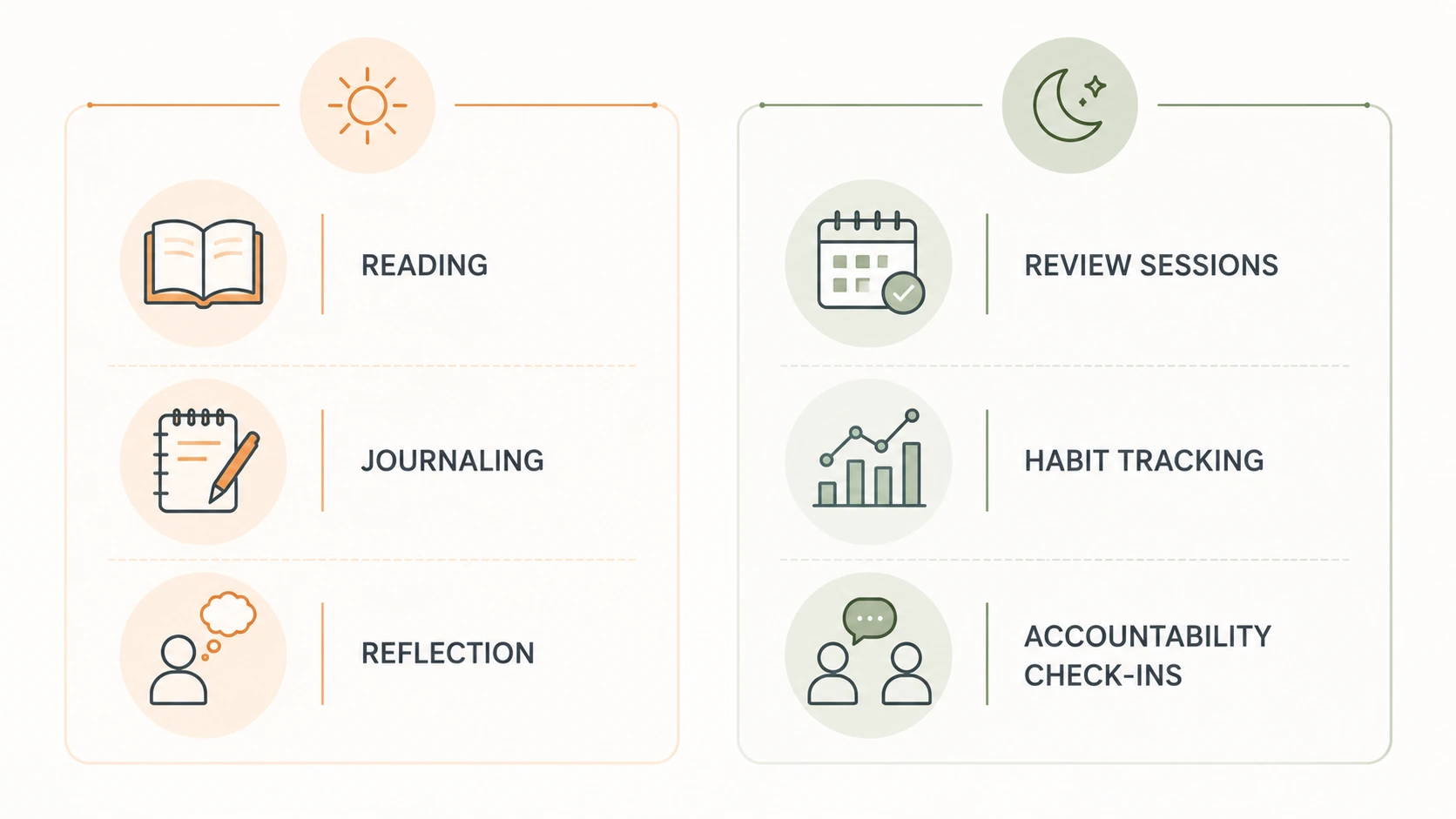
- Daily reading routine: Even short daily reading sessions reinforce concepts over time.
- Weekly review sessions: Revisiting notes or highlights strengthens retention.
- Journaling: Regular writing tracks emotional and behavioral shifts.
- Habit tracking: Visual tracking tools support accountability.
- Accountability methods: Sharing goals with a trusted person increases follow-through.
- Applying lessons in real life: Testing concepts in real situations solidifies learning.
- Maintaining motivation: Revisiting personal reasons for change sustains momentum.
- Adapting routines for different lifestyles: Adjusting practice frequency to fit work, family, or seasonal demands supports long-term sustainability.
Conclusion
The best book to change your mindset depends on individual goals, learning preferences, and current challenges rather than any single universally superior title. Psychology-based books explain the mechanisms behind belief and behavior, while practical and workbook-style books support direct application. Your Daily Thrive recommends evaluating books based on evidence, practical exercises, and readability, then pairing reading with consistent daily practices such as journaling, reflection, and habit tracking. Lasting mindset change comes not from finishing a book, but from applying its principles consistently over time.
Frequently Asked Questions
What is the best book to change your mindset?
The best book to change your mindset depends on your specific goal, whether that’s confidence, success, happiness, or financial thinking, and should combine evidence-based psychology with practical, actionable exercises.
Which mindset books are best for beginners?
Beginners generally benefit most from books with clear, accessible language, real-world examples, and structured action steps rather than dense academic material.
Are psychology-based mindset books better than motivational books?
Neither is inherently better; psychology-based books explain the reasoning behind thought patterns, while motivational books focus on inspiration and momentum, and many readers benefit from combining both.
How long does it take for a mindset book to change your thinking?
Initial shifts in awareness often appear within the first week, while measurable behavioral change typically develops over one to several months of consistent application.
Can reading mindset books improve success and happiness?
Yes, mindset books can support success and happiness when their concepts are actively applied through habits, reflection, and real-world practice rather than passive reading alone.
What should I do after finishing a mindset book?
After finishing a mindset book, readers should identify key lessons, apply them through daily habits, and track progress using journaling or goal-tracking methods.
Should I choose a workbook or a traditional mindset book?
A workbook suits readers who prefer structured, hands-on exercises, while a traditional book suits readers who prefer conceptual understanding through narrative and explanation.