
Introduction
Self-improvement is the process of intentionally developing habits, skills, mindset, and behaviors to create positive changes in life. While many people view personal growth as essential for success and fulfillment, others question whether self-improvement is always beneficial or if it can become unhealthy. Understanding both the advantages and potential downsides helps people build a balanced approach to growth. When approached thoughtfully, self improvement can improve quality of life, increase resilience, and help people achieve meaningful goals without sacrificing their well-being.
Quick Summary
- Self-improvement can improve habits, confidence, productivity, and life satisfaction when approached realistically.
- Excessive self-improvement can become harmful when it creates perfectionism, anxiety, or constant dissatisfaction.
- Sustainable growth focuses on progress, not endless optimization.
- The value of self-improvement depends on how and why it is pursued.
- Consistent systems and habits often produce better results than relying on motivation alone.
What Is Self-Improvement?
Self-improvement is the deliberate process of improving different areas of life through learning, habit formation, behavioral change, and personal development. For people asking what is self improvement, the simplest definition is becoming a better version of yourself through intentional actions and consistent growth.
Personal growth differs from self-criticism. Self-improvement focuses on constructive development, while self-criticism often focuses excessively on flaws and shortcomings. Healthy growth involves recognizing areas for improvement without constantly judging yourself.
Areas of self-improvement include:
- Mental growth
- Emotional development
- Physical well-being
- Productivity improvement
- Relationship skills
- Financial habits
Self-Improvement Examples
Common self-improvement examples include:
- Reading regularly
- Exercising consistently
- Learning new skills
- Building better routines
- Improving emotional regulation
- Managing time more effectively
People pursue self-improvement because they want greater confidence, stronger relationships, improved performance, better health, and a greater sense of fulfillment.
Is Self Improvement Worth It? The Short Answer
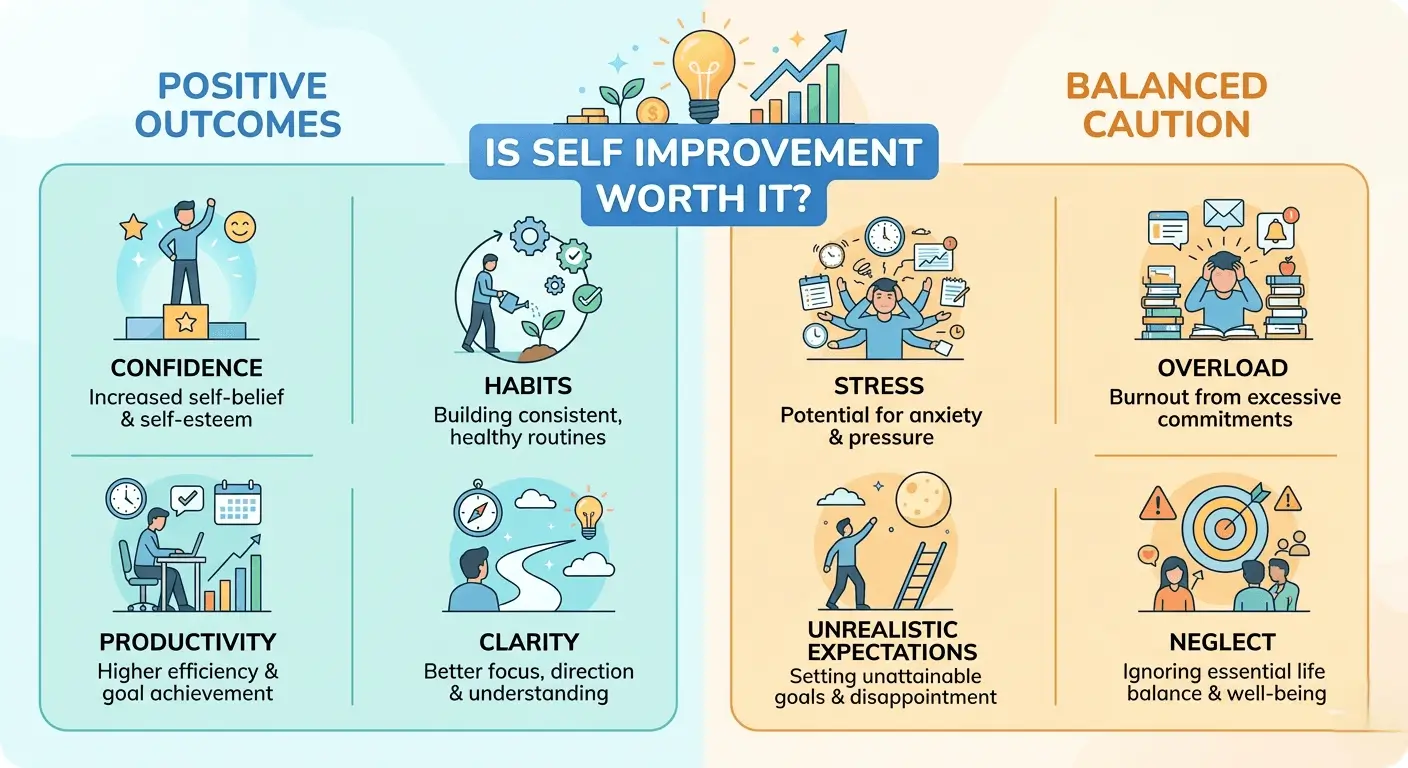
Yes, self-improvement is worth it when it is pursued with realistic expectations and a healthy mindset.
Many people ask, is self improvement worth it, is self improvement good, or is self improvement a good thing. In most cases, the answer is yes because personal growth helps people improve habits, increase self-awareness, and build resilience over time.
Benefits include:
- Increased self-awareness
- Better decision-making
- Greater resilience
- Improved confidence
- More control over daily habits
Why It Works
Self-improvement works because behavior influences outcomes.
- Better habits lead to better outcomes.
- Better systems reduce reliance on motivation.
- Consistent actions compound over time.
- Small improvements create meaningful long-term results.
For example, someone who consistently improves their sleep habits may experience better energy, focus, mood, and productivity. The effects of healthy habits often extend into multiple areas of life.
Why Is Self-Improvement Important?
Why is self improvement important? Because growth helps people adapt to changing circumstances and continue developing throughout life.
Personal development offers several long-term benefits:
- Increased adaptability
- Lifelong learning
- Emotional resilience
- Greater competence
- Long-term fulfillment
Many people experience frustration when they feel stagnant. Growth creates momentum and helps individuals move toward meaningful goals while developing valuable skills along the way.
Science-Backed Insight
Behavioral psychology shows that habits are formed through repeated actions. As behaviors become automatic, they require less mental effort and become easier to maintain.
Research on skill acquisition also demonstrates that improvement occurs gradually through repetition and deliberate practice. Small actions performed consistently often produce greater results than occasional bursts of effort.
When Self-Improvement Becomes Harmful
Self-improvement can become unhealthy when it shifts from growth to constant self-correction.
The concept of toxic self-improvement refers to pursuing growth in a way that creates stress, dissatisfaction, and unrealistic expectations.
Common signs include:
- Constant self-criticism
- Never feeling good enough
- Comparing yourself to others
- Turning growth into an obsession
- Measuring self-worth solely through achievement
Common Warning Signs
- Burnout
- Chronic guilt
- Anxiety around productivity
- Loss of enjoyment
- Unrealistic expectations
For those wondering is self improvement bad, the answer depends on the approach. Growth itself is beneficial, but excessive self-improvement can become harmful when it creates constant pressure and dissatisfaction.
Can Self-Improvement Ruin Your Life? Understanding the Criticism
Some people claim that self improvement ruined my life, but these experiences are often linked to extreme approaches rather than personal growth itself.
Negative experiences can occur when people:
- Over-optimize every aspect of life
- Develop perfectionist thinking
- Ignore relationships
- Sacrifice health for productivity
- Constantly pursue more without satisfaction
Myth vs Reality
| Claim | Reality |
|---|---|
| Self-improvement always helps | It depends on the approach |
| More growth is always better | Balance matters |
| Success guarantees happiness | Personal fulfillment involves multiple factors |
| Productivity equals self-worth | Self-worth is broader than achievement |
The healthiest approach recognizes that growth should improve life quality rather than dominate it.
Why Self-Improvement Is So Hard
Why is self improvement so hard? Because changing behavior requires overcoming natural psychological resistance.
Humans are wired to prefer familiar patterns. Existing habits feel comfortable, even when they are not beneficial.
Psychological Barriers
- Fear of failure
- Fear of success
- Lack of clarity
- Instant gratification
- Overthinking
- Perfectionism
Why People Struggle
- The brain prefers familiar patterns.
- Results often appear slowly.
- Motivation fluctuates naturally.
- New behaviors require sustained effort.
Many people mistakenly assume that difficulty means they are failing. In reality, resistance is a normal part of behavior change.
Motivation vs Discipline in Personal Growth
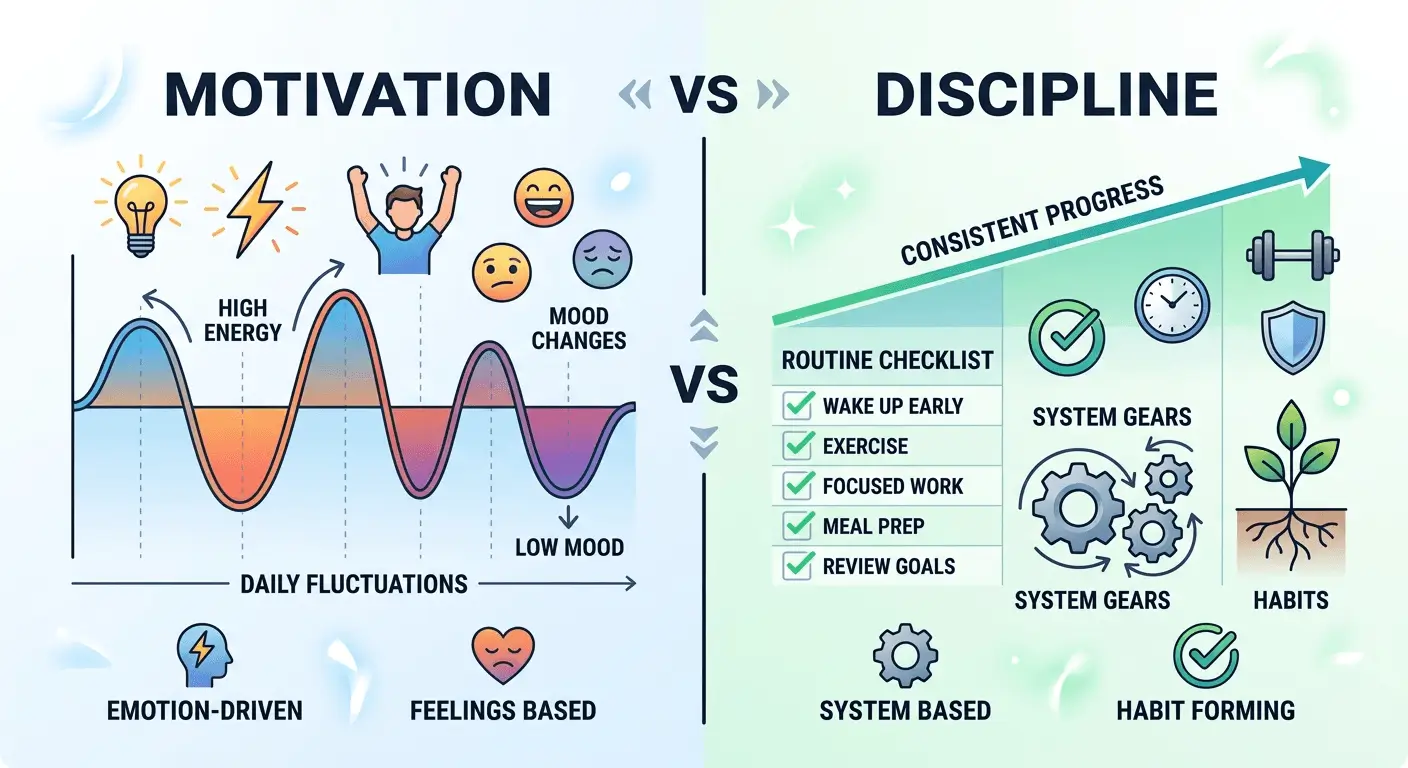
Motivation and discipline are often confused, but they serve different purposes.
| Motivation | Discipline |
| Emotion-driven | System-driven |
| Temporary | Sustainable |
| Unpredictable | Reliable |
| Depends on mood | Depends on routine |
Motivation can help people start, but discipline helps them continue when motivation fades.
Key Takeaway
Successful self-improvement relies more on systems and habits than motivation alone. If you struggle to stay consistent when motivation fades, learning how to build discipline without motivation can help create reliable routines that support long-term growth. Sustainable routines create consistency regardless of emotional state.
Consistency vs Intensity: What Actually Creates Results?
This is why many people find that small habits that changed my life approaches produce more lasting results than extreme short-term challenges.
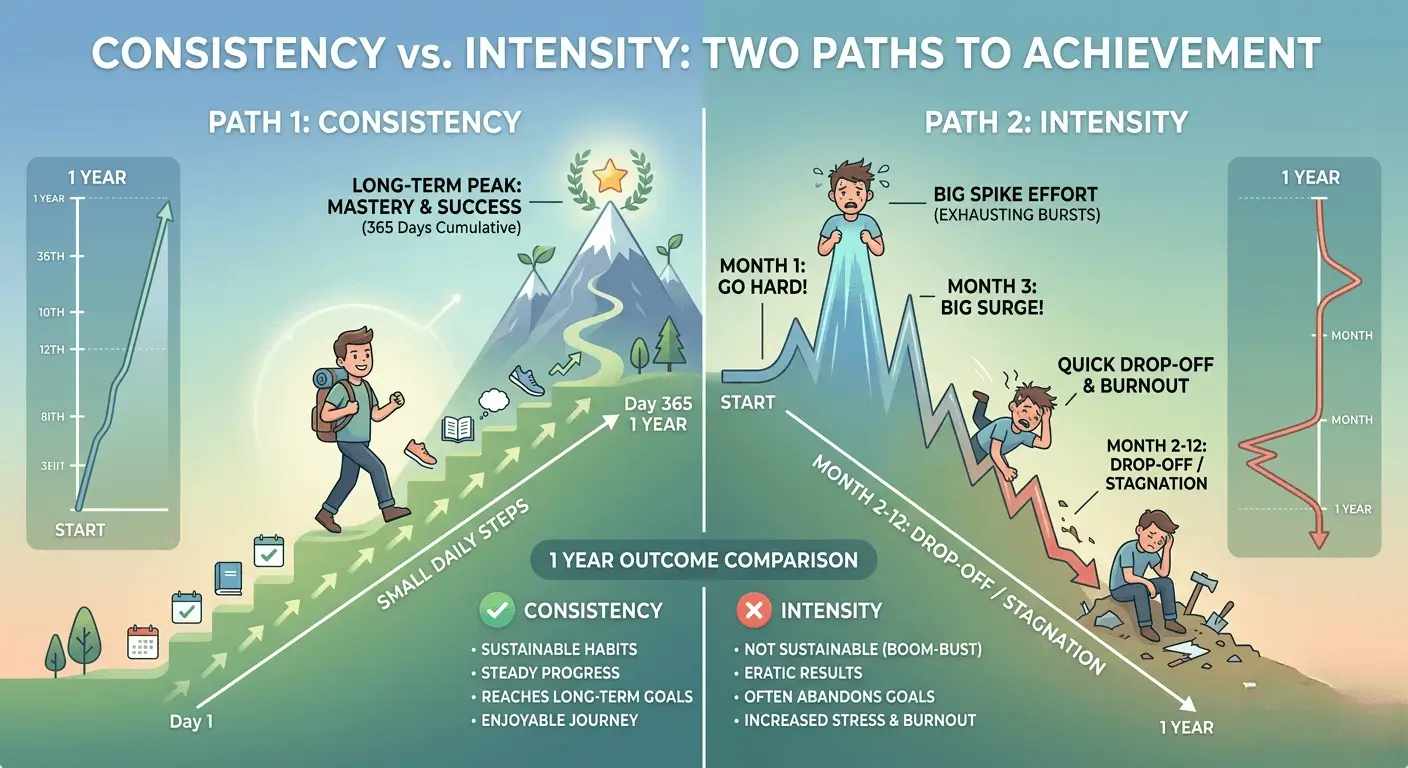
Long-term results are usually created by consistency rather than intensity.
| Consistency | Intensity |
| Small daily actions | Large bursts of effort |
| Easier to maintain | Difficult to sustain |
| Lower burnout risk | Higher burnout risk |
| Better long-term outcomes | Often temporary |
Real-Life Example
Consider two individuals trying to improve fitness.
One person exercises three times per week for an entire year. Another follows an extreme one-month fitness challenge but quits afterward.
The person who exercises consistently throughout the year will typically achieve better results because sustainable habits allow progress to compound over time.
Is Self-Improvement Oversaturated? Separating Useful Advice from Noise
Many people ask, is self improvement oversaturated.
The modern self-help industry produces a massive amount of content. While some advice is valuable, much of it promotes unrealistic expectations and quick fixes.
What Actually Works
- Clear goals
- Evidence-based habits
- Consistency
- Reflection
- Accountability
What Sounds Good but Often Fails
- Overnight transformation promises
- Extreme routines
- Constant hustle culture
- Productivity for its own sake
Effective self-improvement is usually simple, practical, and sustainable rather than dramatic.
Common Self-Improvement Problems and How to Solve Them
| Problem | Why It Happens | How to Fix It | How to Prevent It |
| Procrastination | Avoidance of discomfort | Start with small actions | Reduce task friction |
| Lack of Motivation | Emotional fluctuation | Build systems | Create routines |
| Inconsistency | Unrealistic goals | Focus on repetition | Track habits |
| Overthinking | Fear of mistakes | Take imperfect action | Set decision deadlines |
| Burnout | Excessive pressure | Prioritize recovery | Pace progress |
| Fear of Failure | Identity protection | Reframe mistakes | Focus on learning |
Building a Healthy Self-Improvement System
Long-term growth requires a sustainable framework rather than constant willpower.
For beginners, a structured plan such as how to build good habits in 30 days can make behavior change feel more achievable and sustainable.
Step-by-Step Framework
- Define a meaningful goal.
- Identify one high-impact habit.
- Start with a manageable version.
- Track consistency.
- Review progress regularly.
- Adjust rather than quit.
Routine & System Building
Strong systems often include:
- Daily habits
- Weekly reviews
- Environmental design
- Accountability systems
Systems make positive behaviors easier to repeat and maintain over time.
Healthy Self-Improvement vs Toxic Self-Improvement
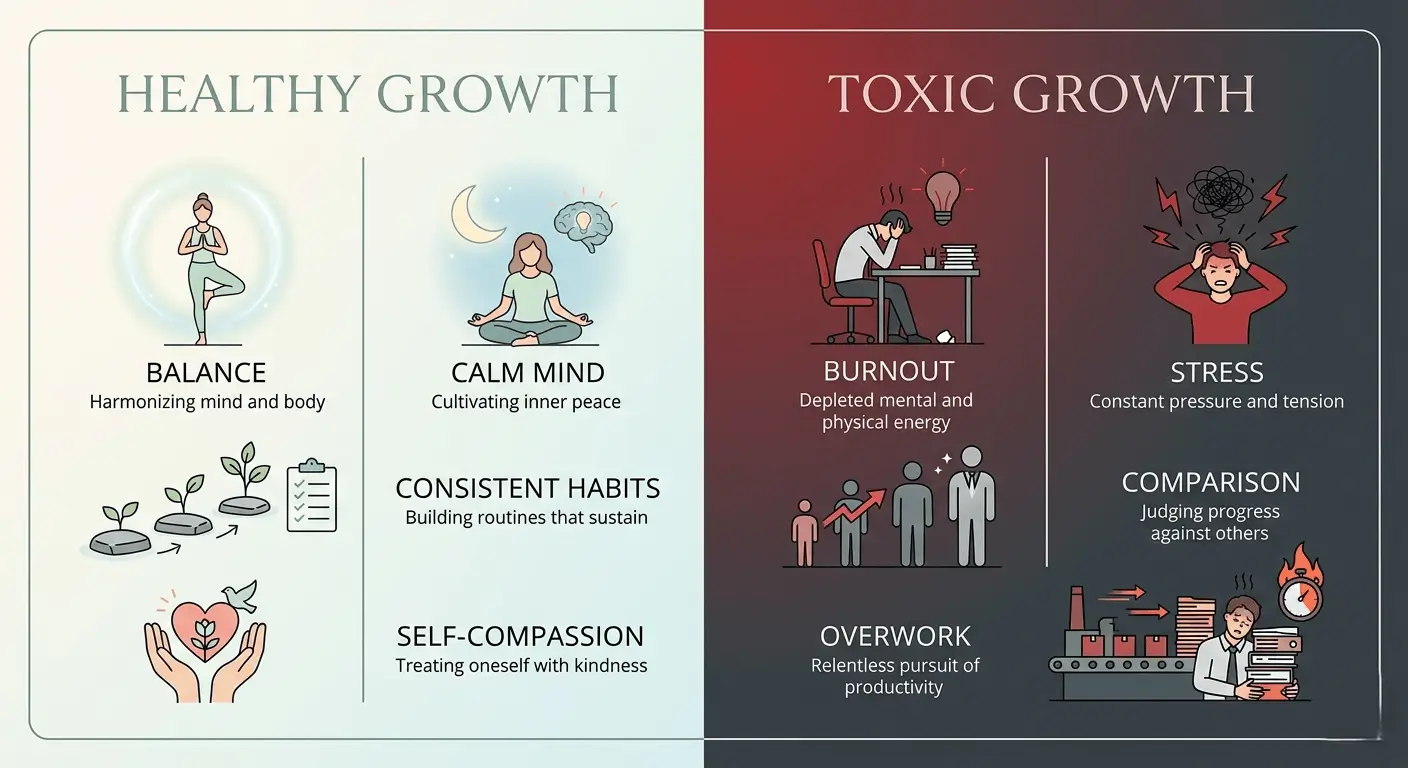
Healthy growth supports well-being, while toxic growth often creates unnecessary pressure.
| Healthy Self-Improvement | Toxic Self-Improvement |
| Progress-focused | Perfection-focused |
| Self-compassion | Self-criticism |
| Sustainable habits | Extreme routines |
| Growth with balance | Growth at all costs |
| Flexible goals | Rigid expectations |
The goal of self-improvement should be to improve quality of life, not create endless dissatisfaction.
What Long-Term Personal Growth Actually Looks Like
Long-term personal growth is usually gradual rather than dramatic.
Key Insights
- Growth is rarely linear.
- Setbacks are normal.
- Consistency beats perfection.
- Small improvements compound over years.
Real-Life Scenarios
Beginner
Focuses on one habit at a time and builds consistency.
Intermediate
Develops routines, accountability systems, and structured habits.
Advanced
Uses self-awareness, reflection, and continuous learning to refine behaviors while maintaining balance.
Sustainable growth is measured in years rather than days or weeks.
Conclusion
Self-improvement is worth it when it helps create meaningful, sustainable changes in behavior, mindset, and daily habits. The greatest benefits come from consistent progress rather than relentless self-optimization. Instead of chasing perfection, focus on building systems that support long-term growth, resilience, and personal fulfillment. Healthy self-improvement should improve your life—not become your entire identity.
FAQs
Why do I struggle with consistency in self-improvement?
Consistency is difficult because behavior change requires overcoming existing habits, emotional resistance, and short-term temptations. Small, repeatable actions are usually more effective than relying on motivation.
Is self-improvement bad for mental health?
Self-improvement itself is not harmful, but it can become unhealthy when it creates perfectionism, constant self-criticism, or unrealistic expectations.
What is the difference between healthy and toxic self-improvement?
Healthy self-improvement focuses on gradual growth and self-awareness, while toxic self-improvement focuses on endless optimization and never feeling satisfied.
Why is self-improvement so hard to maintain?
Results often take time, motivation fluctuates, and people tend to underestimate the importance of systems and routines.
Can self-improvement lead to burnout?
Yes. Burnout can occur when people pursue extreme routines, unrealistic goals, or constant productivity without adequate recovery.
Is self-improvement worth it if I keep failing?
Yes. Failure is often part of the learning process. Long-term growth comes from adapting strategies rather than expecting immediate success.
How can I improve myself without becoming obsessed?
Focus on one or two meaningful habits, measure progress realistically, and prioritize balance alongside achievement. Healthy growth comes from consistency and self-awareness rather than constant optimization.










One Response