
Table of Contents
ToggleIntroduction
Neurodiversity training is a structured learning approach that helps individuals and organizations understand how people process information, communicate, and behave differently due to cognitive variations such as autism, ADHD, and dyslexia. It treats these differences as natural variations in human cognition rather than deficits.
In workplaces and education systems, neurodiversity training strengthens inclusion, improves communication, and reduces misunderstandings. It enables environments to adapt to diverse cognitive styles, helping individuals perform more effectively while improving collaboration, wellbeing, and productivity across teams.
Neurodiversity training connects strongly with personal development concepts like how to become best version of yourself, where self-awareness and behavioral understanding are essential for growth.
Quick Summary
- Neurodiversity training explains cognitive differences and their impact on behavior and communication
- It improves inclusion, reduces stigma, and increases productivity
- It is used in workplaces, education, leadership, and therapy settings
- Focus shifts from changing individuals to improving systems and environments
- Better understanding leads to stronger teamwork and performance outcomes
What Is Neurodiversity Training?
Neurodiversity training is an educational framework designed to improve awareness and understanding of cognitive differences.
It focuses on:
- How neurodivergent individuals process information differently
- Strength-based thinking instead of deficit-based labeling
- Inclusive communication strategies
- Environmental and workplace adjustments
Cause-effect:
Lack of awareness leads to misinterpretation and exclusion, while training improves communication and inclusion.
Core Principles of Neurodiversity Training
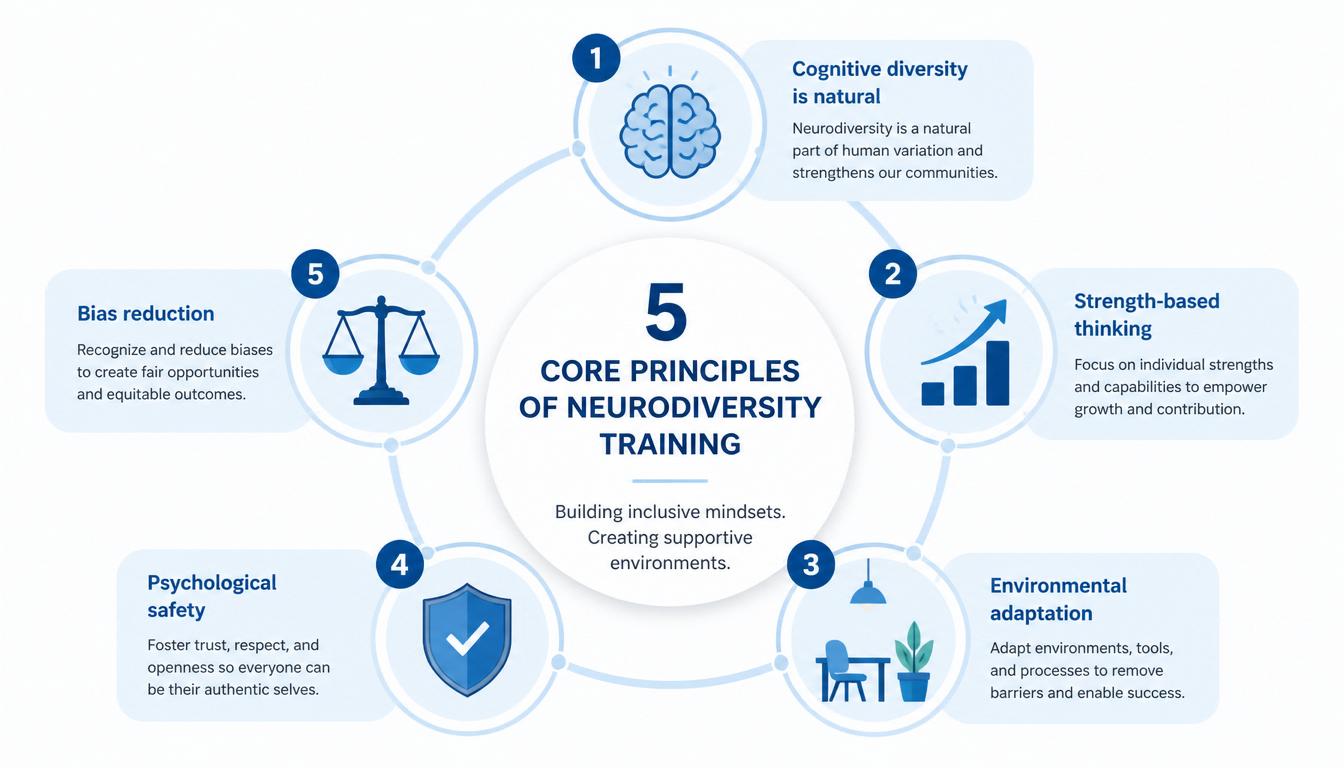
- Cognitive diversity is natural and valuable
- Strength-based approaches improve performance
- Environments shape behavior significantly
- Psychological safety increases productivity
- Reducing unconscious bias improves fairness
Many principles such as emotional regulation and self-awareness are also reflected in broader mindset topics like focus on what you can control and consciousness awareness, which help individuals improve decision-making and mental clarity.
Why Organizations Implement Neurodiversity Training
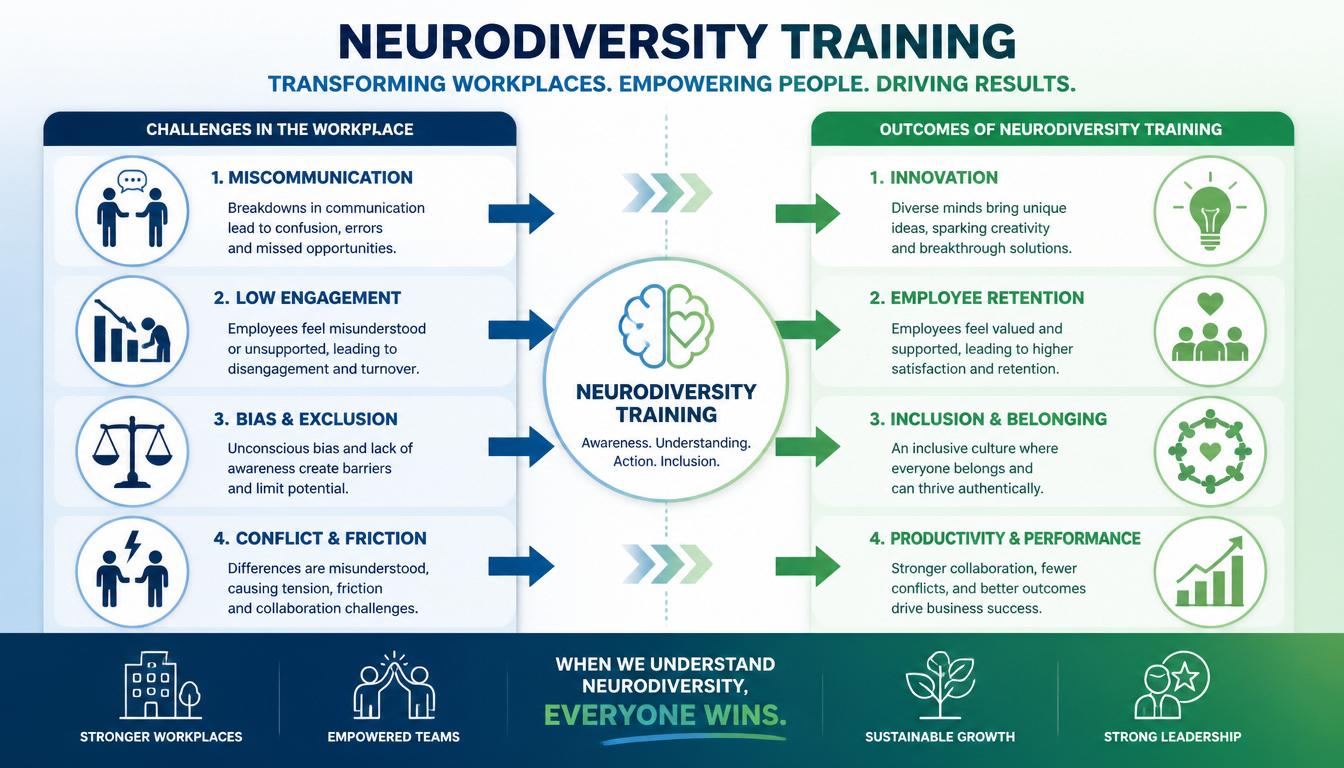
Organizations adopt neurodiversity training to improve both culture and performance.
Key reasons:
- Increased innovation through diverse thinking styles
- Higher employee engagement and retention
- Reduced workplace conflict
- Better leadership and decision-making
- Stronger inclusion culture
When employees feel understood, motivation and performance increase significantly.
Types of Neurodiversity Training Applications
- Workplace employees: awareness and communication skills
- Managers: leadership and performance adaptation
- Teachers: inclusive education strategies
- Therapists: cognitive-sensitive approaches
- Organizations: policy-level inclusion systems
Neurodiversity Training in the Workplace
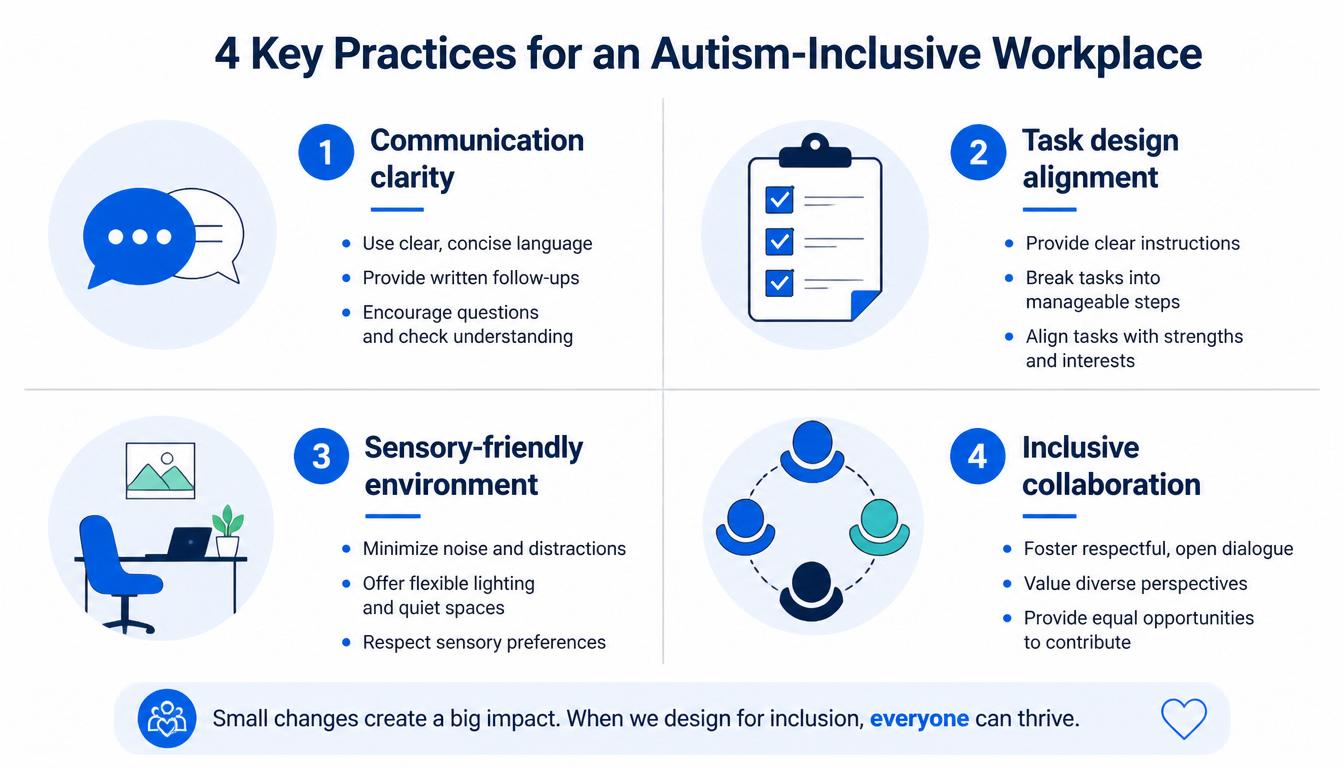
Workplace training focuses on behavior and system improvement.
Key areas:
- Clear and structured communication
- Task design aligned with cognitive strengths
- Sensory-friendly environments
- Inclusive collaboration practices
Outcome: improved productivity, reduced burnout, and better role alignment.
Neurodiversity Training for Managers
Managers play a key role in implementation.
Focus areas:
- Providing clear instructions
- Giving structured feedback
- Supporting flexible working styles
- Fair performance evaluation
- Reducing unconscious bias
Management behavior directly affects psychological safety and team performance.
Neurodiversity Training for Teachers
Education-focused training improves learning inclusion.
Key practices:
- Differentiated instruction
- Flexible assessment methods
- Sensory-friendly classrooms
- Support for attention and processing differences
Neurodiversity Training for Therapists
Therapists use training to improve client outcomes.
Includes:
- Understanding cognitive processing differences
- Strength-based therapeutic approaches
- Adjusted communication methods
- Improved diagnostic sensitivity
Common Barriers to Effective Neurodiversity Training
- Misunderstanding neurodiversity concepts
- Superficial or checkbox training
- Lack of leadership involvement
- Resistance to system change
- One-size-fits-all approaches
Implementation Framework (Step-by-Step)
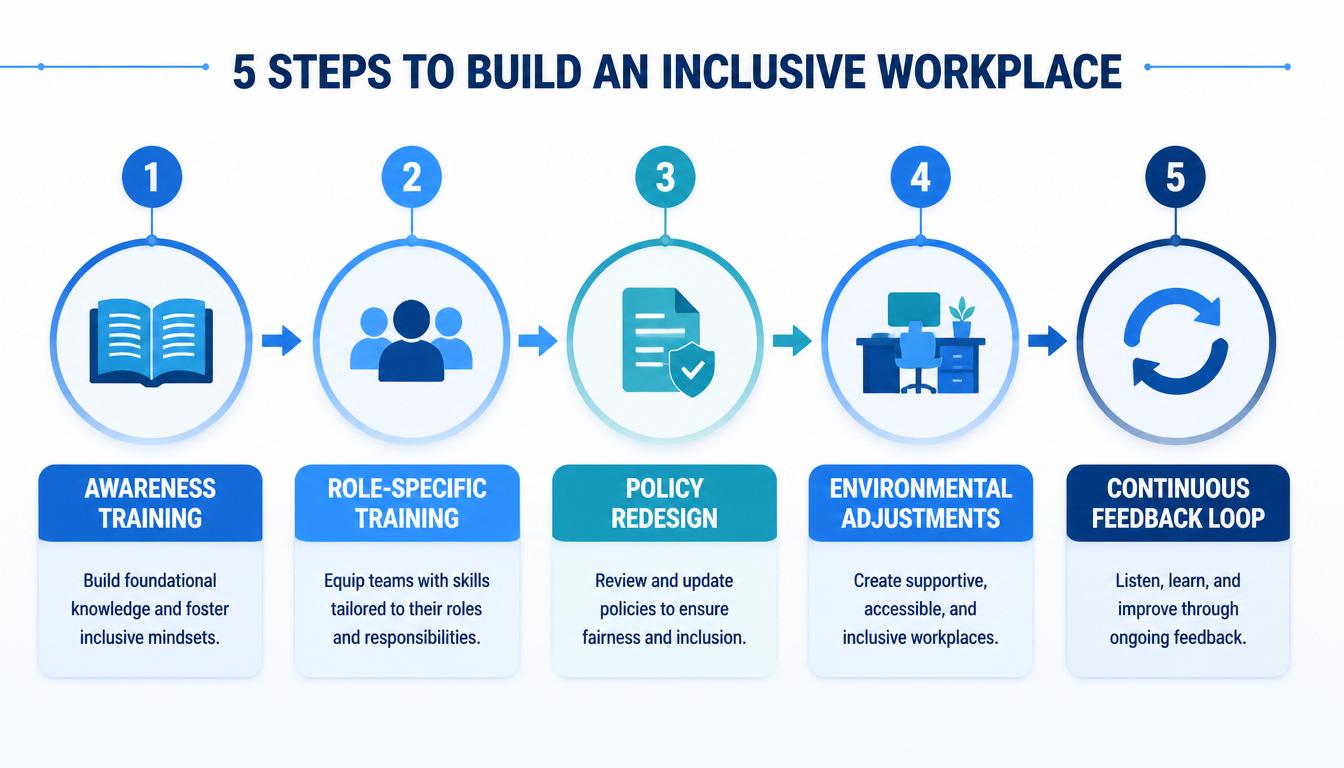
- Step 1: Organization-wide awareness training
- Step 2: Role-specific training
- Step 3: Policy and workflow redesign
- Step 4: Environmental adjustments
- Step 5: Continuous feedback and improvement
Comparison: Key Approaches in Neurodiversity Training
| Approach | Focus | Outcome | Limitation |
|---|---|---|---|
| Awareness Training | Basic knowledge | Reduces stigma | Limited behavior change |
| Full Neurodiversity Training | Systems + skills | High inclusion & performance | Requires effort |
| Compliance-Based Training | Policy adherence | Legal safety | Low engagement |
| Strength-Based Training | Talent optimization | Higher innovation | Needs leadership support |
Neurodiversity Training vs Awareness Training
Awareness training improves understanding, while neurodiversity training changes behavior and systems.
- Awareness = knowledge shift
- Training = behavioral and structural change
Key difference: awareness changes thinking, training changes action.
Science-Backed Insight
Research in cognitive psychology shows that diverse cognitive styles improve group problem-solving. Teams with varied thinking patterns demonstrate:
- Higher creativity
- Better decision-making
- More effective problem-solving
This is linked to cognitive diversity and neuroplasticity, where structured environments enhance performance and adaptability.
Conclusion
Neurodiversity training is a practical framework for improving inclusion, communication, and performance. It shifts focus from changing individuals to improving systems that support different cognitive styles.
The core insight is clear: understanding how people think differently leads to stronger teams, better communication, and healthier, more productive environments.
FAQs
What is the main goal of neurodiversity training?
To improve understanding of cognitive differences and build inclusive systems that support performance and communication.
Why is neurodiversity training important?
It reduces misunderstandings, improves collaboration, and increases workplace productivity.
How does it help managers?
It improves communication clarity, fairness, and leadership adaptability.
What problems does it solve?
It addresses bias, exclusion, miscommunication, and lack of psychological safety.
Is it only for HR teams?
No, it applies to all employees, especially managers and leaders.
How does it improve performance?
By aligning environments and tasks with cognitive strengths, reducing friction and improving efficiency.