

Introduction
Self trust affirmations are positive statements designed to strengthen confidence in your decisions, abilities, and emotional resilience through intentional self-talk. Positive affirmations for self trust can gradually reshape self-perception by reinforcing healthier beliefs and reducing patterns of doubt and self-criticism. Internal dialogue strongly influences confidence, emotional regulation, and decision-making because repeated thoughts shape how people interpret themselves and their abilities.
Affirmations to build self trust work best when combined with consistent behavior, emotional awareness, and realistic self-reflection. They are not magic solutions. Instead, they act as mindset-conditioning tools that help reinforce self-worth, emotional stability, and self-belief over time. What are self love affirmations? They are positive statements focused on self-acceptance and compassion, while self trust affirmations focus more on confidence in judgment, actions, and reliability.
Quick Summary
- Self trust affirmations are positive statements that help reinforce confidence, self-belief, and emotional security.
- Repeating affirmations consistently can improve self-image, reduce self-doubt, and support healthier decision-making.
- Affirmations work best when combined with action, emotional awareness, and daily habits.
- Building self-trust requires consistency, self-compassion, and evidence from small wins.
What Are Self Trust Affirmations?
The Meaning of Self Trust in Personal Growth
Self-trust is confidence in your ability to make decisions, handle emotions, and respond to challenges effectively. It is closely connected to emotional resilience, self-worth, and personal growth because people who trust themselves are more likely to take action, set boundaries, and recover from setbacks.
In personal development, self-trust acts as an internal foundation. Without it, people often rely heavily on validation from others, struggle with indecision, or constantly question their abilities.
An affirmation for trusting yourself helps reinforce the belief that your judgment and actions are reliable. Over time, repeated self-supportive thoughts can reduce mental hesitation and strengthen emotional stability.
How Affirmations Influence Thoughts and Behavior
What is self affirmations? Self affirmations are intentional positive statements used to reinforce healthier beliefs and challenge negative thought patterns.
Affirmations influence behavior through repetition-based cognitive reframing. The brain adapts to repeated thought patterns through neural conditioning, which means consistent mental repetition can influence emotional responses and self-perception.
Examples include:
- “I trust myself to make thoughtful decisions.”
- “I can learn from mistakes without losing confidence.”
- “I am capable of handling uncertainty calmly.”
Self affirmations for self worth and affirmations about self belief encourage identity-based behavior change by reinforcing supportive internal narratives.
The Difference Between Self-Trust, Self-Esteem, and Self-Confidence
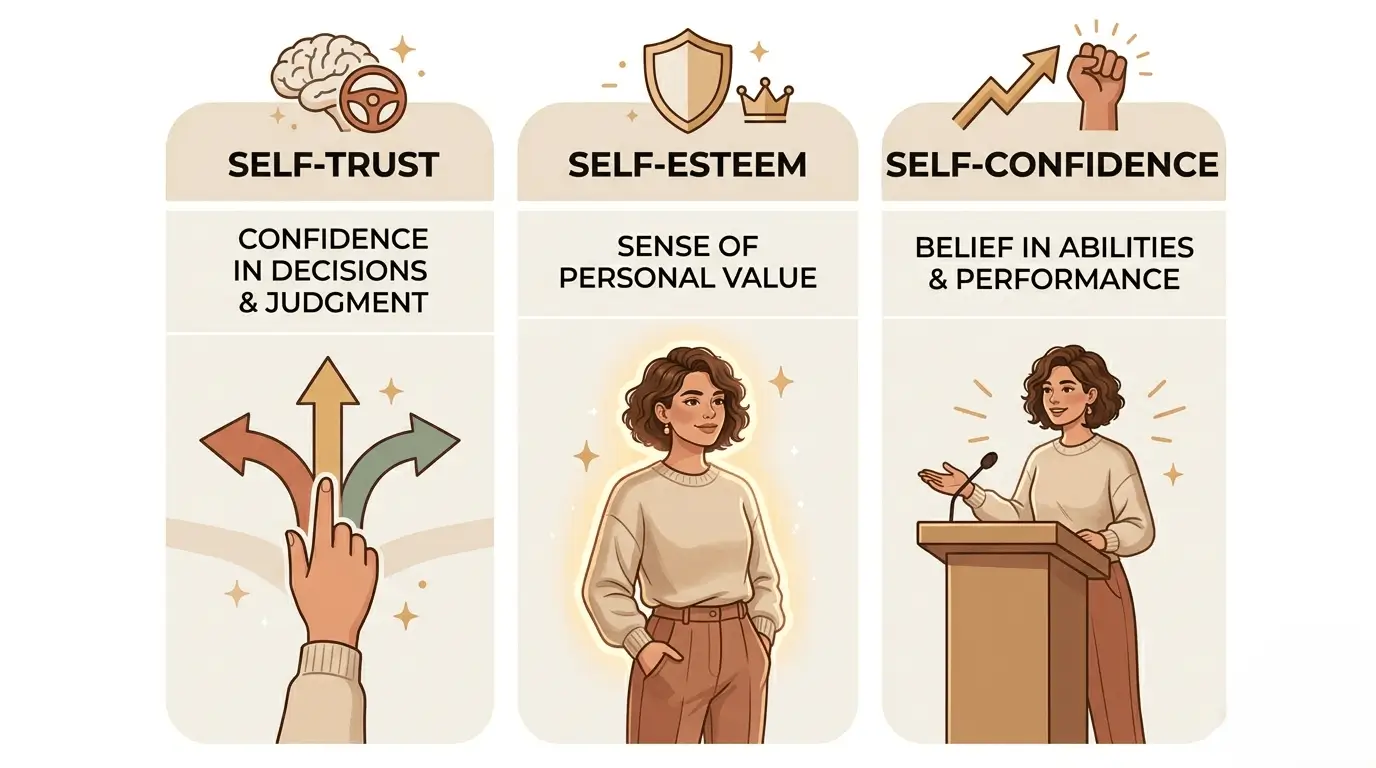
| Concept | Meaning |
|---|---|
| Self-Trust | Confidence in your judgment and reliability |
| Self-Esteem | Overall sense of personal value |
| Self-Confidence | Belief in your abilities and performance |
Self worth affirmations and self-esteem affirmations often overlap with self-trust because emotional security influences all three areas.
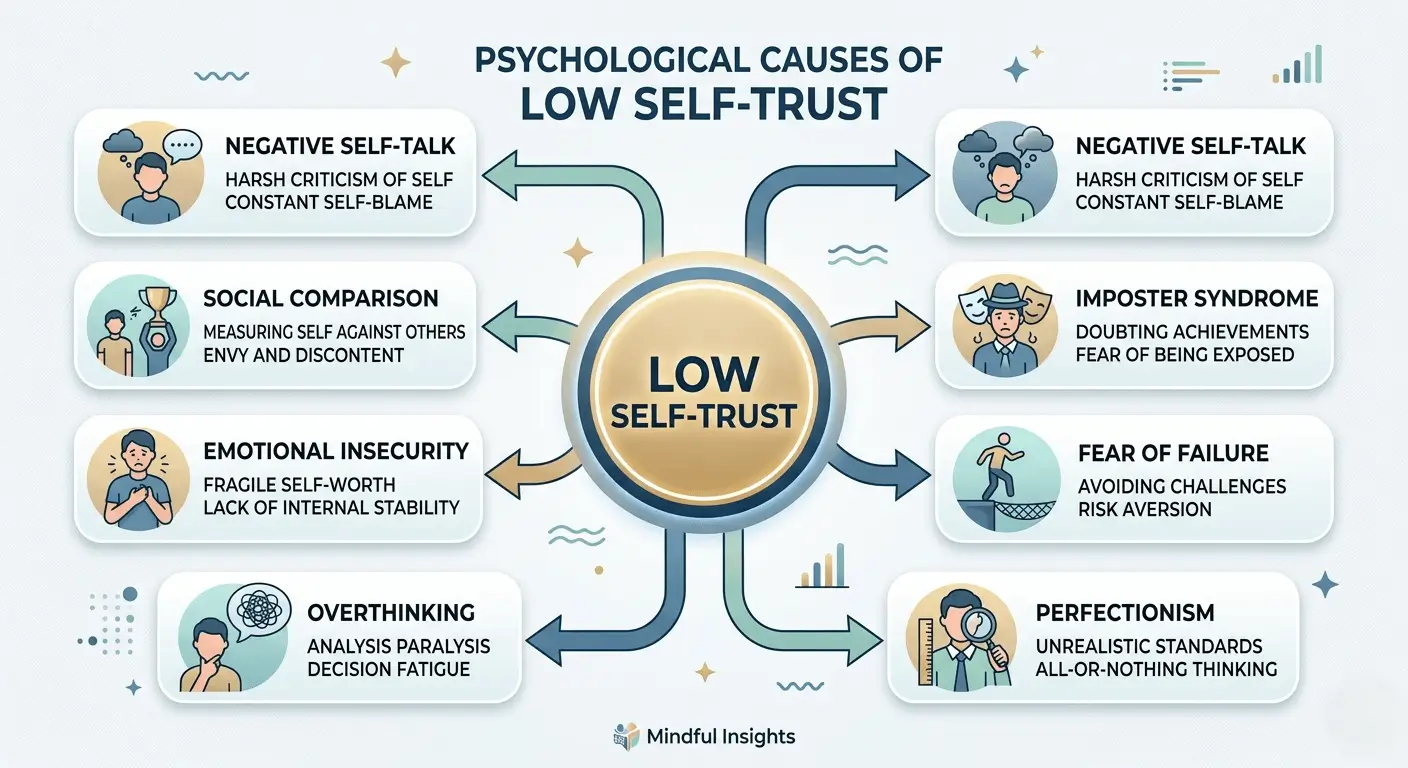
Why Many People Struggle With Self-Trust
Fear of Failure and Past Disappointments
Many people struggle with self-trust because past failures create emotional hesitation. Repeated disappointment can train the brain to expect negative outcomes, making future decisions feel risky.
This often leads to:
- Overthinking
- Decision paralysis
- Fear of judgment
- Avoidance behaviors
When people stop trusting their ability to recover from mistakes, they become emotionally dependent on certainty and validation.
Negative Self-Talk and Inner Criticism
Repeated negative thoughts weaken self-trust because the brain gradually accepts internal criticism as truth.
Examples include:
- “I always fail.”
- “I’m not capable enough.”
- “Other people are more qualified.”
Negative internal dialogue creates emotional insecurity and lowers confidence over time. Self image affirmations and affirmations for self image help interrupt these patterns by replacing destructive thoughts with healthier emotional reinforcement.
Perfectionism and the Need for Validation
Perfectionism often damages self-trust because confidence becomes tied to flawless performance.
People trapped in perfectionism may:
- Avoid taking risks
- Delay important decisions
- Fear criticism constantly
- Struggle with imposter syndrome
Affirmations for self worth and self esteem can help shift focus from perfection to sustainable growth.
Comparison Culture and Self-Image Issues
Constant comparison weakens emotional resilience and self-belief. Social comparison encourages unrealistic standards that damage body image, confidence, and self-respect.
Common effects include:
- Low self-esteem
- Emotional insecurity
- Social anxiety
- Self-doubt
Self image affirmations can support healthier self-acceptance by reinforcing internal validation instead of external comparison.
How Self Trust Affirmations Actually Work
The Science of Repetition and Cognitive Conditioning
Self trust affirmations influence the brain through neuroplasticity, which is the brain’s ability to reorganize neural pathways based on repeated thoughts and experiences.
Repeated positive self talk reminders gradually strengthen healthier cognitive patterns. Over time, the brain becomes more familiar with supportive thoughts instead of automatic criticism.
This process is closely connected to cognitive restructuring, where negative mental habits are replaced with more balanced interpretations.
Why Emotional Belief Matters More Than Repetition Alone
Affirmations become more effective when they feel emotionally believable.
For example, saying:
- “I am perfect and fearless.”
may create emotional resistance if it feels unrealistic.
A more effective approach is:
- “I am learning to trust myself more each day.”
This creates psychological alignment between belief and reality.
How Affirmations Influence Habits and Decision-Making
Affirmations alone are not enough. They become powerful when supported by consistent action.
Self-perception theory suggests people build identity through observed behavior. When actions repeatedly support affirmations, the brain receives evidence that reinforces self-belief.
Examples include:
- Keeping promises to yourself
- Following daily routines
- Practicing emotional regulation
- Completing small goals consistently
Positive affirmations for self become stronger when paired with behavior that confirms the message.
Best Self Trust Affirmations for Different Areas of Life
Self Trust Affirmations for Confidence
Affirmations for confidence and success help reduce hesitation and strengthen belief in personal ability.
Examples:
- “I trust myself to handle challenges calmly.”
- “I am capable of growth and progress.”
- “My voice and opinions deserve respect.”
- “I can succeed without perfection.”
Affirmations for confidence and beauty may also improve emotional confidence and social self-image.
Examples:
- “I feel comfortable being myself.”
- “I appreciate my appearance and individuality.”
Affirmations positive quotes can support emotional encouragement during stressful periods.
Self Worth and Self-Esteem Affirmations
Positive affirmations for self worth focus on emotional value and self-respect.
Examples:
- “My worth is not based on productivity.”
- “I deserve respect and healthy boundaries.”
- “I value myself even when I make mistakes.”
- “I treat myself with compassion.”
Affirmations self esteem and self respect affirmations can strengthen emotional resilience in relationships and work environments.
Self-Image and Beauty Affirmations
Physical beauty affirmations support healthier body image and emotional acceptance.
Examples:
- “I accept myself as I am today.”
- “My appearance does not determine my value.”
- “I treat my body with care and respect.”
Self image affirmations can reduce harsh self-criticism and improve self-acceptance over time.
Excellence and Personal Growth Affirmations
Excellence affirmations focus on consistency, growth, and long-term improvement.
Examples:
- “Consistency matters more than perfection.”
- “I improve through repeated effort.”
- “I trust myself to keep learning.”
- “I am becoming more disciplined every day.”
These affirmations about self belief support goal achievement, work confidence, and emotional resilience.
Morning Affirmations for Self Worth and Emotional Stability
Why Morning Routines Shape Mental Patterns
Morning routines influence emotional regulation, focus, and mental clarity throughout the day. Early thoughts often shape emotional momentum because the brain is highly receptive to repeated mental patterns shortly after waking.
Morning affirmations for self worth can help reduce stress, improve emotional stability, and strengthen confidence before external pressures begin.
Sample Morning Self Trust Affirmation Routine
A simple routine may include:
- Deep breathing for two minutes
- Reading daily affirmation quotes
- Mirror affirmations
- Journaling one personal win
- Setting one realistic intention for the day
Examples of daily affirmations quotes include:
- “I trust myself to handle today calmly.”
- “I deserve patience and respect.”
- “I can make thoughtful decisions.”
- “I am emotionally grounded.”
Creating a Sustainable Daily Practice
Consistency matters more than intensity.
Habit stacking can improve routine consistency by attaching affirmations to existing habits such as:
- Brushing teeth
- Drinking coffee
- Morning walks
- Journaling sessions
Breathing exercises and reflection practices can also increase emotional connection during affirmations.
Most people notice gradual mindset changes after several weeks of consistent repetition and supportive behavior.
Self Trust Affirmations vs Positive Thinking
| Self Trust Affirmations | Positive Thinking |
| Focuses on identity and belief | Focuses on optimism |
| Reinforces internal safety | Encourages hopeful thinking |
| Builds decision confidence | Improves emotional outlook |
| Requires repetition + action | Often temporary without behavior change |
Self trust affirmations are generally more effective when supported by behavior. Positive thinking alone may temporarily improve mood, but affirmations combined with action create stronger emotional reinforcement.
Emotional authenticity also matters. Forced positivity often creates resistance because the brain rejects messages that feel unrealistic.
Motivation vs Discipline in Building Self-Trust
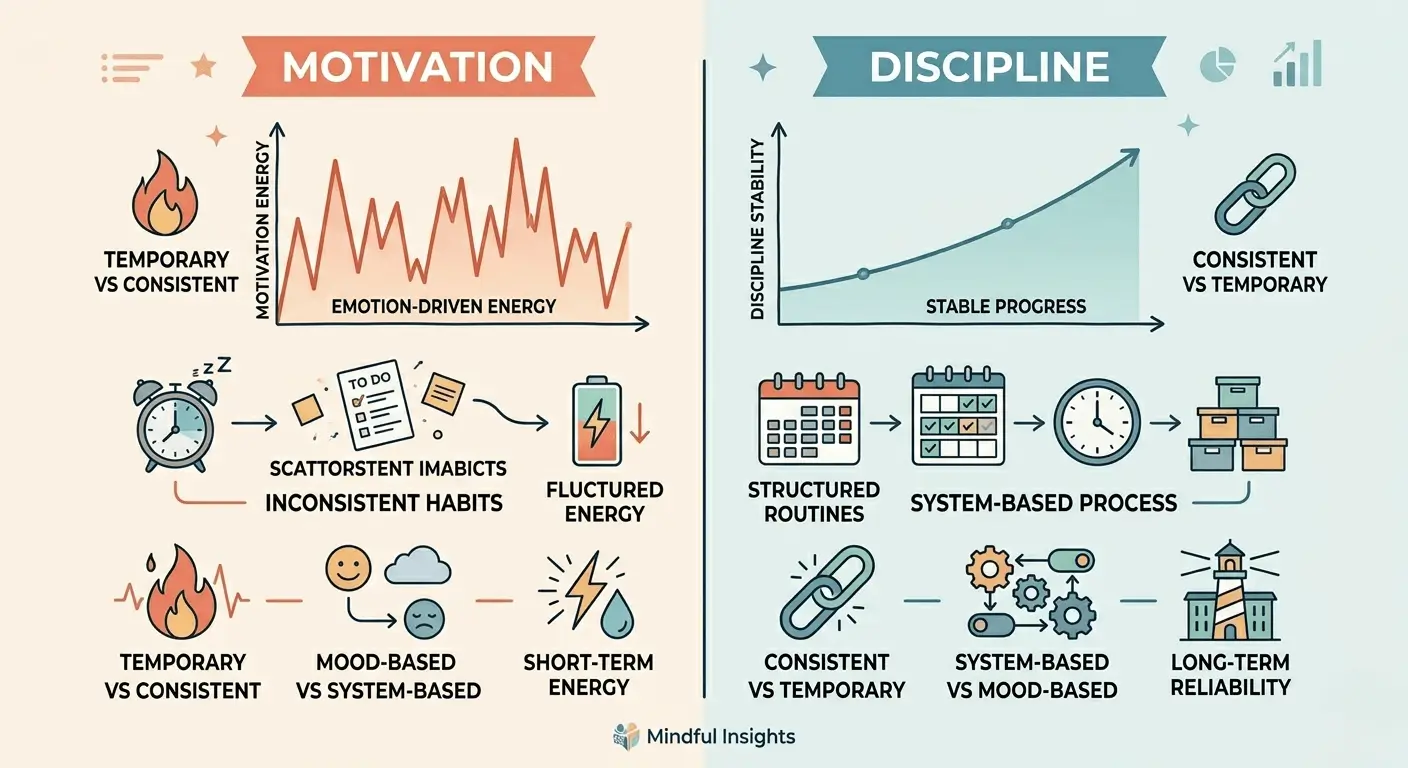
| Motivation | Discipline |
| Emotion-driven | Habit-driven |
| Temporary energy | Long-term consistency |
| Depends on mood | Depends on systems |
| Unstable during stress | More reliable over time |
Self-trust grows faster when people consistently follow through on commitments.
Motivation is useful for starting change, but discipline strengthens identity because repeated action creates evidence of reliability.
Keeping small promises to yourself reinforces:
- Emotional stability
- Personal accountability
- Confidence in decision-making
- Long-term self-belief
Routine consistency often builds stronger self-trust than occasional bursts of motivation.
Common Mistakes That Make Affirmations Ineffective
Repeating Statements Without Emotional Connection
Affirmations repeated mechanically without emotional engagement often feel empty and forgettable.
The brain responds more strongly when affirmations are connected to genuine emotional intention.
Using Unrealistic or Forced Affirmations
Extreme affirmations may create resistance if they feel disconnected from reality.
Instead of:
- “I am completely fearless.”
Try:
- “I am learning to handle fear with more confidence.”
Believable affirmations are often more effective because they reduce internal conflict.
Expecting Instant Results
Affirmations do not create immediate transformation.
Mindset conditioning requires:
- Consistency
- Emotional awareness
- Habit reinforcement
- Repeated behavioral evidence
People often quit too early because they expect rapid emotional change.
Ignoring Underlying Emotional Patterns
Burnout, emotional resistance, unresolved stress, and self-sabotage can interfere with affirmation practices.
Practical fixes include:
- Tracking progress
- Journaling emotional triggers
- Pairing affirmations with small actions
- Using realistic language
- Maintaining routine consistency
How to Build a Personal Self Affirmation List
Choosing Affirmations That Match Your Current Struggles
A self affirmation list should focus on specific emotional or behavioral challenges.
Examples:
| Struggle | Helpful Affirmation |
| Fear of judgment | “I do not need everyone’s approval.” |
| Low confidence | “I trust myself to improve with practice.” |
| Procrastination | “Small action creates momentum.” |
| Social anxiety | “I can stay calm and present in conversations.” |
Personalized affirmations are usually more effective than generic quotes.
Writing Identity-Based Affirmations
Identity-based affirmations reinforce the type of person you want to become.
Examples:
- “I am someone who follows through.”
- “I respect my boundaries and priorities.”
- “I am building emotional resilience.”
These self affirmation quotes support identity reinforcement and long-term behavior change.
Creating Short, Memorable Self-Talk Reminders
Effective affirmations are:
- Short
- Present tense
- Emotionally believable
- Specific
- Easy to remember
Positive affirmations quotes and self affirming quotes work best when they feel personally meaningful rather than copied mechanically.
Real-Life Examples of Self Trust in Action
Beginner Example — Rebuilding Confidence After Failure
A student who failed an important exam may begin doubting personal ability.
Helpful affirmations include:
- “Mistakes do not define my future.”
- “I can improve through consistent effort.”
Combined with better study habits and small goals, confidence gradually improves.
Professional Example — Trusting Decisions at Work
A professional experiencing imposter syndrome may constantly second-guess decisions.
Useful affirmations include:
- “I trust my preparation and experience.”
- “My ideas deserve consideration.”
When paired with preparation and repeated action, these affirmations can improve decision confidence.
Emotional Example — Overcoming Self-Doubt in Relationships
Someone struggling with emotional insecurity may fear rejection or avoid communication.
Helpful affirmations include:
- “My feelings deserve respect.”
- “I can communicate honestly and calmly.”
- “I deserve healthy relationships.”
Over time, self-trust grows through repeated emotional honesty and healthier boundaries.
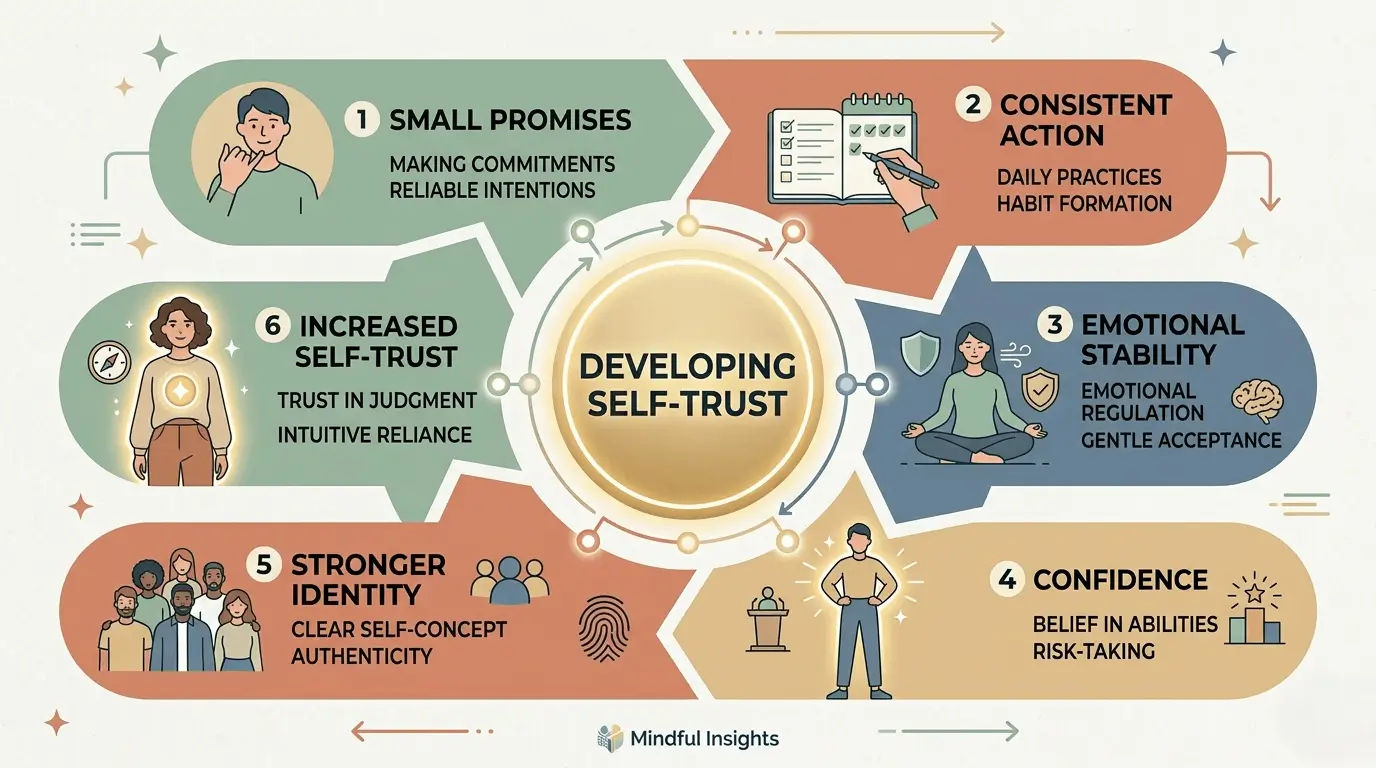
Sustainable Habits That Strengthen Self-Trust Long-Term
Keeping Small Promises to Yourself
Self-trust grows when actions consistently match intentions.
Examples include:
- Waking up on time
- Completing planned tasks
- Following simple routines
- Practicing emotional regulation
Small wins create psychological evidence that reinforces reliability.
Building Consistent Routines
Consistency vs intensity is important in sustainable self-improvement.
Extreme routines often create burnout, while realistic systems encourage long-term progress.
Reliable routines strengthen:
- Emotional stability
- Time management
- Self-discipline
- Confidence
Journaling and Self-Reflection
Journaling increases emotional awareness and helps identify negative thought patterns.
Reflection practices can help people:
- Recognize emotional triggers
- Track progress
- Reinforce positive habits
- Reduce impulsive reactions
Practicing Self-Respect Through Boundaries
Healthy boundaries reinforce self-respect and emotional security.
People build stronger self-trust when they:
- Protect their time
- Say no when necessary
- Prioritize emotional well-being
- Align actions with values
Sustainable self-improvement depends more on consistency than perfection.
Conclusion
Self trust affirmations help shape confidence, emotional resilience, self-worth, and healthier decision-making through intentional self-talk and consistent mental conditioning. Positive affirmations for self trust can gradually reduce self-doubt, improve emotional stability, and strengthen personal accountability when practiced regularly.
Affirmations become most effective when supported by action, self-awareness, and sustainable habits. Real self-trust develops through repeated evidence, emotional honesty, and consistency rather than perfection.
A personalized affirmation practice rooted in realistic growth and self-respect can strengthen confidence, discipline, emotional resilience, and long-term self-belief over time.
FAQs
What are self trust affirmations?
Self trust affirmations are positive statements designed to strengthen confidence in your thoughts, decisions, and abilities through consistent self-talk and mindset reinforcement.
Why do I struggle to trust myself?
Many people struggle with self-trust because of past failures, negative self-talk, perfectionism, fear of judgment, or constantly relying on external validation.
Do affirmations actually improve self-confidence?
Affirmations can improve self-confidence when they are repeated consistently and supported by actions that reinforce positive beliefs and personal progress.
How long does it take for affirmations to work?
Results vary, but most people notice mindset shifts after several weeks of consistent repetition combined with behavior change and emotional awareness.
What are the best morning affirmations for self-worth?
Morning affirmations focused on self-worth usually reinforce confidence, self-respect, emotional stability, and trust in personal growth.
Why do affirmations sometimes feel fake?
Affirmations can feel unrealistic if they are too extreme or disconnected from your current beliefs. Starting with believable and emotionally grounded statements often works better.
Can affirmations help with self-image and insecurity?
Yes. Self-image affirmations may help reduce negative self-talk, improve body confidence, and strengthen emotional self-acceptance over time.
What is the difference between self-love affirmations and self-trust affirmations?
Self-love affirmations focus on acceptance and compassion, while self-trust affirmations focus more on confidence in decisions, judgment, and personal reliability.