

Table of Contents
ToggleIntroduction
Affirmations for discipline are simple, intentional self-talk statements used to reinforce consistency, self-control, and productive behavior. In practical terms, they are repeated phrases that help guide your thoughts toward disciplined action, especially when motivation is low or distractions are high. These statements shape mindset patterns over time by influencing how you respond to tasks, challenges, and emotional resistance.
Repeated self-talk directly affects behavior, motivation, and habit formation because thoughts influence emotions, and emotions influence actions. Over time, this cycle strengthens or weakens discipline depending on the type of internal dialogue you maintain. However, affirmations alone do not create discipline. Without consistent action, structure, and real-life repetition, they remain mental reminders rather than behavioral change tools.
Discipline affirmations connect mindset with self-control, emotional regulation, and daily routines. When used correctly, they support identity-based change—helping you think like a disciplined person instead of just trying to act like one occasionally. This shift reduces procrastination and builds long-term consistency through reinforced thinking patterns and behavioral alignment.
Many people struggle with discipline despite having clear goals because their actions are driven by mood, not systems. Positive affirmations for discipline help bridge this gap by reinforcing stable mental frameworks that support consistency even when motivation fades.
Quick Summary
- Affirmations for discipline help reinforce consistent thinking and productive behaviors
- Repeating intentional statements can improve focus, self-control, and habit awareness
- Discipline grows through repetition, routines, and emotionally believable self-talk
- The most effective affirmations are paired with action, structure, and daily consistency
What Are Affirmations for Discipline?
Affirmations for discipline are structured, repeated statements designed to strengthen self-control, consistency, and goal-directed behavior. They act as mental cues that guide your attention toward productive actions and reduce impulsive or distracted decision-making.
How Affirmations Influence Behavior and Mindset
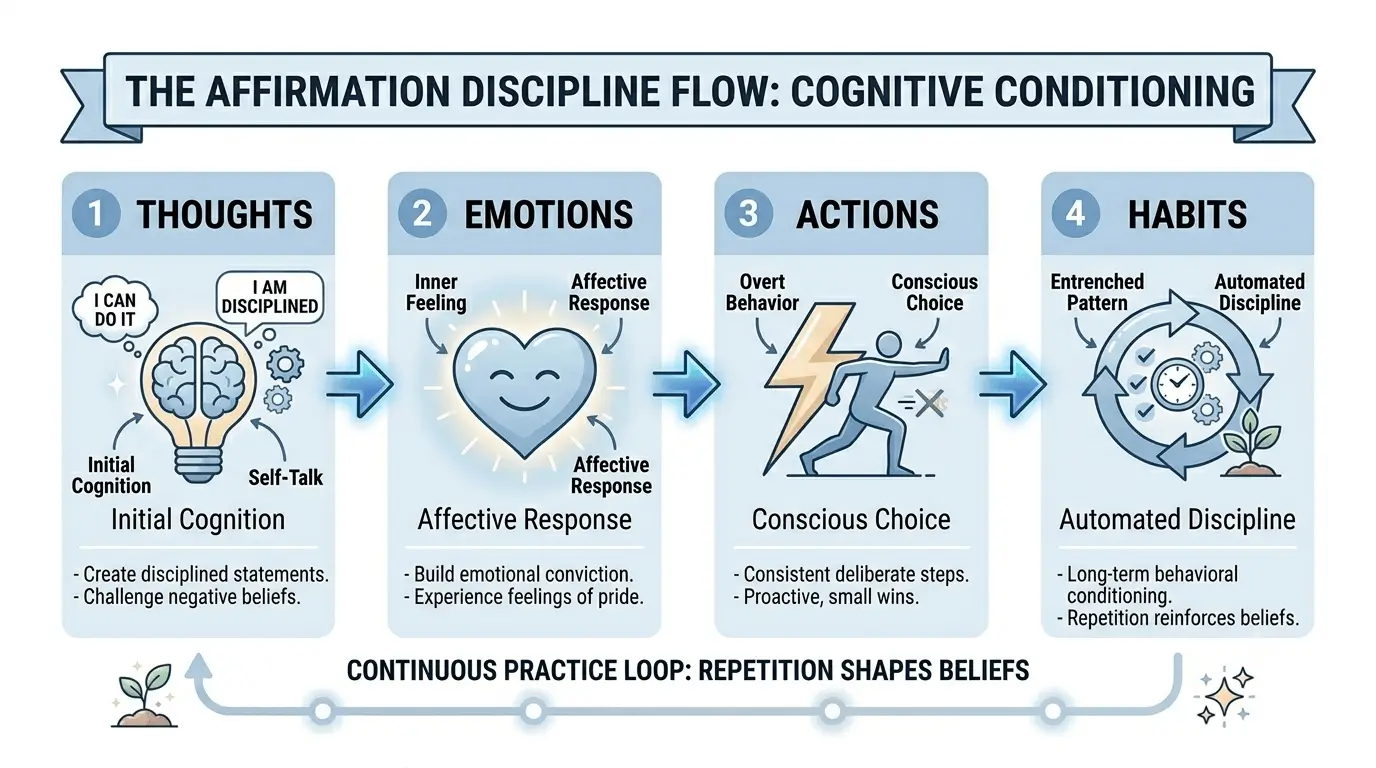
Affirmations influence behavior by shaping internal dialogue, which directly affects decisions, emotions, and habits. When you repeatedly use discipline affirmations, you train your mind to respond differently to challenges, discomfort, and temptation.
Thoughts trigger emotional responses, and emotions influence actions. Over time, repeated actions become automatic habits. This is why self control affirmations and affirmations for self discipline are often used in behavior change practices—they gradually rewire how you interpret effort and resistance.
Repetition plays a key role in cognitive conditioning. When a belief is repeated consistently, the brain begins to treat it as familiar and safer, reducing internal resistance. This is how affirmations for consistency and discipline support long-term behavioral reinforcement.
Why Discipline Is More Mental Than Motivational
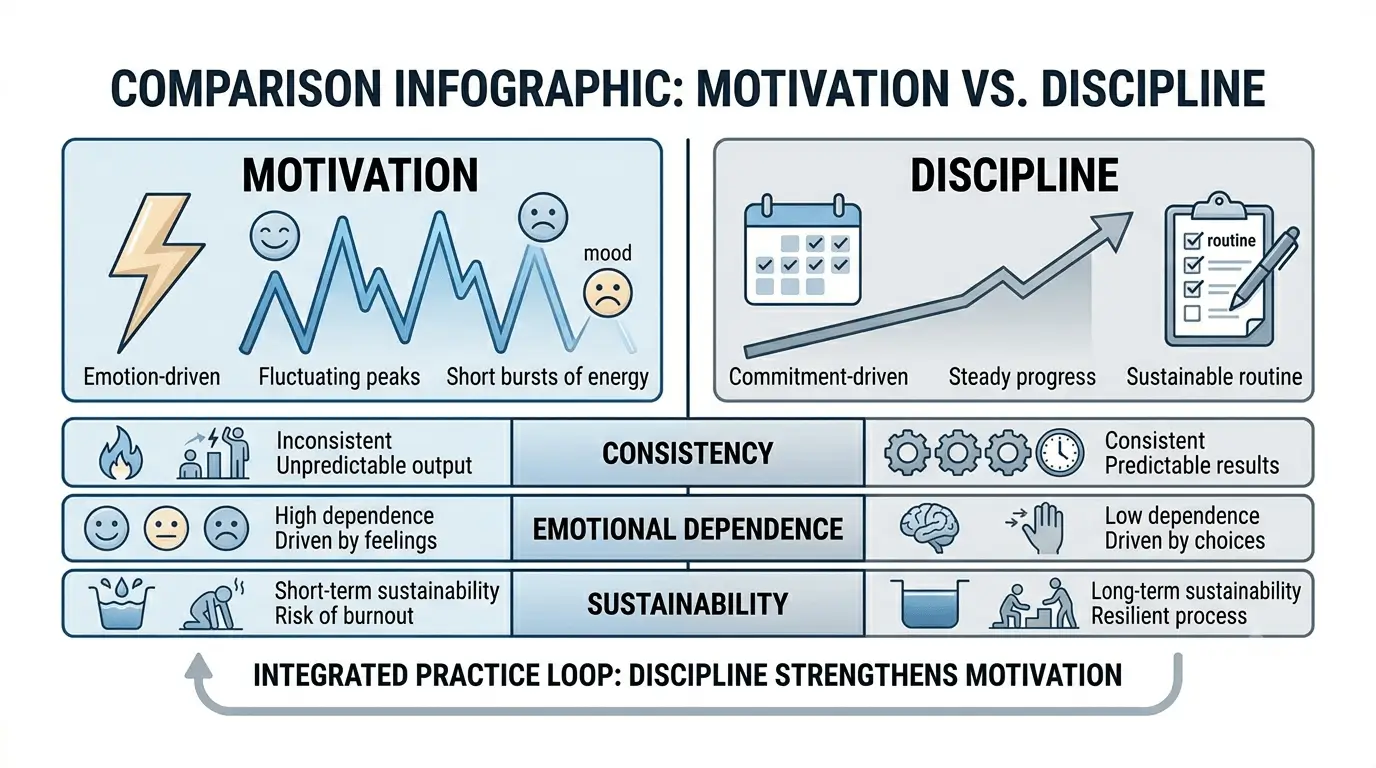
Discipline is primarily mental because it depends on identity, systems, and emotional regulation—not short-term motivation. Motivation is temporary and fluctuates based on mood, energy, and external conditions.
People often start strong but quit when emotional discomfort appears. This is because they rely on feelings instead of structure. Disciplined individuals rely on systems, routines, and identity-based thinking instead of emotional highs.
If you struggle with staying consistent even when motivation disappears, learning how to build discipline without motivation can help you develop stronger identity-based habits beyond emotional drive.
Comparison Block: Motivation vs Discipline
| Motivation | Discipline |
|---|---|
| Emotion-driven | Habit-driven |
| Temporary bursts | Long-term consistency |
| Depends on mood | Depends on routines |
| Exciting at first | Sustainable over time |
Affirmations for focus and discipline work by reinforcing identity-based thinking, such as “I act consistently regardless of how I feel.” A self-discipline mantra strengthens persistence even when motivation disappears, helping prevent early quitting behavior.
How Daily Discipline Affirmations Improve Consistency
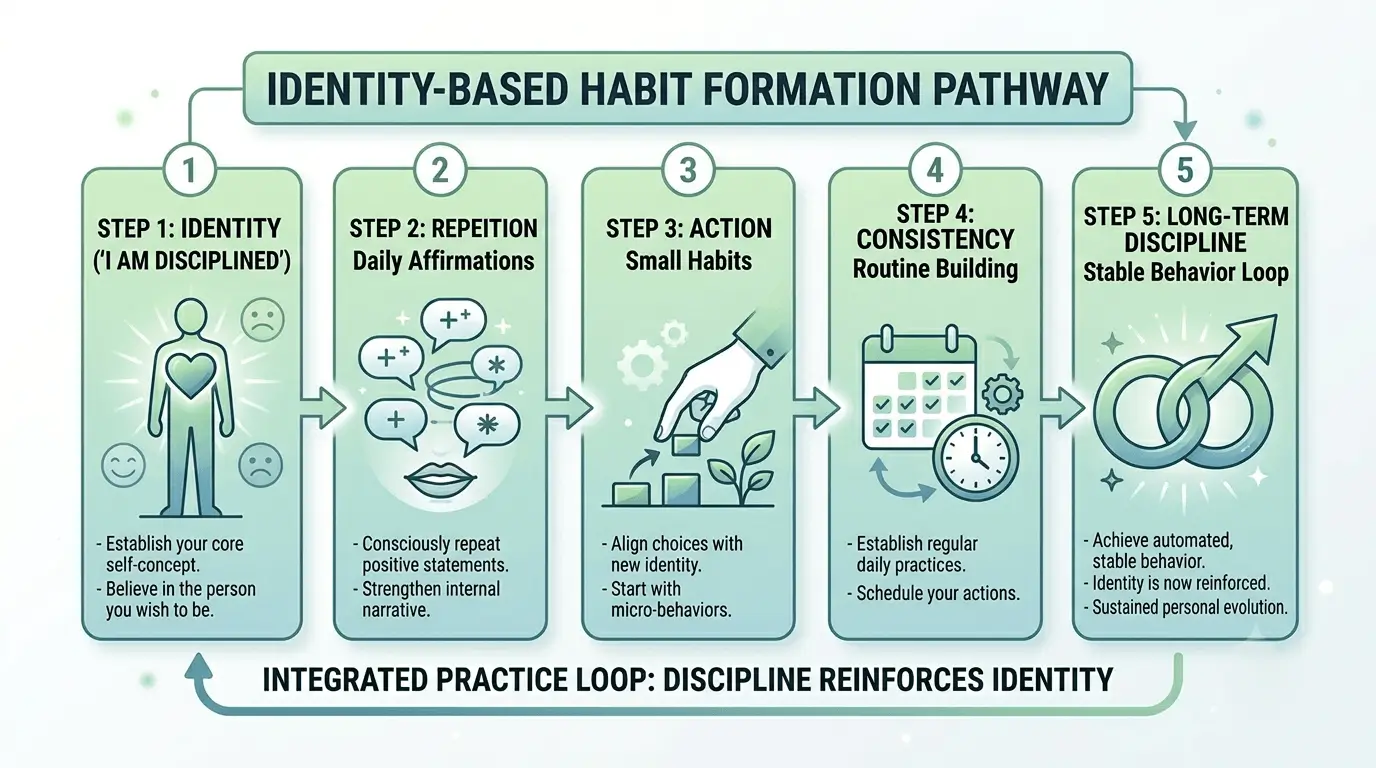
Daily discipline affirmations improve consistency by reinforcing identity, reducing decision fatigue, and strengthening behavioral repetition. When repeated daily, they help align thoughts with long-term habits.
A powerful way to strengthen affirmations is combining them with reflective writing, such as learning how to journal for self-growth, which helps reinforce identity-based thinking and behavioral awareness.
Building Identity Through Repetition
Identity-based habits focus on becoming a disciplined person rather than just completing tasks. Daily affirmations for discipline reinforce this identity by shaping how you perceive yourself in relation to your actions.
For example, statements like “I follow through on my commitments” or “I stay consistent even when progress is slow” help reinforce self-image over time.
Morning affirmations for discipline are especially effective because they set mental direction before distractions and emotional challenges arise. The key factor is consistency—small repeated affirmations are more effective than intense but irregular practice.
The Connection Between Self-Talk and Self-Control
Self-talk directly influences self-control by shaping emotional responses to impulses and distractions. Many procrastination behaviors come from emotional triggers such as fear, overwhelm, or discomfort.
Self control affirmations help create awareness between impulse and action, allowing space for intentional decision-making instead of automatic reactions.
For example:
- “I choose action over avoidance.”
- “I stay focused on what matters.”
- “I manage my emotions with discipline.”
Affirmations for consistency support delayed gratification by strengthening long-term thinking. Autonomy affirmations reinforce personal responsibility, helping individuals feel in control of their behavior rather than influenced by external triggers.
Best Types of Discipline Affirmations for Different Goals
Affirmations for Focus and Productivity
Affirmations for focus and discipline help improve attention control, reduce distractions, and support deep work habits. They train the mind to stay engaged with important tasks even when mental fatigue appears.
Examples include:
- “I focus on one task at a time.”
- “I eliminate distractions and stay present.”
- “I complete important work before less important tasks.”
Mental fatigue often leads to reduced discipline, which is why positive affirmations for discipline help reinforce mental clarity and sustained productivity.
Affirmations for Confidence and Self-Belief
Confidence plays a critical role in discipline because people are more likely to follow through when they believe in their ability to succeed.
Fear of failure and self-doubt weaken consistency, while confidence strengthens persistence.
Examples include:
- affirmation confidence: “I trust my ability to stay consistent.”
- affirmations for self confidence: “I handle challenges with strength.”
- affirmations about confidence: “I improve through consistent effort.”
- confident affirmation: “I take action even when unsure.”
Affirmations for confidence and self-confidence reduce hesitation and support long-term follow-through by reinforcing belief in personal capability.
Affirmations for Self-Love and Emotional Stability
Self-criticism often reduces discipline by increasing emotional stress and burnout. Self love affirmations help create emotional balance and sustainable productivity.
Examples include:
- affirmation self love: “I treat myself with respect and patience.”
- affirmations for self-love: “I allow myself to grow without pressure.”
- positive self love affirmations: “I support myself through challenges.”
- love self affirmations: “I choose self-respect over self-criticism.”
When emotional stability increases, discipline becomes easier to maintain because the mind is not overloaded by guilt or perfectionism.
How to Use Affirmations Effectively in Daily Life
Morning vs Evening Affirmation Routines
Morning affirmations for discipline help set intention and focus, while evening affirmations reinforce reflection and accountability. Both play different but complementary roles in behavior reinforcement.
Comparison Block: Morning vs Evening Discipline Practice
| Morning Practice | Evening Practice |
|---|---|
| Sets mental direction | Reinforces reflection |
| Builds proactive focus | Encourages accountability |
| Supports productivity | Reduces negative self-talk |
Affirmations for daily life are more effective when paired with habit stacking, such as repeating them during routines like brushing teeth, journaling, or planning the day.
How to Write an Effective Affirmation Statement
How to write an affirmation statement involves creating believable, present-tense, and identity-focused phrases that align with real behavior.
Step-by-step process:
- Identify the behavior you want to improve
- Focus on identity instead of outcomes
- Use present-tense, realistic language
- Repeat consistently with action
- Track behavioral progress over time
A discipline mantra should feel emotionally believable. Generic or exaggerated statements often fail because the brain rejects them as unrealistic.
Common Mistakes That Make Affirmations Ineffective
Relying on Motivation Without Systems
Affirmations fail when they are not supported by routines, structure, or accountability systems. Motivation alone is unstable and cannot sustain long-term discipline.
Using Unrealistic or Emotionally Empty Statements
When affirmations feel fake, the brain resists them. This emotional disconnect reduces effectiveness and creates internal skepticism instead of reinforcement.
Expecting Immediate Results
Behavior change takes time. Discipline develops gradually through repetition, emotional adaptation, and consistent reinforcement.
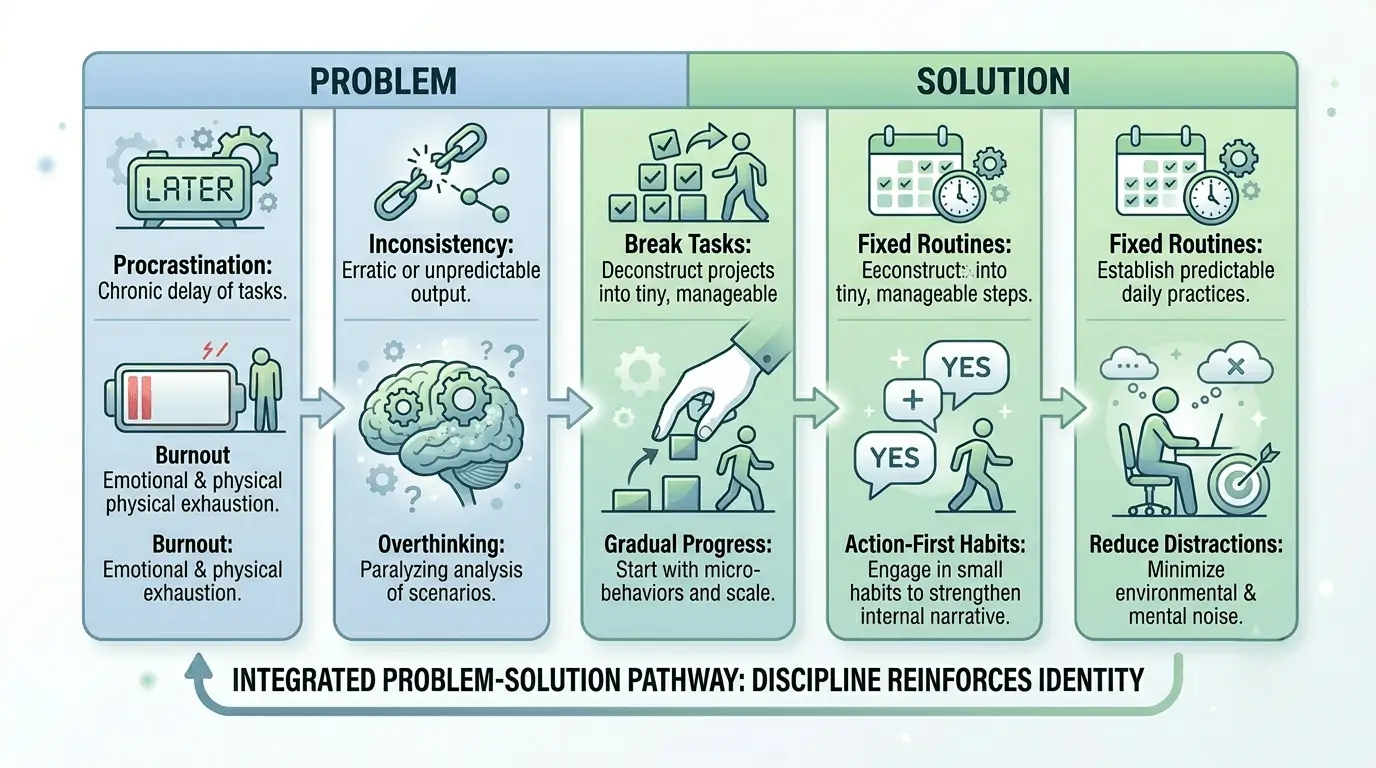
Table: Common Discipline Problems and Practical Solutions
| Problem | Why It Happens | Practical Solution |
|---|---|---|
| Procrastination | Fear or overwhelm | Break tasks into smaller actions |
| Inconsistency | Mood-based behavior | Create fixed routines |
| Burnout | Unsustainable intensity | Focus on gradual progress |
| Overthinking | Fear of failure | Use action-first habits |
| Lack of focus | Constant distractions | Reduce decision fatigue |
Real-Life Ways to Apply Discipline Affirmations
Using Affirmations During Habit Change
Affirmations for changing habits are effective when paired with real behavioral adjustments such as exercise routines, study habits, or reducing distractions.
They support habit replacement by reinforcing identity shifts, such as becoming a consistent student, athlete, or professional.
Beginner vs Advanced Discipline Practices
Comparison Block: Beginner vs Advanced Discipline Building
| Beginner Approach | Advanced Approach |
|---|---|
| Uses motivation frequently | Relies on systems |
| Focuses on goals | Focuses on identity |
| Tries major changes quickly | Builds gradual routines |
| Depends on willpower | Uses automation and habits |
What Actually Works for Long-Term Discipline
Sustainable Habits vs Short-Term Intensity
Long-term discipline is built through consistent, small actions rather than extreme effort. Sustainable habits reduce burnout and support emotional balance, making discipline easier to maintain over time.
Combining Affirmations With Systems and Accountability
Self discipline affirmations work best when combined with structured systems such as:
- Habit tracking
- Routine planning
- Environmental cues
- Accountability practices
Affirmations strengthen mindset, while systems strengthen behavior. Together, they create stable long-term discipline.
Conclusion
Affirmations for discipline improve consistency, focus, and self-control by reinforcing identity-based thinking and structured self-talk. However, they are most effective when combined with real action, habits, and systems rather than used alone.
Long-term discipline is built through repetition, emotional regulation, and sustainable routines. By combining affirmations with consistent behavior, individuals can shift from short-term motivation to stable, identity-driven discipline.
FAQs
Why do I struggle with discipline even when I feel motivated?
Motivation is emotional and temporary, while discipline depends on structured habits and systems. Without routines, behavior becomes inconsistent.
Do affirmations really help with self-discipline?
Yes, affirmations help reinforce mindset and behavioral patterns, but only when combined with consistent action and routines.
How often should I repeat discipline affirmations?
Daily repetition is most effective, especially when paired with existing habits like morning routines or journaling.
What are the best affirmations for focus and self-control?
Effective affirmations include statements like “I stay focused on important tasks” and “I control my impulses with awareness.”
Why do affirmations sometimes feel fake or ineffective?
They often feel ineffective when they are unrealistic or emotionally disconnected from actual behavior.
Can affirmations help stop procrastination?
Yes, they can reduce procrastination by improving awareness, emotional control, and action orientation, especially when paired with small steps.
What is the difference between confidence affirmations and discipline affirmations?
Confidence affirmations strengthen belief in self, while discipline affirmations reinforce consistent behavior and follow-through.
How long does it take for affirmations to influence habits?
Habit change takes time and depends on repetition, consistency, and reinforcement through real-life action.










3 Responses