

Introduction
Positive morning affirmations are intentional statements repeated early in the day to reinforce constructive thinking patterns, emotional stability, and self-confidence. Many people use affirmations for the morning to guide attention away from stress, self-doubt, and reactive thinking. Because mornings strongly influence mental momentum and decision-making, positive affirmations in the morning can shape emotional energy, productivity, and behavior throughout the day. However, positive affirmations morning routines are not magic solutions. They work best when paired with consistent action, healthy habits, and realistic self-belief. A simple morning positive affirmation practice can help improve focus, emotional regulation, and long-term personal growth when used consistently over time.
Quick Summary
- Positive morning affirmations help reinforce constructive thought patterns and emotional stability
- Repeating intentional statements in the morning can improve focus, confidence, and stress management
- Consistency matters more than intensity when building an affirmation habit
- Affirmations are most effective when connected to actions, routines, and realistic self-belief
What Are Positive Morning Affirmations?
The Simple Definition of Morning Affirmations
Morning affirmations are intentional statements designed to guide mindset, focus, and emotional attention at the beginning of the day. An affirmation morning practice involves repeating supportive thoughts that align with personal goals, emotional balance, and healthy behavior patterns.
A morning affirmation is different from unrealistic positive thinking. Evidence-based self-talk focuses on believable and constructive language rather than denying real problems. For example, a positive affirmation to start the day might say:
- “I can handle challenges calmly.”
- “I am improving through consistent effort.”
- “I can make thoughtful decisions today.”
Positive affirmations to start the day influence how the brain interprets experiences. Language affects perception, emotional response, and attention patterns. Repeated self-directed thoughts can gradually influence confidence, stress responses, and behavioral choices.
Morning affirmations are often used as a foundational tool for personal transformation, especially for people working toward becoming the best version of yourself or following structured best ways to achieve personal growth frameworks.
Why Morning Affirmations Affect the Brain and Mood
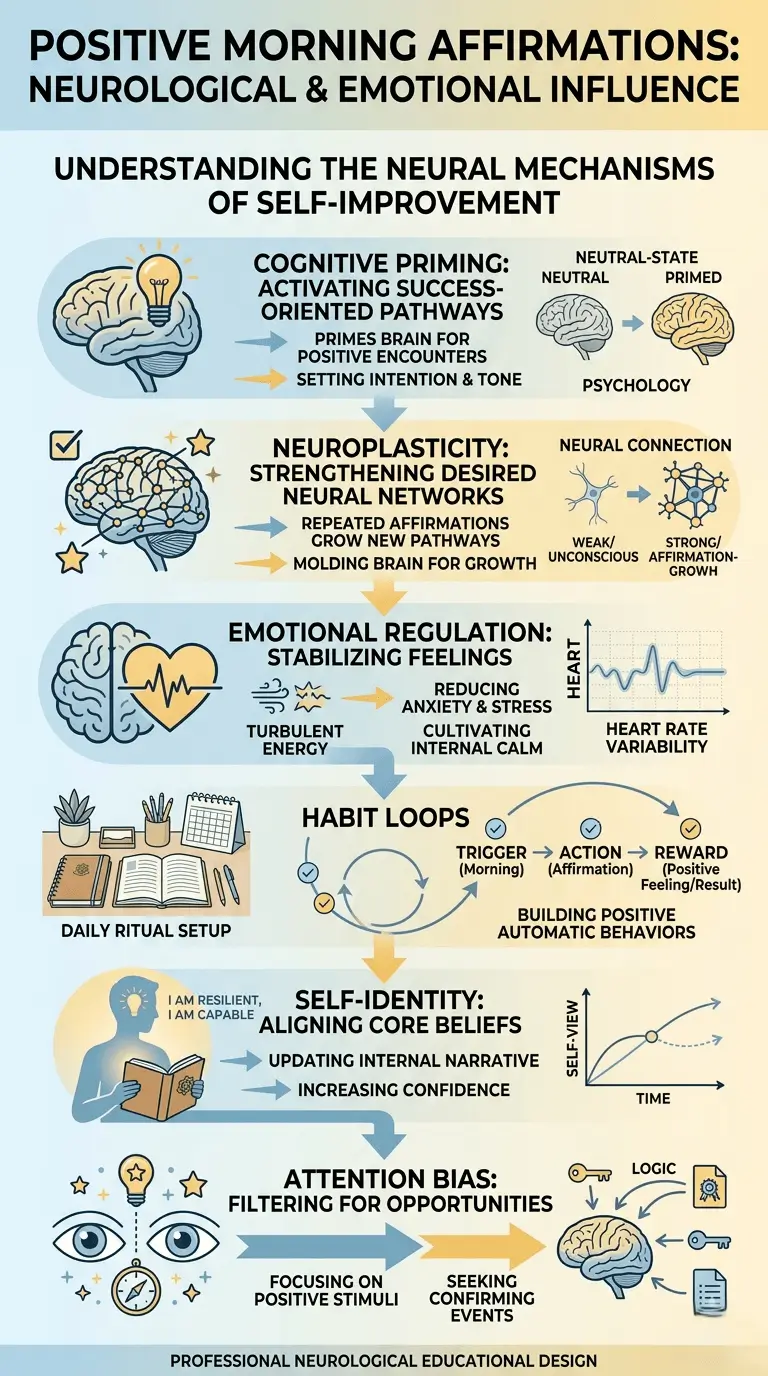
Morning affirmations influence the brain through repetition, cognitive priming, and attention bias. Repeated thoughts strengthen mental pathways associated with self-perception and emotional reactions.
Behavioral psychology explains this through:
- Habit loops
- Mental conditioning
- Emotional reinforcement
- Self-identity development
Neuroplasticity refers to the brain’s ability to adapt and reorganize through repeated experiences and thought patterns. Consistent affirmations can help reduce automatic negative self-talk while encouraging healthier emotional responses.
Morning affirmations also create cognitive priming. The brain tends to notice information that matches current mental focus. When someone starts the day with intentional thoughts, they are more likely to notice opportunities, solutions, and productive behaviors throughout the day.
This process also connects with consciousness awareness and practices like focus on what you can control, which are often discussed in non duality examples and modern behavioral psychology.
Benefits of Positive Morning Affirmations
Improved Confidence and Self-Image
Repeated self-directed language can gradually influence confidence and internal beliefs. Identity-based habits develop when behaviors and thoughts consistently reinforce a desired self-image.
For example:
| Negative Self-Talk | Constructive Affirmation |
|---|---|
| “I always fail.” | “I learn through consistent effort.” |
| “I’m not capable.” | “I can improve with practice.” |
| “I’m behind everyone.” | “My progress happens step by step.” |
Over time, these shifts can improve self-perception and emotional resilience.
Better Emotional Energy and Stress Management
Morning affirmations for positive energy can help regulate emotional responses before stress accumulates during the day. Positive energy morning affirmations encourage calm attention instead of reactive thinking.
Emotional energy directly affects:
- Productivity
- Communication
- Decision-making
- Patience
- Relationship quality
Examples include:
- “I respond calmly under pressure.”
- “I protect my peace and energy.”
- “I can handle today with clarity.”
Increased Focus, Motivation, and Daily Consistency
Powerful daily affirmations help direct attention toward long-term priorities rather than short-term emotional distractions. Daily positive morning affirmations can support discipline when attached to routines and behavior systems.
Positive daily morning affirmations work best when combined with:
- Task planning
- Time management
- Habit tracking
- Consistent sleep schedules
Affirmations alone do not create discipline, but they can reinforce productive identity patterns.
Healthier Morning Routines and Decision-Making
Intentional mornings reduce reactive behavior. People who begin the day with structured habits are often less emotionally impulsive later in the day.
Morning affirmations can support:
- Mindfulness
- Planning
- Emotional awareness
- Better time management
- Reduced decision fatigue
Why Many People Struggle With Affirmations
Unrealistic Expectations and Instant Results
Many people expect affirmations to create immediate transformation. In reality, affirmations are tools for mental conditioning, not instant solutions.
Long-term effectiveness depends on:
- Repetition
- Emotional consistency
- Aligned action
- Habit reinforcement
Negative Self-Talk and Emotional Resistance
Self-doubt, imposter syndrome, and internal criticism can make affirmations feel uncomfortable initially. Some people experience emotional resistance because the affirmations conflict with deeply established beliefs.
For example, saying “I completely love myself” may feel emotionally unrealistic to someone struggling with severe self-criticism. More believable language often works better.
Inconsistency and Lack of Routine
Habit friction makes morning routines difficult to maintain. Motivation changes daily, which is why systems usually outperform emotional enthusiasm alone.
Simple routines are easier to repeat consistently than complex routines.
How to Use Positive Morning Affirmations Effectively
Start With Short and Believable Statements
Short positive affirmations for the day are easier for the brain to accept and repeat consistently.
Many people combine affirmations with how to journal for self-growth or structured journaling prompts for self growth, as these methods strengthen reflection and discipline without motivation over time.
Examples of short positive morning affirmations:
- “I can handle today calmly.”
- “I make steady progress.”
- “I deserve rest and balance.”
- “I focus on what I can control.”
Pair Affirmations With Existing Morning Habits
Habit stacking improves consistency by attaching affirmations to existing behaviors.
Examples:
- Brushing teeth
- Journaling
- Meditation
- Stretching
- Walking
This reduces mental resistance and creates stronger consistency triggers.
Speak in the Present Tense and With Emotional Intention
I am morning affirmations often create stronger emotional associations because they reinforce identity-centered thinking.
Examples:
- “I am disciplined.”
- “I am learning daily.”
- “I am emotionally resilient.”
Present-tense language helps connect affirmations to current behavior rather than distant goals.
Combine Affirmations With Action
Affirmations without behavior change lose effectiveness over time. Repetition must connect with action.
Examples:
| Affirmation | Aligned Action |
| “I value my health.” | Exercising regularly |
| “I am productive.” | Following a task system |
| “I manage stress calmly.” | Practicing breathing exercises |
Positive Morning Affirmation Examples for Different Situations
Positive Morning Affirmations for Women
Positive morning affirmations for women often focus on confidence, emotional resilience, boundaries, and self-worth.
Examples:
- “I respect my emotional needs.”
- “My voice deserves to be heard.”
- “I protect my energy and boundaries.”
Positive Morning Affirmations for Men
Positive morning affirmations for men and positive morning affirmations for him often emphasize discipline, emotional balance, leadership, and stress management.
Examples:
- “I lead with calm confidence.”
- “I stay disciplined during challenges.”
- “I respond thoughtfully under pressure.”
Positive Morning Affirmations for Kids
Positive morning affirmations for kids can support emotional development and healthy self-esteem.
Examples:
- “I can learn new things.”
- “Mistakes help me grow.”
- “I can be kind and confident.”
Affirmations for Supporting and Encouraging Others
Short positive affirmations for others and morning affirmations for positive energy for others can strengthen empathy and supportive relationships.
Examples:
- “You are capable of growth.”
- “Your effort matters.”
- “You can handle this challenge.”
Morning Affirmations vs Motivation: What Actually Builds Long-Term Change?
Motivation vs Discipline
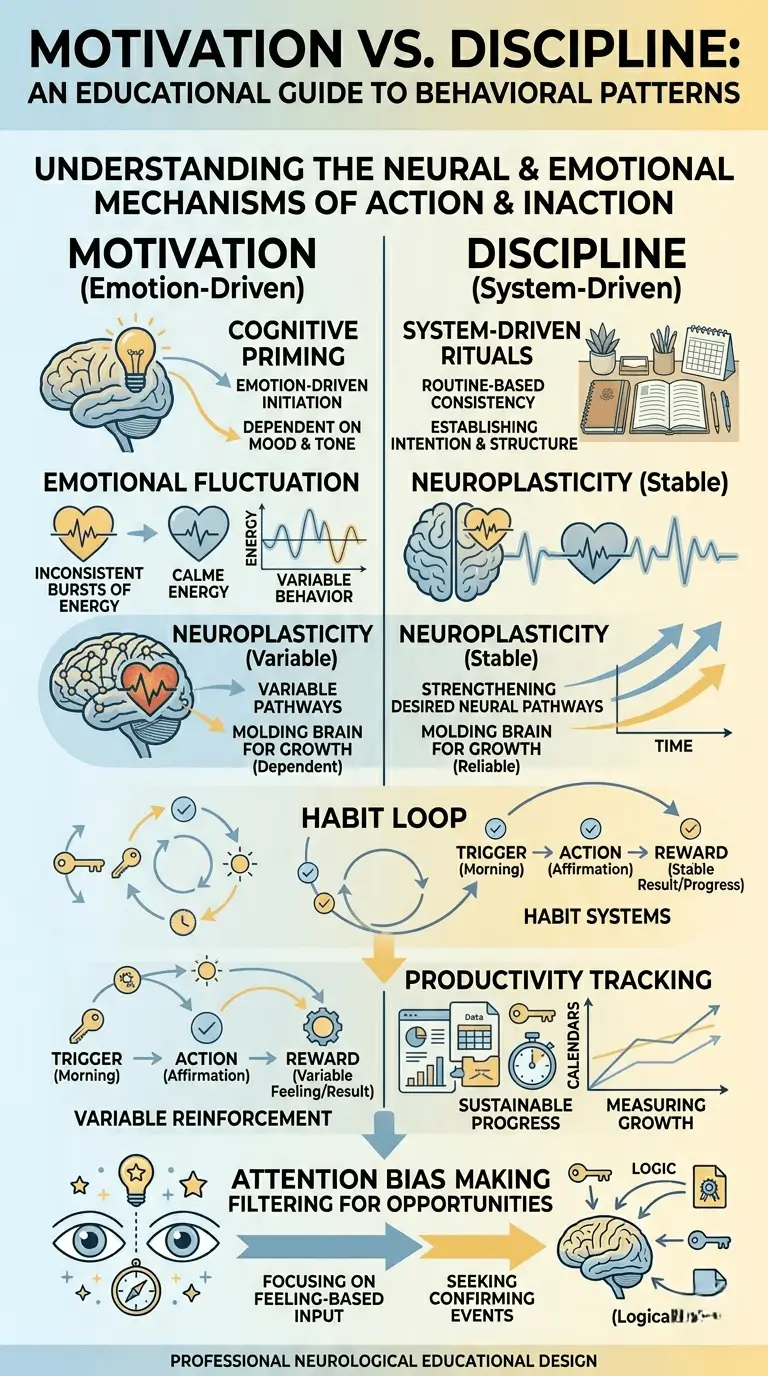
| Motivation | Discipline |
| Emotion-driven | System-driven |
| Temporary | Sustainable |
| Depends on mood | Depends on routine |
| Creates bursts of action | Builds long-term consistency |
Affirmations support discipline better when connected to repeatable routines.
Consistency vs Intensity
| Consistency | Intensity |
| Small daily effort | Occasional extreme effort |
| Easier to sustain | Easier to quit |
| Builds habits gradually | Often causes burnout |
Short daily affirmations are generally more sustainable than occasional long sessions.
Common Mistakes That Make Morning Affirmations Less Effective
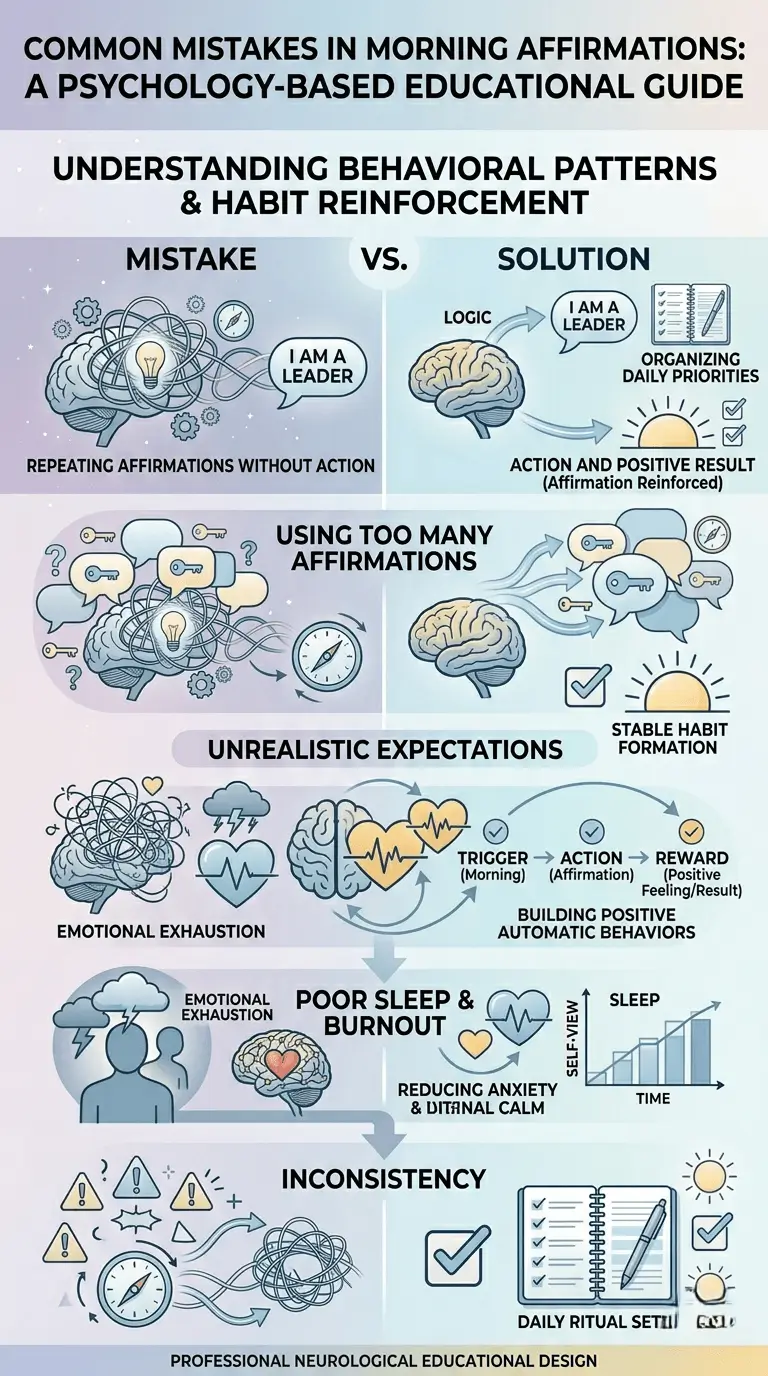
Repeating Statements Without Belief or Action
Passive repetition creates emotional disconnect. Affirmations are more effective when supported by realistic self-belief and action.
Using Too Many Affirmations at Once
Too many affirmations can create cognitive overload and reduce emotional focus. Fewer targeted affirmations are usually easier to maintain consistently.
Ignoring Sleep, Stress, and Mental Health Factors
Burnout, overwhelm, emotional exhaustion, and poor sleep can reduce the effectiveness of affirmations. Affirmations cannot replace proper rest, therapy, or mental health support when needed.
Building a Sustainable Morning Affirmation Routine
A Beginner-Friendly Daily Routine
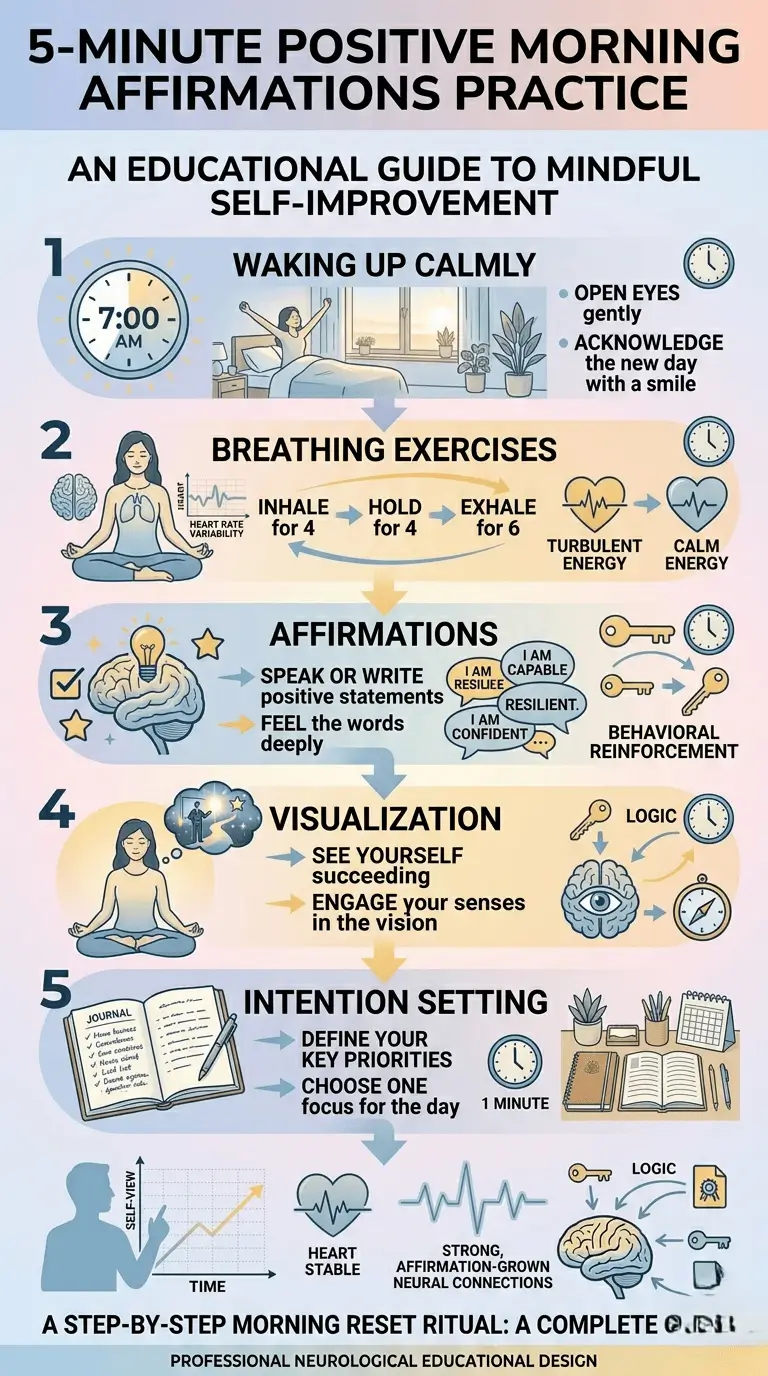
A simple 5 minute positive morning affirmations routine may include:
- Wake up calmly
- Take slow breaths
- Repeat 10 positive morning affirmations
- Visualize the day intentionally
- Set one daily intention
This structure reduces overwhelm while improving consistency.
Habit Tracking and Long-Term Consistency
Habit tracking reinforces identity-based behavior change.
Useful systems include:
- Habit apps
- Journaling checklists
- Calendars
- Visual progress trackers
Tracking reduces skipped days and strengthens self-discipline over time.
Creating a Personalized Affirmation Practice
Goals, personality, emotional needs, and lifestyle all influence affirmation effectiveness. Some people prefer written affirmations, while others prefer spoken repetition or guided audio.
During stressful periods, affirmations may need to become simpler and more emotionally supportive.
Morning Meditation and Affirmations Together
How Meditation Enhances Affirmation Effectiveness
Morning meditation affirmation practices improve focus, emotional awareness, and nervous system regulation. Morning meditation affirmations often become more effective when the mind is calm and attentive.
Meditation can help reduce mental distraction and emotional reactivity before affirmations are repeated.
Guided vs Silent Affirmation Practices
| Method | Best For |
| Audio affirmations | People who prefer external guidance |
| Self-spoken affirmations | Strong emotional engagement |
| Journaling affirmations | Reflective thinkers |
Different methods suit different personality types and attention styles.
Myths About Positive Morning Affirmations
“Affirmations Solve Everything”
Affirmations are supportive tools, not complete solutions. Sustainable improvement still requires behavior change and consistent habits.
“Positive Thinking Means Ignoring Problems”
Healthy optimism does not mean emotional avoidance. Effective affirmations acknowledge reality while encouraging constructive responses.
“Affirmations Only Work for Certain People”
Affirmations are adaptable and highly personal. Their effectiveness depends more on consistency, emotional relevance, and action than personality type.
What Actually Works for Long-Term Mindset Change
Identity-Based Habits and Repetition
Repeated actions shape self-image over time. Small behaviors repeated consistently often influence mindset more effectively than occasional emotional motivation.
Emotional Awareness and Self-Compassion
Long-term growth is more sustainable when supported by self-awareness instead of harsh self-criticism.
Small Daily Improvements Over Perfection
Progress-based thinking improves consistency because it reduces overwhelm and unrealistic expectations.
Conclusion
Positive morning affirmations can help improve mindset, emotional energy, focus, and daily behavior when practiced consistently. They support emotional regulation, confidence, and intentional thinking by reinforcing healthier mental patterns over time. However, affirmations work best when paired with realistic expectations, consistent routines, and aligned action. Sustainable growth comes from repetition, self-awareness, and gradual improvement rather than perfection. A simple daily affirmation practice connected to healthy habits can become a powerful tool for long-term emotional resilience and personal development.
FAQs
Why do positive morning affirmations help some people feel more motivated?
Morning affirmations create cognitive priming by directing attention toward constructive goals and emotional focus. They can improve intentional thinking patterns and reduce negative mental distractions early in the day.
Why do I struggle to believe my affirmations?
Negative self-talk, emotional resistance, and unrealistic wording can make affirmations feel uncomfortable. Starting with believable and emotionally realistic affirmations usually improves consistency.
How long does it take for morning affirmations to become effective?
Results vary depending on consistency, emotional engagement, and aligned behavior. Many people notice small mindset shifts within a few weeks of regular practice.
What are the best short positive morning affirmations for beginners?
Examples include:
- “I can handle today calmly.”
- “I focus on progress.”
- “I am improving daily.”
- “I can learn from challenges.”
Can morning affirmations improve confidence and reduce stress?
Yes. Consistent affirmations may support emotional regulation, self-perception, and stress management by reducing automatic negative thinking patterns.
Are affirmations better when spoken out loud or written down?
Both methods can work effectively. Spoken affirmations may create stronger emotional engagement, while written affirmations encourage reflection and deeper focus.
What should I do if I lose motivation to continue affirmations?
Simplify the routine and focus on consistency instead of intensity. Habit systems and identity-based routines are usually more reliable than motivation alone.
Can positive morning affirmations work alongside meditation or journaling?
Yes. Combining affirmations with meditation or journaling can improve mindfulness, emotional awareness, and reflective thinking, which may strengthen long-term consistency.










One Response