
Introduction
A growth mindset story is a narrative built around learning rather than talent. Instead of a character who simply succeeds, the character faces a real obstacle, makes mistakes, adjusts strategy, and improves through effort and feedback. This framing connects directly to the growth mindset concept developed by psychologist Carol Dweck, which distinguishes between believing abilities are fixed and believing abilities can develop. The strongest growth mindset stories never rely on “just work harder.” They show mistakes being used as information, strategies being changed, help being requested, and persistence continuing after setbacks. These stories are used by children, students, educators, parents, and adults, each applying the same underlying lesson to different challenges.
Quick Summary
- A growth mindset story shows how a person can develop abilities through learning, practice, feedback, and effective strategies.
- The most useful stories show characters responding constructively to mistakes or challenges rather than simply succeeding immediately.
- Stories can help kids, students, and adults recognize fixed-mindset thinking and practice more flexible responses.
- A good growth mindset story connects its lesson to a real-life behavior readers can apply.
What Is a Growth Mindset Story?
A growth mindset story is a narrative in which a character learns, improves, adapts, or develops through effort, strategies, feedback, and persistence, rather than through natural talent alone. The concept is rooted in Carol Dweck’s research on mindset, which found that people who believe abilities can be developed tend to engage more productively with challenges than people who believe abilities are fixed traits. believe abilities can be developed tend to engage more productively with challenges — a principle reflected throughout Carol Dweck’s mindset quotes.
A story only qualifies as a genuine growth mindset story if it goes beyond generic encouragement. It should demonstrate a character learning from mistakes, changing approach based on feedback, seeking help when needed, and continuing after a setback instead of stopping. These elements separate a growth mindset story from a simple motivational tale that ends in immediate success.
Growth mindset stories are used across several audiences:
- Children, who benefit from short, concrete examples tied to everyday challenges.
- Students, who apply the concept to schoolwork, exams, and skill-building.
- Educators, who use stories as classroom discussion tools.
- Parents, who model learning-oriented language at home.
- Adults, who apply the same principles to careers, creative work, and personal goals.
Core related concepts include fixed mindset, resilience, persistence, and learning from failure. Understanding how these ideas connect to one another helps clarify why a story succeeds or falls short as a teaching tool.
What Makes a Story a Growth Mindset Story?
Certain criteria distinguish an authentic growth mindset narrative from a generic motivational story.
The Character Faces a Meaningful Challenge
An effective story identifies a specific obstacle or learning difficulty rather than a vague hardship. Struggle matters because it creates the opportunity for learning; without a real obstacle, there is nothing for the character to grow from. Most stories show the character’s initial response as frustration, avoidance, or a fixed-mindset assumption such as “I’m just not good at this.”
The Character Learns From Mistakes and Feedback
A key distinction in growth mindset storytelling is treating failure as information rather than as an endpoint. This involves feedback, reflection, deliberate practice, and a willingness to change strategies rather than repeating the same approach and hoping for a different result.
The Character Uses “Yet” Thinking
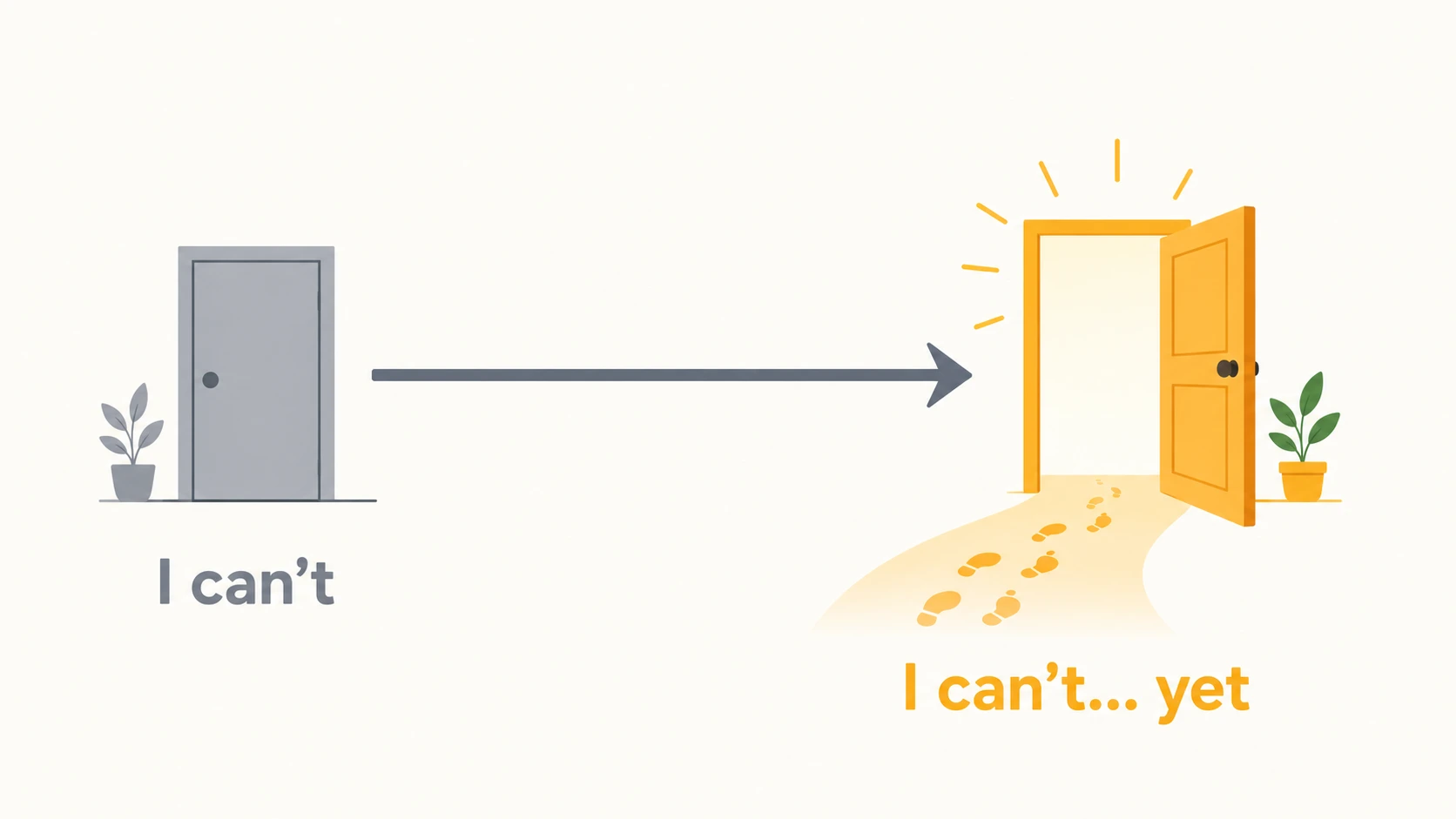
The phrase “I can’t do this yet” reframes a limitation as temporary rather than permanent. This “yet” framing supports persistence, but it should never imply that effort alone guarantees success—effective growth mindset stories pair “yet” with a plan, practice, or new strategy.
The Character Changes Through the Process
The most credible growth mindset stories end with learning, adaptation, or increased confidence rather than instant mastery. A realistic depiction of gradual improvement is more useful for readers than an unrealistic “overnight success” narrative, because it reflects how learning actually happens.
What Is the Main Lesson of a Growth Mindset Story?
The central lesson across most growth mindset stories can be summarized in a few consistent takeaways:
- Abilities can develop over time.
- Mistakes can provide useful information.
- Difficult tasks can reveal areas for learning.
- Feedback can improve performance.
- Persistence works best when combined with effective strategies.
- Asking for help is part of learning, not evidence of inability.
- Progress can be gradual rather than immediate.
Growth Mindset vs. Fixed Mindset in a Story
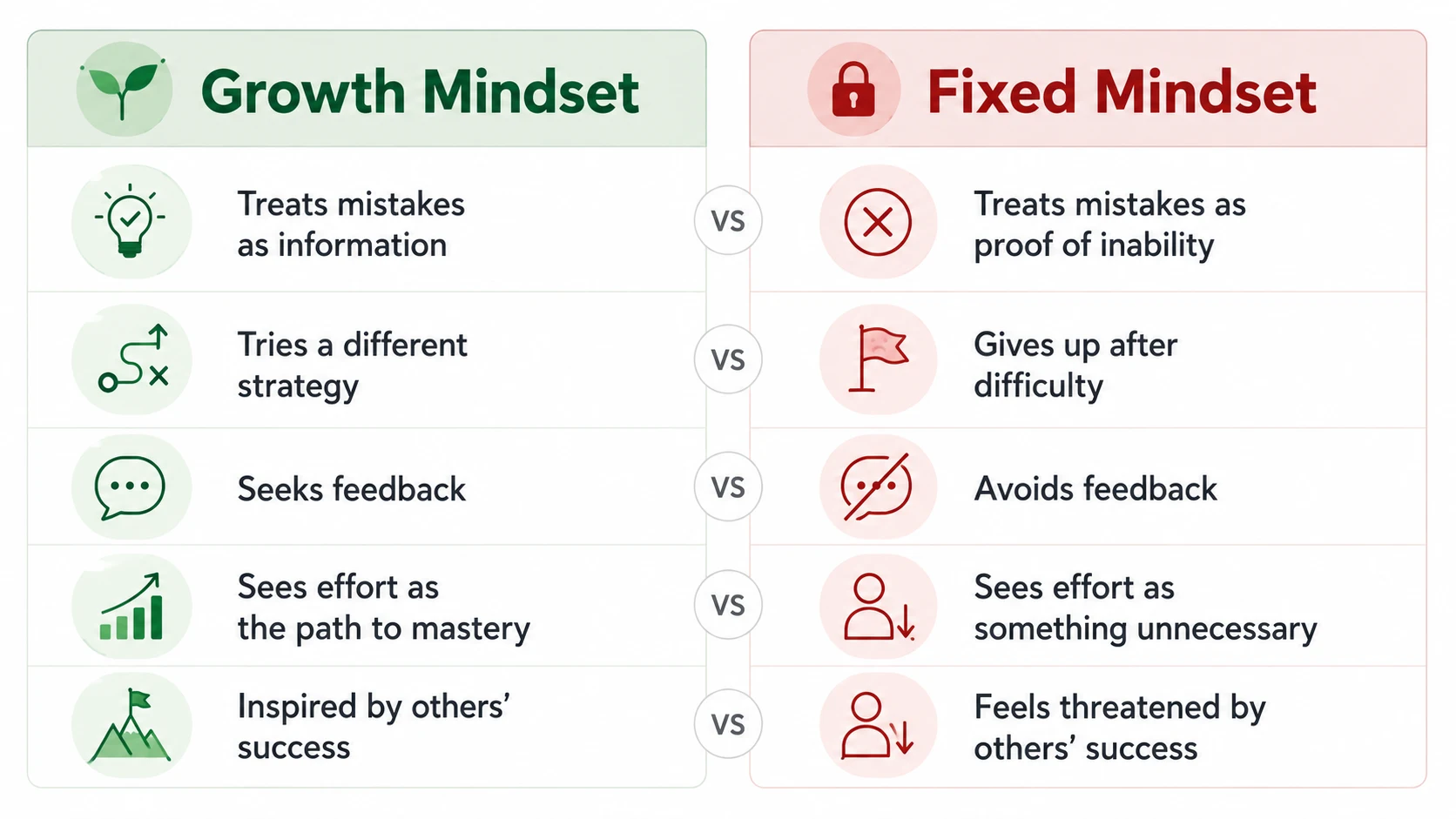
| Growth mindset response | Fixed mindset response |
|---|---|
| “I can improve this.” | “I’m just not good at this.” |
| Treats mistakes as information | Treats mistakes as proof of inability |
| Tries a different strategy | Gives up after difficulty |
| Seeks feedback | Avoids feedback |
| Values learning and progress | Focuses mainly on appearing capable |
It’s worth noting that people can display both mindsets depending on the situation. Growth mindset is not a fixed personality type—someone might approach a new hobby with curiosity and openness to feedback while reacting defensively to criticism in a different area, such as their job performance.
Growth Mindset Story Examples for Different Age Groups
Story selection should be organized around the reader’s developmental stage, since a challenge that resonates with a seven-year-old rarely resonates the same way with an adult.
Growth Mindset Stories for Kids
Stories for children work best when they are short and concrete, focused on relatable challenges such as learning to read, solving a puzzle, practicing a new skill, or making a visible mistake. Clear emotional turning points and simple, direct lessons help young readers connect the story to their own experience. A growth mindset story for kids typically avoids abstract language and instead shows a specific moment of struggle followed by a specific change in approach. Parents and educators looking for more material beyond a single story can explore a full list of growth mindset books for kids organized by age and reading level.
Growth Mindset Stories for Students
For students, stories connect more directly to studying, exams, difficult subjects, group projects, sports, and classroom feedback. A growth mindset story for students—including material appropriate for a growth mindset story KS1 audience—shows how a student can replace “I’m bad at this” with more productive problem-solving, such as asking a teacher for clarification or trying a new study method.
Growth Mindset Stories for Adults
Growth mindset stories for adults shift toward career development, learning new skills later in life, professional setbacks, creative work, leadership challenges, and personal goals. These stories emphasize adaptation, reflection, and continued learning rather than the more simplified motivational language often used with children.
How to Use a Growth Mindset Story for Learning
Reading a growth mindset story passively provides less benefit than using it as a structured learning tool. This approach works for teachers, parents, caregivers, and adult learners alike.
Before Reading: Introduce the Challenge
Ask the reader what they would do if they could not solve a problem. Introduce the idea that mistakes are part of learning, and ask the reader to predict how the character might respond to the obstacle they’re about to encounter.
During Reading: Identify Growth Mindset Moments
Have readers actively look for:
- A mistake or setback
- A fixed-mindset reaction
- A change in thinking
- A new strategy
- Feedback or help
- Evidence of improvement
After Reading: Turn the Story Into Reflection
Useful reflection questions include:
- What challenge did the character face?
- What mistake did they make?
- What did they learn?
- What changed their approach?
- What could you try differently in a similar situation?
What Can “The Girl Who Never Made Mistakes” Teach About Growth Mindset?
This popular children’s story explores perfectionism, fear of mistakes, and the process of learning to accept imperfection. Its themes connect directly to growth mindset concepts without needing to reproduce its copyrighted text.
Why Avoiding Mistakes Can Become a Problem
Fear of failure can discourage experimentation and limit a person’s willingness to try new approaches. Perfectionism can make ordinary, low-stakes mistakes feel threatening rather than instructive, and avoiding difficult situations altogether can close off valuable opportunities to learn.
How the Story Connects to Growth Mindset
The narrative links mistakes with learning by showing how a character’s emotional reaction to error can shift from shame to curiosity. This lesson translates directly into classroom and everyday situations, where discussion prompts around a “the girl who never made mistakes” read aloud experience can focus on how the character’s feelings change and what that shift reveals about handling imperfection.
What Can “The Magical Yet” Teach About Learning?
This story introduces the “yet” concept as a practical way to reframe temporary difficulty, focusing on the underlying growth-mindset principle rather than its specific copyrighted content.
Why “I Can’t” and “I Can’t Yet” Mean Different Things
“I can’t” frames an ability as permanently fixed, closing off the possibility of improvement. “I can’t yet” leaves room for learning and development, but this framing works best when paired with an actual plan, practice routine, or strategy—not simply repeating the word “yet” without action.
How to Apply the “Yet” Idea in Real Life
Practical examples of “yet” language include:
- “I don’t understand this yet.”
- “I haven’t learned this skill yet.”
- “I haven’t found the right strategy yet.”
Discussion around a “the magical yet” read aloud session can center on identifying moments where the character shifts from “can’t” to “can’t yet,” and what specific action follows that shift.
How Growth Mindset Stories Can Teach Kindness and Empathy
Kindness connects to growth mindset specifically where the two concepts overlap: learning from social mistakes, responding constructively to others, and developing interpersonal skills.
What a Kindness Story Can Teach
A be kind story or broader story of kindness can demonstrate recognizing another person’s difficulty, responding without judgment, learning from social mistakes, and encouraging others rather than labeling them. These lessons overlap with growth mindset when a character learns a better way to support someone else through their own trial and error.
How Kindness Supports a Learning Environment
Supportive classrooms and families make it safer for children and adults to ask questions and make mistakes without fear of embarrassment. This is distinct from simply praising every outcome; kindness in a learning environment means responding constructively to effort and error, not avoiding honest feedback. Stories about kindness, including random acts of kindness stories, can reinforce this supportive dynamic when paired with growth-mindset discussion.
How to Choose the Right Growth Mindset Story
Selecting an appropriate story requires more than picking a popular title. Consider:
- Reader’s age and reading level
- Complexity of the challenge
- Emotional maturity
- Whether the story demonstrates genuine learning
- Whether the character changes strategy
- Whether the lesson is realistic
- Cultural and classroom context
- Whether the story encourages reflection rather than passive inspiration
What Makes a Story Appropriate for Younger Children?
Younger children benefit from a simple conflict, concrete examples, a shorter narrative, clear emotional vocabulary, and a manageable, single takeaway rather than multiple layered lessons.
What Makes a Story Useful for Older Students and Adults?
Older readers benefit from more complex challenges, ambiguous setbacks without a clean resolution, multiple possible strategies, reflection on motivation and decision-making, and clear real-world applications they can transfer to their own situations.
Common Mistakes When Teaching Growth Mindset Through Stories
Growth-mindset storytelling can become oversimplified or even counterproductive when certain pitfalls are overlooked.
Treating Growth Mindset as “Just Try Harder”
Effort without strategy may not solve a problem. Effective stories emphasize practice, feedback, resources, and strategy adjustment rather than sheer effort in isolation.
Praising Effort Without Considering the Outcome
There is an important difference between praising process and praising ineffective effort. Feedback works best when it is specific about strategies and progress rather than offering blanket praise for trying.
Making Failure Look Easy
Realistic setbacks often involve frustration, disappointment, or repeated attempts before improvement occurs. Stories that gloss over this emotional reality tend to feel less relatable and less useful.
Labeling Someone as Either “Growth Mindset” or “Fixed Mindset”
Mindset varies according to context, so it is more accurate—and more useful—to identify specific thoughts and behaviors in a given situation than to apply a permanent label to a person.
How to Turn a Growth Mindset Story Into a Practical Activity
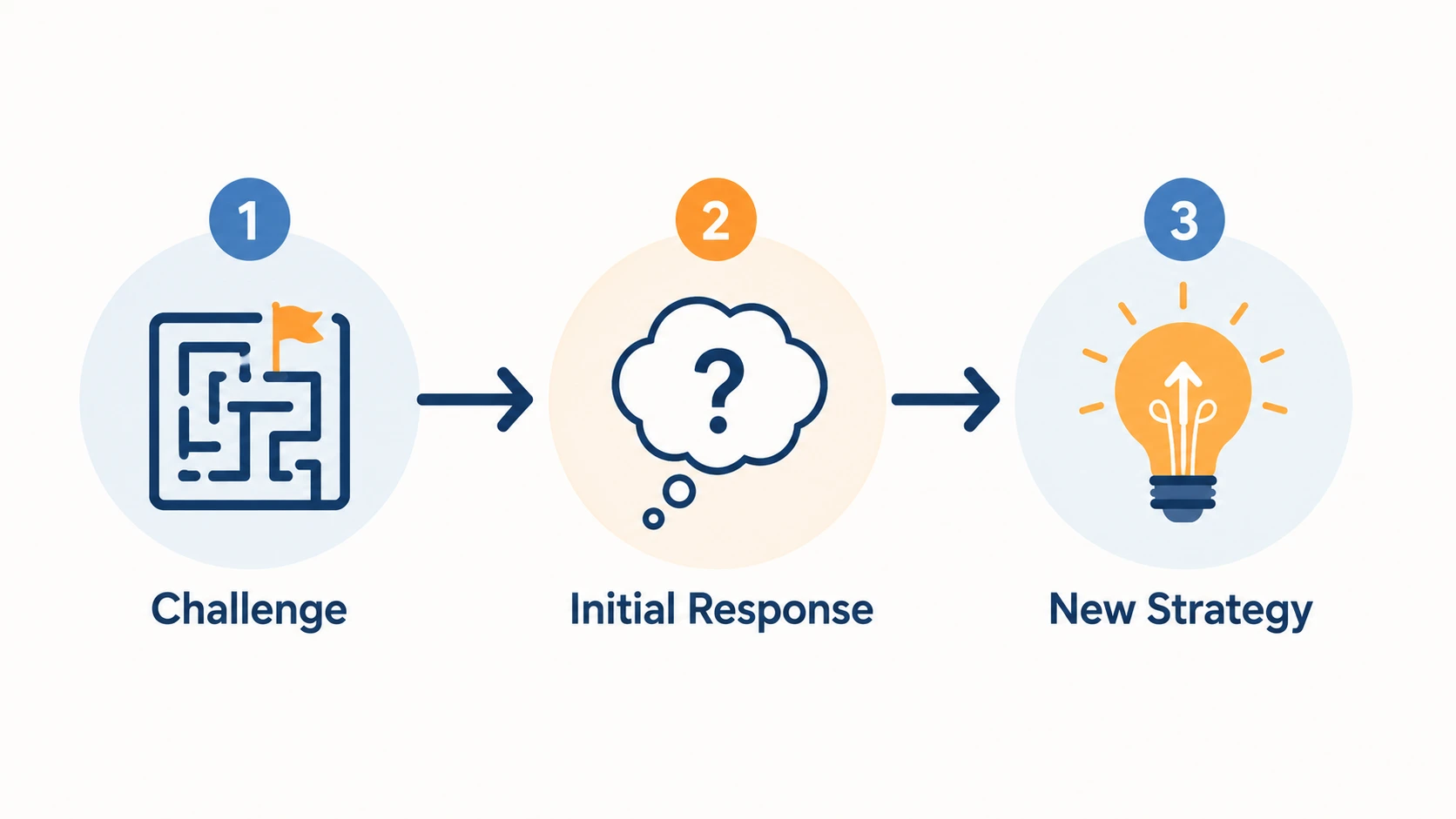
The Challenge–Response–Change Activity
| Challenge | Initial response | New response or strategy |
|---|---|---|
| What went wrong? | What did the character think or do? | What did they change? |
Rewrite the Fixed-Mindset Thought
- “I’m bad at math.” → “I need another strategy for this problem.”
- “I always get this wrong.” → “I need to identify where my process breaks down.”
- “Everyone else is better.” → “What can I learn from how they approached it?”
Personal Reflection Prompt
Ask readers to identify one current challenge and complete the following: To go deeper than a one-time reflection, readers can work through a full set of journal prompts for growth mindset designed to build this habit over time.
- What am I finding difficult?
- What have I tried?
- What have I learned?
- What could I change?
- Who could help me?
Growth Mindset Stories in the Classroom, at Home, and at Work
The same core concept applies differently depending on context.
For Teachers
In our experience helping readers build better habits, teachers get the most out of growth mindset stories by combining a read-aloud with structured discussion, reflection questions, consistent classroom language around effort and strategy, and mistake-friendly learning activities that normalize error as part of the process.
For Parents and Caregivers
Parents can discuss mistakes without shame, model their own learning and uncertainty out loud, avoid excessive outcome-based praise, and encourage children to explain the strategies behind their answers rather than just the answers themselves.
For Adult Learners and Professionals
Your Daily Thrive recommends applying the same framework to skill development at work: reflect on feedback rather than dismissing it, treat setbacks as data rather than failure, and experiment with alternative approaches when a current method isn’t producing results.
How to Find or Create a Growth Mindset Story PDF
When looking for a growth mindset story PDF, readers should evaluate age suitability, readability, and whether the resource includes discussion or activity prompts rather than just narrative text. A PDF intended for teaching should provide more than a story alone—reflection questions, vocabulary support, or an activity component add most of the instructional value.
It’s also important to distinguish between an original educational resource created specifically for teaching purposes and an unauthorized copy of a copyrighted book. Using licensed or original materials protects both the creator’s rights and the credibility of the resource being used in a classroom or at home.
What Makes a Growth Mindset Story Actually Effective?
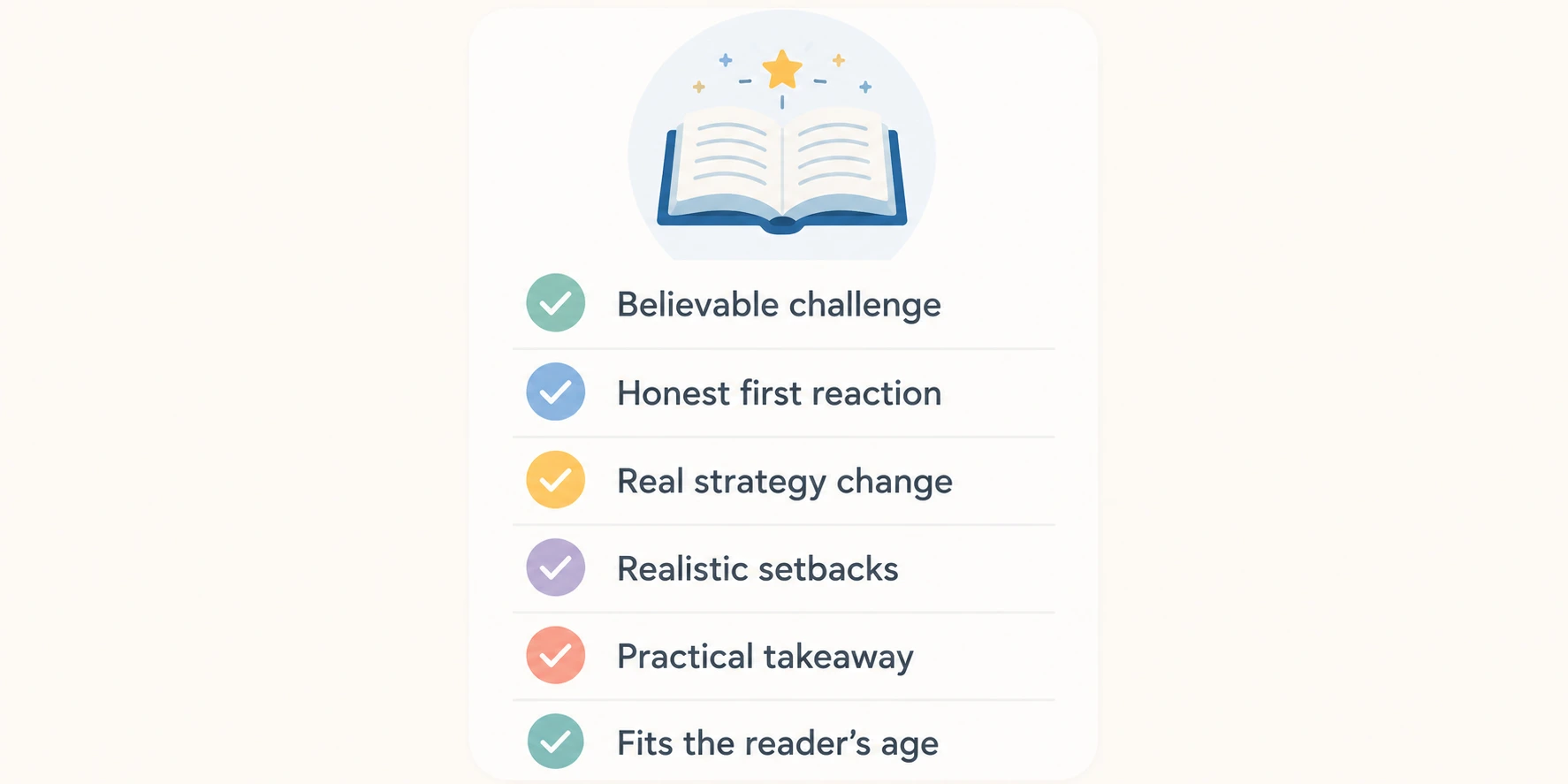
An effective growth mindset story should:
- Present a believable challenge.
- Show an initial response or misconception.
- Demonstrate learning or strategy adjustment.
- Include realistic setbacks.
- Make the lesson understandable without excessive moralizing.
- Give readers something practical to try.
- Fit the audience’s developmental level.
- Connect the story to real-life behavior.
Stories that check all of these boxes tend to be far more useful as teaching tools than stories that rely on inspiration alone.
Growth Mindset, Goal Setting, Habits, and Resilience
Growth Mindset and Goal Setting
Goals identify a direction, while growth mindset shapes how a person responds to obstacles along the way. Outcome goals focus on a specific result, while learning goals focus on developing skills or understanding—both matter, but they serve different purposes.
Growth Mindset and Habit Formation
Repeated practice supports skill development, but consistency alone is not sufficient if the underlying approach is ineffective. Growth mindset encourages evaluating and adjusting habits, not simply repeating them indefinitely.
Growth Mindset and Productivity
Productivity benefits from learning, prioritization, feedback, and adjustment rather than constant effort alone. As of 2026, behavioral science guidance increasingly emphasizes working smarter through iteration rather than equating longer hours with better output.
Growth Mindset and Resilience
Resilience involves adapting after setbacks rather than simply tolerating unlimited difficulty. A resilient response identifies what didn’t work and adjusts course, rather than persisting indefinitely with an ineffective strategy.
Frequently Asked Questions About Growth Mindset Stories
What is a growth mindset story?
A growth mindset story is a narrative in which a character develops abilities through effort, strategy changes, feedback, and persistence rather than relying on natural talent alone.
What is a good growth mindset story for kids?
A good story for kids presents a simple, concrete challenge, a clear emotional turning point, and a manageable lesson the child can apply to their own experience, rather than an abstract or overly complex narrative.
What is a growth mindset story for students?
A student-focused story addresses academic challenges such as exams, difficult subjects, or group projects, and shows how mistakes, feedback, and persistence lead to improved performance over time.
What are some growth mindset stories for adults?
Adult-focused stories typically involve career changes, professional setbacks, creative work, leadership challenges, or learning a new skill later in life, emphasizing reflection and adaptation over simplified motivational messaging.
What is the lesson of “The Girl Who Never Made Mistakes”?
The story illustrates how fear of mistakes and perfectionism can limit learning, and how accepting imperfection allows for growth and reduced anxiety around error.
What does “The Magical Yet” teach about growth mindset?
The story introduces “yet” as a way to reframe “I can’t” into “I can’t yet,” emphasizing that ability can develop with continued effort and the right strategy.
How can teachers use growth mindset stories in the classroom?
Teachers can apply a simple framework: read the story, identify the challenge, analyze the character’s response, discuss the strategy used, and help students apply the lesson to their own situation.
Are growth mindset stories only useful for children?
No. The underlying concept applies to students and adults as well, as long as the story reflects challenges appropriate to that reader’s age and life circumstances.
Conclusion
A growth mindset story is most effective when it shows learning in action rather than simply describing success. Strong stories connect mistakes, feedback, strategy changes, persistence, and improvement into a realistic arc that readers can relate to. Different audiences need different types of challenges and examples—what resonates with a young child rarely works the same way for a student or adult. Ultimately, the value of a growth mindset story lies not in feeling briefly inspired, but in applying its lesson to a real challenge. Growth is a process of learning, adapting, and improving—not proof that someone was naturally capable from the beginning.