Introduction
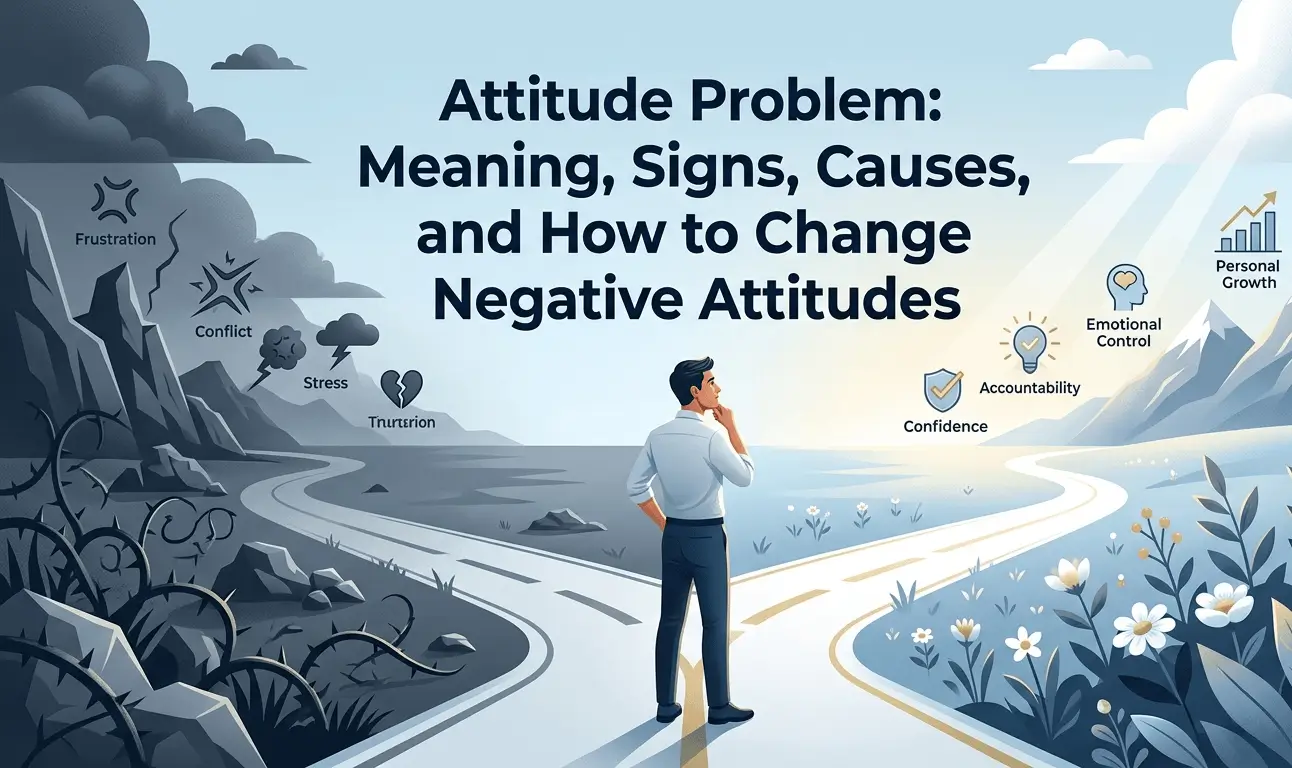
An attitude problem refers to a recurring pattern of negative thinking, emotional reactions, or behaviors that create difficulties in daily life. Attitudes influence how people interpret situations, respond to challenges, interact with others, and pursue goals. A negative attitude can affect relationships, workplace performance, emotional well-being, and personal growth. Importantly, an attitude problem is not a fixed personality trait. It is a learned pattern that can be changed through greater self-awareness, mindset adjustments, emotional regulation, and consistent behavioral improvement. Understanding how attitudes develop and influence behavior is the first step toward creating meaningful and lasting change.
Quick Summary
- An attitude problem refers to persistent negative thinking, reactions, or behaviors that create difficulties in personal or professional life.
- Common signs include defensiveness, blame-shifting, resistance to feedback, and negativity.
- Attitude problems often develop from beliefs, experiences, habits, and emotional responses.
- Positive change is possible through self-awareness, emotional regulation, and consistent behavior adjustments.
What Is an Attitude?
An attitude is a learned tendency to think, feel, and behave in a particular way toward people, situations, ideas, or experiences. In psychology, attitude meaning refers to an individual’s overall evaluation or response pattern toward something.
When people ask “what is attitude” or “what is an attitude,” they are referring to the mental framework that influences perception and behavior. A simple attitude definition is a combination of beliefs, emotions, and actions toward a specific object or situation.
Attitudes shape decision-making, communication, motivation, and problem-solving. Understanding what attitude means helps explain why different people respond differently to the same circumstances.
The Three Components of Attitude
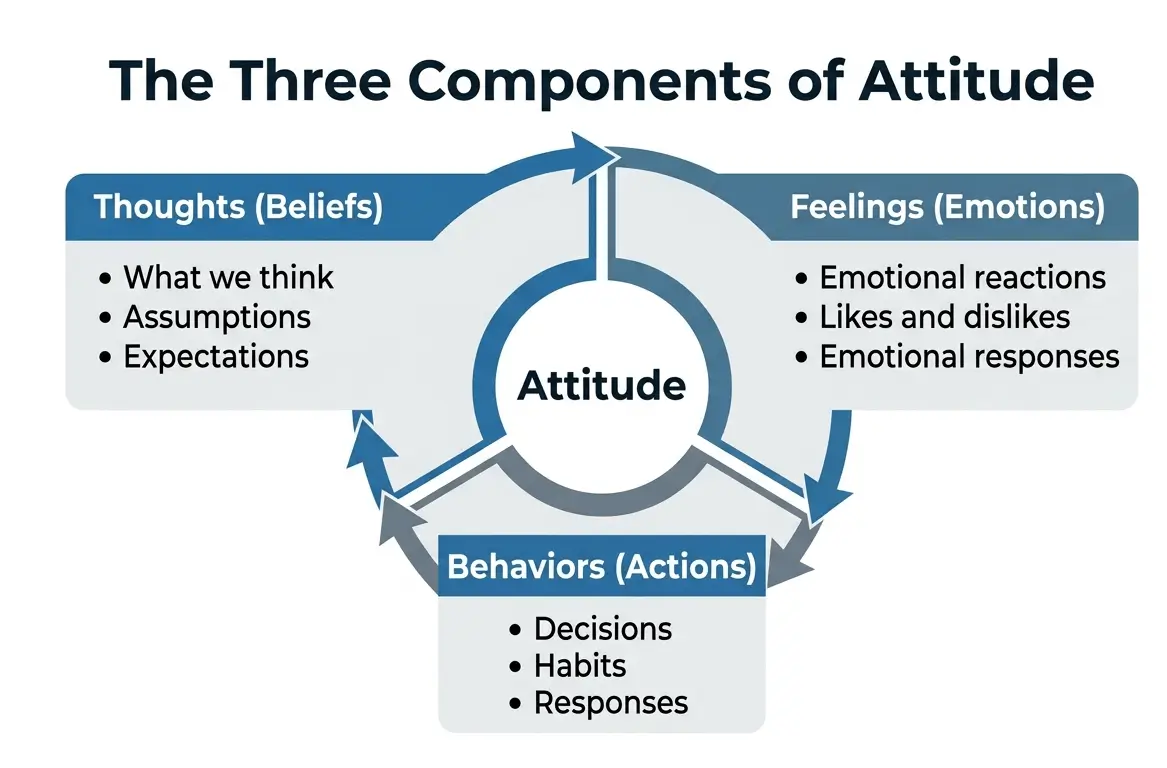
Every attitude consists of three interconnected components:
Thoughts (Beliefs)
- What a person believes about a situation.
- Example: “Feedback helps me improve.”
Feelings (Emotions)
- Emotional reactions linked to beliefs.
- Example: Feeling encouraged or threatened by feedback.
Behaviors (Actions)
- Observable responses and habits.
- Example: Listening openly or becoming defensive.
These three components constantly influence one another. Beliefs affect emotions, emotions influence behavior, and behaviors reinforce beliefs.
Why Attitudes Influence Daily Decisions
Attitudes affect nearly every aspect of life, including:
- Relationship quality
- Workplace interactions
- Goal achievement
- Learning and development
- Stress management
- Personal growth
People with constructive attitudes tend to focus on solutions, while negative attitudes often focus on problems and limitations.
What Is an Attitude Problem?
An attitude problem is a persistent pattern of negative thoughts, emotions, and behaviors that interferes with healthy relationships, effective communication, and personal development.
Many people confuse confidence or assertiveness with an attitude problem. However, confidence involves healthy self-belief, while an attitude problem involves behaviors that consistently create conflict, resistance, or negativity.
Bad Attitude Meaning Explained
A bad attitude is characterized by repeated negative responses to situations, feedback, challenges, or people.
Common indicators include:
- Constant negativity
- Defensiveness
- Excessive criticism
- Refusal to take responsibility
- Resistance to improvement
A bad attitude reflects behavior patterns rather than permanent personality traits.
Attitude Problem vs Temporary Frustration
Temporary frustration is a normal emotional response to stress or setbacks.
An attitude problem differs because it involves:
| Temporary Frustration | Attitude Problem |
|---|---|
| Short-term reaction | Long-term pattern |
| Situation-specific | Occurs across situations |
| Usually resolves naturally | Persists over time |
| Triggered by events | Influences many interactions |
Context matters. One difficult day does not necessarily indicate an attitude problem.
Common Signs and Symptoms of an Attitude Problem
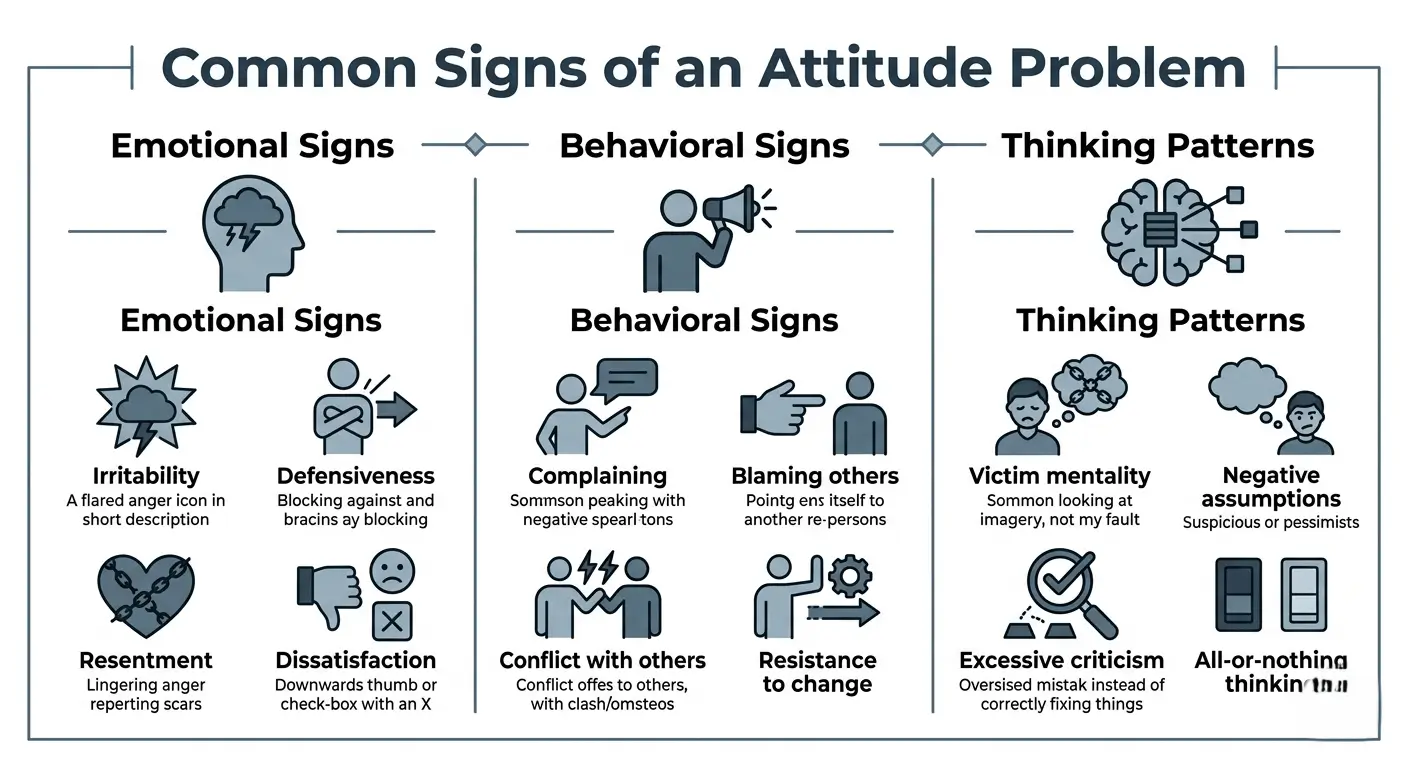
Recognizing attitude problem symptoms helps identify areas for improvement.
Emotional Signs
Common emotional indicators include:
- Irritability
- Resentment
- Defensiveness
- Chronic dissatisfaction
- Persistent frustration
Behavioral Signs
Behavioral symptoms often include:
- Frequent complaining
- Refusing responsibility
- Resistance to change
- Conflict with others
- Poor cooperation
Thinking Patterns Behind Negative Attitudes
One effective way to break negative thinking patterns is to focus on what you can control rather than dwelling on circumstances outside your influence.
Negative attitudes are often driven by cognitive habits such as:
- Victim mentality
- All-or-nothing thinking
- Excessive criticism
- Negative assumptions
- Confirmation bias
These thinking patterns reinforce negativity and limit growth.
Negative Attitude Examples in Everyday Life
Understanding real-life examples makes attitude problems easier to recognize.
Negative Attitudes Examples at Home
Examples include:
- Blaming family members for personal mistakes
- Refusing to apologize
- Overreacting emotionally to small issues
- Ignoring personal responsibilities
These behaviors often increase conflict and reduce trust.
Negative Attitude Examples at School
Students may demonstrate negative attitudes by:
- Rejecting constructive feedback
- Blaming teachers or classmates
- Avoiding effort after setbacks
- Assuming failure before trying
This mindset can reduce learning opportunities and academic growth.
Negative Attitude Examples at Work
Common workplace examples include:
- Constant negativity about company decisions
- Refusing collaboration
- Ignoring feedback
- Resisting process improvements
Such behaviors can damage teamwork and career development.
Examples of Negative Attitude
- Rejecting constructive criticism
- Constant complaining
- Blaming circumstances
- Dismissing other viewpoints
- Refusing collaboration
- Assuming failure before trying
Why Do People Develop Attitude Problems?
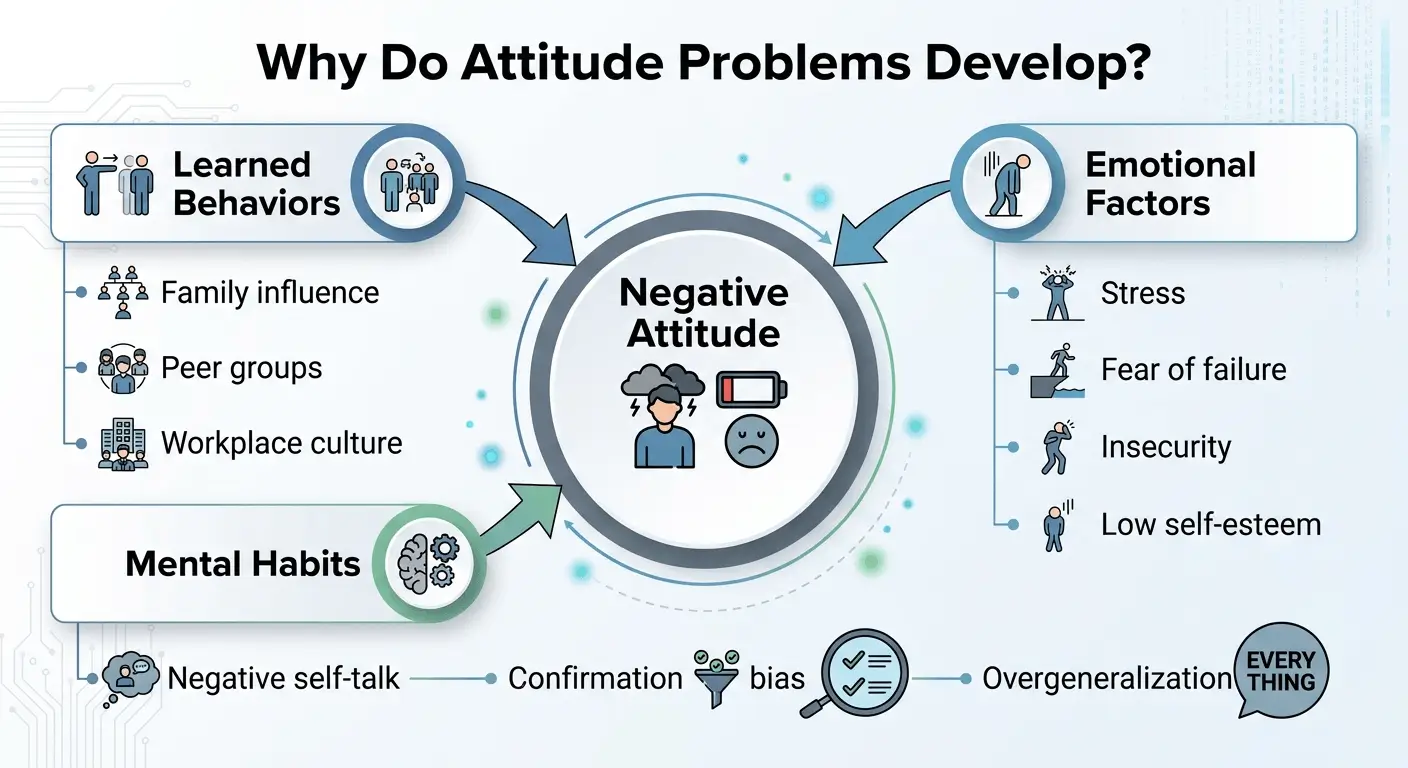
Attitude problems usually develop from a combination of experiences, beliefs, habits, and emotional responses.
Learned Behaviors and Environment
People often learn attitudes from:
- Family environments
- Peer groups
- School experiences
- Workplace culture
Repeated exposure to negativity can normalize unhelpful behaviors.
Emotional and Psychological Factors
Several emotional factors contribute to attitude problems:
- Stress
- Insecurity
- Fear of failure
- Low self-esteem
- Unresolved disappointment
Negative attitudes often function as protective responses to perceived threats.
Unhelpful Mental Habits
Mental habits that reinforce attitude problems include:
- Negative self-talk
- Overgeneralization
- Catastrophic thinking
- Confirmation bias
Over time, these habits become automatic.
How an Attitude Problem Affects Personal and Professional Life
Persistent negative attitudes can create long-term consequences.
Effects on Relationships
Negative attitudes often lead to:
- Communication breakdowns
- Reduced trust
- Frequent arguments
- Emotional distance
Effects on Career Growth
Workplace consequences may include:
- Missed opportunities
- Poor teamwork
- Limited leadership potential
- Reduced professional reputation
Effects on Mental Well-Being
Negative attitudes can contribute to:
- Increased stress
- Frustration cycles
- Emotional exhaustion
- Reduced resilience
Attitude Problem at Work: Causes and Solutions
Workplace attitudes significantly influence performance and team dynamics.
Common Workplace Attitude Problems
Examples include:
- Resistance to feedback
- Lack of accountability
- Negative communication
- Persistent complaining
Ways to Resolve Attitude Problems at Workplace
Effective strategies include:
- Improving self-awareness
- Seeking constructive feedback
- Developing emotional intelligence
- Practicing solution-focused thinking
- Strengthening communication skills
Workplace Attitude Problems and Solutions
| Attitude Problem | Possible Cause | Practical Solution |
| Constant complaining | Feeling unheard | Focus on solutions |
| Defensiveness | Fear of criticism | Seek feedback objectively |
| Resistance to change | Uncertainty | Learn adaptability skills |
| Blaming others | Avoiding responsibility | Practice accountability |
| Negative communication | Stress or frustration | Improve emotional regulation |
How to Change a Negative Attitude
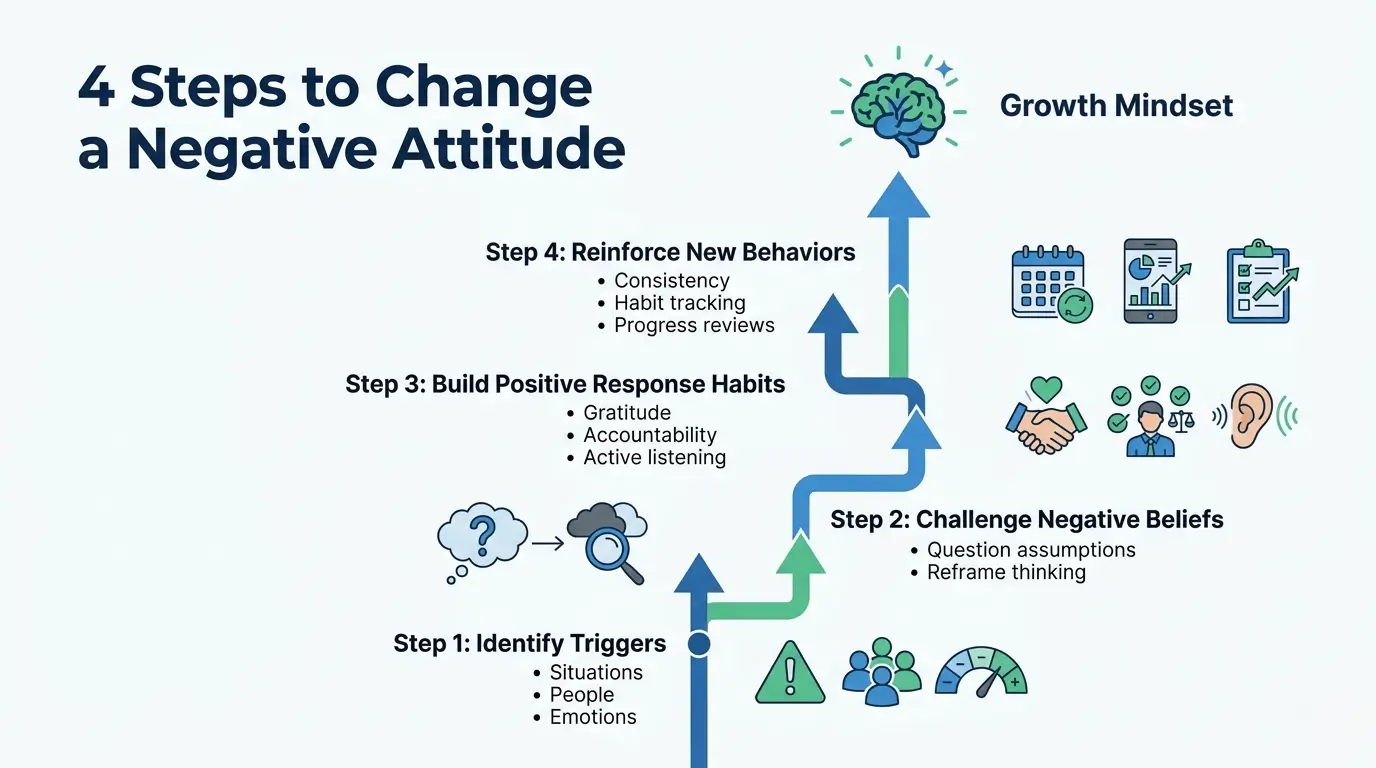
Lasting attitude change requires consistent action rather than temporary motivation.
Step 1 – Identify Triggers
Identify:
- Situations
- People
- Emotions
- Repeated patterns
Awareness creates the opportunity for change.
Step 2 – Challenge Negative Beliefs
People who regularly practice positive mindset tips for beginners often find it easier to replace negative assumptions with more balanced and constructive thinking.
Ask questions such as:
- Is this assumption accurate?
- What evidence supports this belief?
- Is there another explanation?
This process helps reduce distorted thinking.
Step 3 – Build Positive Response Habits
Develop habits such as:
- Gratitude practice
- Daily reflection
- Accountability
- Active listening
- Solution-focused thinking
Small behavioral changes compound over time.
Step 4 – Reinforce New Behaviors
Strengthen progress through:
- Consistency
- Habit tracking
- Progress reviews
- Regular self-reflection
Behavior change becomes sustainable through repetition.
Mental and Behavioral Barriers That Keep Attitude Problems Alive
Procrastination and Avoidance
Many people avoid self-improvement because change feels uncomfortable.
Helpful strategies include:
- Starting with small actions
- Creating clear routines
- Tracking progress
Lack of Motivation
Motivation fluctuates.
Long-term improvement depends on commitment, routines, and systems rather than temporary feelings.
Overthinking and Defensiveness
Fear often drives defensive reactions.
Cognitive reframing can help individuals interpret feedback as information rather than personal attacks.
Burnout and Emotional Exhaustion
Burnout often increases irritability and negativity.
Recovery strategies include:
- Rest
- Stress management
- Healthy boundaries
- Realistic expectations
Motivation vs Discipline in Attitude Change
| Motivation | Discipline |
| Emotion-driven | Action-driven |
| Temporary | Sustainable |
| Unpredictable | Consistent |
| Depends on feelings | Depends on habits |
| Starts action | Maintains action |
Key Takeaway
Lasting attitude improvement depends more on discipline than motivation. Positive behaviors become reliable when supported by habits and systems.
If you struggle to maintain positive behavioral changes, learning how to build discipline without motivation can help you stay consistent even when motivation fades.
Common Myths About Attitude Problems
Myth 1: People Are Born With a Bad Attitude
Fact: Attitudes are largely learned and influenced by experiences and habits.
Myth 2: Attitude Cannot Be Changed
Fact: Behavioral psychology shows that beliefs, habits, and responses can be modified through consistent effort.
Myth 3: Positive Thinking Alone Solves Everything
Fact: Positive thinking helps, but lasting change requires action, accountability, and behavior adjustment.
Myth 4: Confidence and Attitude Problems Are the Same Thing
Fact: Confidence involves healthy self-belief, while attitude problems involve behaviors that negatively impact relationships and performance.
Real-Life Examples of Attitude Change
Workplace Example
An employee who previously reacted defensively to feedback begins asking clarifying questions and applying suggestions. Over time, performance and team relationships improve.
Student Example
A student who blamed teachers for poor grades starts taking responsibility for study habits. Increased accountability leads to better academic outcomes.
Personal Growth Example
An individual who frequently focused on problems adopts solution-focused thinking and daily reflection. This shift reduces stress and improves resilience.
Conclusion
Attitude problems are patterns of thinking and behavior that can negatively affect relationships, performance, and well-being. Understanding attitude meaning, identifying negative attitudes, and addressing root causes are essential steps toward improvement. Sustainable change comes from self-awareness, emotional regulation, accountability, and consistent habits. The most effective mindset shift is focusing less on circumstances and more on personal responsibility, adaptability, and growth.
Frequently Asked Questions (FAQs)
What is an attitude problem?
An attitude problem is a recurring pattern of negative thinking, emotional reactions, or behaviors that create difficulties in personal, social, or professional situations.
What are the common signs of an attitude problem?
Common signs include defensiveness, frequent complaining, blaming others, resistance to feedback, and persistent negativity.
Can attitude problems be changed?
Yes. Attitudes are learned patterns that can be improved through self-awareness, mindset shifts, emotional regulation, and consistent behavior changes.
Why do I struggle with a negative attitude?
Negative attitudes often stem from stress, past experiences, fear of failure, low self-esteem, or habitual thinking patterns.
How can I improve my attitude at work?
Focus on accountability, constructive communication, emotional intelligence, adaptability, and solution-oriented thinking.
What is the difference between confidence and an attitude problem?
Confidence reflects healthy self-belief, while an attitude problem involves behaviors that negatively affect interactions and relationships.
How long does it take to change a negative attitude?
The timeline varies, but consistent effort, habit-building, and self-reflection can produce noticeable improvements within weeks or months.
Why do attitude problems damage relationships?
They often create conflict, reduce trust, weaken communication, and make collaboration more difficult.