
Introduction
A growth mindset classroom theme is a classroom environment that consistently reinforces the idea that abilities can develop through effort, effective strategies, feedback, practice, and persistence. It goes far beyond decoration: the theme connects visual elements, teacher language, activities, routines, and student reflection into one coherent instructional approach. A genuine growth mindset classroom is different from a room that simply displays motivational quotes, because every visible message is tied to a concrete classroom behavior. This approach can be adapted across grade levels, and it is especially effective in elementary classrooms, where concrete language and repeated practice help young learners build lasting habits around effort, strategy, and persistence.
Quick Summary
- A growth mindset classroom theme combines classroom visuals, teacher language, routines, and learning activities to reinforce that skills can improve with practice and effective strategies.
- The most effective themes focus on learning processes and strategies, rather than praising students simply for being smart or working hard.
- Elementary classrooms can use posters, bulletin boards, books, reflection activities, and goal-setting routines to make growth mindset concepts visible and actionable.
- Growth mindset messaging works best when teachers connect it to specific behaviors, constructive feedback, and opportunities to revise and improve.
What Makes a Classroom Theme a Growth Mindset Theme?
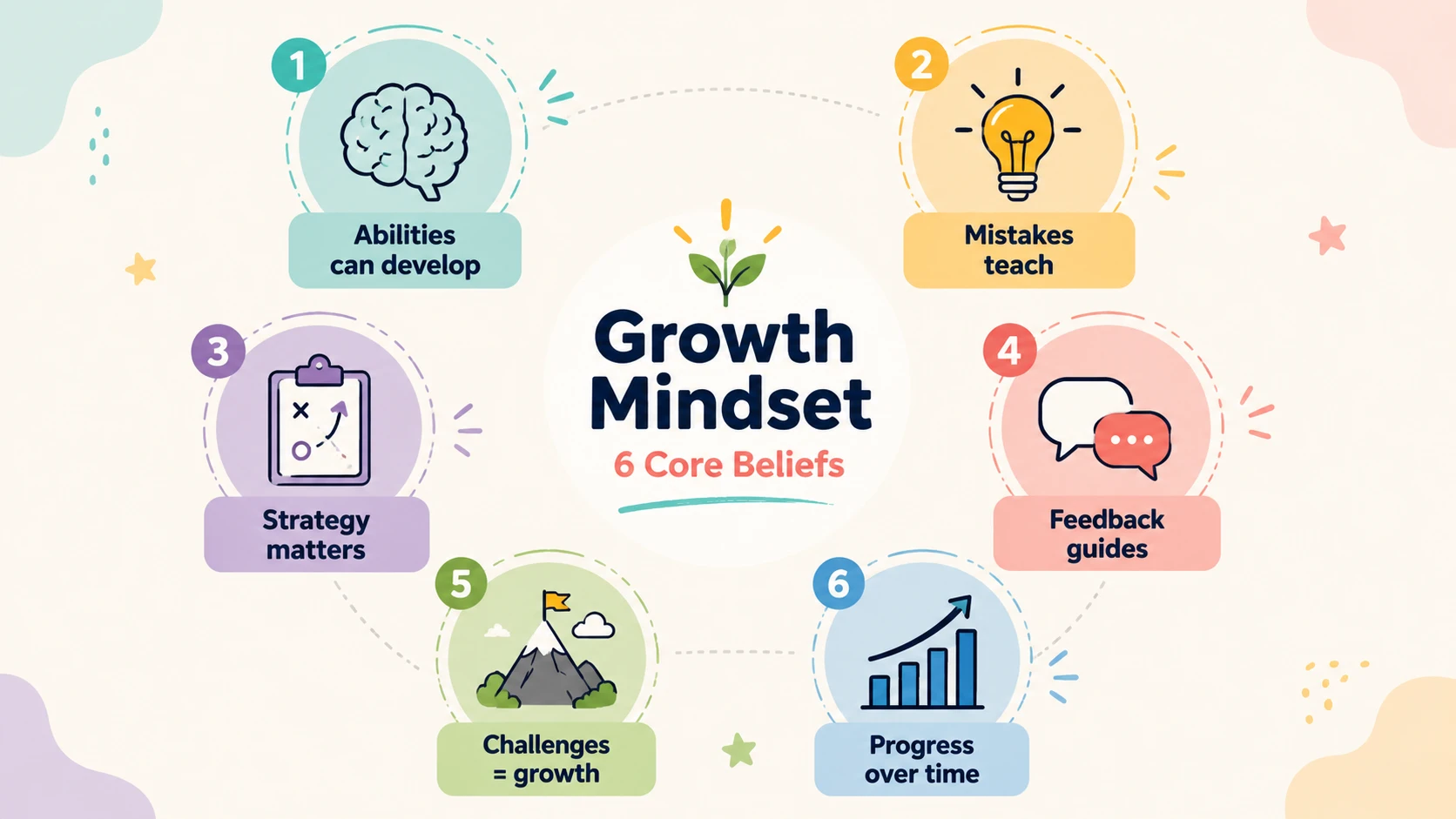
A classroom theme becomes a true growth mindset environment when its visuals are paired with instructional practice, not when posters are simply hung on a wall. Decoration shows words; culture shows behavior. The distinction matters because students absorb what teachers model and reinforce far more than what they read on a wall.
The Core Principles Behind Growth Mindset
- Abilities and skills can develop.
- Mistakes can provide useful information.
- Effective strategies matter alongside effort.
- Feedback can guide improvement.
- Challenges can provide opportunities to learn.
- Progress should be recognized over time. These principles are rooted in psychologist Carol Dweck’s original research on mindset — you can explore some of her most cited Carol Dweck mindset quotes for language that works well in classroom displays.
Growth Mindset Versus General Classroom Motivation
Generic motivational messaging encourages students to feel good, while growth-oriented messaging teaches students what to do next. Statements that focus only on effort — such as “just try harder” — can be incomplete, because students who lack an effective strategy or adequate support will not improve no matter how much effort they apply. Growth mindset language pairs effort with a specific action: a new strategy, a request for feedback, or a revision.
| Message Type | Example | What It Reinforces |
|---|---|---|
| Growth mindset language | “What strategy could you try next?” | Effort plus strategy and reflection |
| Fixed mindset language | “You’re just not a math person.” | Ability as fixed and unchangeable |
| Generic praise | “Great job trying hard!” | Effort alone, without direction |
How to Design a Growth Mindset Classroom Theme
A cohesive growth mindset classroom theme starts with a small set of consistent messages and extends those messages into daily instruction, not just wall space.
Choose a Small Set of Core Growth Mindset Messages
- “Not yet” and progress-oriented language
- Learning from mistakes
- Trying a new strategy
- Asking for help
- Reflecting on progress
- Persisting through appropriate challenges
Connect Classroom Decor to Daily Learning
- Pair posters with classroom routines.
- Refer to displayed messages during challenging assignments.
- Use student examples to demonstrate growth.
- Change or rotate displays as learning goals change.
Avoid Turning Growth Mindset Into Empty Slogans
Repeatedly displaying motivational phrases without corresponding teaching practices can weaken the message over time, since students quickly learn to tune out language that isn’t backed by classroom action. Teachers can strengthen each visual message by connecting it to a concrete classroom behavior — for example, referring to a “mistakes are learning” poster directly after a student revises an answer.
Growth Mindset Classroom Theme Ideas for Elementary Students
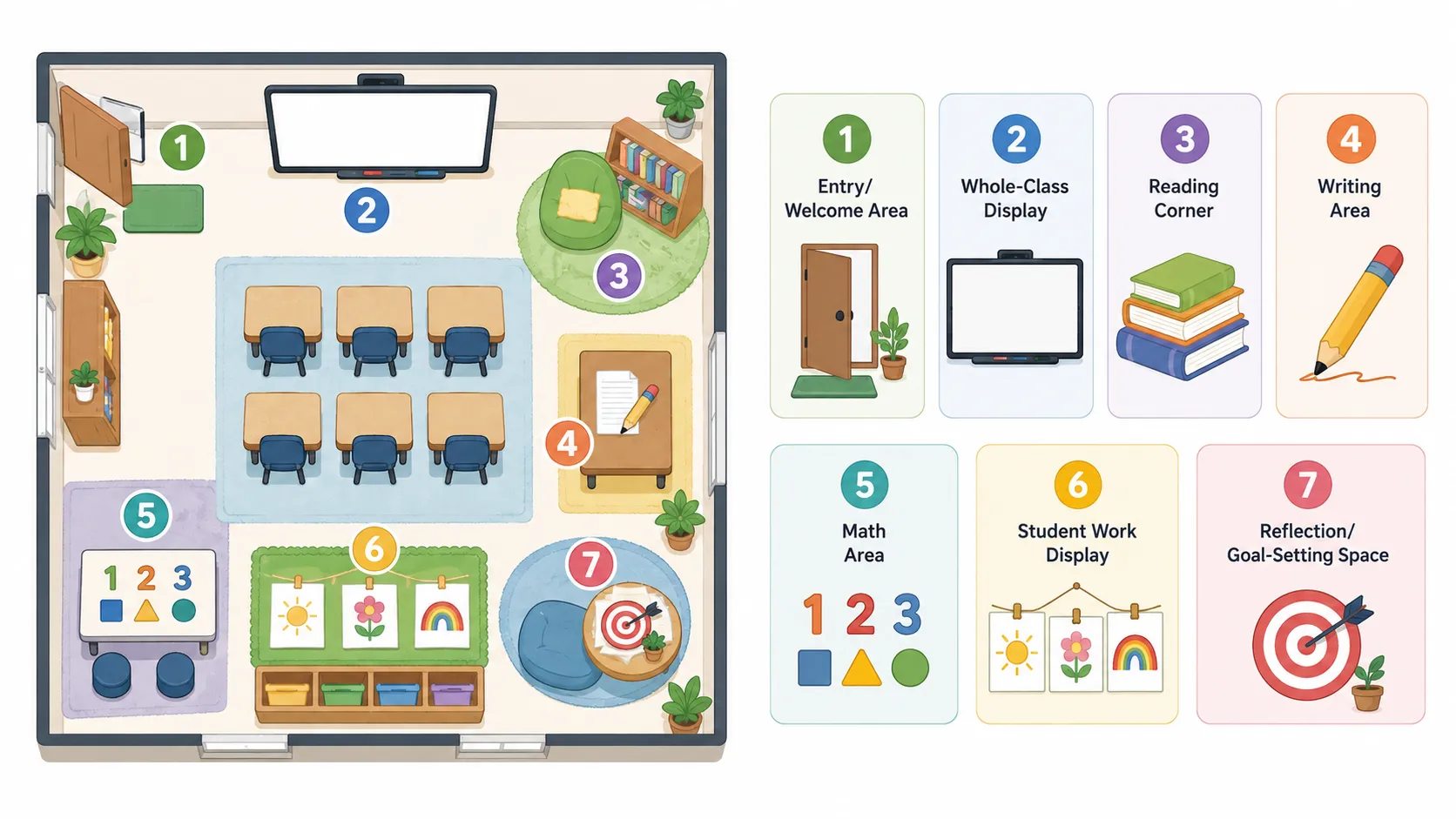
A growth mindset classroom theme for elementary students needs language, visuals, activities, and examples matched to students’ developmental level.
Age-Appropriate Growth Mindset Language
- Use short, concrete statements.
- Explain unfamiliar concepts through examples.
- Focus on actions students can control.
- Avoid implying that effort alone guarantees success. For ready-made examples matched to younger learners, see this collection of elementary growth mindset posters.
Classroom Areas That Can Reinforce Growth Mindset
- Entry or welcome area
- Whole-class display
- Reading corner
- Writing area
- Mathematics area
- Student work display
- Reflection or goal-setting space
Growth Mindset for Kids: Simple Examples
- Turning “I can’t do this” into “I can’t do this yet.”
- Identifying what strategy was tried.
- Naming what could be changed next time.
- Celebrating improvement rather than only high scores.
In our experience helping educators build classroom culture, growth mindset for kids works best when it’s tied to a specific moment of struggle rather than taught only as an abstract concept.
Growth Mindset Posters and Visual Displays
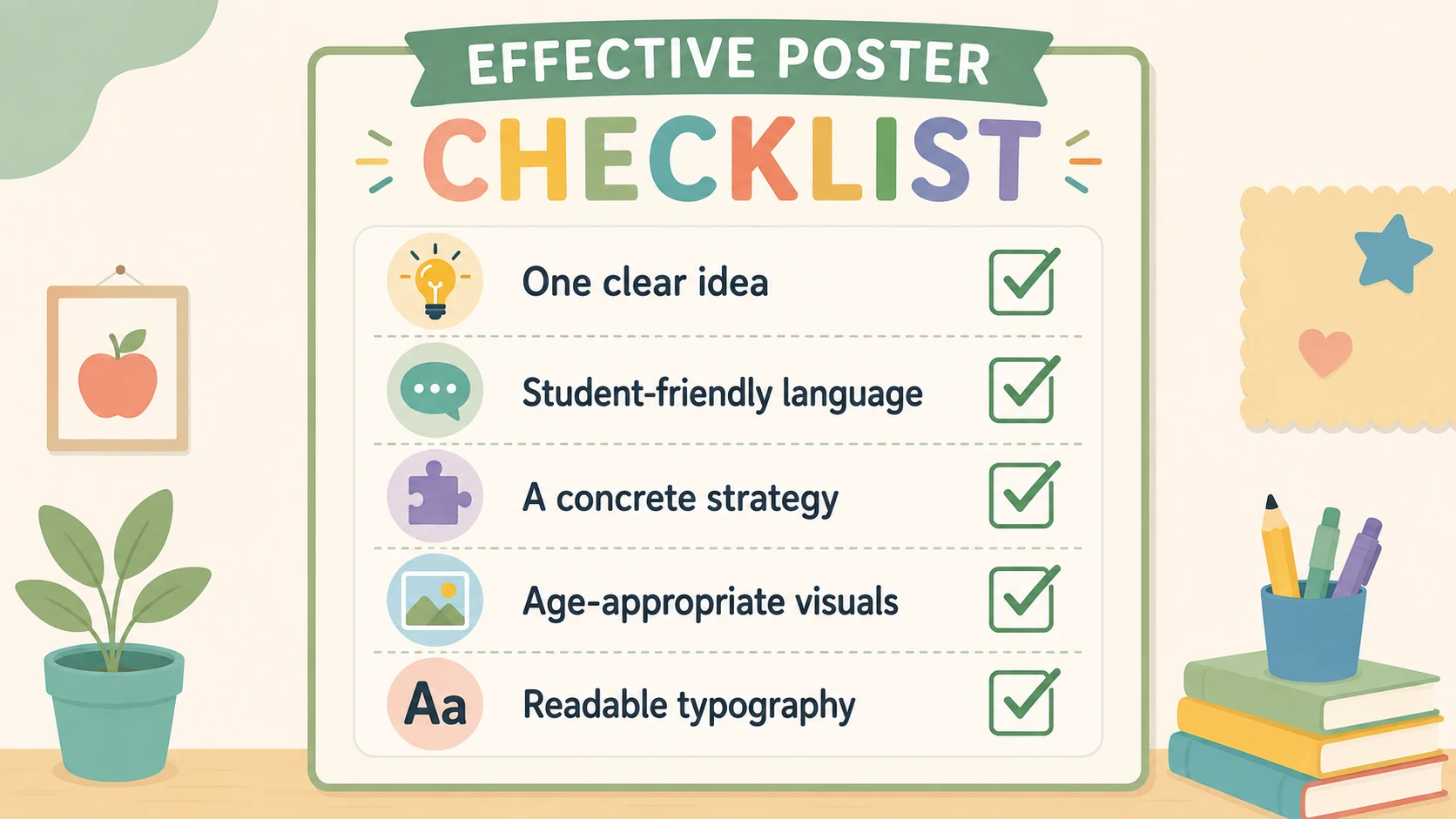
Growth mindset posters work as instructional prompts, not passive decoration, when they are designed and used with intention.
What to Include on a Growth Mindset Poster
- One clear idea per poster.
- Short, student-friendly language.
- A concrete behavior or strategy.
- Visual elements appropriate for the age group.
- Readable typography and uncluttered design. Before designing your own, it helps to see what makes a growth mindset poster effective in the first place.
How to Use Growth Mindset Posters in the Classroom
- Introduce one message at a time.
- Discuss the meaning behind the message.
- Connect it to classroom examples.
- Refer back to the poster during challenging tasks.
- Replace or rotate messages when appropriate.
Printable and PDF Growth Mindset Poster Resources
When evaluating growth mindset posters for classroom PDF downloads, teachers should check readability, age appropriateness, and relevance to their current curriculum, along with printing requirements and whether the resource can be reused across the year. Many educators search for growth mindset posters free PDF or growth mindset posters for classroom free options; the same evaluation criteria apply regardless of cost.
| Resource Type | Purpose | Ideal Age Group | Format | Customization |
|---|---|---|---|---|
| Single-concept poster | Reinforce one specific message | All elementary grades | PDF, printable | Low |
| Poster bundle/set | Cover multiple growth mindset principles | K–5 | PDF, printable | Moderate |
| Editable template | Allow teacher-specific wording | Any grade | Editable digital file | High |
Growth Mindset Bulletin Board Ideas That Support Learning
Bulletin boards can move beyond decoration by making learning processes visible to the whole class.
Progress and “Not Yet” Bulletin Board
- Display challenging skills students are developing.
- Highlight progress rather than ranking students.
- Allow students to add reflections about strategies they used.
Mistakes as Learning Opportunities Board
- Display examples of productive mistakes.
- Ask students what the mistake revealed.
- Show how a solution changed after feedback.
Strategy and Problem-Solving Board
- Collect strategies students use when they are stuck.
- Categorize strategies by subject.
- Encourage students to add successful approaches.
Using Printable Bulletin Board Components
Printable headings, student cards, reflection prompts, and growth statements can be combined into a coherent growth mindset bulletin board without overcrowding the classroom. A useful growth mindset bulletin board printable set typically includes a header, a handful of reusable prompt cards, and blank templates students can fill in themselves.
How Teachers Can Build Growth Mindset Into Everyday Instruction
A themed classroom becomes a growth-oriented culture only when teacher behavior consistently matches the displayed principles.
Use Process-Focused Feedback
- Identify what the student did.
- Explain which strategy helped.
- Suggest a specific next step.
- Encourage revision when appropriate.
Teach Students How to Respond When They Are Stuck
- Pause and identify the problem.
- Try another strategy.
- Review an example.
- Ask a specific question.
- Seek feedback.
- Reflect on what changed.
Praise Progress Without Overpraising Effort
Your Daily Thrive recommends recognizing effective strategies, persistence, improvement, and learning behaviors rather than treating effort as the only measure of success. Overpraising effort alone, without acknowledging strategy or outcome, can leave students without a clear sense of what to adjust next time.
Growth Mindset Books and Classroom Learning Resources
Books and stories can provide concrete examples of perseverance, mistakes, and skill development that make abstract growth mindset concepts easier for students to grasp.
Choosing Books That Reinforce Growth Mindset
- Look for characters who encounter challenges.
- Examine how characters respond to setbacks.
- Discuss strategies rather than simply celebrating success.
- Ask students to connect the story to their own learning.
Using Kids’ Books as Discussion Starters
- What challenge did the character face?
- What did the character try?
- What changed after the character received feedback?
- What could the character try next?
Books growth mindset classroom theme resources and kids’ books growth mindset classroom theme selections work best when paired with structured discussion questions rather than read in isolation.
Common Growth Mindset Classroom Mistakes and How to Fix Them
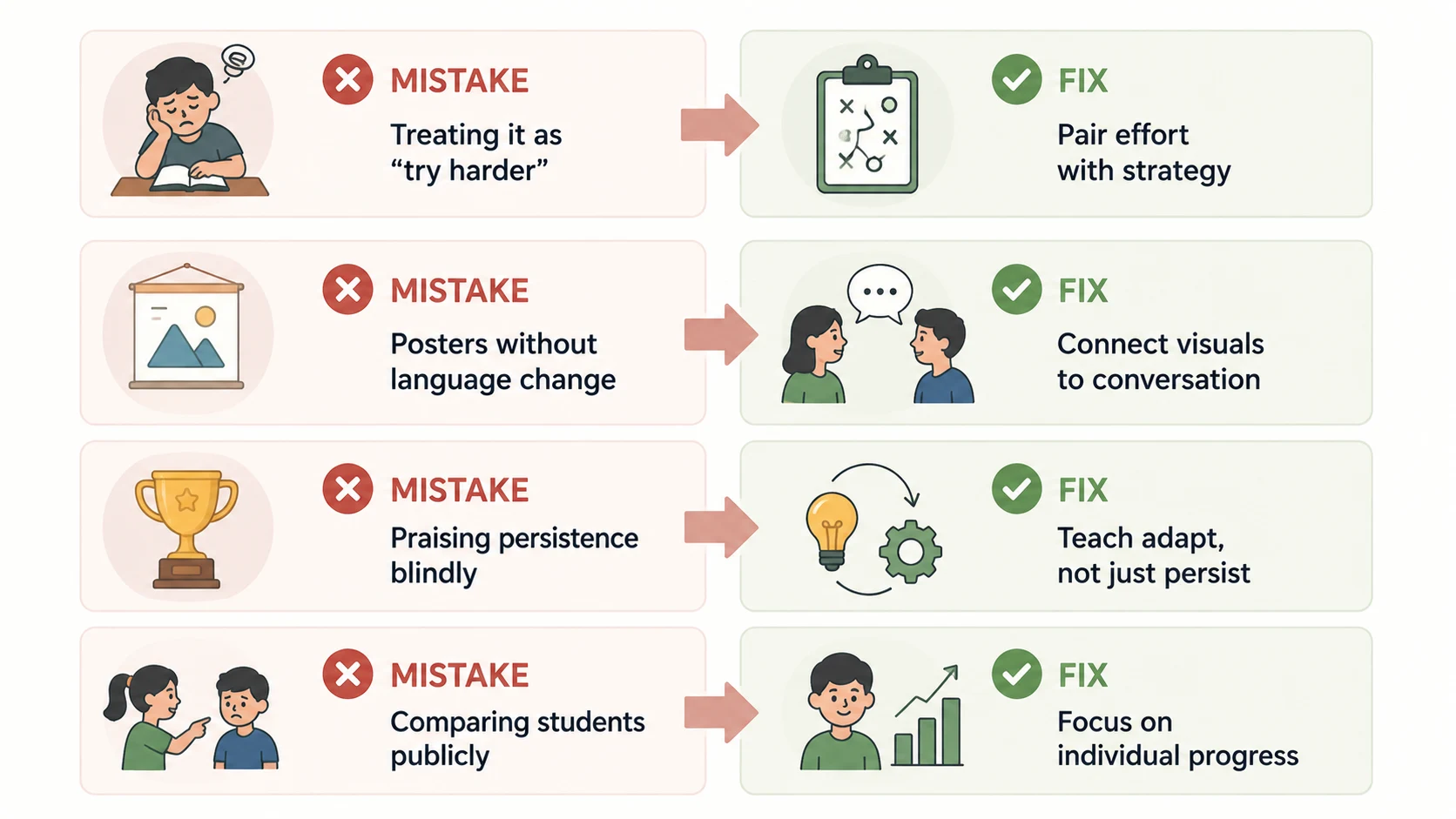
Mistake: Treating Growth Mindset as “Try Harder”
Why it happens: Effort is easy to praise and communicate. How to fix it: Pair effort with strategy, feedback, practice, and appropriate support. How to prevent it: Teach students to ask what they can try differently.
Mistake: Using Posters Without Changing Teacher Language
Why it happens: Classroom decor is easier to implement than instructional change. How to fix it: Connect visual messages to real classroom conversations and feedback.
Mistake: Celebrating Persistence Even When a Strategy Is Not Working
Why it happens: Persistence is treated as automatically positive. How to fix it: Teach students to persist and adapt, not simply repeat an ineffective approach.
Mistake: Comparing Students’ Progress Publicly
Why it happens: Progress displays can unintentionally become competitive. How to fix it: Focus displays on individual learning, reflection, and improvement rather than rankings.
How to Make a Growth Mindset Theme Work for Different Classroom Situations
For Younger Elementary Students
- Use concrete language.
- Keep messages short.
- Use visual examples.
- Build repetition into routines.
For Older Elementary Students
- Introduce more explicit reflection.
- Discuss strategies and evidence of progress.
- Connect mindset to academic goals.
For Mixed-Ability Classrooms
- Avoid labeling students by perceived ability.
- Provide multiple ways to approach tasks.
- Normalize different learning speeds.
- Emphasize individual progress.
How to Keep a Growth Mindset Classroom Theme Effective Over Time
As of the current school year, many educators are moving toward rotating, student-contributed displays instead of static posters, since a theme that never changes can quickly fade into background noise. To keep a growth mindset classroom theme effective over time:
- Rotate selected visual messages.
- Connect displays to current learning goals.
- Invite students to contribute examples.
- Revisit growth mindset language during challenging units.
- Remove messages that no longer serve a clear instructional purpose.
- Review whether classroom practices actually match the displayed principles.
How a Growth Mindset Classroom Theme Connects to Broader Learning Habits
Growth Mindset and Goal Setting
Students can set specific, measurable learning goals and monitor their own progress toward them, which reinforces the idea that skills develop over time through deliberate effort.
Growth Mindset and Productivity
Planning, task breakdown, and strategy selection help students work through difficult assignments without becoming overwhelmed, connecting growth mindset principles to everyday academic productivity.
Growth Mindset and Resilience
Responding constructively to setbacks — rather than avoiding challenges — supports resilience and helps students continue learning even after a difficult result.
Growth Mindset and Habit Formation
Repeated reflection, strategy use, and feedback can become regular learning behaviors, turning growth mindset from a one-time lesson into a lasting classroom habit.
Conclusion: Building a Growth Mindset Classroom That Goes Beyond Decoration
An effective growth mindset classroom theme is not simply a visual style — it is the combination of classroom displays, teacher language, feedback, student reflection, appropriate challenge, and real opportunities to improve. Posters and bulletin boards matter, but they only support learning when they are tied to daily instructional practice. The strongest growth mindset classroom theme is the one that makes growth visible and actionable, helping students see effort, strategy, and feedback as tools they can use every day.
Frequently Asked Questions About Growth Mindset Classroom Themes
What is a growth mindset classroom theme? A growth mindset classroom theme is a classroom environment where visuals, language, routines, and learning practices consistently reinforce the idea that skills and abilities can develop through effort, strategy, and feedback.
How do you create a growth mindset classroom? Choose a small set of core principles, establish consistent growth-oriented language, create meaningful displays, integrate growth-oriented routines into daily instruction, and model the behaviors you want students to adopt.
What should a growth mindset classroom poster say? Effective posters focus on learning, strategies, progress, mistakes, feedback, and improvement rather than generic motivation alone, giving students a concrete action to take.
How can teachers use growth mindset bulletin boards? Bulletin boards can display strategies, progress updates, reflections, mistakes-as-learning examples, and student contributions, turning the board into an active learning tool rather than static decoration.
Is growth mindset appropriate for elementary students? Yes. Age-appropriate growth mindset concepts can be introduced to elementary students through concrete language, stories, classroom routines, and guided reflection activities.
What is the difference between a growth mindset and simply encouraging students to work harder? Growth mindset involves effort combined with effective strategies, feedback, adaptation, practice, and support, while “work harder” messaging addresses effort alone without direction.
How can growth mindset be taught without relying on posters? Teacher modeling, specific feedback, goal setting, structured reflection, opportunities for revision, and consistent classroom routines can reinforce growth mindset even without visual materials.