

Introduction
A talent mindset is the underlying belief system that shapes how a person notices, develops, and applies their abilities. The talent mindset definition centers on one core idea: talent is not a fixed label but a resource that grows through attention, practice, and feedback. This belief affects far more than hobbies or sports — it influences how people learn in school, perform at work, lead teams, and pursue long-term goals.
A talent growth mindset is closely related to, but distinct from, both raw natural ability and Carol Dweck’s growth mindset framework. Natural ability describes what a person starts with. A growth mindset describes a general belief that abilities can improve. A talent mindset sits between the two — it’s specifically about how someone interprets and cultivates their talent over time.
Quick Summary
- A talent mindset is the belief system that shapes how people recognize, develop, and apply abilities.
- Organizations and individuals benefit more when talent is viewed as something that can be developed rather than simply identified.
- Combining a talent mindset with continuous learning leads to stronger long-term performance.
- Understanding common misconceptions helps avoid limiting beliefs about talent.
What Is a Talent Mindset?
Talent Mindset Definition
A talent mindset is the belief that ability is a starting point, not a fixed ceiling, and that consistent effort determines how far that starting point can go. This definition connects four related ideas: innate ability, learned skills, continuous improvement, and potential.
- Innate ability refers to natural aptitudes a person is born with or develops early, such as quick reflexes or strong spatial reasoning.
- Learned skills are capabilities built through instruction, repetition, and experience.
- Continuous improvement describes the ongoing process of refining skills through feedback and practice.
- Potential is the ceiling of what someone could achieve if ability and effort are both maximized over time.
A person with a talent mindset treats innate ability as one input among several, rather than the deciding factor in long-term success.
Why the Concept Matters
Mindset shapes decisions before ability ever comes into play. In our experience helping readers build better habits, the belief someone holds about talent often determines whether they attempt a challenge at all, how they respond to setbacks, and how long they persist before giving up.
In education, a talent mindset affects whether students seek out difficult material or avoid it. In workplaces, it shapes whether employees ask for stretch assignments or stay within comfortable roles. In leadership, it determines whether managers develop people or simply sort them into “talented” and “not talented” categories. In personal development, it influences whether setbacks are read as evidence of limits or as normal steps in a learning curve.
How a Talent Mindset Differs from Other Mindsets
Talent Mindset vs Growth Mindset
A talent growth mindset blends the two concepts, but they are not identical. A growth mindset is a general belief that intelligence and ability can be developed through effort. A talent mindset applies that belief specifically to how a person’s existing strengths and aptitudes are cultivated. Understanding why growth mindset is important]helps clarify why the two concepts work best when applied together rather than treated as competing frameworks
| Talent Mindset | Growth Mindset | |
|---|---|---|
| Core belief | Ability is a developable starting point | Intelligence and skill can always improve |
| Focus | Refining specific existing talents | General approach to learning and challenge |
| View of ability | Combination of innate traits and effort | Primarily shaped by effort and strategy |
| Learning approach | Targeted skill-building around strengths | Broad openness to feedback and difficulty |
| Typical behaviors | Deliberate practice in a specific domain | Seeking challenges across many domains |
| Long-term outcomes | Deep expertise in chosen areas | Resilience and adaptability generally |
Mindsets developing talent through a growth mindset work best together: the growth mindset supplies the belief that improvement is possible, while the talent mindset directs that belief toward specific abilities worth developing.
Talent Mindset vs Fixed Mindset
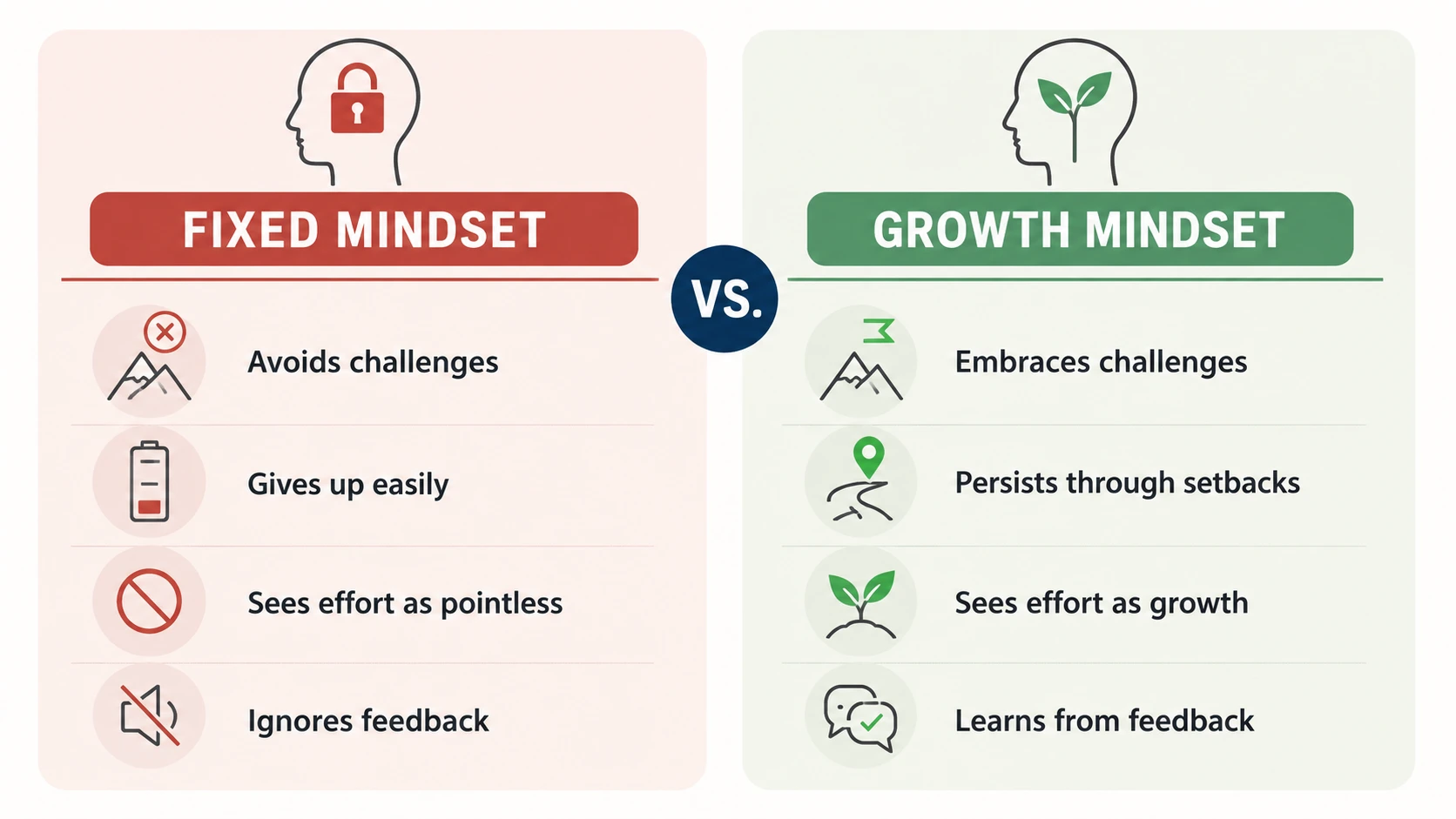
A fixed mindset assumes ability is static — you either have talent or you don’t. This belief reduces adaptability because setbacks are interpreted as proof of a ceiling rather than as normal feedback. People with fixed beliefs about talent tend to avoid challenges that might expose perceived weaknesses, which limits the very growth that would disprove the belief. A talent mindset counters this by treating early performance as a baseline, not a verdict.
Characteristics of a Talent Mindset
Core Traits
Several traits consistently appear in people who operate from a talent mindset:
- Curiosity — actively seeking new information and approaches rather than relying only on existing knowledge.
- Continuous learning — treating skill development as ongoing rather than something that ends after initial competence.
- Adaptability — adjusting methods when circumstances or feedback indicate a change is needed.
- Accountability — owning outcomes, including setbacks, instead of attributing them entirely to external factors.
- Feedback acceptance — using criticism as data for improvement rather than as a threat to self-image.
- Long-term development — prioritizing sustained growth over short-term validation.
How People Demonstrate a Talent Mindset
Someone who has a talent mindset shows it through consistent, observable behaviors rather than stated beliefs alone. A focused talent mindset typically includes:
- Asking specific questions after receiving feedback instead of dismissing it.
- Practicing weaker skills instead of only repeating strengths.
- Setting incremental goals tied to measurable progress.
- Reviewing past performance to identify patterns.
- Seeking mentors or coaches with more experience in a target skill.
Talent Mindset Examples in Real-Life Situations
Individual Examples
Students with a talent mindset revisit incorrect answers to understand the reasoning behind them, rather than only noting the grade. Professionals request specific, actionable feedback after project reviews instead of general praise. Athletes treat plateaus in performance as a signal to adjust training methods, not as evidence of a fixed limit. Creative workers — writers, designers, musicians — deliberately study work they find harder to produce, rather than only refining an established style.
These talent mindset examples share a common thread: each person treats current performance as a data point for improvement, not a final judgment of ability.
Workplace Examples
In leadership, managers who hold a talent mindset assign stretch projects based on growth potential rather than only current skill level. In employee development, organizations that adopt this belief invest in training even for high performers, assuming further growth is possible. Coaching conversations focus on specific behaviors to adjust rather than vague encouragement. Performance reviews built around a talent mindset separate current output from long-term potential, and skill building programs are designed around deliberate practice rather than one-time training events.
Why Talent Alone Is Not Enough
Mindset Beats Talent
The idea that mindset beats talent is supported by a consistent pattern across skill-based fields: naturally gifted individuals who stop practicing deliberately are regularly outperformed by less gifted individuals who practice consistently and seek feedback. Persistence, discipline, and deliberate learning compound over time in a way that early natural advantage often does not, particularly once a skill reaches an intermediate level and further gains depend on refinement rather than raw ability.
Talent vs Mindset
Rather than treating talent vs mindset as a competition with one winner, a balanced view recognizes that each plays a different role.
| Talent | Mindset | |
|---|---|---|
| Definition | Natural aptitude or predisposition toward a skill | Belief system guiding how ability is developed |
| Advantages | Faster early progress, lower initial effort required | Sustained improvement, resilience through setbacks |
| Limitations | Can plateau without deliberate practice | Requires consistent effort to produce results |
| Best use cases | Early skill acquisition, initial performance gaps | Long-term mastery, recovery from setbacks |
In practice, the strongest long-term outcomes come from pairing existing talent with a mindset that treats it as a starting point rather than a guarantee.
Developing a Talent Mindset
Practical Strategies
Your Daily Thrive recommends building a talent mindset through structured, repeatable practices rather than motivation alone: Since motivation naturally fluctuates, it helps to know [how to build discipline without motivation] so practice continues even on low-energy days.
- Setting learning goals that target specific weaknesses, not just general improvement.
- Seeking feedback proactively from people with more experience in the relevant skill.
- Reflection on what worked and what didn’t after each practice session or project.
- Deliberate practice — focused, effortful repetition aimed at a specific improvement, rather than casual repetition.
- Continuous improvement through small, measurable adjustments over time.
Habits That Support Long-Term Growth
Sustainable growth depends on habits that operate independently of short-term motivation:
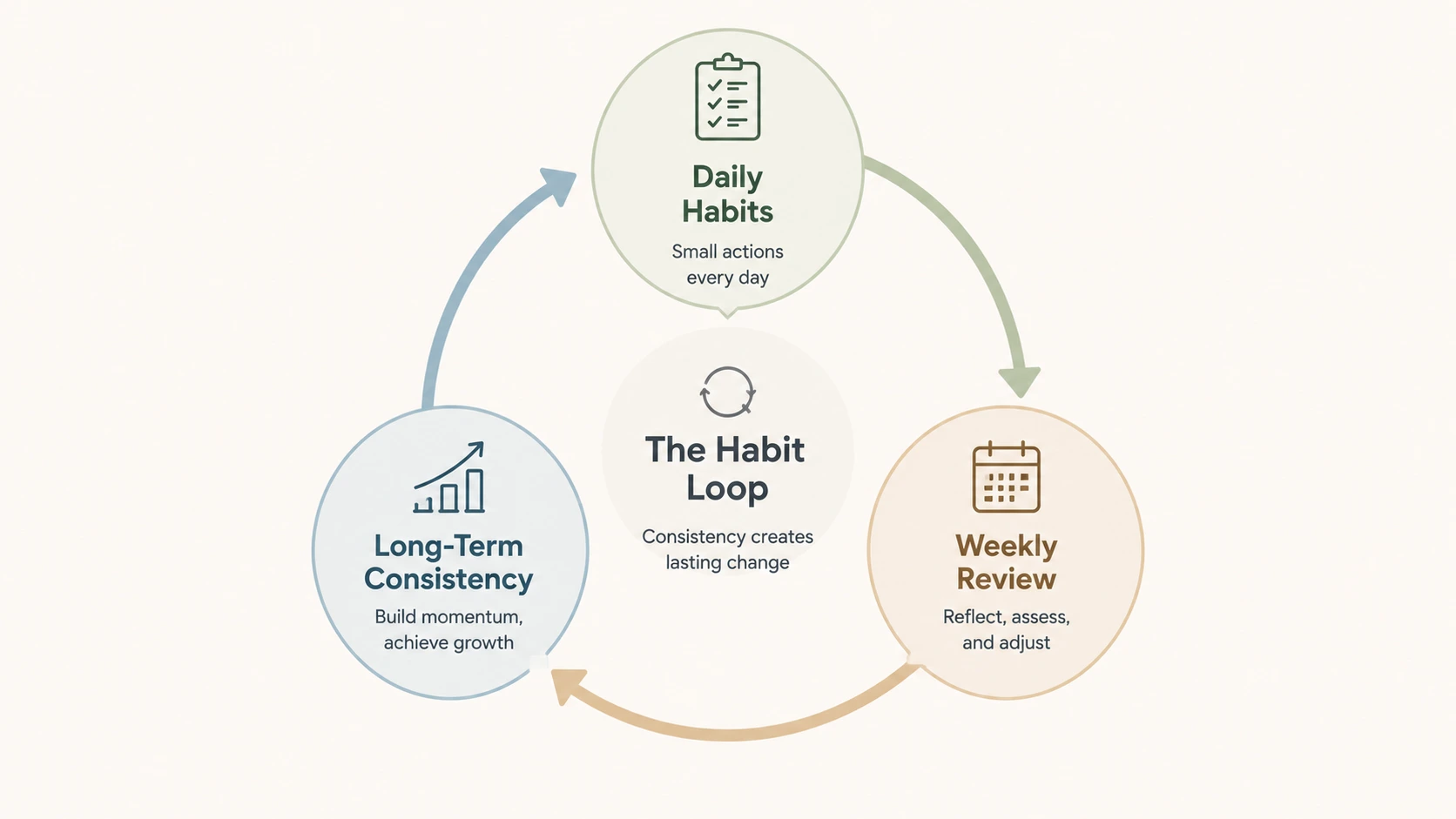
- Daily learning habits, even in small increments.
- Skill tracking to make progress visible over weeks and months.
- Reading in and around the target skill area.
- Coaching or mentorship for structured, external feedback.
- Regular self-assessment to catch plateaus early.
How Organizations Benefit from a Talent Mindset
Talent Development in Companies
Organizations that build talent — how companies can profit from a growth mindset applied at scale — see measurable advantages in hiring, employee growth, leadership pipelines, learning culture, and innovation. Hiring practices shift from screening only for existing skill toward evaluating learning capacity. Employee growth becomes an ongoing investment rather than a one-time onboarding process. Leadership pipelines strengthen because potential leaders are identified by development trajectory, not just current output. A strong learning culture normalizes asking questions and admitting gaps, and innovation improves because employees are more willing to attempt unfamiliar approaches.
Organizational Benefits
Companies that embed a talent mindset into their culture typically see improvements in:
- Employee engagement — people invest more when growth is visibly supported.
- Retention — employees are less likely to leave roles that continue to develop them.
- Collaboration — feedback-friendly environments reduce defensiveness between teams.
- Performance improvement — consistent skill development compounds across the organization.
- Adaptability — teams adjust more readily to new tools, roles, or market conditions.
Common Misconceptions About Talent Mindset
Myth: Talent Is Entirely Inborn
Research on skill acquisition supports both natural variation and substantial skill development through practice. Genetics can influence starting points in areas like physical coordination or certain cognitive processing speeds, but deliberate practice, quality instruction, and sustained effort account for a large share of eventual skill level in most domains.
Myth: Hard Work Always Eliminates Talent Differences
A balanced explanation accounts for genetics, opportunity, environment, and practice together. Two people practicing identically will not always reach identical outcomes, because access to quality instruction, available time, and starting conditions differ. Hard work substantially narrows gaps and often outweighs initial talent, but it does not guarantee identical results for everyone.
Common Challenges When Building a Talent Mindset
Fear of Failure
Fear of failure often develops when past mistakes were met with criticism rather than constructive feedback. It shows up as avoidance of challenging tasks or reluctance to share unfinished work. Overcoming it typically involves reframing failure as information, setting smaller, lower-stakes practice opportunities, and normalizing mistakes as part of the learning process rather than exceptions to it.
Lack of Visible Progress
Plateaus are a normal part of skill development, not a sign that growth has stopped. Motivation often dips during these periods because progress isn’t visible day to day. Measuring improvement realistically — using weekly or monthly comparisons rather than daily ones — helps maintain motivation through plateaus.
Comparing Yourself to Others
Comparison becomes unhealthy when it’s used to judge worth rather than to gather useful information. Healthier comparison strategies focus on specific, actionable differences — such as a technique or habit someone else uses — rather than broad, identity-based conclusions about ability.
Beginner Mistakes to Avoid
Common early mistakes when building a talent mindset include:
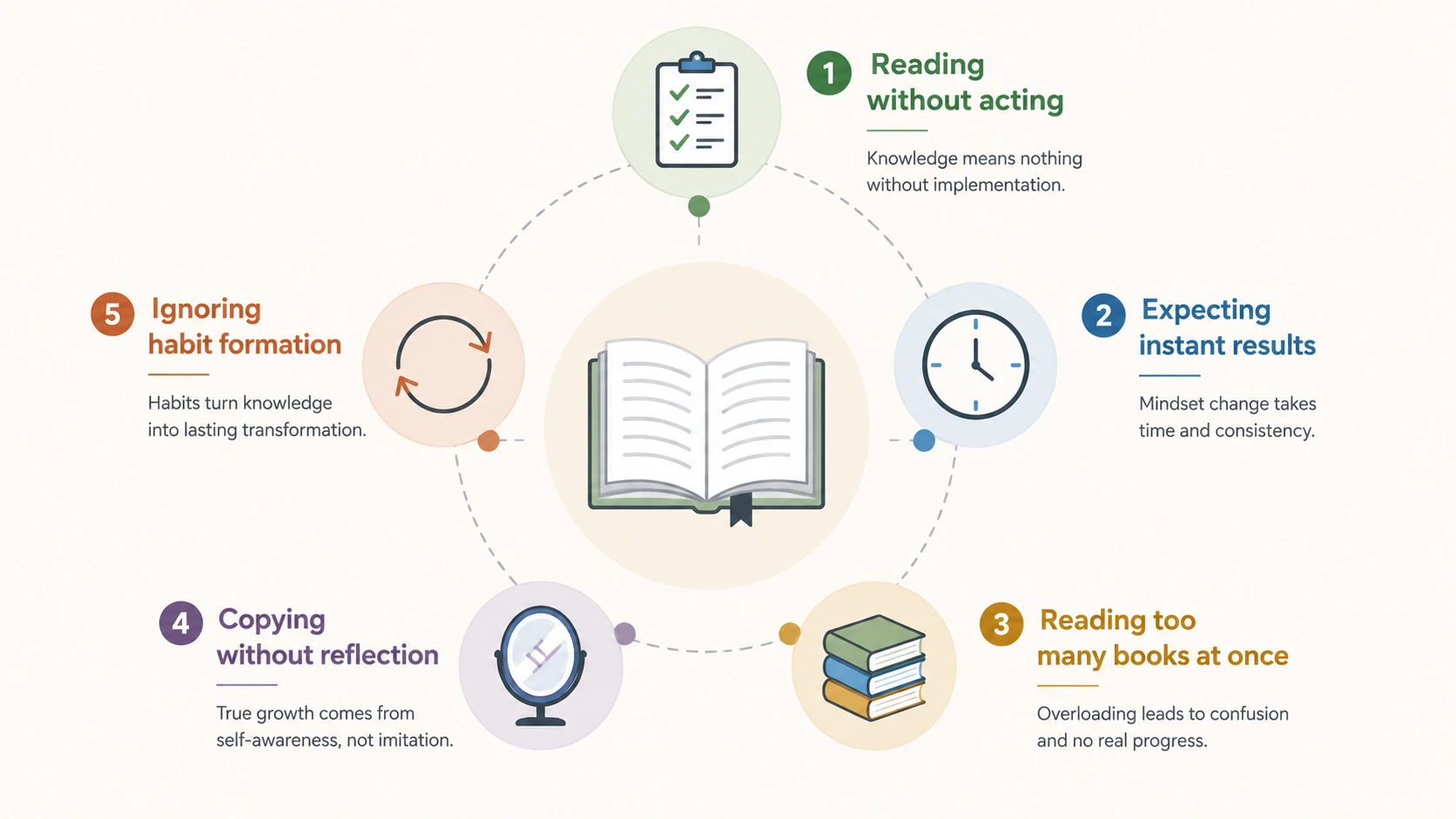
- Confusing talent with skill — assuming natural aptitude and developed ability are the same thing.
- Expecting immediate mastery — underestimating the repetition required for meaningful improvement.
- Ignoring feedback — treating criticism as discouraging rather than useful.
- Focusing only on strengths — avoiding weaker areas instead of addressing them directly.
- Avoiding difficult challenges — staying within a comfortable skill range instead of testing limits.
Practical Ways to Apply a Talent Mindset in Everyday Life
Students
Students benefit from reviewing errors in detail, setting specific study goals tied to weak areas, and treating grades as feedback rather than final judgments of ability.
Professionals
Professionals apply a talent mindset by requesting specific feedback after projects, pursuing stretch assignments, and tracking skill development over successive roles rather than expecting mastery immediately.
Managers and Leaders
Managers develop others most effectively through targeted coaching, specific behavioral feedback, and development plans that treat current performance as a starting point rather than a fixed rating.
Entrepreneurs
Entrepreneurs rely heavily on adaptability and resilience, since business conditions change faster than most other environments. A talent mindset supports treating early failures as necessary information for refining a business model rather than as proof the venture cannot work.
Difficulty & Time Investment
Building a talent mindset requires different time commitments depending on experience level. Beginners often need several weeks of consistent practice before new habits — such as seeking feedback proactively — start to feel natural. Experienced learners who already have some self-reflection habits in place typically adjust faster, since they’re refining an existing process rather than starting one.
Factors affecting progress include prior exposure to structured feedback, the difficulty of the target skill, available time for practice, and access to mentorship or coaching. Realistic expectations matter: shifting a long-held belief about talent is a gradual process, not a single decision, and setbacks during that shift are normal rather than a sign of failure.
Results Timeline
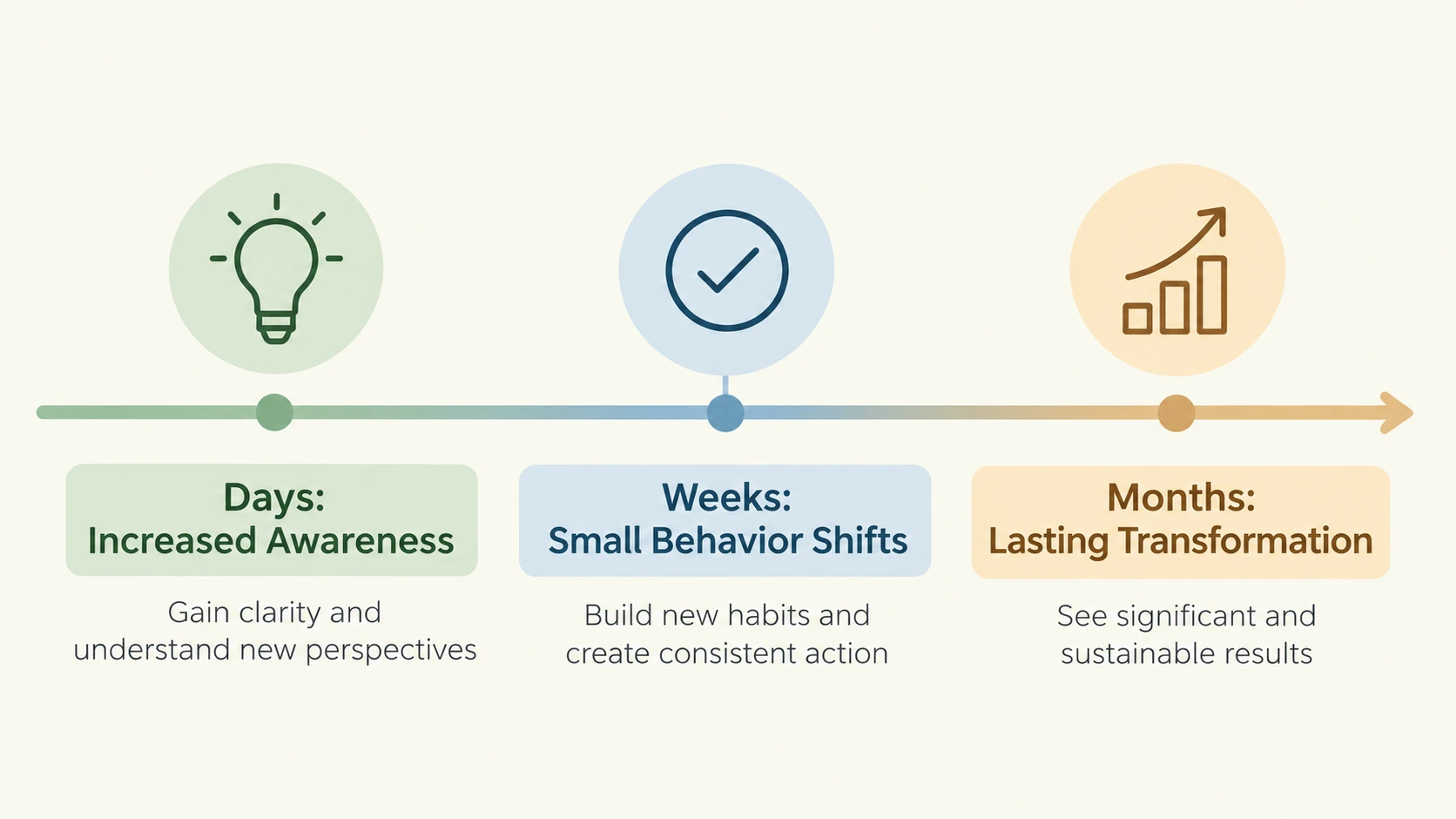
Early mindset shifts, such as becoming more receptive to feedback, often appear within the first few weeks of deliberate effort. Medium-term behavioral changes — like consistently setting specific learning goals or seeking out challenging tasks — typically develop over one to three months of consistent practice. Long-term performance improvements, including measurable skill gains and greater resilience through setbacks, generally build over six months or longer.
Individual differences in progress are common. Factors such as the complexity of the target skill, consistency of practice, and quality of available feedback all affect how quickly results appear.
Practice Guide
Daily Practices
- Brief reflection on what was learned or attempted that day.
- Reviewing or setting a specific learning goal.
- Reading material related to the target skill.
- Requesting or reviewing feedback when available.
- Focused practice on one specific weak point.
Weekly Review
A weekly review supports progress tracking by comparing current performance against the previous week, adjusting goals based on what worked or didn’t, and using accountability methods such as checking in with a mentor, coach, or peer.
Long-Term Sustainability
Maintaining motivation without burnout involves building in rest periods, celebrating incremental progress rather than only major milestones, and adjusting the intensity of practice based on current capacity rather than a fixed schedule.
Resources for Learning More About Talent Mindset
Books
Readers interested in this topic often start with foundational texts on growth mindset theory, the science of learning and expertise, leadership development, and organizational approaches to talent development. Look for authors with backgrounds in psychology, education, or organizational behavior for the most credible material. For structured reading on this topic, our list of [the best growth mindset books] is a good starting point alongside titles on learning science and leadership.
Research Articles and Educational Resources
For deeper study, talent mindset resources are widely available through university psychology departments, peer-reviewed journals in educational and organizational psychology, and professional development platforms affiliated with recognized institutions.
Finding a Talent Mindset PDF
Many educational institutions, publishers, and professional organizations offer downloadable guides, white papers, and academic papers on talent development and mindset research. When searching for a talent mindset PDF, prioritize reputable and legally available sources — university websites, established publishers, and professional associations — rather than unverified third-party file-sharing sites.
Conclusion
A talent mindset is the belief that ability is a starting point rather than a fixed limit, and that consistent effort, feedback, and deliberate practice determine how far that starting point can go. Sustainable success depends less on raw natural ability alone and more on combining it with continuous learning, persistence, and honest self-assessment. For individuals, this means treating setbacks as information rather than verdicts. For organizations, it means building systems that invest in growth rather than only identifying existing skill. Applied consistently, a talent mindset supports stronger performance, greater resilience, and more sustainable long-term development — for students, professionals, leaders, and entrepreneurs alike.
Frequently Asked Questions
What is a talent mindset?
A talent mindset is the belief that ability is a starting point that can be developed through effort, feedback, and deliberate practice, rather than a fixed trait.
How is a talent mindset different from a growth mindset?
A growth mindset is a general belief that abilities can improve through effort, while a talent mindset applies that belief specifically to developing existing strengths and aptitudes.
Can a talent mindset be developed over time?
Yes. A talent mindset can be built through consistent habits such as seeking feedback, setting specific learning goals, and engaging in deliberate practice over weeks and months.
Why do companies value a talent mindset?
Companies value a talent mindset because it improves employee engagement, retention, collaboration, and adaptability by treating skill development as an ongoing investment rather than a one-time hiring filter.
Is talent more important than mindset?
Neither is universally more important; talent often supports faster early progress, while mindset drives sustained improvement, making the combination more effective than either alone.
What are common examples of a talent mindset?
Common examples include students reviewing mistakes for understanding, professionals requesting specific feedback, and athletes adjusting training methods after a performance plateau.
Where can I find reliable talent mindset resources?
Reliable resources include university psychology departments, peer-reviewed journals in educational and organizational psychology, and materials from established professional development organizations.
Are talent mindset PDF guides useful for learning the concept?
Yes, when sourced from reputable institutions, publishers, or professional organizations, talent mindset PDF guides can provide structured, in-depth information beyond what’s available in shorter articles.