
Introduction
A growth mindset book for kids teaches children that intelligence and ability are not fixed traits — they grow through effort, practice, and learning from mistakes. This concept, popularized by psychologist Carol Dweck, stands in contrast to a fixed mindset, where children believe talent is unchangeable. Growth mindset books build confidence, resilience, and perseverance by showing young readers that struggle is part of learning, not a sign of failure. Different book types — fiction, non-fiction, and activity-based — serve different ages and learning goals, making the right choice dependent on a child’s developmental stage and personality.
Quick Summary
- Growth mindset books teach children that abilities improve through effort, practice, and learning from mistakes.
- The best book depends on the child’s age, reading level, interests, and learning style.
- Fiction, non-fiction, activity books, and workbooks each support growth mindset in different ways.
- Parents and teachers can reinforce lessons through everyday conversations and activities.
What Is a Growth Mindset Book for Kids?
Understanding the Growth Mindset Concept
A growth mindset is the belief that skills and intelligence can be developed through effort and practice, rather than being fixed at birth. For children, this means understanding that getting something wrong the first time is a normal step toward getting it right. The concept originates from Carol Dweck’s research on motivation and achievement, which identified two core belief systems: a growth mindset and a fixed mindset. Growth mindset books translate this research into age-appropriate stories and lessons, helping children internalize the idea that effort, strategy, and persistence — not just natural talent — drive improvement. The concept originates from Carol Dweck’s research on motivation and achievement… For inspiration, parents can also explore Carol Dweck mindset quotes to reinforce these ideas in everyday conversation.
Why Books Are an Effective Way to Teach Growth Mindset
Books teach growth mindset effectively because they combine storytelling with emotional learning. When a character struggles, fails, and eventually improves, children absorb the lesson through narrative rather than direct instruction, which tends to be more memorable and less preachy. Key reasons books work well include:
- Character development that models real struggles and eventual success
- Real-life applications children can relate to their own school or home experiences
- Parent-child discussion opportunities that open natural conversations about effort and mistakes
Growth Mindset vs Fixed Mindset for Children
Key Differences Between the Two Mindsets
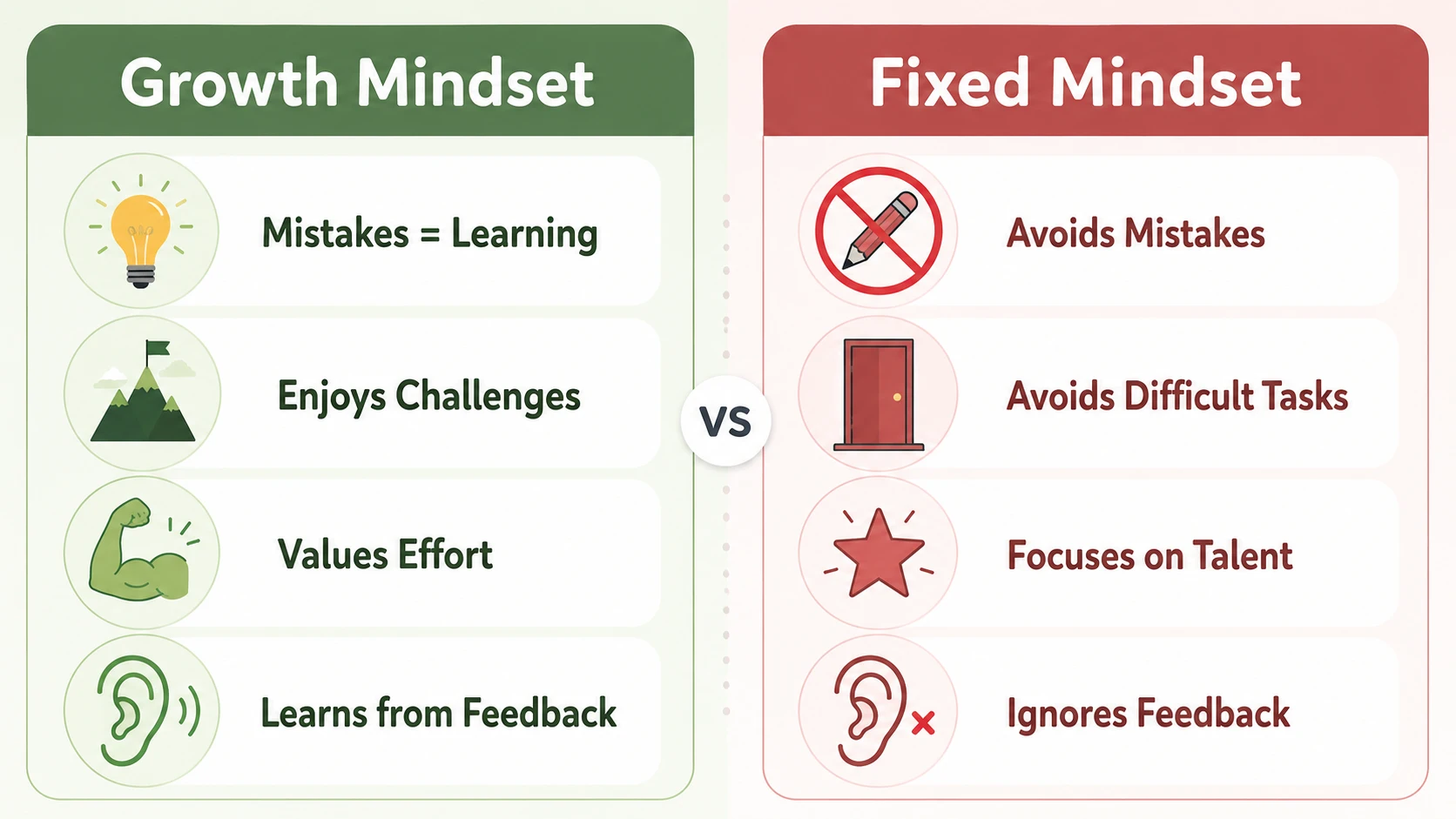
Understanding the growth vs fixed mindset book for kids distinction helps parents choose material that reinforces the right beliefs. Children with a fixed mindset often avoid challenges because they fear looking incapable, while children with a growth mindset see challenges as opportunities to improve. This difference shows up clearly in how a child reacts to failure and feedback.
| Growth Mindset | Fixed Mindset |
|---|---|
| Views mistakes as learning | Avoids mistakes |
| Enjoys challenges | Avoids difficult tasks |
| Values effort | Focuses only on talent |
| Learns from feedback | Ignores feedback |
To explain growth mindset to a child in simple terms, parents can compare the brain to a muscle: the more it is used and challenged, the stronger it becomes. This framing helps young readers understand that intelligence is not fixed, and that effort is what builds capability over time.
Benefits of Reading Growth Mindset Books for Kids
Academic Benefits
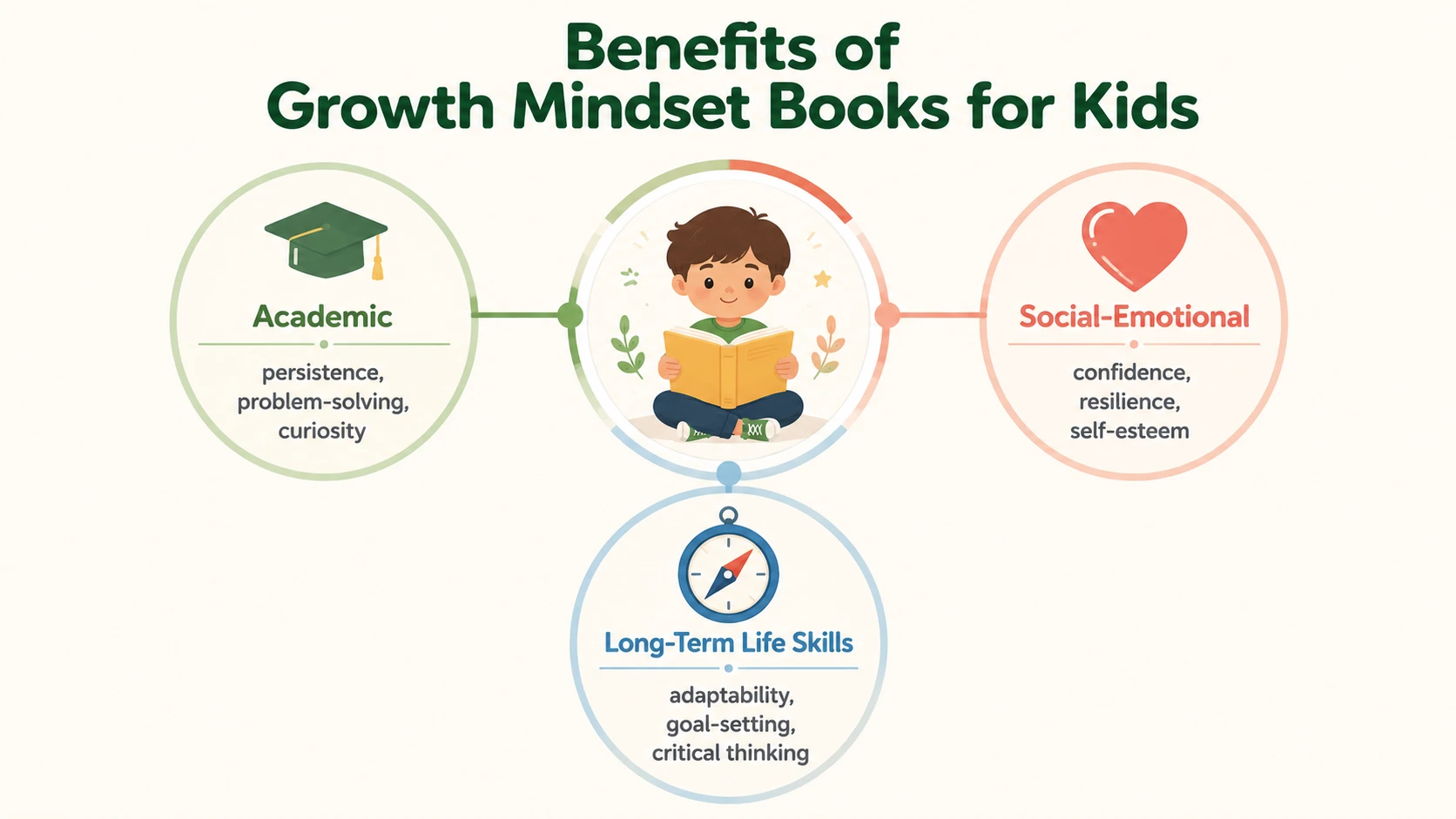
Growth mindset books support academic growth by encouraging children to persist through difficult material rather than giving up. In our experience helping readers build better habits, children exposed to these books tend to show:
- Greater learning persistence when material becomes challenging
- Improved problem-solving skills through trial and error
- Increased curiosity about new subjects
- More active classroom participation, since mistakes feel less threatening
Social and Emotional Benefits
Beyond academics, growth mindset books strengthen a child’s emotional toolkit. Key social and emotional benefits include:
- Confidence built through repeated experiences of improvement
- Emotional regulation when facing frustration or setbacks
- Resilience after failure or disappointment
- Healthy self-esteem rooted in effort rather than outcomes
- Positive relationships, since children learn to give and receive constructive feedback
Long-Term Life Skills
A growth mindset life skills for kids book approach extends benefits well beyond childhood. Long-term skills reinforced through these books include adaptability to new situations, goal setting, critical thinking, and a foundation for lifelong learning. Your Daily Thrive recommends introducing these books early, since mindset patterns formed in childhood often carry into adolescence and adulthood.
Types of Growth Mindset Books for Kids
Fiction Growth Mindset Books
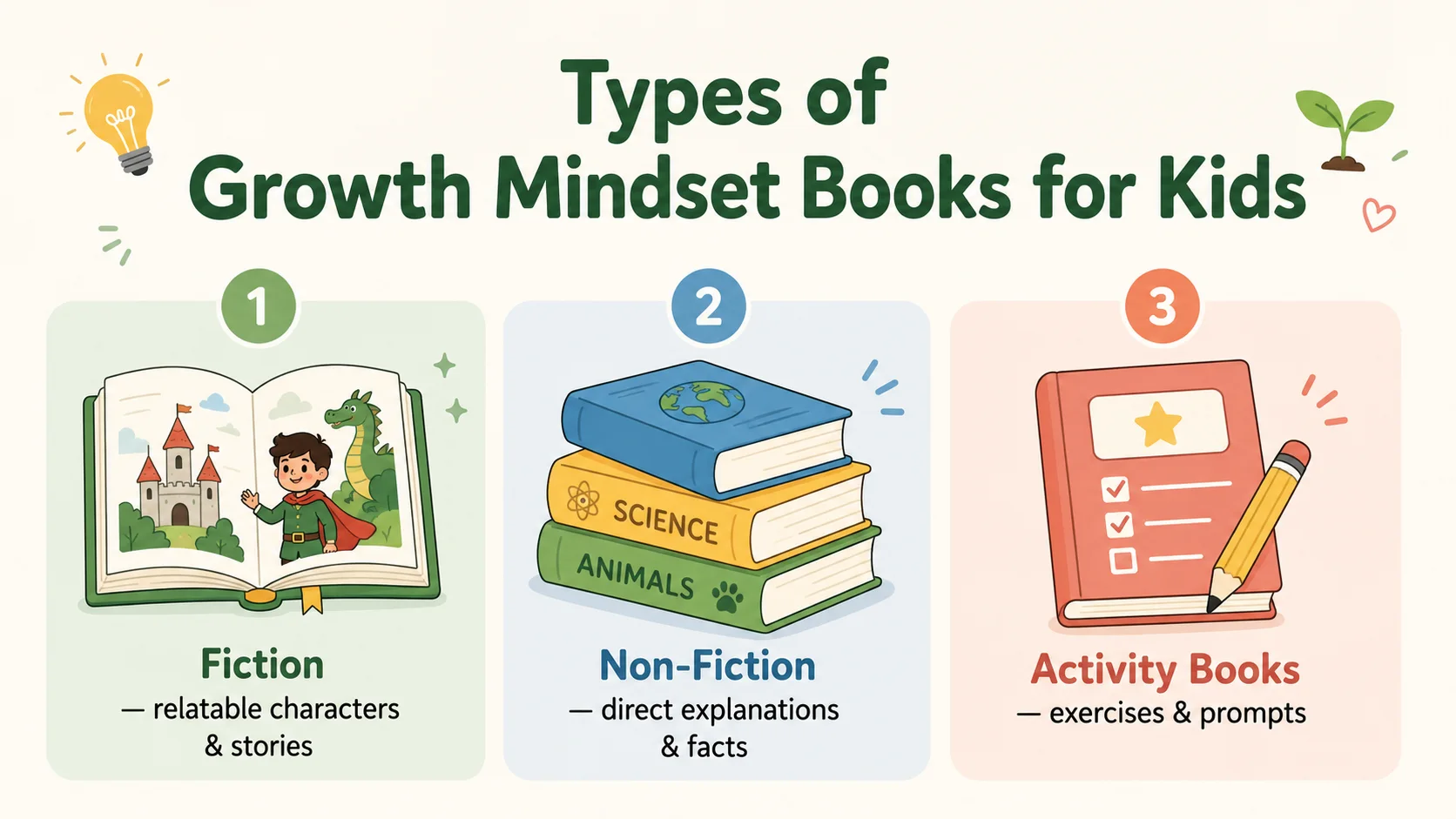
A fiction growth mindset book for kids teaches lessons through relatable characters who face setbacks and grow from them. These stories use emotional storytelling and moral lessons embedded in a plot, which makes abstract concepts like perseverance easier for children to understand and remember.
Non-Fiction Growth Mindset Books
A non-fiction growth mindset book for kids explains concepts directly, often using real-world examples, educational diagrams, and practical advice. These books work well for children who prefer straightforward explanations over narrative storytelling and are often used as classroom supplements.
Activity Books and Workbooks
A growth mindset activity book for kids and a workbook growth mindset book for kids format take a hands-on approach through reflection exercises, games, writing prompts, and habit-building activities. These formats are especially effective for children who learn best by doing rather than reading passively.
Choosing the Right Growth Mindset Book by Age
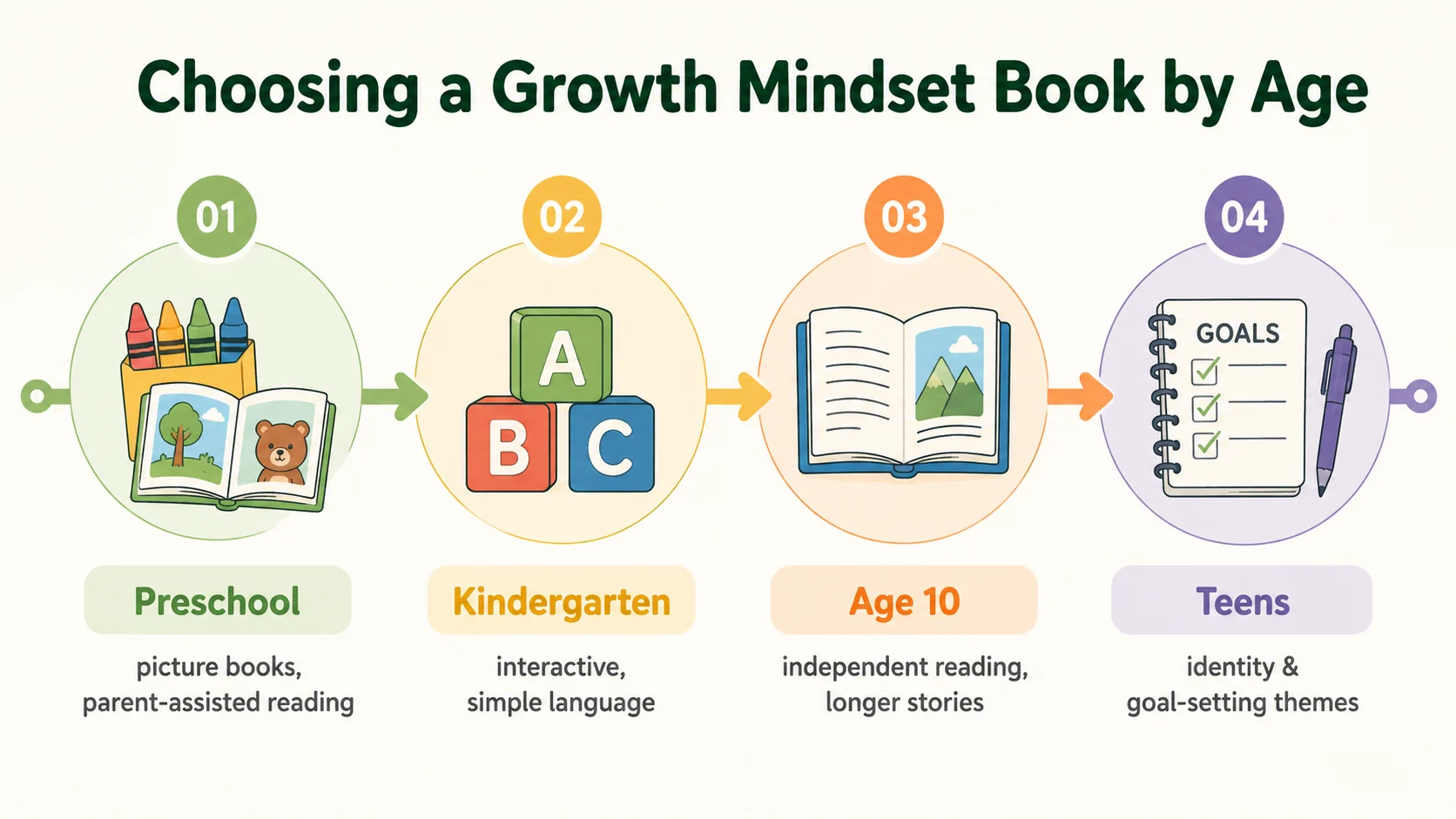
Preschoolers
Growth mindset books for preschoolers should rely on picture books and short stories with simple vocabulary. Parent-assisted reading works best at this age, since preschoolers benefit from discussion and repetition rather than independent reading.
Kindergarten Children
Growth mindset books for kindergarten typically use interactive elements, simple language, and classroom-friendly examples that align with what children are learning about emotions and cooperation at school.
Elementary School Children (Around Age 10)
Growth mindset books for 10 year old can introduce longer stories, more independent reading, and more complex challenges, such as navigating friendships, academic pressure, or extracurricular setbacks. Growth mindset books for 10 year old can introduce longer stories, more independent reading, and more complex challenges, such as navigating friendships, academic pressure, or extracurricular setbacks. See our full list of growth mindset books for 10 year olds for age-specific picks.
Teen Readers
A growth mindset book for teens should address more mature themes such as identity, goal setting, academic pressure, and personal development. Teen-focused titles often connect growth mindset principles to real decisions about future planning and self-image.
How Parents Can Use Growth Mindset Books at Home
Reading Together
Reading together is one of the most effective ways to reinforce lessons. Parents can ask reflective questions during and after reading, encourage open discussion about the character’s choices, and connect the story to real situations the child has faced.
Reinforcing Growth Mindset Daily
Learning how to help your child have a growth mindset extends beyond reading time. Growth mindset books for parents often recommend: Celebrating improvement over perfection. Pairing these habits with simple growth mindset affirmations can give children easy, repeatable language to use when facing challenges.
- Praising effort instead of talent (“You worked hard on that” rather than “You’re so smart”)
- Normalizing mistakes as a normal part of learning
- Celebrating improvement over perfection
How Teachers Can Use Growth Mindset Books in the Classroom
Growth mindset books for students can be integrated into classroom routines in several ways. Effective classroom strategies include:
- Read-aloud sessions that model discussion and reflection
- Group discussions connecting the story to classroom challenges
- Reflection journals where students track effort and progress
- Classroom challenges that reward persistence, not just correct answers
- Social-emotional learning integration alongside academic instruction
Popular Examples of Growth Mindset Books for Kids
Story-Based Books
Well-known story-based titles that teach perseverance and learning from mistakes include The Girl Who Never Made Mistakes and Do It Bad: A Growth Mindset Book for Kids Who Learn by Making Mistakes. Both use narrative structure to show children that mistakes are a normal, even necessary, part of growth.
Activity-Based Resources
Activity-based resources include books built around exercises, worksheets, and interactive learning tasks designed to help children practice growth mindset thinking in a structured, repeatable way.
How to Evaluate Whether a Growth Mindset Book Is Effective
When reading reviews growth mindset book for kids content or evaluating a book independently, parents and teachers should consider several criteria:
- Age appropriateness of vocabulary and themes
- Positive messaging that avoids shame around failure
- Practical lessons children can apply immediately
- Diversity and inclusion in characters and situations
- Engaging illustrations that support comprehension
- Discussion questions that extend learning beyond the page
- Evidence-based concepts grounded in behavioral science rather than vague motivational language
Common Mistakes When Teaching Growth Mindset
Even well-intentioned adults can undermine growth mindset lessons. Common mistakes include:
- Praising effort without offering guidance on how to improve
- Ignoring constructive feedback instead of using it as a teaching moment
- Expecting instant results rather than gradual progress
- Confusing healthy persistence with unhealthy pressure to succeed
- Using growth mindset language inconsistently, which confuses children about what is actually expected
As of 2026, behavioral science researchers increasingly emphasize that praise must be specific and process-focused — vague encouragement without concrete feedback tends to have little lasting effect on a child’s mindset.
Practical Ways to Reinforce Growth Mindset Beyond Books
Books are most effective when paired with real-world practice. Additional reinforcement strategies include:
- Family activities that involve shared problem-solving
- Journaling to track effort, setbacks, and progress
- Goal tracking with small, achievable milestones
- Creative projects that allow room for trial and error
- Sports and music, which naturally reward practice over innate talent
- Everyday problem solving, where parents narrate their own effort and mistakes aloud
Difficulty & Time Investment
Teaching growth mindset through books requires minimal effort to begin but consistent reinforcement to sustain. Reading a single book is beginner-friendly and can start immediately, while building lasting mindset habits requires ongoing conversation and modeling over weeks and months. Personal factors such as a child’s temperament, prior experiences with failure, and classroom environment all influence how quickly the concept takes hold.
Results Timeline
Mindset shifts in children typically appear gradually rather than immediately. Some children show small changes in language and attitude within a few weeks of consistent exposure, such as using phrases like “I can’t do this yet” instead of “I can’t do this.” Deeper, more consistent behavioral change — such as seeking out challenges independently — often takes several months of reinforcement through books, conversation, and lived experience.
Conclusion
Choosing the right growth mindset book for kids depends on a child’s age, personality, and learning style, but the underlying goal remains the same: helping children see effort, mistakes, and challenges as pathways to growth rather than threats to avoid. Fiction, non-fiction, and activity-based books each offer distinct ways to teach this lesson, and their impact multiplies when paired with consistent reinforcement at home and school. By selecting age-appropriate titles and modeling growth mindset language daily, parents and teachers can help children build resilience, confidence, and a lifelong love of learning.
Frequently Asked Questions
Should every child read the same type of growth mindset book?
No. The best growth mindset book depends on a child’s age, reading level, and personal interests, since different formats resonate differently with different learning styles.
Are fiction or non-fiction books better?
Neither is universally better. Fiction works well for emotional engagement and storytelling-based learning, while non-fiction suits children who prefer direct, practical explanations.
Can activity books improve learning?
Yes. Activity books reinforce growth mindset concepts through hands-on practice, such as reflection exercises and writing prompts, which can deepen understanding for children who learn best by doing.
At what age should children start reading growth mindset books?
Children can be introduced to growth mindset concepts as early as preschool age through simple picture books, with parent-assisted reading to support comprehension.
How can parents reinforce growth mindset lessons outside of books?
Parents can reinforce lessons through daily habits such as praising effort over talent, normalizing mistakes, and engaging in activities like journaling, sports, or creative projects that reward persistence.