

Introduction
The best mindset books of all time do more than motivate — they reshape how people think, learn, and respond to setbacks. Unlike general self-help titles that focus on quick tactics, mindset books target the underlying beliefs that drive behavior. This distinction matters because mindset influences learning, resilience, decision-making, productivity, and long-term success across every stage of life. Whether someone is a student building study habits, a professional navigating career change, or an entrepreneur facing failure, the right combination of books on mindset and success can provide lasting frameworks. This guide covers popular mindset books, how to choose books for better mindset, and what makes certain titles endure for decades.
Quick Summary
- Mindset books help reshape thinking patterns, habits, and decision-making rather than offering quick fixes.
- The most influential books combine psychology, behavioral science, philosophy, and practical application.
- Different books serve different goals, including personal growth, resilience, confidence, leadership, and success.
- Choosing the right mindset book depends on your current challenges, experience level, and learning preferences.
What Is a Mindset Book?
Defining mindset in personal development
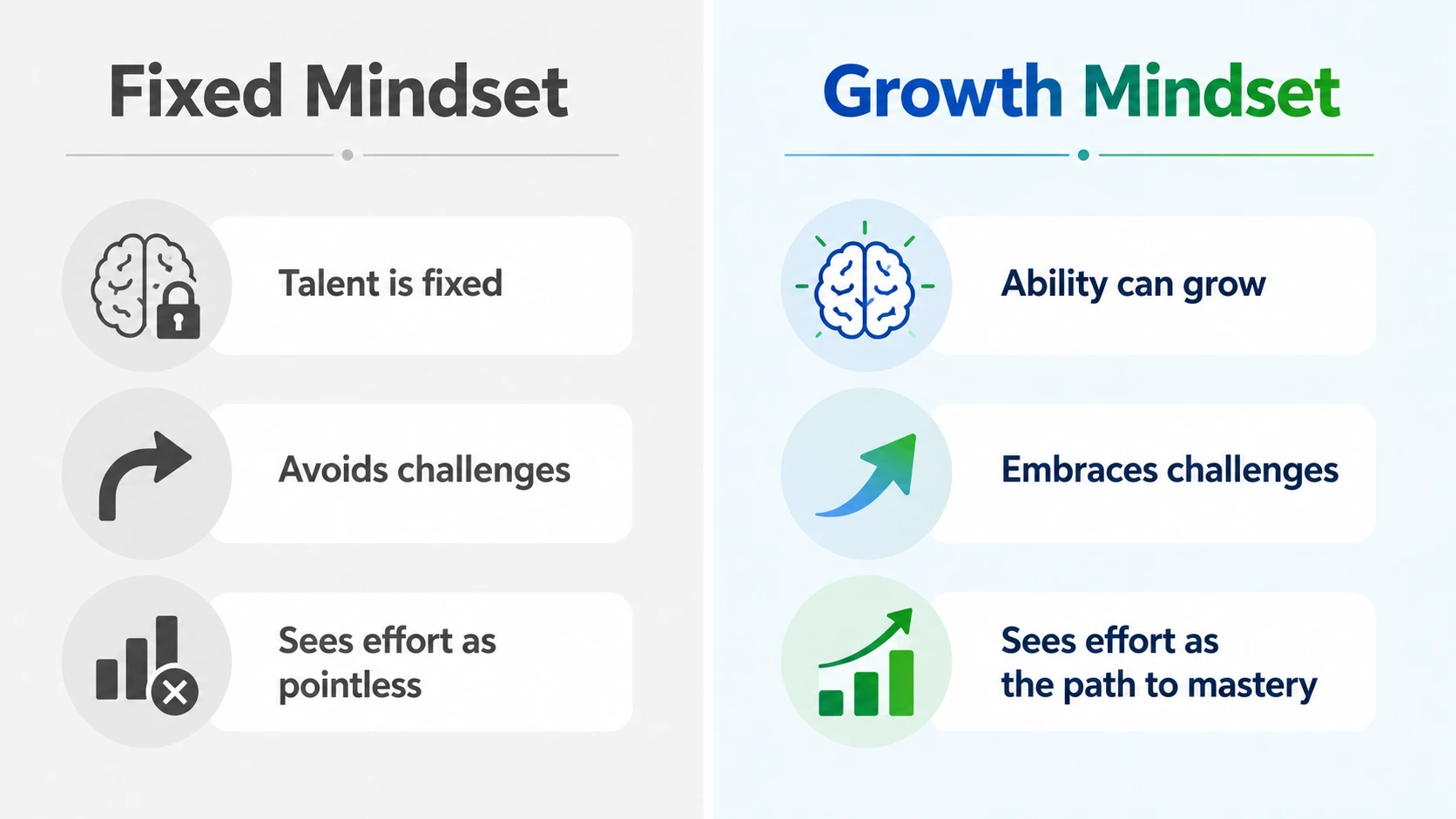
A mindset is the set of beliefs and mental frameworks a person uses to interpret experiences, effort, and ability. In personal development, mindset is distinct from personality, motivation, and intelligence: personality describes stable behavioral traits, motivation describes short-term drive, and intelligence describes cognitive capacity, while mindset describes the interpretive lens applied to all three. Psychologist Carol Dweck’s research popularized the distinction between a fixed mindset, where abilities are seen as static, and a growth mindset, where abilities are seen as developable through effort and strategy. This fixed vs. growth framework underlies most modern mindset books. This fixed vs. growth framework underlies most modern mindset books, and understanding why growth mindset is important helps explain its influence across education, career, and relationships
What makes a mindset book different from a general self-improvement book?
Mindset books focus on belief systems and thought patterns rather than external systems like productivity techniques or leadership frameworks. Productivity books typically address time management and task execution, motivation books address short-term emotional drive, leadership books address influencing others, and habit books address behavioral repetition. Mindset books overlap with all four categories because beliefs shape how people approach tasks, sustain motivation, lead teams, and build habits — but their core focus stays on the internal thinking patterns that precede action.
Why Mindset Matters for Personal and Professional Success
How mindset influences behavior and decision-making
Mindset shapes several core areas of functioning:
- Learning — a growth-oriented mindset treats mistakes as feedback rather than failure, which increases persistence in acquiring new skills.
- Confidence — belief in one’s capacity to improve reduces avoidance behavior in unfamiliar situations.
- Emotional resilience — reframing setbacks as temporary and specific, rather than permanent and global, supports faster recovery from adversity.
- Goal achievement — process-focused thinking sustains effort better than outcome-focused thinking alone.
- Adaptability — flexible mental models allow faster adjustment when circumstances change.
The connection between mindset and long-term success
Successful individuals frequently prioritize mental frameworks over isolated tactics because tactics become outdated while thinking patterns transfer across contexts. A person who internalizes a growth mindset can apply it to career changes, financial decisions, and relationships alike, which is why books on mindset and success are often reread at different life stages. Books for success mindset tend to emphasize consistency and belief systems that compound over time rather than one-time strategies.
Characteristics of the Best Mindset Books of All Time
The most enduring mindset books share several qualities: evidence-based ideas grounded in psychology or behavioral science, practical exercises readers can apply immediately, memorable frameworks that are easy to recall under pressure, genuine psychological insight rather than surface-level advice, real-world examples that illustrate abstract concepts, and long-term relevance that holds up across decades and cultural shifts.
- Easy to apply
- Research-supported
- Evergreen concepts
- Broad audience appeal
Categories of Mindset Books and Who They Help Most
Growth mindset
Books in this category help readers who feel limited by perceived fixed abilities. They are best for students, parents, educators, and anyone starting a new skill, with typical outcomes including increased persistence and reduced fear of failure.
Success mindset
These books target readers focused on achievement, wealth-building, or career advancement. They work best for entrepreneurs and professionals seeking long-term strategic thinking rather than short-term wins.
Resilience mindset
Resilience-focused books help readers recovering from setbacks, job loss, illness, or major life transitions. Outcomes typically include faster emotional recovery and improved stress tolerance.
Confidence mindset
These titles suit readers who struggle with self-doubt, public speaking, or decision paralysis. They tend to produce steadier self-assessment and reduced social anxiety over time.
Leadership mindset
Leadership-focused mindset books benefit managers, founders, and team leads navigating influence and accountability. Outcomes include clearer communication and improved team trust.
Performance mindset
Performance-oriented books suit athletes, high performers, and competitive professionals. They typically improve focus under pressure and consistency in high-stakes situations.
Top 10 Best Mindset Books of All Time
Selection criteria for this list include psychological grounding, practical applicability, longevity of influence, and broad relevance across life situations — the same standards used throughout this guide to identify the top 10 best mindset books of all time.
| Book | Primary Focus | Best For | Key Lesson |
|---|---|---|---|
| Mindset: The New Psychology of Success (Carol Dweck) | Growth vs. fixed mindset | Students, parents, lifelong learners | Abilities can be developed through effort and strategy |
| Atomic Habits (James Clear) | Habit formation and identity | Beginners building consistency | Small, repeated actions compound into major change |
| Man’s Search for Meaning (Viktor Frankl) | Purpose and resilience | Anyone facing hardship | Meaning can be found even in extreme adversity |
| Think and Grow Rich (Napoleon Hill) | Success mindset | Entrepreneurs, professionals | Persistent belief and definite goals drive achievement |
| The 7 Habits of Highly Effective People (Stephen Covey) | Character-based effectiveness | Leaders, professionals | Proactive, principle-centered habits build lasting success |
| Grit (Angela Duckworth) | Perseverance and passion | Performance-driven readers | Sustained effort outperforms raw talent over time |
| The Subtle Art of Not Giving a F*ck (Mark Manson) | Values-based thinking | Readers overwhelmed by positivity culture | Choosing what to care about matters more than forced positivity |
| Can’t Hurt Me (David Goggins) | Mental toughness | High performers, athletes | Discomfort tolerance builds long-term resilience |
| The Obstacle Is the Way (Ryan Holiday) | Stoic resilience | Readers facing setbacks | Obstacles can be reframed as opportunities for growth |
| The Power of Now (Eckhart Tolle) | Present-moment awareness | Readers seeking calm and clarity | Reducing overidentification with thought reduces suffering |
Why this book stands out — Mindset
Dweck’s core idea, the growth mindset, gives readers a simple but research-backed lens for interpreting effort and failure. Its lasting influence comes from its applicability to parenting, education, and workplace culture alike, making it a foundational entry among popular mindset books. Dweck’s core idea, the growth mindset, gives readers a simple but research-backed lens for interpreting effort and failure — a concept she has reinforced through many well-known Carol Dweck mindset quotes on ability and effort.”
Why this book stands out — Atomic Habits
Clear’s system connects small behavioral changes to identity-level shifts, making it one of the most practical entries among the best book for mindset seekers who want structured, repeatable systems rather than abstract theory.
Why this book stands out — Man’s Search for Meaning
Frankl’s account demonstrates that purpose can sustain resilience under extreme conditions, giving readers a philosophical foundation for reframing hardship that remains relevant decades after publication.
Why this book stands out — Think and Grow Rich
Hill’s early synthesis of belief, persistence, and goal clarity shaped much of modern success-mindset literature, making it a recurring reference point in top 10 books on mindset lists.
Why this book stands out — The 7 Habits of Highly Effective People
Covey’s principle-centered approach ties mindset to character rather than tactics, which explains its continued relevance in leadership development programs.
Why this book stands out — Grit
Duckworth’s research on passion and perseverance reframes talent as secondary to sustained effort, offering a data-backed counterpoint to natural-ability narratives.
Why this book stands out — The Subtle Art of Not Giving a F*ck
Manson’s counterintuitive approach challenges forced-positivity culture, resonating with readers seeking a more grounded, values-based version of top 10 mindset books.
Why this book stands out — Can’t Hurt Me
Goggins’s emphasis on discomfort tolerance appeals to performance-driven readers building mental toughness for demanding physical or professional goals.
Why this book stands out — The Obstacle Is the Way
Holiday’s modern application of Stoic philosophy gives readers a repeatable framework for reframing setbacks as usable material rather than pure adversity.
Why this book stands out — The Power of Now
Tolle’s focus on present-moment awareness offers a contemplative alternative to achievement-driven mindset books, appealing to readers prioritizing calm over output.
Psychology Behind Lasting Mindset Change
Cognitive patterns
Mindset change begins with identifying automatic thought patterns, such as catastrophizing or all-or-nothing thinking, and replacing them with more flexible interpretations — a process central to cognitive behavioral approaches referenced in psychology best mindset books of all time.
Habit formation
Sustainable mindset shifts depend on repeated behavior, since beliefs are reinforced through consistent action rather than a single insight or decision.
Neuroplasticity
The brain’s capacity to reorganize neural pathways in response to repeated experience explains why mindset change is gradual rather than instant; consistent practice strengthens new patterns of thinking over time.
Emotional regulation
Managing emotional reactivity supports mindset change by preventing setbacks from triggering a return to old thought patterns, which is why many mindset books pair cognitive strategies with emotional regulation techniques.
Philosophy vs Psychology in Mindset Books
Philosophical approaches
Philosophy-based mindset books, often rooted in Stoicism, focus on meaning, acceptance, and rational thinking as tools for managing what is within or outside personal control.
Scientific approaches
Psychology-based mindset books rely on behavioral science and empirical research to explain why certain thought patterns produce measurable outcomes in performance, resilience, and wellbeing.
Combining both for lasting growth
The strongest reading strategy often combines philosophy best mindset books of all time with scientifically grounded titles, since philosophy provides meaning and framing while psychology provides testable mechanisms for change.
How to Choose the Right Mindset Book
Based on your goals
Readers pursuing career advancement benefit most from success- and leadership-oriented titles, while those recovering from setbacks benefit more from resilience-focused books.
Based on your experience level
Beginners generally benefit from foundational, framework-driven books, while advanced readers often prefer nuanced or philosophically dense titles that build on prior knowledge.
Based on your preferred learning style
Readers who prefer structured exercises should choose workbook-style titles, while readers who prefer narrative or philosophical reflection should choose books with fewer explicit action steps.
Different reader profiles benefit from different starting points:
- Beginners often benefit most from clear, framework-driven titles like Mindset or Atomic Habits.
- Professionals often gravitate toward success- and leadership-focused books.
- Students benefit from growth-mindset titles tied to learning and effort.
- Entrepreneurs often prefer success- and resilience-mindset combinations.
- Leaders benefit from character-based and principle-centered books.
- Lifelong learners often rotate across categories to maintain variety and depth.
Mindset Books for Different Life Situations
Career growth
Readers navigating promotions or career transitions benefit from success- and leadership-mindset titles that emphasize long-term strategic thinking.
Building confidence
Confidence-focused reading works best when paired with small, low-risk action steps that reinforce new self-beliefs through direct experience.
Overcoming failure
Resilience-oriented books help readers reframe failure as informative rather than identity-defining, which supports faster recovery and renewed effort.
Improving relationships
While fewer mindset books focus directly on relationships, growth-mindset principles support better conflict resolution by encouraging flexible interpretation of others’ behavior.
Financial mindset
Success-mindset books often address belief systems around money, scarcity, and long-term planning, which influence financial decision-making independent of income level.
Personal resilience
General resilience reading benefits readers facing health challenges, loss, or major life disruption by providing frameworks for meaning-making and emotional recovery.
Common Themes Found Across Great Mindset Books
Despite differing approaches, most influential mindset books converge on several recurring themes: growth mindset, discipline, consistency, self-awareness, emotional intelligence, purpose, adaptability, lifelong learning, and positive thinking balanced with realism. This convergence explains why readers often find overlapping advice across different popular mindset books, even when the authors approach the subject from different disciplines.
Common Mistakes Readers Make After Reading Mindset Books
- Reading without taking action — Insight alone does not change behavior; without applied practice, ideas fade quickly. The fix is scheduling one small, specific action per chapter.
- Expecting instant transformation — Mindset change is gradual due to how habits and neural patterns form. Readers should track progress over months, not days, to avoid discouragement.
- Consuming too many books at once — Reading several mindset books simultaneously dilutes retention and application. Focusing on one book at a time improves follow-through.
- Copying others without reflection — Frameworks work best when adapted to personal context; readers should reflect on relevance before applying advice directly.
- Ignoring habit formation — Mindset shifts require behavioral reinforcement; pairing insights with habit-tracking prevents regression to old patterns.
Practical Ways to Apply Lessons from Mindset Books
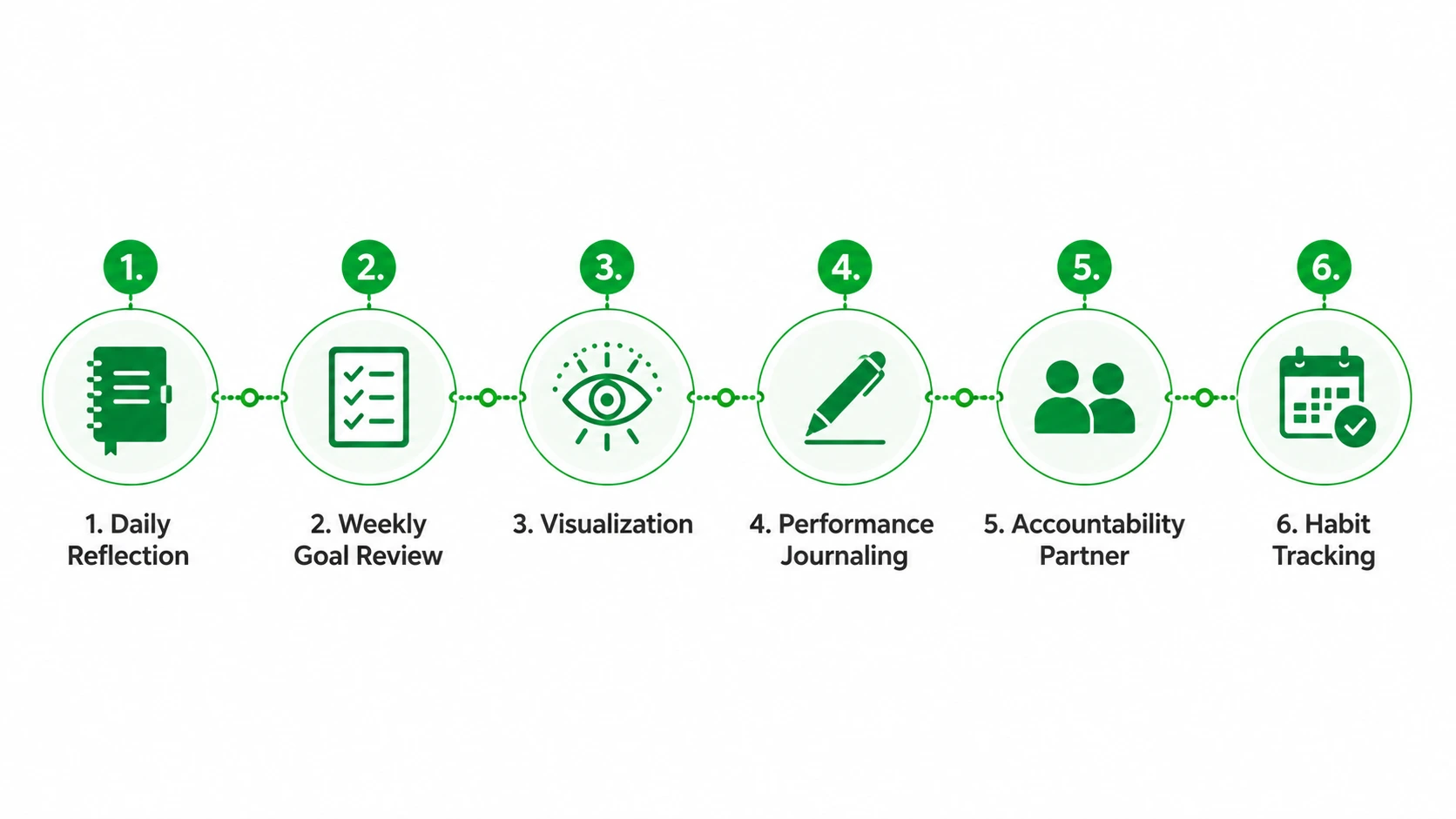
Daily reflection
Spending a few minutes reviewing daily decisions through a mindset lens helps reinforce new thought patterns before they fade.
Journaling
Writing about setbacks and reframing them in real time strengthens the cognitive habits mindset books describe, turning abstract concepts into personal evidence. Writing about setbacks and reframing them in real time strengthens the cognitive habits mindset books describe — these journal prompts for self growth are a useful starting point for readers new to the practice
Habit tracking
Logging specific behaviors tied to a chosen mindset framework provides measurable feedback on consistency and progress.
Goal reviews
Periodic review of goals against mindset principles helps readers notice when old thought patterns resurface under stress.
Accountability systems
Sharing progress with a mentor, coach, or peer group increases follow-through on applying mindset lessons beyond the reading stage.
Difficulty & Time Investment
Applying lessons from mindset books requires moderate, sustained effort rather than intense short-term commitment. Beginner-friendly titles like Atomic Habits typically require 15–20 minutes of daily reading plus brief reflection, while advanced or philosophically dense titles may require slower, repeated reading to fully internalize concepts. Personal factors such as current stress levels, existing self-awareness, and available time for reflection all influence how quickly mindset work becomes sustainable.
Results Timeline
Mindset change typically follows an uneven but predictable pattern. In the first few days, readers often notice increased awareness of automatic thoughts without significant behavior change. Over several weeks, small behavioral shifts — such as reframing setbacks more quickly — tend to emerge with consistent practice. Meaningful, durable transformation in decision-making and resilience usually develops over multiple months, since it depends on repeated reinforcement rather than a single reading. Progress pace is influenced by consistency of practice, existing habits, and the presence of environmental stressors.
Practice Guide for Developing a Stronger Mindset
Daily habits
Short daily practices, such as reviewing one guiding principle from a current book, help maintain momentum between reading sessions.
Weekly review routine
A weekly check-in comparing intended mindset shifts against actual behavior helps identify where old patterns are resurfacing.
Tracking progress
Simple tracking methods, such as a habit log or reflection journal, provide concrete evidence of gradual change over time.
Staying motivated
Revisiting personal reasons for pursuing mindset change, and reviewing early progress notes, helps sustain motivation during slower periods.
Maintaining long-term consistency
Long-term consistency depends on habit stacking — attaching new mindset practices to existing routines — and periodic accountability check-ins with a mentor or peer.
In our experience helping readers build better habits, the readers who make the most lasting progress are the ones who apply one concept fully before moving to the next book, rather than trying to absorb an entire library at once.
Comparing Mindset Books with Other Personal Development Books
| Type | Primary Goal | Best For | Typical Outcome |
|---|---|---|---|
| Mindset books | Reshape beliefs and thought patterns | Readers seeking internal change | Long-term resilience and adaptability |
| Productivity books | Improve time and task management | Readers seeking efficiency | Better output in less time |
| Habit books | Build and sustain repeated behaviors | Readers seeking consistency | Automatic positive routines |
| Leadership books | Improve influence and team management | Managers and founders | Stronger team trust and communication |
| Motivation books | Increase short-term emotional drive | Readers needing a push | Temporary energy and momentum |
| Psychology books | Explain human behavior broadly | Readers seeking understanding | Deeper insight into behavior patterns |
Frequently Overlooked Factors When Choosing Mindset Books
Several factors are often missing from typical book recommendations. Personal learning style matters because structured, exercise-based readers respond differently than reflective, narrative-oriented readers. Scientific credibility varies significantly between books, with some relying on rigorous research and others on anecdote alone. Publication age does not always predict relevance — some older titles remain timeless while some newer ones are already outdated. The balance of practical exercises versus theory should match the reader’s intended use, and cultural perspective can shape how directly certain frameworks apply to different backgrounds. Finally, readers should weigh depth versus simplicity based on whether they want a quick framework or a more thorough psychological foundation.
Conclusion
The best mindset books of all time remain valuable because they address the underlying beliefs that shape learning, resilience, decision-making, and long-term success — not just temporary motivation. Choosing the right title depends less on a book’s popularity and more on individual goals, current life situation, and preferred learning style. Readers who consistently apply lessons from even one well-matched book, through reflection, habit tracking, and accountability, tend to see more durable change than those who read broadly without follow-through. In short: pick one mindset book aligned with your current challenge, apply it consistently, and let gradual, evidence-based change compound over time.
Frequently Asked Questions
What is the best mindset book of all time?
Mindset: The New Psychology of Success by Carol Dweck is widely regarded as one of the best mindset books of all time due to its research-backed growth mindset framework and broad applicability across education, parenting, and career development.
Which mindset books are best for beginners?
Beginners generally benefit most from structured, framework-driven titles such as Mindset and Atomic Habits, since these books provide clear, actionable steps rather than dense philosophical concepts.
Are mindset books supported by psychology?
Many top mindset books, including those by Carol Dweck and Angela Duckworth, are grounded in peer-reviewed psychological research on cognition, motivation, and behavior change.
How many mindset books should I read each year?
There is no fixed number, but reading one to three mindset books per year with full application tends to produce more lasting change than reading many books without follow-through.
Can mindset books improve confidence and resilience?
Yes, mindset books that focus on reframing failure and building self-efficacy can improve confidence and resilience when paired with consistent, applied practice over time.
What is the difference between mindset books and self-help books?
Mindset books specifically target underlying belief systems and thought patterns, while general self-help books may focus more broadly on tactics, habits, motivation, or life advice.
Which mindset books focus on success and achievement?
Think and Grow Rich, The 7 Habits of Highly Effective People, and Grit are commonly cited books on mindset and success for readers focused on achievement and long-term goal attainment.
How can I apply the lessons from mindset books in daily life?
Readers can apply mindset lessons through daily reflection, journaling, habit tracking, periodic goal reviews, and accountability systems that reinforce new thought patterns through consistent practice.