
Introduction
The discussion around logic vs emotion often makes people believe they must choose between rational thinking and emotional awareness. In reality, both systems influence human behavior, relationships, productivity, habits, and long-term decision-making. Logic helps people analyze consequences, solve problems, and create structure, while emotions influence motivation, connection, instincts, and personal meaning. Most healthy decisions require balance rather than emotional suppression or excessive overthinking. Emotional awareness and rational thinking serve different psychological functions, and understanding how they work together improves self-control, communication, resilience, and long-term personal growth.
Quick Summary
- Logic focuses on analysis, reasoning, and objective thinking
- Emotion influences motivation, relationships, instincts, and personal values
- Most life decisions involve both logical and emotional processing
- Balancing logic and emotion improves communication and self-control
- Emotional awareness supports healthier habits and long-term decision-making
What Is the Difference Between Logic and Emotion?
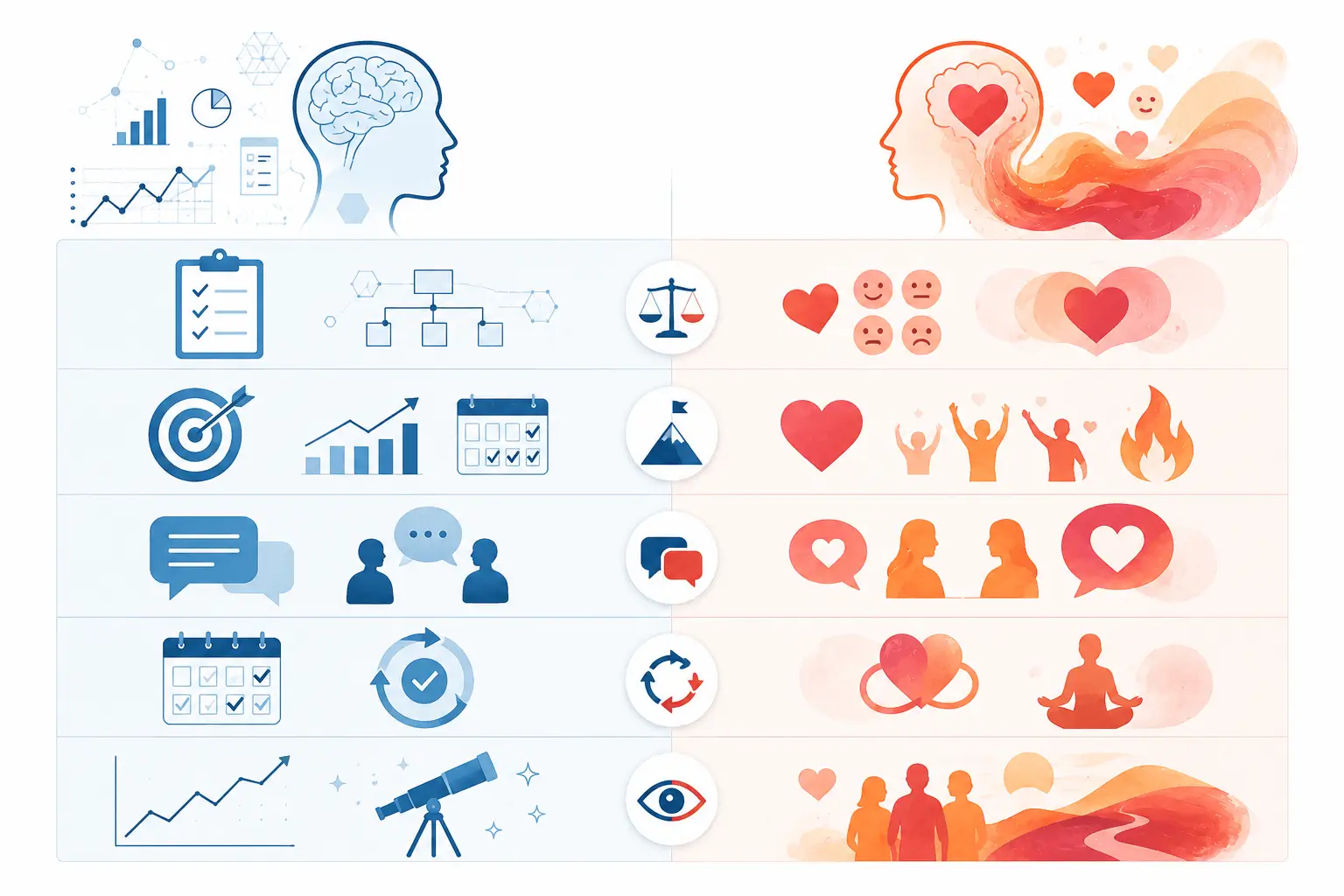
Logic and emotion are two separate but connected systems that shape human thinking and behavior. Logical thinking focuses on reasoning, evidence, and objective evaluation, while emotional processing focuses on feelings, instincts, reactions, and internal experiences.
Humans naturally use both systems because cognition and emotional intelligence work together in everyday life. Decisions related to productivity, relationships, habits, and communication usually involve emotional and logical influences simultaneously.
What Is Logic?
Logic refers to objective reasoning and analytical thinking. It helps people evaluate situations based on evidence, patterns, and consequences instead of immediate emotional reactions.
Logical thinking often includes:
- Cause-and-effect analysis
- Long-term consequence evaluation
- Structured problem-solving
- Rational comparison of choices
- Evidence-based decision-making
Logic is especially useful in situations that require consistency and long-term planning.
| Situation | Logical Advantage |
|---|---|
| Financial planning | Reduces impulsive spending |
| Time management | Improves productivity |
| Career decisions | Supports long-term stability |
| Habit tracking | Creates measurable progress |
What Is Emotion?
Emotion refers to psychological and physical responses that influence behavior, motivation, and perception. Emotions act as signals that help people respond to relationships, rewards, stress, and threats.
Emotional processing supports:
- Survival instincts
- Human attachment
- Motivation and reward-seeking
- Empathy and connection
- Habit reinforcement
Emotions strongly influence habits and daily choices, including procrastination, communication patterns, stress eating, and impulsive spending.
Why Humans Need Both Logic and Emotion
Humans need both systems because each serves a different purpose.
- Logic without emotion can reduce empathy and flexibility
- Emotion without logic can increase impulsive behavior
- Balanced thinking improves adaptability and resilience
People who combine emotional awareness with rational analysis usually make healthier long-term decisions and communicate more effectively.
Logic vs Emotion in Psychology
In psychology, logic vs emotion explains how analytical reasoning interacts with emotional processing. Human decision-making is influenced by dual-process thinking, where fast emotional reactions and slower logical evaluation work together.
The emotional vs logical debate is not about eliminating one system. Instead, psychology shows that healthy behavior depends on understanding when each system should guide decisions.
How the Brain Processes Logic and Emotion
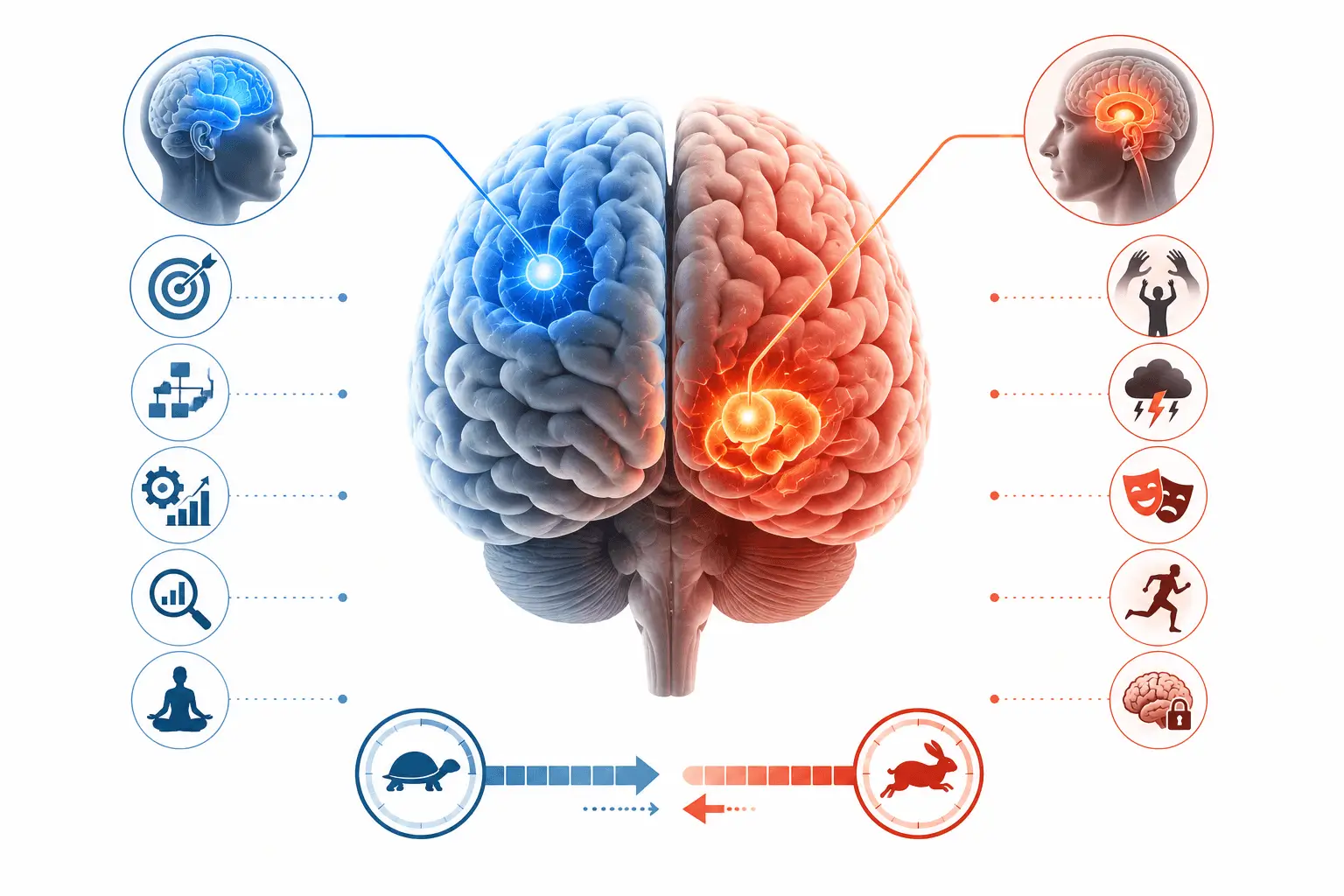
The logic vs emotion brain relationship involves different neurological systems.
- The prefrontal cortex supports reasoning, planning, and impulse control
- The amygdala processes fear, emotional reactions, and survival responses
Emotions usually react faster than logic because survival systems prioritize immediate danger before analytical reasoning occurs.
Why Emotions Often Override Logic
Emotions often override logic because emotional reactions are deeply connected to memory and survival.
Common causes include:
- Fear-based reactions
- Stress and anxiety
- Emotional memories
- Cognitive biases
- Decision fatigue
Stress changes decision-making because emotional systems become more active while rational thinking weakens.
Can You Train Yourself to Think More Logically?
Yes. Logical thinking can improve through self-awareness and emotional regulation habits.
Learning how to journal for self-growth can help people identify emotional triggers, recognize thinking patterns, and improve long-term decision-making.
Helpful methods include:
- Journaling emotional reactions
- Delaying immediate responses
- Practicing mindfulness
- Reflecting before making decisions
- Evaluating long-term consequences
Over time, these practices improve emotional control and strengthen rational thinking.
Logic vs Emotion in Decision Making
Logic vs emotion in decision making affects productivity, habits, finances, communication, and long-term goals. Most decisions involve both emotional and logical influences.
Problems usually happen when one system completely dominates the other.
When Logic Leads to Better Decisions
Logic leads to better decisions when long-term stability and objective evaluation are important.
Examples include:
- Financial planning
- Career development
- Time management
- Productivity systems
- Habit tracking
Logical thinking reduces emotional impulsiveness and improves consistency.
When Emotions Improve Decisions
Emotions improve decisions involving relationships, empathy, creativity, and personal fulfillment.
Examples include:
- Relationship choices
- Intuition-based judgments
- Creative thinking
- Personal values
- Meaningful life goals
Emotions help people understand motivation, fulfillment, and human connection.
Common Decision-Making Mistakes
Many people struggle because they rely too heavily on emotional or logical extremes.
Common mistakes include:
- Acting emotionally during stress
- Overanalyzing simple choices
- Ignoring intuition completely
- Seeking perfection instead of progress
Short-Term vs Long-Term Thinking
| Short-Term Thinking | Long-Term Thinking |
|---|---|
| Emotion-driven reactions | Strategic planning |
| Instant gratification | Delayed gratification |
| Temporary comfort | Sustainable growth |
| High impulsiveness | Better consistency |
Logic vs Emotion in Relationships
Logic vs emotion in relationships often appears during disagreements, communication problems, and emotional misunderstandings.
Healthy relationships require emotional validation and rational problem-solving together.
Why Relationship Conflicts Become Emotional
Relationship conflicts become emotional because people often feel unheard or emotionally unsafe.
Common triggers include:
- Feeling misunderstood
- Defensive reactions
- Emotional triggers
- Unmet expectations
- Communication failures
Emotional reactions usually happen before rational problem-solving begins.
Balancing Logic and Emotion in Communication
Understanding why empathy is important in relationships helps people communicate more calmly during emotional conflicts instead of reacting defensively.
Healthy communication requires emotional understanding before solutions are introduced.
Helpful strategies include:
- Listening before solving problems
- Validating emotions calmly
- Setting boundaries logically
- Avoiding emotionally reactive discussions
Healthy Relationship Habits
Strong relationship habits include:
- Pausing before reacting
- Emotional accountability
- Communication routines
- Conflict-resolution systems
- Calm discussions after emotional intensity decreases
Logic vs Emotion vs Feelings: Are They the Same?
Logic vs emotion vs feelings describes three related but different psychological experiences.
People often confuse emotions and feelings because they happen closely together, but they are not identical.
Emotions vs Feelings
| Emotions | Feelings |
|---|---|
| Automatic reactions | Personal interpretation |
| Often unconscious | Conscious awareness |
| Short-term signals | Longer-lasting experiences |
| Physical responses | Mental meaning |
Why This Difference Matters
Understanding this difference improves emotional awareness and self-control.
Benefits include:
- Reduced impulsive behavior
- Healthier communication
- Better emotional intelligence
- More mindful decision-making
Motivation vs Discipline: Emotional Drive vs Logical Consistency
Motivation and discipline represent emotional and logical approaches to behavior change.
Motivation is heavily influenced by emotions, while discipline depends more on systems, routines, and consistency.
Motivation vs Discipline Comparison
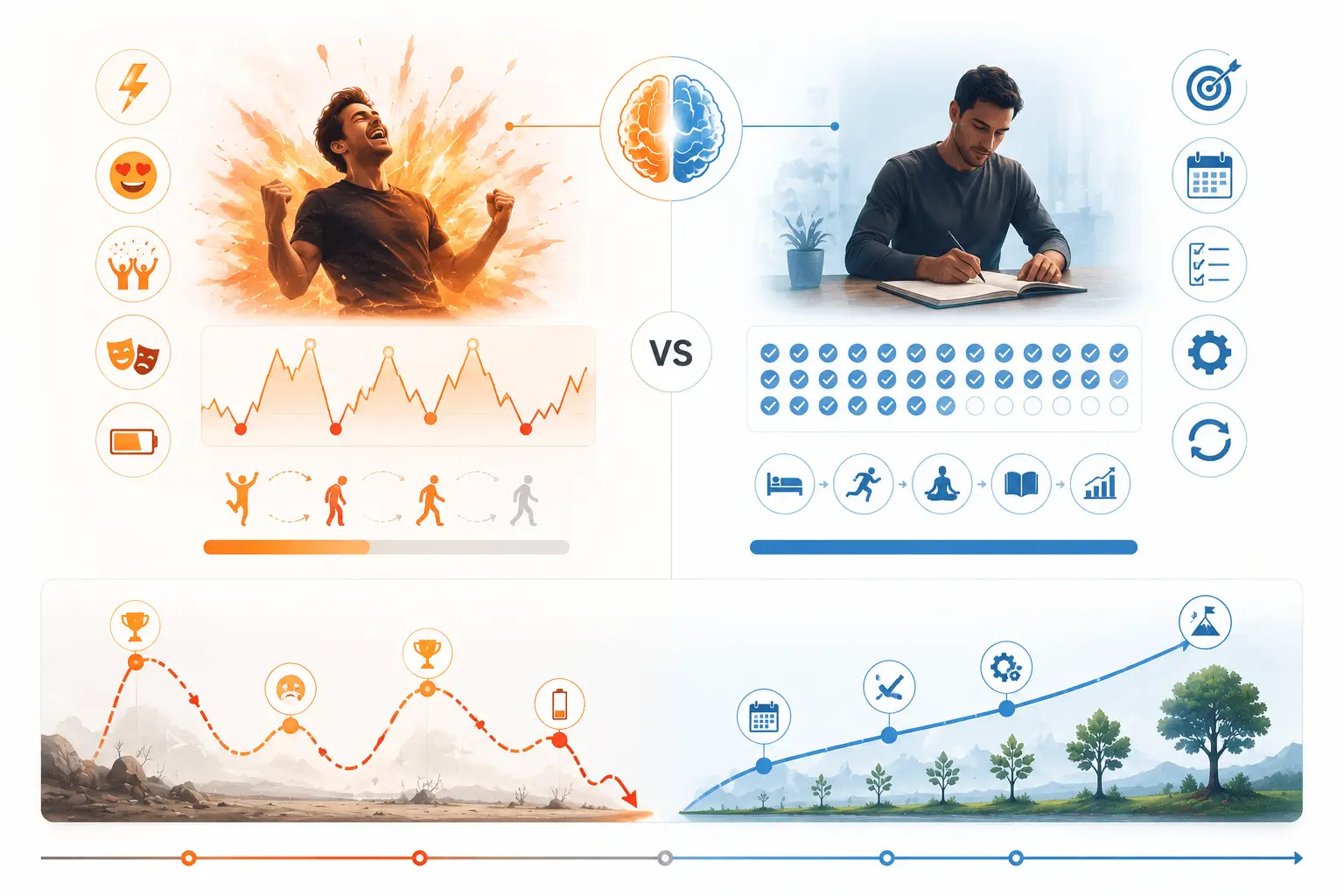
| Motivation | Discipline |
|---|---|
| Emotion-driven | System-driven |
| Temporary | Consistent |
| High-energy bursts | Sustainable routines |
| Depends on mood | Depends on habits |
Why People Struggle With Consistency
Many consistency struggles happen because people rely on emotional motivation instead of structured systems.
Common causes include:
- Emotional dependence
- Instant gratification
- Unrealistic expectations
- Burnout cycles
- Lack of routines
What Actually Works Long-Term
Behavioral psychology shows that sustainable habits depend more on systems than emotional intensity.
Effective long-term strategies include:
- Small daily routines
- Identity-based habits
- Emotional regulation practices
- Environment design
- Reducing decision fatigue
Common Myths About Logic and Emotion
Many misconceptions create unhealthy views about emotional intelligence and rational thinking.
Myth: Emotions Are Weaknesses
Emotions are not weaknesses. They provide valuable information about needs, stress, values, and boundaries.
Emotional intelligence improves:
- Leadership
- Communication
- Relationships
- Conflict resolution
- Self-awareness
Myth: Logical People Are Always Right
Logical thinking can still contain biases and blind spots.
Rational analysis sometimes ignores:
- Emotional impact
- Human complexity
- Psychological needs
- Social context
Myth: You Must Choose Between Logic and Emotion
Balanced thinking is usually more effective than emotional suppression or extreme rationality.
Emotional awareness often strengthens logical reasoning instead of weakening it.
Practical Ways to Balance Logic and Emotion Daily
Balancing logic and emotion requires consistent habits, self-awareness, and practical systems.
One of the most effective ways to reduce emotional overwhelm is learning to focus on what you can control instead of reacting to every external situation.
The Pause-and-Reflect Method
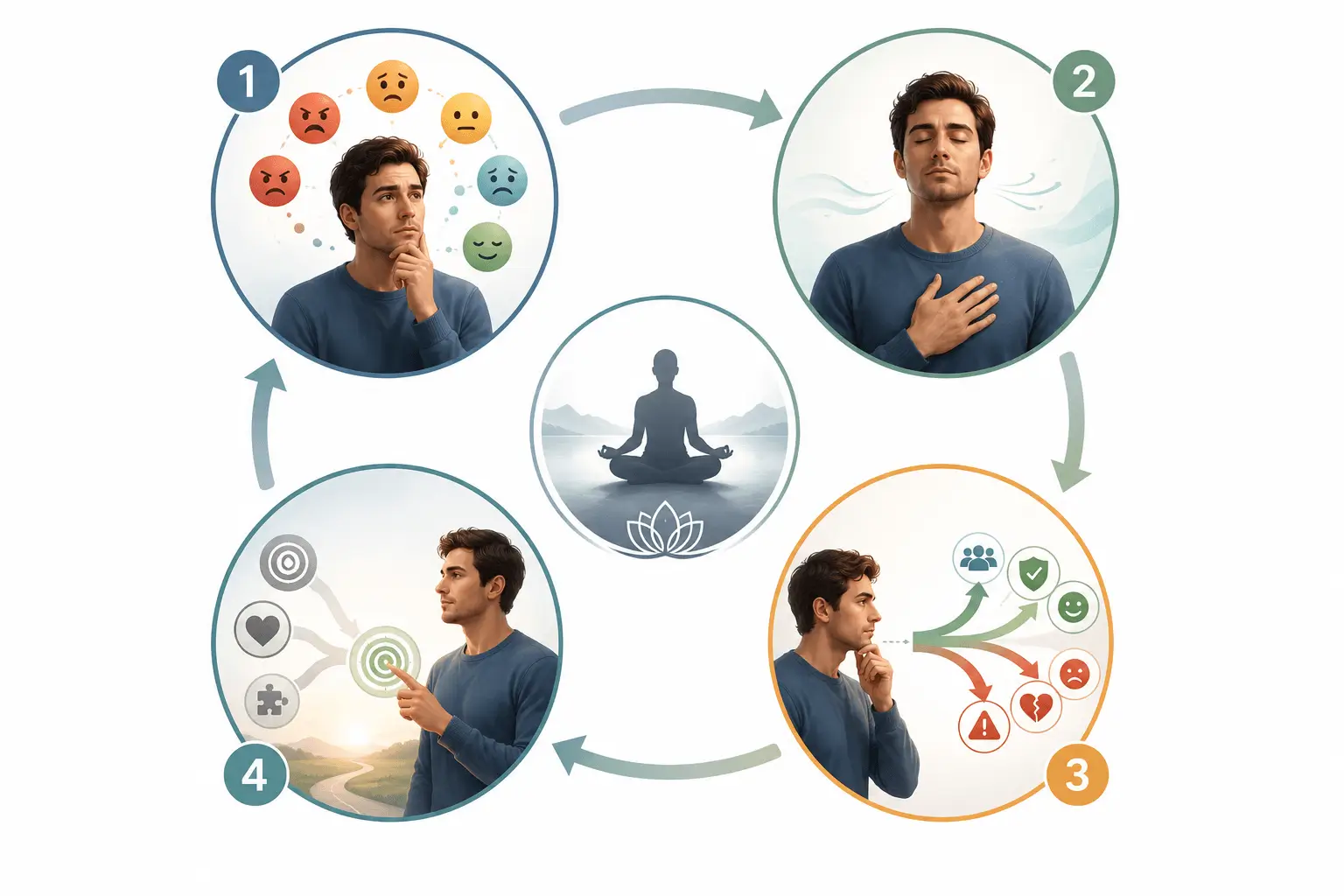
This method helps reduce impulsive reactions and improve intentional behavior.
Steps
- Identify the emotion
- Delay immediate reaction
- Evaluate possible consequences
- Choose intentional action
This process strengthens emotional regulation and rational thinking simultaneously.
Daily Habits That Improve Emotional Control
Helpful habits include:
- Journaling
- Meditation
- Quality sleep
- Stress management
- Exercise and movement
These habits improve emotional stability and reduce reactive behavior.
Building Better Decision-Making Systems
Practical decision-making systems include:
- Pros-and-cons frameworks
- Long-term thinking questions
- Emotional trigger tracking
- Routine-based decision reduction
Reducing unnecessary decisions lowers mental exhaustion and improves consistency.
Real-Life Examples of Logic vs Emotion
Logic vs emotion examples appear constantly in everyday life.
Emotional Decision Example
Impulse spending during stress often creates short-term emotional relief but leads to long-term regret.
This pattern happens because emotions prioritize comfort over future consequences.
Logical Decision Example
Budget planning and delayed gratification support financial stability and long-term progress.
Logical systems reduce emotional overspending and improve financial discipline.
Balanced Decision Example
Choosing a meaningful career path often requires both practicality and emotional fulfillment.
Balanced decisions usually consider:
- Financial security
- Personal values
- Long-term opportunities
- Emotional satisfaction
- Lifestyle sustainability
Science-Backed Insights on Emotional Regulation and Rational Thinking
Behavioral psychology research shows that emotions strongly influence cognition, productivity, and habit formation.
Emotional regulation improves long-term decision-making because stress directly affects brain function.
Why Stress Weakens Logical Thinking
Stress increases cortisol levels, which can reduce impulse control and increase emotional reactivity.
Effects include:
- Mental exhaustion
- Reduced focus
- Emotional impulsiveness
- Poor decision-making
- Higher procrastination levels
Why Emotional Awareness Improves Productivity
Emotional awareness supports productivity by improving self-regulation and reducing avoidance behaviors.
Benefits include:
- Better focus
- Reduced procrastination
- Improved consistency
- Healthier coping mechanisms
- Stronger habits and routines
Conclusion
Logic and emotion are not enemies but complementary systems that influence human behavior, relationships, habits, and decision-making. Emotional awareness helps people understand values, motivations, and personal needs, while logical thinking creates structure, discipline, and long-term stability. Sustainable self-improvement depends on learning when to feel, when to analyze, and when to combine both systems intentionally. The healthiest decisions usually come from balancing emotional intelligence with rational analysis instead of relying completely on either extreme.
FAQ Section
Why do emotions often overpower logic?
Emotions react faster than rational thinking because the brain prioritizes survival, emotional memory, and safety before analytical reasoning.
Is it better to be logical or emotional?
Neither is inherently better. Balanced thinking allows people to make rational decisions while still understanding emotional needs and relationships.
How can I stop making emotional decisions?
Practice delaying reactions, identifying emotional triggers, journaling regularly, and using structured decision-making systems before acting impulsively.
Why do I struggle with consistency even when I know what to do?
Many people rely on motivation instead of systems. Emotional fluctuations make consistency difficult without routines and sustainable habits.
Can emotions improve decision-making?
Yes. Emotions help people recognize values, intuition, empathy, and fulfillment, which are important for healthy relationships and life satisfaction.
What happens when someone ignores emotions completely?
Suppressing emotions can increase stress, reduce self-awareness, damage relationships, and create emotional burnout over time.
How do I balance logic and emotion in relationships?
Listen actively, validate emotions before solving problems, communicate calmly, and avoid reacting during emotionally intense situations.










2 Responses