

Introduction
Learning how to apologize without saying sorry involves communicating accountability, empathy, and emotional awareness through actions and language that feel sincere instead of scripted. In many emotional conversations, relationship conflicts, and professional situations, people respond more positively to genuine understanding than automatic phrases. Knowing how to apologize properly means recognizing the emotional impact of your behavior and showing a willingness to improve consistently.
This approach does not mean avoiding accountability. Instead, it focuses on emotional validation, non-verbal accountability, and behavior change. Whether you are learning how to apologize to someone personally or professionally, meaningful repair depends more on trust-building actions than repeating one word.
Quick Summary Block
- A meaningful apology focuses on accountability, empathy, and changed behavior—not just the word “sorry.”
- People respond better when they feel understood, respected, and emotionally validated.
- Effective apologies explain awareness of the impact caused and show a willingness to improve.
- Consistent actions rebuild trust more than repeated verbal apologies.
- Emotional maturity during conflict strengthens long-term relationships and communication.
What Makes an Apology Feel Genuine
The Core Elements of a Real Apology
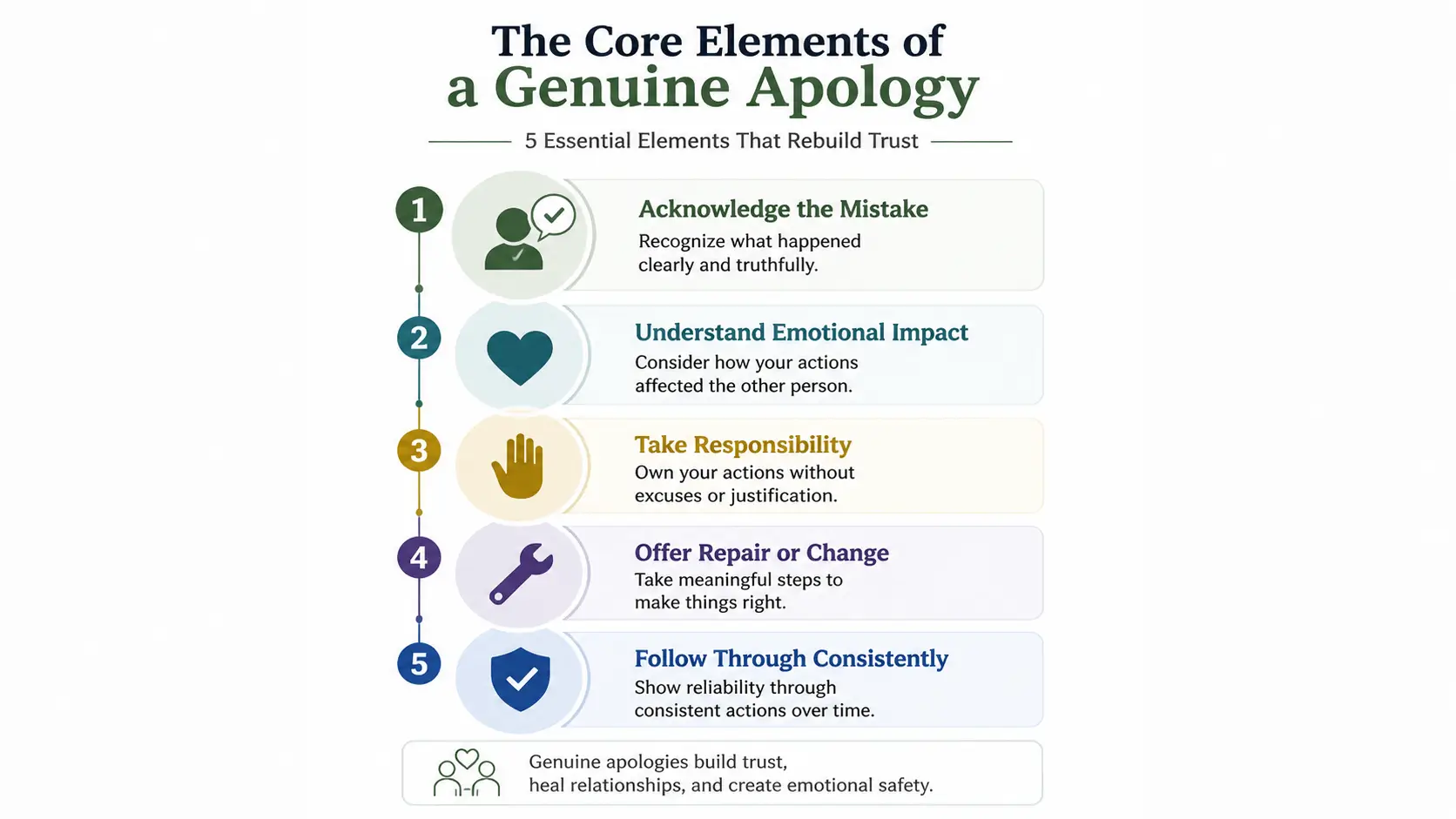
A genuine apology includes emotional awareness, accountability, and behavioral change. People usually distrust apologies that sound automatic or emotionally disconnected.
The core elements of a meaningful apology include:
- Acknowledging the mistake
- Understanding emotional impact
- Taking responsibility
- Offering repair or change
- Following through consistently
When people apologize sincerely, they communicate emotional intelligence rather than emotional performance. Research in behavioral psychology shows that trust repair depends heavily on consistency and accountability. If someone repeatedly says the same thing without improvement, emotional credibility decreases over time.
Understanding how do you apologize to someone sincerely requires more than polite wording. Effective communication validates the other person’s experience while reducing defensiveness and resentment.
Why “Sorry” Alone Sometimes Feels Meaningless
The word “sorry” can lose emotional value when it is disconnected from action.
Common reasons apologies feel meaningless include:
- Repeated apologies without behavior change
- Defensive or forced communication
- Passive-aggressive wording
- Emotional disconnect during conflict
This creates apology fatigue. Over time, repeated emotional promises without improvement lead to relationship resentment and trust erosion.
Behavioral psychology explains this through pattern recognition. People evaluate long-term reliability more than isolated emotional statements. When actions consistently contradict words, emotional trust weakens.
How to Apologize Without Saying Sorry
Acknowledge the Specific Impact
A strong apology begins by recognizing emotional impact clearly and directly.
Examples include:
- “I understand why that upset you.”
- “I can see how my actions affected you.”
- “You deserved better communication.”
Emotional validation reduces defensiveness because people feel emotionally understood instead of dismissed. This is one of the most effective ways to apologize without saying sorry.
If you want to understand how to say sorry without apologizing directly, focus on clarity and empathy rather than emotional dramatics. Many ways to apologize without saying sorry work because they prioritize emotional recognition instead of rehearsed wording.
Take Responsibility Without Excuses
Accountability means owning behavior without minimizing consequences.
Avoid:
- Blame shifting
- Defensive explanations
- Downplaying emotional impact
Use direct ownership statements such as:
- “I should have handled that differently.”
- “That decision created unnecessary stress.”
- “I take full responsibility for what happened.”
Accountability is different from guilt. Guilt focuses on personal discomfort, while accountability focuses on repair and responsibility.
Excuses weaken trust because they redirect attention away from the emotional impact caused. People generally respond better to ownership than justification.
Show Intent to Improve
A meaningful apology explains what will change moving forward.
Many people improve communication patterns faster when they reflect regularly through practices like how to journal for self-growth and emotional awareness tracking.
Focus on action-based improvement such as:
- Better communication habits
- Setting reminders or systems
- Managing emotional reactions
- Creating healthier conflict patterns
Behavior-change psychology shows that trust rebuilds through consistency, not intensity. Sustainable improvement matters more than emotional promises made during conflict.
People regain credibility by demonstrating repeated behavioral alignment over time.
Different Ways to Say Sorry Without Using the Word “Sorry”
Emotionally Supportive Phrases
Different ways to say sorry can still communicate empathy clearly.
- “I understand why you’re hurt.”
- “I regret how this affected you.”
- “I appreciate your patience.”
- “You mattered in this situation.”
- “I want to make this right.”
Accountability-Focused Phrases
Another way to say sorry is through direct ownership.
- “That was my mistake.”
- “I handled that poorly.”
- “I should have communicated better.”
- “I understand the frustration I caused.”
Action-Based Apology Statements
Other ways to say sorry often focus on future behavior.
- “Here’s what I’m doing differently.”
- “I’ll be more intentional moving forward.”
- “I’m working on changing that behavior.”
Learning how to say sorry effectively involves combining emotional understanding with practical action. In many situations, apologies for harmful behavior become more meaningful when supported by visible change.
How to Apologize Without Saying Sorry in Relationships
Romantic Relationships and Emotional Safety
In relationships, emotional validation matters more than perfect wording.
People often search for how to apologize without saying sorry to boyfriend or how to apologize without saying sorry to your boyfriend because they want communication to feel authentic instead of forced. The same applies to learning how to apologize without saying sorry to my husband or partner.
Defensiveness damages emotional intimacy because it makes people feel emotionally unsafe. Healthy relationships rebuild trust through:
- Emotional consistency
- Accountability
- Respectful listening
- Behavioral improvement
Knowing how to say sorry to your partner means prioritizing emotional repair over “winning” the argument.
Relationship Text Examples
Text communication can easily create misunderstandings because tone is harder to interpret emotionally.
Examples of healthy relationship repair messages include:
- “I know my words hurt you, and I understand why you needed space.”
- “You deserved more understanding from me.”
- “I care about fixing this, not just ending the argument.”
People searching for how to apologize without saying sorry in a relationship text often benefit from shorter, emotionally clear communication rather than long emotional explanations.
Apologizing to Friends Without Overexplaining
Healthy friendships require accountability without emotional manipulation.
If you want to know how to apologize without saying sorry to a friend, focus on:
- Honest communication
- Respecting boundaries
- Giving space for processing
- Avoiding pressure for immediate forgiveness
Overexplaining can sometimes feel defensive instead of sincere.
How to Apologize Professionally Without Saying Sorry
Professional Accountability vs Emotional Apologies
Professional environments value clarity, responsibility, and solutions.
Learning how to apologize without saying sorry professionally means balancing accountability with composure. Emotional overexplaining can reduce clarity and professionalism.
Healthy workplace communication focuses on:
- Identifying the issue
- Explaining corrective action
- Preventing future mistakes
- Respectful communication
This is especially important when learning how to apologize without saying sorry at work.
Professional Email Apology Examples
| Weak Response | More Effective Alternative |
|---|---|
| “Sorry for the delay.” | “Thank you for your patience while I resolved this issue.” |
| “Sorry for the confusion.” | “I understand the confusion this created and have clarified the next steps below.” |
| “Sorry about the mistake.” | “I identified the issue and implemented a correction process.” |
Solution-oriented communication builds professional trust because it demonstrates competence and accountability.
People often search for:
- how to apologize professionally in an email without saying sorry
- how to apologize without saying sorry in email
- how to apologize without saying sorry professionally letter
- how to apologize for a mistake professionally
The most effective approach combines responsibility with corrective action.
Motivation vs Accountability in Apologies
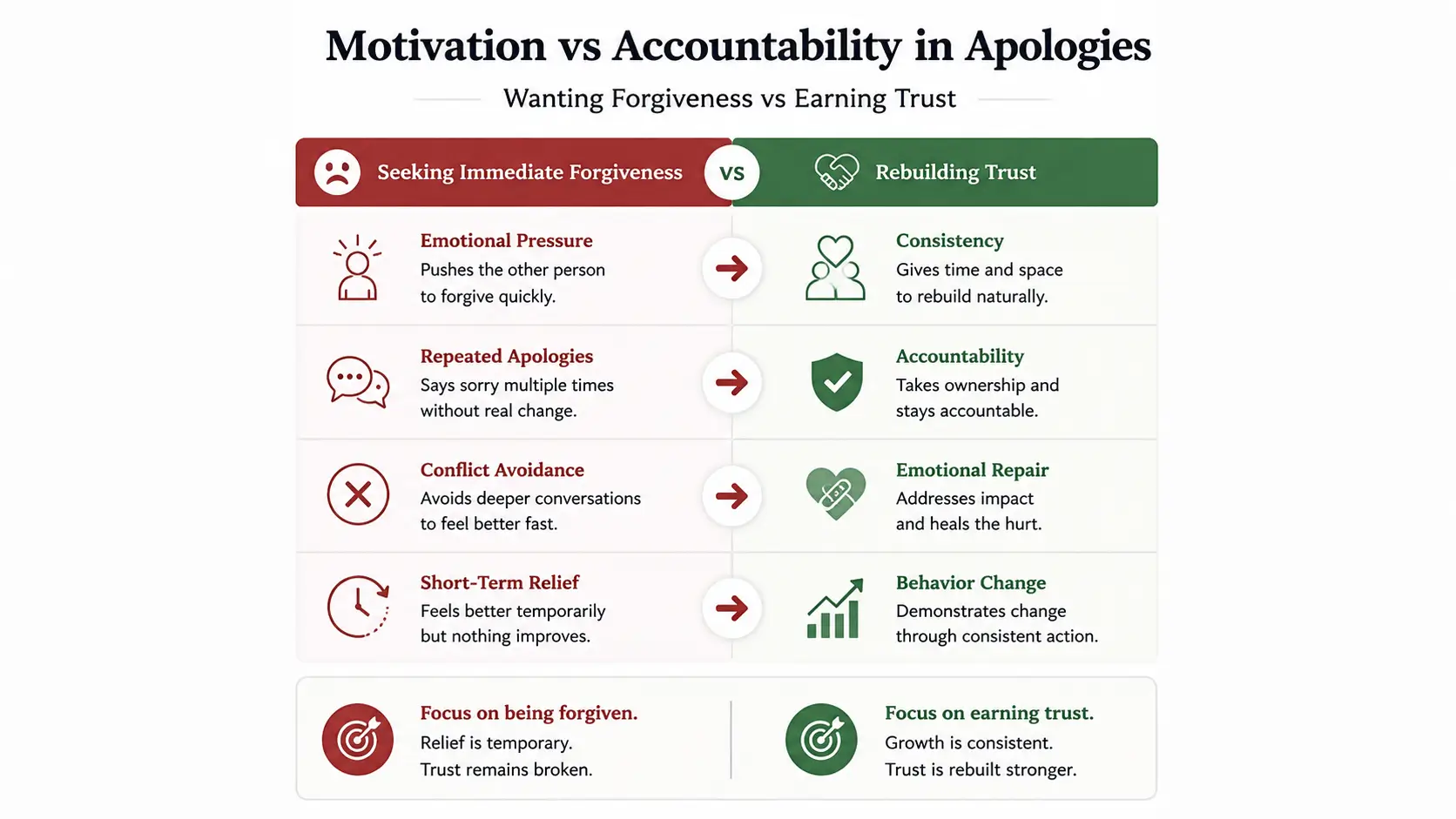
Wanting Forgiveness vs Earning Trust
| Seeking Immediate Forgiveness | Rebuilding Trust |
|---|---|
| Wants conflict to end quickly | Focuses on long-term change |
| Uses emotional pressure | Uses consistent actions |
| Prioritizes personal relief | Prioritizes emotional repair |
| Repeats apologies | Demonstrates improvement |
People often rush apologies because emotional discomfort feels overwhelming. Behavioral psychology shows that humans naturally avoid conflict, shame, and vulnerability.
However, emotional regulation requires tolerating discomfort long enough to communicate responsibly.
Why People Struggle to Apologize Effectively
Fear of Rejection or Vulnerability
Many people struggle with apologies because accountability threatens ego protection.
Many conflict reactions become worse when people focus on controlling others instead of learning to focus on what you can control during emotionally stressful situations.
Common barriers include:
- Shame avoidance
- Fear of conflict escalation
- Emotional defensiveness
- Fear of rejection
Overthinking the “Perfect” Apology
Perfectionism can create emotional avoidance.
This includes:
- Analysis paralysis
- Fear of saying the wrong thing
- Delaying communication unnecessarily
People sometimes focus so heavily on wording that they avoid accountability entirely.
Lack of Emotional Awareness
Low emotional awareness makes conflict resolution more difficult.
This may include:
- Difficulty identifying emotional impact
- Reactive communication habits
- Low empathy during stressful moments
These patterns are strongly connected to emotional regulation, mindset patterns, communication habits, and behavioral psychology.
Common Apology Mistakes That Damage Trust
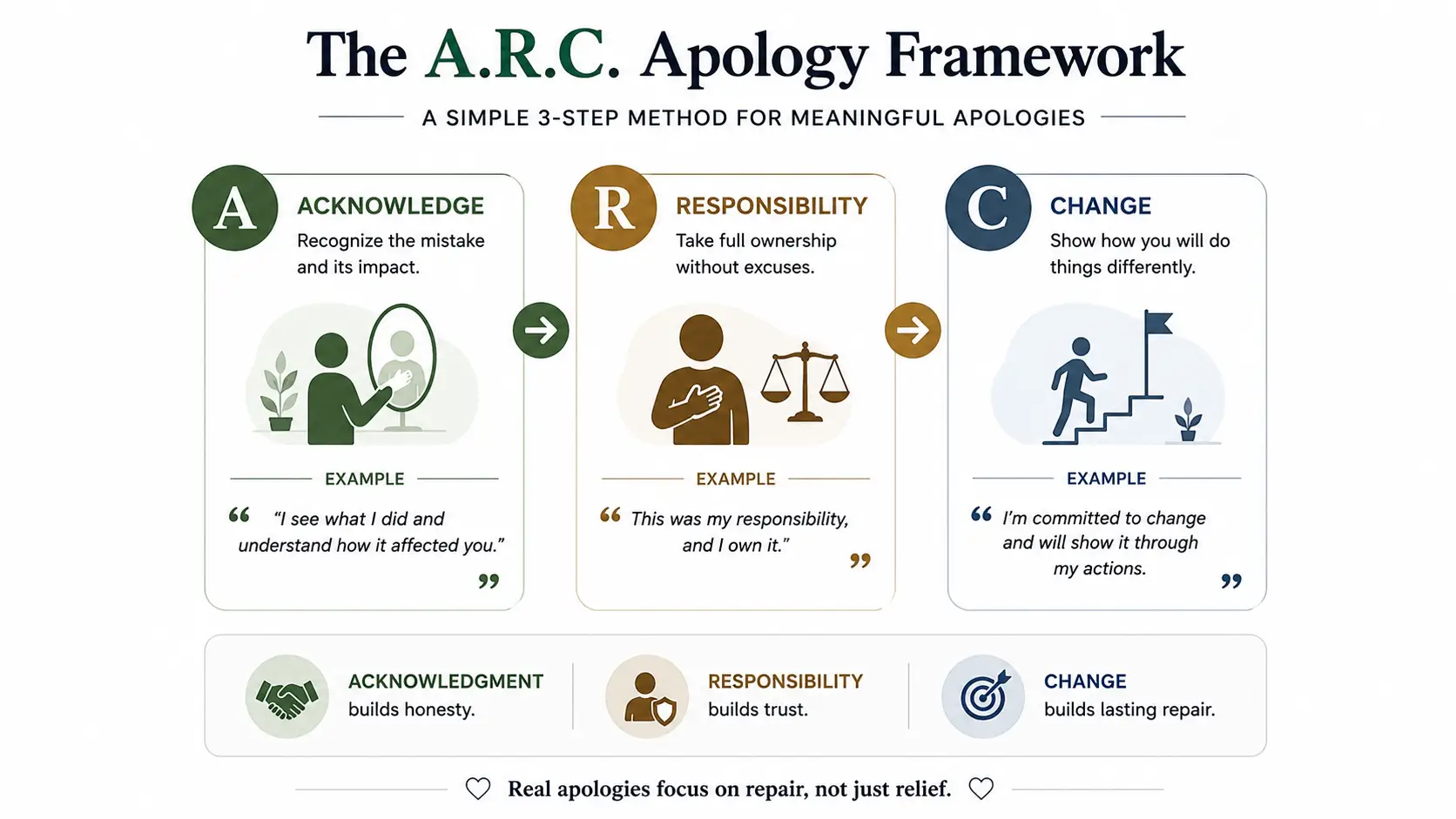
Fake Accountability
Some phrases appear apologetic but avoid responsibility.
Examples include:
- “I’m sorry you feel that way.”
- “Mistakes happen.”
- “You misunderstood me.”
These statements often feel dismissive because they shift attention away from accountability.
Making the Apology About Yourself
Another common mistake is prioritizing personal emotional relief.
Examples include:
- Seeking reassurance immediately
- Explaining intentions excessively
- Expecting instant forgiveness
This can unintentionally pressure the other person emotionally.
Repeating the Same Behavior
Repeated behavior damages credibility faster than imperfect wording.
Trust psychology shows that consistency matters more than emotional intensity. Sustainable behavior change creates long-term emotional safety and reliability.
Practical Framework for Apologizing Without Saying Sorry
The A.R.C. Method
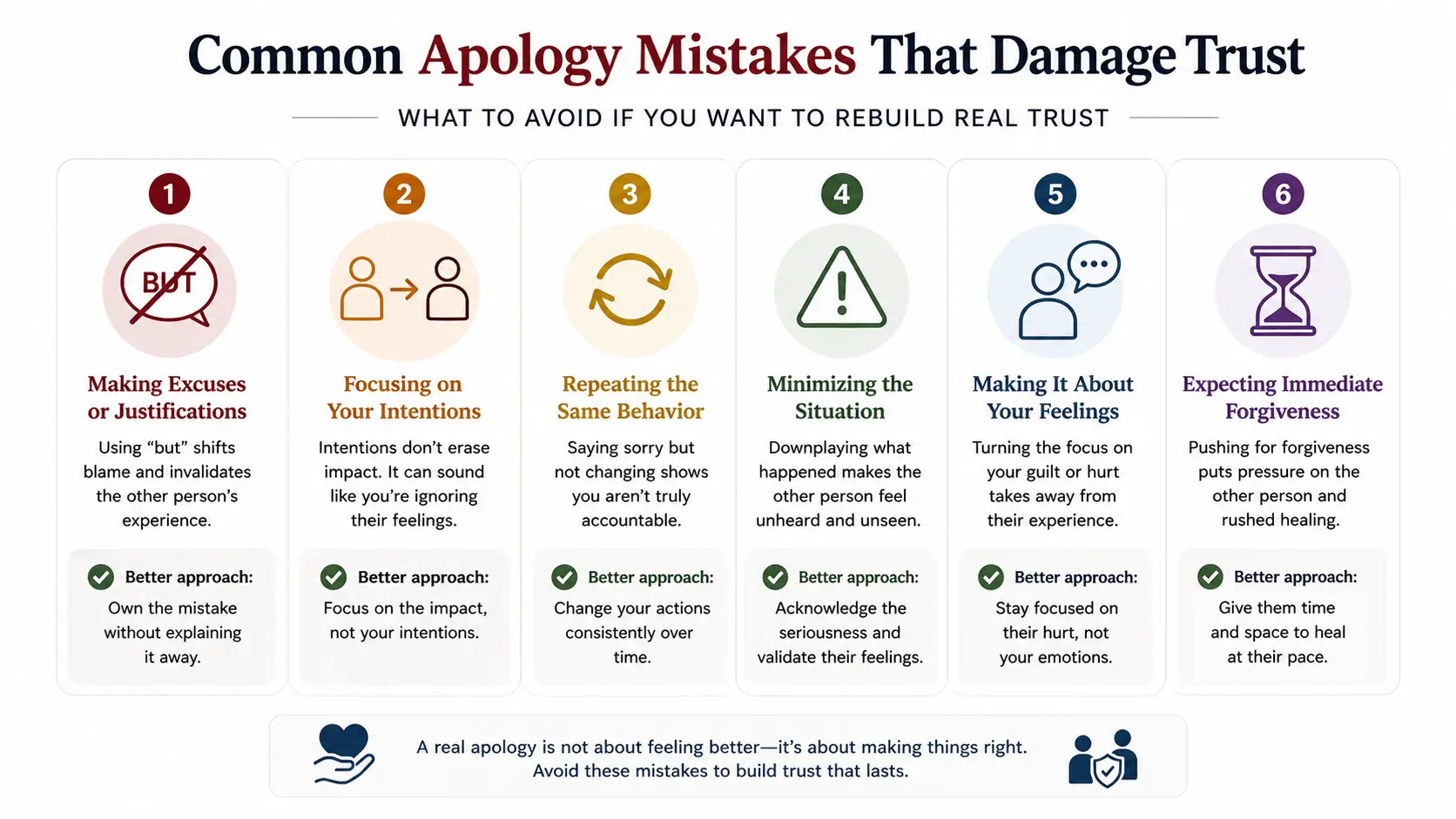
| Step | Meaning | Example |
|---|---|---|
| Acknowledge | Recognize the impact | “I understand why that hurt you.” |
| Responsibility | Own the behavior | “I handled that poorly.” |
| Change | Explain future action | “I’m improving how I communicate.” |
The A.R.C. Method provides a beginner-friendly structure for difficult conversations.
Step-by-step implementation:
- Acknowledge emotional impact clearly.
- Take responsibility without excuses.
- Explain realistic behavior changes.
- Follow through consistently.
This framework works because it combines empathy, accountability, and action.
Real-Life Examples of Meaningful Apologies
Relationship Scenario
An emotionally reactive argument creates distance between partners.
A beginner response:
- Defensive explanations
- Immediate pressure for forgiveness
- Emotional shutdown
An emotionally mature response:
- “I understand why my reaction hurt you.”
- Respectful listening
- Consistent improvement in communication habits
Workplace Scenario
An employee misses an important deadline.
Ineffective response:
- Overexplaining circumstances
- Avoiding responsibility
Effective response:
- Acknowledges impact
- Explains corrective process
- Provides clear timeline updates
Friendship Scenario
A friend breaks trust by sharing private information.
Healthy repair includes:
- Honest acknowledgment
- Respecting emotional boundaries
- Giving the other person time to process
- Demonstrating reliability over time
These realistic dialogue patterns help rebuild emotional safety gradually.
What Actually Works When Rebuilding Trust
Consistency Over Intensity
Trust rebuilds through small repeated actions.
Developing accountability, emotional regulation, and consistent communication habits is an important part of learning how to become the best version of yourself in relationships and daily life.
Important factors include:
- Emotional reliability
- Consistent communication
- Predictable behavior
- Long-term accountability
Short bursts of emotional intensity rarely create lasting trust.
Listening More Than Explaining
Validation matters because people want emotional understanding before explanation.
Active listening techniques include:
- Reflecting emotional concerns
- Avoiding interruptions
- Asking clarifying questions
- Reducing defensive reactions
Listening lowers emotional tension and improves communication quality.
Giving People Space to Process
Healthy communication respects emotional boundaries.
This means:
- Avoiding pressure for immediate forgiveness
- Allowing emotional processing time
- Remaining patient during repair
Emotional maturity requires patience, self-regulation, and sustainable communication habits.
Conclusion
Meaningful apologies depend on accountability, empathy, and changed behavior—not just saying “sorry.” People rebuild trust when they feel emotionally understood, respected, and emotionally safe during difficult conversations.
Learning how to apologize without saying sorry involves emotional validation, responsible communication, and long-term behavioral consistency. Whether in relationships, friendships, or professional settings, healthy communication strengthens trust through actions more than scripted language.
The most effective apologies focus less on perfect wording and more on emotional understanding, responsibility, and reliable improvement over time.
FAQs
Why do people apologize without saying sorry?
Some people want to communicate accountability more naturally through actions, validation, and responsibility instead of relying on scripted language.
Is it rude to apologize without saying sorry?
Not necessarily. A sincere acknowledgment of harm and a commitment to improve can feel more genuine than repeatedly saying “sorry” without change.
How do you apologize sincerely without sounding fake?
Focus on specific accountability, emotional understanding, and behavior change instead of dramatic emotional language.
Can actions replace verbal apologies?
Actions build trust long term, but emotional acknowledgment is still important. Most effective apologies combine both words and consistent behavior.
How do I apologize to my partner without making things worse?
Avoid defensiveness, listen carefully, validate their feelings, and focus on understanding the emotional impact before explaining yourself.
How do you professionally apologize without saying sorry?
Acknowledge the issue, explain the solution, and communicate corrective action clearly and respectfully.
Why do repeated apologies stop working?
Repeated apologies without behavior change create distrust because people value consistency more than emotional promises.










One Response