

Introduction
The mindset of a sales warrior is a personal-development framework built around resilience, discipline, confidence, adaptability, and continuous improvement in selling. Rather than focusing on scripts or closing tricks, it treats sales performance as an outcome of psychological preparation and consistent daily habits. This article breaks down the book’s core ideas, the principles behind a sales warrior mindset, and how sales professionals, entrepreneurs, and leaders can apply these concepts in real-world selling situations.
Quick Summary
- A sales warrior mindset combines resilience, discipline, emotional control, and customer-focused selling.
- Developing the right mindset can improve consistency, confidence, and long-term sales performance.
- The principles extend beyond sales into communication, leadership, and personal growth.
- Building this mindset requires continuous learning, reflection, and practical application.
What Is The Mindset of a Sales Warrior?
The Mindset of a Sales Warrior is a sales-psychology concept and book centered on the idea that internal mental discipline drives external sales results more reliably than any single technique or script. Its central philosophy holds that resilience, preparation, and emotional control determine how a salesperson responds to rejection, pressure, and uncertainty — and that response, repeated over time, shapes long-term performance.
Mindset is often considered more important than technique alone because scripts and tactics can be copied, but the ability to stay composed after a rejection, remain curious about a customer’s needs, and keep showing up with consistent effort cannot be faked. In our experience helping readers build better habits, the salespeople who improve fastest are rarely the ones chasing a new closing trick — they’re the ones who fix how they think about setbacks first.
The Core Message of the Book
The primary lesson of the mindset of a sales warrior book is that sustainable sales success comes from internal discipline rather than external circumstances. It frames selling as a mental discipline similar to how an athlete or a martial artist approaches training: through repetition, reflection, and a willingness to absorb setbacks without losing direction. The book introduces major concepts such as purpose-driven selling, mental toughness under pressure, and customer-centered communication, without reducing the material to a chapter-by-chapter breakdown.
Who Can Benefit from These Principles?
These principles are not limited to full-time salespeople. Groups who commonly benefit include:
- Sales professionals looking to improve consistency and close rates
- Entrepreneurs who must sell their vision to investors, partners, and customers
- Business owners managing client relationships directly
- Customer service professionals who handle objections and difficult conversations
- Leaders who need to influence and motivate teams
- Career changers moving into sales or client-facing roles for the first time
The Mindset of a Sales Warrior Summary
The mindset of a sales warrior summary can be organized into recurring themes rather than a linear, chapter-by-chapter recap. Across the book, several ideas repeat and reinforce one another:
- Purpose-driven selling, where motivation is tied to a clear reason beyond commission
- Mental resilience, or the capacity to recover quickly from rejection
- Confidence built through preparation rather than bravado
- Customer-centered communication that prioritizes listening over persuading
- Continuous improvement through reflection and feedback
- Long-term relationship building over one-time transactions
Taken together, these themes describe a salesperson who treats each interaction as part of a longer professional journey, not an isolated event to “win” or “lose.”
What Is a Sales Mindset?
A sales mindset is the collection of beliefs, habits, and emotional patterns that shape how a person approaches selling — independent of any single book or framework. It influences decision-making and performance by determining how someone interprets a “no,” how much effort they invest in preparation, and how consistently they follow up. Two salespeople with identical training can produce very different results because one interprets rejection as useful data while the other treats it as personal failure.
Characteristics of a Strong Sales Mindset
A strong sales mindset typically includes:
- Confidence grounded in preparation
- Curiosity about customer problems
- Empathy for the buyer’s perspective
- Accountability for outcomes, not just effort
- Discipline in follow-through
- Adaptability across different buyers and situations
- Persistence through rejection
- Emotional intelligence in reading the room
Why Mindset Often Outperforms Sales Scripts
Scripts help standardize a conversation, but mindset determines what happens when the conversation goes off-script. Mindset shapes:
- Decision making — choosing when to push, when to pause, and when to walk away
- Handling objections — staying curious instead of defensive
- Consistency under pressure — maintaining quality performance during slow periods or high-stakes deals
- Long-term growth — treating every deal, won or lost, as a learning opportunity
What Is a Warrior Mindset?
A warrior mindset is a psychological orientation defined by discipline, focus, resilience, and a willingness to face difficulty directly rather than avoid it. In modern personal-development contexts, “warrior mindset” and “warrior mentality” describe a mental framework, not literal combat readiness. It’s important to separate this contemporary, growth-oriented usage from military or historical interpretations of the term, which describe physical combat preparedness rather than everyday psychological resilience.
Key Principles of the Warrior Mentality

The core principles typically associated with a warrior mentality include:
- Courage to act despite fear or uncertainty
- Self-discipline in daily habits and follow-through
- Focus on priorities rather than distractions
- Responsibility for outcomes and reactions
- Resilience in recovering from setbacks
- Adaptability when circumstances change
- Integrity in how goals are pursued
Warrior Mindset vs Aggressive Mindset

A warrior mindset is frequently confused with an aggressive mindset, but the two are distinct. Discipline differs from aggression because discipline is proactive and controlled, while aggression is often reactive and impulsive.
| Warrior Mindset | Aggressive Mindset |
|---|---|
| Disciplined | Reactive |
| Customer-focused | Self-focused |
| Long-term thinking | Short-term wins |
| Controlled emotions | Impulsive decisions |
How a Warrior Mindset Applies to Sales
Psychological resilience connects directly to sales performance because selling involves repeated exposure to uncertainty, rejection, and negotiation pressure. A warrior mindset gives salespeople a framework for staying steady through each stage of the sales process.
During Prospecting
Prospecting requires handling frequent rejection without losing motivation. A resilient mindset treats each “no” as a step closer to a “yes” rather than evidence of failure, which helps maintain the outreach volume needed for consistent results.
During Negotiation
Negotiation benefits from confidence, active listening, and patience. Salespeople with a strong mindset are less likely to concede prematurely or become defensive, because they view negotiation as a collaborative problem-solving process rather than a confrontation.
After Failure
How a salesperson responds after losing a deal often matters more than the loss itself. A warrior mindset emphasizes reflection — reviewing what happened, learning from it, and applying that insight to continuous improvement rather than dwelling on the outcome.
How to Develop a Sales Mindset
Learning how to develop a sales mindset involves building specific daily habits, strengthening emotional resilience, and improving customer-centered thinking over time. Much of this resilience comes down to learning to focus on what you can control — your preparation and response — rather than the outcome of any single call.
Daily Habits That Strengthen Sales Thinking
Consistent daily habits reinforce sales mindset development:
- Setting clear, measurable goals
- Reading books or articles on sales psychology
- Keeping a sales journal to track patterns
- Practicing specific skills, such as objection handling
- Reviewing past conversations for lessons
- Actively seeking feedback from managers or peers
Building Emotional Resilience
Emotional resilience develops through consistent exposure to rejection paired with intentional reflection. Managing rejection well means separating the outcome of a single call from one’s overall self-worth. Maintaining confidence and consistency requires reframing setbacks as feedback rather than failure — a practice that compounds over weeks and months.
Improving Customer-Centered Thinking
Customer-centered thinking shifts the focus from closing a sale to solving a customer’s problem. This involves active listening, asking better diagnostic questions, and genuinely understanding customer needs before proposing a solution — an approach consistent with established consultative-selling principles in behavioral sales research.
The Principles That Make a Sales Warrior Successful
Several core principles consistently support long-term sales success:
- Discipline — showing up and following through regardless of motivation levels
- Preparation — researching prospects and rehearsing responses to objections
- Confidence — grounded in competence rather than bravado
- Adaptability — adjusting approach based on the buyer and situation
- Persistence — continuing effort despite setbacks
- Lifelong learning — treating every interaction as a chance to improve
- Integrity — maintaining ethical standards even when it costs a sale
- Accountability — owning outcomes rather than blaming external factors
Each principle reinforces the others: discipline supports preparation, preparation builds confidence, and confidence supports persistence — together forming a self-reinforcing cycle of long-term improvement.
Common Mistakes When Trying to Build a Sales Warrior Mindset
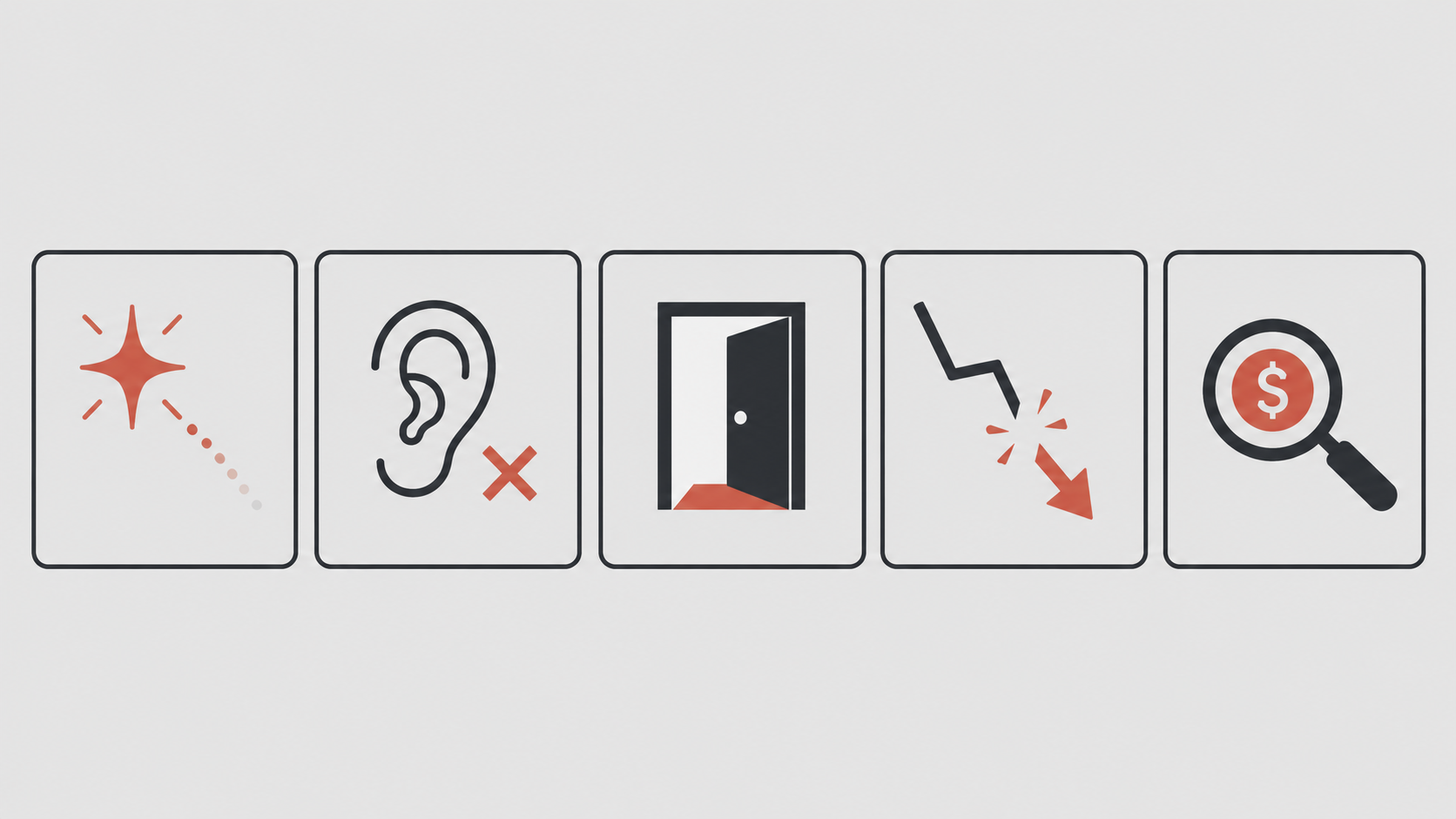
Many people attempting to build this mindset run into a predictable set of mistakes.
Focusing Only on Motivation
This happens because motivation feels immediate and energizing, but it is inherently unstable. The fix is building systems and habits that function even when motivation is low, and prevention comes from tracking consistency metrics rather than daily enthusiasm.
Ignoring Customer Needs
This occurs when salespeople prioritize their own targets over the buyer’s actual problem. It’s corrected by shifting to consultative, question-based selling, and prevented by making discovery questions a mandatory step in every sales conversation.
Avoiding Difficult Conversations
Avoidance happens because difficult conversations — pricing pushback, timeline concerns, competitor comparisons — feel uncomfortable. The fix is preparing responses in advance, and prevention comes from practicing these conversations regularly in low-stakes settings, such as role-play.
Giving Up After Rejection
This happens when rejection is interpreted personally rather than as situational feedback. The fix is reframing each “no” as data about fit or timing, and prevention involves setting activity-based goals rather than outcome-based goals for daily effort.
Measuring Only Short-Term Results
This occurs when quarterly or monthly pressure overshadows relationship-building. The fix is tracking leading indicators, such as follow-up consistency, alongside lagging indicators like closed deals, and prevention comes from building review cycles that account for both.
Different Approaches to Building a Sales Mindset
There is no single correct path to developing a sales mindset. Different approaches suit different learning styles and career stages.
| Approach | Best For | Strengths | Limitations |
|---|---|---|---|
| Experience-based learning | On-the-job learners | Realistic, immediately applicable | Slower, inconsistent feedback |
| Coaching and mentorship | Those wanting guided growth | Personalized feedback, accountability | Requires access to a mentor |
| Formal sales training | Structured learners | Comprehensive, standardized | Can be generic, less personalized |
| Self-study | Independent learners | Flexible, low-cost | Requires strong self-discipline |
| Daily deliberate practice | Skill-focused learners | Builds measurable competence | Time-intensive, requires consistency |
Applying Sales Warrior Principles in Different Situations
Mindset priorities shift depending on role and experience level. This often means adopting elements of an investor mindset themselves — thinking in terms of long-term value rather than a single transaction.
New Sales Professionals
Newer professionals typically benefit most from building confidence through preparation and developing resilience to frequent early rejection.
Experienced Sales Representatives
Experienced reps often focus on refining consistency, avoiding complacency, and applying lifelong learning to stay competitive as markets shift.
Entrepreneurs
Entrepreneurs frequently need a sales warrior mindset to sell their vision to investors and early customers, often without an established brand to lean on.
Business Owners
Business owners apply these principles to long-term client relationship management, where trust and integrity directly affect retention.
Customer Success Teams
Customer success professionals apply resilience and customer-centered thinking to retention conversations, renewals, and handling dissatisfaction constructively.
What Is the Warrior Mindset of Policing?
The warrior mindset of policing refers to a distinct concept within law enforcement that emphasizes preparedness, situational awareness, discipline, and rapid decision-making in high-risk environments. It is not the same concept as the sales warrior mindset, though the two share underlying psychological traits such as discipline, resilience, and composure under pressure. The policing version centers on physical safety and operational readiness, while the sales version centers on relationship-building and business outcomes.
| Sales Warrior Mindset | Policing Warrior Mindset |
|---|---|
| Customer relationships | Public safety |
| Ethical persuasion | Risk assessment |
| Sales resilience | Operational resilience |
| Business outcomes | Public service outcomes |
Difficulty & Time Investment
Building a sales warrior mindset is generally beginner-friendly at the conceptual level but requires sustained effort to translate into behavior change. Typical effort involves daily reflection and consistent practice rather than intense, sporadic bursts of motivation. Beginners can grasp the core ideas quickly, while mastering the associated behaviors — staying composed after rejection, listening actively under pressure — takes longer and depends on individual factors such as prior sales experience, natural temperament, and the amount of real-world practice available. Learning the concepts is fast; changing ingrained habits and emotional responses is the slower, more demanding part of the process.
Results Timeline
Results from mindset work typically follow a gradual pattern rather than an instant transformation. In the first days to weeks, people often notice small shifts in how they interpret rejection. Over several weeks, confidence gains tend to build as preparation habits become more consistent. Habit formation — where new responses to pressure or rejection become automatic — generally takes a few months of consistent practice. Long-term professional growth, including measurable improvements in close rates and relationship quality, tends to compound over six months to a year or more. Progress speed varies based on how consistently the person practices, the amount of real-world sales exposure they get, and whether they receive structured feedback along the way.
Practice Guide
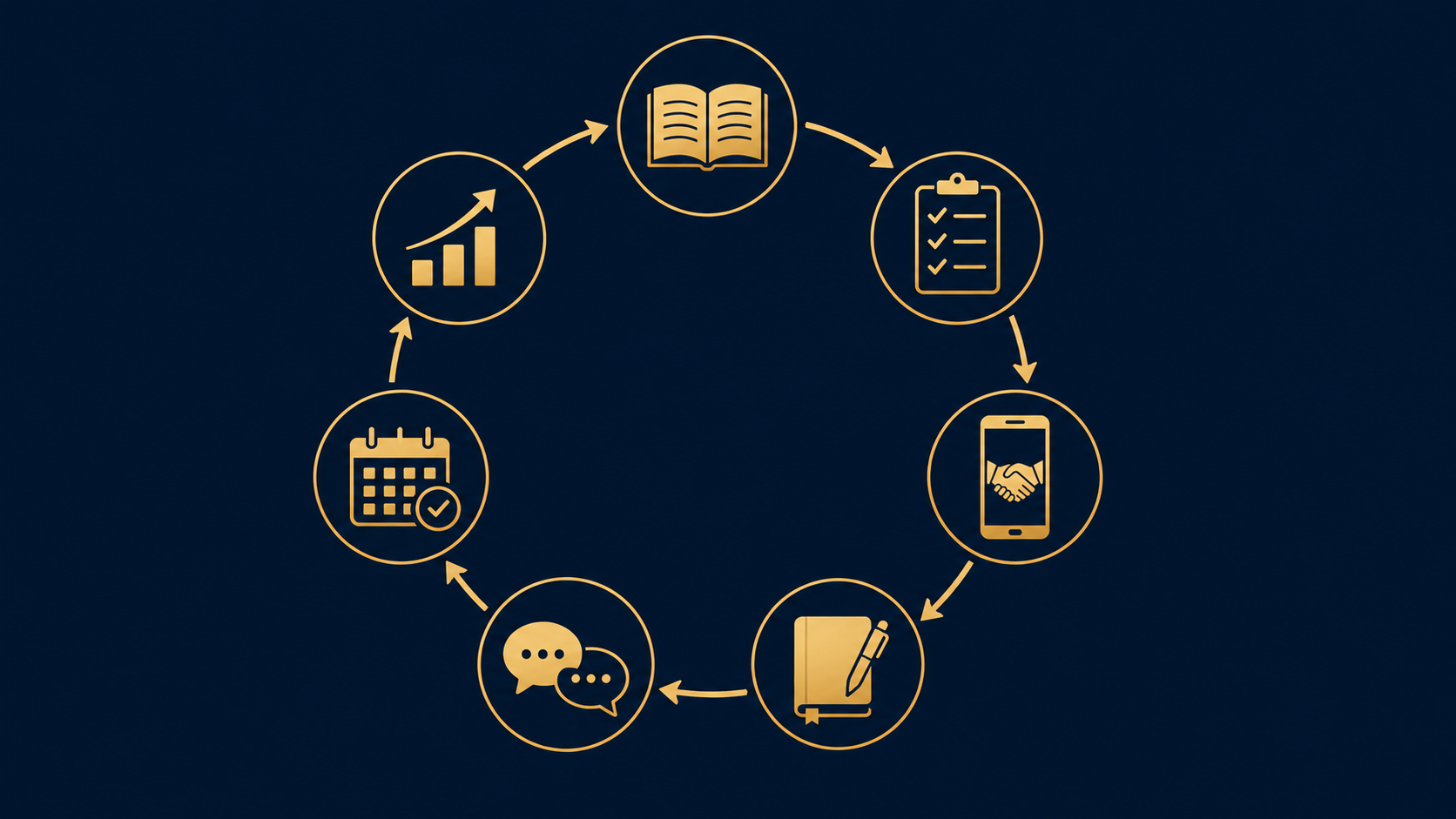
A sustainable practice routine typically includes:
- Daily reading on sales psychology or personal development
- Reviewing goals each morning or evening
- Practicing prospecting or outreach consistently
- Keeping a reflection journal after key conversations
- Practicing objection-handling scenarios
- Conducting a weekly skill review
- Completing a monthly progress evaluation
Long-term sustainability depends heavily on accountability, whether through a manager, mentor, or peer group, along with intrinsic motivation tied to clear personal goals. Habit tracking — logging daily activities like calls made or follow-ups completed — helps maintain consistency even when motivation dips, and reviewing this data regularly reinforces the discipline needed for lasting change. If you’re unsure where to start, journal prompts for self growth offers prompts that adapt well to post-call reflection
The Mindset of a Sales Warrior Review
An objective review of The Mindset of a Sales Warrior highlights several consistent strengths and a few limitations worth noting.
Strengths: The book’s emphasis on psychological discipline over tactical scripts gives it lasting relevance across industries and sales roles. Its themes — resilience, preparation, and customer-centered communication — align with widely accepted behavioral science principles rather than trend-driven sales fads.
Limitations: Readers looking for step-by-step scripts or highly tactical, situation-specific advice may find the material more conceptual than procedural. Applying the principles effectively requires readers to do additional work translating mindset concepts into their own daily habits.
Writing style and practical value: The material is structured around principles and themes rather than storytelling, making it useful as a reference readers can revisit rather than a one-time read.
Best audience: The book is best suited to sales professionals, entrepreneurs, and leaders who are already comfortable with basic sales fundamentals and are looking to strengthen the psychological and behavioral side of performance.
Key takeaways: Mindset — not technique alone — is the foundation of sustained sales performance, and building it requires ongoing practice rather than a single read-through.
Frequently Asked Questions
What is The Mindset of a Sales Warrior about?
The Mindset of a Sales Warrior is about building resilience, discipline, and confidence as the psychological foundation for sustained sales success, rather than relying solely on scripts or techniques.
What are the main lessons from The Mindset of a Sales Warrior?
The main lessons include purpose-driven selling, mental resilience, confidence through preparation, customer-centered communication, continuous improvement, and long-term relationship building.
What is the difference between a sales mindset and a warrior mindset?
A sales mindset refers specifically to beliefs and habits that shape selling performance, while a warrior mindset is a broader psychological framework of discipline, resilience, and focus that can be applied to sales or any high-pressure field.
Can beginners benefit from a sales warrior mindset?
Yes, beginners can benefit because the core concepts are accessible early on, though mastering the related behaviors takes consistent practice over time.
How long does it take to develop a strong sales mindset?
Early shifts in perspective can appear within days to weeks, while durable habit formation and measurable performance gains typically take several months of consistent practice.
Is a sales warrior mindset useful outside of sales?
Yes, the underlying principles — resilience, discipline, and customer-centered communication — apply directly to leadership, negotiation, and general professional communication.
What daily habits strengthen a sales warrior mindset?
Effective daily habits include goal setting, reflective journaling, reviewing past conversations, practicing objection handling, and seeking regular feedback.
Conclusion
The mindset of a sales warrior centers on resilience, discipline, customer focus, and continuous improvement as the true drivers of long-term sales success. Rather than a fixed set of scripts, it presents mindset as an ongoing practice built through daily habits, reflection, and consistent effort. Sales professionals, entrepreneurs, and leaders who treat mindset development as a continuous process — not a one-time achievement — position themselves for steadier performance, stronger customer relationships, and sustained professional growth over time.