
Introduction
A mindset gym is a structured approach to training the mind with the same consistency, repetition, and progressive effort used in physical fitness. Instead of lifting weights, a mindset gym focuses on strengthening mental habits like focus, discipline, emotional regulation, and resilience through daily practice. This concept is not tied to a physical location or a specific gym business — it describes a training philosophy anyone can apply. Mental fitness supports nearly every area of performance, from workout consistency to decision-making under stress. Understanding the mindset meaning behind this “gym” analogy helps explain why so many people now treat mental conditioning as seriously as physical conditioning.
Quick Summary
- A mindset gym is a structured approach to strengthening mental habits through consistent practice.
- Mental fitness complements physical fitness by improving focus, motivation, and resilience.
- Anyone can create a personal mindset gym using daily exercises and reflection techniques.
- Long-term consistency matters more than intensity.
- Mindset training draws on established psychology, including neuroplasticity and behavioral science.
What Is a Mindset Gym?
Definition of a Mindset Gym
A mindset gym is a repeatable system of mental exercises designed to build psychological strength over time. Where a physical gym trains muscles through resistance and repetition, a mindset gym trains the brain through structured cognitive and emotional practice. In our experience helping readers build better habits, the people who see the most progress treat mental training as a scheduled activity, not an occasional mood boost.
The term also reflects a search intent: many people typing “mindset meaning gym” are trying to understand whether mindset training is a literal place or a conceptual framework. It is almost always the latter — a framework, not a facility.
Why the “Gym” Analogy Works
The gym analogy works because both physical and mental development follow the same underlying principles:
- Repetition builds capacity, whether it’s muscle fibers or neural pathways.
- Progressive overload applies to mental challenges just as it does to added weight.
- Recovery is required for both physical muscles and cognitive stamina.
- Consistency outperforms occasional bursts of intense effort in both domains.
This shared structure is why terms like “mental conditioning” and “cognitive training” have become common in performance psychology.
Core Components of Mental Fitness
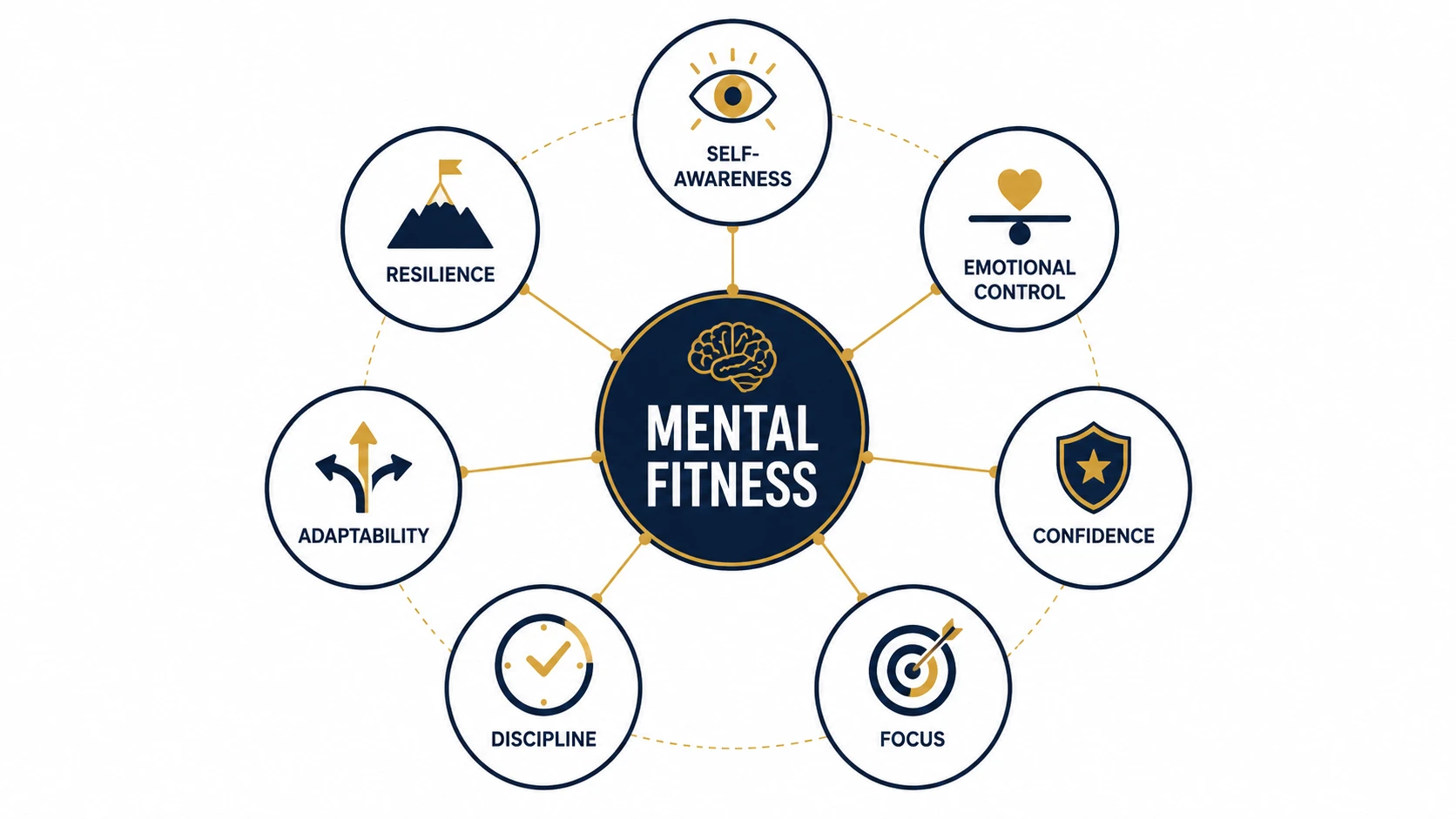
A strong mindset gym practice typically develops seven core components:
- Self-awareness — recognizing thought patterns and emotional triggers
- Emotional control — regulating reactions rather than being controlled by them
- Confidence — a grounded belief in one’s ability to handle challenges
- Focus — sustained attention on a task or goal
- Discipline — following through on intentions despite resistance
- Adaptability — adjusting to change without losing direction
- Resilience — recovering from setbacks and continuing forward
Why Mindset Matters for Physical Fitness
How Mental Strength Influences Workout Performance
Mental strength directly affects physical training outcomes. Motivation determines whether a workout happens at all, while consistency determines whether progress compounds over weeks and months. Mental fitness also shapes recovery, since stress and poor emotional regulation can interfere with sleep and muscle repair. Goal achievement and the ability to handle setbacks — such as plateaus or injuries — both depend heavily on psychological resilience rather than physical capacity alone.
The Connection Between Brain Training and Exercise
The idea of a mindset brain gym reflects a real neurological process: exercise and mental training both stimulate neuroplasticity, the brain’s ability to form and reorganize neural connections. Consistent mental practice reinforces learning habits and mental conditioning in much the same way consistent exercise reinforces muscle memory. This overlap is a core focus within performance psychology, which studies how cognitive and emotional states influence physical output.
What Does a Mindset Gym Routine Look Like?
Daily Mental Exercises
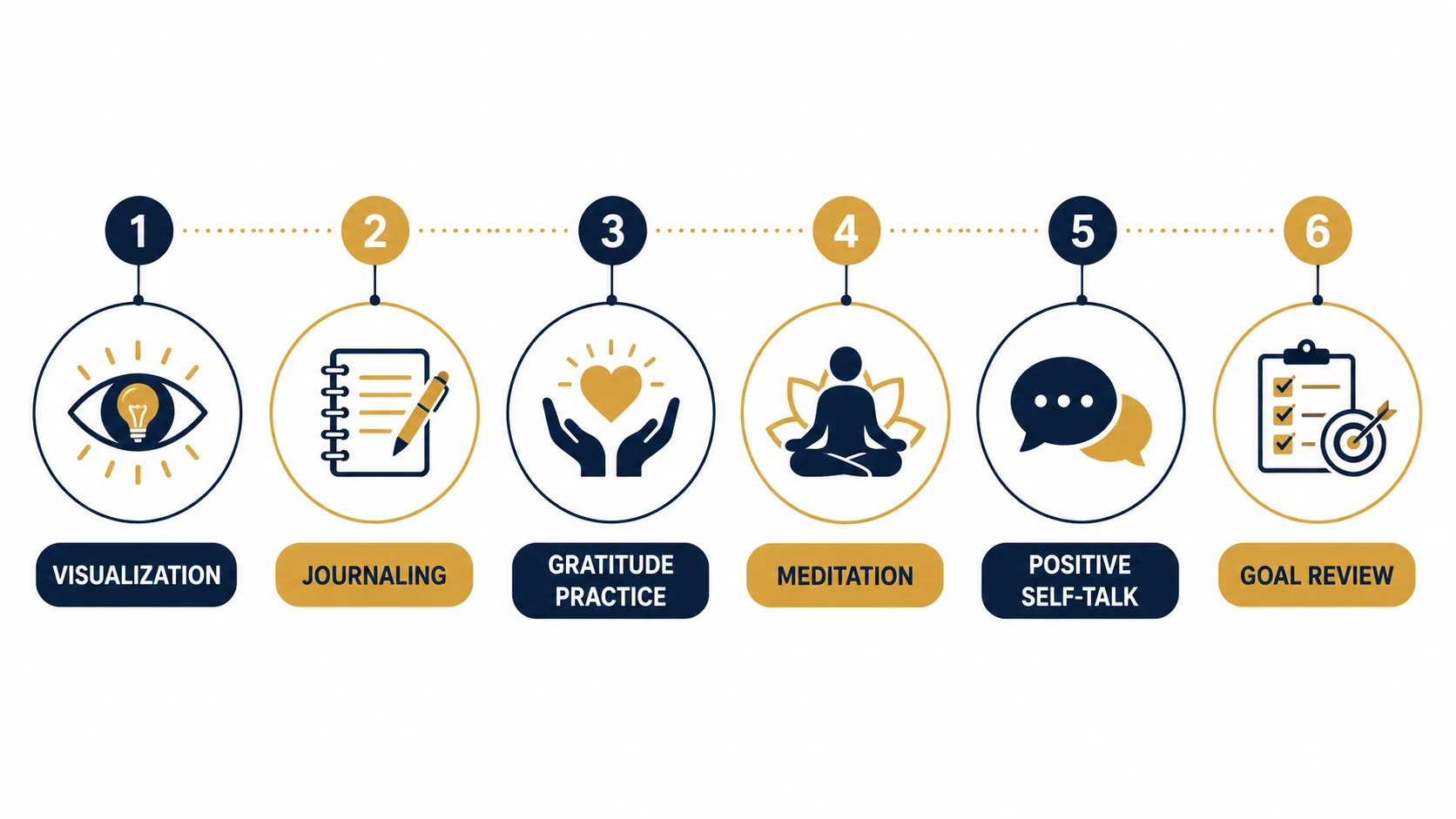
A basic daily mindset gym routine can include:
- Visualization of goals or upcoming challenges
- Journaling to process thoughts and track patterns
- Gratitude practice to shift attention toward positives
- Meditation to build focus and reduce reactivity
- Positive self-talk to counter automatic negative thinking
- Goal review to maintain direction and motivation
Weekly Reflection Practices
Weekly reflection adds structure to daily effort. This typically involves reviewing progress against goals, identifying recurring obstacles, and adjusting routines based on what worked or didn’t. Weekly check-ins prevent small setbacks from becoming long-term derailments.
Building Long-Term Mental Strength
Long-term mental strength depends on three principles: prioritizing consistency over perfection, using habit stacking to attach new mental exercises to existing routines, and introducing progressive challenges so mental capacity continues to grow rather than plateau. For a more structured approach, our guide on how to build good habits in 30 days breaks this process into a clear, actionable timeline
Key Benefits of Developing a Strong Mindset
A consistent mindset gym practice is associated with several measurable benefits:
- Better discipline in daily decision-making
- Improved confidence when facing new challenges
- Increased resilience after setbacks
- Greater emotional stability under pressure
- Better decision-making through reduced reactivity
- Reduced stress via improved self-regulation
- Greater consistency across both mental and physical goals
Mindset Gym vs Traditional Gym Training
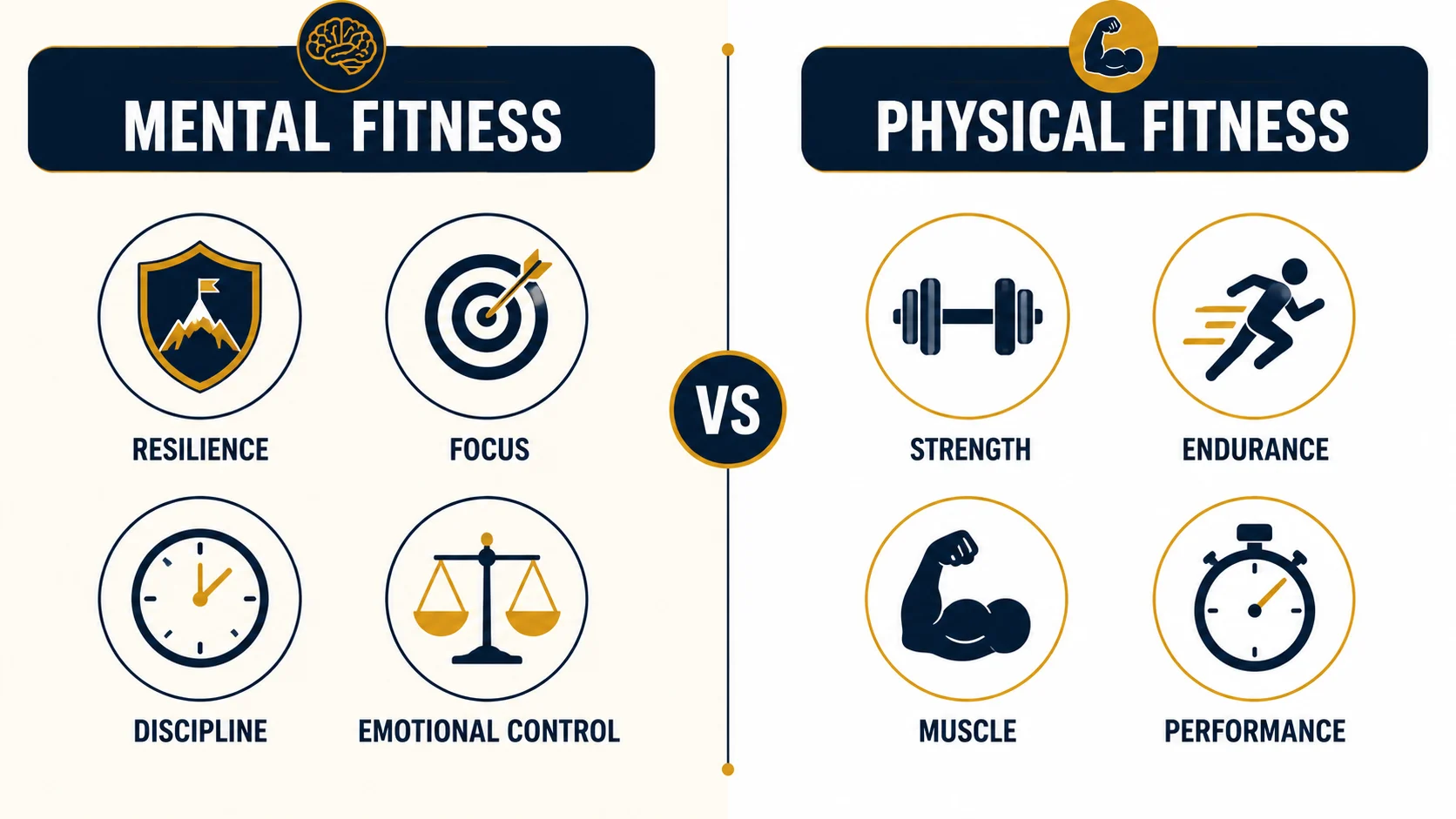
| Mental Fitness | Physical Fitness |
|---|---|
| Builds resilience | Builds strength |
| Improves focus | Improves endurance |
| Develops discipline | Develops muscle |
| Enhances emotional control | Enhances physical performance |
Both forms of training rely on repetition, recovery, and progressive effort, but they target different systems: one strengthens the nervous system and emotional regulation, the other strengthens muscular and cardiovascular capacity. Most performance experts recommend training both together, since each reinforces the other.
Different Types of Mindset Training
Growth Mindset Training
Growth mindset training focuses on the belief that abilities can be developed through effort, a concept popularized in behavioral science research on motivation and learning. This concept is closely associated with psychologist Carol Dweck, and revisiting Carol Dweck’s growth mindset quotes can reinforce the practice on harder days.
Performance Mindset
Performance mindset training targets consistency and focus under pressure, often used by athletes and professionals preparing for high-stakes situations.
Positive Mindset Development
Positive mindset development emphasizes optimism and constructive self-talk. Readers researching positive mindset gym quotes are often looking for short, motivational language to reinforce this type of daily practice, typically used as reminders during journaling or visualization exercises.
Champion Mindset
A champion mindset gym approach centers on competitiveness, high standards, and the discipline needed to perform consistently at a top level.
Elite Performance Mindset
An elite mindset gym framework is built for advanced practitioners who want to refine focus, recovery, and mental stamina beyond beginner-level practice.
Endurance Mindset
An endure mindset gym approach trains the mental stamina needed for long-duration challenges, such as marathon training or extended project work, where sustained effort matters more than short bursts of intensity.
Each type supports different personal goals, and many people combine elements from several types depending on their current priorities.
Practical Ways to Build Your Own Mindset Gym
Creating Daily Habits
Start with one or two small mental exercises, such as a five-minute journaling session or a short visualization practice, and perform them at the same time each day to build consistency.
Setting Meaningful Goals
Effective mindset training requires goals tied to personal values, not just external outcomes. Meaningful goals sustain motivation longer than goals based solely on comparison to others.
Tracking Mental Progress
Simple tracking methods — such as a habit tracker, a weekly journal review, or a mood log — make mental progress visible, which reinforces continued effort.
Finding Accountability
Accountability through a coach, friend, or structured program increases follow-through. Your Daily Thrive recommends pairing mental fitness goals with a regular check-in, similar to how physical trainers use progress check-ins.
Common Challenges When Training Your Mind
Loss of Motivation
Motivation naturally fluctuates. It often drops when progress feels invisible. Preventing this requires tracking small wins and reconnecting with the original reason for training.
Negative Self-Talk
Negative self-talk happens when automatic thought patterns go unchallenged. Fixing it involves recognizing the pattern and consciously replacing it with balanced, realistic thinking rather than forced positivity.
Inconsistent Habits
Inconsistency usually stems from routines that are too ambitious at the start. Preventing this means starting with smaller, sustainable practices and building up gradually.
Unrealistic Expectations
Unrealistic expectations occur when people expect mental strength to develop as quickly as a single workout result. Preventing this requires understanding that mental fitness, like physical fitness, develops through cumulative repetition.
Beginner Mistakes to Avoid
Common beginner mistakes in mindset training include:
- Expecting instant results instead of gradual progress
- Skipping consistency in favor of occasional effort
- Ignoring recovery, such as rest or reduced mental load
- Comparing personal progress to others
- Setting unrealistic goals that lead to early burnout
Avoiding these mistakes early helps establish a sustainable long-term practice.
How Long Does It Take to Build a Strong Mindset?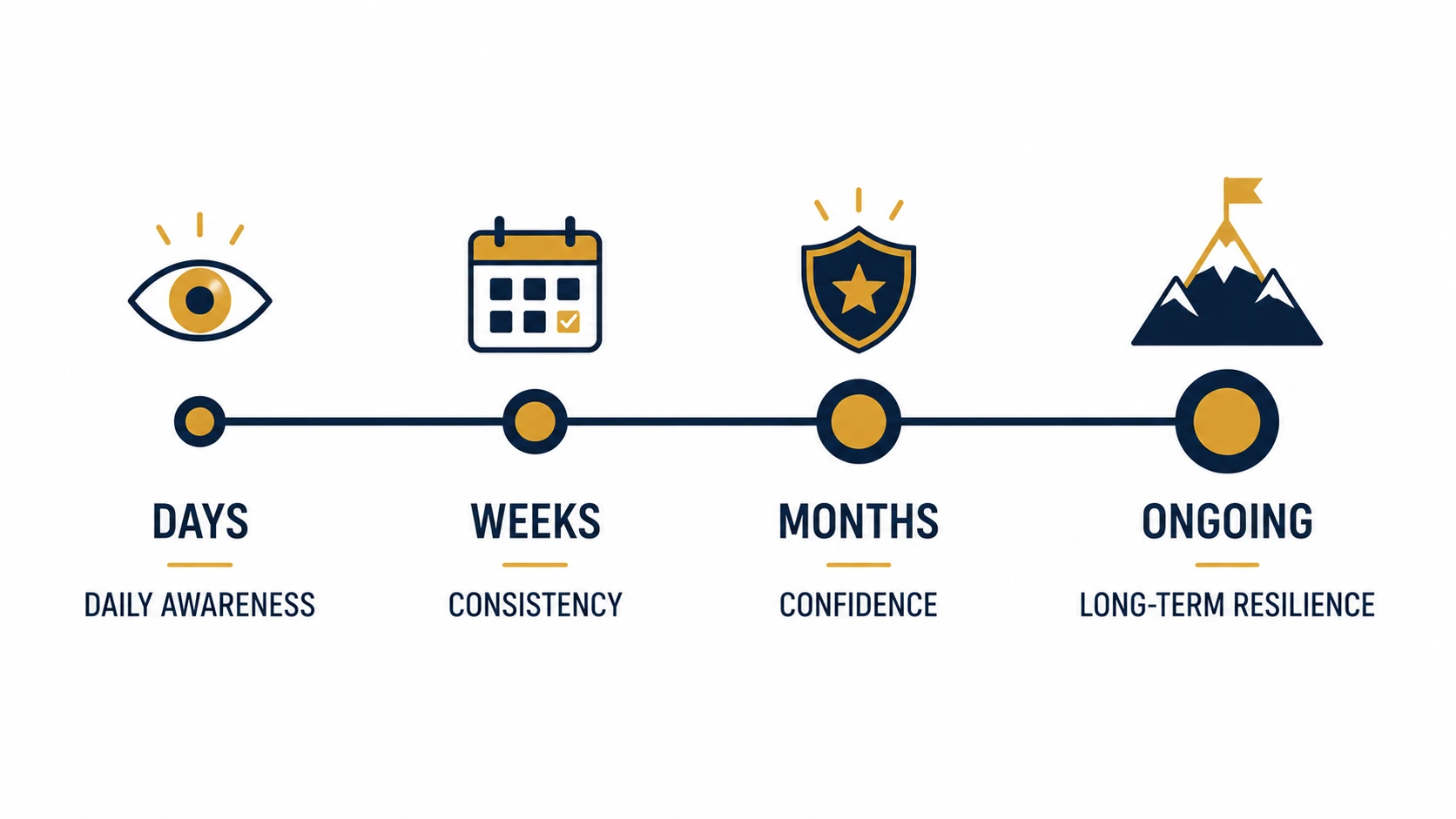
| Habit | Typical Timeline |
|---|---|
| Daily awareness | Days |
| Consistency | Weeks |
| Confidence | Months |
| Long-term resilience | Ongoing |
Timelines vary based on individual differences, environment, lifestyle, and previous habits. Someone with prior experience in reflective practices, such as journaling or meditation, often progresses faster than a complete beginner. If you’re unsure where to start, a set of journaling prompts for self growth can make this habit easier to sustain.
Difficulty and Time Investment
Mindset training is beginner-friendly at its foundation, typically requiring only 10–15 minutes per day to start. Advanced practices, such as structured performance psychology routines or in-depth reflection systems, may require 30–60 minutes and greater consistency. Difficulty is influenced by factors such as existing stress levels, available time, and prior exposure to reflective or mindfulness-based practices.
Practice Guide for Mental Fitnes
A sustainable mental fitness practice generally includes:
- Daily routine: short exercises like journaling, visualization, or focused breathing
- Weekly review: assessing progress and adjusting habits
- Monthly assessment: evaluating longer-term growth and setting new goals
- Tracking tools: habit trackers, journals, or mood logs
- Habit-building strategies: habit stacking and gradual progression
- Motivation techniques: goal visualization and accountability check-ins
- Long-term sustainability: treating mindset training as an ongoing skill rather than a short-term fix
Frequently Misunderstood Ideas About Mindset Training
Mindset Is Not Just Positive Thinking
Mindset training is often confused with simple positive thinking. In reality, it includes realistic self-assessment, emotional regulation, and constructive problem-solving, not just optimism.
Mental Strength Doesn’t Mean Ignoring Emotions
Mental strength does not mean suppressing emotions. Evidence-based approaches in behavioral science emphasize acknowledging emotions and responding to them constructively, rather than avoiding them.
Confidence Comes From Practice
Confidence is frequently misunderstood as an innate trait. In practice, confidence develops through repeated experience and demonstrated competence, similar to how physical strength develops through repeated training.
Conclusion
A mindset gym is a structured, repeatable system for training mental fitness through daily habits like journaling, visualization, and reflection. Mental fitness matters because it directly influences motivation, consistency, and resilience — both in daily life and in physical training. As with any form of conditioning, consistent practice over time produces stronger results than short bursts of effort. Approaching mindset as a lifelong skill, one that complements physical fitness rather than competing with it, supports steady, sustainable personal growth. If you’re unsure where to start, a set of journaling prompts for self growth can make this habit easier to sustain.
Frequently Asked Questions
What is a mindset gym?
A mindset gym is a structured system of mental exercises, such as journaling, visualization, and reflection, used to build psychological strength through consistent practice.
How can I train my mindset every day?
Daily mindset training can include a short visualization exercise, a few minutes of journaling, gratitude practice, or a brief meditation session performed at a consistent time each day.
What is the difference between mental fitness and physical fitness?
Mental fitness strengthens focus, discipline, and emotional regulation, while physical fitness strengthens muscles, endurance, and cardiovascular capacity. Both rely on repetition and consistency.
Can mindset training improve workout performance?
Yes. Mental fitness supports motivation, consistency, and recovery, all of which directly influence workout performance and long-term progress.
How long does it take to build a stronger mindset?
Daily awareness can develop within days, consistency within weeks, confidence within months, and long-term resilience is an ongoing process that continues to strengthen over time.
Is a mindset gym suitable for beginners?
Yes. A mindset gym is beginner-friendly and typically starts with just 10–15 minutes of daily practice, with advanced routines added gradually as consistency improves.
What habits help develop mental resilience?
Habits such as journaling, weekly reflection, goal tracking, and positive self-talk support mental resilience by reinforcing self-awareness and emotional regulation over time.