
Introduction
A growth mindset is the belief that abilities and intelligence can be developed through effort, learning, and persistence rather than being fixed traits. Journal prompts for growth mindset use targeted, reflective questions to help people examine their thinking patterns, reframe setbacks, and build habits that support long-term development. Journaling supports this process because writing slows down thinking, making it easier to notice limiting beliefs and replace them with more adaptive ones. This connects to broader concepts like self-reflection, neuroplasticity, emotional intelligence, and habit formation, all of which strengthen personal development over time. Beginners, adults, students, and professionals can all use these prompts, adapting the depth and frequency to their own goals and schedules.
Quick Summary
- Growth mindset journal prompts encourage learning from challenges rather than avoiding them.
- Consistent journaling improves self-awareness, resilience, and emotional regulation.
- Beginners can start with simple daily reflection questions before progressing to deeper prompts.
- Different prompts serve different goals, including confidence, healing, productivity, and self-discovery.
- Small, consistent sessions build lasting change more effectively than occasional long entries.
What Are Growth Mindset Journal Prompts?
Definition and Purpose
Growth mindset journal prompts are structured questions designed to guide reflective writing toward learning, adaptability, and self-improvement. Unlike open-ended journaling, prompts direct attention to specific themes such as effort, failure, feedback, and progress. This structure removes the pressure of deciding what to write about, which makes reflection more consistent and productive.
Free writing allows thoughts to flow without direction, which can be useful for emotional release but may not consistently target growth-oriented thinking. Guided prompts, by contrast, ask specific questions—such as “What did this challenge teach me?”—that push the writer toward constructive interpretation of events rather than passive recounting.
Why They Support Personal Growth
Growth mindset prompts support personal growth in several interconnected ways:
- Reflection: Prompts create space to process experiences rather than react to them immediately.
- Learning from mistakes: Writing about setbacks with a growth-oriented question reframes failure as data rather than identity.
- Building confidence: Recording small wins and progress reinforces a sense of capability over time.
- Identifying limiting beliefs: Prompts surface unconscious assumptions, such as “I’m not a math person,” that restrict effort.
- Encouraging continuous improvement: Regular reflection keeps personal goals visible and adjustable.
How Growth Mindset Journaling Works
The Psychology Behind Reflective Journaling
Reflective journaling draws on several established psychological principles. Neuroplasticity, the brain’s capacity to reorganize itself by forming new neural connections, is the biological basis for the growth mindset framework popularized by psychologist Carol Dweck. Journaling supports self-awareness by externalizing internal thought patterns, making them easier to examine objectively. Cognitive reframing, a technique from cognitive behavioral therapy, allows writers to reinterpret a negative event in a more balanced or constructive way. Over time, this process functions as positive behavioral reinforcement: recognizing and recording progress increases the likelihood that growth-oriented behaviors, such as trying new strategies after failure, will be repeated.
Why Asking Better Questions Creates Better Thinking
The quality of a journal prompt directly shapes the quality of the reflection it produces. Vague questions like “How was today?” tend to generate surface-level answers, while specific prompts such as “What is one thing I avoided today, and why?” engage deeper internal dialogue. This process strengthens critical thinking by requiring the writer to evaluate evidence and assumptions. It also supports emotional processing, since naming and examining a feeling in writing reduces its intensity compared to leaving it unexamined. Additionally, well-designed prompts function as a structured problem-solving tool, guiding the writer from identifying an issue to considering possible responses.
Benefits of Using Journal Prompts for Growth Mindset
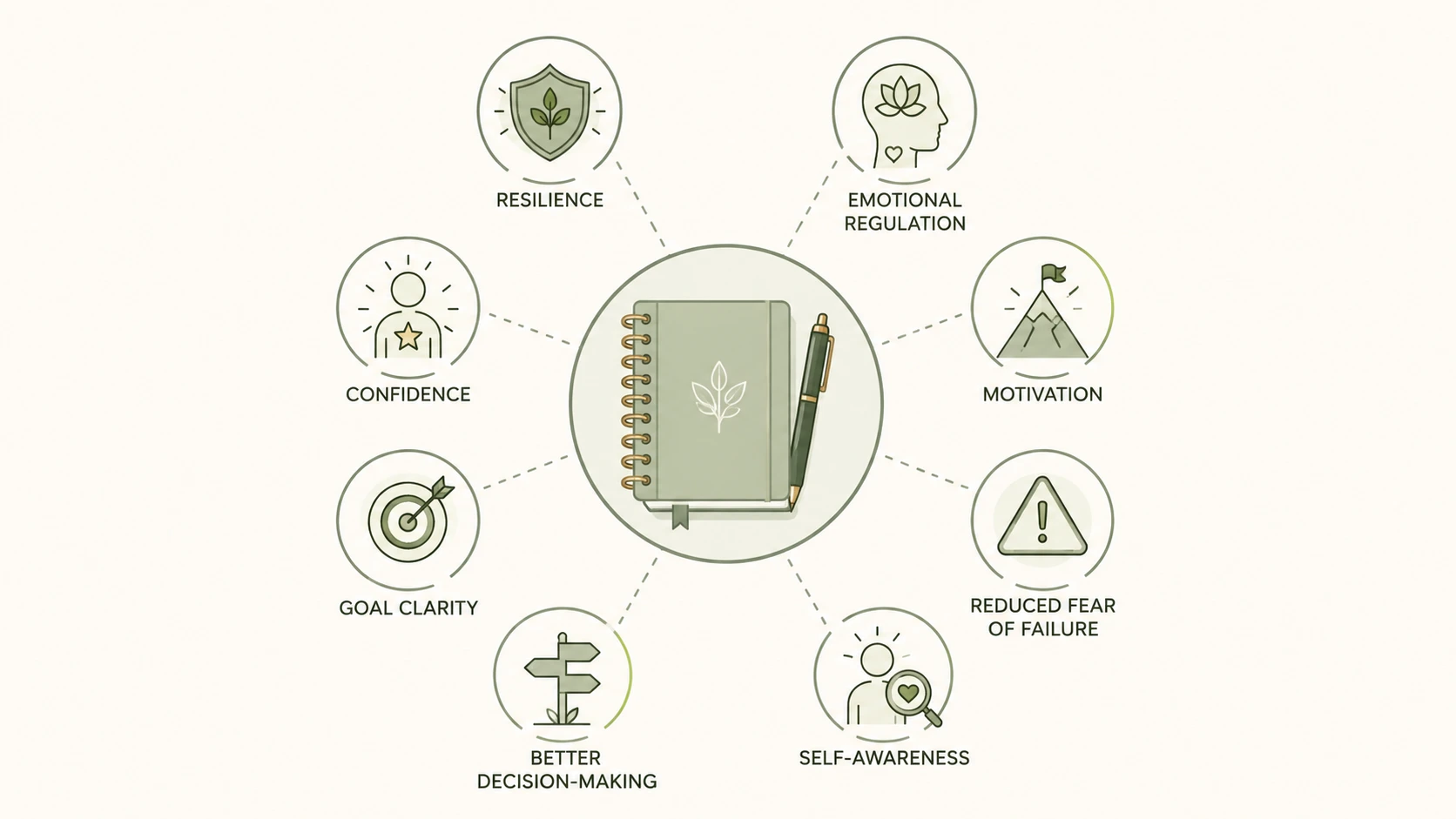
Research and applied psychology consistently link structured reflective writing to a range of measurable benefits:
- Increased resilience in the face of setbacks
- Better emotional regulation during stressful situations
- Higher self-confidence through documented progress
- Greater motivation to pursue long-term goals
- Improved goal clarity and prioritization
- Reduced fear of failure through reframing
- Better decision-making from slower, more deliberate thinking
- Increased self-awareness of patterns and triggers
Journal Prompts for Growth Mindset for Beginners
Simple Daily Reflection Questions
New Journaler benefit most from short, low-pressure prompts that build the habit before increasing complexity. Examples include:
- What is one thing I learned today?
- What challenge did I face, and how did I respond?
- What would I do differently if I faced this again?
- What effort am I proud of today, regardless of the outcome?
Building the Habit Without Overthinking
Journal prompts for growth mindset for beginners work best when consistency is prioritized over length or depth. A five-minute journaling session is enough to build the habit; writers can expand later once the routine is established. Morning journaling tends to set intentions for the day, while evening journaling supports reflection on what actually happened. Neither timing is objectively better—the right choice depends on personal energy levels and schedule.
Journal Prompts for Adults
Journal prompts for growth mindset for adults typically focus on applied, real-world contexts rather than general self-discovery alone.
Career and Professional Growth
- What skill did I improve this month, and how?
- What feedback have I resisted, and why might it be valid?
- Where did I choose comfort over growth this week?
Relationships and Communication
- What assumption did I make about someone today that may not be accurate?
- How did I respond to conflict, and what does that reveal about my patterns?
Confidence and Decision-Making
- What decision am I avoiding, and what is the actual risk of making it?
- What would I attempt if I were not afraid of failing?
Adults generally apply growth mindset thinking to career trajectories, financial decisions, and long-term relationships, whereas students more often apply it to academic performance and skill acquisition.
Journal Prompts for Students and Kids
Growth Mindset Journal Prompts for Students
Students benefit from prompts connected to academic effort and learning strategies, such as: “What subject felt hard today, and what strategy could make it easier?” or “What mistake taught me something useful this week?”
Growth Mindset Journal Prompts for Kids
Prompts for children should use simple, concrete language: “What is something new I tried today?” or “What did I do when something felt hard?” Visual or drawing-based prompts can also support younger children who are still developing writing fluency.
Encouraging Learning Through Reflection
Age-appropriate reflection reinforces that effort and strategy—not fixed ability—drive improvement, a core principle of growth mindset education used in many classrooms.
Kids vs. Students vs. Adults Comparison
| Aspect | Kids | Students | Adults |
|---|---|---|---|
| Prompt complexity | Simple, concrete | Moderate, academic | Complex, applied |
| Focus area | Effort and trying new things | Study habits, grades, skills | Career, relationships, decisions |
| Session length | 2–5 minutes | 5–10 minutes | 10–20 minutes |
| Guidance needed | High (parent/teacher support) | Moderate | Self-directed |
Journal Prompts for Self-Growth and Self-Discovery
Understanding Personal Values
Journal prompts for self-growth often begin with clarifying core values: “What matters most to me right now, and does my daily life reflect that?” If self-discovery is your primary goal, you may also want to explore our dedicated list of journal prompts for self-discovery.
Identifying Strengths and Weaknesses
Journaling prompts for self-discovery help surface honest self-assessment: “What do I do well without effort?” and “What pattern keeps holding me back?”
Discovering Long-Term Goals
A self-discovery journal can help clarify direction over time through prompts such as: “If nothing were stopping me, what would I pursue?” These journal prompt ideas and journal prompt examples work best when revisited periodically to track how answers evolve.
Journal Prompts for Self-Love and Confidence
Building Self-Compassion
Self-love journaling encourages a kinder internal voice: “What would I say to a friend in my situation?” This reframes self-criticism into supportive self-talk. Pairing journal prompts with growth mindset affirmations can reinforce the reframing process between writing sessions.
Challenging Negative Self-Talk
Self-love journal prompts often target automatic negative thoughts directly: “What evidence contradicts this critical thought about myself?”
Celebrating Personal Progress
Journaling prompts for self-love should include regular recognition of progress, not just problems: “What is one way I have grown in the past month?” Self-love complements growth mindset by ensuring effort is met with encouragement rather than perfectionism—love journaling is about acknowledging progress honestly, not ignoring areas for improvement.
Journal Prompts for Healing and Mental Well-Being
Processing Difficult Emotions
Mental health journal prompts help name and process emotions rather than suppress them: “What am I feeling right now, and where do I notice it in my body?”
Letting Go of Past Experiences
Journal prompts for healing often address unresolved experiences: “What am I still carrying from this experience, and what would help me set it down?”
Building Emotional Resilience
Journaling prompts for mental health support resilience by reinforcing coping strategies: “What helped me get through a hard moment today?” Journal prompts for self-growth and healing work best as a complement to, not a replacement for, professional mental health support when needed.
365 Daily Journal Prompt Ideas for Continuous Growth
Using one prompt per day for a full year is a practical way to maintain variety and avoid journaling fatigue. Rotating through categories keeps the practice engaging rather than repetitive. Suggested categories for 365 daily journal prompts include:
- Gratitude: What am I thankful for today?
- Learning: What new information did I encounter?
- Productivity: What was my most valuable use of time today?
- Relationships: How did I show up for someone today?
- Confidence: What did I do today that scared me?
- Creativity: What idea have I been putting off exploring?
- Mindset: What belief limited me today?
- Reflection: What would I tell myself at the start of today?
Rotating categories on a weekly or monthly basis, rather than randomly, helps writers notice patterns within each theme over time.
Growth Mindset Journal Ideas and Topics
Reflection Topics
Growth mindset journal ideas centered on reflection include reviewing weekly decisions, identifying recurring emotional triggers, and evaluating how challenges were handled.
Goal-Oriented Topics
Growth mindset journal topics tied to goals include breaking large objectives into smaller milestones and reviewing progress against a specific timeline.
Problem-Solving Topics
These topics guide writers through structured problem analysis: defining the issue, listing possible approaches, and evaluating outcomes after attempting a solution.
Gratitude and Positivity Topics
Positivity journal ideas balance growth-focused reflection with appreciation, preventing the practice from becoming solely focused on deficits or problems.
Growth Mindset Journaling vs Traditional Journaling
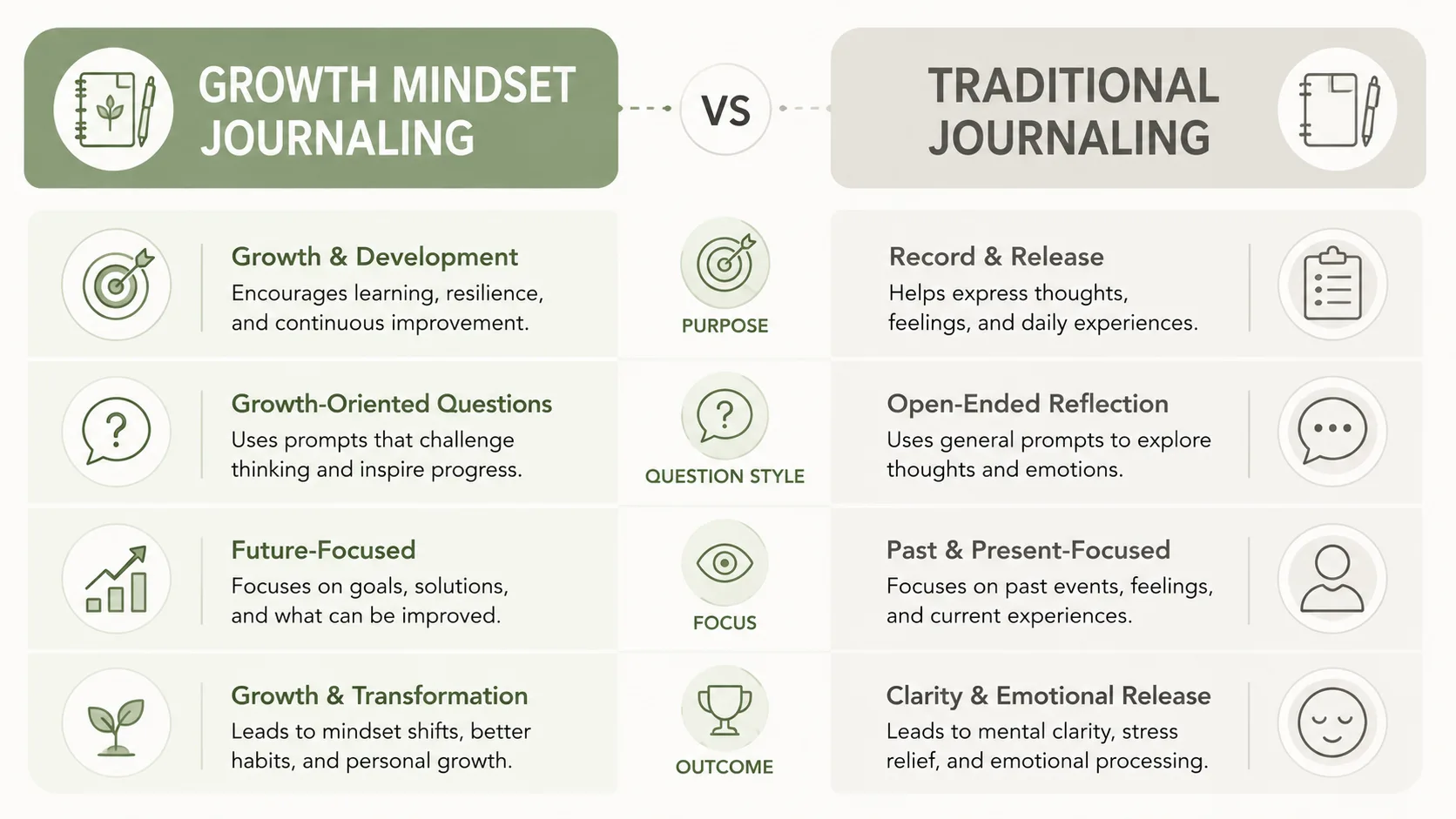
| Feature | Growth Mindset Journaling | Traditional Journaling |
|---|---|---|
| Primary purpose | Build adaptive thinking and resilience | Record events and emotions |
| Question style | Structured, goal-directed prompts | Open-ended or free-form |
| Focus | Learning, effort, and improvement | General life experiences |
| Outcomes | Increased self-awareness and resilience | Emotional release and memory-keeping |
| Best for | Skill-building, resilience, goal progress | Processing daily life broadly |
How to Build a Sustainable Growth Mindset Journaling Habit
Choosing the Right Time
Consistency improves when journaling is attached to an existing routine, such as after morning coffee or before bed.
Creating a Simple Routine
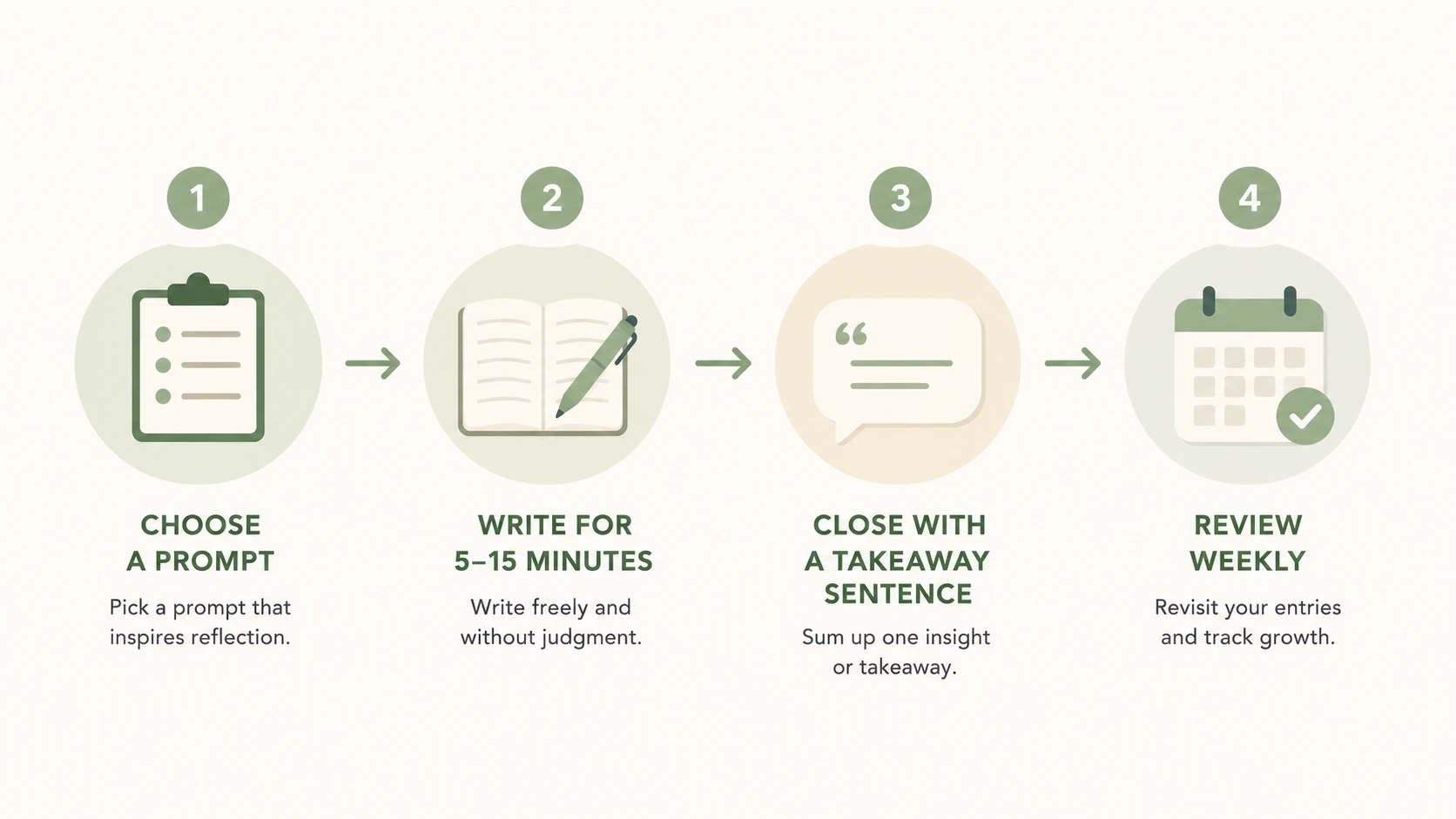
A sustainable routine typically includes one prompt, a set time limit (5–15 minutes), and a consistent location or format, whether digital or paper-based.
Tracking Progress
Dating entries and briefly noting mood or key insights makes it easier to review growth over weeks and months.
Reviewing Past Entries
Periodically rereading past entries—monthly or quarterly—helps identify patterns in thinking and measure genuine progress, connecting directly to habit formation, productivity, and accountability.
Common Mistakes When Using Growth Mindset Journal Prompts
Expecting Immediate Change
Mindset shifts occur gradually through repeated reflection, not after a single entry; expecting instant results often leads to premature abandonment of the practice.
Writing Without Reflection
Simply recording events without analyzing them limits the growth benefit; prompts work best when writers pause to interpret, not just describe, what happened.
Judging Yourself Too Harshly
Overly critical self-assessment can undermine motivation; growth mindset journaling should focus on constructive analysis rather than self-punishment.
Being Inconsistent
Irregular journaling weakens the cumulative benefits of reflection; short, frequent sessions are more effective than occasional long ones.
Common Challenges and Practical Solutions
Running Out of Ideas
Keeping a rotating list of prompt categories, such as the 365-day framework above, prevents writers from running out of material.
Feeling Unmotivated
Lowering the daily commitment to a single sentence on low-motivation days maintains the habit without adding pressure.
Fear of Honest Reflection
Reminding oneself that journals are private, and starting with lower-stakes prompts before addressing sensitive topics, can ease this fear over time.
Lack of Time
Using short, five-minute prompts or voice-to-text journaling during commutes or breaks helps maintain consistency despite time constraints.
Free Resources and Printable Journal Templates
Readers searching for journal prompts for self growth pdf or journal prompts for growth mindset free resources should look for materials that are well-organized by category, include a mix of beginner and advanced prompts, and clearly cite any psychological frameworks referenced. Quality printable prompt lists and PDF worksheets typically separate prompts by goal (confidence, healing, productivity) rather than presenting an unstructured list. Digital journals and printable planners with space for dates and brief mood tracking tend to support more consistent use than static, undated templates.
How to Choose the Right Journal Prompts for Your Goals
| Goal | Best Prompt Type |
|---|---|
| Confidence | Progress-tracking and strength-based prompts |
| Healing | Emotional processing and letting-go prompts |
| Productivity | Goal-review and time-use prompts |
| Self-discovery | Values and long-term vision prompts |
| Stress management | Body-awareness and coping-strategy prompts |
| Learning | Mistake-analysis and strategy-adjustment prompts |
Difficulty & Time Investment
Growth mindset journaling is a beginner-friendly entry point into self-reflection, requiring no special training or equipment. Typical sessions require 5–20 minutes daily, depending on prompt depth and writer experience. Consistency is influenced by factors such as schedule stability, emotional readiness, and access to a quiet space. Beginners should start with short, simple prompts, while more experienced journalers can adapt to longer, more analytical entries as the habit strengthens.
Results Timeline
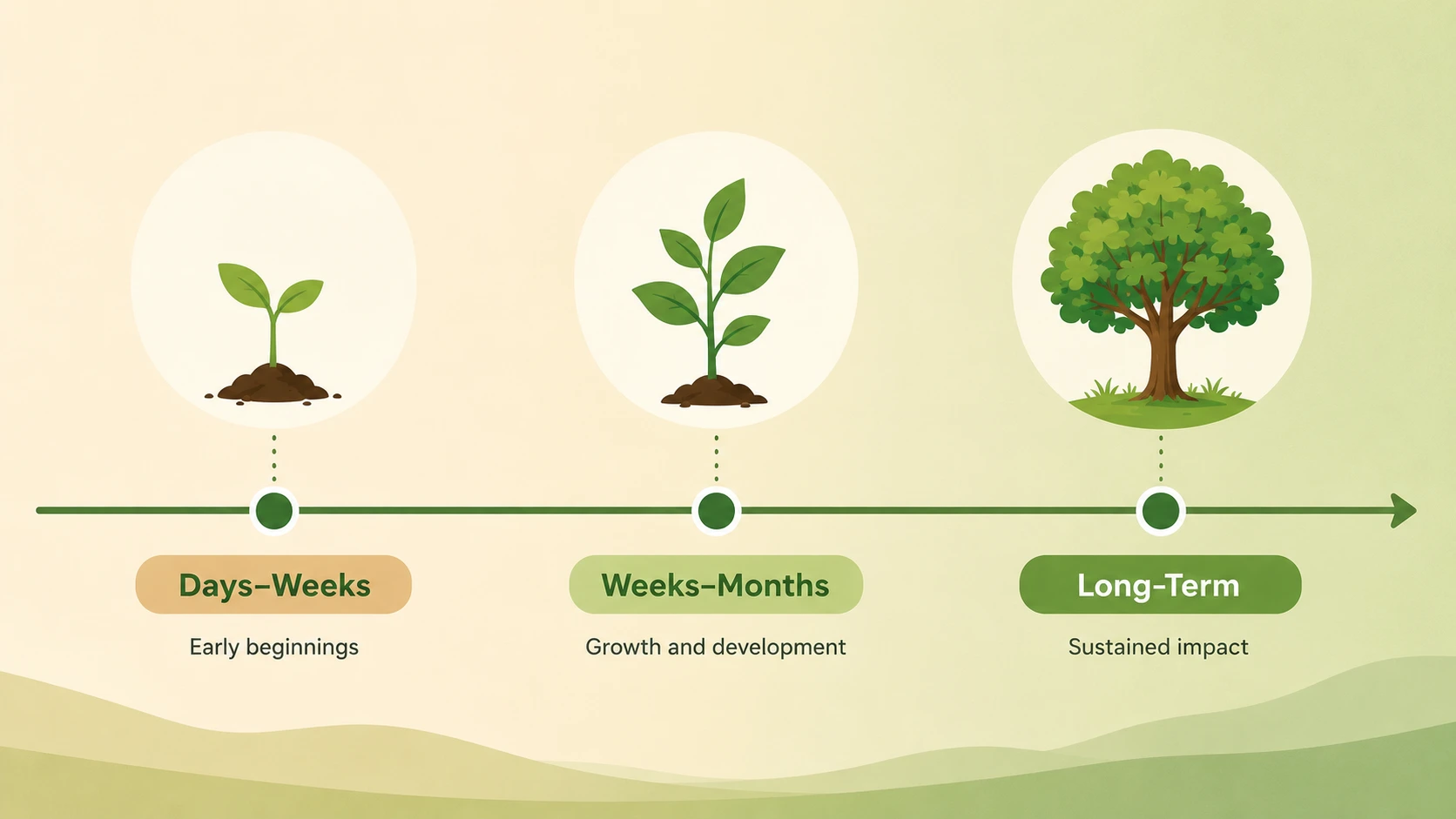
Early benefits, such as improved mood and a greater sense of clarity, often appear within days to a few weeks of consistent journaling. Medium-term improvements, including better emotional regulation and more visible progress toward goals, typically develop over several weeks to a few months. Long-term mindset development—measurable shifts in how challenges are interpreted and approached—generally builds over sustained practice across months or longer. Progress pace is influenced by consistency, prompt depth, and the individual’s starting level of self-awareness.
Practice Guid
Daily Journaling Routine
A simple daily routine involves selecting one prompt, writing for 5–15 minutes without editing, and closing with one sentence identifying a takeaway.
Weekly Reflection Sessions
A longer weekly session, reviewing the past week’s entries, helps identify recurring themes and adjust upcoming goals.
Tracking Personal Growth
Keeping a simple log of dates, prompts used, and brief notes on insights supports long-term tracking without requiring complex systems.
Staying Motivated Over Time
Rotating prompt categories, revisiting past entries, and setting small milestones helps sustain motivation beyond the initial weeks of practice.
Adjusting Your Practice for Different Lifestyles
Busy schedules may call for shorter, single-question entries, while periods of higher availability can support deeper, multi-part reflection. The practice should flex with circumstances rather than being abandoned when life gets busy.
Conclusion
Journal prompts for growth mindset offer a structured, accessible way to build resilience, self-awareness, and lifelong learning through consistent reflective writing. Whether used by beginners, adults, students, or those focused on healing and self-discovery, the right prompts turn everyday experiences into opportunities for growth. Progress depends less on perfect execution and more on regular, honest reflection over time. Starting with simple, low-pressure prompts and gradually building a sustainable routine is the most reliable path to lasting change. In short, growth mindset journaling works best as a consistent habit, not a one-time exercise.
Frequently Asked Questions
What are growth mindset journal prompts?
Growth mindset journal prompts are structured reflective questions that guide writers to view challenges, effort, and setbacks as opportunities for learning rather than fixed limitations. For a broader look at building a self-growth journaling practice from scratch, see our guide on how to journal for self-growth.
How often should I use growth mindset journal prompts?
Daily use for 5–15 minutes is ideal for building the habit, though even two to three sessions per week can produce meaningful benefits over time.
Are growth mindset journal prompts suitable for beginners?
Yes, beginners should start with short, simple prompts focused on daily reflection before progressing to deeper, more analytical questions.
Can journaling improve mental health and emotional resilience?
Yes, structured reflective journaling supports emotional processing, reduces stress, and builds resilience by helping individuals recognize and reframe difficult experiences.
What’s the difference between self-reflection prompts and growth mindset prompts?
Self-reflection prompts are broadly open-ended, while growth mindset prompts specifically target effort, learning, and adaptive thinking after challenges or setbacks.
Are growth mindset journal prompts useful for students and children?
Yes, age-appropriate prompts help students and children connect effort and strategy to improvement, reinforcing growth mindset principles used in many educational settings.
How long should each journaling session be?
Sessions can range from 5 to 20 minutes, with beginners typically starting shorter and extending duration as the habit becomes established.
Can I use the same journal prompts repeatedly?
Yes, revisiting the same prompts over time is useful for tracking how thinking and responses evolve, though rotating prompts also helps prevent journaling fatigue.