

Introduction
A warrior mindset is the ability to remain disciplined, resilient, focused, and emotionally controlled in the face of challenges. In modern life, the warrior mindset is not about combat or aggression. It is about developing the mental toughness needed to overcome obstacles, maintain consistency, and pursue meaningful goals despite discomfort. Whether applied to fitness, business, education, or personal growth, the warrior’s mindset helps individuals take responsibility for their actions, manage adversity, and continue progressing when motivation fades.
Quick Summary
- A warrior mindset combines discipline, resilience, focus, and self-control.
- Mental toughness is built through consistent action, not temporary motivation.
- Repeated exposure to challenges increases confidence and adaptability.
- Sustainable habits create long-term strength and performance.
- Emotional control is a key characteristic of the warrior mind.
What Is a Warrior Mindset?
In psychology, this concept is closely related to mental toughness, which is widely studied as the ability to consistently perform under pressure.
Warrior Mindset Meaning and Core Principles
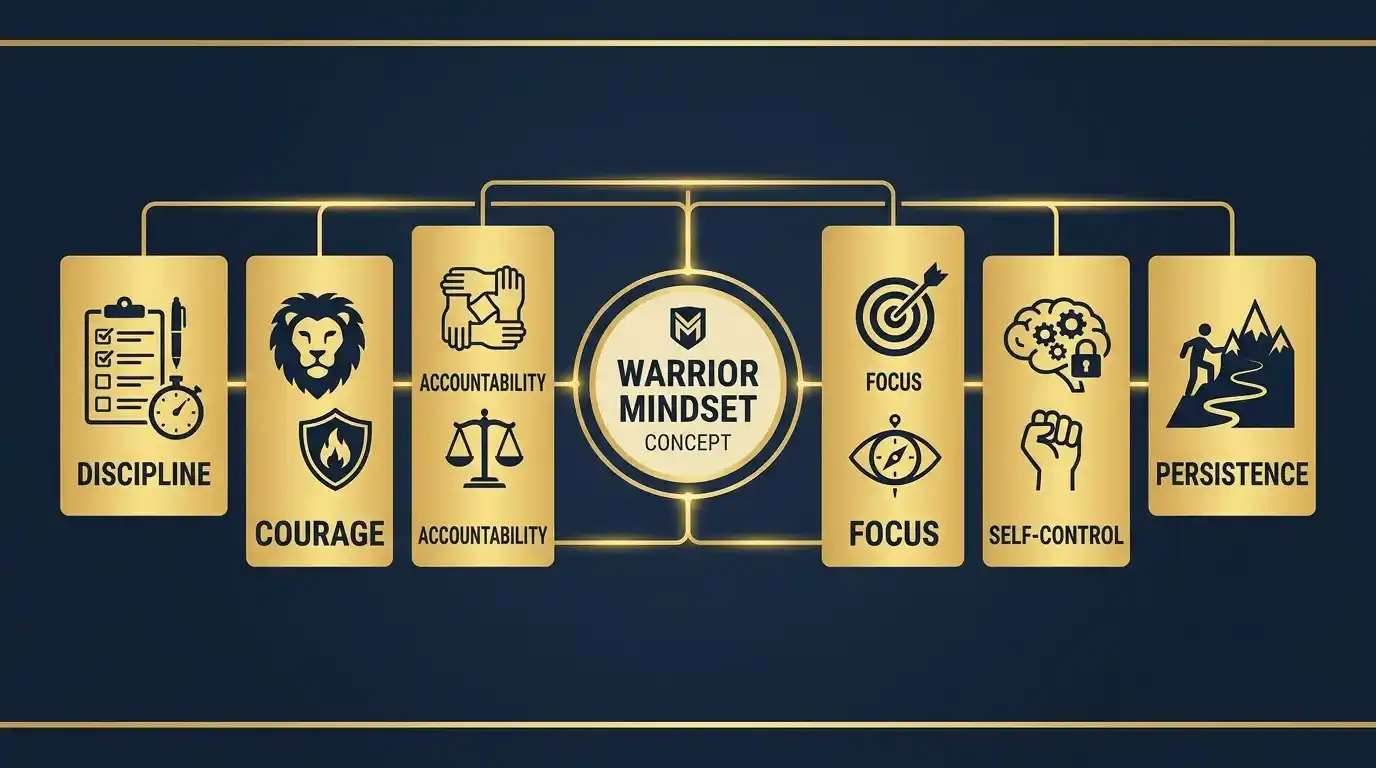
A warrior mindset is a way of thinking that prioritizes discipline, responsibility, resilience, and purposeful action.
Core principles include:
- Self-discipline over impulse
- Long-term thinking over short-term comfort
- Courage despite fear
- Accountability for outcomes
- Emotional regulation under pressure
- Continuous self-improvement
The mindset of a warrior focuses on controlling personal actions rather than external circumstances.
The Difference Between a Warrior Mindset and an Aggressive Mindset
Many people confuse toughness with aggression. However, the warrior mentality emphasizes control rather than reaction.
| Warrior Mindset | Aggressive Mindset |
| Strategic | Impulsive |
| Disciplined | Reactive |
| Emotionally controlled | Emotionally driven |
| Purpose-focused | Ego-focused |
| Consistent | Unpredictable |
Why People Struggle to Develop a Warrior Mindset
Many of these struggles come down to discipline itself being a trainable ability, as explored in is self-discipline a skill, rather than a fixed personality trait.
Common Psychological Barriers
People often struggle because they seek comfort, avoid uncertainty, or expect immediate results.
Common obstacles include:
- Fear of failure
- Fear of criticism
- Perfectionism
- Overthinking
- Dependence on motivation
Modern Comfort and Mental Weakness
Modern environments reduce exposure to difficulty. Constant convenience can weaken discomfort tolerance, making ordinary challenges feel overwhelming.
The Illusion of Control and Mental Resilience
The illusion of control is the tendency to believe we can influence outcomes that are largely outside our control.
A warrior mindset accepts uncertainty while focusing on controllable factors:
- Effort
- Preparation
- Attitude
- Response to setbacks
This shift improves resilience and reduces unnecessary stress.
The Psychology Behind the Warrior Mind
How Mental Toughness Is Built

Mental toughness develops through repeated exposure to manageable challenges.
The process typically follows:
- Encounter discomfort.
- Take action despite resistance.
- Build confidence through experience.
- Increase challenge gradually.
The Mere Exposure Effect and Confidence Building
The mere exposure effect, also called the familiarity effect, explains why repeated exposure increases comfort and reduces fear.
For example:
- Public speaking becomes easier after multiple presentations.
- Difficult conversations become less intimidating with practice.
- New habits feel more natural over time.
Confidence often grows from familiarity rather than natural talent.
Why Repetition Creates Mental Strength
Repetition strengthens neural pathways and reinforces identity.
When people repeatedly perform difficult actions, they begin to see themselves as disciplined individuals. This identity shift makes consistency easier.
Warrior Mindset Training: How Mental Toughness Is Developed
Journaling is one of the most effective reflection tools for building awareness and discipline, and you can use structured journaling prompts for self-growth to strengthen this habit.
The Foundations of Warrior Mindset Training
Effective warrior mindset training includes:
- Daily discipline
- Physical challenges
- Self-reflection
- Consistent routines
- Purpose-driven goals
Practical Warrior Mindset Training Exercises
Useful exercises include:
- Cold showers
- Delayed gratification challenges
- Daily journaling
- Focus sessions without distractions
- Structured exercise programs
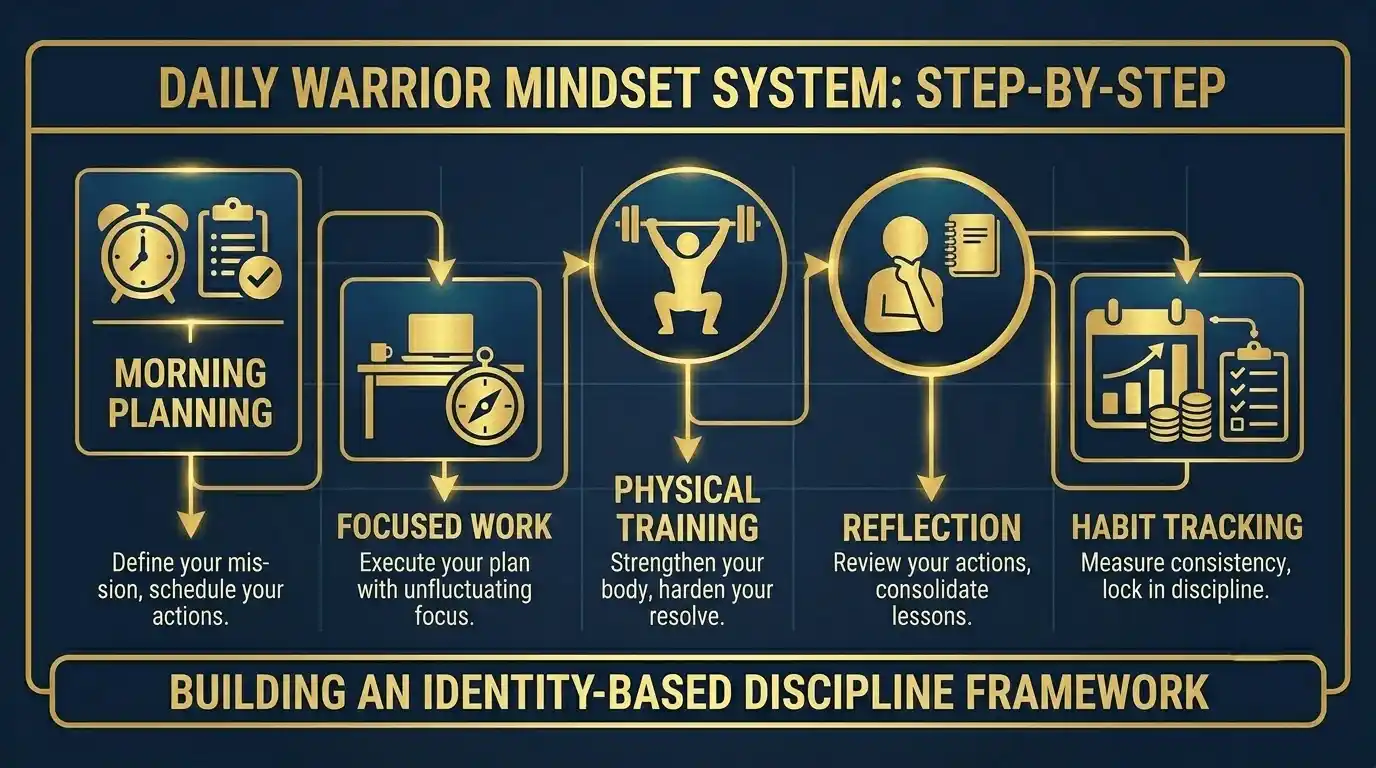
Building a Personal Warrior Training System
A simple system may include:
- Morning planning
- Daily physical training
- Evening reflection
- Weekly challenge goals
- Habit tracking
Systems outperform motivation because they reduce decision fatigue.
Discipline vs Motivation: What Actually Creates Results?
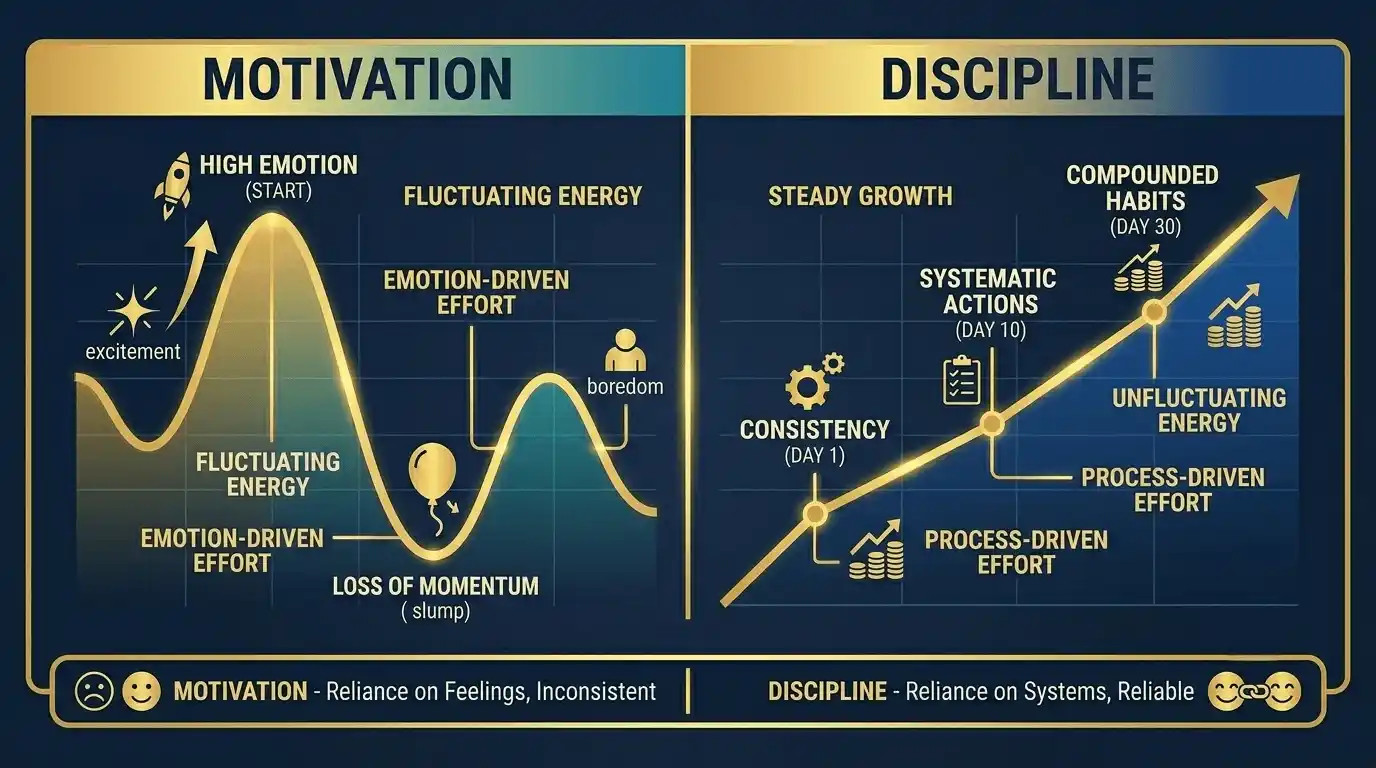
Motivation helps people start. Discipline helps them continue. A warrior mindset is ultimately built through systems and repetition, similar to what is explained in how to build good habits in 30 days, where consistency is shown to outperform motivation in the long run.
| Motivation | Discipline |
| Emotional | Behavioral |
| Temporary | Sustainable |
| Unpredictable | Reliable |
| Depends on mood | Depends on systems |
Long-term achievement depends more on disciplined routines than emotional enthusiasm.
Consistency vs Intensity in Warrior Development
| Consistency | Intensity |
| Sustainable | Often temporary |
| Habit-driven | Emotion-driven |
| Long-term growth | Short bursts |
| Lower burnout risk | Higher burnout risk |
Consistent effort compounds over time and produces greater results than occasional extreme effort.
Lessons from Historical and Modern Warrior Figures
Musashi vs Kojiro
The famous rivalry of musashi vs kojiro highlights strategic thinking, preparation, patience, and psychological composure. Success often comes from planning and adaptability rather than raw strength.
Mas Oyama and Extreme Discipline
Mas Oyama demonstrated how relentless practice and personal discipline can produce extraordinary capability. His example reinforces the value of deliberate training and persistence.
Chad Wright and Modern Endurance Mindset
Chad Wright emphasizes accountability, endurance, and embracing discomfort. His approach reflects the principle that growth occurs when individuals consistently challenge their limits.
Physical Training and the Warrior Mentality
How Physical Challenges Build Mental Toughness
Physical training teaches:
- Delayed gratification
- Stress management
- Persistence
- Self-confidence
These benefits transfer into professional and personal life.
What CrossFit Hero WODs Teach About Resilience
CrossFit Hero WODs are known for demanding effort and perseverance.
Key lessons include:
- Commitment under pressure
- Purpose-driven training
- Teamwork
- Mental endurance
Warrior Toughness: What It Is and Why It Matters
Understanding Warrior Toughness
Warrior toughness refers to mental readiness, resilience, and the ability to perform effectively under stress.
What Is the Primary Goal of Warrior Toughness?
The primary goal is to strengthen:
- Emotional regulation
- Stress tolerance
- Adaptability
- Decision-making under pressure
Developing Toughness Through Daily Habits
Daily toughness habits include:
- Regular exercise
- Consistent sleep
- Reflection practices
- Difficult but achievable challenges
Warrior vs Guardian Mindset
Understanding the Difference
A warrior mindset focuses on overcoming threats and adversity, while a guardian mindset focuses on protection, service, and responsibility.
Warrior vs Guardian Mindset in Policing
The debate around warrior vs guardian mindset in policing often centers on balancing preparedness with community trust and service.
Warrior Policing and Modern Leadership Lessons
Modern leadership benefits from combining strength, accountability, empathy, and situational awareness.
Best Warrior Mindset Books and Learning Resources
What Makes a Great Warrior Mindset Book?
Effective books typically include:
- Practical frameworks
- Actionable strategies
- Psychological principles
- Real-world examples
Popular Warrior Mentality Books
Many warrior mentality books focus on:
- Mental toughness
- Discipline
- Leadership
- Resilience
How to Apply Lessons from Books in Real Life
To turn knowledge into results:
- Take notes.
- Create action steps.
- Build habits around lessons.
- Review progress regularly.
Common Myths About the Warrior Mindset
Myth: Warriors Never Feel Fear
Fear is normal. Courage means acting despite fear.
Myth: Toughness Means Ignoring Emotions
Mental strength involves regulating emotions, not suppressing them.
Myth: More Hardship Always Creates More Strength
Recovery, balance, and sustainability are essential for long-term growth.
Practical Warrior Mindset Framework for Daily Life
| Challenge | Warrior Response | Habit to Build |
| Procrastination | Immediate action | Five-minute rule |
| Fear of failure | Learning mindset | Reflection journaling |
| Low motivation | Follow systems | Daily routine |
| Stress | Emotional regulation | Breathing practice |
| Inconsistency | Identity-based habits | Habit tracking |
Real-Life Examples of the Warrior Mindset in Action
Students
Consistent study habits outperform last-minute cramming.
Entrepreneurs
Resilience helps manage uncertainty and setbacks.
Athletes
Structured training develops discipline and performance.
Everyday Professionals
Accountability and emotional control improve decision-making and productivity.
Conclusion
The warrior mindset is a practical framework for building resilience, discipline, and mental toughness. It is not defined by aggression but by self-control, consistency, and purposeful action. By embracing discomfort, focusing on controllable factors, and developing sustainable habits, anyone can strengthen the warrior mind. Long-term success comes from repeated action, not occasional inspiration. The most effective path is to build small daily disciplines that compound into lasting personal growth.
FAQs
What is a warrior mindset?
A warrior mindset is a disciplined and resilient approach to challenges that emphasizes self-control, accountability, and consistent action.
How can I develop a warrior mindset?
Develop daily habits that build discipline, embrace manageable discomfort, and focus on long-term consistency rather than motivation.
Why do I struggle with consistency?
Many people rely on motivation instead of systems. Consistency improves when behaviors are tied to routines and identity-based habits.
How do I stay disciplined long-term?
Reduce reliance on emotions, create structured routines, track progress, and focus on small daily actions.
What if I lose motivation?
Continue following your system. Motivation fluctuates naturally, but habits and routines provide stability.
How does the mere exposure effect build confidence?
Repeated exposure increases familiarity, which reduces fear and uncertainty. Confidence often develops through experience rather than inspiration.
What is warrior toughness?
Warrior toughness refers to mental readiness, emotional resilience, and the ability to perform effectively under pressure.
Is a warrior mindset useful outside of sports or the military?
Yes. The principles of discipline, resilience, and accountability apply to business, education, health, relationships, and personal development.










One Response