

Introduction
Journal prompts for self growth are structured questions or writing cues designed to guide reflection on thoughts, emotions, behaviors, and personal direction. They help individuals slow down their thinking process and examine internal patterns that often go unnoticed in daily life. By using journal prompts consistently, people can build self-awareness, improve emotional clarity, and make more intentional decisions aligned with their values. Over time, journaling shifts from simple writing into a practical tool for mindset change, habit improvement, and identity development. This makes it a simple but powerful method for long-term personal growth and emotional regulation.
Quick Summary
- Journal prompts for self growth improve self-awareness through structured reflection
- They support emotional healing, clarity, and behavioral change
- Different types include self-discovery, mental health, self-love, and growth mindset prompts
- Consistent journaling builds long-term discipline and identity-based habits
What Are Journal Prompts for Self Growth?

Journal prompts for self growth are guided questions that help individuals structure their reflection process and understand their thoughts more clearly. Instead of writing randomly, prompts provide direction and focus for self-exploration.
They help answer “what to journal about” and often include:
- journaling prompts
- journaling topics
- journal questions
- questions for journal
- things to journal about
These prompts create a structured reflection system that transforms scattered thinking into organized self-awareness. This improves emotional regulation and supports clearer decision-making over time.
Cause-effect insight:
- Clear prompts → deeper reflection → stronger awareness → improved self-regulation
Why Journal Prompts Work for Self Discovery and Mindset Change
Journal prompts for self discovery help uncover hidden beliefs, emotional reactions, and behavior patterns that influence daily life. They guide individuals toward deeper understanding of identity and long-term goals. Structured reflection also supports long-term mindset shifts and helps break limiting thought patterns, especially when combined with intentional cognitive habits like explained in How to Change Your Thoughts.
Common forms include:
- journal prompts for self discovery
- self discovery journal prompts
- journaling prompts for self discovery
- growth mindset journal prompts
Why it works psychologically:
- Writing activates cognitive processing and reduces mental overload
- Structured questions reduce avoidance and overthinking
- Reflection strengthens feedback loops for behavior change
- Awareness helps improve emotional control and decision-making
This process supports identity-level change by helping individuals observe how they think, not just what they think.
Types of Journal Prompts for Personal Growth and Healing
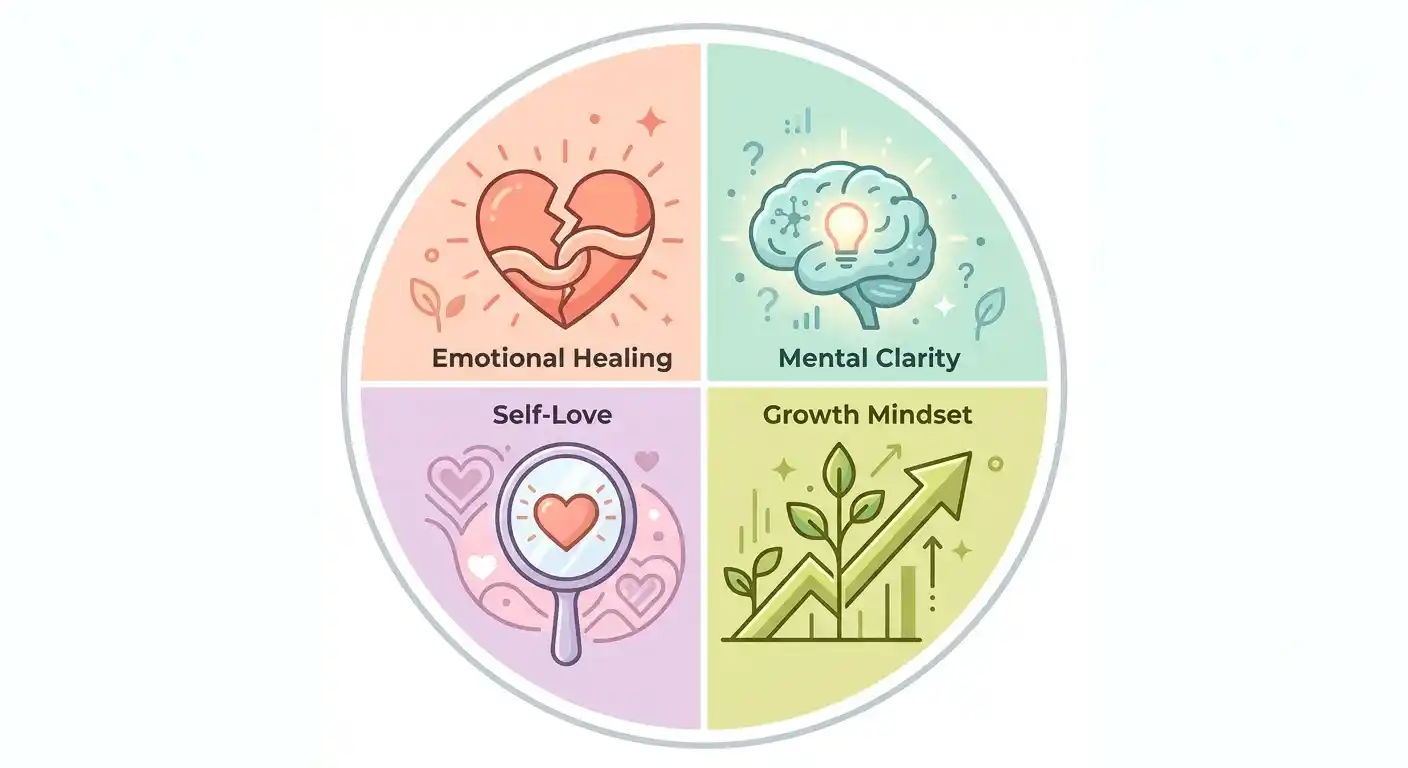
1. Mental Health & Emotional Clarity
- journal prompts for mental health
- journaling prompts for mental health
- mental health journal prompts
- journaling ideas for mental health
- journaling topics for mental health
Effect: Reduces emotional overwhelm and improves emotional regulation.
2. Self-Love & Identity Building
- journal for self love
- journaling for self-love
- self love journal prompts
- journal prompts for self-love
- journaling prompts for self love
Effect: Strengthens self-worth and reduces negative self-talk patterns.
3. Healing & Emotional Recovery
- journaling prompts for healing
- healing journal prompts
- journaling prompts for emotional healing
- writing prompts for healing
Effect: Helps process emotional pain and supports psychological recovery.
4. Self-Reflection & Awareness
- self reflection journal prompts
- journaling questions
- journal prompts for self reflection
Effect: Improves awareness of habits, triggers, and behavioral responses.
Daily Journal Prompts for Self Growth (Routine System)
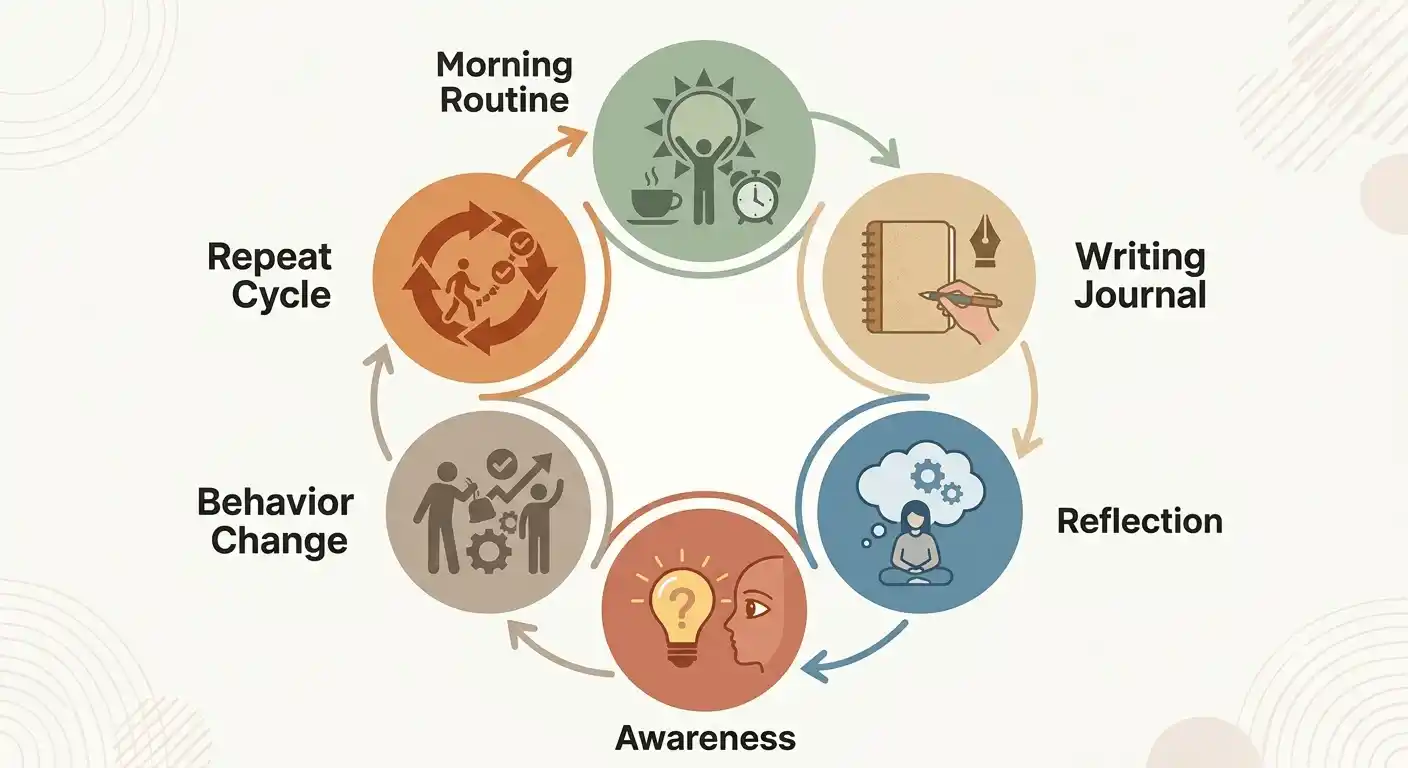
Daily journal prompts for self growth help build consistency in reflection, which is essential for long-term personal development. They remove uncertainty about what to write and make journaling easier to maintain. This consistency works best when paired with strong habit-building systems, such as those explained in How to Build Good Habits in 30 Days, where small daily actions are turned into automatic behaviors.
Common formats include:
- daily journal prompts
- daily journaling prompts
- everyday journaling prompts
- journal prompts daily
- prompt journaling / prompts journaling
Why daily practice works:
- repetition → habit formation
- habit formation → identity reinforcement
- identity reinforcement → long-term behavior change
Over time, daily reflection becomes part of identity rather than a forced activity.
Growth Mindset & Personal Development Prompts
Growth mindset prompts focus on improving how individuals interpret challenges, effort, and progress. They help reframe failure as part of learning and support long-term resilience.
Includes:
- growth journal prompts
- journal prompts for growth
- self growth journal prompts
- self improvement journal prompts
- personal growth journal prompts
- journal prompts for growth mindset
Cause-effect relationship:
- Reflection on failure → reframing → resilience improvement
- Tracking progress → motivation reinforcement
- Identity shift (“I am improving”) → sustained discipline
How to Use Journal Prompts Effectively
Using journal prompts effectively requires consistency and simplicity rather than complexity. Building discipline around journaling can be challenging at first, but strategies like those in How to Build Discipline Without Motivation help make reflection a consistent long-term habit instead of a temporary effort.
- Choose one category (growth, healing, or self-love)
- Answer honestly without overthinking
- Write consistently for 10–20 minutes daily
- Reflect on recurring patterns weekly
- Turn insights into small actions
Key principle:
- Insight without action leads to stagnation
- Insight combined with repetition leads to transformation
Common Struggles and Why People Fail at Journaling

Many people struggle with journaling because they treat it as a task instead of a habit.
Common challenges:
- Lack of consistency due to no routine system
- Overthinking prompts instead of writing naturally
- Emotional discomfort when facing thoughts
- Unrealistic expectations of quick results
Fixes:
- Use short, simple prompts
- Focus on honesty rather than perfection
- Start with 1–2 questions only
- Link journaling to an existing daily habit
Comparison Table: Types of Journal Prompts and Their Outcomes
| Prompt Type | Focus Area | Main Outcome | When to Use |
| Self-discovery prompts | Identity & values | Clarity about self | Life direction confusion |
| Mental health prompts | Emotions & stress | Emotional regulation | Anxiety or overwhelm |
| Self-love prompts | Self-worth | Confidence building | Low self-esteem |
| Growth mindset prompts | Beliefs & effort | Resilience | Facing challenges |
| Healing prompts | Past experiences | Emotional processing | Trauma or loss reflection |
Practical Example Use Cases
- Beginner: “What am I feeling right now and why?”
- Intermediate: “What belief is holding me back today?”
- Advanced: “How did my actions reflect my identity today?”
These examples help translate abstract emotions into structured self-awareness, making personal growth more practical and measurable over time.
Conclusion
Journal prompts for self growth provide a structured way to improve self-awareness, emotional clarity, and long-term behavioral change. By consistently engaging with reflective questions, individuals develop better understanding of their thoughts and actions. The most important factor is consistency, not complexity, as small daily reflection leads to meaningful long-term transformation.
FAQs
1. Why do I struggle with consistency in journaling?
Because journaling is often treated as a task instead of a habit, making it easy to skip without a routine.
2. What are the best journal prompts for self growth?
The best prompts are simple, clear questions that help explore emotions, habits, and beliefs.
3. How do journal prompts help mental health?
They help organize thoughts, reduce emotional overload, and improve emotional awareness.
4. What if I don’t know what to write?
Start with basic prompts like “What am I feeling right now?” or “What is stressing me today?”
5. Can journaling really change mindset?
Yes, consistent reflection helps reframe thinking patterns and supports long-term mindset change.