

Table of Contents
ToggleIntroduction
Understanding when to walk away from a relationship requires distinguishing emotional attachment from consistent behavioral reality. Many people remain in unhealthy relationships due to fear, hope, familiarity, or psychological dependency rather than actual compatibility or emotional safety. Over time, this leads to repeated conflict cycles, emotional exhaustion, and declining self-respect. The challenge is not identifying temporary problems, but recognizing persistent patterns that do not improve despite communication or effort. This guide explains the psychological drivers, behavioral warning signs, and structured decision-making approach needed to determine when staying is no longer healthy or sustainable.
Quick Summary
- Walking away depends on repeated behavioral patterns, not isolated incidents
- Psychological biases like fear, sunk cost, and attachment delay decision-making
- Relationships fail when trust, effort, or respect becomes one-sided
- Love alone does not guarantee emotional safety or compatibility
- Walking away is a structured decision based on long-term well-being
Emotional and Psychological Foundations of Knowing When to Leave
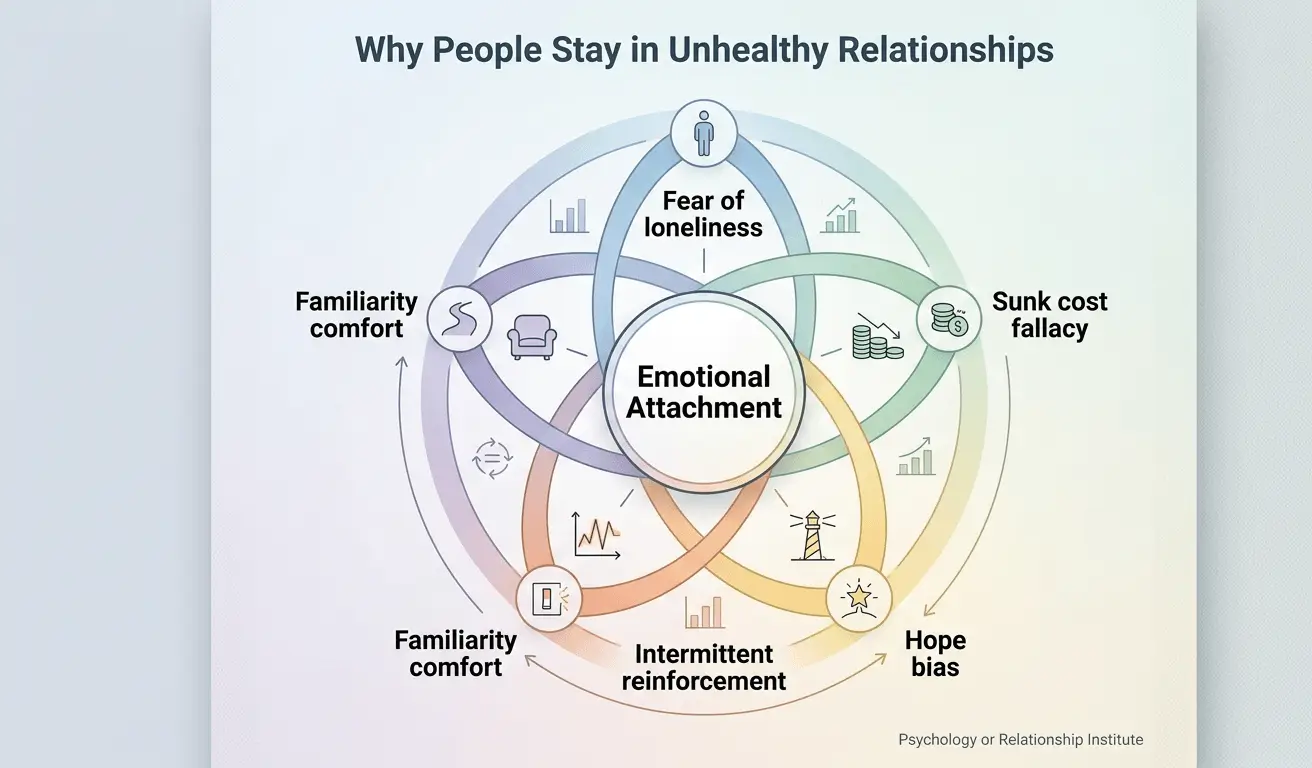
People often struggle to leave relationships because emotional attachment overrides rational evaluation. The brain prioritizes connection and familiarity, even in unhealthy environments.
These emotional biases become easier to manage when you focus on how to become the best version of yourself, shift attention toward what you can control, and understand the balance between logic vs emotion. In deeper awareness practices, concepts like consciousness awareness help separate reaction from observation.
Key psychological influences:
- Attachment dependency: emotional bonding creates resistance to separation
- Sunk cost fallacy: “I’ve invested too much to leave now” thinking
- Intermittent reinforcement: cycles of affection and conflict increase emotional addiction
- Fear of loneliness: staying feels safer than uncertainty
- Hope bias: belief that change will happen without consistent evidence
These mechanisms distort judgment, making it harder to evaluate the relationship objectively.
Clear Signs It May Be Time to Walk Away from a Relationship
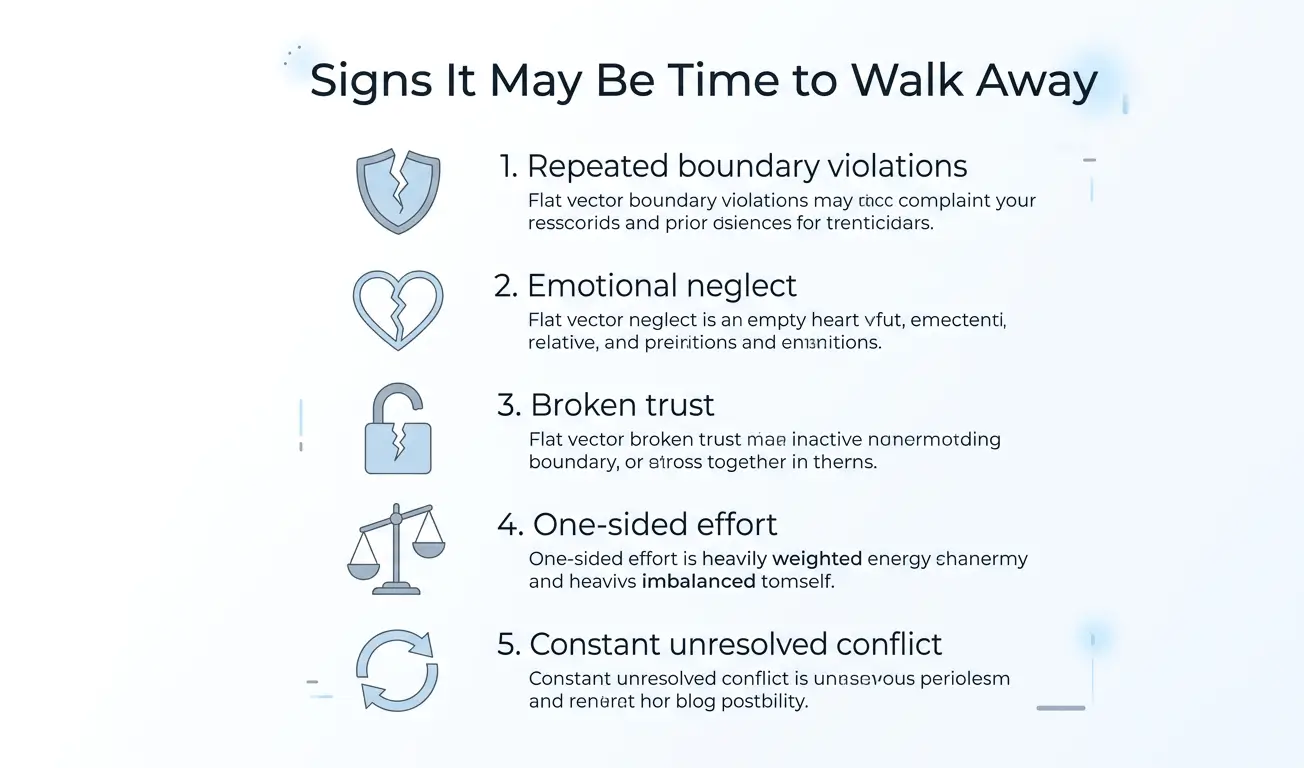
It becomes necessary to consider leaving when harmful behavioral patterns repeat without meaningful improvement.
Key signs include:
- Repeated disrespect of boundaries
- Emotional neglect or lack of support
- Ongoing dishonesty or broken trust
- One-sided emotional effort
- Repetitive unresolved conflicts
Behavioral indicators:
- Conversations repeat without resolution
- Apologies are not followed by action
- Emotional distance increases over time
- Effort declines instead of improving
When Love Exists but the Relationship Still Fails
Love alone does not ensure compatibility or long-term stability. A relationship can still fail even when emotional attachment is strong.
Common situations:
- Core values are incompatible
- One partner refuses accountability or change
- Emotional harm continues despite affection
- Long-term goals are misaligned
Emotional connection without behavioral alignment often leads to repeated disappointment.
When Effort No Longer Creates Change
A major turning point occurs when effort stops producing lasting improvement in the relationship.
Signs include:
- Only one partner consistently initiates change
- Promises replace real behavioral shifts
- Emotional labor becomes uneven
- Temporary improvements quickly revert
Cause-effect pattern:
Unequal effort → emotional exhaustion → resentment → emotional detachment
Special Situations That Complicate the Decision
Some relationships involve additional emotional complexity but still require prioritizing personal well-being.
When children are involved:
- Stability and emotional safety matter more than staying together
- High conflict environments can negatively affect development
When addiction is involved:
- Recovery must be self-driven
- Repeated relapse without accountability signals instability
- Support should not come at the cost of personal emotional health
Core principle: commitment does not require self-destruction.
How to Know It Is Time to End a Relationship
A relationship may need to end when emotional well-being consistently declines.
Key indicators:
- Relief when imagining separation outweighs fear
- Emotional needs remain unmet over time
- Trust cannot be rebuilt through behavior
- Relationship reduces personal growth and stability
Clarity comes from evaluating patterns, not emotional fluctuations.
This clarity often connects with broader personal growth goals like getting your life in order, living your best life, and working toward the best version of yourself beyond the relationship itself.
How to Walk Away from a Relationship (Step-by-Step)
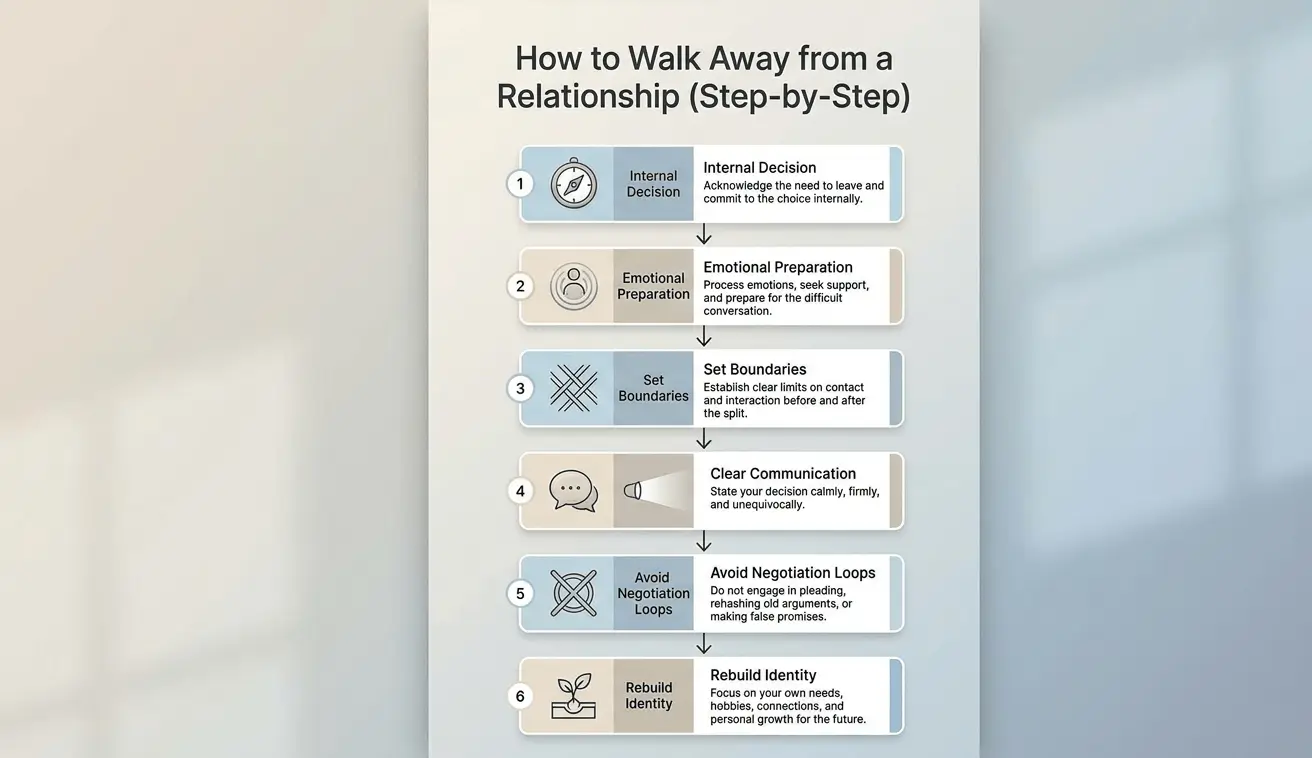
Ending a relationship requires structured emotional and behavioral action.
Steps:
- Make the decision internally before external communication
- Prepare emotionally for grief and withdrawal
- Set clear boundaries on contact
- Communicate decision calmly and directly
- Avoid negotiation cycles or repeated debates
- Focus on rebuilding identity, routine, and independence
Key principle: closure is created through consistency, not repeated conversation.
Walking Away When You Still Love Someone
Love can persist even when leaving is necessary. Emotional attachment does not always reflect relationship health.
Challenges:
- Emotional withdrawal feels like regret
- Memory bias highlights positive experiences
- Attachment creates temporary emotional confusion
Healthy understanding:
- Love does not equal compatibility
- Emotional pain is part of separation, not proof of mistake
- Long-term clarity often comes after emotional distance
When to Fight for the Relationship vs When to Let Go
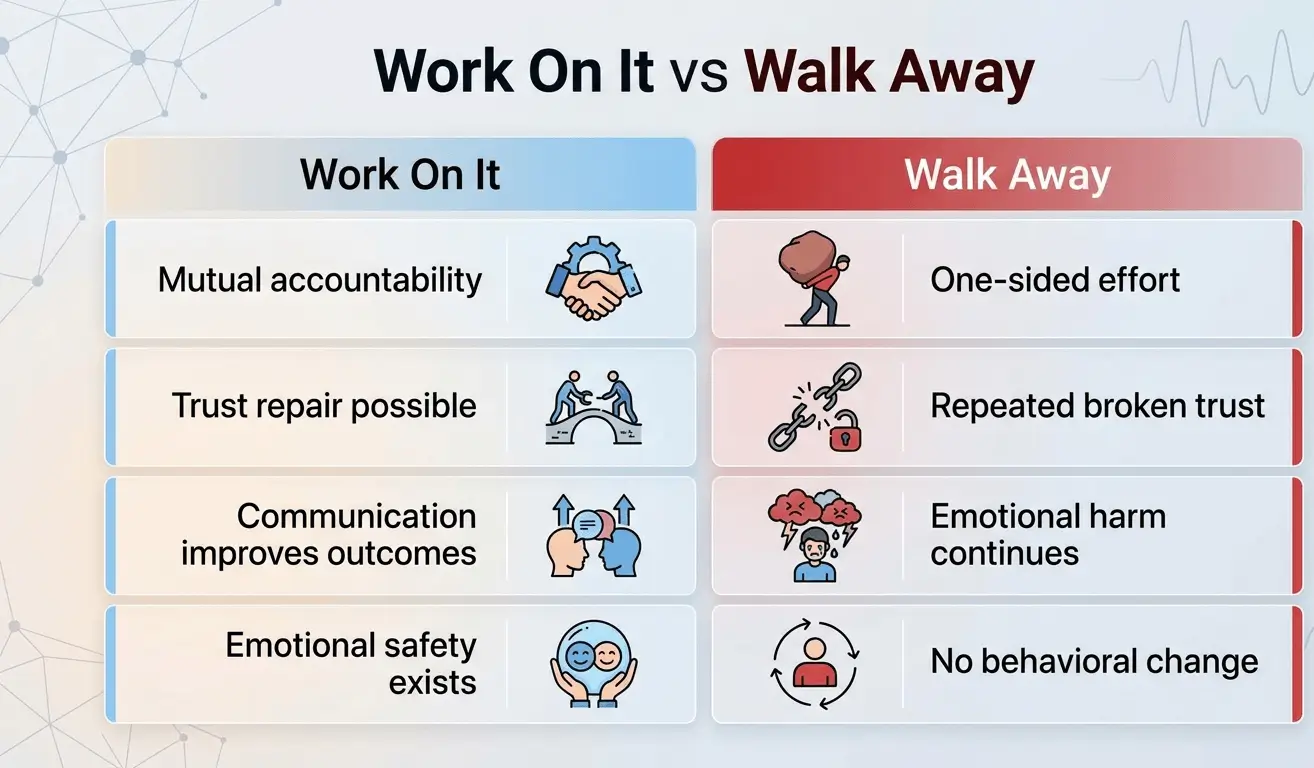
| Situation to Work On | Situation to Walk Away From |
|---|---|
| Both partners take responsibility | Only one partner changes |
| Conflict leads to solutions | Conflict repeats without resolution |
| Emotional safety exists | Emotional harm continues |
| Trust is repairable | Trust is repeatedly broken |
| Growth is mutual | Growth is one-sided |
Behavioral and Emotional Barriers That Delay Walking Away
Common obstacles include:
- Fear of regret or failure
- Social expectations or pressure
- Financial or practical dependency
- Emotional comfort in familiarity
- Hope without behavioral evidence
These barriers often delay necessary decisions.
Problem–Solution Framework for Staying Too Long
- Overthinking: caused by uncertainty → focus on real patterns, not hypotheticals
- Emotional confusion: caused by attachment → track behaviors, not feelings
- Fear of loss: driven by avoidance → reframe leaving as self-protection
- Lack of clarity: cognitive overload → write objective relationship history
What Healthy Walking Away Looks Like
Healthy separation includes:
- Clear decision without ongoing negotiation
- Gradual reduction of emotional dependence
- Rebuilding personal identity and routines
- Acceptance of grief without reversal of decision
- Long-term emotional stabilization
Conclusion
Knowing when to walk away from a relationship is about recognizing persistent behavioral patterns that damage emotional well-being, trust, or long-term stability. While love and emotional history can make decisions difficult, they cannot replace consistency, respect, and mutual effort. Walking away is not a failure—it is a structured decision that protects mental health and creates space for personal growth and healthier future relationships.
FAQs
1. Why do I struggle to know when to walk away from a relationship?
Because emotional attachment and hope bias often override objective evaluation of repeated behavioral patterns.
2. How do I know when it is time to walk away from a relationship?
When emotional needs are consistently unmet and behavior does not improve over time.
3. Can you love someone and still leave them?
Yes. Love does not guarantee compatibility, respect, or emotional safety.
4. What if I still feel attached but the relationship is unhealthy?
Attachment is normal, but decisions should be based on long-term behavioral patterns.
5. How do I walk away without going back?
Set firm boundaries, limit contact, and focus on rebuilding identity and routine.
6. When should I try to fix the relationship instead of leaving?
When both partners consistently take accountability and demonstrate sustained behavioral change.










One Response