

Introduction
A morning routine is a set of actions and habits you follow shortly after waking up. It influences your energy levels, mental focus, mood, and productivity throughout the day. Many people struggle to establish consistent routines because of low motivation, poor sleep habits, decision fatigue, and unrealistic expectations about what mornings should look like. The truth is that effective morning routine ideas for lazy people do not require extreme discipline or complicated schedules. A successful routine morning structure focuses on simplicity, consistency, and sustainability. If you have ever wondered what is a good morning routine, the answer is often a low-effort system that is easy to repeat every day rather than a perfect routine followed only occasionally.
Quick Summary
- A good morning routine is simple enough to repeat consistently.
- Small habits performed daily often create better results than ambitious routines followed occasionally.
- Energy, motivation, and discipline improve when routines reduce friction and decision-making.
- The best morning routine is one that fits your lifestyle and can be maintained long-term.
What Is a Good Morning Routine and Why Does It Matter?
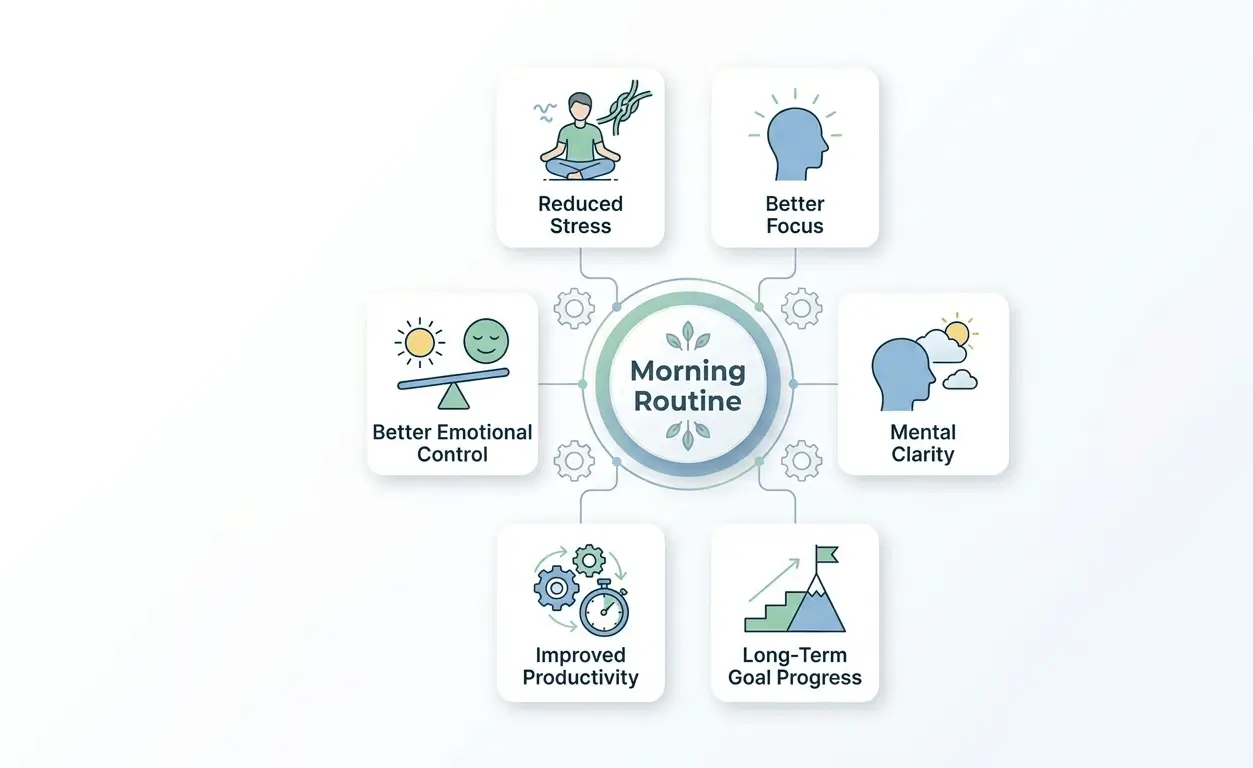
A good morning routine is a series of intentional habits that help you begin the day with focus, clarity, and direction. The most effective routines are not necessarily the longest or most impressive. They are the ones that are repeated consistently.
Morning habits influence productivity because they shape your mental state before distractions appear. Starting the day with structure reduces uncertainty and helps your brain focus on meaningful tasks instead of reacting to whatever happens first.
Benefits of an effective morning routine include:
- Creates structure for the day
- Reduces decision fatigue
- Improves mental clarity
- Supports long-term goals
- Encourages self-discipline
- Improves emotional regulation
Behavioral psychology shows that consistent actions strengthen habits over time. This is why simple routines often outperform complicated systems that are difficult to maintain.
Why Lazy People Often Struggle With Morning Routines
Many people who consider themselves lazy are actually facing psychological and environmental barriers that make behavior change difficult.
Common challenges include:
- Lack of motivation
- Poor sleep quality
- Unrealistic routine expectations
- Procrastination habits
- Instant gratification behaviors
- Inconsistent schedules
When routines feel overwhelming, the brain naturally avoids them and seeks easier alternatives.
The Hidden Mental Barriers Behind Bad Mornings
Several mental patterns contribute to poor mornings.
Self-sabotage
People often delay actions that could improve their lives because change requires effort and temporary discomfort.
All-or-Nothing Thinking
Missing one day can make people feel like they have failed completely, causing them to abandon the routine.
Perfectionism
Some individuals believe every morning must be productive and flawless. This creates unnecessary pressure.
Low Perceived Reward
The benefits of healthy habits usually appear gradually, making it harder for the brain to prioritize them.
Why Most Morning Routine Advice Fails
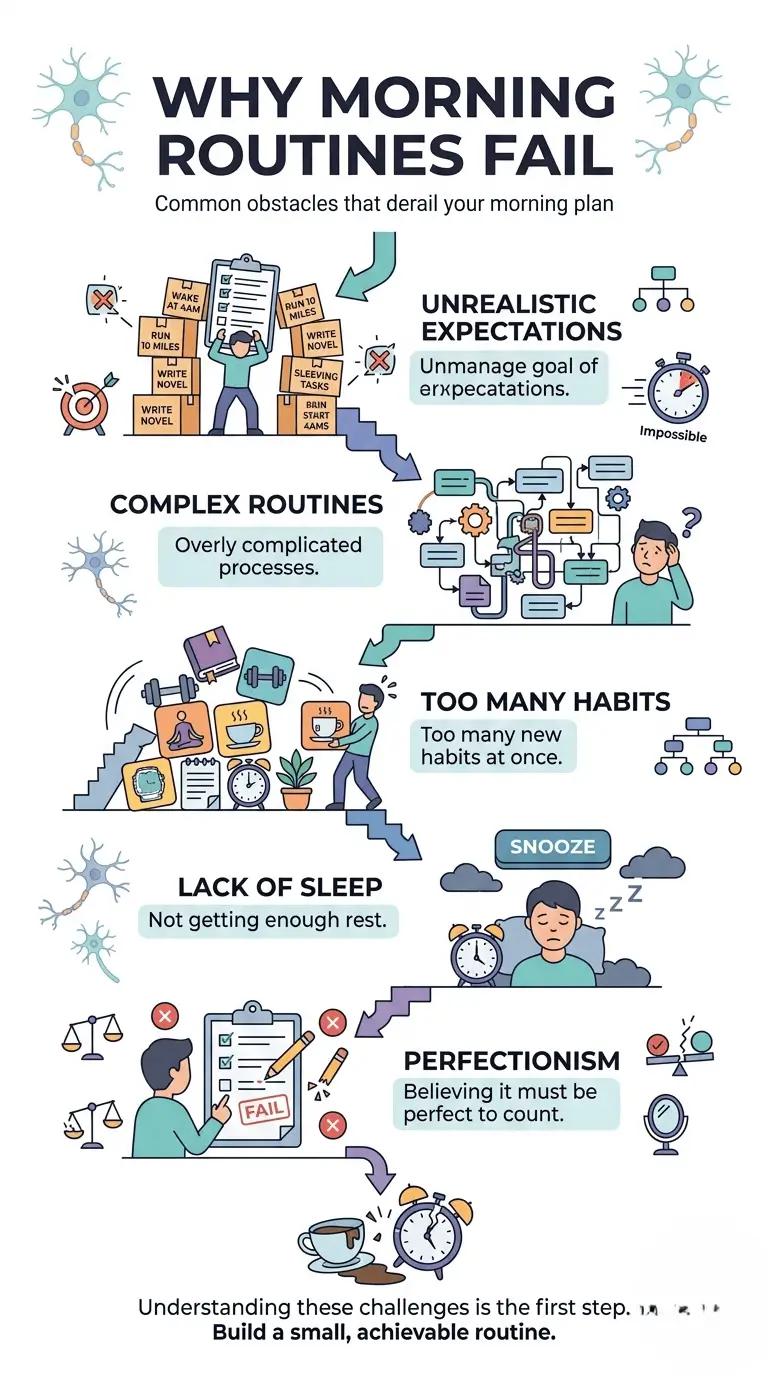
Many popular routines are difficult to sustain because they require excessive effort.
Common reasons include:
- Overly complex schedules
- Excessive habit stacking
- Influencer-style routines that demand too much time
- Unrealistic expectations
- Poor fit for individual lifestyles
The best routine is one that works in real life, not just on paper.
The Best Morning Routine for Lazy People
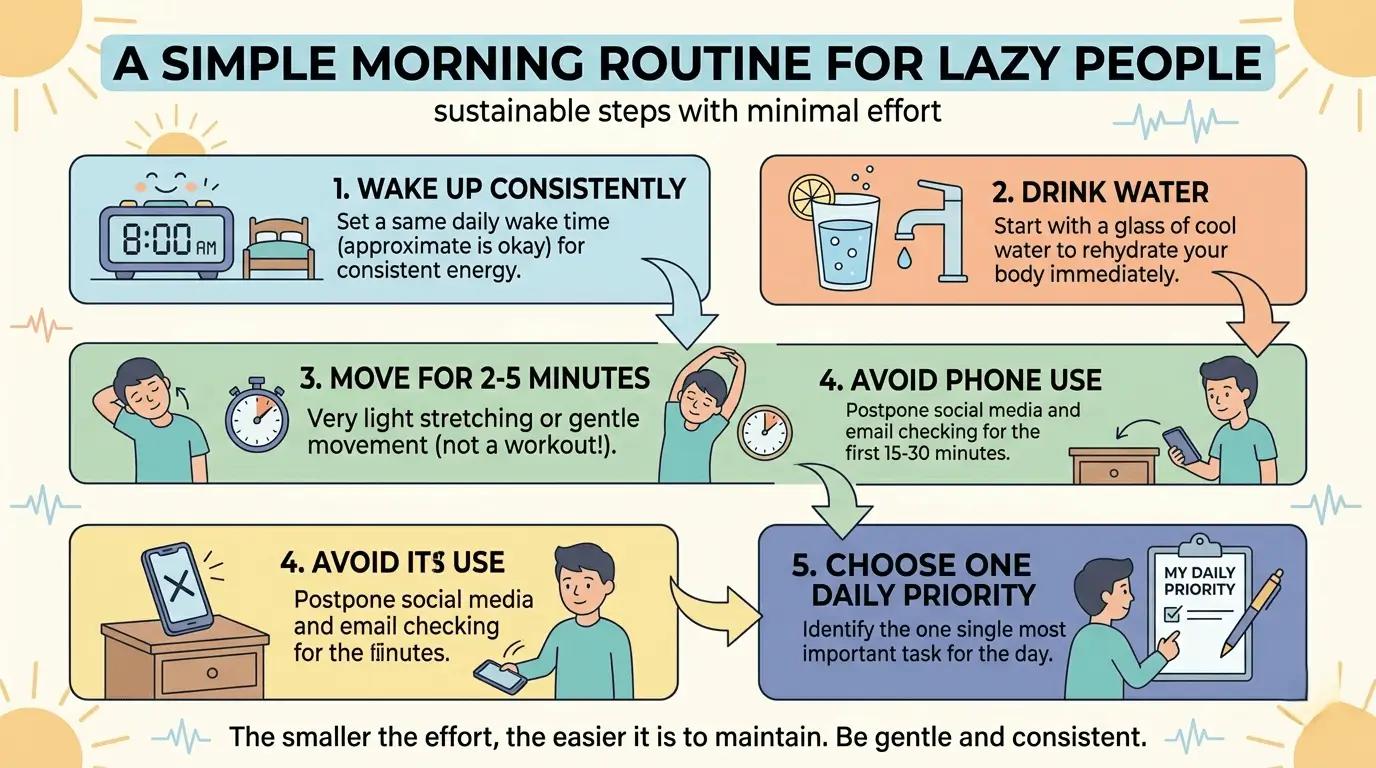
The best morning routine for lazy people focuses on habits that require minimal effort while creating meaningful results.
Step 1: Wake Up at a Consistent Time
Your body operates according to a circadian rhythm. Consistent wake-up times help regulate this internal clock.
Benefits include:
- Better sleep quality
- Improved alertness
- More stable energy
- Easier mornings
Consistency matters more than waking up extremely early.
Step 2: Drink Water Immediately
After several hours of sleep, the body naturally becomes dehydrated.
Benefits include:
- Increased alertness
- Better concentration
- Improved energy levels
- Faster mental activation
This habit is simple, quick, and highly effective.
Step 3: Move for 2–5 Minutes
Movement helps wake up the body and mind.
Examples include:
- Stretching
- Walking
- Light mobility exercises
- Gentle bodyweight movements
Even a few minutes can improve circulation and energy.
Step 4: Avoid Instant Phone Use
Checking your phone immediately after waking often creates distraction before your day has properly begun.
Benefits include:
- Better focus
- Reduced distraction
- Improved attention control
- Healthier dopamine management
Waiting even 15 minutes can make a noticeable difference.
Step 5: Choose One Priority for the Day
Identifying a single important task provides clarity and direction.
Benefits include:
- Reduced overwhelm
- Better productivity
- Improved decision-making
- Greater focus
Many people consider this one of the best morning routine ever principles because it creates momentum with very little effort.
These morning routines healthy habits form a practical foundation for daily success.
Easy Morning Routine Examples for Different Lifestyles
Morning Routine Example for Students
- Wake up consistently
- Drink water
- Review classes or assignments
- Eat breakfast
- Focus on the first study task
Morning Routine Example for Remote Workers
- Wake up
- Hydrate
- Stretch briefly
- Plan top priorities
- Begin work without social media
Morning Routine Example for Busy Parents
- Wake up before major responsibilities begin
- Drink water
- Review family schedule
- Complete one personal habit
- Start daily tasks
Morning Routine Example for Night Owls
- Prioritize sleep quality
- Wake consistently
- Get sunlight exposure
- Move briefly
- Start with an easy task
Morning Routine Example for Beginners
- Wake up
- Drink water
- Make the bed
- Choose one priority
- Begin the day
These morning routine examples show how a simple morning schedule can become a reliable good day routine regardless of lifestyle.
Healthy Morning Habits That Deliver the Biggest Results
Some habits provide disproportionately large benefits compared to the effort required.
Journaling is one of the most effective mental clarity tools, especially when you understand how to journal for self-growth in a structured way.
| Habit | Potential Benefit |
|---|---|
| Hydration | Improved alertness |
| Sunlight Exposure | Better circadian rhythm |
| Light Exercise | Increased energy |
| Journaling | Mental clarity |
| Mindfulness | Reduced stress |
| Healthy Breakfast | Stable energy |
| Daily Planning | Better productivity |
Morning routines healthy habits often work because they influence both physical and mental performance. A sustainable early morning routine should prioritize these high-impact actions.
Morning Ritual Ideas That Require Very Little Effort
Two-Minute Rituals
- Drink a glass of water
- Open curtains
- Take deep breaths
- Make your bed
Five-Minute Rituals
- Light stretching
- Short walk
- Gratitude journaling
- Daily planning
Habit Stacking Rituals
Connect a new habit to an existing one:
- After brushing your teeth, drink water.
- After making coffee, review priorities.
- After getting dressed, stretch for two minutes.
Low-Motivation Backup Routine
On difficult mornings:
- Drink water
- Open the blinds
- Move for one minute
- Identify one task
These simple morning ritual ideas maintain consistency even when motivation is low.
Consistency vs Intensity in Morning Routines
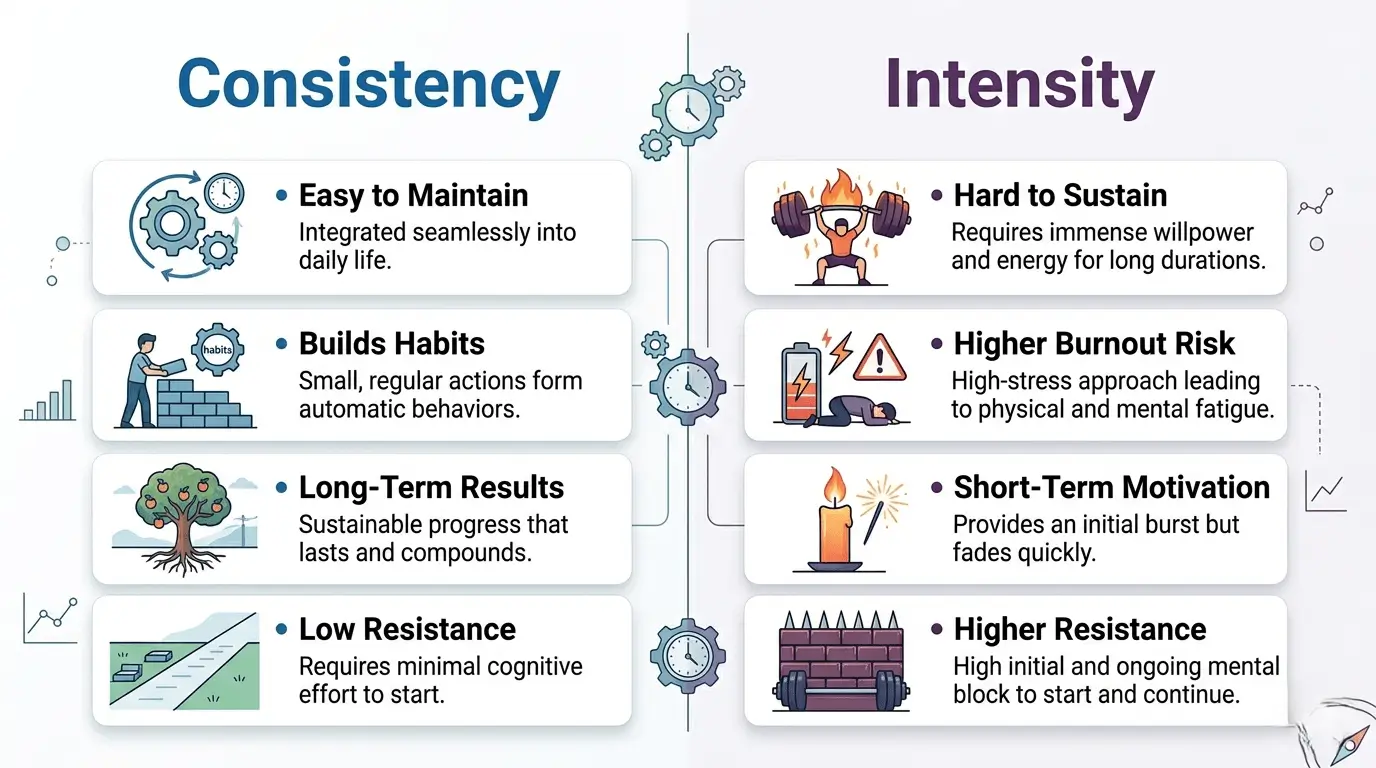
| Consistency | Intensity |
| Easier to maintain | Harder to sustain |
| Builds habits faster | Often causes burnout |
| Creates long-term results | Produces short-term motivation |
| Lower resistance | Higher resistance |
Key Takeaway
Small actions repeated daily outperform occasional bursts of effort. Consistency is the foundation of lasting habits.
Motivation vs Discipline in Building a Morning Routine
Long-term consistency depends more on systems than feelings, which is why learning about how to build discipline without motivation is essential for sustaining any morning routine.
| Motivation | Discipline |
| Emotional and temporary | Reliable and repeatable |
| Changes daily | Built through repetition |
| Good for starting | Good for maintaining |
| Depends on feelings | Depends on systems |
Key Takeaway
Successful routines rely more on systems than motivation. Discipline grows through repetition and environmental design.
How to Improve Your Morning Routine Over Time
Start With One Habit
Focus on a single habit before adding more.
Track Small Wins
Progress tracking reinforces positive behavior and increases consistency.
Remove Friction
Prepare clothes, water, or task lists the night before.
Upgrade Slowly
Add new habits gradually rather than changing everything at once.
Review Weekly Progress
Ask yourself:
- What worked?
- What felt difficult?
- What should be simplified?
Learning how to improve your morning routine becomes easier when changes are gradual.
Common Morning Routine Mistakes and How to Fix Them
| Mistake | Why It Happens | Solution |
| Hitting snooze repeatedly | Sleep inertia | Place alarm away from bed |
| Checking phone immediately | Dopamine habit loop | Delay phone use 15–30 minutes |
| Starting too many habits | Overwhelm | Begin with one habit |
| Skipping routine after one bad day | Perfectionism | Resume immediately |
| Waking too early | Unrealistic expectations | Choose sustainable wake times |
What Actually Works vs Common Morning Routine Myths
Myth: You Must Wake Up at 5 AM
Productivity is more closely related to sleep quality and consistency than a specific wake-up time.
Myth: A Long Routine Is Better
Simple routines are easier to maintain and often deliver better long-term results.
Myth: Motivation Creates Consistency
Systems and habits create consistency more reliably than motivation.
Myth: Successful People Follow the Same Routine
Different lifestyles require different approaches.
What Research and Real Life Suggest
The most effective routines focus on:
- Simplicity
- Habit repetition
- Sleep quality
- Environmental design
- Sustainable consistency
Preventing Burnout and Overwhelm When Building New Habits
Many people quit routines because they try to change too much too quickly.
Common causes of burnout include:
- Habit fatigue
- Unrealistic expectations
- Overplanning
- Productivity guilt
Prevention Strategies
- Focus on minimum viable habits
- Build routines gradually
- Prioritize sleep
- Celebrate consistency
- Simplify when necessary
The goal is long-term sustainability, not short-term perfection.
Conclusion
A good morning routine does not need to be complicated to be effective. The most sustainable morning routine ideas for lazy people focus on reducing friction, creating consistency, and building momentum through small actions. Long-term success comes from repeatable systems rather than motivation alone. Start with one simple habit, stay consistent, and improve gradually over time. The best morning routine is the one you can realistically maintain every day.
FAQs
1. What is a good morning routine for someone who lacks motivation?
A good morning routine for someone who lacks motivation should focus on simple habits such as drinking water, getting sunlight, moving briefly, and identifying one important task. Small actions reduce resistance and increase consistency.
2. How can I stay consistent with a morning routine long-term?
Start with one habit, remove unnecessary friction, track progress, and focus on repetition rather than perfection. Consistency grows through simple systems.
3. Do I need to wake up early to have a productive morning?
No. Productivity depends more on sleep quality, consistency, and effective habits than on waking at a specific hour.
4. Why do I struggle to follow a morning routine every day?
Common reasons include poor sleep, unrealistic expectations, perfectionism, and attempting too many changes simultaneously.
5. What are the healthiest habits to include in a morning routine?
Hydration, sunlight exposure, light exercise, mindfulness, healthy nutrition, and daily planning are among the most effective habits.
6. How long should a morning routine be?
A morning routine can be as short as five to fifteen minutes. Consistency is more important than duration.
7. What should I do if I keep hitting the snooze button?
Place your alarm away from your bed, improve sleep consistency, and ensure you are getting sufficient sleep each night.
8. Can a simple morning routine improve productivity and focus?
Yes. Simple routines reduce decision fatigue, improve mental clarity, and create momentum that supports productivity and focus throughout the day.