

Introduction
A daily routine of a student at home is a structured plan that organizes study time, sleep, meals, exercise, breaks, and personal activities throughout the day. A well-balanced routine for students improves focus, productivity, discipline, and mental well-being by creating consistency and reducing unnecessary distractions. Many students studying from home struggle with procrastination, phone distractions, irregular sleep schedules, and poor time management because there is less external structure compared to traditional classrooms. A good routine for students should balance study, rest, exercise, and personal development without becoming overwhelming. A consistent daily schedule for students at home also reduces decision fatigue, helping students stay organized, productive, and mentally focused every day.
Quick Summary
- A daily routine helps students manage time, stay productive, and avoid stress
- Effective student routines balance study, breaks, sleep, exercise, and hobbies
- Consistency matters more than creating a perfect timetable
- Small daily habits improve concentration, discipline, and long-term academic performance
Why a Daily Routine Is Important for Students
A daily routine is important because it creates structure and reduces chaos in a student’s daily life. Students who follow organized schedules usually manage their time better and complete academic tasks more efficiently. A structured routine also helps students reduce stress because they know exactly when to study, rest, and relax.
Routines are strongly connected to academic performance because consistency improves learning habits over time. When students study regularly instead of randomly, the brain becomes better at storing and recalling information. Predictable schedules also improve mental clarity and reduce procrastination because students spend less time deciding what to do next.
How Routines Improve Focus and Productivity
Routines improve focus and productivity by helping students build automatic habits. Repeating the same study behaviors daily trains the brain to enter a focused state more quickly.
Habit formation works through repetition. When students consistently study at the same time and place, studying becomes easier and requires less mental effort.
Benefits of structured study habits include:
- Reduced distractions during study sessions
- Improved concentration and memory retention
- Better energy management throughout the day
- Increased consistency in completing tasks
Practical examples of productive study habits at home include:
- Studying at a fixed desk every day
- Turning off phone notifications during study hours
- Using focused study sessions with short breaks
- Reviewing notes before bedtime
These habits improve productivity because they reduce mental clutter and help students stay focused for longer periods.
Why Students Struggle Without a Routine
Students struggle without a routine because unstructured environments increase distractions and reduce accountability.
Common problems include:
- Phone distractions and social media overuse
- Inconsistent sleep schedules
- Lack of motivation
- Overthinking tasks
- Burnout caused by poor planning
Behavioral psychology explains this through instant gratification. The brain naturally prefers activities that provide quick rewards, such as entertainment or scrolling social media, instead of difficult tasks with delayed rewards like studying.
Without a clear structure, students often delay important work until stress and anxiety increase.
How to Make a Daily Routine for Students
Building an effective routine requires realistic planning and sustainable habits instead of extreme schedules. Students should focus on creating systems that are easy to maintain consistently.
Start With Fixed Daily Activities
Students should begin by organizing fixed daily activities such as:
- Wake-up time
- Meals
- Classes
- Homework
- Sleep schedule
Consistency helps train the brain and body to follow predictable rhythms. Regular sleep and wake times improve concentration, mood, and overall learning performance.
Students who maintain consistent schedules usually experience better energy levels and less mental fatigue.
Prioritize High-Energy Tasks
Students should schedule difficult tasks during their highest energy hours, which are often in the morning.
High-energy study sessions are ideal for:
- Problem-solving
- Writing assignments
- Learning difficult subjects
- Revision and memorization
Avoiding multitasking is also important because switching between tasks reduces concentration and productivity.
Time blocking is a useful productivity system where students assign specific periods of time to one task without interruptions.
Benefits of time blocking include:
- Better focus
- Improved discipline
- Increased productivity
- Reduced procrastination
Include Breaks and Recovery Time
Breaks are necessary because the brain cannot maintain deep concentration continuously.
Short recovery periods help:
- Reduce mental fatigue
- Improve focus
- Increase memory retention
- Prevent study burnout
Students who study without breaks often experience reduced productivity and emotional exhaustion.
Healthy routines should also include:
- Physical activity
- Relaxation time
- Hobbies
- Social interaction
Balanced routines improve both academic performance and mental well-being.
Build a Routine Around Realistic Goals
Unrealistic schedules usually fail because they require too much change too quickly.
Many students create overly strict timetables that are difficult to maintain long-term. This often leads to frustration and inconsistency.
Students should instead focus on:
- Small gradual improvements
- Habit stacking
- Consistency over perfection
- Flexible scheduling
Habit stacking involves connecting new habits to existing routines. For example:
- Reviewing notes after dinner
- Stretching after waking up
- Reading before bedtime
Simple routines are easier to sustain consistently.
Ideal Daily Schedule for Students at Home
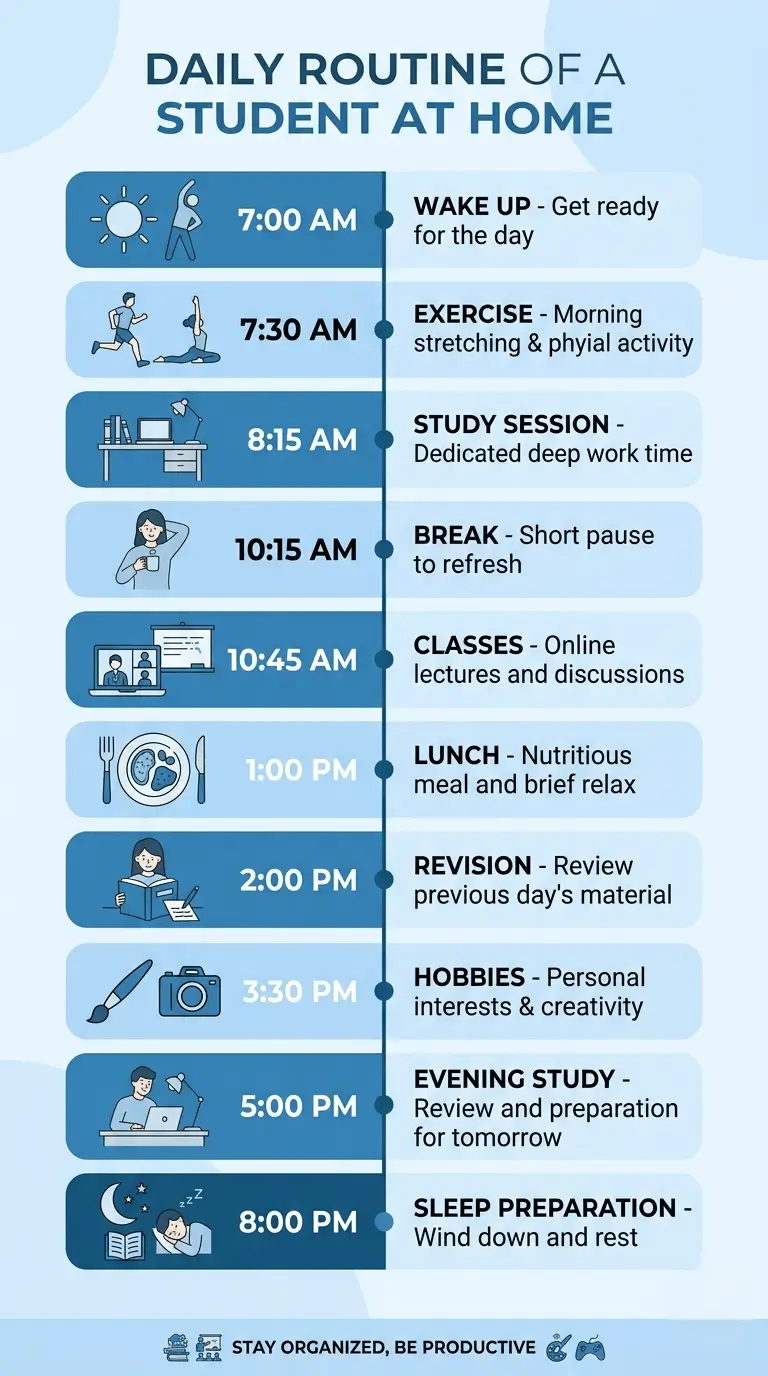
A daily routine of a student timetable should include study sessions, breaks, exercise, and proper sleep. Students can adjust schedules depending on their age, workload, and academic level.
Example Daily Routine of a Student at Home
| Time | Activity | Purpose |
|---|---|---|
| 6:30 AM | Wake up and hydrate | Increase energy and alertness |
| 7:00 AM | Exercise or stretching | Improve focus and mood |
| 8:00 AM | Study session | Deep concentration time |
| 10:00 AM | Short break | Mental recovery |
| 10:30 AM | Classes or assignments | Academic productivity |
| 1:00 PM | Lunch and relaxation | Stress reduction |
| 2:00 PM | Revision or practice | Memory retention |
| 4:00 PM | Hobby or outdoor activity | Mental balance |
| 6:00 PM | Light study session | Reinforcement learning |
| 9:30 PM | Sleep preparation | Better sleep quality |
This daily routine of a student with time example shows how balanced schedules improve productivity while avoiding burnout. A 24 hour daily routine for students should include enough sleep, focused study sessions, and time for recovery.
Morning Routine Habits That Help Students Stay Productive
Benefits of Waking Up Early
Waking up early helps students study in quieter environments with fewer distractions. Morning hours often improve concentration because the mind feels more refreshed and mentally clear.
Benefits include:
- Reduced distractions
- Better mental freshness
- Improved discipline
- More productive study hours
Students do not need extreme routines like waking up at 4 AM to become successful. Consistency and adequate sleep are more important than following unrealistic productivity trends.
Healthy Habits Before Studying
Healthy morning habits improve learning performance because physical health directly affects brain function.
Helpful habits include:
- Drinking water after waking up
- Light exercise or stretching
- Meditation or breathing exercises
- Journaling
- Eating a healthy breakfast
These habits improve focus, mood, and energy levels throughout the day.
Study Routine Strategies That Actually Work
Time Blocking vs Flexible Scheduling
| Time Blocking | Flexible Scheduling |
|---|---|
| Best for disciplined students | Best for unpredictable days |
| Structured study hours | Adjustable study periods |
| Improves consistency | Reduces pressure |
| Requires planning | Easier for beginners |
Different productivity methods work for different students. Some students prefer highly structured schedules, while others perform better with flexible systems.
Personalized scheduling improves long-term consistency because students can adapt routines to their lifestyle and workload.
Consistency vs Intensity in Study Routines
| Consistency | Intensity |
|---|---|
| Builds long-term habits | Often causes burnout |
| Easier to maintain | Hard to sustain |
| Improves gradual progress | Creates pressure |
| Better for discipline | Depends on motivation |
Consistency is more effective than occasional extreme study sessions because habits improve through repetition.
Small daily study sessions are easier to maintain and usually produce better long-term academic results.
Common Mistakes Students Make in Their Daily Routine
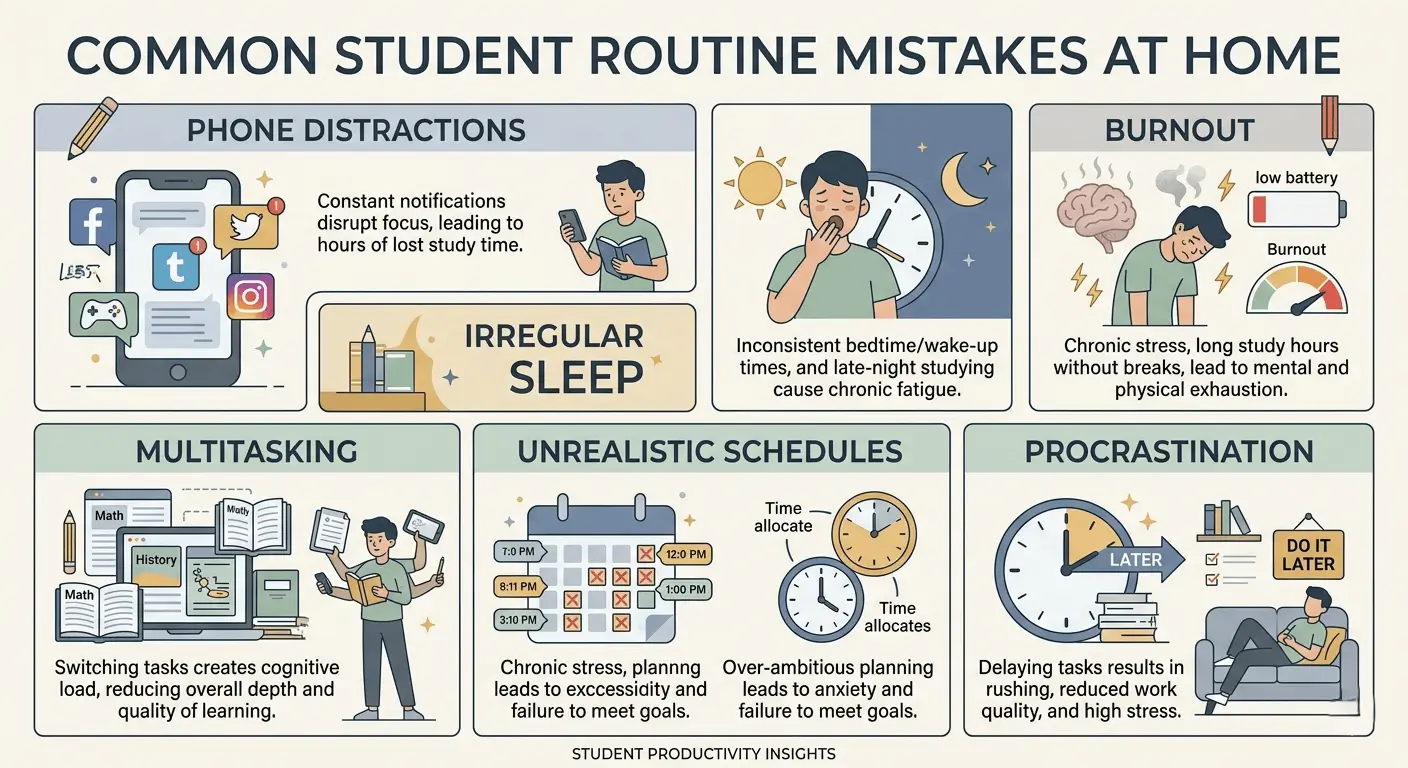
Creating Unrealistic Timetables
Many students create schedules filled with nonstop study sessions and unrealistic expectations.
Common problems include:
- Overplanning
- Perfectionism
- Lack of flexibility
- Mental exhaustion
Strict schedules often fail because they leave no room for unexpected situations or recovery time.
Ignoring Sleep and Mental Health
Ignoring sleep and mental health reduces academic performance significantly.
Sleep deprivation can cause:
- Poor concentration
- Reduced memory retention
- Emotional instability
- Low productivity
Students also experience higher stress and emotional exhaustion when they ignore recovery time.
Depending Only on Motivation
Motivation is temporary and changes depending on emotions, stress, and environment.
Students who rely only on motivation often struggle with consistency because motivation naturally decreases over time.
Routines and habits reduce emotional decision-making by making productive actions automatic.
Motivation vs Discipline for Students
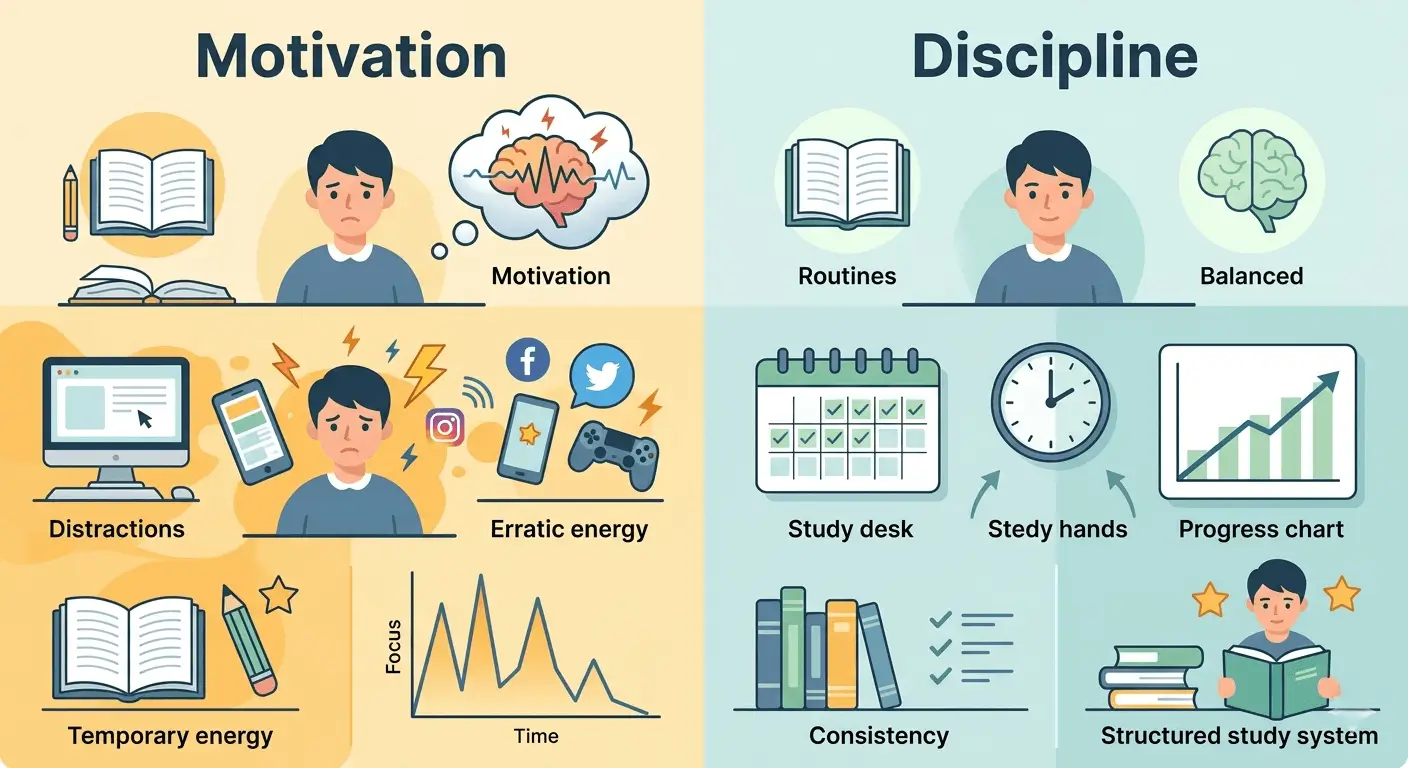
| Motivation | Discipline |
|---|---|
| Temporary emotional drive | Consistent action system |
| Changes daily | Stable over time |
| Depends on feelings | Depends on habits |
| Hard to maintain long-term | Creates sustainable success |
Disciplined routines help students continue working even when motivation disappears. Students who build strong habits rely less on emotional energy and more on consistent systems.
Identity-based habits are especially effective because students begin to see themselves as disciplined learners. This mindset increases long-term consistency.
Students who struggle with consistency can benefit from learning structured systems that work even without emotional drive, such as detailed methods in how to build discipline without motivation.
How Students Can Stay Consistent With Their Routine
Use Habit Tracking and Small Wins
Habit tracking improves consistency by creating visual progress.
Helpful tracking methods include:
- Checklists
- Calendars
- Habit-tracking apps
- Progress journals
Small wins activate dopamine reward systems, which increase motivation and build momentum.
Along with tracking habits, students can also improve reflection and self-awareness by using structured writing methods like how to journal for self-growth, which helps reinforce daily discipline.
Reduce Distractions at Home
Students can improve focus by controlling their environment.
Helpful strategies include:
- Keeping phones away during study sessions
- Limiting social media use
- Creating a dedicated study space
- Using website blockers
Digital discipline is important because constant notifications fragment attention and reduce concentration.
Recover Quickly After Missing a Day
Students should avoid guilt spirals after missing a day of their routine.
Effective students focus on:
- Restarting quickly
- Progress over perfection
- Long-term consistency
Missing one day is not a failure. Consistency improves when students recover quickly instead of quitting completely.
Mental and Behavioral Challenges Students Face at Home
Why Students Procrastinate
Students procrastinate because of:
- Fear of failure
- Feeling overwhelmed
- Lack of clarity
- Low energy levels
Large tasks often create mental resistance. Breaking work into smaller steps reduces overwhelm and makes tasks easier to begin.
Burnout From Overstudying
Burnout happens when students study excessively without enough rest and recovery.
Common causes include:
- Unrealistic expectations
- Constant pressure
- Lack of breaks
- Comparing productivity with others
Balanced routines reduce stress and improve long-term performance.
Overthinking and Lack of Focus
Overthinking creates mental clutter and reduces concentration.
Students often struggle with:
- Anxiety
- Decision fatigue
- Attention fragmentation
- Excessive multitasking
Clear routines simplify decision-making and improve mental clarity.
Daily Routine Examples for Different Types of Students
Daily Routine of a School Student
School students need routines that balance:
- Homework
- Playtime
- Sleep
- Family time
Consistent bedtime habits are especially important for younger students because sleep strongly affects learning and emotional regulation.
Daily Routine of a University Student
University students usually manage more independent schedules and flexible workloads.
Helpful productivity systems include:
- Time blocking
- Weekly planning
- Deep work sessions
- Digital calendars
University students often need stronger self-discipline because they have fewer external restrictions.
Beginner-Friendly Routine for Students
Beginners should focus on simple routines instead of making drastic lifestyle changes.
Good starting habits include:
- Fixed wake-up times
- One focused study session daily
- Reduced phone use
- Consistent sleep schedules
Small manageable changes improve long-term consistency.
What Actually Works for Building Better Student Habits
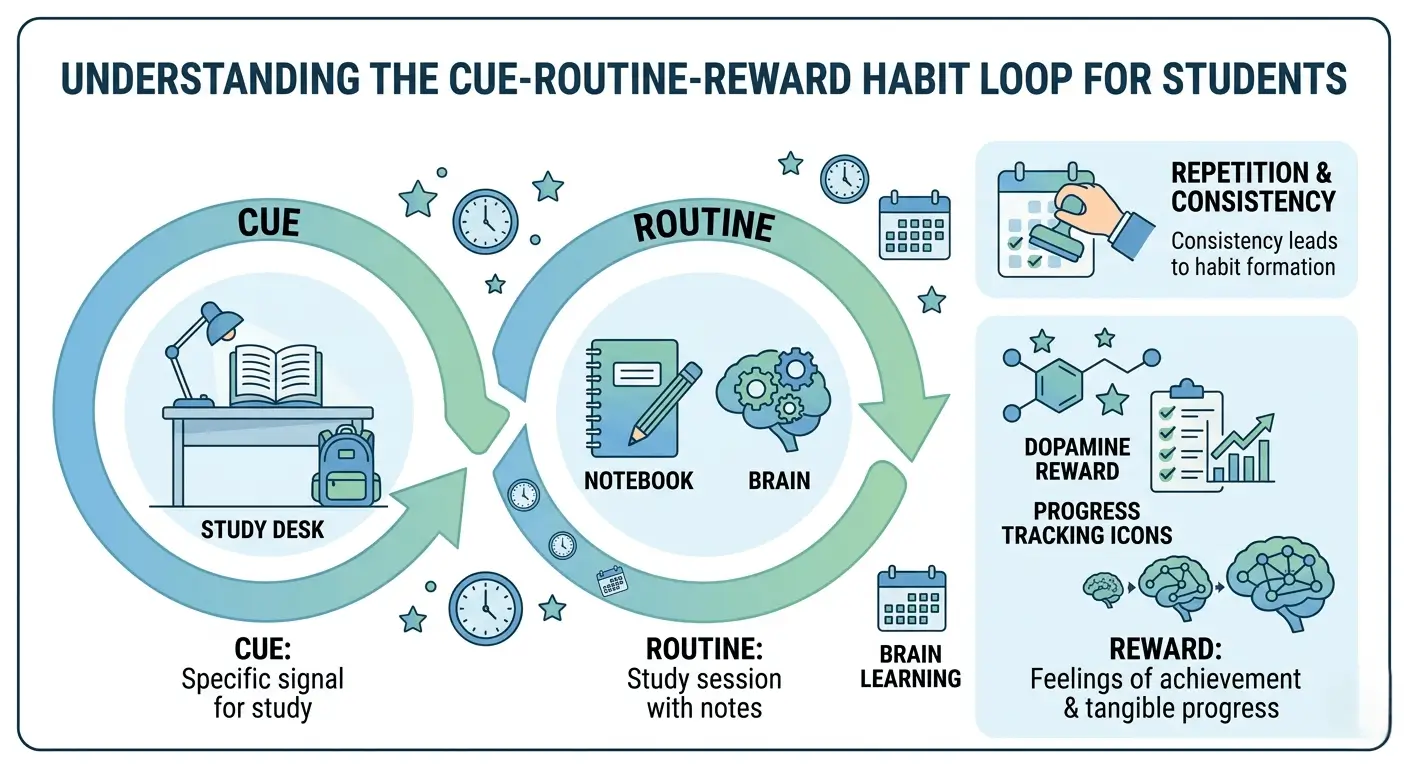
Science-Backed Habit Building Techniques
Behavioral psychology explains that habits follow a cue-routine-reward loop.
Examples include:
- Cue: Sitting at a study desk
- Routine: Starting focused study work
- Reward: Taking a short break or tracking progress
Environment design also improves habit consistency. Clean and distraction-free spaces support better concentration.
Repetition strengthens habits over time by reinforcing neural pathways in the brain.
Sustainable Habits vs Extreme Productivity
Sustainable habits support long-term success, while toxic productivity often causes burnout and stress.
Balanced routines include:
- Proper sleep
- Regular breaks
- Realistic expectations
- Mental recovery time
Long-term academic success depends more on consistency and balance than extreme productivity.
Common Myths About Student Productivity
Many productivity myths are misleading and unrealistic.
Common myths include:
- Studying longer means studying better
- Waking up at 4 AM guarantees success
- Motivation alone creates discipline
Effective productivity depends more on focused work, healthy routines, and consistent habits.
Conclusion
A daily routine of a student at home improves focus, productivity, discipline, and mental well-being by creating structure and reducing distractions. Students perform better when they follow realistic routines that balance study, rest, exercise, and personal development. Consistency matters more than perfection because small daily habits create sustainable long-term improvement. Instead of chasing extreme productivity, students should focus on manageable routines that support both academic success and mental health. Starting small and improving gradually is the most effective way to build a good routine for students.
FAQs
Why do students struggle to follow a daily routine?
Students often struggle because of distractions, unrealistic schedules, lack of sleep, and depending too much on motivation instead of habits.
How do I make a good routine for students at home?
Start with fixed activities like sleep and study hours, then gradually build realistic habits that are easy to maintain consistently.
What is the best study time for students at home?
The best study time depends on individual energy levels, but many students focus better during quiet morning hours with fewer distractions.
How can students stay disciplined every day?
Students stay disciplined by reducing distractions, tracking habits, building consistent systems, and focusing on progress instead of perfection.
Why do students lose motivation quickly?
Motivation changes because emotions, stress, and environment constantly affect energy levels. Routines and habits are more reliable than temporary motivation.
How many hours should a student study daily?
Study hours depend on academic level and goals, but focused study sessions with regular breaks are usually more effective than long unproductive hours.
What should students avoid in their daily routine?
Students should avoid irregular sleep, excessive phone use, multitasking, unrealistic study schedules, and ignoring mental health.