
Introduction
The Batman mindset is a practical framework built on discipline, preparation, emotional control, strategic thinking, and continuous self-improvement — not an attempt to become a fictional vigilante. Many people misread Batman’s mindset as extreme willpower or physical perfection, but its real value lies in repeatable mental habits: staying calm under pressure, planning before acting, and treating failure as data rather than defeat. This is often described as a Batman brain — a way of thinking, not a costume. Understanding this distinction is the first step toward applying the mindset in a healthy, sustainable way.
Quick Summary
- Batman’s mindset is built on discipline, preparation, emotional control, and lifelong learning.
- Anyone can adopt many of Batman’s mental habits without copying fictional extremes.
- Mental resilience develops through consistent practice rather than motivation alone.
- Strategic thinking, self-awareness, and purposeful routines form the foundation of a Batman-inspired lifestyle.
- Healthy application requires balancing discipline with rest, connection, and self-compassion.
What Is the Batman Mindset?
The Batman mindset is a personal-development philosophy that emphasizes discipline, preparation, emotional regulation, and strategic decision-making as tools for handling adversity. Unlike superheroes defined by inherited powers, Batman’s identity is built entirely through training, planning, and repeated effort, which is why his character resonates with readers pursuing self-improvement. Batman’s mindset treats setbacks as information to analyze rather than threats to avoid, and this orientation shapes how decisions, habits, and long-term goals are approached. The Batman brain concept extends this further, describing a pattern of observation and calm analysis that can be trained like any cognitive skill.
Why Batman Is Considered a Symbol of Mental Strength
- Psychological resilience: He processes loss and adversity without becoming paralyzed by it.
- High standards: He holds himself to consistent, self-imposed performance expectations.
- Personal responsibility: He does not rely on external rescue or luck.
- Adaptability: He adjusts strategy quickly when circumstances change.
- Self-discipline over natural talent: His competence comes from training, not innate ability.
The Core Principles Behind Batman’s Mentality
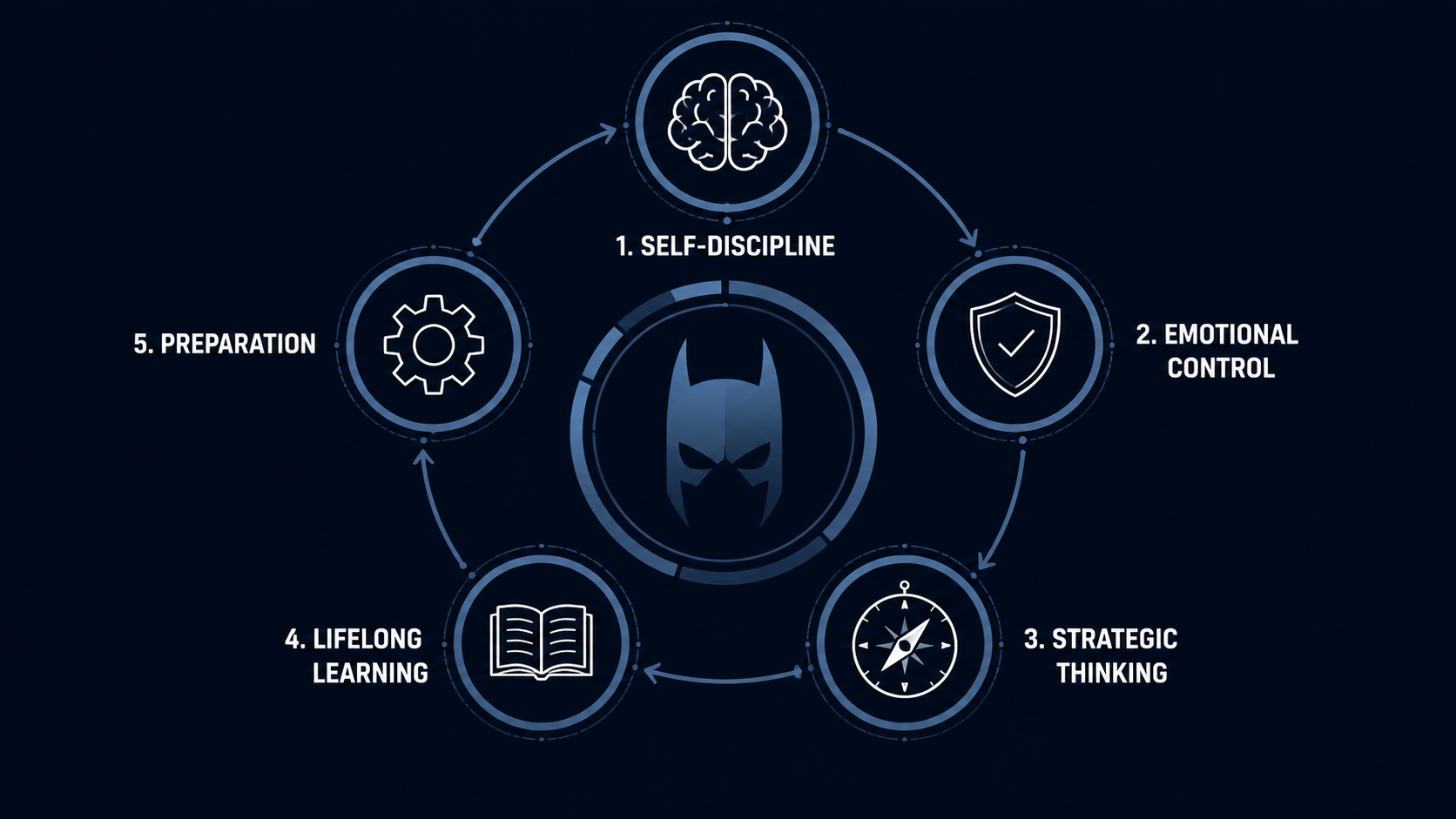
Self-Discipline Over Motivation
Discipline means acting according to a plan regardless of mood. Motivation is unreliable because it fluctuates with energy and circumstance, while discipline relies on structure and habit to keep progress consistent. Discipline relies on structure and habit rather than mood. In fact, self-discipline is a skill that can be trained deliberately, much like memory or focus.
Emotional Control During Pressure
Emotional control is the ability to notice a strong emotional reaction and choose a response rather than react impulsively. This is closely related to what psychologists call emotional regulation, a core component of resilience research.
Strategic Thinking Before Action
Strategic thinking involves evaluating options, anticipating consequences, and choosing the most effective response before acting, rather than reacting on impulse.
Lifelong Learning and Continuous Improvement
Continuous improvement means treating skill-building as an ongoing process rather than a fixed destination, with regular review of what is working and what needs adjustment.
Preparation Instead of Hope
Preparation replaces uncertainty with readiness. Instead of hoping a situation resolves favorably, the focus shifts to planning for multiple likely outcomes.
Daily behaviors that reflect these principles include structured routines, deliberate skill practice, and scheduled reflection. Mental habits include reframing setbacks and separating facts from emotional interpretation. Decision-making patterns favor evaluating evidence over acting on impulse.
How to Be Like Batman Mentally
Learning how to be like Batman mentally starts with building consistent habits around toughness, critical thinking, emotional intelligence, self-control, and purpose rather than chasing intensity for its own sake.
Build Mental Toughness
Mental toughness develops through repeated exposure to manageable discomfort — such as consistent exercise, cold exposure in moderation, or disciplined scheduling — combined with reflection on how those challenges were handled.
Train Critical Thinking
Critical thinking improves through deliberate practice: analyzing decisions after the fact, questioning assumptions, and studying cause-and-effect in real situations rather than relying on gut reaction alone.
Practice Emotional Intelligence
Emotional intelligence involves recognizing emotions in yourself and others and using that awareness to guide behavior, a concept widely studied in behavioral psychology.
Develop Self-Control
Self-control strengthens through small, repeated exercises in delayed gratification, such as sticking to a schedule even when an easier option is available.
Create a Mission-Driven Mindset
A mission-driven mindset connects daily actions to a larger, personally meaningful purpose, which research links to greater persistence and life satisfaction.
Practical daily habits: structured mornings, focused work blocks, and physical training. Weekly mental exercises: reviewing decisions, journaling setbacks, and planning the week ahead. Reflection techniques: end-of-day reviews and identifying one lesson from each significant challenge.
What Does the “Batman Brain” Really Mean?
The term Batman brain refers to a trained cognitive style focused on observation, pattern recognition, and calm analysis under stress, rather than any literal neurological trait.
Observation Skills
Noticing details in an environment or conversation that others overlook, developed through deliberate attention practice.
Pattern Recognition
Identifying recurring patterns in behavior or data to predict outcomes and respond proactively.
Memory Development
Strengthening recall through techniques such as spaced repetition, note-taking, and structured review.
Analytical Thinking
Breaking complex problems into smaller components before deciding on a course of action.
Calm Decision-Making Under Stress
Maintaining clear judgment during high-pressure situations by relying on rehearsed routines rather than improvisation alone.
How to Live Like Batman Without Becoming Extreme
Learning how to live like Batman in a sustainable way means applying discipline to everyday life without sacrificing health or relationships.
Physical Health and Mental Performance
Regular exercise, adequate sleep, and balanced nutrition directly support cognitive performance, emotional regulation, and stress resilience.
Building Productive Daily Routines
Consistent routines reduce decision fatigue and create the structure needed for long-term discipline.
Managing Time Like a Strategist
Prioritizing tasks by impact, and planning around energy levels rather than the clock alone, improves both output and focus.
Living With Purpose Instead of Perfection
Progress-oriented goals sustain motivation better than perfection-oriented standards, which tend to increase burnout risk.
Batman Mindset vs Toxic Perfectionism
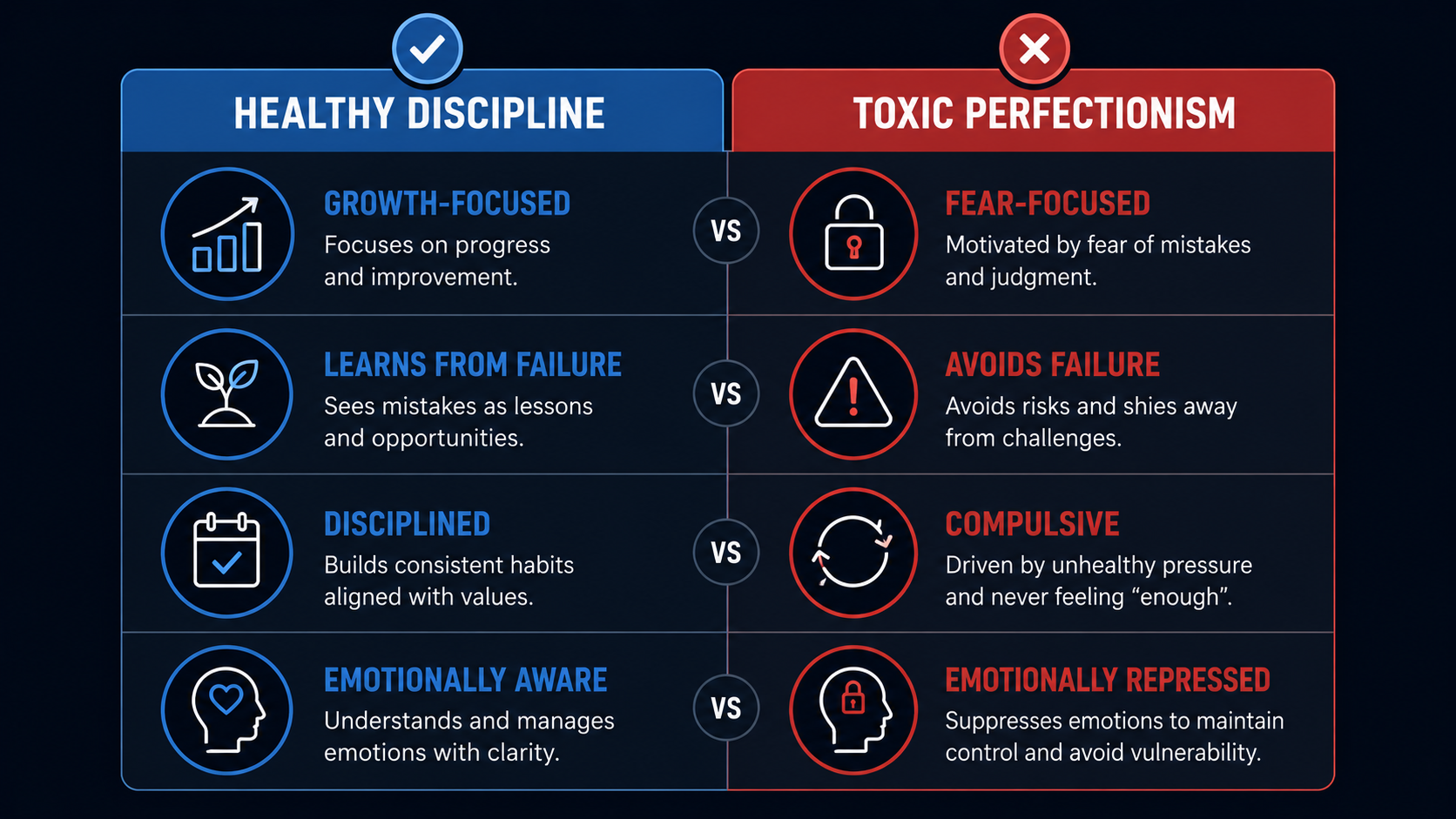
A healthy Batman-inspired mindset must be distinguished from toxic perfectionism, which shares surface traits but produces very different outcomes.
Healthy Discipline vs Obsession
Discipline supports long-term goals; obsession disregards wellbeing to meet rigid, often unrealistic standards.
Confidence vs Ego
Confidence is grounded in demonstrated competence; ego requires constant external validation.
Independence vs Isolation
Independence means functioning well without relying on others; isolation means avoiding connection altogether, which increases psychological risk.
Resilience vs Emotional Suppression
Resilience processes and learns from difficult emotions; suppression avoids them, often leading to later emotional or physical strain.
| Batman Mindset | Toxic Perfectionism |
|---|---|
| Growth-focused | Fear-focused |
| Learns from failure | Avoids failure |
| Disciplined | Compulsive |
| Emotionally aware | Emotionally repressed |
Lessons We Can Learn From Batman’s Character
Responsibility
Taking ownership of outcomes rather than assigning blame builds long-term credibility and trust.
Integrity
Consistent values across public and private behavior create a stable personal identity.
Courage
Acting despite fear, rather than waiting for fear to disappear, is a trainable behavioral pattern.
Consistency
Reliable, repeated effort compounds over time into measurable skill and reputation.
Leadership Through Example
Modeling desired behavior is generally more effective at influencing others than instruction alone.
Common Mistakes People Make When Copying Batman
Confusing Isolation With Strength
Withdrawing from supportive relationships is often mistaken for independence, but it typically increases stress and reduces long-term resilience.
Ignoring Mental Health
Discipline should not replace addressing genuine mental health needs, including seeking professional support when necessary.
Chasing Perfection
Perfectionism can stall progress by making every imperfect attempt feel like failure.
Overworking Without Recovery
Skipping rest and recovery undermines the physical and cognitive performance the mindset is meant to support.
Copying the Character Instead of the Principles
Focusing on surface-level imitation — gear, aesthetics, or extreme behavior — misses the underlying principles of preparation and discipline.
Batman Mindset Compared With Other Growth Mindsets
Batman vs Stoic Mindset
Both emphasize emotional control, but Stoicism centers on accepting what cannot be controlled, while the Batman mindset emphasizes proactive preparation to influence outcomes.
Batman vs Growth Mindset
The psychological growth mindset focuses on believing abilities can improve through effort; the Batman mindset applies this belief specifically through structured training and strategic planning.
Batman vs Warrior Mindset
The warrior mindset emphasizes confrontation and toughness; the Batman mindset places equal weight on strategy and restraint. The warrior mindset emphasizes confrontation and toughness; the Batman mindset places equal weight on strategy and restraint. If you want to explore that comparison further, see our full breakdown of the warrior mindset and how it differs from strategic discipline
Batman vs Monk Mindset
The monk mindset prioritizes simplicity and inner stillness; the Batman mindset channels discipline toward external goals and active problem-solving.
| Comparison Factor | Batman Mindset | Related Mindsets |
|---|---|---|
| Focus | Strategy and preparation | Varies (acceptance, toughness, stillness) |
| Emotional control | Regulated, not suppressed | Often shared trait |
| Discipline | High, structured | Varies in intensity |
| Purpose | Mission-driven | Often self-focused |
| Decision-making | Analytical | Varies by philosophy |
| Adaptability | High | Varies |
Difficulty and Time Investment
Building a Batman-inspired mindset is beginner-accessible but requires sustained effort over months rather than days. Early stages mainly involve establishing basic routines around sleep, exercise, and reflection, which most people can start immediately. Long-term commitment involves refining decision-making and emotional regulation skills, which develop gradually with practice. Lifestyle changes required include structured scheduling and consistent self-review, and individual personality differences affect how quickly habits stabilize. Consistency matters more than intensity, since irregular high-effort bursts are less effective than steady, moderate daily practice.
Results Timeline
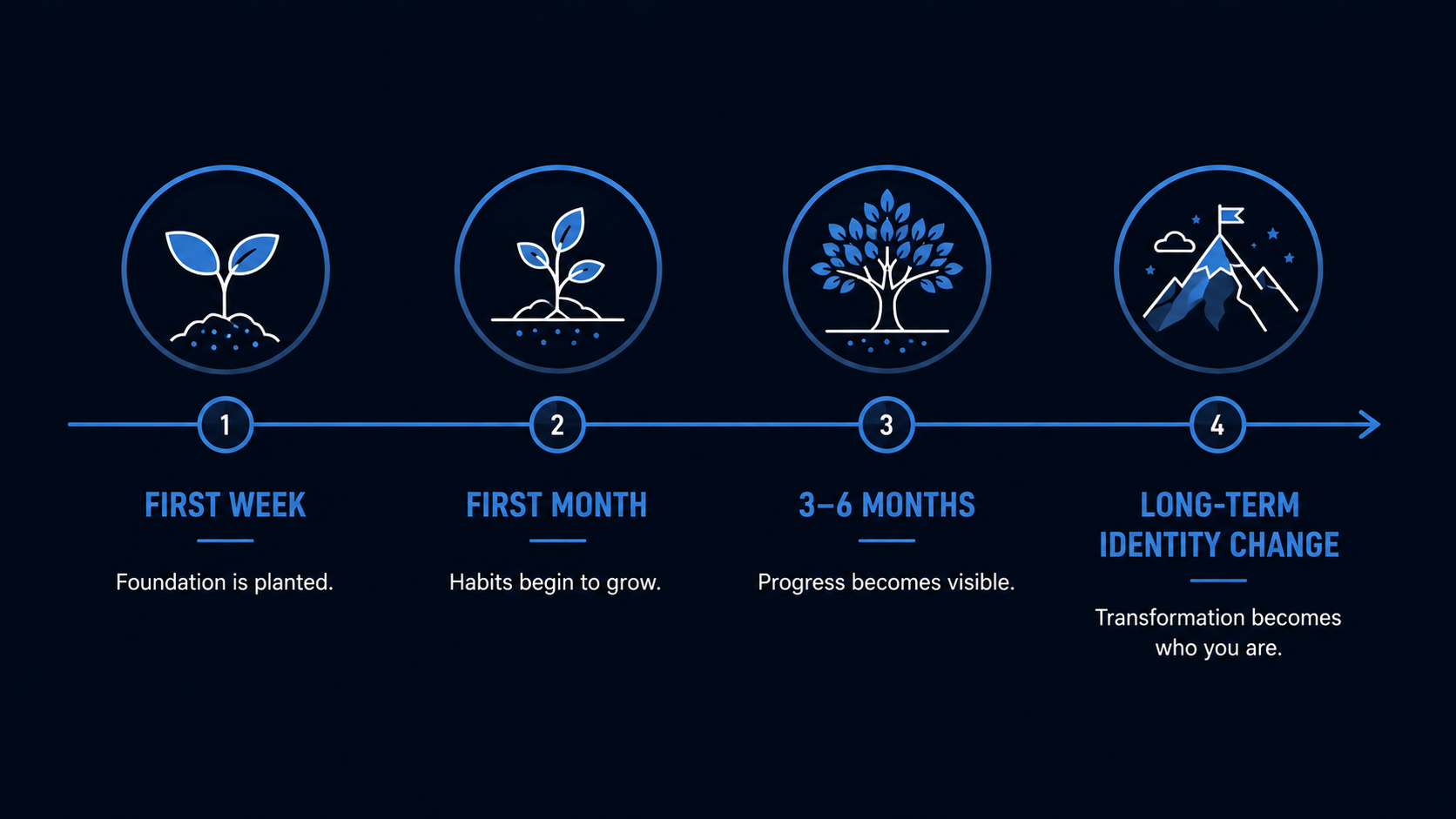
First Week
Initial structure and awareness improve, though behavioral change is minimal.
First Month
Routines begin to feel more automatic, and early improvements in focus and emotional regulation are commonly reported.
Three to Six Months
Noticeable gains in discipline, decision-making, and stress tolerance typically emerge with consistent practice.
Long-Term Identity Change
Over a year or more, habits shift from effortful practice to a stable part of personal identity.
Practice Guide: Building Your Own Batman Mindset
Morning Mental Routine
Start the day with a brief planning session and a physical activity to prime focus and energy. Because motivation naturally fluctuates, the most reliable approach is learning how to build discipline without motivation through fixed routines rather than mood-dependent effort.
Learning Routine
Dedicate consistent time to reading or skill-building relevant to personal or professional goals.
Fitness and Recovery
Balance regular exercise with adequate sleep and rest days to sustain long-term performance.
Reflection and Journaling
Record daily decisions, outcomes, and lessons to reinforce learning and self-awareness.
Tracking Personal Growth
Use a simple habit tracker or journal to monitor consistency over weeks and months.
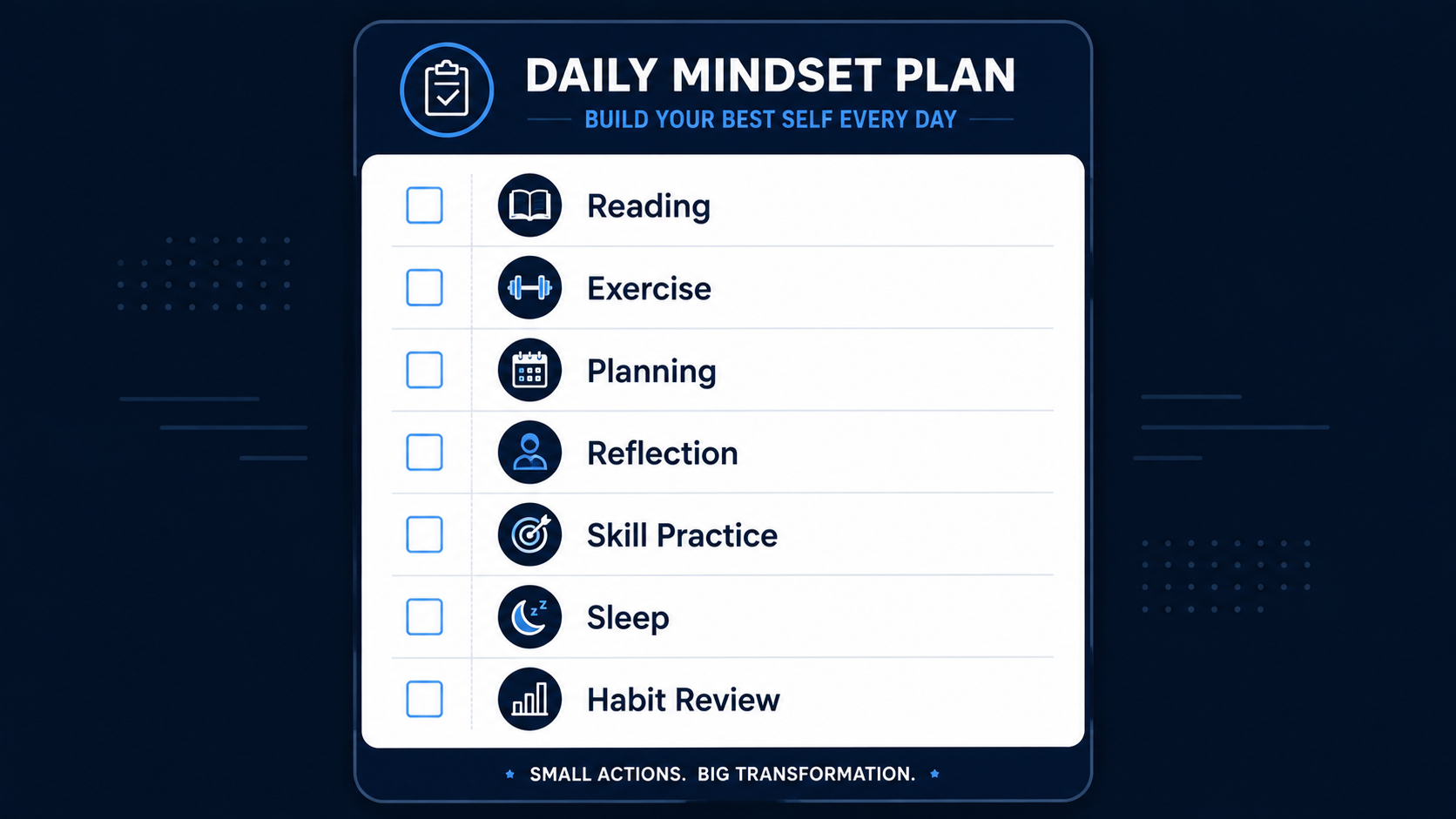
Daily checklist:
- Reading
- Exercise
- Planning
- Reflection
- Skill practice
- Sleep
- Habit review
Common Challenges and How to Overcome Them
Losing Motivation
This occurs when routines rely on mood rather than structure. The solution is scheduling habits at fixed times regardless of motivation level.
Burnout From Overtraining
Pushing without recovery depletes physical and cognitive resources. Scheduled rest and workload adjustment prevent this.
Negative Self-Talk
Harsh internal dialogue undermines confidence. Reframing setbacks as data rather than failure reduces its impact.
Feeling No Progress
Progress can be difficult to notice day-to-day. Tracking metrics over weeks, not days, makes gains more visible.
Comparing Yourself to Fiction
Measuring personal progress against a fictional standard sets unrealistic benchmarks; comparing current progress to past personal performance is more accurate and motivating.
Batman in Books, Psychology, and Popular Culture
Books Inspired by Batman’s Philosophy
Several nonfiction titles use Batman’s character as a framework for discussing discipline, resilience, and self-improvement principles, translating fictional traits into practical exercises.
Psychological Analyses of Batman
Academic and popular psychology writing has examined Batman’s character through lenses such as trauma processing, resilience, and moral reasoning, offering structured ways to interpret his behavior.
What Fiction Can Teach About Real-Life Character Development
Fictional characters can serve as simplified models for exploring real psychological concepts, provided the takeaways are translated into practical, sustainable habits rather than literal imitation.
Frequently Misunderstood Batman Quotes and Their Meaning
Context Matters More Than Individual Quotes
Lines from Batman films and comics are often shared without their surrounding context, which can distort their intended meaning. A statement about strength, fear, or pain typically reflects a specific narrative situation rather than a universal life rule.
Turning Fictional Dialogue Into Practical Life Lessons
Rather than treating isolated lines as literal instructions, it is more useful to extract the underlying theme — such as resilience after failure or the value of preparation — and apply that theme through structured, real-world habits.
Conclusion
The Batman mindset is ultimately about discipline, preparation, emotional control, and lifelong growth rather than imitating a fictional character’s extremes. By focusing on structured routines, strategic thinking, and honest self-reflection, anyone can build many of the mental habits associated with Batman’s character in a healthy, sustainable way. The most effective approach applies the underlying principles — responsibility, consistency, and preparation — rather than copying surface-level behavior. Readers who prioritize consistent practice over short bursts of intensity are most likely to see lasting change in resilience and mental strength.
Frequently Asked Questions
What is the Batman mindset?
The Batman mindset is a self-improvement framework centered on discipline, preparation, emotional control, and strategic thinking, inspired by Batman’s character traits rather than his fictional abilities.
How can I be like Batman mentally in real life?
Build mental toughness through consistent routines, train critical thinking through reflection, and practice emotional regulation under manageable stress rather than attempting extreme lifestyle changes all at once.
Is the Batman mindset healthy?
It can be healthy when it emphasizes balanced discipline, recovery, and emotional awareness, but it becomes unhealthy if it turns into isolation, perfectionism, or ignoring mental health needs.
What habits make someone think like Batman?
Key habits include structured daily routines, deliberate skill practice, regular reflection or journaling, and strategic planning before major decisions.
Can anyone develop a Batman-like mindset?
Yes. The core skills — discipline, emotional regulation, and strategic thinking — are learnable through consistent practice rather than requiring any special innate trait.
Does Batman’s mindset relate to psychology?
Yes. Concepts such as resilience, emotional regulation, and growth-oriented thinking are established areas of psychological research that align closely with the traits attributed to Batman’s character.
Is discipline more important than motivation in the Batman mindset?
Yes. Discipline provides the consistency needed for long-term progress, while motivation is inherently variable and unreliable as a sole driver of habit formation.