

Introduction
Changing your mindset books are resources designed to help readers replace limiting beliefs with healthier, more productive thinking patterns. They build resilience, strengthen discipline, and support long-term personal growth. A mindset is the collection of beliefs and attitudes that shapes how a person interprets events, makes decisions, and responds to challenges. Because mindset influences habits, learning, relationships, and career outcomes, changing it can create measurable improvements across nearly every area of life. Not every mindset book serves the same purpose — some focus on confidence, others on productivity, success, study habits, spirituality, or health, so the right choice depends on individual goals.
Quick Summary
- Mindset books teach practical ways to replace limiting beliefs with productive thinking.
- Different books focus on growth mindset, discipline, success, habits, resilience, or specific life challenges.
- The best mindset book depends on your personal goals rather than popularity alone.
- Applying lessons consistently matters more than reading more books.
What Are Changing Your Mindset Books?
Changing your mindset books are nonfiction works that teach readers how thought patterns, beliefs, and self-perception influence behavior and outcomes. They differ from general motivational books because most rely on psychological research, behavioral science, or documented case studies rather than purely inspirational storytelling.
Books about mindset typically explain how thinking styles form, why certain beliefs become self-limiting, and what specific practices can shift those beliefs over time. The best mindset books combine theory with actionable exercises, distinguishing them from content that offers encouragement without a clear method for change.
These books influence four key areas:
- Thinking — how situations are interpreted
- Behavior — the actions taken in response to challenges
- Emotions — how setbacks and stress are processed
- Decision-making — the choices made under pressure or uncertainty
Why Mindset Matters in Personal Growth
Fixed Mindset vs Growth Mindset
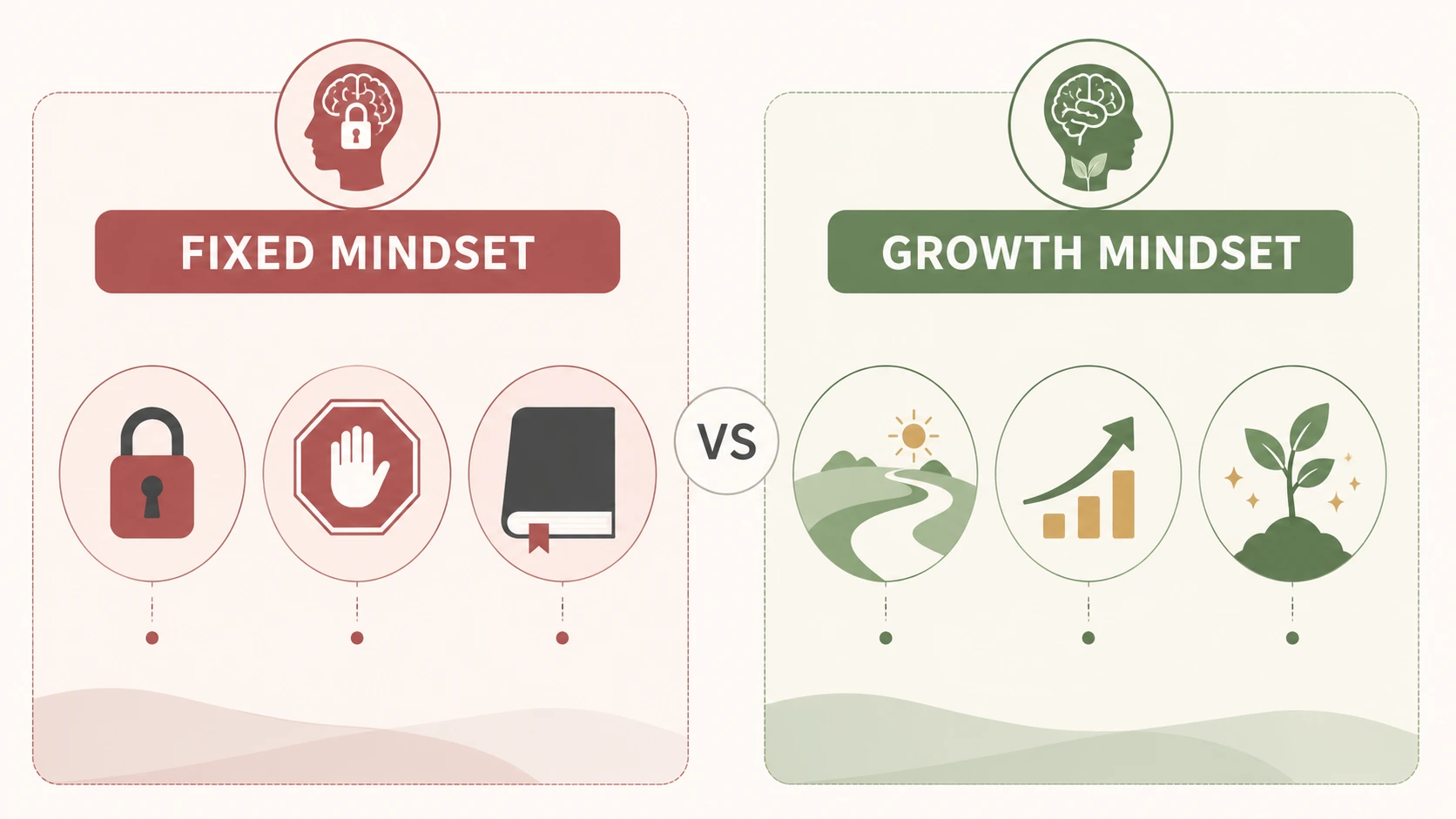
A fixed mindset assumes abilities and intelligence are static traits, while a growth mindset treats them as skills that develop through effort and practice. People with a fixed mindset tend to avoid challenges to protect their self-image, while those with a growth mindset view difficulty as an opportunity to improve. For example, a student with a fixed mindset may quit after a poor grade, while a growth-mindset student adjusts study habits and tries again. Mindset directly affects outcomes across major life areas, which is exactly why growth mindset is important for long-term success.
How Your Mindset Shapes Success
Mindset directly affects outcomes across major life areas:
- Career — willingness to take on new responsibilities and learn new skills
- Education — persistence through difficult coursework
- Relationships — openness to feedback and conflict resolution
- Financial decisions — long-term planning versus impulsive spending
- Mental resilience — ability to recover from setbacks
Books on mindset and success, along with growth mindset books, focus heavily on these connections, showing readers how belief systems translate into real-world results.
How Mindset Books Help You Change Your Thinking
Replacing Limiting Beliefs
Mindset books identify common limiting beliefs — such as “I’m not good at this” — and provide reframing techniques to replace them with more accurate, constructive thoughts. Mindset books identify common limiting beliefs and provide reframing techniques — a core part of learning how to change your thoughts into more constructive patterns.
Building Better Habits
Many books connect mindset change directly to habit formation, showing how small, repeated actions reinforce new thought patterns over time.
Improving Self-Awareness
Reflection exercises help readers recognize automatic thoughts and thinking traps that previously went unnoticed.
Developing Emotional Resilience
Books teach coping strategies for setbacks, reducing the emotional impact of failure and criticism.
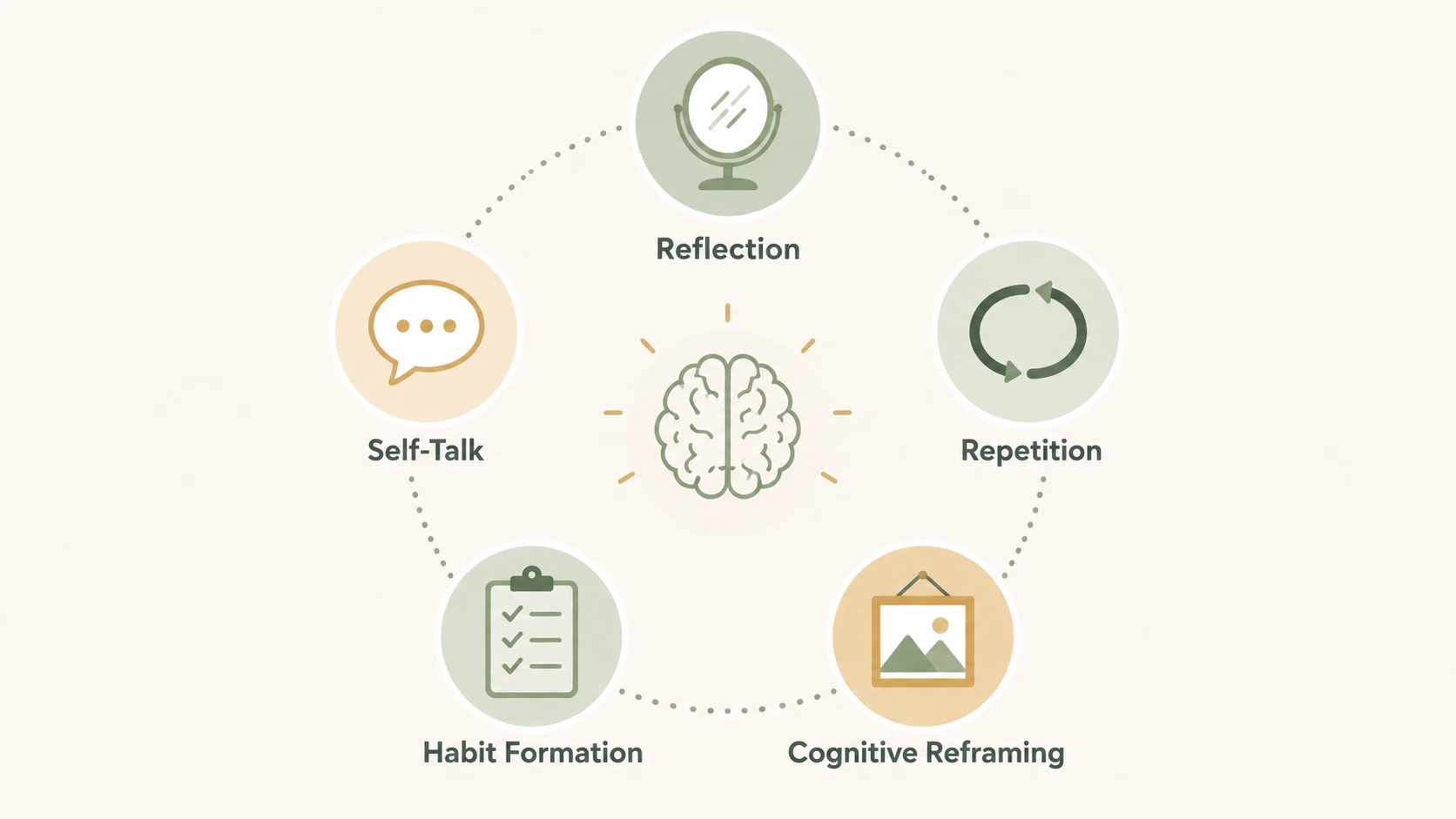
These outcomes rely on several psychological mechanisms:
- Reflection — reviewing thoughts and reactions to identify patterns
- Repetition — reinforcing new beliefs through consistent practice
- Cognitive reframing — reinterpreting a situation in a more constructive way
- Habit formation — turning intentional actions into automatic routines
- Self-talk — adjusting internal dialogue to support rather than undermine goals
Readers commonly report improved focus, reduced self-criticism, and greater consistency in pursuing goals after applying these techniques.
Best Changing Your Mindset Books Worth Reading
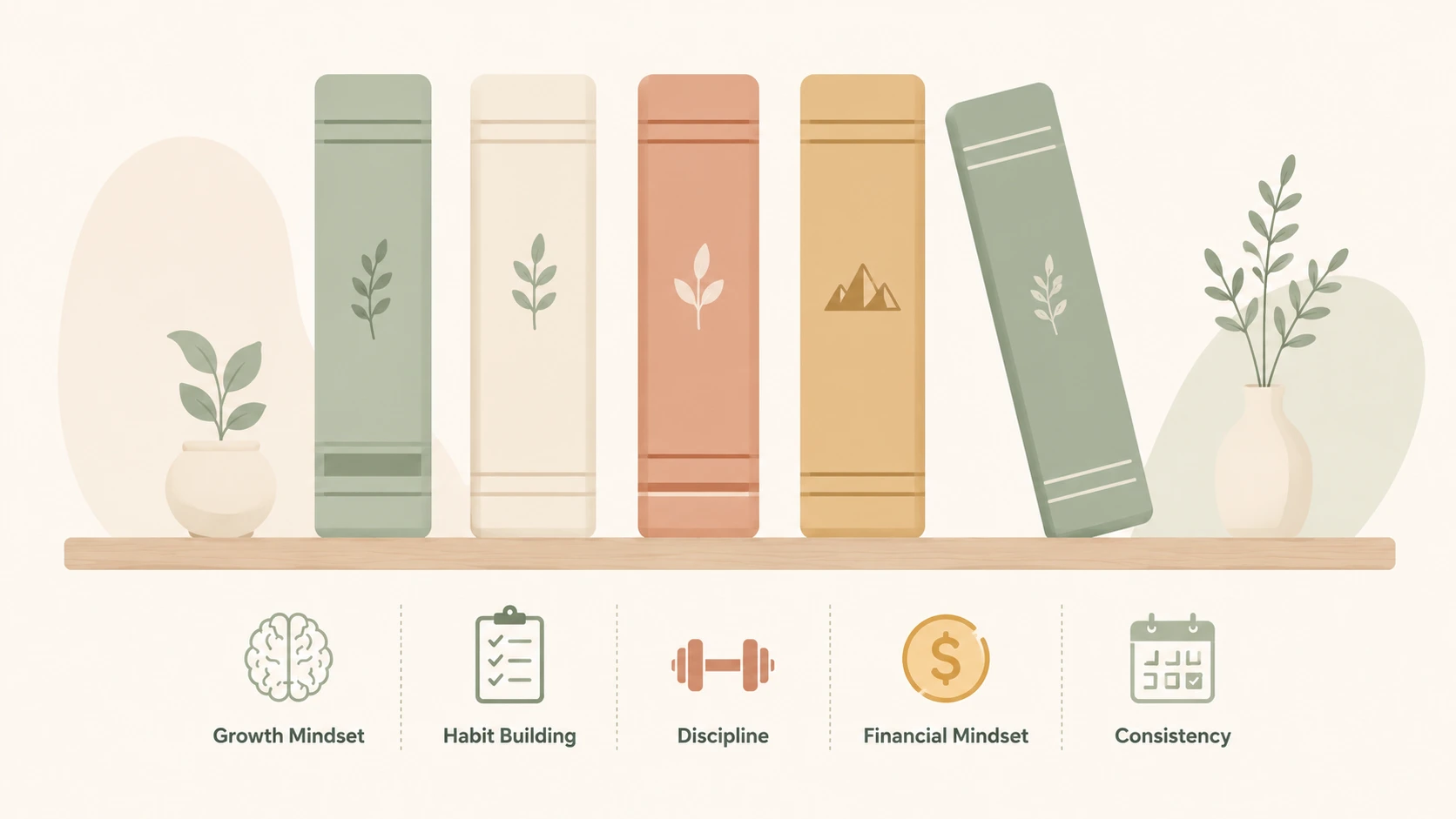
Before choosing a book, consider selection criteria such as the reader’s primary goal, preferred learning style (research-based versus story-driven), and current life stage.
| Book | Primary Focus | Best For | Difficulty |
|---|---|---|---|
| Mindset | Fixed vs. growth thinking | General readers, educators | Beginner |
| Atomic Habits | Habit-based change | Anyone building routines | Beginner |
| The 7 Habits of Highly Effective People | Character and effectiveness | Career and leadership growth | Intermediate |
| The Mountain Is You | Self-sabotage and healing | Emotional growth | Intermediate |
| The Power of Now | Present-moment awareness | Stress and anxiety reduction | Intermediate |
| The Four Agreements | Personal freedom principles | Beginners seeking simplicity | Beginner |
| Can’t Hurt Me | Mental toughness | Discipline and resilience | Advanced |
| Grit | Passion and perseverance | Long-term goal pursuit | Intermediate |
| The Psychology of Money | Mindset toward wealth | Financial decision-making | Beginner |
| The Slight Edge | Small daily choices | Consistency and habit-building | Beginner |
These titles regularly appear among the best changing your mindset books, best mindset books, and best books on mindset because they combine research, practical tools, and accessible writing.
Choosing the Right Mindset Book for Your Goals
For Personal Growth
Books like Mindset and The Four Agreements offer foundational frameworks for self-understanding.
For Career Success
The 7 Habits of Highly Effective People and Grit address professional discipline and long-term achievement.
For Building Discipline
Can’t Hurt Me and The Slight Edge focus on consistency and mental toughness, relevant to readers searching books on mindset and discipline.
For Confidence
Mindset and The Mountain Is You address self-perception and internal barriers.
For Students
Books emphasizing growth mindset and habit formation help readers looking into how to change your mindset to study more effectively.
For Better Relationships
The Four Agreements offers communication and boundary-setting principles applicable to personal relationships.
For Long-Term Habit Change
Atomic Habits and The Slight Edge provide structured systems for sustained behavior change.
Matching a book to a specific objective produces better results than selecting titles based on popularity alone.
Growth Mindset Books vs Success Mindset Books
Growth mindset books emphasize the process of learning and self-improvement, while success mindset books focus more directly on achieving specific outcomes.
| Growth Mindset | Success Mindset |
|---|---|
| Learning | Achievement |
| Skills | Results |
| Improvement | Performance |
| Persistence | Strategy |
Readers early in a personal development journey often benefit most from growth mindset books, since they build foundational thinking skills. Readers pursuing specific goals, such as career advancement or financial milestones, may benefit more from success-oriented material.
Specialized Mindset Books for Different Areas of Life
Books for Adults
Readers navigating career transitions, parenting, or major life changes often benefit from books addressing mature challenges such as identity shifts, long-term discipline, and emotional regulation — commonly searched as changing your mindset books for adults.
Christian Books About Mindset
Some readers prefer books that integrate faith-based principles with personal growth. Christian books on changing your mindset often draw on biblical teachings about renewal of thought and perseverance, without requiring formal theological study. These resources appeal to readers interested in changing your mindset in the bible from a practical, everyday application perspective.
Books About Changing Your Mindset Around Food
Books on changing your mindset about food address emotional eating, building sustainable healthy habits, and shifting from restrictive thinking toward long-term lifestyle balance rather than short-term dieting.
Can You Really Change Your Mindset?
Yes, mindset can change through consistent practice, repeated exposure to new thinking patterns, and supportive environmental conditions.
What Psychology Says
Psychological research on growth mindset shows that beliefs about ability are malleable and can shift through deliberate effort and constructive feedback.
What Neuroscience Says
Neuroplasticity — the brain’s ability to reorganize neural pathways — supports the idea that repeated thoughts and behaviors can create lasting changes in thinking patterns over time.
Factors That Influence Lasting Change
- Neuroplasticity — the brain’s capacity to adapt with repeated practice
- Habit formation — turning new beliefs into automatic routines
- Environment — surroundings that reinforce or undermine new thinking
- Repetition — consistent practice strengthens new mental patterns
- Identity-based change — aligning actions with a desired self-concept
These factors explain why questions like can you change your mindset and how to completely change your mindset consistently point to the same answer: change is possible, but it requires sustained effort rather than a single reading session.
How to Get the Most Value From Reading Mindset Books
Read Actively Instead of Passively
Take notes, highlight key concepts, and pause to reflect rather than reading straight through.
Apply One Lesson at a Time
Focus on implementing a single concept before moving to the next to avoid overwhelm.
Keep a Reflection Journal
Document insights and personal examples to reinforce learning. Document insights and personal examples using journal prompts for self growth to reinforce learning.
Review Key Concepts Regularly
Revisit notes or summaries periodically to strengthen retention.
Pair Reading With Real-Life Practice
Apply lessons to real situations immediately, since practical application accelerates lasting change more than reading alone.
Common Mistakes People Make When Reading Mindset Books
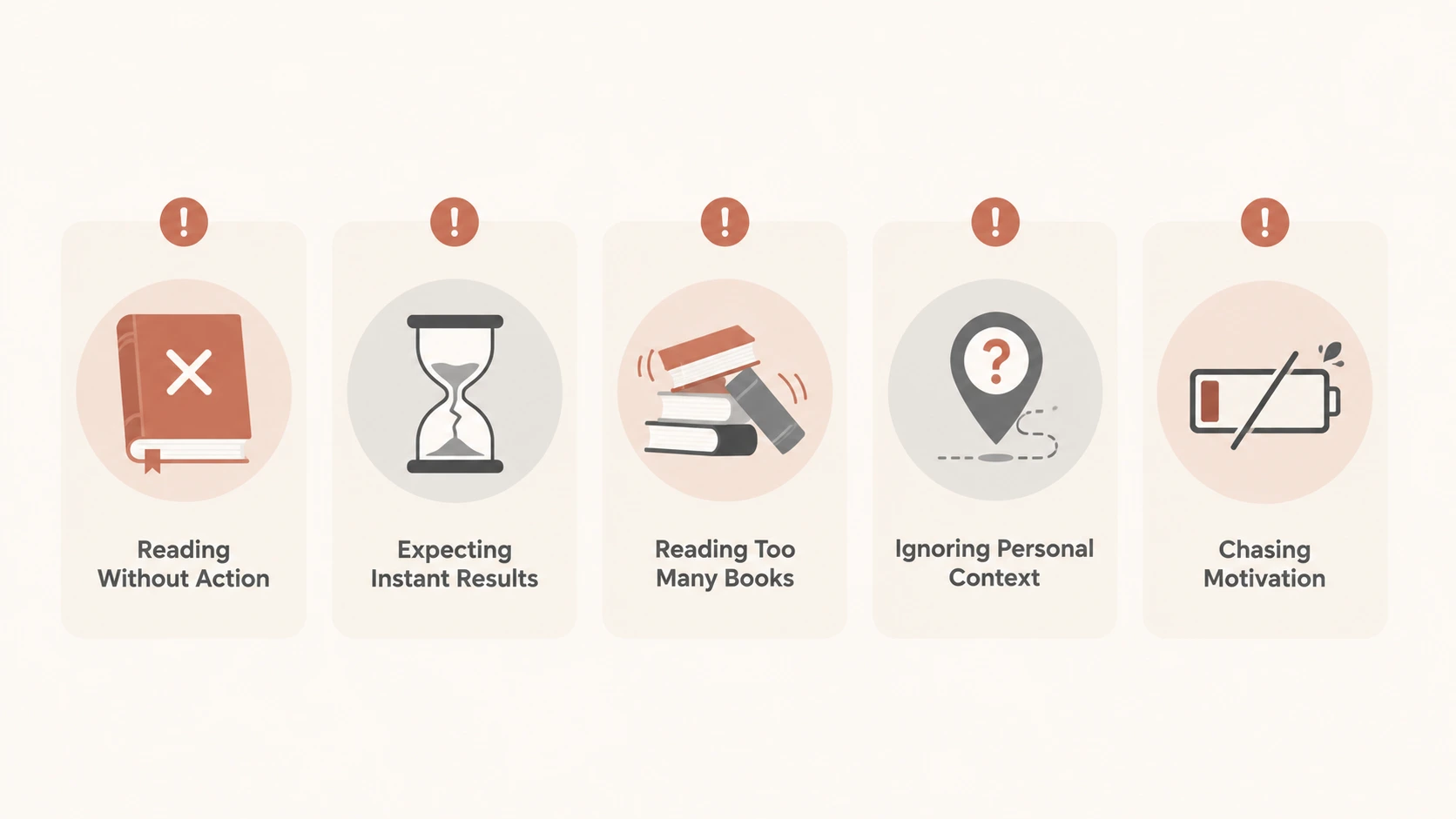
- Reading without implementation — absorbing information without applying it leads to minimal change.
- Looking for instant transformation — mindset shifts develop gradually, not overnight.
- Reading too many books at once — spreading focus across multiple titles dilutes application.
- Ignoring personal circumstances — generic advice must be adapted to individual context.
- Chasing motivation instead of habits — motivation fades, while structured habits sustain progress.
These mistakes happen because readers often expect books alone to produce change. In our experience helping readers build better habits, the most effective approach pairs reading with small, consistent actions rather than relying on inspiration alone.
Practical Mindset-Building Habits Beyond Reading
Books initiate change, but daily habits sustain it. Complementary practices include:
- Daily journaling
- Meditation
- Structured reflection
- Regular goal reviews
- Habit tracking
- Accountability partnerships
- Coaching or mentorship
- Building positive, supportive environments
Your Daily Thrive recommends combining at least one book-based lesson with one daily habit to reinforce learning through repeated practice.
Frequently Asked Questions People Have Before Choosing a Mindset Book
Readers commonly want to know which books suit beginners, how much time commitment is required, whether to read one book thoroughly or several at once, and in what order to read foundational titles. As a general guideline, beginners benefit from starting with one accessible, research-based book, spending several weeks applying its core lessons before moving to the next title.
Conclusion
Changing your mindset books remain valuable tools for lifelong learning because they combine psychological insight with practical strategies for growth, resilience, and discipline. Choosing the right book depends on personal goals — whether that means building better habits, improving confidence, or developing long-term discipline — rather than simply selecting the most popular title. Ultimately, consistent application of the lessons within these books, paired with supportive daily habits, produces the lasting change that changing your mindset books are designed to support.
FAQs
What is the best book for changing your mindset?
Mindset by Carol Dweck is widely considered a foundational choice because it introduces the core concept of fixed versus growth thinking in an accessible, research-backed format.
Which mindset book is best for beginners?
The Four Agreements and Mindset are beginner-friendly due to their clear structure and straightforward, practical concepts.
Are growth mindset books backed by psychology?
Yes, growth mindset books are generally grounded in established psychological research on ability, effort, and learning, particularly studies on how beliefs influence performance.
How long does it take for mindset changes to become noticeable?
Mindset changes typically become noticeable within several weeks to a few months of consistent practice, though timelines vary based on individual effort and circumstances.
Can reading mindset books improve discipline?
Yes, books that pair mindset principles with actionable habit strategies, such as Atomic Habits or The Slight Edge, can strengthen discipline when lessons are applied consistently.
Which mindset books are best for students?
Books emphasizing growth mindset and habit formation are best for students, since they directly address persistence through academic challenges and effective study routines.
What is the difference between a growth mindset book and a success mindset book?
Growth mindset books focus on learning, skill development, and persistence, while success mindset books focus more on achievement, results, and strategic performance.
How many mindset books should you read at one time?
Reading one mindset book at a time is generally more effective, since it allows readers to fully apply its lessons before introducing new concepts from another title.