
introduction
Mindset book quotes distill decades of psychological research into short, memorable lines that explain how beliefs shape behavior, learning, and success. Many of the most repeated mindset quotes trace back to Carol Dweck’s research on growth versus fixed thinking, though the ideas also appear across leadership, sports, and self-improvement literature. Understanding a mindset quote in its original context — rather than as an isolated slogan — is what turns a catchy phrase into a usable principle for daily life.
Quick Summary
- Mindset book quotes explain how beliefs influence learning, effort, and long-term success.
- Growth mindset quotes emphasize improvement and effort, while fixed mindset quotes reveal limiting beliefs.
- Quotes carry more value when understood in context rather than treated as standalone inspiration.
- Different mindset quote categories serve students, professionals, athletes, and anyone working toward personal growth.
What Are Mindset Book Quotes?
Mindset book quotes are short passages drawn from psychology and self-improvement books that capture a core idea about how thinking patterns affect behavior and outcomes. They differ from generic mindset quotes in that they are anchored to a specific author’s research or argument, giving them added credibility.
Books remain one of the richest sources of mindset lessons because they develop an idea across many pages, with supporting evidence and real examples, rather than compressing it into a single line. A mindset motivational quote pulled from a book usually carries a fuller argument behind it — even if the quote itself is brief.
It’s worth distinguishing between two categories:
- Motivational quotes — designed primarily to inspire emotion or momentum in the moment.
- Evidence-based mindset principles — grounded in psychological research, such as studies on effort, praise, and learning behavior.
Mindset inspirational quotes often blend both, but the most durable ones are those tied to a demonstrated psychological concept rather than a purely emotional appeal.
Why Mindset Matters in Personal Growth
How Your Mindset Shapes Decisions
The beliefs a person holds about their own abilities directly influence how they approach challenges. Someone who believes intelligence and skill can be developed tends to interpret difficulty as a signal to try a new strategy. Someone who believes ability is fixed tends to interpret the same difficulty as evidence of a limitation. This distinction affects learning choices, confidence levels, resilience after setbacks, and the habits a person is willing to build or abandon.
Growth Mindset vs Fixed Mindset
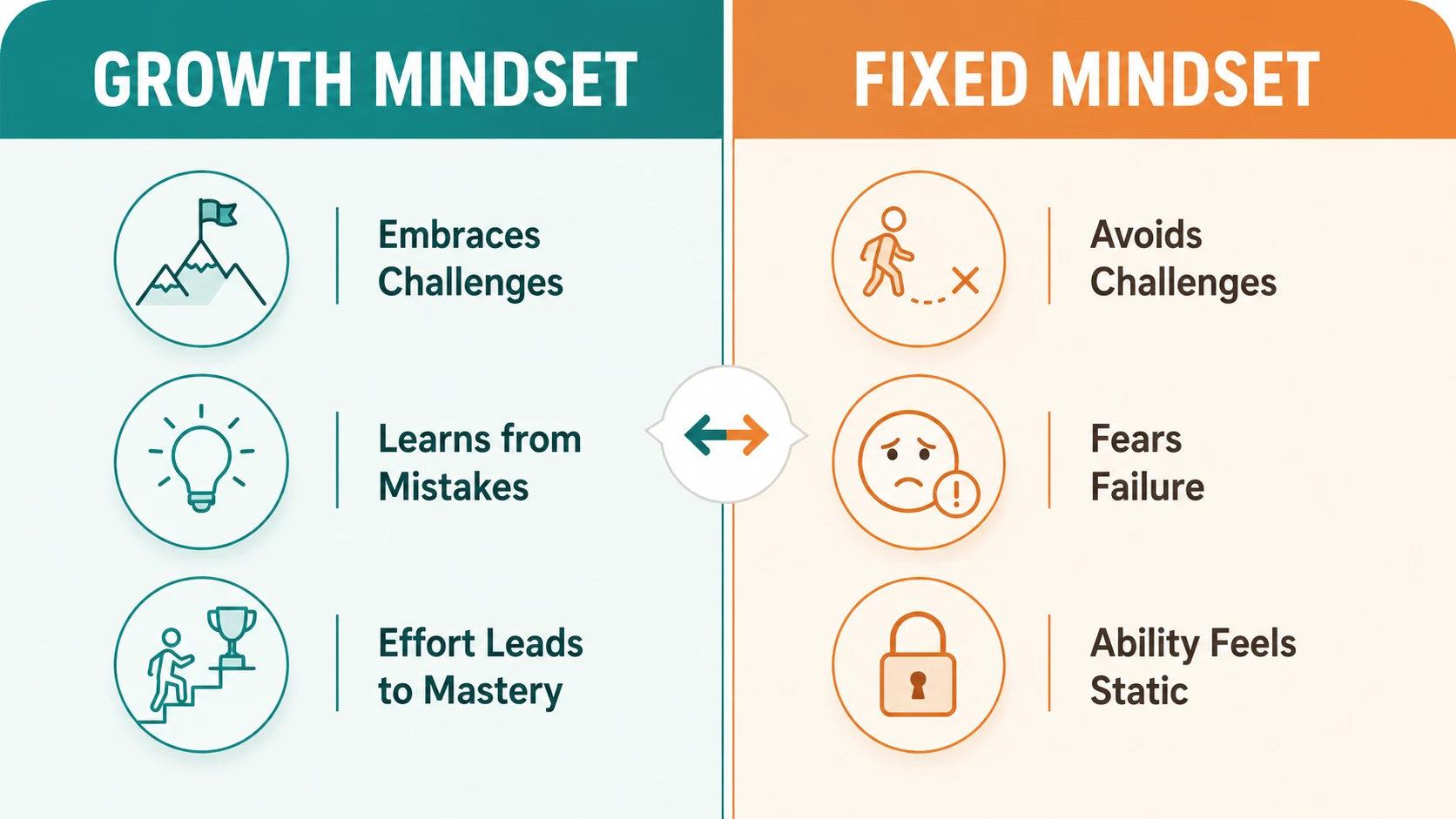
A growth mindset is the belief that abilities can be developed through effort, strategy, and feedback. A fixed mindset is the belief that abilities are largely static traits a person either has or lacks.
In everyday terms, a growth-minded student sees a failed exam as information about what to study differently next time. A fixed-minded student may see the same failed exam as proof they simply “aren’t a math person.” This framework was popularized by psychologist Carol Dweck, whose research on motivation and achievement gave the growth/fixed distinction its modern vocabulary. Growth mindset sayings tend to emphasize effort and process, while fixed mindset quotes often illustrate the limiting self-talk that keeps people from attempting new challenges.
Carol Dweck and the Mindset Book
Who Is Carol Dweck?
Carol Dweck is a psychologist whose decades of research on motivation, achievement, and self-theories reshaped how educators, coaches, and organizations think about ability and success. Her work moved the conversation on talent away from fixed traits and toward developable skills, which is why her ideas are cited so frequently in mindset book quotes and continue to influence classrooms and workplaces worldwide. Her ideas are most fully developed in her original growth mindset book, which remains the foundational text behind most modern mindset quotes.
Core Lessons From Mindset
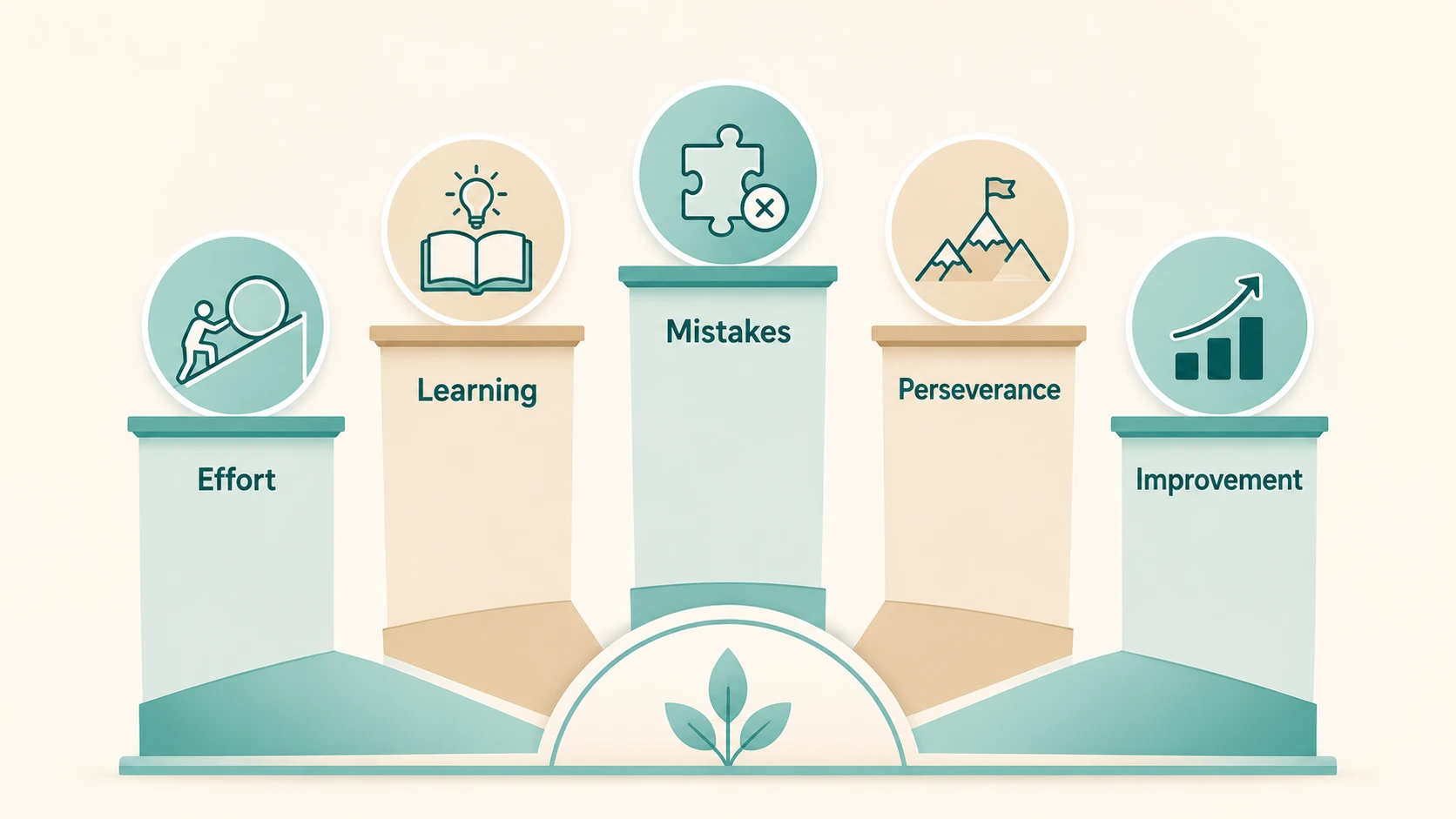
Rather than relying on isolated quotations, it helps to understand the major themes her research explores:
- Effort — sustained effort is treated as a path to mastery, not a sign of insufficient talent.
- Learning — mistakes are treated as data that informs the next attempt.
- Mistakes — setbacks are reframed as normal parts of skill development rather than failures of identity.
- Perseverance — sticking with a difficult task, even after early struggle, builds long-term competence.
- Lifelong improvement — the idea that abilities keep evolving across a person’s entire life, not just during formal education. For a deeper collection, see our full roundup of Carol Dweck mindset quotes organized by theme.
These themes are the foundation behind most popular carol dweck quotes growth mindset content, and they explain why the mindset book’s famous quotes and best quotes continue to circulate in classrooms, coaching, and workplace training.
Memorable Growth Mindset Book Quotes
Growth mindset book quotes tend to cluster around a few recurring lessons. Understanding the lesson behind each theme is more useful than memorizing the exact wording.
- Learning from mistakes — quotes in this category reframe errors as useful feedback rather than personal failure.
- Embracing challenges — this theme highlights choosing difficulty over comfort as a path to growth.
- Progress over perfection — quotes here emphasize incremental improvement instead of flawless results.
- Persistence — this theme centers on continuing effort through setbacks.
- Continuous improvement — quotes in this category frame growth as an ongoing process without a fixed endpoint.
Positive growth mindset quotes built around these five themes are widely used because they translate directly into actionable behavior, not just encouragement.
Powerful Mindset Quotes and Their Meanings
Organizing mindset quotes by theme, rather than by author, makes them easier to apply to specific situations.
Success
Quotes about success in mindset literature typically reframe it as a byproduct of consistent effort and learning, not a fixed destination.
Confidence
Confidence-focused quotes tend to link self-assurance to competence built through repeated practice, rather than innate certainty.
Discipline
Discipline-related quotes emphasize showing up consistently, even when motivation is low, as the mechanism that sustains growth.
Resilience
Resilience quotes highlight the ability to recover from setbacks and continue moving toward a goal.
Personal Responsibility
Quotes in this category stress ownership over reactions and choices, rather than circumstances.
Great mindset quotes and motivational mindset quotes in these five categories are commonly used in coaching, education, and workplace development because each theme maps to a specific, practical behavior.
Quotes About Mindset and Attitude
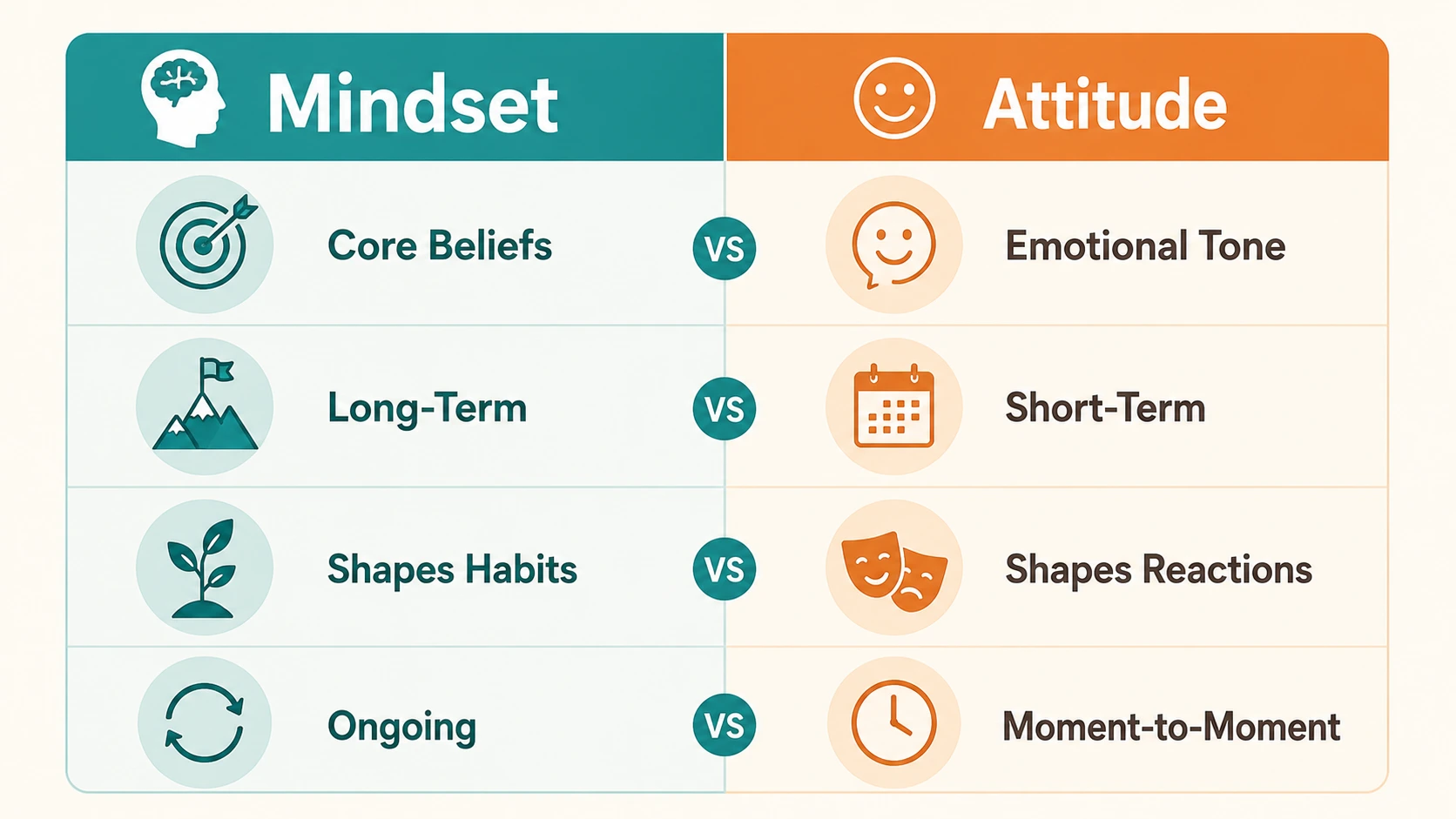
Mindset and attitude are related but distinct. Mindset refers to the underlying beliefs a person holds about ability and change; attitude refers to the outward disposition or emotional tone a person brings to a given moment.
| Mindset | Attitude | |
|---|---|---|
| Definition | Core beliefs about ability and change | Outward emotional disposition |
| Long-term influence | Shapes long-term learning and habits | Shapes short-term reactions |
| Examples | Believing skills can be developed | Staying upbeat during a hard meeting |
| Daily application | Guides how challenges are approached over time | Guides how a single moment is handled |
Quotes about mindset and attitude often work together: a strong mindset provides the underlying belief system, while a positive attitude supports how that belief shows up moment to moment.
Strong Short Mindset Quotes for Daily Motivation
Short mindset quotes are popular for journals, social media captions, affirmations, and presentation slides because they are easy to remember and repeat. Useful categories include:
- Confidence — brief reminders that ability grows with practice.
- Persistence — short lines that reinforce continuing despite difficulty.
- Leadership — concise statements about guiding others through example.
- Self-belief — compact affirmations of capability and worth.
- Learning — short reminders that mistakes are part of the process.
Strong mindset quotes short in format work best when paired with a specific action, such as writing one in a journal alongside a goal for the day.
Growth Mindset Quotes for Students
Learning From Mistakes
Students benefit from reframing incorrect answers as diagnostic information rather than proof of inability.
Building Confidence
Confidence grows through repeated small wins, which is why quotes in this category often pair with incremental goal-setting.
Academic Challenges
Growth-oriented quotes encourage students to choose more difficult material deliberately, since struggle is where skill-building happens.
Exam Preparation
Quotes focused on exam preparation typically emphasize consistent study habits over last-minute cramming, connecting mindset directly to study strategy.
Growth mindset quotes for students work best when tied to a concrete study technique, not just displayed as decoration.
Fixed Mindset Quotes and the Lessons They Teach
Fixed mindset quotes are useful because they illustrate limiting beliefs clearly enough to be recognized and corrected. Common patterns include:
- Fear of failure — avoiding attempts to protect a self-image of competence.
- Avoiding challenges — choosing easier tasks to guarantee success.
- Giving up quickly — abandoning effort at the first sign of difficulty.
- Comparing yourself with others — measuring worth against other people’s results instead of personal progress.
Recognizing these patterns in fixed mindset quotes is often the first step toward replacing them with growth-oriented alternatives.
Mindset Quotes Across Different Success Themes
Millionaire Mindset
This theme centers on financial thinking patterns — such as long-term planning and calculated risk-taking — and should be treated as a psychological framework rather than specific financial advice.
Warrior Mindset
The warrior mindset theme focuses on resilience, courage, and discipline under pressure.
Champion Mindset
This theme emphasizes perseverance and sustained high performance, often used in athletic and competitive contexts.
Master Your Mindset
This theme covers self-awareness and the ongoing process of refining one’s own thinking patterns over time.
| Theme | Primary Focus | Best For |
|---|---|---|
| Growth | Learning | Students |
| Millionaire | Financial thinking | Entrepreneurs |
| Warrior | Resilience | Personal challenges |
| Champion | Performance | Athletes |
| Master Your Mindset | Self-improvement | Everyday life |
Millionaire mindset book quotes, warrior mindset book quotes, champion mindset book quotes, and master your mindset book quotes each serve a different practical purpose depending on the reader’s goals.
How to Apply Mindset Quotes in Everyday Life
Morning Reflection
Reading one mindset quote at the start of the day can set an intentional tone before challenges arise. Pairing a quote with a short growth mindset affirmation each morning can reinforce the lesson before challenges arise
Goal Setting
Pairing a quote’s theme with a specific, measurable goal turns inspiration into a plan.
Journaling
Writing a brief reflection on how a quote applies to a current situation reinforces the lesson more than reading alone.
Building Habits
Repeating a mindset principle alongside a small daily action helps it become an automatic response over time.
Staying Motivated During Setbacks
Returning to a resilience-themed quote during a setback can help reframe the moment as temporary rather than permanent.
In our experience helping readers build better habits, quotes stick best when tied to a specific trigger — such as reviewing one each Monday morning — rather than encountered randomly.
Common Mistakes When Using Motivational Quotes
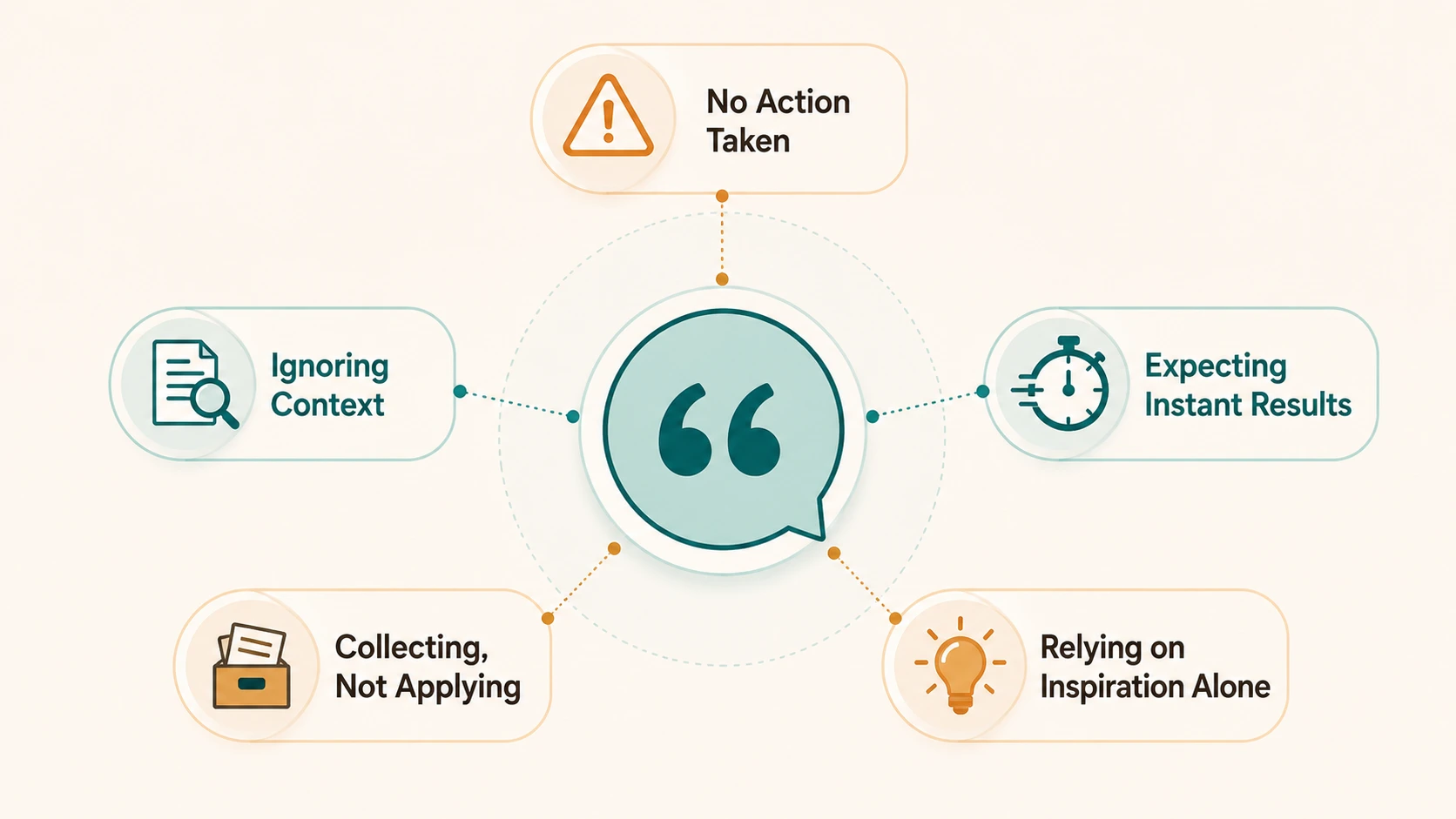
Quotes alone rarely create lasting change. Common issues include:
- Reading a quote without taking any related action.
- Ignoring the original context the quote came from.
- Expecting a single quote to produce instant motivation.
- Collecting quotes as a hobby instead of building habits.
- Depending on bursts of inspiration instead of consistent routines.
Your Daily Thrive recommends treating each quote as a prompt for a specific action, not as the action itself.
Choosing the Right Mindset Quotes for Different Situations
Different situations benefit from different mindset themes:
- Students often benefit most from learning- and confidence-focused quotes.
- Professionals tend to respond well to discipline and personal responsibility themes.
- Entrepreneurs often gravitate toward resilience and financial-thinking themes.
- Athletes typically benefit from champion and warrior mindset themes.
- Leaders often find confidence and responsibility-focused quotes most applicable.
- Personal challenges are usually best matched with resilience and persistence themes.
Matching the theme to the situation makes a quote far more actionable than choosing one at random.
Are Mindset Book Quotes With Page Numbers Always Reliable?
Page numbers for mindset book quotes are not always reliable because pagination varies across hardcover editions, paperback reprints, eBooks, and international translations. A quote listed as page 42 in one printing may appear on a different page entirely in another.
| Edition Type | Why Page Numbers Differ |
|---|---|
| Hardcover | Different layout and typesetting |
| Paperback | Different pagination from reprints |
| eBook | Page display adjusts to font size and device |
| International editions | Formatting and translation differences |
Readers who need to verify a mindset book quote with page numbers should check the specific edition they own, since chapter or section references are often more stable than exact page citations. Preserving the original context — not just the page number — is what keeps a quote accurately attributed.
Conclusion
Mindset book quotes offer a compact way to access research-backed ideas about growth, resilience, and positive thinking, but their real value comes from understanding and applying the lesson behind each one. Growth mindset quotes reinforce that effort and learning drive progress, while fixed mindset quotes highlight beliefs worth challenging. Whether drawn from Carol Dweck’s research or other mindset literature, these quotes work best as prompts for reflection and consistent action rather than standalone inspiration. Readers who pair a mindset quote with a concrete habit — journaling, goal-setting, or a daily routine — are far more likely to see the lasting personal growth these quotes describe.
Frequently Asked Questions
What are the most popular mindset book quotes?
The most popular mindset book quotes typically come from Carol Dweck’s research on growth versus fixed thinking, focusing on effort, learning from mistakes, and embracing challenges.
What is the difference between a growth mindset and a fixed mindset?
A growth mindset is the belief that abilities can be developed through effort and strategy, while a fixed mindset is the belief that abilities are largely static traits.
Why are Carol Dweck’s mindset quotes so influential?
Carol Dweck’s quotes are influential because they’re backed by decades of psychological research on motivation and achievement, giving them credibility beyond generic motivational content.
Can mindset quotes improve motivation and confidence?
Mindset quotes can support motivation and confidence when paired with consistent action, such as journaling or habit-building, rather than being read passively.
Why do page numbers for mindset book quotes differ between editions?
Page numbers differ because hardcover, paperback, eBook, and international editions all use different layouts, typesetting, and pagination systems.
Which mindset quotes are best for students?
Growth mindset quotes focused on learning from mistakes, building confidence, and approaching academic challenges tend to work best for students.
How can I use mindset quotes in my daily routine?
Mindset quotes work well in morning reflection, journaling, and goal-setting routines, especially when tied to a specific daily action or trigger.