
Introduction
Mindset shapes how people learn, recover from setbacks, build confidence, and navigate relationships. It influences whether challenges are seen as threats or opportunities, and it plays a direct role in long-term success. Choosing the right books to improve mindset gives readers structured, research-backed ways to reshape unhelpful thinking patterns and replace them with habits that support growth. This guide covers different categories of mindset books suited to varying goals, age groups, and interests, so readers can move beyond bestseller lists and select material that actually fits their situation.
Quick Summary
- Mindset books help reshape thinking patterns, habits, and decision-making through practical knowledge and real-world examples.
- Different categories of books serve different goals, such as confidence, business, relationships, psychology, or personal growth.
- Fiction and non-fiction can both contribute to mindset development in different ways.
- Choosing books based on your current challenges leads to better long-term results than simply reading popular titles.
What Does It Mean to Improve Your Mindset?
Understanding the Concept of Mindset
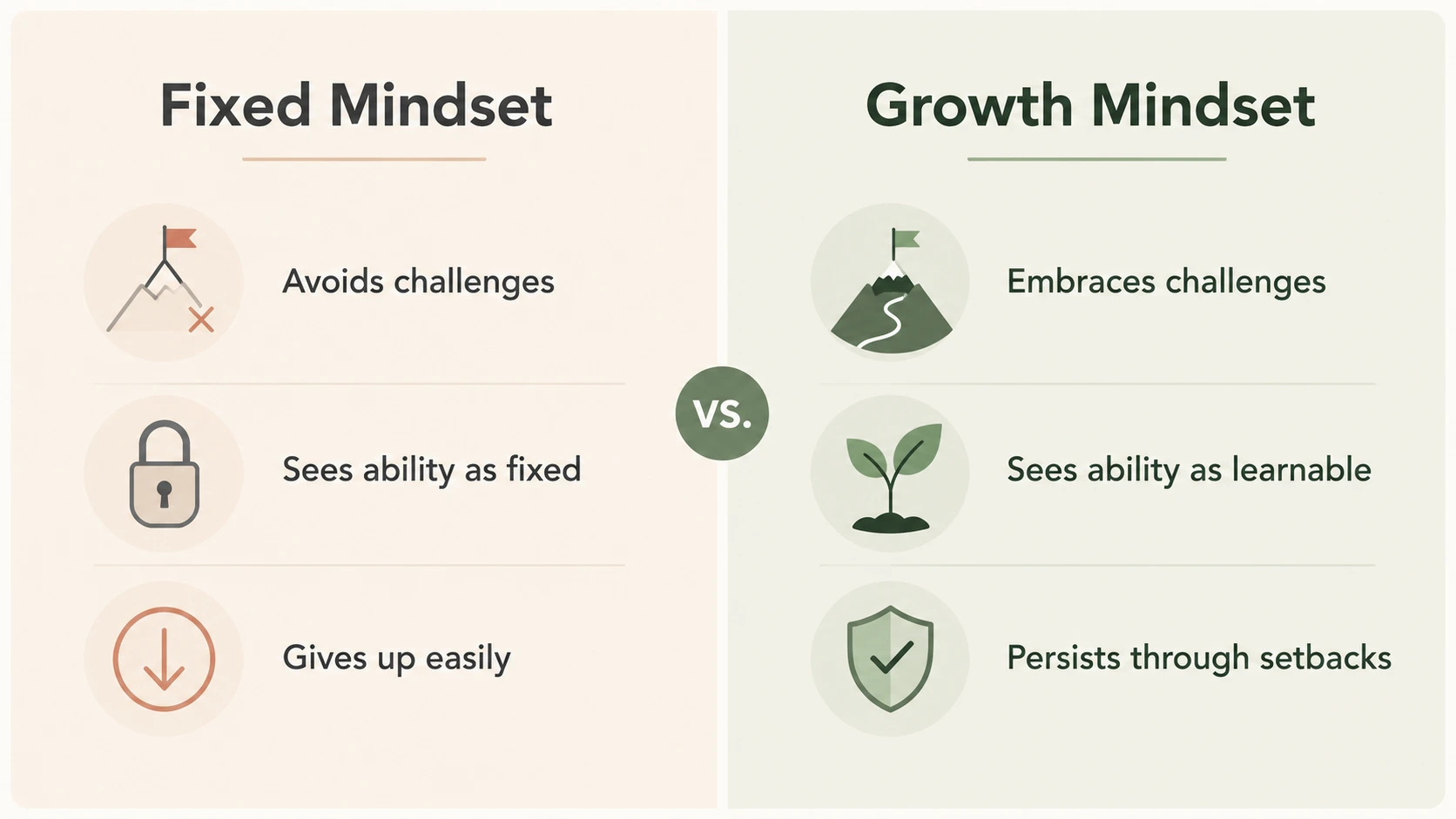
Mindset refers to the collection of beliefs and mental attitudes that shape how a person interprets events and responds to challenges. A fixed mindset assumes abilities and intelligence are static traits, while a growth mindset treats abilities as skills that develop through effort and learning. This distinction matters because beliefs directly influence habits, emotional responses, and behavior. Someone who believes effort leads to improvement is more likely to persist through difficulty, while someone who believes ability is fixed may avoid challenges altogether. This concept, popularized through decades of research, is captured well in these growth mindset quotes by Carol Dweck, which illustrate how effort-based thinking shapes long-term outcomes.
Why Mindset Matters in Everyday Life
A person’s mindset touches nearly every area of daily life, including:
- Career — how setbacks and feedback are handled
- Education — willingness to tackle difficult material
- Relationships — communication and conflict resolution
- Mental resilience — recovery from stress or failure
- Confidence — belief in one’s own capabilities
- Decision making — weighing risk versus opportunity
Reading books to improve mindset or books for better mindset gives readers concrete frameworks for strengthening each of these areas, rather than relying on trial and error alone. Understanding why growth mindset is important helps explain why small shifts in belief can produce outsized changes in behavior over time.
How Reading Can Change Your Mindset
The Science Behind Learning Through Books
Books that focus on mindset development draw on established concepts from cognitive and behavioral science, including:
- Neuroplasticity — the brain’s ability to form new neural pathways through repeated practice
- Habit formation — how consistent behaviors become automatic over time
- Cognitive reframing — the process of viewing a situation from a more constructive angle
- Reflection and self-awareness — recognizing thought patterns before changing them
These mechanisms explain why books to change mindset can produce measurable shifts in thinking when their lessons are actively applied, not just read.
Why Books Often Create Lasting Behavioral Change
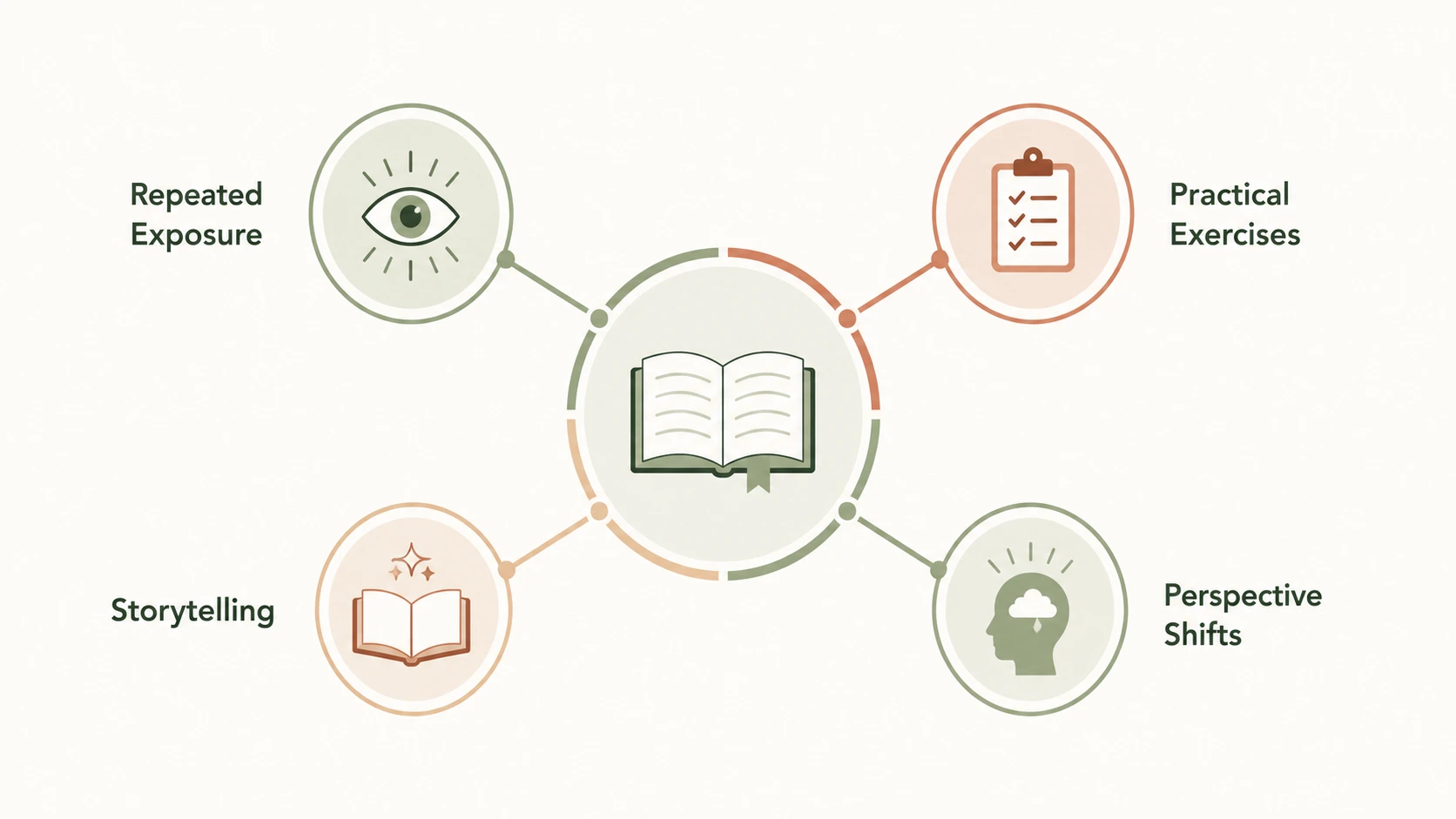
Books support lasting change through several combined effects:
- Repeated exposure to core ideas, which reinforces new beliefs
- Practical exercises that translate concepts into action
- Storytelling that makes abstract ideas memorable
- Perspective shifts that challenge existing assumptions
In our experience helping readers build better habits, the combination of repetition and practical application is what separates temporary motivation from durable mindset change.
Different Types of Books That Help Improve Mindse
Self-Help Books
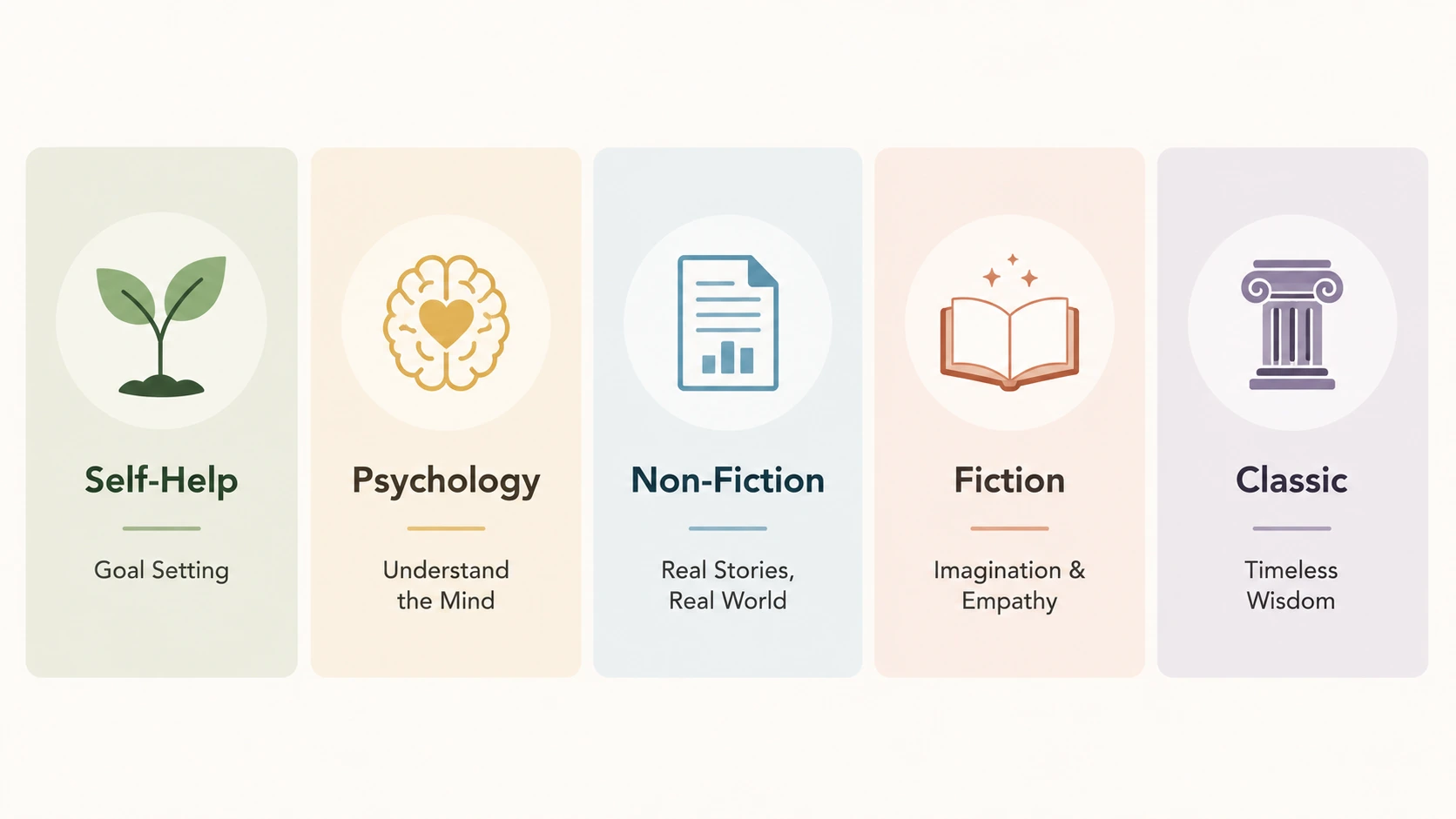
Self-help books to improve mindset typically focus on goal setting, motivation, and personal responsibility. They tend to offer direct frameworks readers can apply immediately to daily routines.
Psychology Books
Psychology books to improve mindset explore human behavior, thinking patterns, and emotional regulation. These titles are grounded in research and often explain the “why” behind behavior change.
Non-Fiction Books
Non-fiction books to improve mindset draw on real-life lessons, research-based insights, and expert knowledge, making them useful for readers who prefer evidence over narrative.
Fiction Books
Fiction books to improve mindset build empathy, perspective, and emotional intelligence through character-driven storytelling. Readers often absorb mindset lessons indirectly by observing how characters navigate conflict and growth.
Classic Books
Classic books to improve mindset offer timeless principles rooted in philosophy and personal discipline. Many modern mindset frameworks reference ideas that originate from these older works.
Choosing Books Based on Your Personal Goals
Books for Confidence
Confidence-focused titles address self-doubt, limiting beliefs, and strategies for building self-assurance in social and professional settings.
Books for Success
Books on mindset and success typically emphasize goal setting, discipline, and long-term thinking over quick wins.
Books for Business Mindset
Books to improve business mindset or mindset books for business focus on decision-making under uncertainty, leadership thinking, and resilience in competitive environments.
Books for Communication and Relationships
These titles address active listening, empathy, and conflict resolution as extensions of a healthy mindset.
Books for Intellectual Growth
Books to increase your intellect encourage curiosity, critical thinking, and lifelong learning habits.
Rather than following bestseller lists, readers get better results by matching book categories to their specific personal objectives — for example, someone facing workplace stress benefits more from a business mindset book than a general confidence title.
Books for Different Age Groups and Life Stages
Adults
Books to improve mindset for adults typically assume a baseline of life experience and address career, relationships, and long-term personal development.
Kids
Kids’ books to improve mindset use simplified language and relatable stories to introduce concepts like effort, resilience, and self-belief early on.
Parents Helping Children Develop a Growth Mindset
Parents can reinforce growth-mindset thinking by modeling constructive responses to failure and by discussing lessons from age-appropriate books at home.
Lifelong Learners
Adult books to improve mindset aimed at lifelong learners tend to explore more advanced or nuanced material, since these readers already have foundational mindset knowledge.
Reading maturity, learning goals, and family influence all affect which age-appropriate recommendations work best for a given reader.
Fiction vs. Non-Fiction Mindset Books
| Feature | Fiction | Non-Fiction |
|---|---|---|
| Learning style | Indirect, through narrative | Direct, through explanation |
| Emotional impact | High, builds empathy | Moderate, appeals to logic |
| Practical advice | Limited, implied | Explicit and structured |
| Research-based insights | Rare | Common |
| Best for | Perspective and emotional growth | Actionable frameworks and habits |
Both formats contribute to mindset development, but they serve different purposes. Fiction is well suited to readers seeking emotional insight and perspective, while non-fiction suits readers who want structured, practical guidance they can apply immediately.
How to Choose the Best Mindset Book for Your Needs
Identify Your Current Challenge
Start by naming the specific area needing improvement, such as confidence, focus, or resilience, rather than choosing a book based on popularity alone.
Match Reading Level and Experience
Beginners benefit from clear, accessible language, while experienced readers may prefer denser, research-heavy material.
Decide Between Practical or Inspirational Books
Some readers respond better to step-by-step frameworks, while others are more motivated by inspirational, story-driven content.
Balance Theory With Action
The most effective mindset books combine explanation with exercises, so readers understand both the reasoning and the application.
Common Characteristics of High-Quality Mindset Books
High-quality mindset books consistently share these traits:
- Evidence-based ideas grounded in psychology or behavioral science
- Practical exercises that translate into daily action
- Clear, jargon-free explanations
- Actionable frameworks rather than vague advice
- Credible authors with relevant expertise
- Real-life examples that illustrate abstract concepts
Common Mistakes People Make When Reading Mindset Books
Reading Without Taking Action
Passive reading without follow-through rarely produces meaningful change, since mindset shifts require applied practice.
Reading Too Many Books Too Quickly
Moving from one book to the next without pausing to reflect prevents ideas from being absorbed and applied.
Expecting Instant Transformation
Mindset change is gradual; expecting immediate results often leads to discouragement and abandoned effort.
Ignoring Reflection and Practice
Skipping journaling or reflection exercises reduces retention and weakens the connection between reading and behavior change.
These mistakes are common because reading feels productive on its own, even without application. Avoiding them requires deliberate pacing, note-taking, and consistent follow-through over weeks and months rather than days.
How to Apply What You Learn From Mindset Books
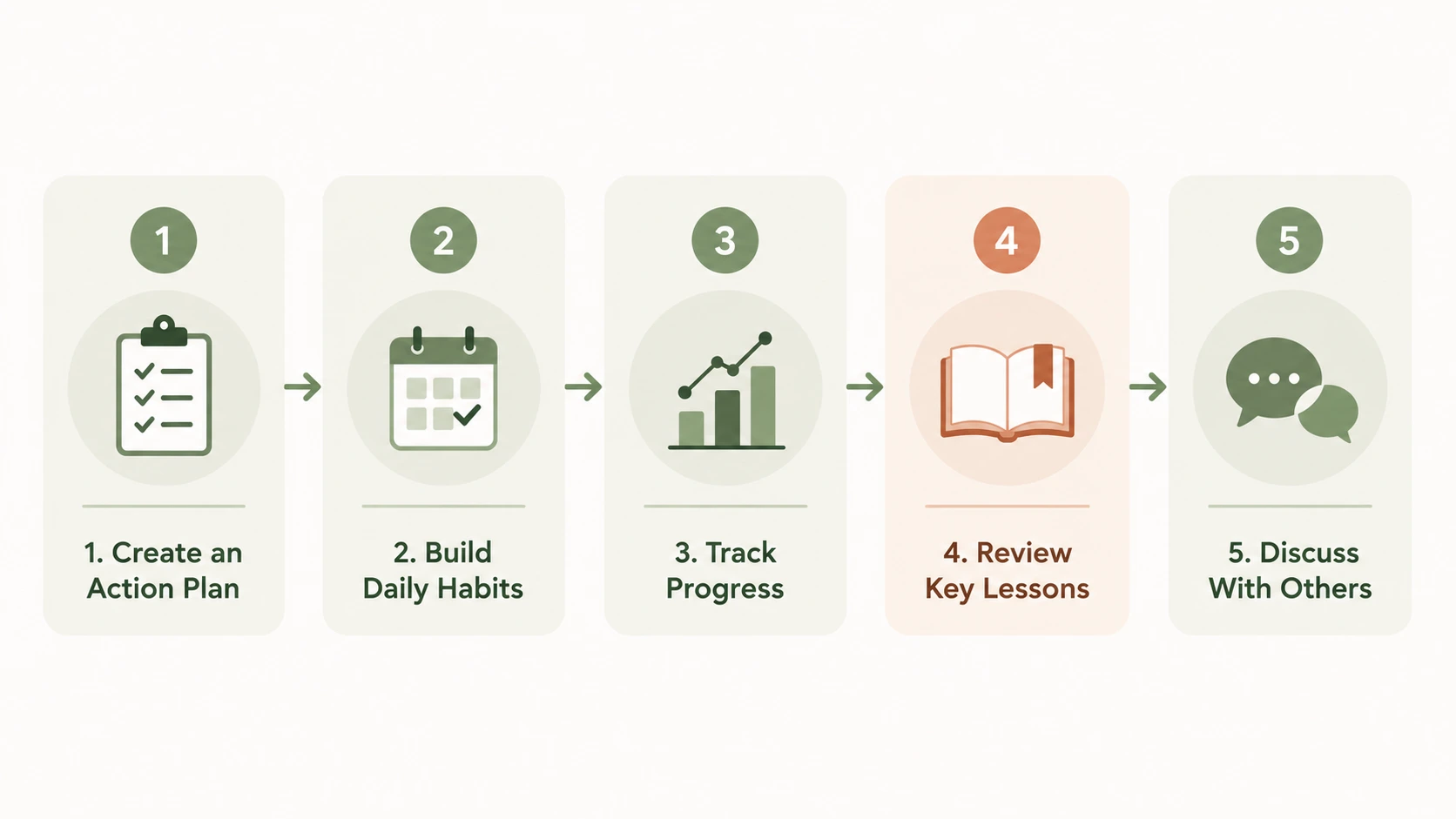
Create an Action Plan
Break down key lessons into specific, achievable steps rather than general intentions.
Build Daily Habits
Small, repeatable actions reinforce new thinking patterns more effectively than occasional bursts of motivation.
Track Progress
Recording progress, even briefly, helps readers notice patterns and stay accountable.
Review Key Lessons Regularly
Revisiting notes or highlighted passages strengthens retention over time.
Discuss Ideas With Others
Talking through concepts with friends, mentors, or accountability partners deepens understanding and encourages consistency.
Your Daily Thrive recommends focusing on implementation over passive reading, since applied lessons are what ultimately shift mindset and behavior.
Factors That Influence Mindset Growth
Several external and internal factors affect how quickly and effectively mindset improves:
- Environment — surroundings that either support or hinder growth
- Relationships — supportive versus discouraging social circles
- Daily habits — routines that reinforce or undermine new thinking
- Stress — chronic stress can slow cognitive flexibility
- Consistency — regular practice compounds over time
- Personal experiences — past events shape existing beliefs
- Learning style — how effectively new information is absorbed
Comparing Popular Mindset Book Categories
| Goal | Best Category |
|---|---|
| Confidence | Self-help |
| Business | Business mindset / leadership |
| Success | Self-help and psychology |
| Relationships | Psychology and communication |
| Emotional resilience | Psychology |
| Productivity | Self-help |
| Personal growth | Non-fiction and classics |
| Intellectual development | Classic and non-fiction |
Practical Tips for Building a Long-Term Reading Habit
Set Realistic Reading Goals
Consistent, modest reading goals are more sustainable than ambitious targets that lead to burnout.
Take Notes While Reading
Highlighting or annotating key ideas improves retention and makes review easier later.
Apply One Lesson at a Time
Focusing on a single concept before moving to the next prevents information overload.
Revisit Impactful Books
Rereading key chapters reinforces lessons that may not have been fully internalized the first time.
Combine Reading With Journaling
Journaling after each reading session connects abstract ideas to personal experience, strengthening long-term behavior change.
Difficulty & Time Investment
Reading mindset books is generally beginner-friendly, requiring no prior background in psychology or behavioral science. Most titles are written in accessible language, though some psychology-focused or classic works involve a moderate learning curve. Time investment varies by reading speed and depth of reflection, but readers typically need 15–30 minutes daily for reading, plus additional time for journaling or applying lessons. Personal factors such as schedule, reading experience, and existing mindset challenges all influence how much time is realistically needed.
Results Timeline
Mindset shifts from reading typically follow a gradual pattern rather than an immediate transformation. Early mindset awareness often develops within the first few weeks, as readers begin recognizing unhelpful thought patterns. Noticeable habit formation tends to build over several weeks of consistent application, while deeper cognitive and behavioral changes generally emerge over multiple months of sustained practice. Individual differences, including consistency and starting mindset, affect how quickly progress becomes visible.
Practice Guide
Daily Reading Routine
Set aside a consistent time each day, even briefly, to build reading into an established habit. If you’re unsure where to start, these journaling prompts for self growth offer a simple framework for turning weekly reflection into a consistent habit.
Weekly Reflection
Set aside time weekly to review notes and assess which lessons are being applied successfully.
Habit Tracking
Use a simple tracker or journal to record daily actions tied to mindset lessons.
Accountability Methods
Share goals with a friend, mentor, or community to increase follow-through.
Maintaining Long-Term Consistency
Adjust routines as needed during busy periods, but avoid abandoning the habit entirely during setbacks.
Frequently Overlooked Factors When Choosing Mindset Books
Several factors are often missing from typical book recommendations:
- Author credibility — checking an author’s background and expertise
- Personal learning preferences — narrative versus structured formats
- Reading fatigue — spacing out dense material to avoid burnout
- Mixing genres — combining fiction and non-fiction for balanced learning
- Applying lessons instead of collecting books — prioritizing depth over volume
- Quality over quantity — a few well-applied books outperform many unread ones
Conclusion
Choosing the right books to improve mindset supports long-term personal development by strengthening confidence, resilience, decision-making, and relationships. The most effective approach is selecting books based on specific goals rather than popularity, and combining self-help, psychology, non-fiction, fiction, and classic titles as needed. Consistent reading, reflection, and practical application — not the number of books read — determine lasting mindset growth. Readers who prioritize depth, apply lessons deliberately, and stay consistent over time are the ones most likely to see meaningful, durable change.
Frequently Asked Questions
What are mindset books and how do they work? Mindset books are written works that explain how beliefs, habits, and thought patterns shape behavior, offering frameworks and exercises to help readers build more constructive thinking patterns.
Can reading books really improve your mindset? Yes, reading can improve mindset when lessons are actively applied through reflection, habit-building, and consistent practice rather than passive reading alone.
What is the difference between growth mindset books and self-help books? Growth mindset books focus specifically on beliefs about ability and effort, while self-help books cover a broader range of topics, including motivation, goal setting, and productivity.
Should I read fiction or non-fiction to improve my mindset? Fiction builds empathy and perspective through storytelling, while non-fiction offers direct, research-based frameworks, so the better choice depends on individual learning preferences and goals.
How many mindset books should I read each year? There is no fixed number; quality of application matters more than quantity, and fully applying a few books produces better results than skimming many.
How long does it take to notice changes after reading mindset books? Early awareness often appears within a few weeks, while deeper behavioral changes typically develop over several months of consistent practice.
Are mindset books suitable for beginners? Yes, most mindset books are written in accessible language and require no prior background in psychology or behavioral science.
What should I do after finishing a mindset book? Readers should create an action plan, apply key lessons through daily habits, track progress, and periodically revisit important sections to reinforce learning.