
Introduction
A combat mindset is a mental framework focused on staying calm, aware, disciplined, and effective during stressful or high-pressure situations. Although the concept is often associated with military training, it also applies to athletes, first responders, leaders, and individuals seeking greater resilience. Rather than encouraging aggression, a combat mindset emphasizes mental conditioning, emotional control, sound decision-making, and adaptability. By developing these qualities, people can improve their ability to perform under pressure, manage uncertainty, and respond effectively to challenges in both professional and personal environments.
By Your Daily Thrive | Self-Improvement & Personal Growth Expert
Quick Summary
- Combat mindset is a disciplined mental approach built around awareness, resilience, and decisive action.
- Mental conditioning techniques help improve performance under stress and uncertainty.
- Military, athletic, and leadership environments commonly use combat mindset principles.
- Emotional control is more important than aggression when facing difficult situations.
- Combat mindset skills can be developed through consistent training and practice.
What Is a Combat Mindset?
Combat Mindset Meaning Explained
Combat mindset refers to a state of mental preparedness that allows an individual to remain focused, confident, and effective during demanding situations. It combines awareness, discipline, emotional regulation, and decision-making skills.
At its core, combat mindset is about maintaining control when circumstances become difficult. It is not limited to physical combat. Many professionals use similar principles to navigate high-pressure environments.
What Are the Core Characteristics of a Combat Mindset?
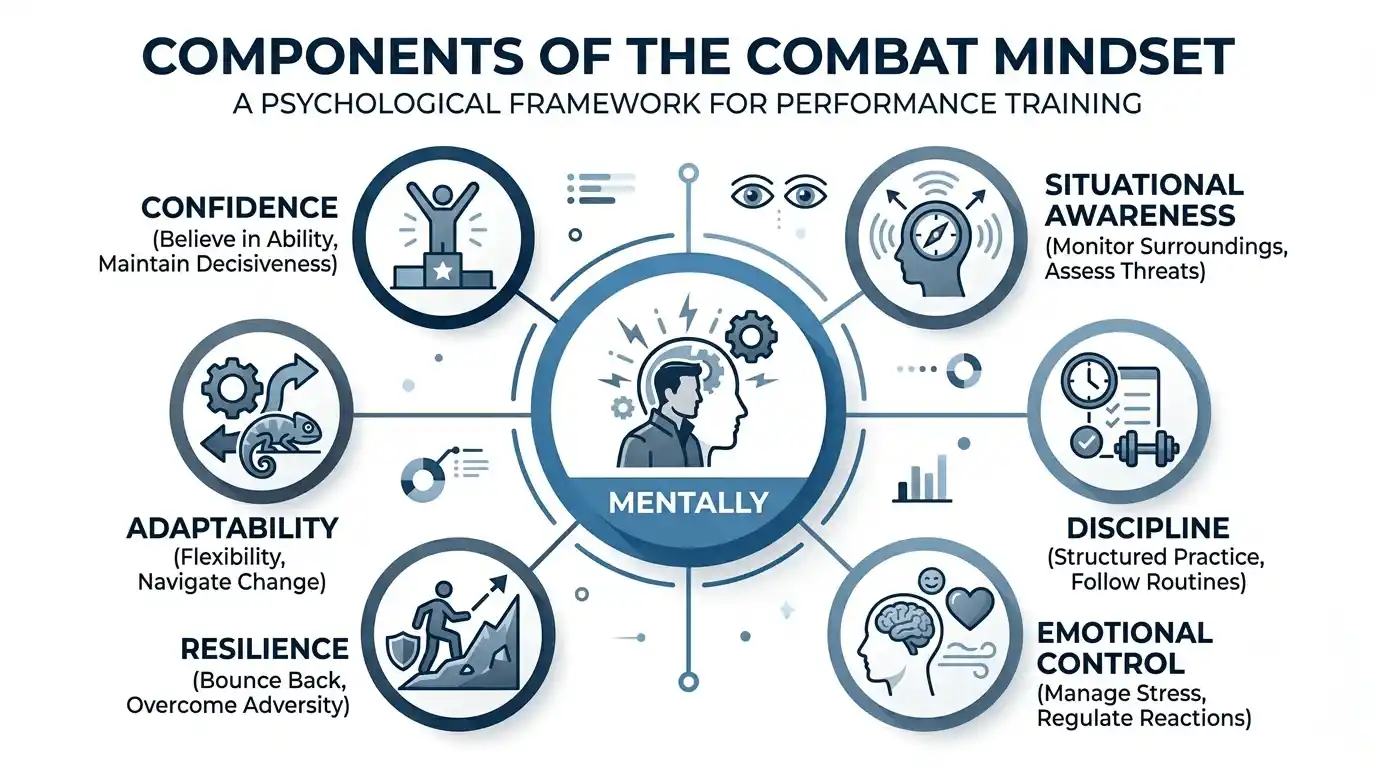
Several traits consistently appear in individuals who demonstrate a strong combat mindset:
- Situational awareness
- Mental resilience
- Emotional regulation
- Discipline
- Confidence
- Adaptability
- Decisiveness
These qualities help individuals respond appropriately rather than react impulsively.
Combat Mindset vs Aggression
A common misconception is that combat mindset means being aggressive. In reality, aggression without control often leads to poor decisions.
A true combat mindset emphasizes:
- Controlled responses
- Strategic thinking
- Emotional stability
- Risk assessment
- Appropriate action
The goal is effectiveness, not hostility.
The Psychology Behind Combat Mindset
Combat Mindset Psychology and Human Performance
Combat mindset psychology focuses on how people think, feel, and behave under pressure. Behavioral science shows that stress influences attention, memory, judgment, and reaction speed.
Individuals with strong mental conditioning often perform better because they train their minds to manage stress effectively.
How Fear, Stress, and Adrenaline Affect Decision-Making
Fear and adrenaline are natural responses to perceived threats. They can improve alertness but may also impair judgment if not managed properly.
Common responses include:
- Fight
- Flight
- Freeze
Mental training helps individuals recognize these responses and maintain functional decision-making during stressful situations.
Why Mental Conditioning Matters
Mental conditioning involves intentionally strengthening psychological skills through structured practice.
Benefits include:
- Improved focus
- Greater resilience
- Better stress management
- Enhanced confidence
- Consistent performance
Research in performance psychology consistently supports the value of mental conditioning for long-term success.
Key Components of a Warrior Mindset
Discipline and Self-Control
Discipline forms the foundation of a warrior mindset. It allows individuals to act according to principles and goals rather than temporary emotions. Many high performers learn how to build discipline without motivation by relying on systems, routines, and consistent habits rather than temporary inspiration.
Self-control supports:
- Better decision-making
- Consistent habits
- Emotional stability
- Long-term success
Resilience and Mental Toughness
Resilience is the ability to recover from setbacks. Mental toughness involves maintaining performance despite discomfort or adversity.
People with strong resilience:
- Learn from failure
- Adapt quickly
- Persist during challenges
- Maintain perspective
Situational Awareness and Preparedness
Situational awareness involves understanding your environment and recognizing potential risks.
Key elements include:
- Observation
- Threat assessment
- Environmental scanning
- Strategic thinking
Preparedness improves confidence and reduces uncertainty.
Commitment to Continuous Improvement
A warrior mindset includes lifelong learning and development. Continuous improvement helps individuals remain adaptable as circumstances change.
Combat Mindset in Military Culture
Combat Mindset in the United States Marine Corps (USMC)
Combat mindset is deeply embedded within military training programs. The USMC emphasizes readiness, discipline, initiative, and adaptability.
Training seeks to develop individuals who can perform effectively under physical and psychological stress.
Understanding MCDP-1 and Military Decision-Making Principles
MCDP-1 emphasizes adaptability, initiative, and sound judgment.
Core concepts include:
- Mission focus
- Decentralized decision-making
- Critical thinking
- Flexibility under uncertainty
These principles support effective action in dynamic environments.
MCMAP and the “One Mind, Any Weapon” Philosophy
The Marine Corps Martial Arts Program promotes the philosophy of “One Mind, Any Weapon.”
This approach integrates:
- Mental development
- Physical capability
- Ethical decision-making
- Character development
The objective extends beyond combat skills to overall personal growth.
Soldier Mindset vs Civilian Mindset
Military environments often require greater emphasis on preparedness, accountability, and rapid decision-making.
However, many lessons translate effectively into civilian life, particularly in leadership, resilience, and stress management.
Mental Conditioning and Mindset Development
What Is Mental Conditioning?
Mental conditioning is the process of strengthening psychological skills through deliberate practice.
It involves developing:
- Focus
- Confidence
- Self-awareness
- Emotional regulation
- Resilience
Mental Conditioning Techniques Used by High Performers
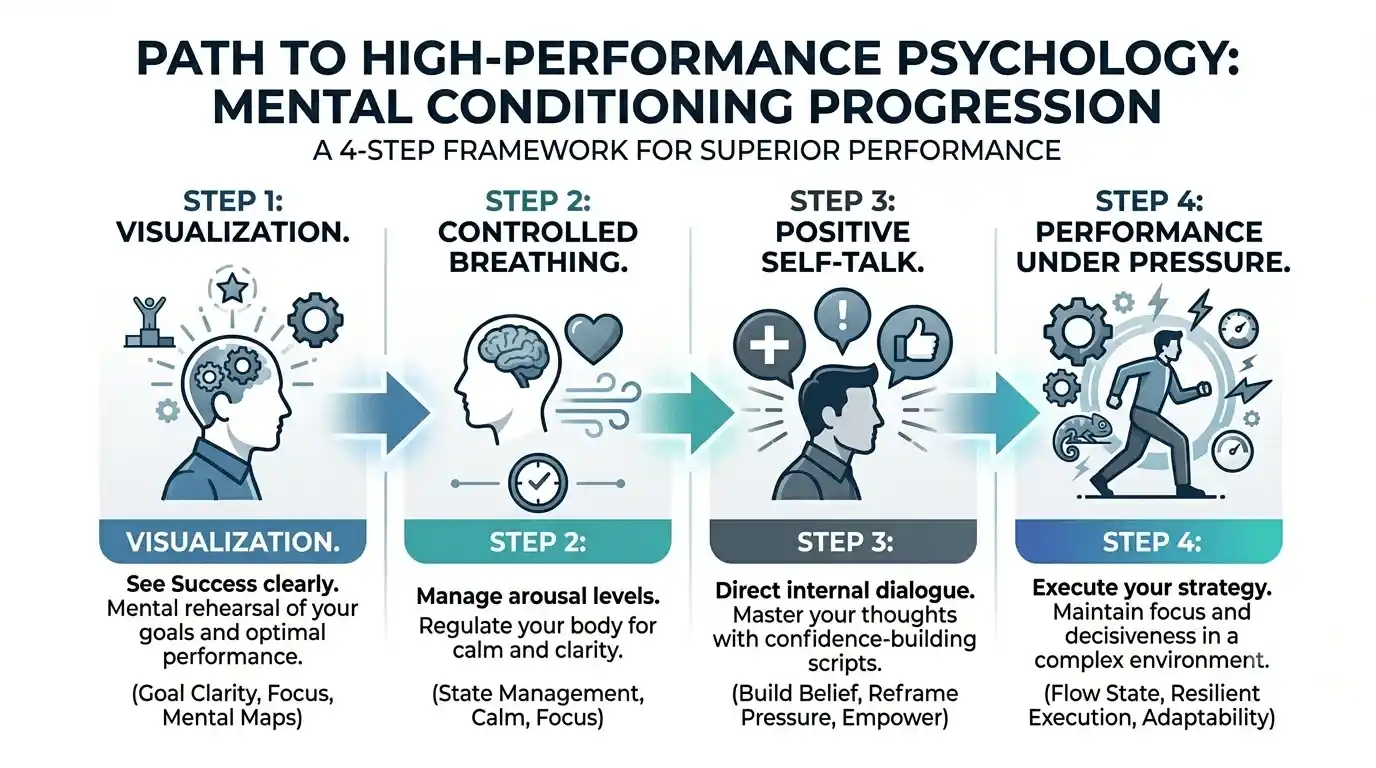
Common techniques include:
- Visualization
- Goal setting
- Positive self-talk
- Breathing exercises
- Mental rehearsal
These methods are widely used in sports psychology, military training, and leadership development.
Mental Training Methods for Performance Under Pressure
Effective mental training methods include:
- Stress inoculation training
- Reflection exercises
- Focus drills
- Cognitive reframing
- Scenario planning
These techniques help individuals function effectively during challenging situations.
How Athletes Use Mental Training
Elite athletes frequently use mental training to improve performance.
Developing an athlete mindset helps competitors strengthen focus, confidence, and emotional control during high-pressure situations.
Common practices include:
- Visualization before competition
- Pre-performance routines
- Focus exercises
- Recovery strategies
In our experience helping readers build stronger habits, consistent mental training often produces measurable improvements in confidence and performance.
Combat Mindset Exercises and Practical Training Methods
Daily Combat Mindset Exercises
Useful daily exercises include:
- Awareness drills
- Journaling
- Visualization
- Controlled breathing
- Reflection sessions
Consistency matters more than intensity.
Mental Training Exercises for Stress Management
Examples include:
- Box breathing
- Progressive relaxation
- Guided imagery
- Attention control exercises
These methods help reduce emotional reactivity.
Building Consistency Through Repetition
Psychological research consistently shows that repeated practice strengthens neural pathways and behavioral patterns.
| Exercise | Purpose | Difficulty | Frequency |
| Visualization | Mental rehearsal | Low | Daily |
| Journaling | Self-awareness | Low | Daily |
| Breathing Drills | Stress control | Low | Daily |
| Scenario Training | Decision-making | Medium | Weekly |
Understanding MOAB Training and Aggressive Behavior Management
What Is MOAB Training?
MOAB stands for Management of Aggressive Behavior. It is designed to help individuals safely manage challenging interactions while reducing the risk of escalation.
What Is Mental Conditioning MOAB?
For those new to mindset development, learning practical positive mindset tips for beginners can provide a strong foundation for long-term mental growth.
Mental conditioning within MOAB programs focuses on emotional regulation, awareness, communication, and stress management.
These skills support effective de-escalation.
MOAB De-Escalation Principles
Core principles include:
- Calm communication
- Active listening
- Boundary setting
- Conflict reduction
- Emotional control
MOAB Certification and Training Programs
MOAB-related certifications typically focus on workplace safety, communication skills, and behavioral management strategies.
Common Frameworks and Concepts Associated With Combat Mindset
What Are the Four Types of Mindsets?
While classifications vary, common mindset categories include:
- Fixed mindset
- Growth mindset
- Defensive mindset
- Performance mindset
Each influences learning, behavior, and resilience differently.
What Is the 3-1 Rule of Combat?
The term may have different meanings depending on the training context. Generally, it highlights preparation, awareness, and effective action under pressure.
Which Elements Are Part of a Combat Mindset?
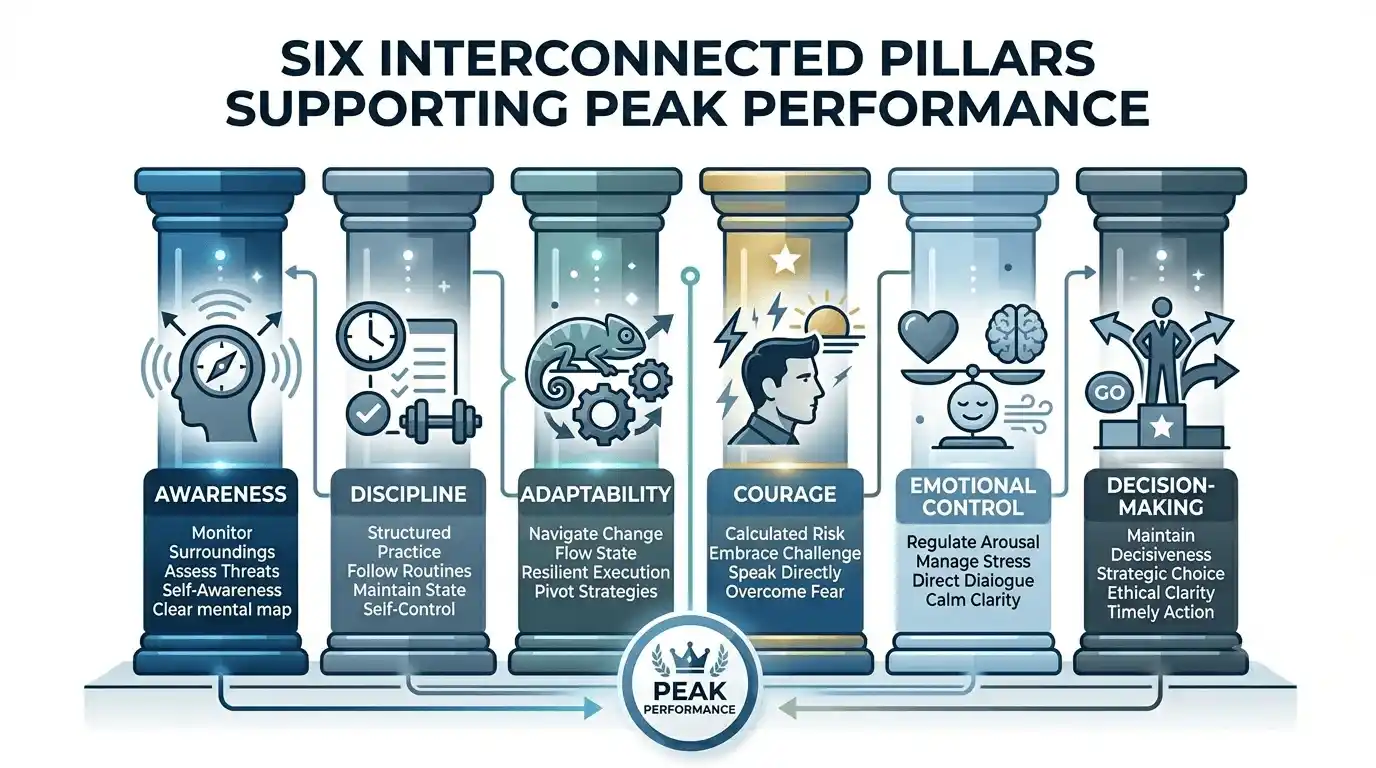
| Element | Purpose | Practical Application |
| Awareness | Risk recognition | Decision-making |
| Discipline | Consistency | Habit formation |
| Adaptability | Flexibility | Problem-solving |
| Courage | Action despite fear | Leadership |
| Emotional Control | Stability | Stress management |
Combat Mindset vs Related Mindset Concepts
Combat Mindset vs Warrior Mindset
Combat mindset often focuses on performance under pressure, while warrior mindset may encompass broader values such as honor, service, and lifelong discipline. Many of these principles overlap with a warrior mindset, which emphasizes resilience, self-mastery, discipline, and long-term personal development.
Combat Mindset vs Fighting Mindset
A fighting mindset generally focuses on confrontation or competition.
Combat mindset includes:
- Strategic thinking
- Awareness
- Preparation
- Emotional regulation
Combat Mindset vs Mental Toughness
| Concept | Primary Focus | Typical Application |
| Combat Mindset | Preparedness | High-pressure situations |
| Warrior Mindset | Values and discipline | Personal development |
| Mental Toughness | Persistence | Long-term challenges |
Common Mistakes When Developing a Combat Mindset
Confusing Confidence With Recklessness
Overconfidence often leads to unnecessary risks. True confidence is based on preparation and competence.
Neglecting Emotional Control
Emotional regulation is essential for maintaining performance under pressure.
Focusing Only on Physical Training
Many beginners invest heavily in physical skills while ignoring mental conditioning.
Your Daily Thrive recommends balancing physical preparation with psychological development.
Ignoring Adaptability
Rigid thinking reduces effectiveness. Adaptability helps individuals respond to changing circumstances.
How to Apply Combat Mindset Principles in Everyday Life
Professional and Leadership Situations
Combat mindset principles can improve:
- Crisis management
- Leadership effectiveness
- Decision-making
- Workplace resilience
Athletic Performance and Competition
Athletes benefit from enhanced focus, confidence, and stress management.
Personal Growth and Self-Development
Combat mindset principles support:
- Goal achievement
- Habit formation
- Self-discipline
- Long-term growth
Managing High-Stress Situations
Individuals can use combat mindset skills to remain calm, assess options, and respond effectively during stressful events.
Difficulty, Time Investment, and Long-Term Development
How Difficult Is It to Develop a Combat Mindset?
Developing a combat mindset requires consistent effort but is achievable for most people.
Beginners often see progress quickly in awareness and confidence, while advanced emotional control takes longer.
How Long Does Mental Conditioning Take?
Initial improvements may appear within weeks. Significant long-term changes often require months of consistent practice.
Progress depends on:
- Training frequency
- Life circumstances
- Stress exposure
- Individual personality traits
Sustainable Development Strategies
Sustainable development involves:
- Gradual progression
- Consistent routines
- Reflection
- Ongoing learning
As of 2026, experts increasingly emphasize sustainable habit-based approaches over extreme motivational strategies.
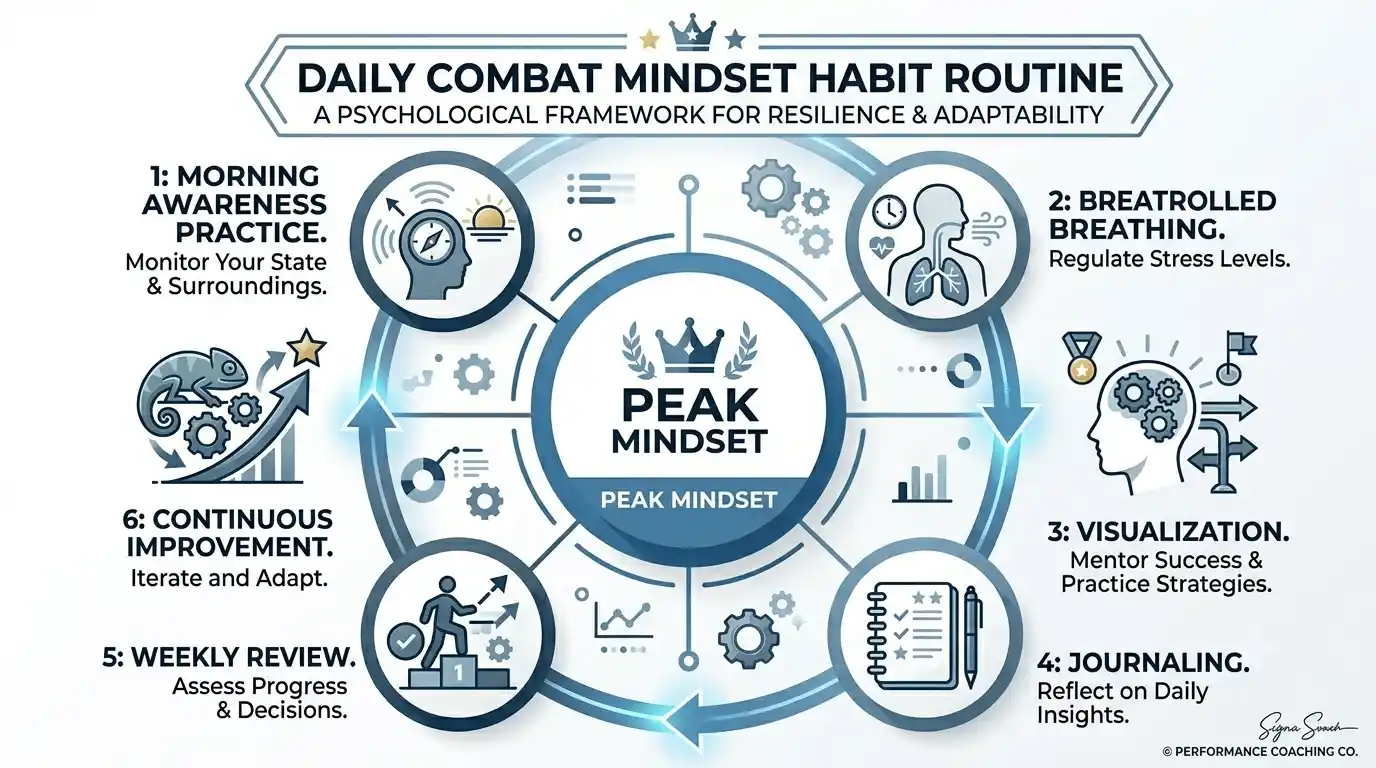
Practice Guide for Building a Combat Mindset
Daily Practices
A practical daily routine may include:
- Five minutes of breathing exercises
- Ten minutes of visualization
- Awareness drills
- Reflection journaling
Weekly Development Plan
Weekly activities can include:
- Goal reviews
- Scenario planning
- Performance evaluations
- Stress-management practice
Tracking Progress and Maintaining Motivation
Useful tools include:
- Journals
- Habit trackers
- Accountability partners
- Progress reviews
In our experience helping readers build resilience, tracking small improvements often increases long-term motivation more effectively than focusing only on major milestones.
Conclusion
A combat mindset is a disciplined mental framework built around awareness, resilience, emotional control, and effective decision-making. Although its roots are often associated with military training, its principles apply equally to leadership, athletics, personal growth, and everyday challenges. Through mental conditioning, consistent practice, and deliberate self-improvement, individuals can strengthen their ability to remain calm and effective under pressure. The most important lesson is that a combat mindset is not about aggression—it is about preparation, adaptability, and maintaining control when it matters most.
Frequently Asked Questions
What is the combat mindset?
Combat mindset is a mental framework focused on awareness, resilience, discipline, and effective decision-making under pressure.
What is combat mindset psychology?
Combat mindset psychology examines how people manage stress, fear, attention, and performance in demanding situations.
How does a warrior mindset differ from a combat mindset?
A warrior mindset often includes broader values such as honor and lifelong discipline, while combat mindset focuses more directly on preparedness and performance under pressure.
What is mental conditioning and why is it important?
Mental conditioning is the systematic development of psychological skills such as focus, confidence, emotional control, and resilience.
What are effective combat mindset exercises?
Effective exercises include visualization, breathing drills, journaling, awareness training, and scenario-based practice.
How is combat mindset used in military training?
Military training uses combat mindset principles to improve readiness, decision-making, discipline, and adaptability under stress.
What is MOAB training and how does it relate to mental conditioning?
MOAB training focuses on managing aggressive behavior through communication, awareness, emotional control, and de-escalation skills.
Can civilians develop a combat mindset?
Yes. Civilians can apply combat mindset principles to leadership, sports, personal development, and stress management.
How long does it take to build mental toughness and resilience?
Many people notice improvements within weeks, while deeper changes often require several months of consistent practice.
Is combat mindset useful outside of combat situations?
Yes. Combat mindset principles support decision-making, leadership, confidence, resilience, and performance in many everyday situations.