

Introduction
The best mindset books help people develop better thinking patterns, stronger habits, and greater emotional resilience. Whether you are looking for a mindset book to improve confidence, increase motivation, or build discipline, the right book can provide practical frameworks for lasting change. Unlike temporary inspiration, effective books on mindset explain how beliefs influence behavior and how small daily actions create long-term results. By understanding growth, productivity, and behavioral psychology principles, readers can develop a mindset that supports personal and professional success.
Quick Summary
- Mindset influences habits, decisions, and long-term outcomes.
- The best mindset books combine psychology with practical action.
- Growth-focused thinking improves resilience and learning ability.
- Motivation starts action, but discipline sustains progress.
- Applying lessons consistently creates meaningful change.
What Is Mindset and Why Does It Matter?
Mindset is the collection of beliefs, attitudes, and assumptions that shape how people interpret situations and respond to challenges.
Understanding why a growth mindset matters can help you recognize how beliefs influence learning, resilience, and long-term improvement.
A person’s mindset affects:
- Confidence levels
- Learning ability
- Emotional resilience
- Productivity
- Goal achievement
Research in behavioral psychology suggests that beliefs influence behavior. When people believe skills can improve through effort, they are more likely to persist during difficulties. This is often referred to as a growth mindset.
A growth-oriented perspective encourages:
- Continuous learning
- Adaptability
- Problem-solving
- Long-term improvement
What Makes a Mindset Book Effective?
Not all mindset books create meaningful change. The most effective books combine evidence-based concepts with practical implementation.
Strong mindset books typically include:
- Behavioral psychology principles
- Habit-building frameworks
- Reflection exercises
- Real-world examples
- Actionable strategies
Books that focus only on motivation often create short-term enthusiasm. Books that teach systems, routines, and behavior change are more likely to produce lasting results.
The Best Mindset Books for Personal Growth and Self-Development
Growth mindset books help readers understand that abilities can develop through learning and effort.
Key themes often include:
- Embracing challenges
- Learning from mistakes
- Developing resilience
- Building self-awareness
- Replacing limiting beliefs
These books encourage readers to view setbacks as feedback rather than evidence of failure. This shift improves adaptability and supports continuous growth.
The Best Books on Motivation and Staying Consistent
Motivation can be useful for getting started, but it is unreliable as a long-term strategy.
Many motivational books explain:
- Why enthusiasm fluctuates
- How habits reduce reliance on motivation
- The importance of routines
- Methods for maintaining momentum
Consistency often improves when people:
- Create clear systems
- Reduce decision fatigue
- Track progress
- Focus on small wins
Books on motivation are most valuable when they teach practical behaviors rather than relying solely on inspiration.
Mindset Books for Success, Achievement, and High Performance
Books on mindset and success often focus on the thinking patterns associated with achievement.
Common concepts include:
- Delayed gratification
- Strategic decision-making
- Personal accountability
- Goal clarity
- Continuous improvement
Successful individuals frequently prioritize systems over outcomes. Rather than focusing only on results, they build behaviors that make results more likely.
Mindset Books for Confidence and Self-Belief
Confidence is largely developed through repeated action and evidence of competence.
The best books for mindset and confidence often teach:
- Self-awareness
- Emotional regulation
- Positive self-talk
- Skill development
- Fear management
Confidence grows when people consistently act despite uncertainty. Repeated action creates experience, and experience reinforces self-belief.
Motivation vs Discipline
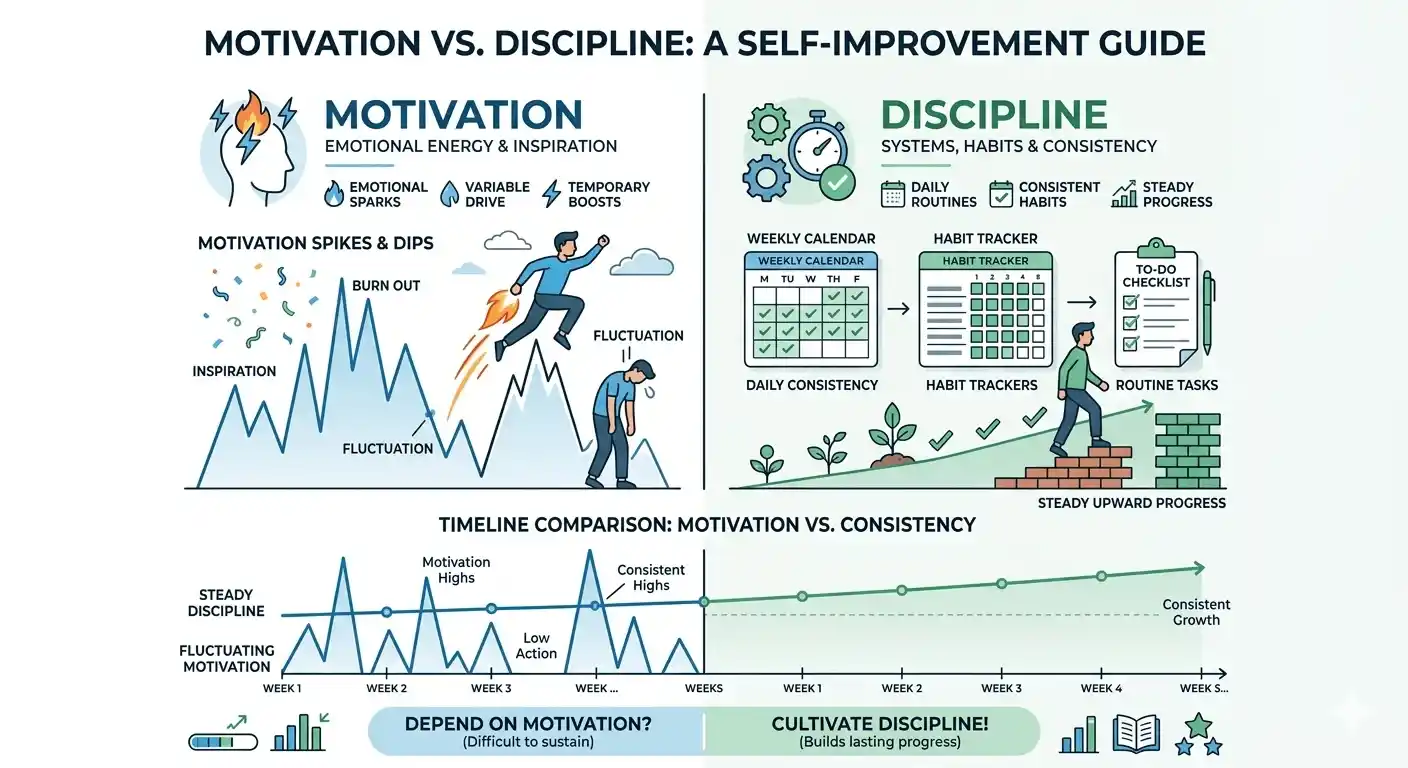
Learning how to develop discipline without depending on motivation can make consistency easier during difficult periods.
| Motivation | Discipline |
| Emotion-driven | Behavior-driven |
| Temporary | Sustainable |
| Depends on mood | Depends on systems |
| Helps initiate action | Maintains action over time |
| Fluctuates frequently | Becomes more stable |
Motivation is valuable for starting. Discipline is essential for continuing.
People who rely only on motivation often struggle with consistency because emotions naturally change. Discipline creates progress regardless of mood.
Fixed Mindset vs Growth Mindset
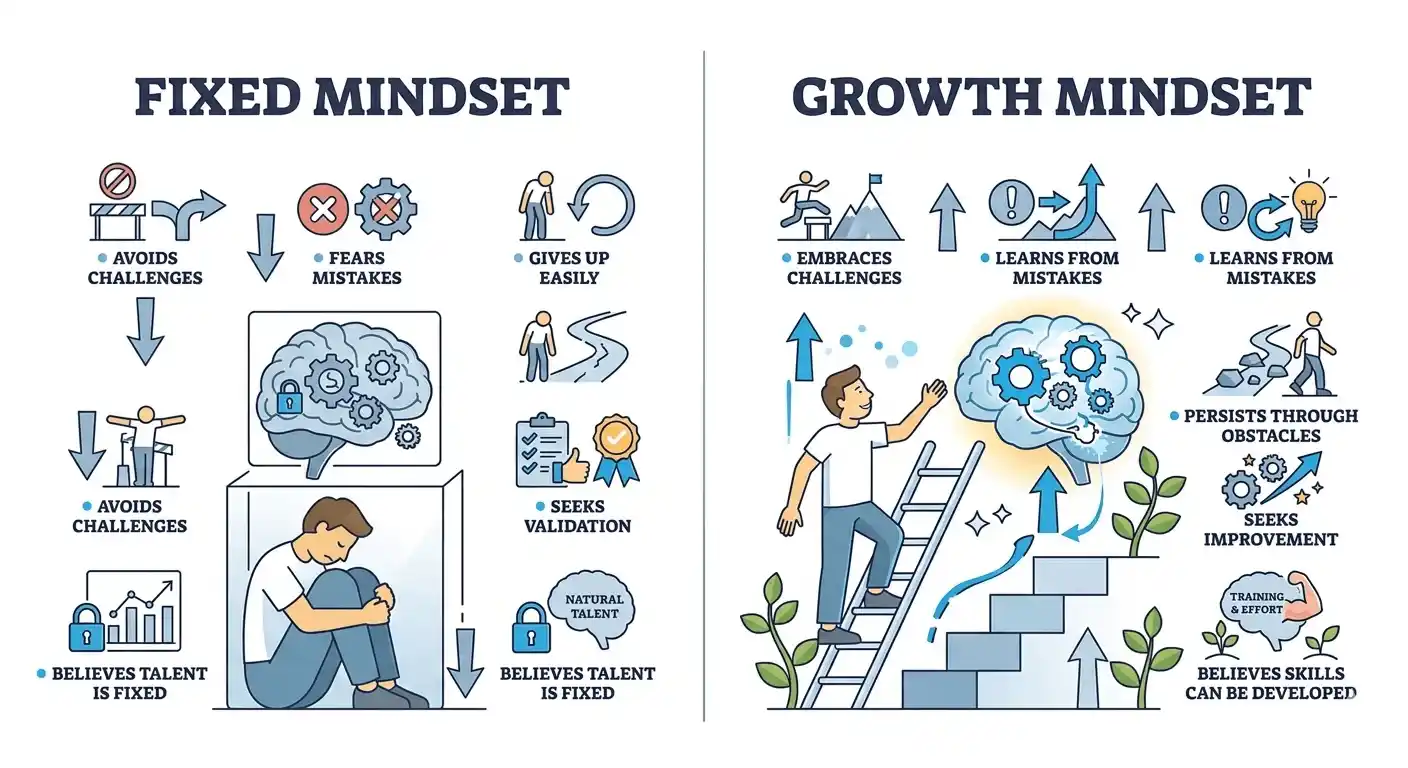
| Fixed Mindset | Growth Mindset |
| Avoids challenges | Accepts challenges |
| Fears mistakes | Learns from mistakes |
| Focuses on talent | Focuses on effort |
| Seeks validation | Seeks improvement |
| Gives up easily | Persists longer |
Growth mindset books emphasize that improvement is a process rather than a fixed trait.
Why People Struggle to Change Their Mindset
Mindset change is difficult because existing beliefs often become deeply connected to identity.
Common barriers include:
Limiting Beliefs
People may believe they are naturally bad at certain skills.
Fear of Failure
Failure can feel like a threat to self-worth.
Negative Self-Talk
Repeated negative thoughts reinforce unhelpful behaviors.
Comfort Zone Dependence
Familiar patterns often feel safer than growth-oriented actions.
Recognizing these barriers is the first step toward overcoming them.
Common Mistakes People Make When Reading Mindset Books
Many readers consume information without applying it.
Common mistakes include:
- Reading without implementation
- Seeking constant motivation
- Expecting immediate results
- Switching strategies too frequently
- Ignoring habit formation
Knowledge alone rarely creates change. Consistent action does.
How to Apply Lessons From Mindset Books in Daily Life
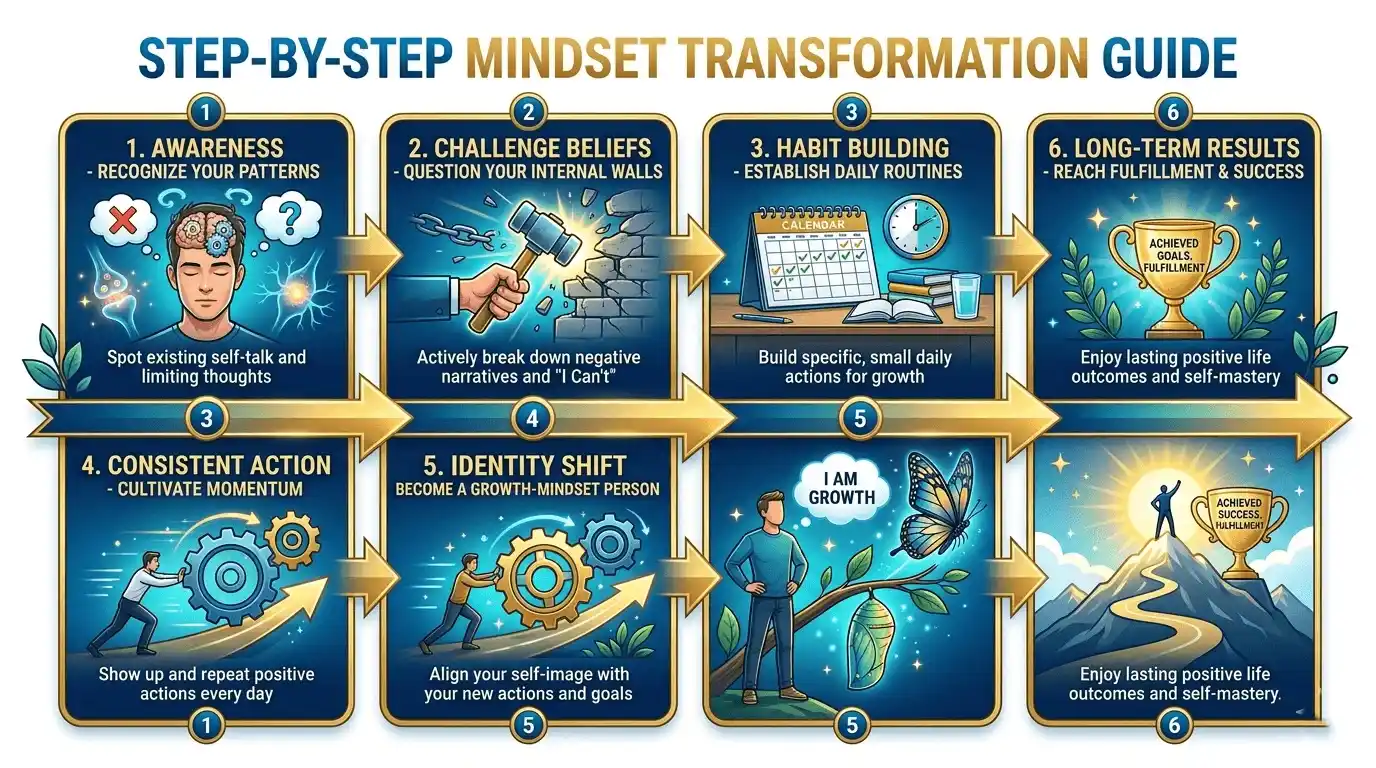
Building small habits consistently is one of the most effective ways to turn mindset changes into long-term behavior.
Practical personal development activities can help reinforce new behaviors and create awareness of progress.
Step 1 – Identify Current Thinking Patterns
Observe recurring beliefs and assumptions.
Step 2 – Challenge Limiting Beliefs
Ask whether evidence supports those beliefs.
Step 3 – Build Small Daily Habits
Focus on manageable actions rather than major changes.
Building small habits consistently is one of the most effective ways to turn mindset changes into long-term behavior.
Step 4 – Track Progress Consistently
Use journals, habit trackers, or weekly reviews.
Step 5 – Reinforce Identity-Based Change
Adopt identities aligned with desired behaviors.
For example:
- “I am becoming a disciplined person.”
- “I am someone who learns continuously.”
Identity-based habits tend to be more sustainable than outcome-based goals.
Common Mindset Problems and Practical Solutions
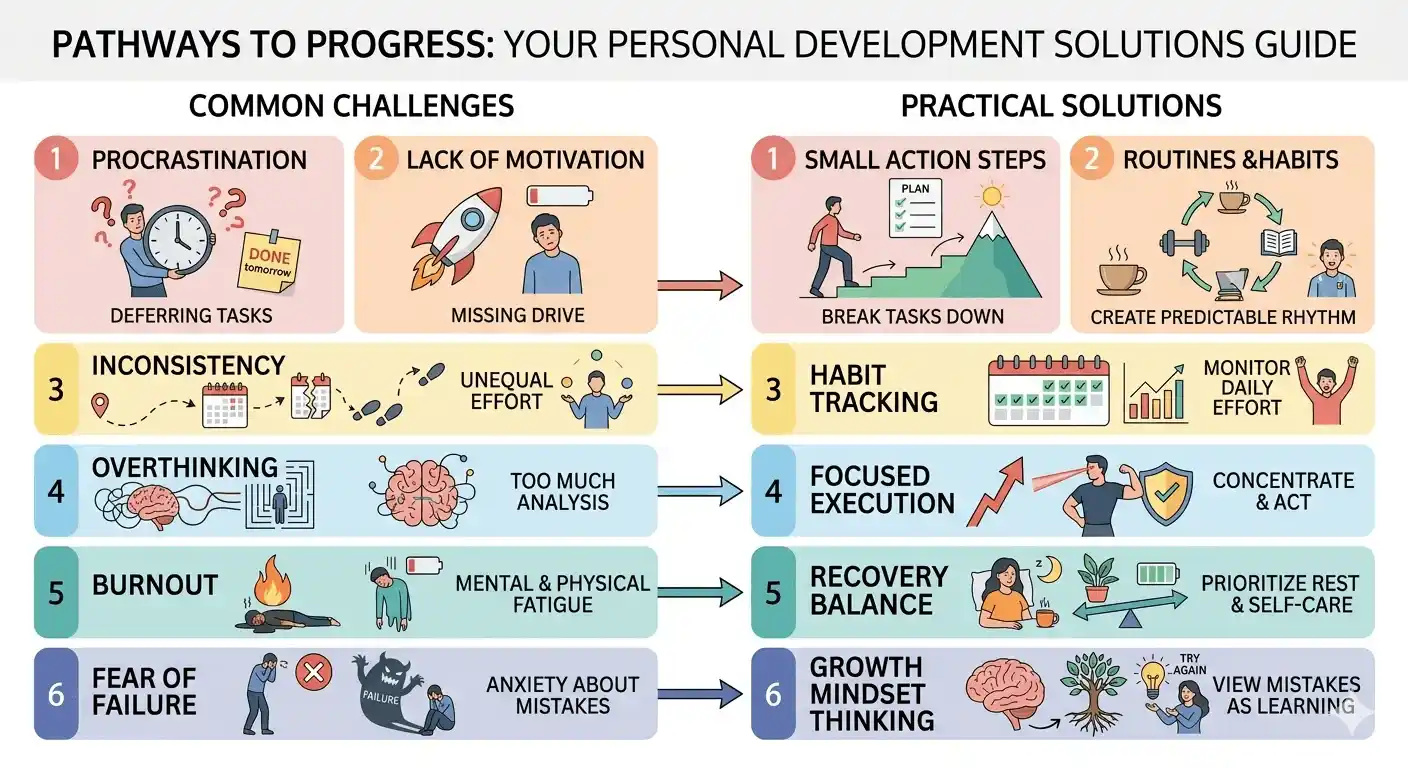
| Problem | Why It Happens | Practical Solution |
| Procrastination | Fear and overwhelm | Break tasks into smaller steps |
| Lack of Motivation | Emotional dependence | Create routines and systems |
| Inconsistency | Weak habit structure | Track behaviors daily |
| Overthinking | Fear of mistakes | Prioritize action over perfection |
| Burnout | Unsustainable effort | Schedule recovery and balance |
| Fear of Failure | Identity attachment | Treat failure as information |
Real-Life Scenarios: Choosing the Right Mindset Book for Your Goal
If You Want More Confidence
Choose books focused on self-belief, courage, and behavioral confidence.
If You Want More Motivation
Choose books that explain action, consistency, and habit formation.
If You Want Greater Discipline
Focus on books covering routines, systems, and self-control.
If You Want a Growth Mindset
Select books centered on learning, adaptability, and resilience.
If You Want Better Career Performance
Choose books that combine mindset development with productivity and decision-making.
Common Myths About Mindset Books
Myth: Reading Alone Creates Change
Reality: Application creates change.
Myth: Motivation Solves Everything
Reality: Systems and habits matter more over time.
Myth: Positive Thinking Is Enough
Reality: Positive thinking must be supported by action.
Myth: Successful People Never Struggle
Reality: Most successful individuals experience setbacks and learn from them.
The most effective mindset development combines awareness, action, and consistency.
Conclusion
The best mindset books provide more than inspiration. They offer practical frameworks for improving thinking patterns, building productive habits, strengthening confidence, and achieving long-term goals. Lasting personal growth occurs when readers consistently apply what they learn rather than simply consuming information. Whether your goal is motivation, resilience, confidence, or success, the right mindset books can help create meaningful and sustainable change.
FAQs
What are the best mindset books for personal growth?
The best books typically focus on growth mindset, resilience, habit formation, self-awareness, and continuous improvement.
Which is the best book to control your mind?
Books that teach emotional regulation, self-discipline, cognitive awareness, and mental resilience are often most effective for improving self-control.
What is the #1 motivational book of all time?
There is no universal answer. The most effective motivational book depends on a person’s goals, challenges, and learning preferences.
Which is the most life-changing book?
A life-changing book is one that creates lasting changes in thinking and behavior. Different readers benefit from different books based on their circumstances.
What are 5 books everyone should read for mindset development?
A balanced reading list often includes books covering growth mindset, habits, productivity, resilience, and behavioral psychology.
Why do I struggle with consistency?
Consistency often breaks down because of unclear systems, unrealistic expectations, emotional dependence on motivation, or weak habits.
How do I stay disciplined long-term?
Build routines, reduce decision fatigue, track behaviors, and focus on systems rather than outcomes.
What if I lose motivation?
Continue following your routine. Consistent habits help maintain progress when motivation naturally decreases.
Can mindset books improve confidence?
Yes. Confidence improves when mindset books encourage action, self-awareness, skill development, and evidence-based self-belief.
How long does it take to change your mindset?
Mindset change varies by individual. Consistent practice and repeated behavioral reinforcement typically produce gradual improvements over weeks and months.