

Introduction
Being present in a relationship means giving your partner full emotional, mental, and physical attention during interactions. In today’s distraction-heavy world, many people struggle with this skill, even when they deeply care about their partner. Learning how to be present in a relationship improves communication, emotional intimacy, and long-term trust. Presence is not about perfection but about intentional attention. When partners feel seen and understood, connection naturally deepens, creating stronger and more stable relationships over time.
Quick Summary Block
- Presence means focusing fully on your partner instead of distractions or assumptions
- Emotional presence builds trust, intimacy, and communication quality
- Daily habits matter more than occasional emotional efforts
- Mindfulness and attention control improve relationship satisfaction
- Consistency is the foundation of lasting emotional connection
What Does It Mean to Be Present in a Relationship?
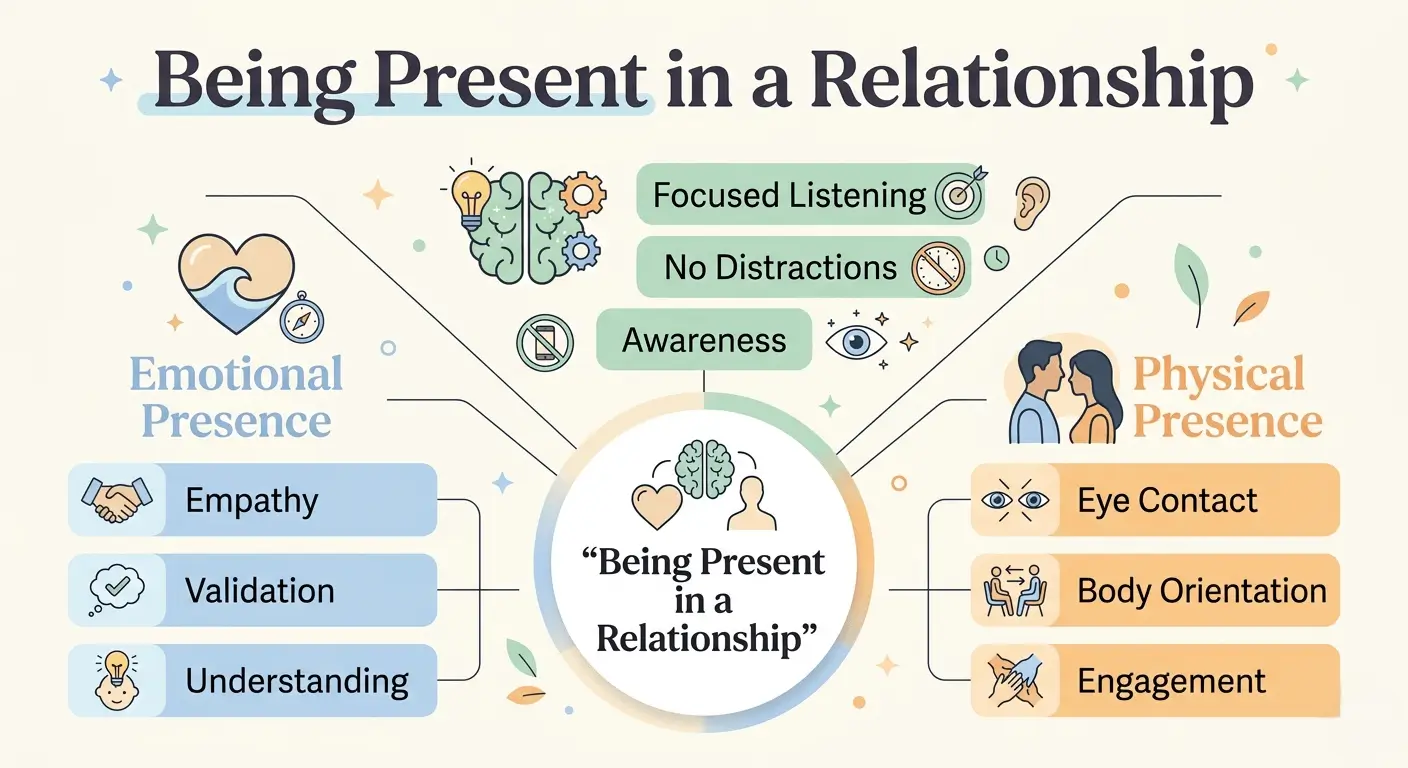
Being present in a relationship means fully engaging with your partner in the moment rather than being mentally or emotionally elsewhere.
It involves active attention, emotional availability, and genuine curiosity. Many couples are physically together but mentally disconnected. True presence bridges this gap.
Key aspects include:
- Listening without interrupting or planning responses
- Observing verbal and nonverbal cues
- Responding with empathy
- Showing emotional interest in your partner’s experiences
Presence transforms interaction into connection.
Why Being Present Is Essential for Healthy Relationships
Presence is essential because it builds emotional safety and trust, which are the foundation of healthy relationships.
When partners feel heard and valued, they become more open and emotionally secure. This reduces misunderstandings and strengthens long-term connection.
The Psychology Behind Feeling Connected
Humans are wired for belonging and validation. When attention is given, the brain interprets it as care and emotional safety. This strengthens attachment and reinforces bonding behaviors over time.
Signs You Are Not Being Present in a Relationship
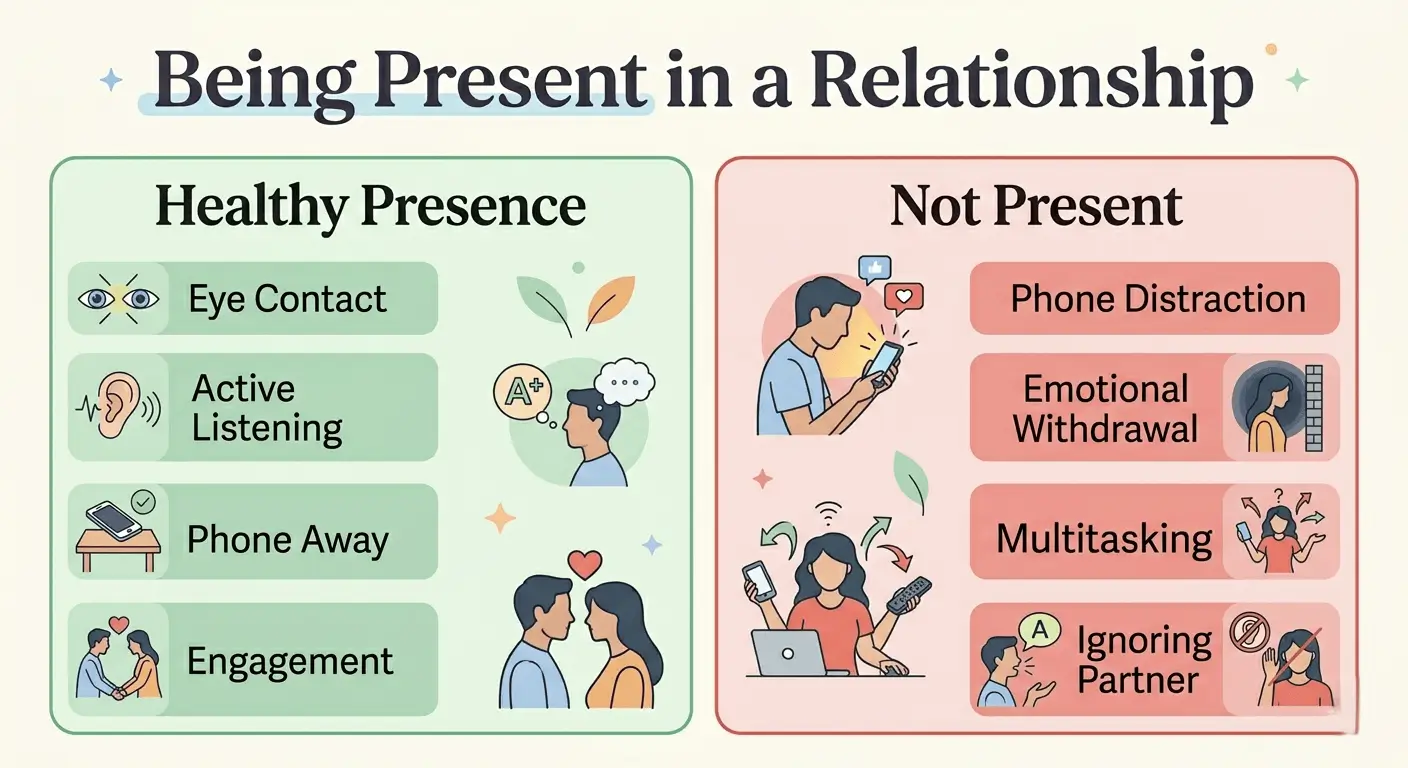
Common signs of not being present in a relationship include distraction, emotional withdrawal, and lack of engagement.
Indicators include:
- Frequent phone use during conversations
- Distracted or shallow listening
- Thinking about external stressors
- Avoiding meaningful emotional discussions
Hidden Behaviors That Create Emotional Distance
Subtle habits also weaken connection:
- Multitasking during communication
- Assuming instead of asking
- Emotional avoidance
- Passive or automatic responses
Common Reasons People Struggle to Stay Present
Many people struggle due to internal and external pressures.
Stress and Mental Overload
Work pressure, digital overload, and constant decision-making reduce emotional bandwidth.
Fear of Vulnerability
Emotional openness feels risky for some individuals, leading to withdrawal.
Relationship Complacency
Familiarity can reduce curiosity and effort.
Avoidant Attachment Tendencies
Some individuals struggle with closeness and may withdraw when emotional intensity increases.
How to Be More Present in a Relationship Every Day
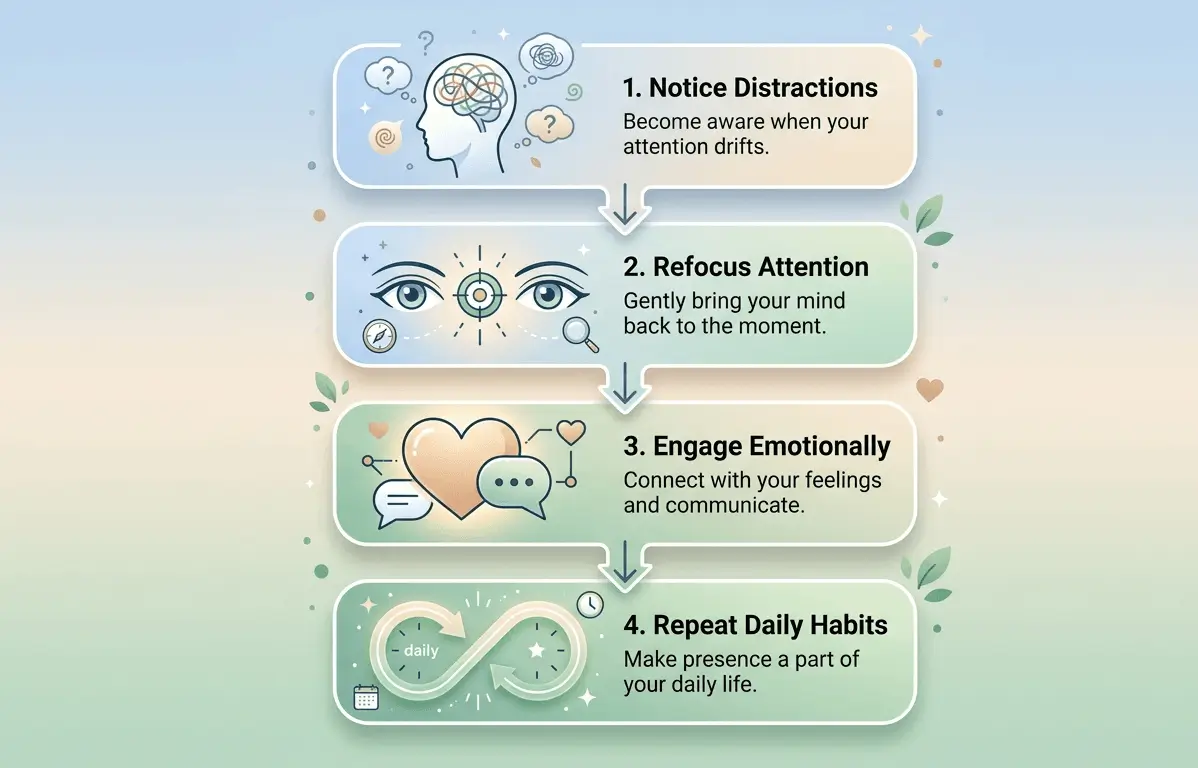
Learning how to be more present in a relationship requires consistent daily actions.
Practice Active Listening
Focus fully on understanding rather than responding. Reflect and clarify what your partner says.
Eliminate Common Distractions
Reduce phone usage and create device-free interaction time.
Focus on the Current Moment
Notice when your mind wanders and gently return attention to your partner.
Increase Curiosity About Your Partner
Ask deeper questions and stay interested in their evolving thoughts and emotions.
How to Be Emotionally Present in a Relationship
Emotional presence is about connection, not just attention.
Share Your Inner Experience
Express thoughts and emotions honestly to build trust.
Learn to Validate Emotions
Acknowledge feelings without immediately trying to fix them.
Respond Instead of React
Pause before reacting to improve emotional communication quality.
How to Be Present With Your Partner During Difficult Times
During stress, presence becomes more important than solutions.
What partners often need:
- Emotional support over advice
- Understanding over correction
- Consistency over perfection
How Presence Changes Across Different Relationship Types
How to Be Present in a Marriage
Balance responsibilities with intentional emotional connection.
How to Be Present With Your Girlfriend or Romantic Partner
Focus on personalized attention, emotional awareness, and consistent engagement.
How to Be More Present in a Long-Distance Relationship
Use intentional communication, structured conversations, and emotional consistency.
Motivation vs Discipline in Relationship Presence
| Motivation | Discipline |
|---|---|
| Emotion-driven | Habit-driven |
| Temporary | Sustainable |
| Inconsistent | Reliable |
| Feeling-based | Commitment-based |
| Short bursts | Long-term stability |
Consistency vs Intensity in Building Connection
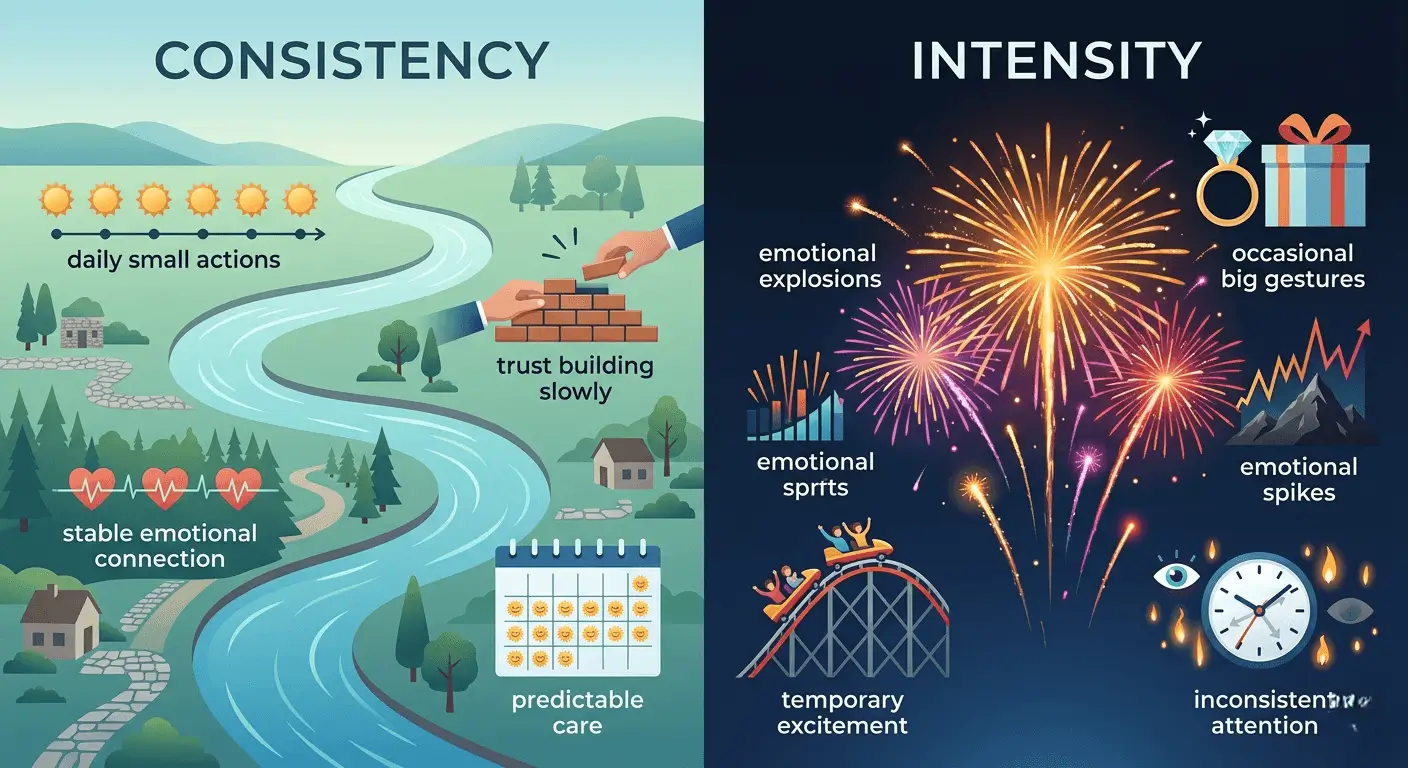
| Consistency | Intensity |
| Daily engagement | Occasional gestures |
| Builds trust | Creates short spikes |
| Sustainable | Hard to maintain |
| Predictable | Emotionally irregular |
| Strengthens security | Temporary impact |
Practical Habits That Improve Presence
| Habit | Why It Works | Outcome |
| Daily check-ins | Builds communication | Stronger connection |
| Active listening | Improves understanding | Fewer conflicts |
| Phone-free time | Reduces distraction | Better attention |
| Weekly bonding time | Strengthens connection | Higher satisfaction |
| Gratitude practice | Builds positivity | More appreciation |
Common Myths About Being Present in a Relationship
- Presence means constant togetherness
- Love alone is enough for connection
- Big gestures matter more than daily attention
- Emotional presence is automatic
Why People Fail to Stay Consistent and How to Fix It
Procrastination in Relationships
People assume there will always be time later. Fix: schedule intentional connection.
Lack of Motivation
Emotions fluctuate. Fix: rely on commitment, not feelings.
Overthinking
Fear of saying the wrong thing reduces expression. Fix: prioritize authenticity.
Burnout and Emotional Exhaustion
Stress reduces capacity. Fix: improve self-care and balance.
Fear of Failure or Rejection
Vulnerability feels risky. Fix: start with small emotional steps.
A Simple Framework for Becoming More Present
- Notice distractions
- Refocus attention intentionally
- Engage emotionally
- Build consistent habits
- Reflect and improve
Conclusion
Learning how to be present in a relationship is about consistent attention, emotional awareness, and intentional connection. Strong relationships are built through daily moments of engagement rather than occasional efforts. When presence becomes a habit, trust, intimacy, and emotional safety naturally strengthen over time.
FAQ
1. What does it mean to be present in a relationship?
It means giving full emotional and mental attention during interactions.
2. Why do I struggle to stay present with my partner?
Stress, distractions, emotional avoidance, and mental overload often reduce presence.
3. How can I be more emotionally present in a relationship?
Practice listening, validation, emotional expression, and reduce distractions.
4. How do I stay present in a long-distance relationship?
Use structured communication and focus on emotional quality over quantity.
5. Can mindfulness improve my relationship?
Yes, it improves awareness, reduces reactivity, and enhances connection.
6. Why is consistency more important than grand gestures?
Consistency builds trust and emotional security over time.
7. How do I become more present with avoidant attachment?
Start with small emotional steps and build gradual vulnerability.
8. What are signs of not being present?
Distraction, withdrawal, lack of curiosity, and poor engagement.