
Table of Contents
ToggleIntroduction
Small habits that changed my life are simple daily actions that appear insignificant in the moment but create powerful long-term transformation. These habits work because they focus on consistency rather than intensity, allowing gradual improvement in behavior, mindset, productivity, and emotional stability.
Lasting change rarely comes from dramatic shifts. Instead, it emerges through repeated micro-actions that compound over time. This is the foundation of habit formation and behavioral psychology. When small actions are repeated daily, they reshape identity and decision-making patterns, leading to sustainable personal growth.
Quick Summary
- Small habits are tiny actions that create long-term transformation
- Consistency is more powerful than intensity in behavior change
- Daily repetition builds identity and discipline over time
- Small improvements compound into major life results
- Systems matter more than motivation for lasting success
What Are Small Habits and Why Do They Have Such a Big Impact?
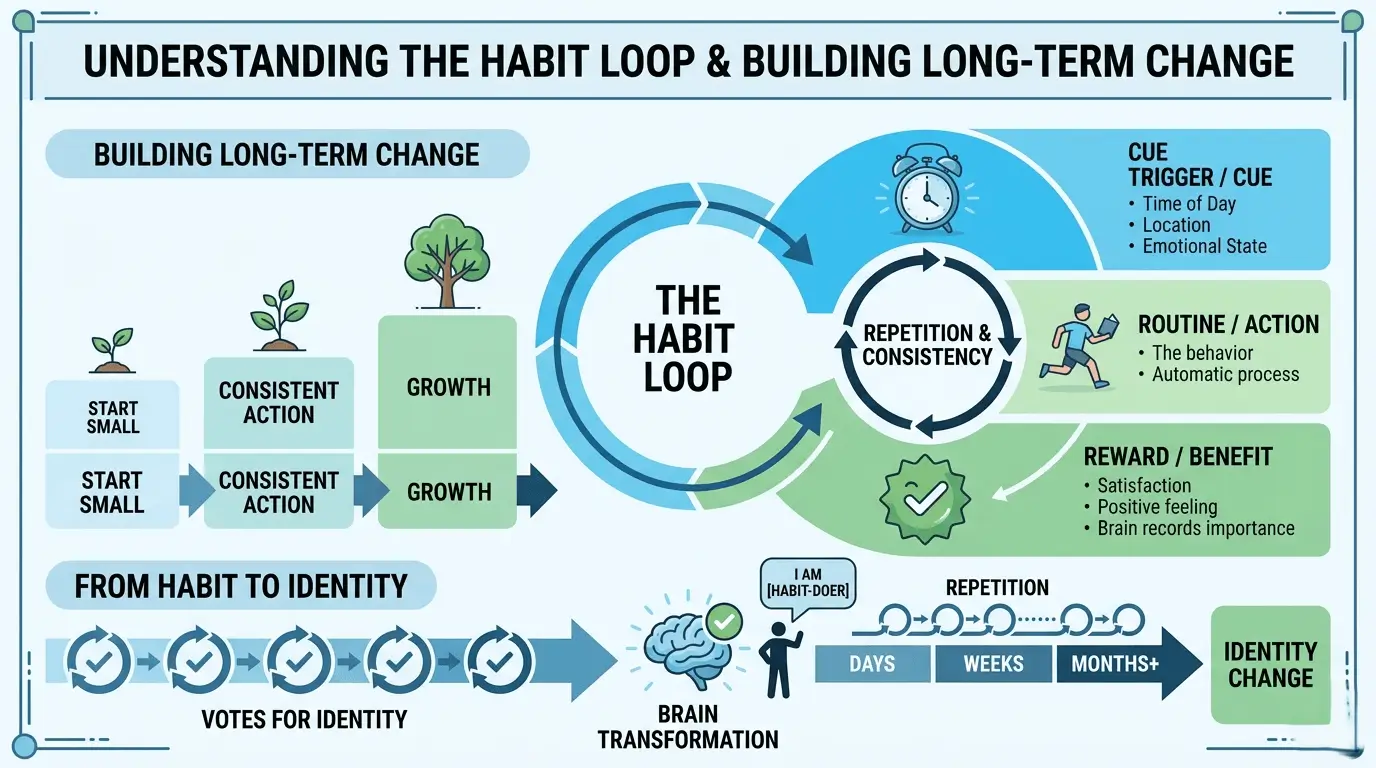
Small habits are micro-behaviors repeated consistently that gradually shape long-term outcomes. They operate through habit loops consisting of cue, routine, and reward, which help automate behavior.
The brain prefers small changes because they require less cognitive effort. Once repeated, these actions become automatic, reducing resistance and increasing consistency.
The Science Behind Small Behavioral Changes
Small habits work because of neuroplasticity, which allows the brain to strengthen neural pathways through repetition. Each repetition reinforces behavior, making it easier to perform over time.
Incremental improvement reduces procrastination because the task feels manageable. Research in behavioral psychology shows that small consistent actions outperform large inconsistent efforts in long-term success.
Why Most People Underestimate Tiny Habits
People often underestimate small habits because they expect fast results. Common reasons include:
- Desire for instant success
- All-or-nothing thinking
- Focus on outcomes instead of systems
- Misjudging long-term compounding effects
Small Habits That Changed My Life and Why They Worked
Reading for Five Minutes Daily
Reading daily builds knowledge gradually. Even small sessions compound into deep learning over time while reducing excessive screen usage.
Planning the Next Day Before Bed
Planning reduces decision fatigue and increases clarity. It improves morning productivity by removing uncertainty.
Daily Reflection and Journaling
Journaling increases self-awareness and emotional control. It helps identify behavioral patterns and improves decision-making.
Drinking Water First Thing in the Morning
This improves hydration, energy levels, and mental clarity. It also triggers other healthy routines through habit stacking.
Taking Short Daily Walks
Walking reduces stress and improves cognitive clarity. Its effectiveness comes from consistency rather than intensity.
Small Habits Examples You Can Start Today
- Making the bed
- Writing one gratitude note
- Reading one page
- Stretching for two minutes
- Reviewing goals daily
- Tidying one small area
- Practicing mindful breathing
- Tracking one habit
- Limiting social media usage
- Writing tomorrow’s top priority
Why Small Habits Often Work Better Than Major Life Changes
| Small Habits | Major Life Changes |
|---|---|
| Easy to start | Hard to maintain |
| Low resistance | High resistance |
| Sustainable | Often temporary |
| Build momentum | Risk burnout |
| Encourage consistency | Depend on motivation |
Small habits work better because they integrate easily into daily life and reduce psychological resistance.
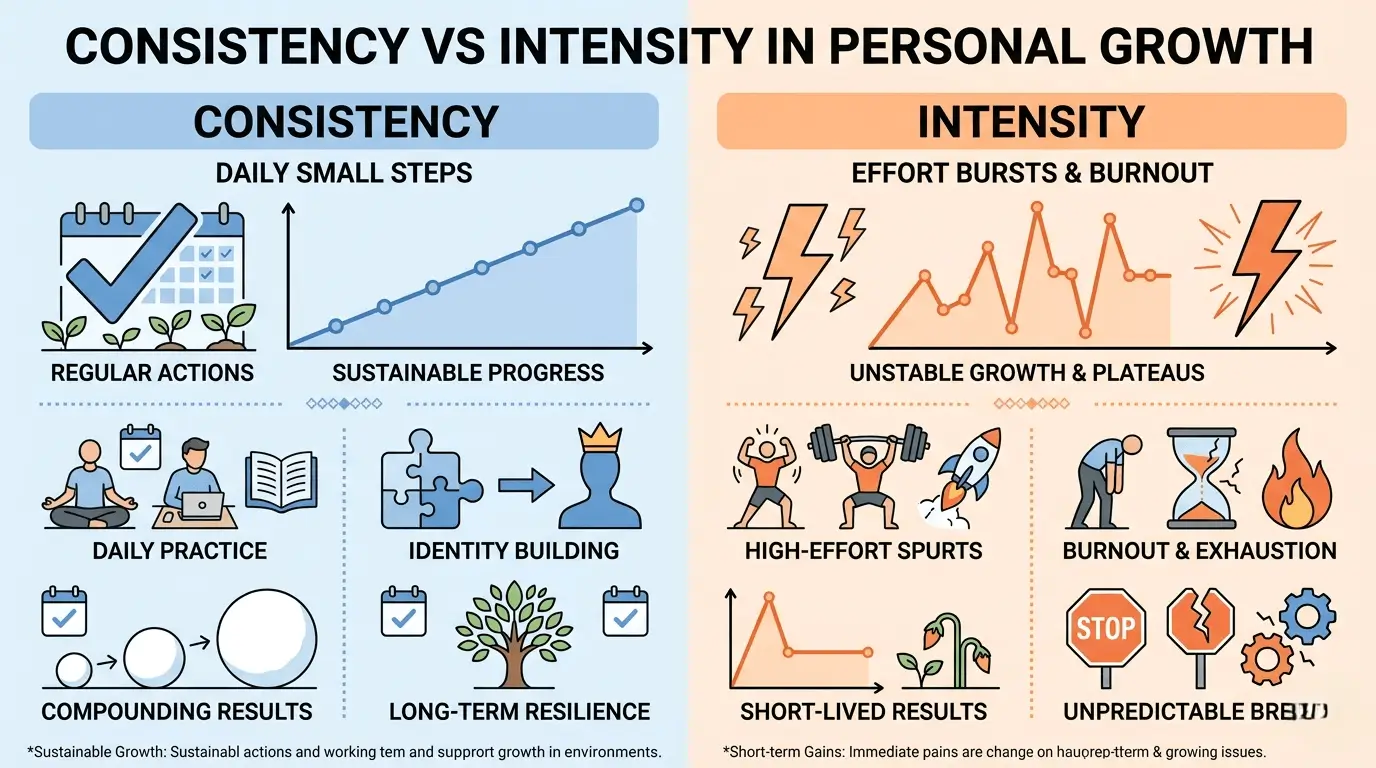
Consistency vs Intensity in Personal Growth
| Consistency | Intensity |
|---|---|
| Builds identity | Creates short-term motivation |
| Sustainable | Exhausting over time |
| Produces compounding results | Produces temporary spikes |
| Easy to repeat | Hard to sustain |
How Consistency Creates Identity Change
Repeated actions shape self-identity. Over time, individuals begin to think, “I am someone who follows through,” which reinforces long-term behavioral alignment.
Small Habits That Will Change Your Life Forever
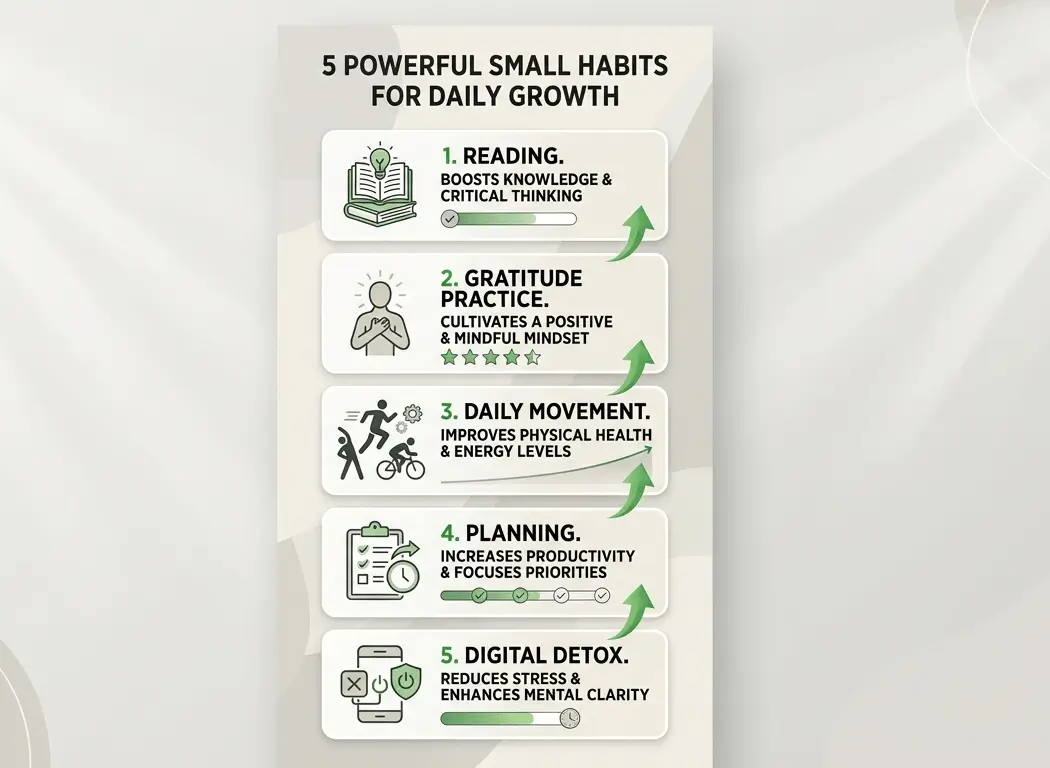
Daily Reading
Works by improving knowledge and focus.
Obstacle: distraction.
Solution: start with 5 minutes daily.
Gratitude Practice
Improves emotional balance and positivity.
Obstacle: forgetting.
Solution: link to bedtime routine.
Daily Movement
Improves physical and mental health.
Obstacle: lack of time.
Solution: short walks or stretching.
Intentional Planning
Improves productivity and clarity.
Obstacle: inconsistency.
Solution: plan the night before.
Limiting Digital Distractions
Improves focus and attention span.
Obstacle: habit dependency.
Solution: set time boundaries.
Daily Habits to Change Your Life Forever
Morning:
- Hydration
- Goal review
- Light movement
Midday:
- Focused deep work
- Short mindful breaks
Evening:
- Reflection
- Next-day planning
Daily Habits That Will Change Your Life
- Reading
- Exercise
- Journaling
- Meditation
- Goal tracking
- Gratitude practice
- Sleep optimization
- Learning new skills
- Time blocking
- Daily reflection
How to Change Lifestyle Habits Without Feeling Overwhelmed
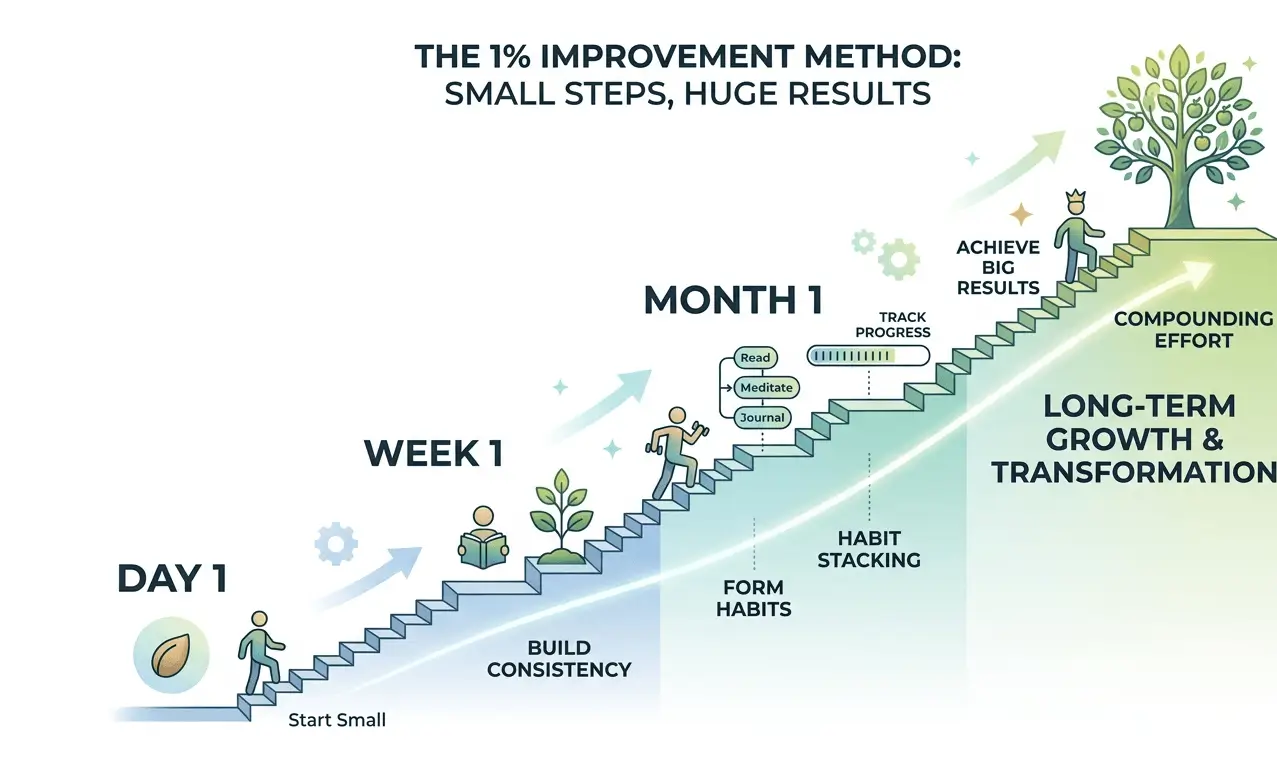
The key is starting small and focusing on systems instead of outcomes. Overwhelm occurs when habits are too large or complex. Reducing scope improves consistency.
The One-Percent Improvement Method
Small daily improvements accumulate into major long-term results through compounding effects.
Habit Stacking
Attach new habits to existing routines to improve consistency naturally.
The Biggest Reasons People Fail to Maintain Good Habits
- No immediate results
- Dependence on motivation
- Unrealistic expectations
- Burnout from overcommitment
Common Mental Barriers That Prevent Lasting Change
Procrastination
Why It Happens: Task avoidance and discomfort
How to Fix: Two-minute rule
How to Prevent: Reduce friction and create cues
Lack of Motivation
Why It Happens: Emotional dependency
How to Fix: Build systems
How to Prevent: Automate routines
Overthinking
Why It Happens: Fear of imperfection
How to Fix: Take action first
How to Prevent: Limit decision complexity
Fear of Failure
Why It Happens: Identity protection
How to Fix: Experiment mindset
How to Prevent: Focus on learning, not outcomes
What Actually Works vs Common Habit Myths
| Myth | Reality |
|---|---|
| Motivation drives success | Action creates motivation |
| Big changes create big results | Small actions compound over time |
| Missing one day ruins progress | Recovery is part of growth |
| Perfect routines are required | Flexible systems work better |
Sustainable Habits vs Unsustainable Habits
| Sustainable Habits | Unsustainable Habits |
|---|---|
| Flexible | Rigid |
| Realistic | Extreme |
| Identity-based | Outcome-focused |
| Easy to repeat | Hard to maintain |
Building a Personal Habit System for Long-Term Growth
Daily Routine Structure
Use fixed anchors like morning planning, midday focus, and evening reflection.
Weekly Review Process
Evaluate progress and adjust habits based on consistency, not perfection.
Measuring Progress Without Obsessing Over Results
Track behavior consistency instead of outcome pressure.
Real-Life Scenarios: How Small Habits Create Big Life Changes
Busy Professional
Challenge: limited time
Habits: planning, short walks
Outcome: improved productivity and reduced stress
Student
Challenge: distractions
Habits: reading, time blocking
Outcome: better focus and academic performance
Parent
Challenge: overwhelm
Habits: gratitude, reflection
Outcome: emotional stability
Someone Starting Personal Development
Challenge: inconsistency
Habits: one small habit daily
Outcome: identity-based change over time
Conclusion
Small habits that changed my life were not dramatic actions but simple daily behaviors repeated consistently. Their power comes from compounding effects, identity formation, and system-based improvement. By focusing on small, sustainable actions, anyone can create long-term personal growth without relying on motivation or drastic lifestyle changes.
FAQs
What are the best small habits that can change your life?
Reading, journaling, exercise, gratitude, and planning are highly effective small habits.
Why do small habits work better than major life changes?
They are easier to maintain and build long-term consistency.
How long does it take for a habit to become automatic?
It varies, but consistent repetition over weeks helps automate behavior.
Why do I struggle with consistency?
Most inconsistency comes from relying on motivation instead of systems.
What should I do if I lose motivation?
Reduce the habit to its smallest version and continue.
How can I avoid feeling overwhelmed?
Start with one small habit and use habit stacking.
What is the difference between motivation and discipline?
Motivation is temporary; discipline is system-driven consistency.
Can small habits really create big results?
Yes, through long-term compounding of daily actions.
How do I recover after breaking a streak?
Restart immediately without guilt.
Which habits give the highest return?
Reading, exercise, planning, and reducing distractions.









One Response