

Introduction
Mindset 2 Wellness is a wellness-focused practice built around supporting mental, emotional, and overall well-being. Rather than treating mental health as a single issue to fix, this approach blends evidence-based mental health support with holistic wellness strategies — habits, routines, and personalized guidance that work together to improve quality of life. For anyone researching how a wellness practice operates, what services are typically available, and how to know if this type of support is the right fit, this article breaks down the core elements of the Mindset 2 Wellness approach and what a wellness journey generally looks like from first appointment to long-term care.
Quick Summary
- Mindset 2 Wellness focuses on improving mental and emotional well-being through supportive wellness services.
- Wellness approaches often combine counseling, stress management, self-care, and personalized support.
- Understanding available services helps individuals choose the right type of care for their needs.
- Mental wellness is a long-term process supported by healthy habits and professional guidance.
What Is Mindset 2 Wellness?
Understanding the Purpose of Mindset 2 Wellness
Mindset 2 Wellness operates on the principle that mental health is connected to every other part of a person’s life — physical health, relationships, daily habits, and overall lifestyle. This is often described as holistic wellness: an approach that looks at the whole person rather than isolating a single symptom or concern. Instead of addressing mental wellness in isolation, this philosophy considers how sleep, nutrition, stress levels, and social connection all interact with emotional health. The goal is to build a foundation where physical, emotional, and mental health support one another, rather than treating them as separate categories.
Who Can Benefit from Wellness Services?
Wellness services are designed for a wide range of people, not just those in crisis. Common groups who benefit include:
- Individuals experiencing everyday stress
- People seeking anxiety management strategies
- Those focused on personal growth
- Individuals wanting general lifestyle improvement
- People interested in preventive mental wellness before problems escalate
Services Offered by Mindset 2 Wellness
The services offered by Mindset 2 Wellness are typically structured to address both immediate concerns and long-term wellness goals. Common service categories include:
- Individual counseling
- Mental wellness coaching
- Stress management support
- Anxiety support strategies
- Emotional wellness guidance
- Lifestyle coaching
- Self-care planning
- Wellness education
How Services Are Typically Personalized
Personalization is central to how wellness services function effectively. Providers generally begin with an assessment to understand a person’s individual goals, current challenges, and history. From there, a customized plan is developed that reflects those specific needs rather than a one-size-fits-all program. Follow-up care is built into this process as well, allowing the plan to be adjusted as circumstances change or progress is made.
Why Mental Wellness Matters
Mental Health and Overall Wellness
Mental health directly shapes multiple areas of daily life. Strong mental wellness contributes to:
- Greater emotional resilience during difficult periods
- Healthier, more stable relationships
- A stronger connection between mental and physical health
- Improved work-life balance
- More effective stress reduction
Because mental and physical health are closely linked, neglecting one often affects the other — chronic stress, for example, can contribute to physical symptoms, while poor physical health can worsen mood and anxiety.
Mental Health Wellness Examples
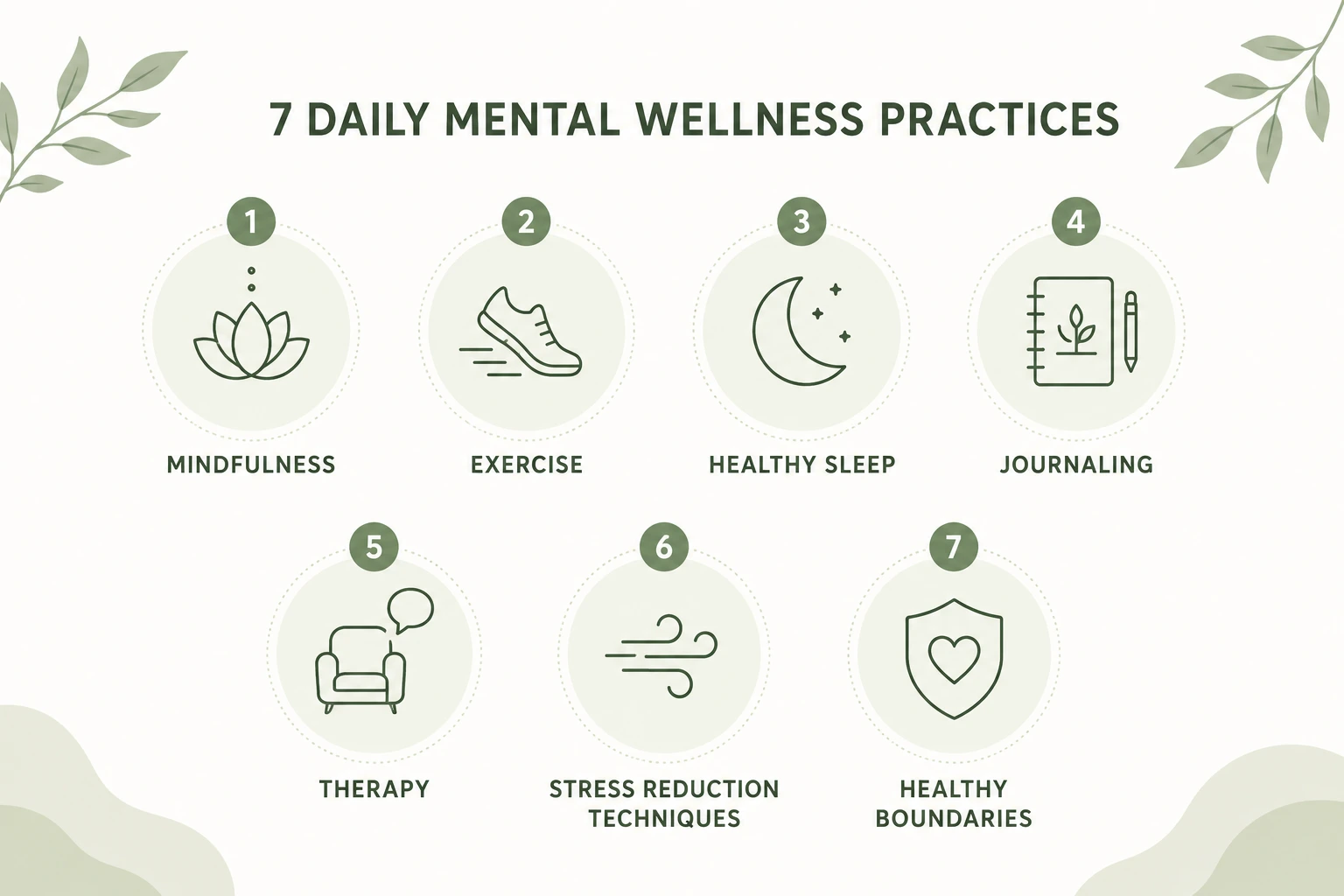
Mental health wellness examples are practical actions that support emotional and psychological stability on a regular basis. Common examples include:
- Daily mindfulness practice
- Regular physical exercise
- Consistent, healthy sleep habits
- Journaling to process thoughts and emotions
- Attending therapy or counseling sessions
- Practicing stress reduction techniques
- Setting and maintaining healthy boundaries
These examples are widely recognized in behavioral science as accessible ways to support mental wellness without requiring major lifestyle overhauls.
How Wellness Services Support Long-Term Well-Being
Short-Term Benefits
In the early stages of engaging with wellness services, individuals often notice:
- Reduced day-to-day stress
- Improved mood
- Better focus and mental clarity
- Increased emotional awareness
Long-Term Benefits
Over time, consistent engagement with wellness support tends to produce deeper, more lasting changes, including:
- Greater emotional resilience
- Healthier daily habits
- Improved relationships
- Stronger coping strategies for future challenges
- Sustainable, long-term wellness rather than short-lived fixes
What to Expect During Your First Wellness Appointment
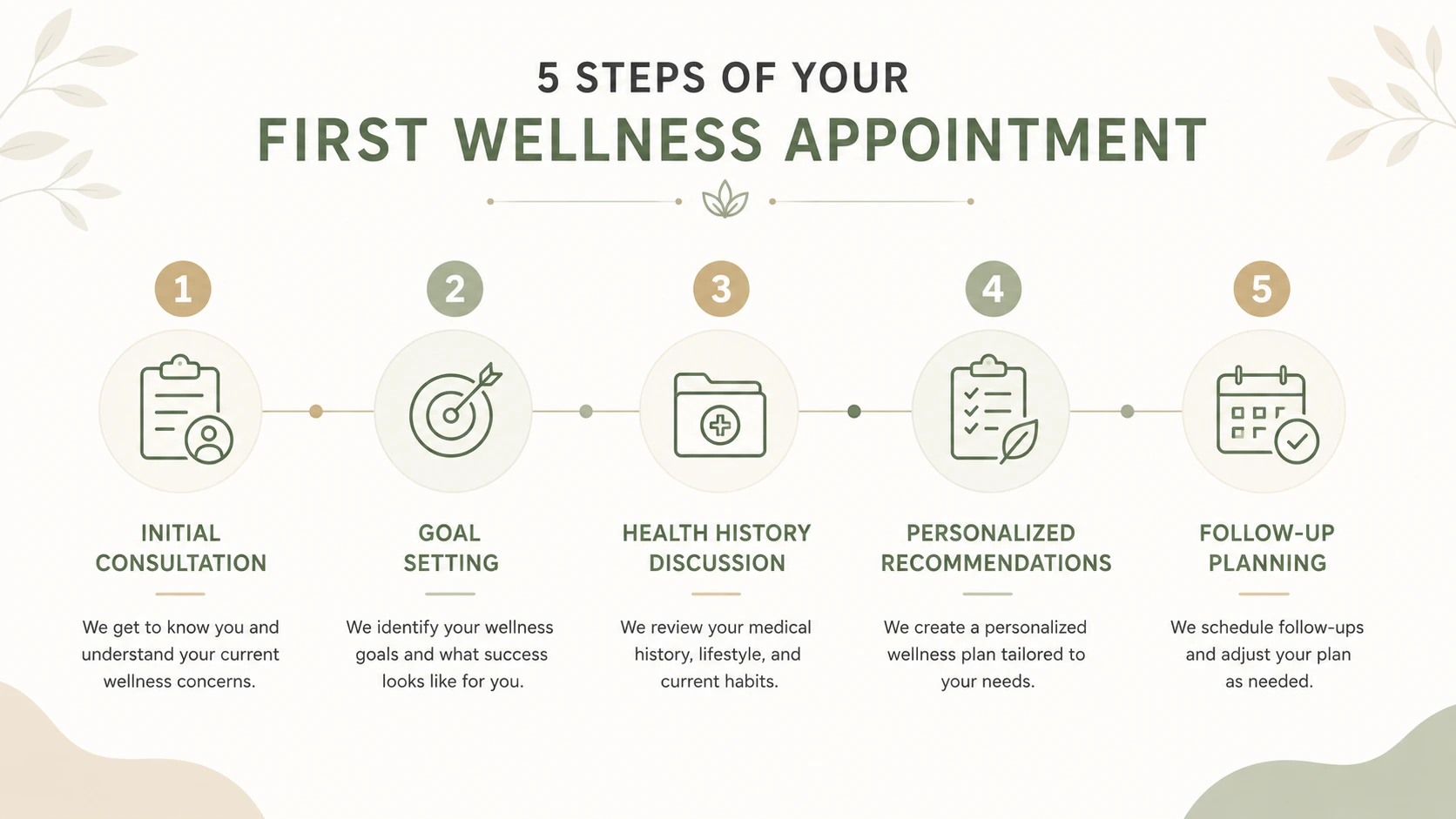
A first wellness appointment is generally structured to build understanding between the individual and the provider. It typically includes:
- An initial consultation to discuss current concerns
- Goal-setting to clarify what the individual wants to achieve
- A discussion of health history relevant to mental and emotional wellness
- Personalized recommendations based on the assessment
- Follow-up planning to establish next steps
In our experience helping readers navigate first appointments, having a clear sense of personal goals beforehand — even informally — makes this initial session more productive.
Factors to Consider When Choosing a Wellness Provider
Choosing the right wellness provider involves evaluating several factors:
- Qualifications — relevant training, certification, or licensure
- Areas of specialization — whether the provider’s focus matches individual needs
- Treatment philosophy — holistic, clinical, or a blend of both
- Communication style — whether it feels comfortable and supportive
- Accessibility — location, scheduling, and availability
- Personalized care — willingness to adapt plans to individual circumstances
- Comfort level — a sense of trust and openness with the provider
Your Daily Thrive recommends taking time to evaluate these factors before committing, since fit between provider and individual often influences long-term success more than any single service offered.
Wellness Services vs Traditional Mental Health Care
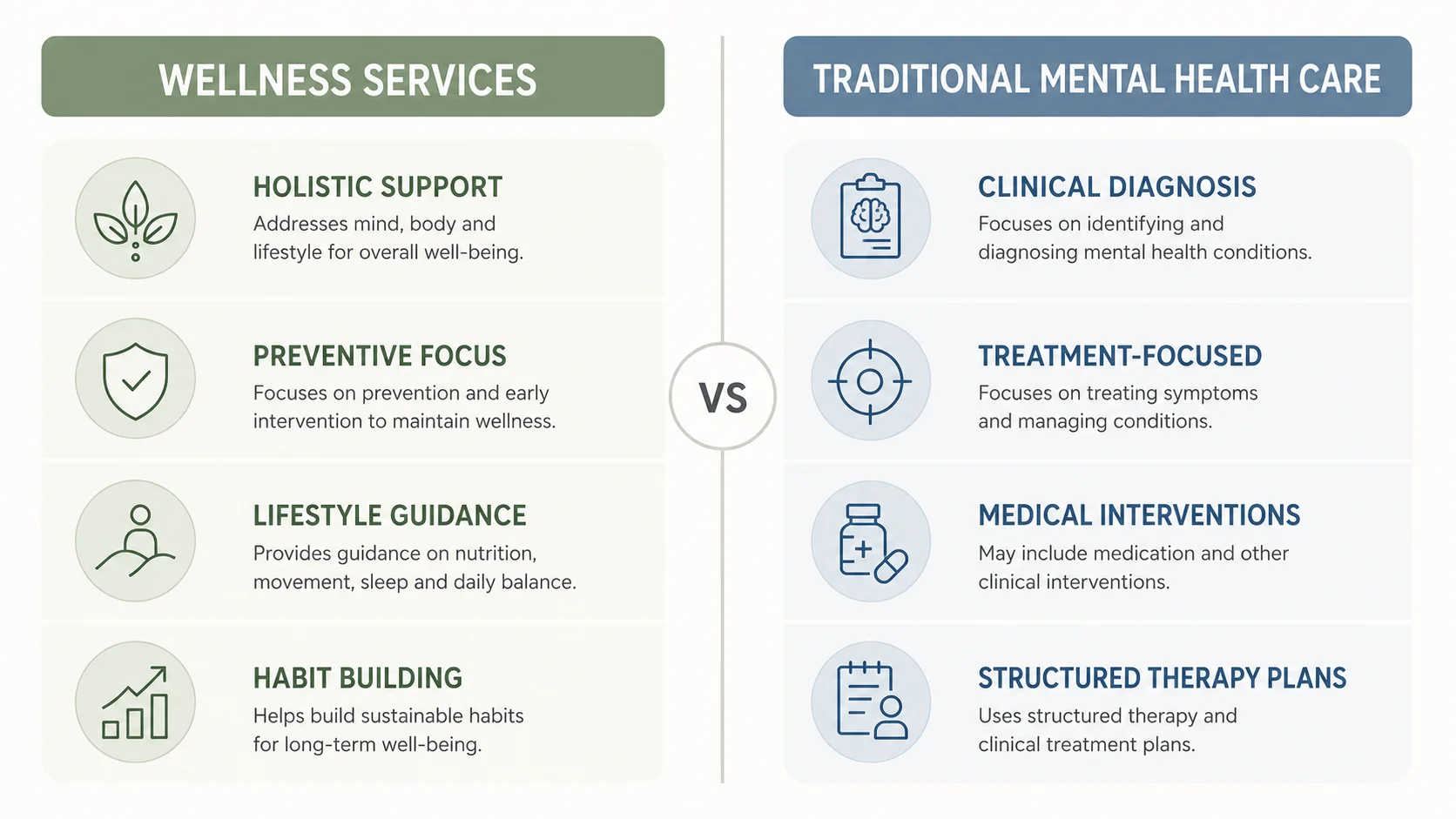
| Wellness Services | Traditional Mental Health Care |
|---|---|
| Holistic support | Clinical diagnosis |
| Preventive focus | Treatment-focused |
| Lifestyle guidance | Medical interventions when appropriate |
| Habit building | Structured therapy plans |
Many individuals benefit from combining both approaches depending on their needs. Wellness services often work well as a preventive, lifestyle-oriented complement to more clinical, diagnosis-based mental health care, rather than as a strict replacement for it.
Common Misconceptions About Wellness Services
Several misconceptions can prevent people from exploring wellness support:
- “Wellness is only for people with mental illness.” In reality, wellness services support anyone looking to maintain or improve emotional health, not only those diagnosed with a condition.
- “Self-care alone replaces professional support.” Self-care is valuable, but it typically works best alongside — not instead of — professional guidance when deeper issues are present.
- “Wellness services produce instant results.” Meaningful change generally develops gradually through consistent effort.
- “Mental wellness is only emotional health.” Mental wellness also includes cognitive, behavioral, and physical components.
Beginner Mistakes When Starting a Wellness Journey
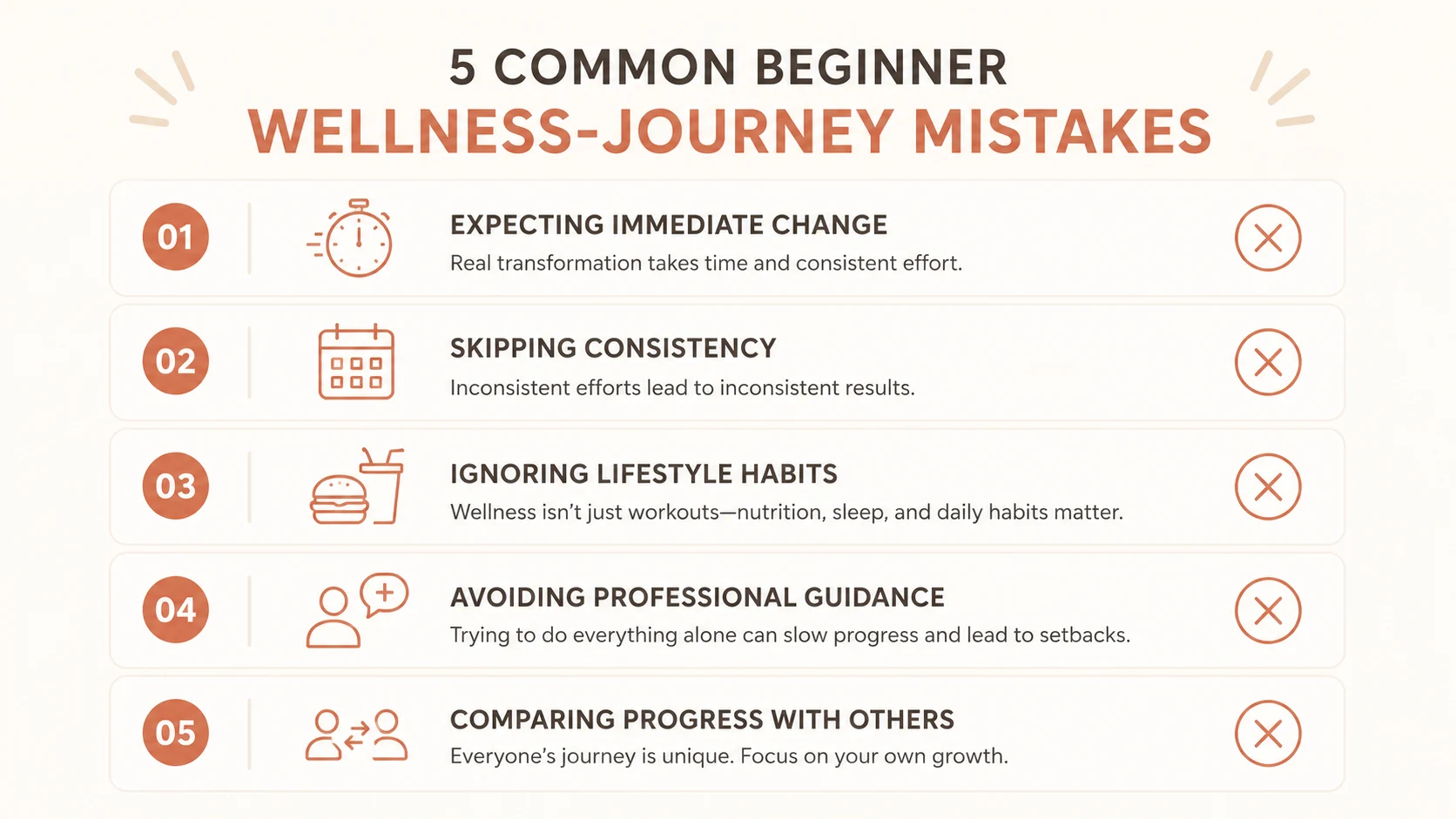
People new to wellness practices often encounter similar obstacles:
- Expecting immediate change — this happens because early motivation can create unrealistic timelines; the fix is setting gradual, realistic milestones instead.
- Skipping consistency — inconsistent effort limits progress; building small, repeatable routines helps prevent this. Consistency is often less about motivation and more about system-building — our guide on how to build discipline without motivation covers this in more depth.
- Ignoring lifestyle habits — focusing only on formal sessions while neglecting sleep, nutrition, or exercise slows results; addressing these habits alongside wellness support strengthens outcomes.
- Avoiding professional guidance — trying to manage everything independently can lead to burnout or stalled progress; seeking guidance early can prevent setbacks.
- Comparing progress with others — wellness timelines vary by individual; focusing on personal progress rather than external comparison supports steadier growth. Part of avoiding this mistake involves letting go of expectations around how quickly progress should happen.
Practical Tips for Maintaining Mental Wellness Every Day
Sustaining mental wellness typically relies on small, consistent actions rather than occasional large efforts:
- Create predictable daily routines
- Exercise regularly, even in short sessions
- Practice mindfulness or brief moments of reflection
- Build and maintain healthy relationships
- Prioritize sleep hygiene
- Manage stress proactively rather than reactively
- Seek professional help when challenges become difficult to manage alone
As of mid-2026, many wellness practitioners increasingly emphasize combining these daily habits with periodic professional check-ins, reflecting a broader shift toward preventive, ongoing mental wellness care rather than only addressing concerns after they intensify.
Frequently Asked Questions About Wellness Services
How does Mindset 2 Wellness support mental well-being?
Mindset 2 Wellness supports mental well-being through personalized wellness plans that combine counseling, coaching, and lifestyle guidance tailored to each individual’s goals and circumstances.
What services are commonly offered by wellness centers?
Wellness centers commonly offer individual counseling, stress management support, anxiety support, lifestyle coaching, self-care planning, and wellness education.
How is wellness different from therapy?
Wellness services generally take a broader, preventive, and lifestyle-focused approach, while therapy is typically more clinical, diagnosis-driven, and structured around specific treatment plans; the two can complement each other.
Can wellness services help reduce stress?
Yes, wellness services commonly use evidence-based stress management strategies such as mindfulness, structured routines, and coping skill development to help reduce stress.
Who can benefit from wellness programs?
Wellness programs can benefit individuals, families, professionals, students, and older adults, since the strategies are adaptable to a wide range of life stages and circumstances. Whether the goal is stress reduction or long-term personal growth, understanding how you can grow as a person often starts with identifying which areas of life need the most support.
Conclusion
Mindset 2 Wellness reflects a holistic approach to mental and emotional health, combining personalized services with practical, evidence-based strategies. Mental wellness matters because it influences nearly every area of life, from relationships to physical health to daily functioning. Wellness services support long-term well-being by building sustainable habits and resilience over time, rather than offering short-term fixes. For anyone exploring wellness support, choosing strategies and providers that align with personal goals is the most effective way to build lasting mental and emotional health.