

Introduction
Physical intimacy is the use of safe, consensual physical closeness to create connection, trust, affection, and emotional security in a relationship. It can include small acts like holding hands, hugging, cuddling, sitting close, or sharing affectionate touch, as well as sexual intimacy within a committed relationship or marriage.
In an intimate relationship, physical intimacy is not only about sex. It often reflects emotional safety, communication, comfort, attraction, and mutual respect. When couples understand what physical intimacy means, why it matters, and how to build it gradually, they can strengthen both emotional and physical connection.
Quick Summary
- Physical intimacy means consensual physical closeness that expresses affection, trust, comfort, or desire.
- It includes non-sexual touch, cuddling, hugging, kissing, affectionate gestures, and sexual intimacy.
- Healthy physical intimacy depends on emotional intimacy, consent, communication, and mutual comfort.
- Couples often struggle with intimacy because of stress, fear of rejection, past hurt, emotional distance, or different needs.
- Small, consistent acts of affection usually build stronger intimacy than occasional intense moments.
What Is Physical Intimacy?
Physical intimacy means safe, consensual physical closeness that communicates affection, comfort, trust, romance, or desire. In simple terms, physical intimacy is the way people use touch to feel connected, emotionally secure, and valued in a relationship.
The physical intimacy meaning depends on the relationship and the comfort level of both people. Physical intimacy in a relationship may include holding hands, hugging, cuddling, kissing, sitting close, comforting touch, or sexual intimacy when both partners want it. Physical intimacy in relationships exists on a spectrum, from casual affectionate touch to deeper romantic or sexual closeness.
Physical intimacy in a relationship is healthiest when it is mutual, respectful, and pressure-free. It should never feel like an obligation. It works best when both partners feel emotionally safe enough to express affection and secure enough to say no when something does not feel comfortable.
Physical intimacy can strengthen trust because the body often responds to safety before logic does. A calm hug, gentle touch, or relaxed closeness can signal reassurance, belonging, and acceptance without needing many words.
Key points:
- Physical intimacy involves touch that communicates closeness.
- It may be romantic, affectionate, comforting, or sexual.
- It depends on consent, emotional safety, and mutual respect.
- It is about connection, not pressure.
- It can help partners feel safe, valued, and emotionally connected.
Physical Intimacy vs Sexual Intimacy
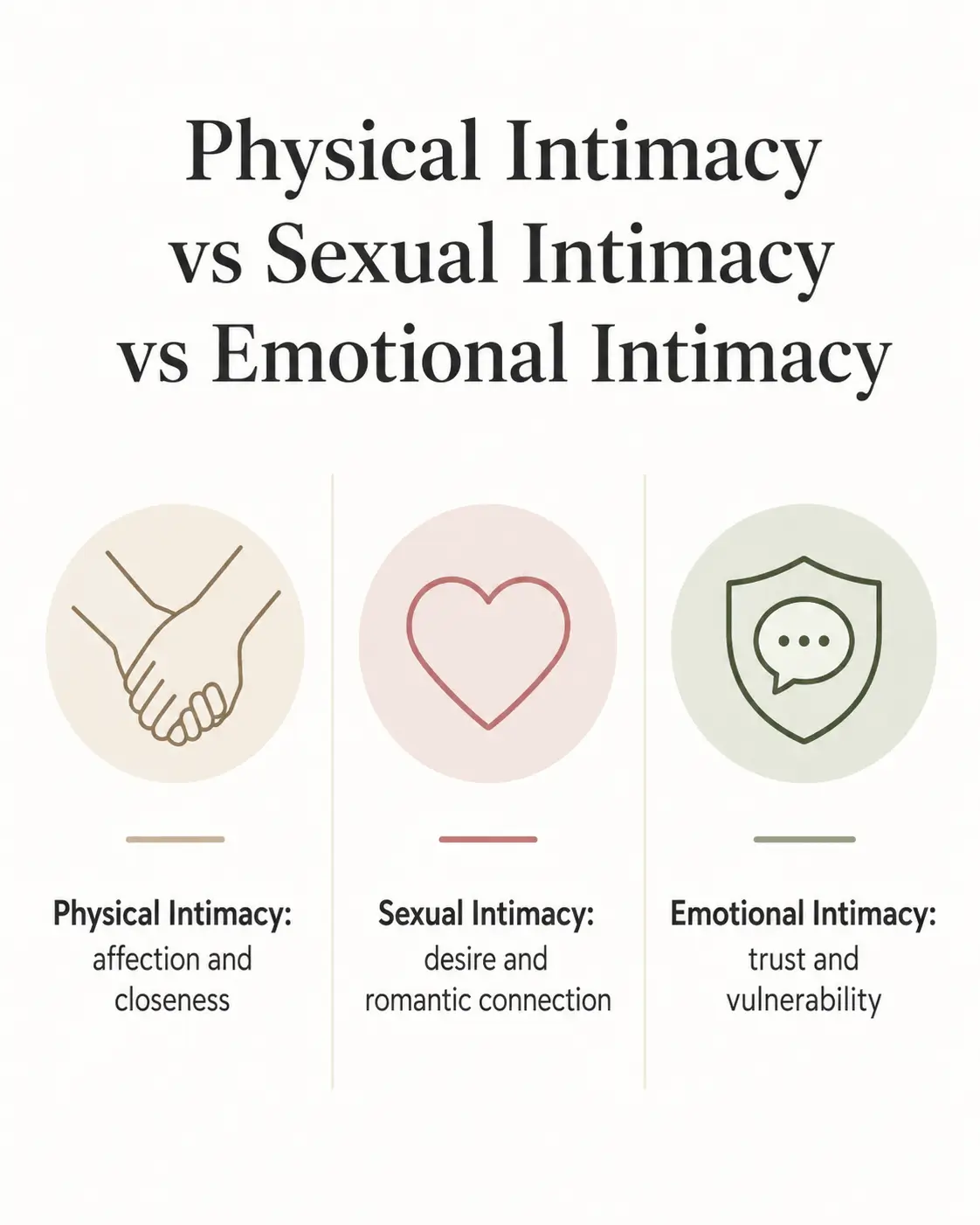
Physical intimacy is broader than sexual intimacy. Sexual intimacy can be part of physical intimacy, but physical closeness also includes non-sexual affection such as hugging, cuddling, hand-holding, sitting close, and comforting touch.
| Concept | Meaning | Examples | Main Purpose |
|---|---|---|---|
| Physical intimacy | Any safe, consensual physical closeness | Hugging, cuddling, hand-holding, kissing, sitting close | Affection, comfort, connection |
| Sexual intimacy | Physical closeness with sexual meaning | Sexual touch or sexual connection between partners | Desire, bonding, romantic expression |
| Emotional intimacy | Feeling safe enough to share inner thoughts and feelings | Honest conversations, vulnerability, emotional support | Trust, understanding, security |
The intimacy sex meaning refers to sexual closeness that may include desire, romance, bonding, and emotional connection. The intimate sexually meaning usually describes physical closeness with sexual meaning between consenting partners.
A physical relationship meaning may include affectionate, romantic, emotional, and sexual closeness, depending on the relationship. However, a physical relationship should always be based on consent, respect, and mutual comfort.
Key takeaway: sexual intimacy can be part of physical intimacy, but physical intimacy is not limited to sex. A couple can build physical intimacy through small affectionate acts before sexual closeness develops.
Why Physical Intimacy Matters in an Intimate Relationship
Physical intimacy matters in an intimate relationship because affectionate touch can create feelings of safety, belonging, and emotional connection. In relationship and intimacy, physical closeness often helps partners feel chosen, valued, and reassured.
In intimacy in a relationship, touch can reduce emotional distance when it is mutual and pressure-free. A hug after a long day, holding hands during stress, or sitting close during a conversation can communicate care without requiring a long explanation.
Physical intimacy intimate relationship benefits include:
- stronger emotional bonding
- increased feelings of security
- reduced emotional distance
- better repair after conflict
- more trust and comfort over time
- stronger relationship satisfaction when intimacy is mutual
Lack of physical intimacy can make partners feel rejected, unwanted, or disconnected. This does not always mean the relationship is failing, but it often signals that emotional safety, stress, conflict, or mismatched needs should be addressed.
Healthy intimacy in relationship dynamics must always respect consent. A strong intimate relationship is not built through pressure or expectation. It is built through mutual care, communication, and repeated moments of safe closeness.
Examples of Physical Intimacy

Physical intimacy examples include everyday acts of affection that help couples feel close. These examples of intimacy are broad, respectful, and non-explicit.
Common intimacy examples include:
- holding hands while walking
- hugging before leaving or after coming home
- sitting close during a conversation
- resting a hand on a partner’s shoulder or back
- cuddling while watching a movie
- kissing as a greeting or goodbye
- sharing a comforting embrace during stress
- sleeping close or snuggling in bed
- gentle affectionate touch during emotional moments
- sexual intimacy when both partners want it and consent to it
These acts of intimacy may seem small, but they can have a strong effect over time. Repeated affectionate contact helps partners feel emotionally remembered. It also makes closeness part of the relationship routine instead of something that only happens during special moments.
The healthiest examples of physical intimacy are not defined by intensity. They are defined by safety, consent, comfort, and emotional meaning.
Cuddling, Hugging, and Non-Sexual Physical Intimacy
Cuddling means holding or resting close to someone for warmth, affection, comfort, or emotional bonding. In simple terms, cuddling meaning is affectionate closeness that does not need to become sexual.
What is cuddling in a relationship? It is a form of non-sexual physical intimacy that can help partners feel calm, loved, and emotionally connected. Cuddles meaning often relates to comfort, reassurance, relaxation, and closeness.
Non-sexual touch matters because it reduces the feeling that every touch must lead somewhere. When hugging, cuddling, or sitting close is allowed to simply be affectionate, partners often feel less pressure and more emotional safety.
Hugging and cuddling can help couples reconnect after stress, conflict, emotional distance, or a busy day. A hug can communicate reassurance. A cuddle in bed or cuddles in bed can create comfort and calm. A snuggle in bed can help partners feel close without needing a long conversation.
Comfortable cuddling positions, cuddle position options, cuddles position choices, and hug positions may include:
- side-by-side cuddling
- resting on a shoulder
- holding hands in bed
- sitting close with relaxed body language
- a gentle embrace
- lying close while talking
- a calm hug after work or stress
The best cuddling positions are not the most complicated ones. The best position is the one where both partners feel relaxed, respected, and comfortable.
Physical Intimacy and Emotional Intimacy: How They Work Together
Emotional intimacy means feeling safe enough to be honest, vulnerable, and understood. Physical intimacy often improves when partners feel emotionally accepted, because emotional safety makes touch feel more natural and less pressured.
What is emotional intimacy? Emotional intimacy definition refers to closeness built through trust, honesty, empathy, vulnerability, and emotional support. Emotional intimacy meaning includes feeling seen, heard, and respected by another person.
What is emotionally intimate? An emotionally intimate definition includes being able to share real feelings, needs, fears, hopes, and concerns without expecting judgment, rejection, or ridicule.
Examples of emotional intimacy include:
- sharing fears without being judged
- talking honestly about needs
- apologizing after conflict
- listening without immediately trying to fix
- expressing appreciation
- asking for comfort instead of withdrawing
Physical intimacy may feel difficult without emotional safety. If one partner feels criticized, ignored, pressured, or emotionally distant, physical touch may feel forced or uncomfortable. In that situation, the issue is not always the touch itself. The deeper issue may be emotional disconnection.
Physical affection can also support emotional closeness when it is gentle, mutual, and reassuring. A calm hug, hand on the shoulder, or comforting cuddle can help partners feel emotionally connected when words are not enough.
Empathy also helps partners understand each other’s comfort levels, which is why learning why empathy is important in relationships can support healthier physical and emotional intimacy.
Stages of Physical Intimacy in a Relationship
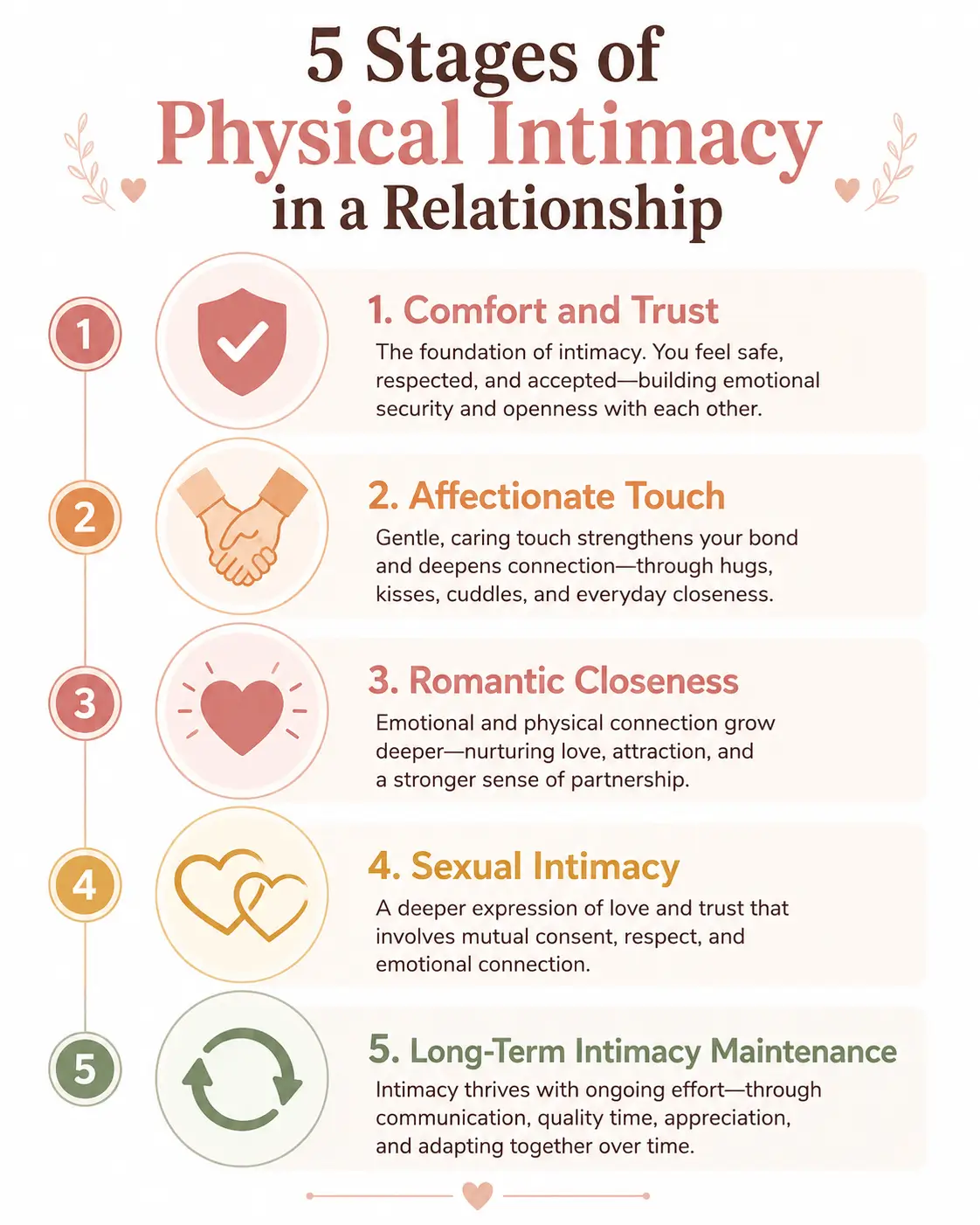
Stages of physical intimacy in relationship development are not strict rules. They are practical patterns that show how comfort, trust, affection, romance, and sexual closeness may grow over time.
Stage 1 — Comfort and Trust
Partners feel emotionally safe around each other. Physical closeness begins with low-pressure gestures like sitting close, light touch, brief hugs, or relaxed body language.
At this stage, the goal is not intensity. The goal is comfort. Both people are learning whether closeness feels safe, respectful, and welcome.
Stage 2 — Affectionate Touch
Hugging, hand-holding, cuddling, and casual affection become more natural. Partners learn what kind of touch feels comforting and what kind of touch may feel overwhelming.
This stage builds familiarity. The relationship begins to develop small habits of affection that create emotional security.
Stage 3 — Romantic Closeness
Physical affection becomes more intentional and emotionally meaningful. Kissing, prolonged cuddling, romantic gestures, and deeper affectionate touch may increase.
At this stage, partners often feel more emotionally connected. Physical intimacy becomes a stronger expression of attraction, care, and romantic closeness.
Stage 4 — Sexual Intimacy
Sexual closeness may become part of the relationship if both partners want it. Consent, communication, and emotional readiness are essential.
Sexual intimacy should never be assumed, pressured, or treated as proof of love. It is healthiest when both partners feel respected, willing, and emotionally safe.
Stage 5 — Long-Term Intimacy Maintenance
Couples learn to keep affection alive through routines, communication, and repair after conflict. Intimacy becomes less about intensity and more about consistency.
In long-term relationships, physical intimacy often survives through small repeated actions: hugs, kind touch, cuddling, honest conversations, and emotional repair.
Physical Intimacy in Marriage
Physical intimacy in marriage often changes over time because of stress, work, parenting, health, emotional conflict, routine, or fatigue. These changes are common, but they should not be ignored.
A healthy husband wife physical relationship is based on affection, respect, consent, and ongoing communication. Marriage does not remove the need for emotional safety. In fact, long-term commitment often requires more intentional communication because routines can make partners assume they already know each other’s needs.
Married couples may need to intentionally rebuild physical closeness instead of waiting for it to happen naturally. Small daily acts of affection can be more sustainable than expecting constant passion.
Practical marriage applications:
- Create daily touch rituals, such as a morning hug or evening cuddle.
- Talk openly about comfort, affection, and needs.
- Repair emotional conflict before expecting physical closeness.
- Avoid using intimacy as a reward, punishment, or obligation.
- Protect time for affection, rest, and connection.
In marriage, consistency matters. A short hug, kind touch, or calm conversation can protect connection when life becomes busy.
The Psychology of Physical Intimacy
Physical intimacy psychology explains how touch, safety, emotions, and behavior interact. Touch can signal safety, belonging, emotional availability, and acceptance.
People may avoid intimacy because of:
- fear of rejection
- body insecurity
- past emotional wounds
- stress
- attachment patterns
- emotional overwhelm
- unresolved conflict
- fear of being pressured
- fear of not being enough
Physical closeness can feel comforting to one partner but overwhelming to another. This difference often comes from past experiences, personality, nervous system responses, relationship history, and emotional safety.
Emotional regulation affects intimacy. A stressed or defensive nervous system may resist closeness because the body is focused on protection rather than connection. When people are exhausted, anxious, criticized, or emotionally flooded, even affectionate touch can feel difficult.
Cause-effect examples:
- When a partner feels criticized, they may withdraw physically.
- When affection is predictable and safe, the body learns to relax.
- When touch always leads to expectations, one partner may avoid touch altogether.
- When conflict is repaired calmly, physical closeness often becomes easier.
- When partners feel emotionally valued, affectionate touch often feels more natural.
Secure intimacy grows through repeated positive experiences, not pressure.
What Is Physical Intimacy to a Man?
Physical intimacy to a man can mean affection, reassurance, desire, emotional acceptance, comfort, or stress relief. Men vary widely, so physical intimacy should not be reduced to sex.
For some men, physical closeness may feel like a direct expression of love and acceptance. Some men express emotions more easily through physical closeness than verbal conversation. A hug, hand-hold, cuddle, or kiss may feel emotionally meaningful because it communicates care without requiring long emotional explanations.
Other men may struggle with intimacy because they were taught to hide vulnerability. They may feel uncomfortable discussing emotional needs, fear rejection, or avoid closeness because it makes them feel exposed.
How to help a man with intimacy issues:
- Ask what kind of affection feels meaningful.
- Avoid assuming he only wants sexual intimacy.
- Encourage honest conversation without shame.
- Respect boundaries.
- Build trust through consistent, low-pressure closeness.
- Offer reassurance without forcing vulnerability.
The goal is not to label men or make assumptions. The goal is to understand the individual partner’s emotional and physical needs.
How to Build Physical Intimacy in a Relationship
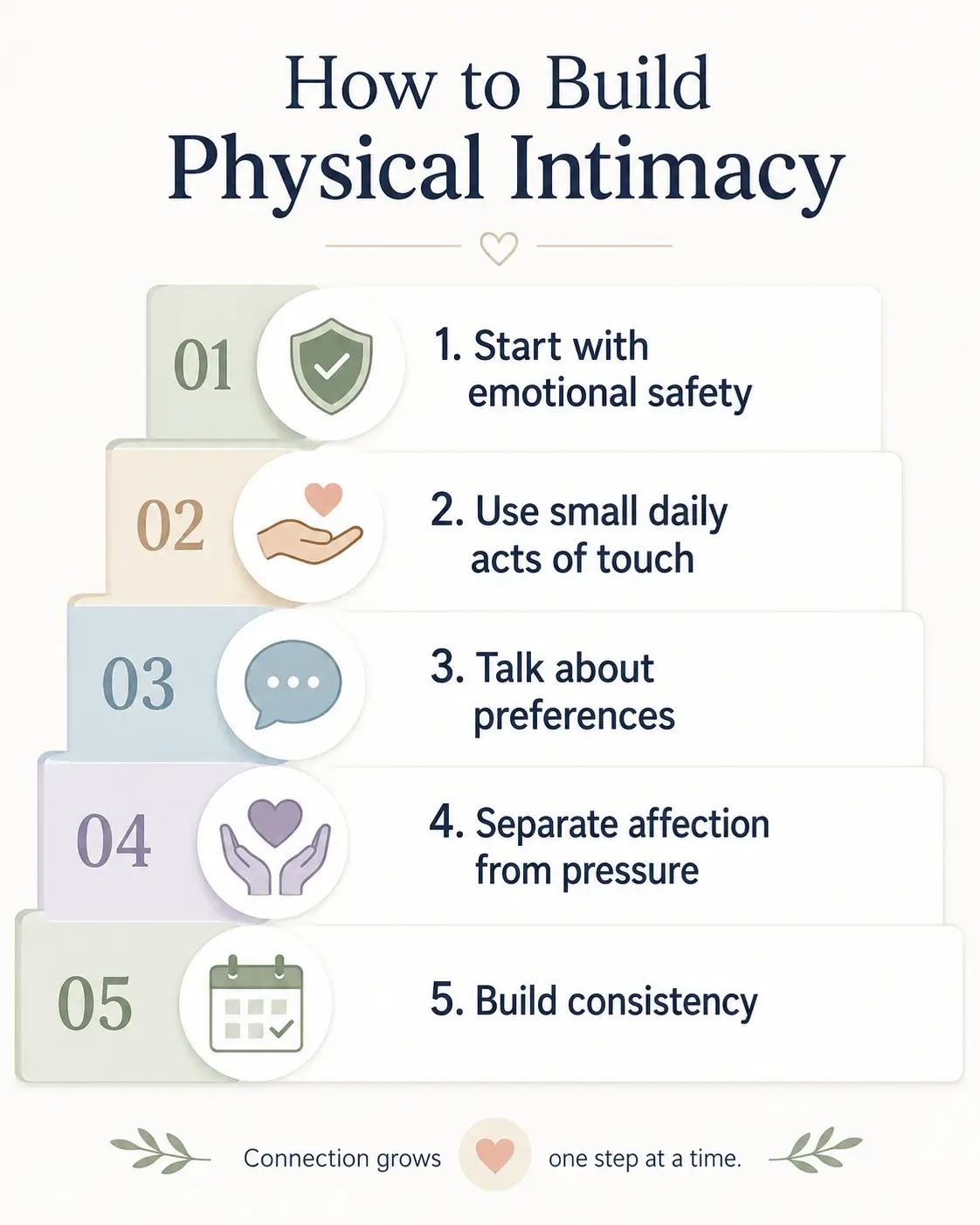
Building physical intimacy in a relationship requires emotional safety, small repeated acts of touch, communication, and consistency. A strong intimate relationship grows when partners treat intimacy as a shared habit, not a performance test.
Step 1 — Start With Emotional Safety
Listen without judgment. Avoid criticism during vulnerable conversations. Make affection feel safe, not demanded.
Emotional safety matters because physical touch becomes easier when both partners feel respected. If one person fears criticism, rejection, or pressure, they may pull away even when they care.
Step 2 — Use Small Daily Acts of Touch
Small acts of intimacy are easier to repeat than dramatic gestures. They also reduce pressure.
Examples include:
- holding hands
- hugging for a few seconds longer
- sitting close during conversations
- offering comforting touch during stress
- kissing goodbye
- cuddling without expectation
Step 3 — Talk About Preferences
Ask what feels comforting, romantic, or overwhelming. Respect differences in touch needs. Revisit the conversation as the relationship changes.
Useful questions include:
- “What kind of affection helps you feel loved?”
- “Is there any kind of touch that feels uncomfortable?”
- “Do you prefer more affection in private or public?”
- “What helps you feel emotionally close before physical closeness?”
Step 4 — Separate Affection From Pressure
Make non-sexual touch normal. Avoid making every hug, cuddle, or kiss a request for more. This helps reduce anxiety and avoidance.
When touch always comes with expectations, one partner may begin avoiding even simple affection. Separating affection from pressure allows closeness to feel safe again.
Step 5 — Build Consistency
Use predictable affection rituals. Prioritize small repeated moments over rare intense gestures. Consistency helps the relationship feel secure.
To build emotional intimacy, combine physical affection with honest listening, appreciation, repair after conflict, and emotional availability.
Why People Struggle With Physical Intimacy
People struggle with physical intimacy when emotional, psychological, physical, or relational barriers make closeness feel unsafe, pressured, or uncomfortable. The issue is often not a lack of love. It is usually a lack of safety, clarity, energy, trust, or communication.
Common reasons include:
- fear of rejection
- fear of vulnerability
- past relationship hurt
- body image insecurity
- stress and burnout
- unresolved conflict
- different affection needs
- pressure around sex
- emotional disconnection
- overthinking or performance anxiety
Cause-effect explanation:
When people feel emotionally unsafe, their body may resist closeness. When partners avoid difficult conversations, physical intimacy often becomes tense. When intimacy feels like a duty, desire and affection can decrease.
Real-life struggles often look like avoidance, silence, irritability, emotional shutdown, or waiting for the “right moment” to talk. Many couples do not lack care; they lack a safe system for discussing intimacy without blame.
Criticism, defensiveness, contempt, and stonewalling can create emotional distance, so understanding the four horsemen of relationships can help couples identify patterns that damage intimacy.
Problem-Solution Guide for Common Intimacy Struggles
| Problem | Why It Happens | How to Fix It | How to Prevent It |
|---|---|---|---|
| Procrastination around intimacy conversations | Fear of conflict or rejection | Start with one honest, gentle conversation | Schedule regular relationship check-ins |
| Lack of motivation | Stress, resentment, or emotional distance | Rebuild affection through small gestures | Address emotional needs before they become resentment |
| Inconsistency | Busy routines or unclear priorities | Create daily or weekly affection rituals | Attach intimacy habits to existing routines |
| Overthinking | Anxiety about performance or response | Focus on comfort, not perfection | Normalize open communication |
| Burnout | Mental overload and low emotional energy | Reduce pressure and prioritize rest | Protect time for connection and recovery |
| Fear of failure | Worry about not being enough | Use reassurance and patience | Build trust through repeated positive moments |
The practical goal is to reduce pressure and increase emotional predictability. Physical intimacy improves when couples stop waiting for perfect timing and start building simple, respectful habits.
Motivation vs Discipline in Building Intimacy
Motivation may start intimacy, but discipline maintains it. In relationships, motivation depends on mood, while discipline depends on values, habits, and commitment.
| Motivation | Discipline |
|---|---|
| Depends on mood and desire | Depends on values and commitment |
| Helps start affectionate behavior | Helps maintain it during stress |
| Can fade during conflict or fatigue | Creates consistency even when life is busy |
| Useful for romantic moments | Useful for daily connection habits |
Motivation is useful when affection feels easy. Discipline matters when life is busy, stress is high, or emotional distance has started to grow.
Key takeaway: motivation may spark intimacy, but discipline keeps connection alive through small, repeated actions.
Consistency vs Intensity in Physical Intimacy
Consistency usually matters more than intensity in long-term physical intimacy. Intense moments can feel exciting, but repeated affectionate habits build emotional security.
| Consistency | Intensity |
|---|---|
| Small affectionate acts repeated often | Big romantic or passionate moments |
| Builds emotional security | Creates excitement |
| Easier to maintain long-term | Harder to sustain daily |
| Prevents emotional distance | Can temporarily reconnect couples |
Many couples overvalue intensity and undervalue small habits. A dramatic romantic moment can be meaningful, but it cannot replace everyday warmth, respect, and affection.
Key takeaway: long-term intimacy usually depends more on consistent affection than occasional intense moments.
Short-Term vs Long-Term Intimacy Habits
Sustainable intimacy works best when couples create systems, not just goals. A goal might be “be more affectionate,” but a system is “hug every morning before work.”
| Habit Type | Example | Benefit | Risk |
|---|---|---|---|
| Short-term habit | Planning a date night | Creates immediate connection | May fade if not repeated |
| Daily habit | Hugging before work | Builds security | Can become automatic if not mindful |
| Weekly habit | Relationship check-in | Improves communication | May feel forced at first |
| Long-term habit | Repairing conflict quickly | Protects trust | Requires emotional maturity |
This connects intimacy with productivity systems, habit building, goal setting, time management, and personal discipline. Small systems make affection easier to repeat.
Key takeaway: sustainable intimacy works best when couples create systems, not just goals.
Common Myths About Physical Intimacy
Many intimacy problems come from unrealistic beliefs about what closeness should look like. These myths can create shame, pressure, or disappointment.
Common myths include:
- “Physical intimacy should happen naturally all the time.”
- “If there is love, intimacy should be easy.”
- “Physical intimacy only means sex.”
- “Men only care about sexual intimacy.”
- “Long-term couples do not need to talk about affection.”
- “More intensity always means a stronger relationship.”
What actually works:
- emotional safety
- clear communication
- consent and respect
- small consistent affection
- repairing conflict
- understanding each partner’s comfort level
Healthy physical intimacy is built, maintained, and adjusted over time. It does not need to look the same in every season of a relationship.
Real-Life Scenarios: How Physical Intimacy Looks in Different Relationships
Physical intimacy looks different depending on the relationship stage, lifestyle, stress level, and comfort needs of both partners.
New Relationship
Partners may build intimacy slowly through hand-holding, hugging, sitting close, and conversations about comfort. Moving slowly can increase trust and reduce pressure.
Long-Term Relationship
Partners may need to refresh affection routines and avoid taking closeness for granted. Familiarity should not replace intentional care.
Marriage With Busy Schedules
Small daily rituals may matter more than rare romantic gestures. A short hug, evening cuddle, or phone-free conversation can protect connection.
Relationship After Conflict
Emotional repair should come before physical closeness. When words feel difficult, learning how to apologize without saying sorry can help rebuild trust through accountability, changed behavior, and emotional repair. A sincere apology, calm conversation, and gentle affection can rebuild safety.
Relationship With Different Touch Needs
Partners should negotiate affection without blame. The goal is mutual comfort, not forcing one person to match the other.
Different touch needs do not automatically mean incompatibility. They usually mean the couple needs clearer communication, compromise, and respect.
Intellectual Intimacy and Other Types of Intimacy
Physical intimacy is one part of a broader intimacy system. Strong relationships usually rely on multiple types of closeness.
Types of intimacy include:
- Physical intimacy: closeness through touch
- Emotional intimacy: closeness through vulnerability
- Intellectual intimacy: closeness through ideas, curiosity, and shared thinking
- Experiential intimacy: closeness through shared activities
- Spiritual or values-based intimacy: closeness through beliefs, purpose, or meaning
Intellectual intimacy matters because shared ideas and meaningful conversations can deepen emotional and physical connection. When partners feel mentally engaged and emotionally understood, physical closeness may feel more natural.
Key takeaway: strong relationships usually rely on multiple types of intimacy, not just physical closeness.
Sustainable Ways to Improve Physical Intimacy
Sustainable physical intimacy improves through small, repeatable habits that lower pressure and increase emotional safety. Couples usually make more progress through consistency than dramatic change.
Practical routine ideas:
- Use a 20-second hug after work.
- Hold hands during walks.
- Sit together without phones for 10 minutes.
- Share one appreciation before bed.
- Ask, “What kind of affection would feel good today?”
- Use weekly relationship check-ins.
- Repair conflict before expecting closeness.
- Create boundaries around work, screens, and stress.
Why this works:
Small habits reduce pressure. Repetition creates emotional predictability. Emotional predictability makes physical closeness feel safer.
A relationship system does not need to be complicated. The best system is simple enough to repeat even during busy or stressful seasons.
When Physical Intimacy Needs Extra Care
Physical intimacy needs extra care when closeness is affected by trauma, mental health, health changes, grief, conflict, or emotional distress. In these situations, patience and consent are essential.
Situations requiring patience include:
- past trauma
- major conflict
- depression, anxiety, or chronic stress
- health changes
- low desire
- postpartum changes
- grief
- body image struggles
- trust issues
Guidance:
Do not pressure a partner into touch. Respect boundaries clearly. Consider couples therapy or professional support when intimacy problems are persistent, painful, or connected to trauma.
Physical closeness should never come at the cost of emotional safety. A healthy relationship allows both affection and boundaries to exist together.
Conclusion
Physical intimacy is a core part of many intimate relationships, but it is broader than sex. It includes affectionate touch, cuddling, hugging, closeness, comfort, romance, and consensual sexual connection. The healthiest physical intimacy grows from emotional safety, communication, consistency, and respect.
The main takeaway is simple: physical intimacy improves when couples stop treating it as a performance and start building it as a shared habit. Small, safe, repeated acts of affection can create trust, reduce emotional distance, and support a stronger intimate relationship over time.
FAQs About Physical Intimacy
What does physical intimacy mean in a relationship?
Physical intimacy means safe, consensual physical closeness that communicates affection, comfort, trust, or romantic desire. It can include hugging, cuddling, hand-holding, kissing, sitting close, or sexual intimacy.
Is physical intimacy the same as sex?
No. Sex can be one form of physical intimacy, but physical intimacy also includes non-sexual affection such as cuddling, hugging, holding hands, and comforting touch.
Why do I struggle with physical intimacy?
People often struggle with physical intimacy because of stress, fear of rejection, emotional distance, past hurt, body insecurity, unresolved conflict, or pressure around sex. Physical closeness becomes easier when emotional safety improves.
How do I build physical intimacy slowly?
Start with low-pressure affection such as holding hands, sitting close, hugging, or cuddling. Talk openly about comfort levels, respect boundaries, and build consistency through small daily acts of connection.
What if my partner and I have different intimacy needs?
Different intimacy needs are common. The solution is honest communication, compromise, and respecting each other’s comfort levels. Couples should focus on mutual connection rather than forcing one partner to match the other.
Why is emotional intimacy important for physical intimacy?
Emotional intimacy creates trust and safety. When partners feel heard, respected, and understood, physical closeness usually feels more natural and less pressured.
How can married couples rebuild physical intimacy?
Married couples can rebuild physical intimacy by repairing emotional distance, creating small affection rituals, discussing needs openly, reducing pressure, and making time for non-sexual closeness.
What are examples of non-sexual physical intimacy?
Examples include hugging, cuddling, holding hands, resting a head on a shoulder, sitting close, kissing goodbye, gentle touch during conversation, and snuggling in bed.
Can physical intimacy exist without emotional intimacy?
Yes, but it may feel less secure or meaningful for some people. In long-term relationships, physical intimacy is usually healthier and more satisfying when emotional intimacy is also present.
How do I help a partner with intimacy issues?
Be patient, avoid judgment, respect boundaries, and create emotional safety. Encourage honest conversation and consider professional support if the issue is linked to trauma, anxiety, or long-term relationship distress.