
Introduction
A Carol Dweck mindset quiz is a self-assessment tool designed to explore whether a person tends to believe that intelligence and abilities are largely fixed traits or qualities that can develop through learning, effort, strategy, and feedback. These questionnaires are built on psychologist Carol Dweck’s mindset theory, which draws a distinction between a growth mindset — the belief that abilities can be cultivated — and a fixed mindset — the belief that ability is a stable, largely unchangeable trait. A quiz result can offer a useful snapshot of current beliefs and tendencies, but it is not a clinical diagnosis or a permanent label. This article explains what these assessments measure, how they work, how to interpret results responsibly, and what the underlying research actually supports.
Quick Summary
- A Carol Dweck mindset quiz generally explores whether a person views intelligence and abilities as more fixed or capable of development.
- Growth mindset emphasizes learning, effective strategies, persistence, feedback, and improvement — not simply “trying harder.”
- Questionnaire results are best interpreted as indicators of beliefs and tendencies, not permanent labels or clinical diagnoses.
- Mindset can vary across subjects, situations, and circumstances, so context matters when interpreting scores.
What Does Carol Dweck Mean by Growth Mindset and Fixed Mindset?
Before evaluating any quiz, it helps to understand the two concepts it is designed to measure. Beliefs about whether ability is fixed or changeable can shape how a person responds to challenges, mistakes, effort, and feedback.
What Is a Growth Mindset?
A growth mindset is the belief that abilities can develop over time through learning and the use of appropriate strategies. It is closely tied to how a person engages with practice, responds to feedback, and learns from mistakes rather than avoiding them. Importantly, a growth mindset does not simply mean believing that anyone can achieve anything through effort alone — effort has to be paired with effective strategies, guidance, and adjustment based on results.
What Is a Fixed Mindset?
A fixed mindset is the belief that important abilities or intelligence are relatively stable and unlikely to change substantially. People with fixed-mindset tendencies may avoid challenges that risk failure or interpret mistakes as evidence of limited underlying ability rather than as part of the learning process. Showing a fixed-mindset response in one situation does not mean a person has a permanently “fixed personality” — mindset tendencies can differ by context.
Growth Mindset vs. Fixed Mindset at a Glance
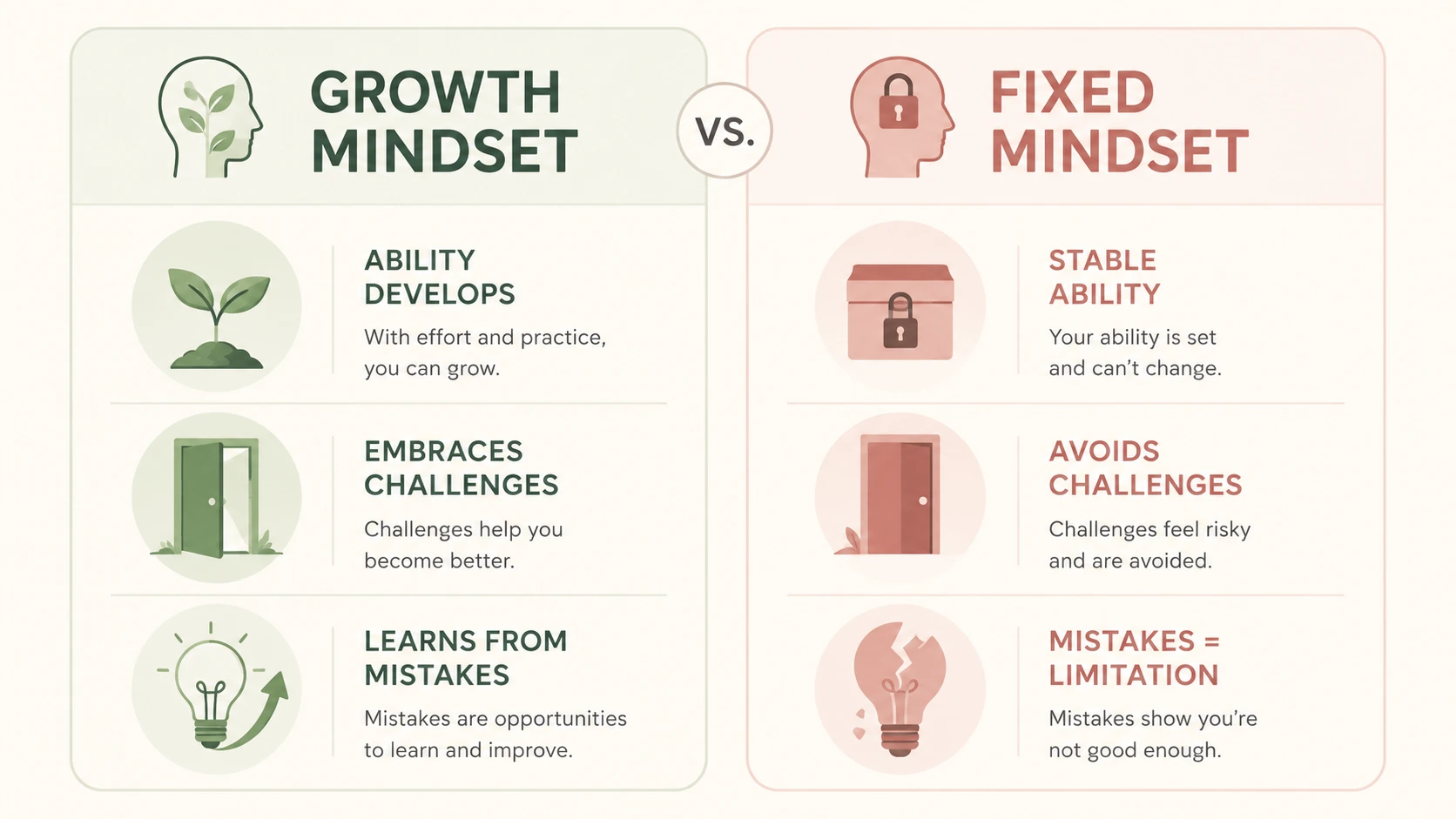
| Dimension | Growth Mindset | Fixed Mindset |
|---|---|---|
| Belief about ability | Can be developed over time | Relatively stable and unchangeable |
| Response to challenges | Seen as opportunities to learn | Often avoided to prevent failure |
| View of mistakes | Part of the learning process | Evidence of limited ability |
| Role of effort | Necessary but paired with strategy | Seen as less relevant if ability is fixed |
| Response to feedback | Used to adjust and improve | May feel threatening or discouraging |
| Response to setbacks | Approached with persistence and adaptation | May lead to giving up or disengagement |
What Does a Carol Dweck Mindset Quiz Actually Measure?
A Dweck-style mindset quiz is not a generic personality test. It is designed to capture beliefs about the malleability of intelligence and ability.
Beliefs About Whether Abilities Can Change
Quiz statements typically ask respondents to agree or disagree with ideas such as “intelligence is something you can substantially change.” These items are attempting to capture belief patterns, not measure actual skill level or intelligence itself. A person’s belief about whether ability can change is distinct from how capable they currently are.
Responses to Challenges, Effort, Mistakes, and Feedback
Mindset assessments often examine how a person tends to react to:
- Difficult or unfamiliar tasks
- Failure or setbacks
- The value and purpose of effort
- Criticism or corrective feedback
- Opportunities to learn something new
Why a Quiz Result Is Not a Permanent Label
Beliefs captured by a quiz can be context-dependent — a person may show more growth-oriented beliefs in one domain and more fixed-oriented beliefs in another. A single result reflects current responses, not a fixed psychological identity, and should be used as a starting point for reflection rather than a basis for self-diagnosis.
How to Take and Interpret a Dweck Mindset Questionnaire
Understanding how to complete and interpret a questionnaire matters as much as the questionnaire itself.
How to Answer Mindset Questions Accurately
- Answer based on genuine beliefs rather than the response that sounds most desirable.
- Consider typical patterns of response rather than a single unusual experience.
- Avoid assuming that “growth mindset” always means selecting the most optimistic-sounding answer.
How Mindset Questionnaire Scores Are Typically Interpreted
Responses are generally aggregated to indicate whether a person leans toward more growth-oriented or more fixed-oriented beliefs. The scoring method and overall questionnaire design significantly affect results, which is why different questionnaires — even ones covering similar themes — can produce different outcomes for the same person.
What to Look for in a Dweck Mindset Questionnaire PDF
A credible questionnaire typically includes:
- Clear authorship or source attribution
- A defined and transparent scoring method
- Context describing the research the questions are based on
- Clear instructions for respondents
- An explanation of the tool’s limitations
Finding a “Dweck mindset questionnaire PDF” online does not automatically mean it is an official or validated instrument developed by Carol Dweck herself. Many available quizzes are third-party adaptations inspired by her research. If you’re specifically looking for a downloadable version, our guide to the growth mindset quiz for adults pdf walks through what to check before treating any PDF as an official assessment.
Is There a Carol Dweck Growth Mindset Scale?
The term “growth mindset scale” generally refers to research-oriented measures developed to study mindset beliefs systematically, which differ meaningfully from informal online quizzes.
How Growth Mindset Scales Differ From Online Quizzes
Research scales are typically developed with attention to item wording, scoring validity, reliability testing, and defined study populations. Casual online quizzes are usually designed for quick self-reflection or entertainment and may not undergo the same level of validation.
What a Growth Mindset Scale Can and Cannot Tell You
A scale score may reveal something about a person’s current beliefs concerning ability and intelligence. It does not directly measure intelligence itself, academic ability, motivation levels, or predict future achievement.
Why Context Matters When Measuring Mindset
Mindset beliefs are not necessarily uniform across a person’s life. They can differ across:
- Mathematics versus other academic subjects
- Academic settings versus professional settings
- Familiar tasks versus unfamiliar tasks
- Low-stakes situations versus highly challenging ones
| Type of Tool | Purpose | Validation Level |
|---|---|---|
| Research growth mindset scale | Academic study of mindset beliefs | Formally tested for reliability and validity |
| Informal online quiz | Quick self-assessment or entertainment | Varies; often not formally validated |
| Self-reflection questionnaire | Personal insight and discussion starter | Not intended as a scientific measurement tool |
What Does Carol Dweck Say About Growth Mindset?
Understanding the conceptual foundation behind growth mindset theory helps explain why a quiz alone cannot capture the full picture. For more inspiration drawn directly from her research, see our collection of Carol Dweck mindset quotes.
The Role of Effort, Strategies, and Learning
Growth mindset theory connects the belief that abilities can develop to the practical processes that make development possible: consistent practice, effective strategies, meaningful feedback, and ongoing adaptation. Effort by itself is not treated as sufficient — how effort is directed matters.
What “The Power of Yet” Means
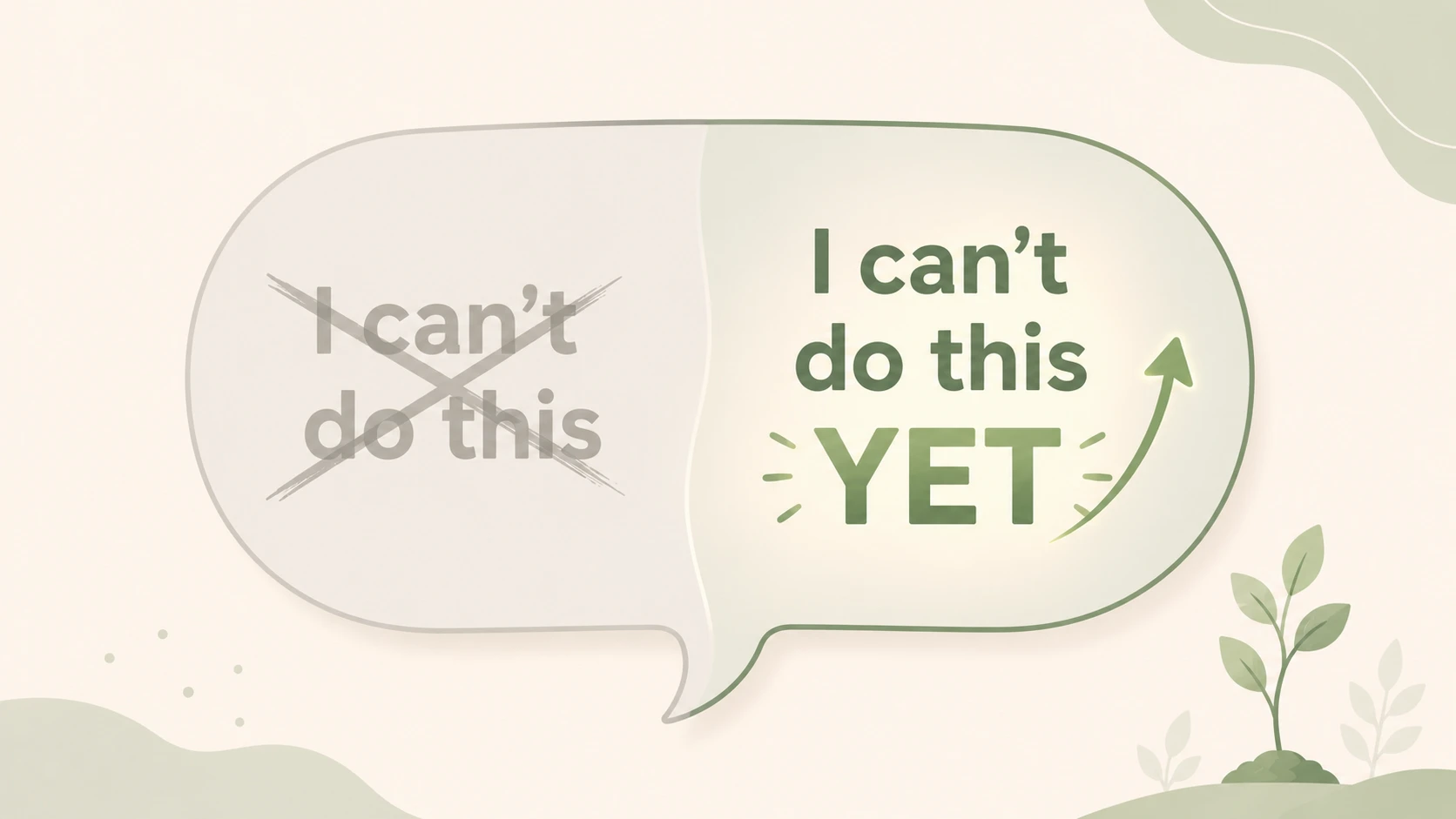
One of the central ideas associated with Dweck’s work is “the power of yet” — reframing a statement like “I can’t do this” into “I can’t do this yet.” This shift emphasizes an ongoing learning process rather than a fixed endpoint. It is a way of framing persistence, not a guarantee that persistence alone leads to success.
Common Misunderstandings About Growth Mindset
- Growth mindset does not mean unlimited potential in every domain.
- Effort does not automatically produce improvement without effective strategy.
- People are not strictly “either” growth-minded or fixed-minded — beliefs can vary by situation.
- Praising effort alone, without attention to strategy and progress, does not reliably build a growth mindset.
- A high quiz score does not prove someone consistently displays growth-mindset behavior in every context.
What Is the Difference Between a Growth Mindset Quiz and a Fixed Mindset Quiz?
In practice, “growth mindset quiz” and “fixed mindset quiz” usually describe the same underlying assessment, just framed around different ends of the same belief spectrum rather than two unrelated tests.
Questions That Reflect Growth-Oriented Beliefs
Common themes include beliefs about:
- Ability development over time
- Learning from mistakes
- Constructively responding to challenges
- Using feedback to improve
- Adjusting strategies when something isn’t working
Questions That Reflect Fixed-Oriented Beliefs
Common themes include beliefs about:
- Ability as relatively stable
- Avoiding potential failure
- Perceiving difficult tasks as threatening
- Interpreting mistakes as evidence of inability
Why People Can Show Both Patterns
Many people show growth-oriented beliefs in some areas of life and more fixed-oriented beliefs in others — for example, feeling confident that a professional skill can improve while doubting that a creative or athletic ability can change. A quiz result should prompt reflection about these patterns rather than sorting a person into a single rigid category.
Common Questions People Get Wrong About Carol Dweck’s Mindset Theory
What Is a Fixed Mindset According to Dweck?
A fixed mindset, according to Dweck’s theory, is the belief that intelligence and core abilities are largely stable traits rather than qualities that can be meaningfully developed through effort and learning.
What Is True of a Growth Mindset?
A growth mindset centers on the belief that abilities can improve through effective effort, strategy adjustment, and learning from feedback — not simply on working harder or staying positive.
Why Quiz Questions Can Be Misleading
Memorizing a textbook definition of growth mindset is different from actually holding growth-oriented beliefs or behaving accordingly under pressure. Quiz-preparation summaries and simplified third-party explanations can also drift from Dweck’s original research, so it is worth distinguishing her academic findings from popularized interpretations.
How Accurate Are Carol Dweck Mindset Quizzes?
Why Questionnaire Quality Matters
The accuracy of any mindset quiz depends on factors such as validity (does it measure what it claims to measure), reliability (does it produce consistent results), the wording of individual questions, the scoring procedure, the population the tool was designed for, and the research context behind it.
Official Research Measures vs. Unofficial Online Quizzes
An online quiz that references Carol Dweck’s name is not necessarily an official or research-validated assessment. Readers should look for the original source and research basis of any questionnaire before treating its results as authoritative.
What a Quiz Result Should and Should Not Be Used For
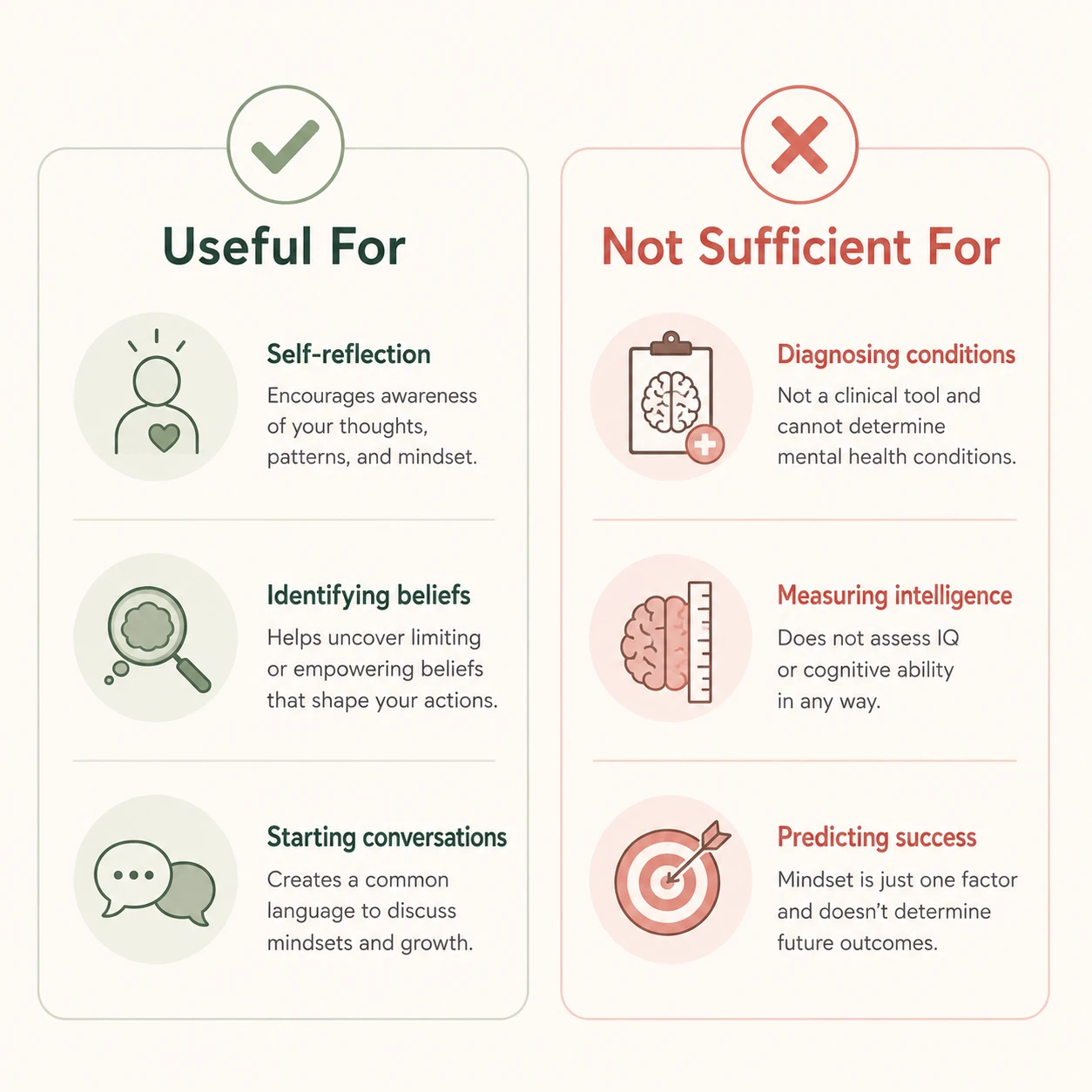
Useful for:
- Self-reflection on beliefs about learning
- Identifying patterns in how challenges and feedback are approached
- Starting conversations about learning strategies
Not sufficient for:
- Diagnosing psychological conditions
- Determining intelligence
- Predicting individual success
- Permanently labeling someone’s personality
How to Use a Mindset Quiz Result for Personal Growth
Identify Situations Where Fixed-Mindset Thinking Appears
Look for recurring reactions to difficult tasks, failure, criticism, or comparison with others. Consider whether the pattern shows up in one specific subject or situation, or more broadly across different areas of life.
Replace “I Can’t” With a More Useful Learning Question
Using the “yet” concept as a starting point, try shifting internal language toward more actionable questions:
- What strategy could I try next?
- What feedback am I missing?
- What can I learn from this attempt?
- What should I practice next?
Focus on Strategies and Progress, Not Effort Alone
In our experience helping readers build better habits, effort tends to be most effective when it’s paired with a clear strategy, regular feedback, and small adjustments over time. Connecting mindset reflection to habit formation, goal setting, and resilience tends to produce more durable progress than focusing on effort in isolation.
Common Mistakes When Using a Growth Mindset Quiz
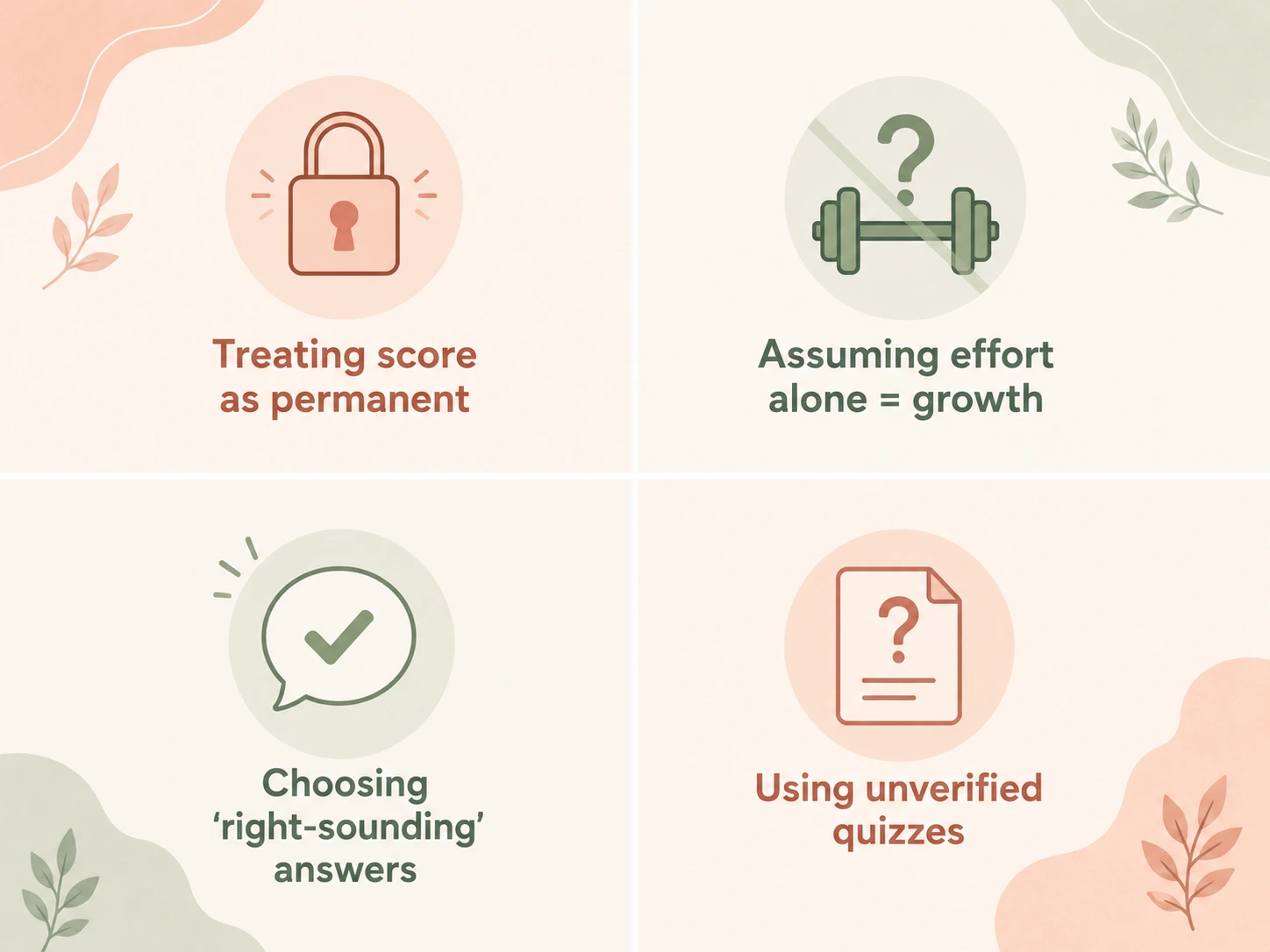
Treating the Score as a Permanent Personality Type
This happens because a single number feels definitive, but mindset beliefs are context-dependent and can shift. Your Daily Thrive recommends treating a result as a snapshot for reflection rather than a fixed identity.
Assuming More Effort Always Means More Growth
Persistence without adjustment can be counterproductive if it isn’t paired with the right strategy, feedback, or resources. Recognizing when a strategy — not the effort behind it — needs to change is a core part of applying growth-mindset thinking effectively.
Choosing Answers Based on What Sounds “Growth Mindset”
Social-desirability bias can lead people to select the response that sounds best rather than the one that reflects their actual beliefs and behavior, which reduces the usefulness of the result.
Using an Unverified PDF or Online Quiz as an Official Assessment
Verifying the source of a questionnaire helps prevent confusion between original research instruments and informal adaptations or educational materials inspired by Dweck’s work.
Where to Find Reliable Information About Carol Dweck’s Work
How to Evaluate a Source About Dweck’s Mindset Research
Look for primary research, peer-reviewed academic publications, university or institutional sources, clearly attributed research instruments, and transparent methodology sections.
Why Primary Sources Matter
When a quiz or article claims to represent Dweck’s findings, consulting original research helps distinguish her actual conclusions from simplified summaries, educational resources, or commercial quizzes that may only loosely reflect the underlying science.
Conclusion — What a Carol Dweck Mindset Quiz Can Tell You
A Carol Dweck mindset quiz can offer a useful window into current beliefs about whether intelligence and abilities are fixed or capable of development. Growth mindset centers on learning, effective strategies, and constructive responses to feedback and setbacks, while fixed mindset reflects the belief that core abilities are relatively stable. As of 2026, ongoing discussion in behavioral science continues to emphasize that mindset should be interpreted carefully and in context rather than treated as a single fixed trait. Because results are context-dependent and vary in quality depending on the source, they are best interpreted cautiously — as indicators of beliefs and tendencies rather than permanent labels or diagnostic tools. Used this way, a mindset quiz becomes a practical starting point for identifying unhelpful thought patterns and building more effective, learning-oriented habits.
Frequently Asked Questions About Carol Dweck Mindset Quizzes
What is a Carol Dweck mindset quiz? It is a self-assessment questionnaire designed to explore whether a person’s beliefs about intelligence and ability lean more toward growth-oriented or fixed-oriented thinking, based on concepts from Carol Dweck’s mindset research.
How do I know if I have a growth or fixed mindset? Questionnaire responses can indicate general tendencies toward growth-oriented or fixed-oriented beliefs, but these tendencies often vary by subject, situation, and level of challenge rather than applying uniformly.
Is there an official Carol Dweck growth mindset quiz? There are research-based mindset scales developed in academic contexts, along with numerous unofficial adaptations and quizzes online; not every quiz using Dweck’s name is a formally validated research instrument.
Where can I find a Dweck mindset questionnaire PDF? Evaluate any PDF questionnaire by checking its authorship, stated research basis, scoring methodology, and intended use before treating the results as authoritative.
What is the growth mindset scale associated with Carol Dweck? Growth mindset scales are research-oriented measures designed to assess beliefs about the malleability of ability, differing from informal quizzes in their validation, wording, and intended scientific use.
What does Carol Dweck mean by “The Power of Yet”? “The Power of Yet” reframes statements like “I can’t do this” into “I can’t do this yet,” emphasizing an ongoing learning process rather than a fixed limitation.
Can a person have both a growth and fixed mindset? Yes — mindset-related beliefs can vary depending on the specific skill, environment, challenge, or situation, so someone can show growth-oriented beliefs in one area and more fixed-oriented beliefs in another.
Does a growth mindset mean that effort always leads to success? No — growth mindset theory emphasizes that effort is most effective when paired with appropriate strategies, feedback, and available resources, rather than effort alone guaranteeing improvement.