

Introduction
Growth mindset activities for middle school are structured exercises, discussion prompts, worksheets, and printable PDF resources that help students practice viewing abilities as things that can be developed through effort, strategy, and feedback, rather than fixed traits they either have or lack. This differs from a fixed mindset, where a student assumes intelligence or talent is static and unchangeable.
Middle school is a period of increasing academic difficulty, social comparison, and emotional change, which makes these years especially important for building growth-oriented habits. Activities work best when they go beyond simply telling students to “think positively” and instead teach concrete responses to challenges, mistakes, and setbacks. Reflection prompts, worksheets, discussion, and printable PDF resources all support this kind of practice when used consistently.
Quick Summary
- Growth mindset activities help middle school students view abilities as developable through effective strategies, practice, feedback, and persistence.
- The most useful activities connect growth mindset concepts to real situations such as difficult assignments, mistakes, test anxiety, and setbacks.
- Printable activities and PDF worksheets can make classroom implementation easier, but the learning is strongest when students discuss and apply the ideas.
- Teachers should avoid presenting growth mindset as “trying harder” alone; students also need appropriate strategies, support, feedback, and opportunities to improve.
<a id=”what-should-they-teach”></a>
What Should Growth Mindset Activities Teach Middle School Students?
Effective growth mindset activities teach students to connect effort with specific, learnable strategies rather than treating effort as a standalone virtue. Core concepts include the distinction between a growth mindset and fixed mindset, the basic idea of neuroplasticity (the brain’s capacity to change with practice), and the roles of persistence, feedback, and resilience in learning.
There is an important difference between a student understanding growth mindset as an abstract idea and a student actually practicing growth-oriented behavior. A student can recite the definition of a growth mindset while still avoiding challenges or giving up quickly after a mistake. Activities close this gap by asking students to apply the concept to a real assignment, grade, or setback rather than just define it.
<a id=”growth-vs-fixed”></a>
Growth Mindset vs. Fixed Mindset
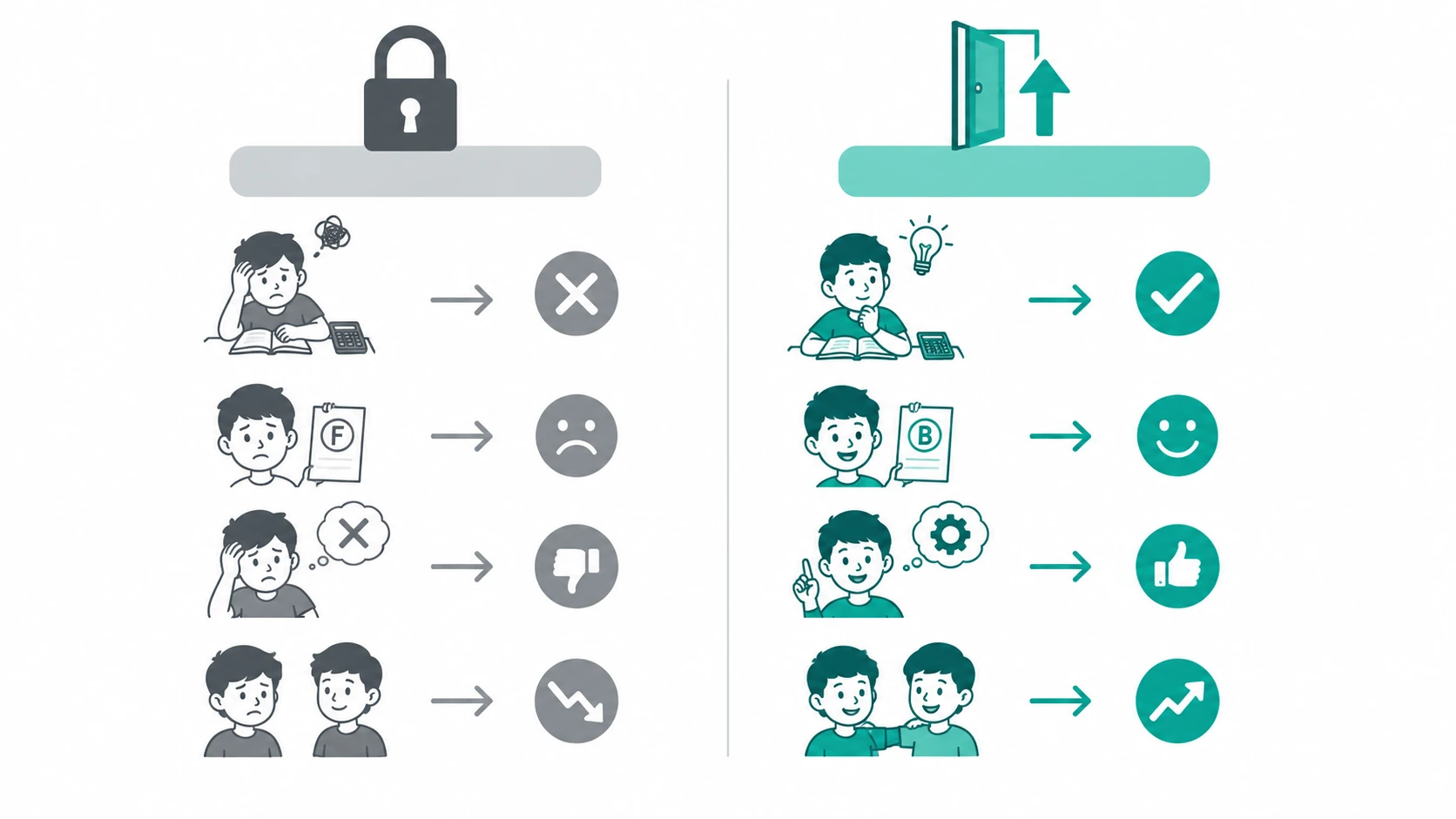
A growth mindset is the belief that abilities can improve through effort, strategy, and practice. A fixed mindset is the belief that ability is a stable trait that effort cannot meaningfully change. In a middle school setting, these mindsets show up most clearly when students face a hard subject, a poor grade, or a mistake in front of peers. This distinction was first popularized by psychologist Carol Dweck, and her research is often summarized through Carol Dweck mindset quotes that capture the core idea in a single line.
| Situation | Fixed Mindset Response | Growth Mindset Response |
|---|---|---|
| Struggling with a math unit | “I’m just not a math person.” | “I need a different strategy or more practice on this skill.” |
| Receiving a low grade | Avoids the subject or stops trying | Reviews feedback to identify what to change next time |
| Making a mistake in class | Feels embarrassed and disengages | Treats the mistake as information about what to adjust |
| Comparing themselves to a classmate | “They’re just smarter than me.” | “They may have practiced this skill more; I can build it too.” |
<a id=”effort-alone”></a>
Why Effort Alone Is Not Enough
Telling students to simply “try harder” is an incomplete growth mindset message because effort without an effective strategy often leads to frustration rather than progress. A growth mindset depends on the relationship between effort, strategy, feedback, and support — not effort in isolation.
Activities should teach students to ask, “What can I try differently?” instead of only asking, “Did I work hard enough?” This shift moves the focus from raw persistence to problem-solving, which is a more accurate and useful application of growth mindset thinking.
<a id=”how-to-use”></a>
How Can Teachers Use Growth Mindset Activities in Middle School?
Growth mindset activities can be used in advisory periods, homeroom, core classroom instruction, counseling sessions, study-skills programs, or short reflection blocks. Selecting the right activity depends on student age, classroom needs, available time, and the specific learning objective for that session.
Before choosing an individual activity, it helps to identify the goal: Is the aim to introduce the concept for the first time, help students recognize fixed-mindset thinking in themselves, or build a specific skill such as using feedback effectively? Matching the activity to this goal makes implementation more purposeful than selecting activities at random.
<a id=”choosing-activity”></a>
Choosing an Activity Based on the Learning Goal
| Learning Goal | Activity Type | Recommended Time | Format |
|---|---|---|---|
| Recognize fixed-mindset thinking | Scenario Cards | 10–15 minutes | Small group or partner |
| Reframe mistakes | Mistake Detective | 10–20 minutes | Individual or whole class |
| Build persistence | Strategy Swap | 15–20 minutes | Individual or small group |
| Use feedback effectively | Feedback to Next Step | 5–10 minutes | Individual |
| Recognize personal progress | Personal Growth Reflection | 10–15 minutes | Individual |
<a id=”how-long”></a>
How Long Should a Growth Mindset Activity Take?
Growth mindset activities typically range from quick 5–10 minute reflection exercises to deeper 20–45 minute lessons involving discussion and application. Short, repeated practice tends to reinforce the concept more effectively than a single one-time lesson, since students need multiple opportunities to apply the thinking to new situations.
Printable worksheets increase in value when they are paired with discussion or reflection rather than completed silently and collected. A brief class conversation about responses helps students hear multiple approaches to the same challenge.
<a id=”core-activities”></a>
Growth Mindset Activities for Middle School Students

The following activities can be used individually, in pairs, or as whole-class exercises. Many can be converted into printable PDF worksheets for classroom or take-home use.
“Yet” Statements
Purpose: Teach students to distinguish a current limitation from a permanent inability. Materials: Paper or printable worksheet, pencil. Time: 5–10 minutes.
Students rewrite fixed statements such as “I can’t do this” into learning-oriented statements such as “I can’t do this yet.” This simple linguistic shift reframes a limitation as temporary rather than permanent.
Reflection prompts:
- What is one thing you currently find difficult?
- What would need to happen for that to change?
- What is one small step you could take this week?
The Challenge Reframe
Purpose: Build problem-solving skills connected to a real challenge. Materials: Worksheet or notebook. Time: 15–20 minutes.
Students choose a difficult academic or personal challenge and identify what specifically makes it difficult. They then identify one strategy, resource, or person who could help. This activity connects growth mindset to resilience and problem-solving rather than positive thinking alone.
Mistake Detective
Purpose: Reduce the tendency to interpret mistakes as evidence of low ability. Materials: A recent assignment or quiz, printable worksheet. Time: 10–20 minutes.
Students examine a real mistake using four questions: What happened? Why did it happen? What did I learn? What will I change? This structured sequence turns an emotional reaction to a mistake into a useful analysis.
Strategy Swap
Purpose: Teach students to adapt their approach rather than repeat an ineffective one. Materials: Worksheet, example problem or assignment. Time: 15–20 minutes.
Students describe a strategy that did not work for a specific problem and generate at least two alternative approaches. This activity is especially useful for mathematics, writing, reading comprehension, and studying, where a single method often is not enough.
Feedback to Next Step
Purpose: Make feedback actionable rather than something students passively read. Materials: Recent teacher, peer, or self-feedback. Time: 5–10 minutes.
Students take one piece of feedback and translate it into a single, specific next step. Feedback becomes far more useful once students know exactly how to apply it to their next attempt.
Growth Mindset Scenario Cards
Purpose: Practice identifying fixed-mindset thinking and generating alternatives. Materials: Printed scenario cards. Time: 10–15 minutes.
Cards present realistic middle school situations — difficult homework, a low test score, comparison with classmates, a group project conflict, or learning a new skill. Students identify the fixed-mindset response in the scenario and write a growth-oriented alternative. This works well in small groups or partner discussion.
Personal Growth Reflection
Purpose: Connect past progress to effort, strategy, and support. Materials: Printable worksheet. Time: 10–15 minutes.
Students reflect on something they can now do that was previously difficult, then identify what practice, strategy, feedback, or support helped them improve. This activity works well as a take-home PDF handout since it draws on the student’s own history rather than a classroom assignment.
<a id=”printable-pdf”></a>
How Do Printable and PDF Growth Mindset Activities Work Best?
Printable and PDF growth mindset activities work best when they prioritize clear instructions, a single focused concept, and space for genuine written reflection rather than visual design alone. A worksheet that looks polished but lacks a clear learning objective adds little instructional value.
Accessibility matters as much as content. Worksheets should use age-appropriate language, readable fonts and spacing, and enough writing space for middle schoolers to respond in full sentences rather than single words.
<a id=”worksheet-components”></a>
What to Include in a Middle School Growth Mindset Worksheet
An effective worksheet should include:
- Clear, simple instructions
- One focused concept per worksheet
- Realistic student scenarios
- Reflection questions that require explanation, not one-word answers
- Adequate space for written responses
- A practical next step the student can act on
Worksheets should encourage application of the concept rather than asking students to repeat a definition, since recalling a definition does not indicate that a student can use the idea in a real situation. Alongside worksheets, many teachers also display a growth mindset poster in the classroom as a visual, everyday reminder of the language introduced in these activities.
<a id=”digital-vs-print”></a>
Digital PDF vs. Printed Worksheet
| Factor | Printed Worksheet | Digital PDF |
|---|---|---|
| Classroom setup | No devices needed | Requires device access |
| Annotation | Easy handwriting and markup | Depends on app or software |
| Storage | Physical folder or binder | Cloud or shared drive |
| Reuse | Requires reprinting | Easily reused or edited |
| Student interaction | Familiar, low-distraction | Can include interactive elements |
Printed worksheets are often more practical for quick, low-distraction classroom use, while digital PDFs are useful when students need to save, revisit, or share their responses electronically.
<a id=”adapting”></a>
How Can Growth Mindset Activities Be Adapted for Different Middle School Situations?
Generic activity lists often overlook the fact that the same growth mindset concept needs to be adapted depending on why a student is struggling. Adapting activities to specific situations makes them more effective than applying one approach to every student.
For Students Who Give Up Quickly
Focus on identifying the exact point where the student disengages, then use small, specific next steps rather than general encouragement to “keep trying.” Strategy identification and brief reflection are more effective than simply telling a student to persist.
For Students Who Fear Mistakes
Use mistake-analysis activities in low-stakes settings, such as reviewing a practice problem rather than a graded test. Classroom norms and how teachers respond to errors strongly influence whether students feel safe experimenting and learning from mistakes.
For Students Who Say “I’m Not Good at This”
Help students identify the specific underlying skill, strategy, or experience behind the statement rather than replacing it with an unrealistic affirmation. “I’m not good at this yet, but I haven’t practiced the second half of this skill” is more useful than “I’m great at everything.”
For High-Achieving Students
Address perfectionism, fear of failure, avoidance of difficult tasks, and over-reliance on existing ability. Growth mindset activities for these students should encourage choosing productive challenges rather than only tasks where success is guaranteed.
<a id=”common-mistakes”></a>
Common Mistakes When Teaching Growth Mindset to Middle School Students
Treating Growth Mindset as “Just Try Harder”
This mistake occurs when effort is treated as sufficient on its own. Productive effort combines persistence with strategy, feedback, practice, and support; ineffective repetition of the same approach rarely produces improvement.
Praising Intelligence Instead of the Learning Process
Praising a student’s intelligence (“You’re so smart”) can unintentionally reinforce fixed-mindset thinking by suggesting that ability, rather than process, explains success. Recognizing effective strategies, persistence, revision, and specific learning behaviors instead helps students focus on what they can control.
Using Growth Mindset Activities as a One-Time Lesson
A single worksheet or lesson rarely changes long-term student behavior. Growth mindset language and short reflection activities are more effective when integrated into regular classroom practice throughout the year.
Ignoring Environmental Factors
Teacher expectations, classroom culture, workload, available support, and prior student experiences all influence behavior. Growth mindset does not mean students can overcome every barrier through attitude alone; appropriate instruction and support remain necessary.
<a id=”connections”></a>
How Does Growth Mindset Connect to Resilience, Goal Setting, and Productivity?
Growth mindset is most useful when connected to concrete behaviors rather than treated as an isolated attitude. It links naturally to goal setting, study habits, and resilience.
Growth Mindset and Goal Setting
Growth-oriented thinking supports realistic goals, ongoing progress monitoring, and willingness to adjust an approach. Focusing only on an outcome, such as a final grade, is less effective than focusing on controllable learning behaviors like practice frequency or strategy use.
Growth Mindset and Study Habits
Students can apply growth mindset thinking through planning, spaced practice, revision, asking for help, and changing ineffective study methods. This connects mindset to sustainable academic habits rather than a one-time mental shift.
Growth Mindset and Resilience
Growth mindset helps students use setbacks as information, but not every setback automatically produces growth. Resilience means adjusting an approach after difficulty, not simply tolerating repeated difficulty without changing course.
<a id=”applying”></a>
How Can Teachers Know Whether Students Are Actually Applying Growth Mindset?

Worksheet completion alone does not confirm that a student has internalized growth mindset thinking. Teachers can look for observable classroom behavior instead.
Signs of Productive Growth-Oriented Thinking
- Students can identify what they do not yet know.
- Students try alternative strategies after an unsuccessful attempt.
- Students use feedback to revise their work.
- Students can describe what they learned from a mistake.
- Students seek appropriate help instead of immediately giving up.
Simple Reflection and Progress Tracking
| Observable Behavior | Possible Student Statement | Teacher Response |
|---|---|---|
| Tries a new approach after failing | “That didn’t work, let me try this instead.” | Reinforce the strategy shift, not just the effort |
| Uses feedback to revise | “I changed this based on your comment.” | Acknowledge the specific revision made |
| Avoids a difficult task | “I don’t want to do this one.” | Ask what part feels difficult and why |
| Gives up after one attempt | “I can’t do this.” | Prompt with a smaller, specific next step |
Brief, recurring reflection prompts — rather than a formal scoring system — allow teachers to notice patterns over time without turning growth mindset into a rigid label.
<a id=”beyond-classroom”></a>
How Can Growth Mindset Activities Be Used Beyond the Classroom?
Growth mindset concepts extend naturally to parents, counselors, and extracurricular programs. Consistent language across these environments reinforces what students practice in class, as long as activities remain age-appropriate and connected to real challenges students actually face.
At Home
Parents can ask strategy-focused questions about homework and setbacks, such as “What’s one thing you could try differently?” rather than only asking about grades. These questions support reflection without adding pressure. Parents looking to reinforce these ideas outside of school can also pair conversations with age-appropriate growth mindset books for kids to keep the concept consistent between home and classroom.
In Sports and Extracurricular Activities
Practice, feedback, mistakes, coaching, and skill development in sports or other extracurricular activities mirror academic growth mindset principles. Connecting these experiences to classroom concepts helps students see that the same thinking transfers across different areas of life.
<a id=”choosing-pdf”></a>
How to Choose or Create a Growth Mindset PDF for Middle School Students

Evaluating or building a growth mindset PDF should focus on educational quality rather than whether a resource is simply downloadable.
PDF Resource Checklist
- Age-appropriate language
- Clear learning objective
- Short, focused instructions
- Realistic examples
- Meaningful reflection questions
- An actionable next step
- Adequate writing space
- Accessible formatting
- Printable layout
- Opportunity for teacher or peer discussion
When to Use a Worksheet, Discussion Activity, or Longer Lesson
A worksheet works well for introducing or practicing a single concept independently. A discussion activity, such as scenario cards, is better suited to exploring different responses to the same situation. A longer lesson is appropriate when the goal is deeper reflection or connecting growth mindset to a broader skill, such as study habits or goal setting. Choosing the right format should follow the specific learning objective rather than convenience alone.
<a id=”conclusion”></a>
Conclusion
Effective growth mindset activities for middle school help students practice responding differently to challenges, mistakes, feedback, and setbacks — not simply adopt a more positive attitude. The strongest activities connect growth mindset thinking to concrete strategies, effort, feedback, reflection, and support, and they work best when adapted to specific student situations such as fear of mistakes, quick disengagement, or perfectionism.
Printable and PDF resources are useful tools for implementation, but they are not substitutes for discussion and repeated application in real classroom situations. Students benefit most when growth mindset becomes an ongoing learning practice woven into daily instruction, rather than a one-time lesson or worksheet.
<a id=”faq”></a>
FAQ: Growth Mindset Activities for Middle School
What is a good growth mindset activity for middle school students? A good activity combines a realistic challenge with reflection, strategy selection, and a specific next step, such as the Challenge Reframe or Mistake Detective activities, rather than a generic definition-based worksheet.
How do you teach growth mindset to middle school students? Teachers typically introduce the concept, model it using real examples, give students opportunities to practice it through structured activities, and reinforce it through everyday classroom language and feedback throughout the year.
What are some simple growth mindset activities for students? Simple options include “yet” statements, mistake analysis, challenge reframing, strategy swaps, and short personal reflection prompts that take 5–20 minutes to complete.
What should a growth mindset worksheet include? An effective worksheet includes clear instructions, one focused concept, realistic scenarios, meaningful reflection questions, adequate writing space, and a practical next step. Application matters more than memorizing terminology.
How can teachers avoid teaching growth mindset incorrectly? Teachers should avoid equating growth mindset with positive thinking or telling students to simply work harder, and instead pair effort with strategy, feedback, and appropriate support.
Can growth mindset activities be used with students who struggle academically? Yes, but activities work best alongside appropriate instruction, feedback, and academic support rather than as a replacement for direct help with the underlying skill.
How often should middle school students do growth mindset activities? Brief, recurring activities are generally more effective than a single dedicated lesson, since students need repeated opportunities to apply the concept to new situations across the school year.
Are printable growth mindset activities better than digital activities? Neither format is inherently better; the right choice depends on classroom resources, student preference, and whether the goal involves quick handwritten reflection or saved, shareable digital responses.