
Introduction
A strong soccer mindset helps players perform consistently, stay focused under pressure, and recover from setbacks more effectively. While technical skills and physical conditioning are essential, mental performance often determines how well players apply those abilities during competition. Concepts such as soccer mentality, soccer mental toughness, and football mentality all refer to the psychological skills that influence confidence, resilience, concentration, and decision-making. Whether you are a beginner or an experienced player, developing the right mindset can improve performance, accelerate learning, and help you handle the challenges that come with competitive soccer.
By Your Daily Thrive | Self-Improvement & Personal Growth Expert
Quick Summary
- A strong soccer mindset improves confidence, focus, and decision-making.
- Mental toughness helps players stay composed during adversity and pressure.
- Consistent routines and self-awareness strengthen soccer mentality over time.
- Growth-oriented players learn from mistakes instead of fearing them.
- Mental skills can be trained and improved just like physical skills.
What Is a Soccer Mindset?
Defining Soccer Mindset and Soccer Mentality
A soccer mindset is the collection of thoughts, beliefs, attitudes, and mental habits that influence how a player approaches training, competition, and personal development.
Soccer mentality goes beyond motivation. It includes:
- Confidence
- Emotional control
- Focus
- Resilience
- Discipline
- Self-awareness
Many coaches use the terms soccer mentality and football mentality interchangeably because both describe the psychological approach players bring to the game.
A player’s mindset affects how they respond to mistakes, criticism, competition, and opportunities for growth.
Why Mindset Matters as Much as Physical Ability
Technical skill alone does not guarantee success. Players often face situations where mental strength becomes the deciding factor.
Examples include:
- Taking a penalty kick under pressure
- Recovering after conceding a goal
- Maintaining focus late in a match
- Handling competition for playing time
Research in sports psychology consistently shows that confidence, concentration, and emotional regulation directly influence athletic performance.
In our experience helping readers improve performance habits, players who develop mental skills often become more consistent even when their physical abilities remain unchanged.
The Core Traits of a Strong Soccer Mindset

Confidence Without Overconfidence
Confidence is trust in your preparation and abilities.
Healthy confidence helps players:
- Take calculated risks
- Stay calm under pressure
- Recover from mistakes
- Trust their training
Overconfidence differs because it can lead to complacency and poor decision-making.
The most effective players balance self-belief with humility and continuous improvement.
Resilience After Mistakes
Mistakes are unavoidable in soccer.
Mentally strong players do not allow a missed shot, poor pass, or defensive error to affect the rest of their performance.
Resilience involves:
- Accepting mistakes quickly
- Refocusing on the next play
- Learning from errors
- Maintaining emotional control
Elite athletes often use a “next action” mindset, directing attention toward what they can influence immediately rather than dwelling on the past.
Discipline and Accountability
Discipline means consistently doing what supports long-term improvement, even when motivation fluctuates.
Accountable players:
- Arrive prepared
- Follow training plans
- Accept constructive feedback
- Take responsibility for development
Your Daily Thrive recommends focusing on daily habits because sustainable improvement usually comes from repeated actions rather than occasional bursts of effort.
Competitive Focus
Focus allows players to remain mentally engaged throughout training and matches.
Strong focus helps athletes:
- Read the game effectively
- Anticipate situations
- Follow tactical instructions
- Avoid distractions
Competitive focus becomes especially important during high-pressure situations where attention can easily shift away from the task at hand.
Soccer Mental Toughness Explained
Players who want to strengthen resilience outside sports can benefit from learning a warrior mindset, which emphasizes discipline, perseverance, and mental strength during adversity.
What Is Mental Toughness in Soccer?
Soccer mental toughness is the ability to perform effectively despite pressure, setbacks, uncertainty, or adversity.
Mental toughness includes:
- Emotional resilience
- Confidence
- Persistence
- Adaptability
- Self-control
A mentally tough player continues competing effectively regardless of temporary challenges.
Signs of Strong Mental Toughness
Several behaviors indicate strong mental toughness.
These include:
- Remaining calm during difficult matches
- Recovering quickly after mistakes
- Maintaining effort regardless of score
- Performing consistently under pressure
- Responding positively to criticism
Mentally tough athletes typically focus on controllable factors instead of external circumstances.
Can Mental Toughness Be Developed?
Yes. Mental toughness is not a fixed trait.
Sports psychologists widely recognize that mental skills can be developed through deliberate practice.
Methods include:
- Visualization
- Reflection exercises
- Goal setting
- Pressure training
- Self-talk techniques
As of 2026, many elite academies increasingly integrate mental performance training alongside technical and physical development programs.
How to Mentally Prepare for a Soccer Game
Pre-Match Mental Preparation Routine
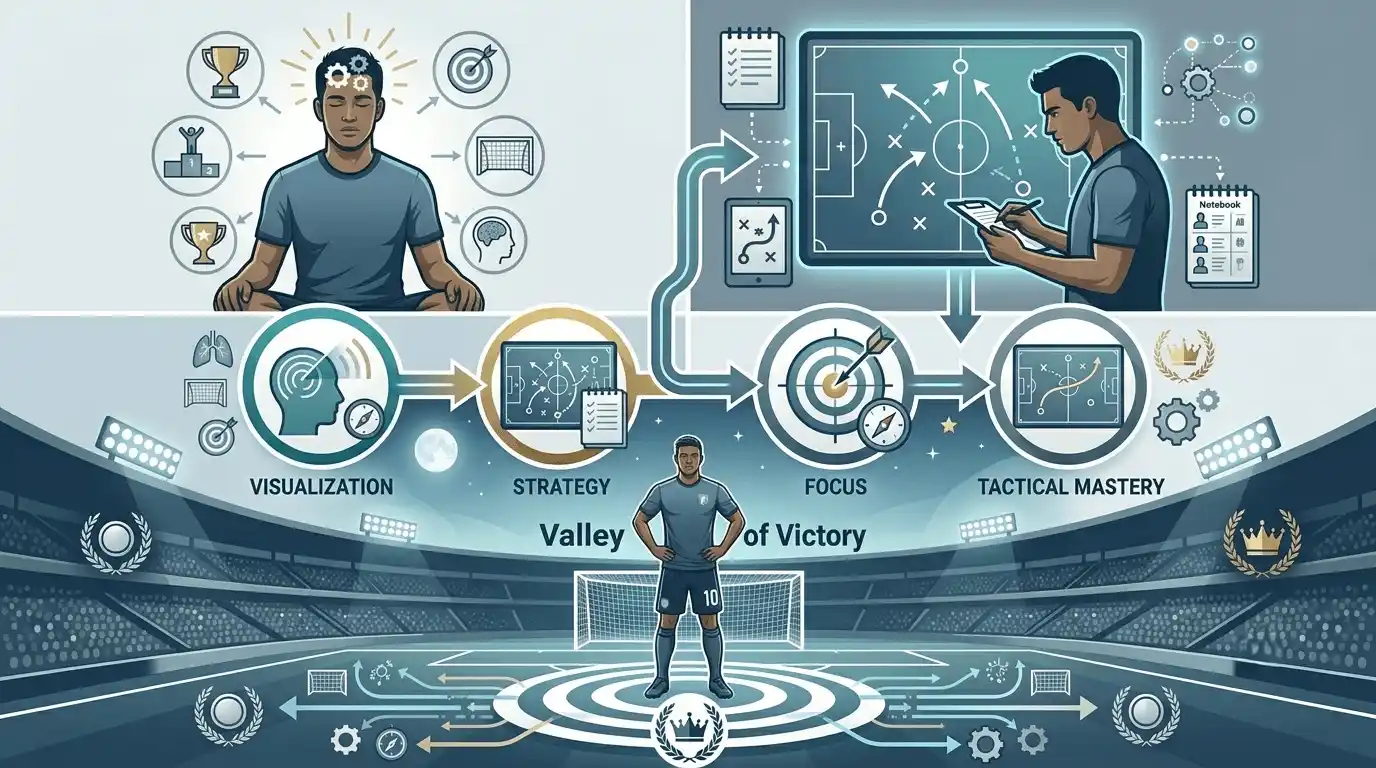
Effective mental preparation begins before kickoff.
A useful routine may include:
- Reviewing tactical responsibilities
- Setting performance goals
- Visualizing successful actions
- Using positive self-talk
- Practicing controlled breathing
Visualization is particularly effective because it activates neural pathways associated with performance execution.
Managing Pre-Game Nerves
Feeling nervous before a match is normal.
Anxiety often occurs because players care about the outcome and anticipate challenges.
Strategies for managing nerves include:
- Deep breathing exercises
- Progressive muscle relaxation
- Positive mental rehearsal
- Focus on controllable actions
Rather than viewing nervousness as a weakness, athletes can interpret it as readiness and heightened awareness.
Creating a Consistent Match-Day Mindset
Consistency reduces uncertainty and builds confidence.
Helpful match-day habits include:
- Following the same warm-up routine
- Using mental cues
- Listening to calming music
- Reviewing personal objectives
When routines become familiar, players often experience greater mental stability during competition.
Pre-Match Mental Preparation Checklist
| Activity | Purpose | Timing | Common Mistake |
| Visualization | Improve confidence | 10-15 minutes before match | Unrealistic expectations |
| Goal Setting | Create focus | Pre-match | Outcome-focused goals |
| Tactical Review | Improve decision-making | Team meeting | Information overload |
| Breathing Exercises | Reduce anxiety | Immediately before kickoff | Inconsistent practice |
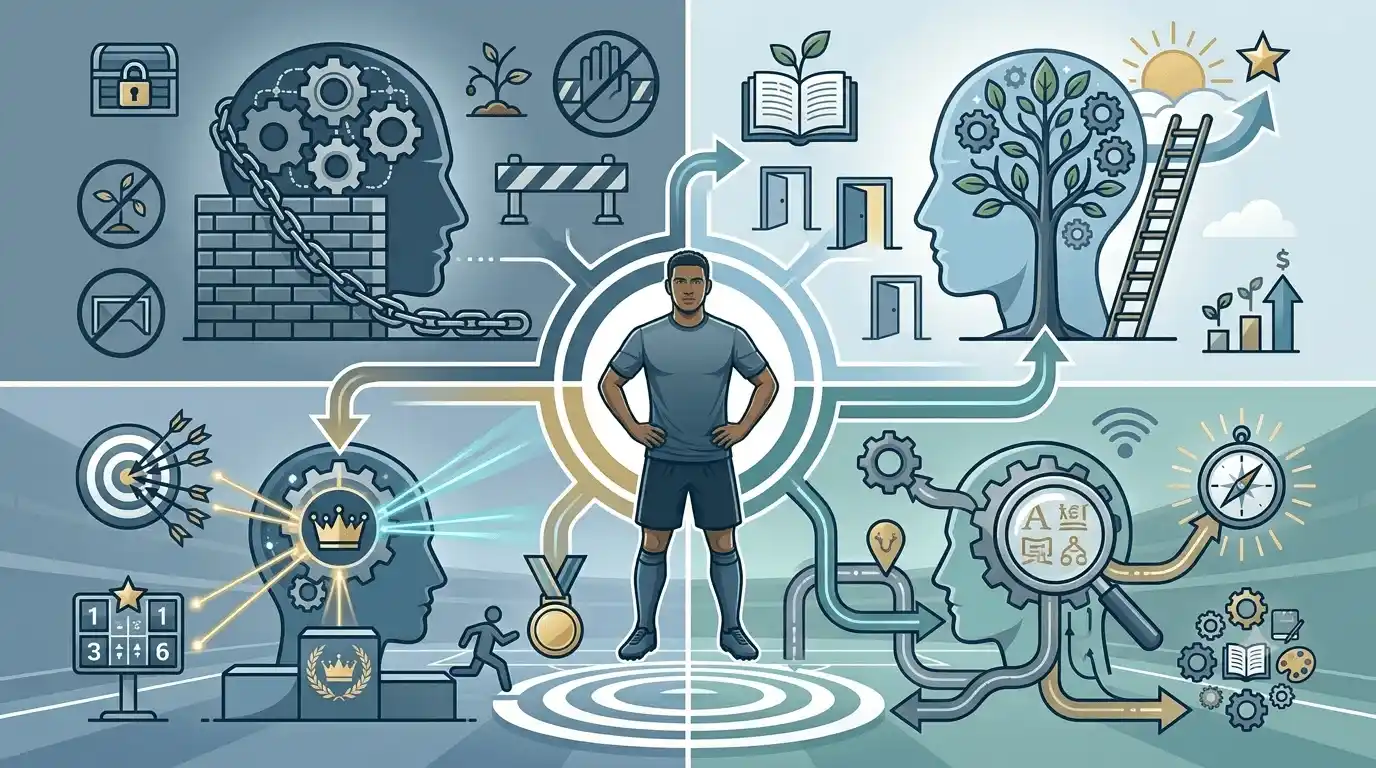
What Are the 4 Types of Mindsets and How Do They Apply to Soccer?
Fixed Mindset
A fixed mindset assumes abilities are largely unchangeable.
Players with a fixed mindset often:
- Avoid challenges
- Fear mistakes
- Resist feedback
- Focus excessively on outcomes
This mindset can limit development over time.
Growth Mindset
A growth mindset assumes abilities can improve through effort and learning.
Players with a growth mindset:
- Embrace challenges
- Learn from setbacks
- Seek feedback
- Value development
Sports psychologists frequently identify growth mindset principles as important components of long-term athletic success.
Performance Mindset
A performance mindset prioritizes execution and achievement.
Benefits include:
- Competitive focus
- Goal achievement
- High standards
Potential limitations include excessive pressure when outcomes become the sole measure of success.
Learning Mindset
A learning mindset prioritizes skill acquisition and continuous improvement.
This approach encourages:
- Experimentation
- Curiosity
- Reflection
- Adaptability
Many successful athletes balance both performance and learning mindsets.
Comparison of Mindset Types
| Mindset Type | Core Belief | Advantages | Potential Limitations |
| Fixed | Ability is static | Short-term confidence | Limited growth |
| Growth | Ability develops | Resilience and improvement | Requires patience |
| Performance | Results matter most | Competitive focus | Pressure and stress |
| Learning | Improvement is ongoing | Adaptability | Slower visible results |
The 80/20 Rule in Soccer and Mental Performance
Understanding the 80/20 Principle
The 80/20 rule suggests that a relatively small number of actions often produce a large percentage of results.
In soccer, a few high-impact habits frequently drive significant performance improvements.
Applying the 80/20 Rule to Soccer Mindset
Players can prioritize mental skills that generate the greatest return.
Examples include:
- Consistent focus
- Positive self-talk
- Effective preparation
- Emotional regulation
- Reflection after matches
These habits often influence performance more than constantly searching for new techniques.
Common Misunderstandings of the 80/20 Rule
The 80/20 principle does not mean avoiding hard work.
Instead, it encourages:
- Strategic effort
- Prioritization
- Efficient practice
Successful players combine focused effort with long-term consistency.
Soccer Mindset Examples From Real Match Situations
Responding to a Missed Goal Opportunity
A strong soccer mindset helps players move forward immediately after a missed chance.
Effective responses include:
- Accepting the mistake
- Regaining focus
- Looking for the next opportunity
Dwelling on errors often leads to additional mistakes.
Handling Limited Playing Time
Players who receive fewer minutes can maintain a productive mindset by:
- Continuing to train hard
- Supporting teammates
- Staying prepared
- Focusing on improvement
This approach preserves motivation and readiness.
Leading During Difficult Matches
Leadership is often most visible during adversity.
Strong leaders:
- Communicate positively
- Encourage teammates
- Remain composed
- Maintain belief
These behaviors can influence team morale and performance.
Recovering After a Loss
Losses provide opportunities for growth when approached constructively.
Effective recovery includes:
- Reviewing performance objectively
- Identifying lessons
- Avoiding excessive self-criticism
- Refocusing on future improvement
The goal is learning rather than dwelling on disappointment.
Common Mental Challenges Soccer Players Face
Fear of Making Mistakes
Fear of mistakes often causes hesitation and reduced performance.
Players can overcome this challenge by:
- Accepting mistakes as part of learning
- Focusing on process goals
- Practicing under pressure
Loss of Confidence
Confidence may decline after poor performances, injuries, or setbacks.
Rebuilding confidence involves:
- Reviewing past successes
- Setting achievable goals
- Maintaining consistent preparation
Performance Anxiety
Performance anxiety is common among athletes at all levels.
Contributors include:
- External expectations
- Fear of failure
- Competitive pressure
Breathing techniques, visualization, and cognitive reframing can help manage anxiety effectively.
Negative Self-Talk
Negative self-talk can undermine confidence and concentration.
Helpful alternatives include:
- Evidence-based self-statements
- Constructive feedback
- Positive performance cues
Replacing destructive thoughts with productive ones improves mental performance over time.
Beginner Mistakes That Hurt Soccer Mentality
Focusing Only on Results
Many players judge themselves exclusively by wins, goals, or statistics.
This can create frustration and reduce motivation.
A process-focused approach emphasizes controllable behaviors such as effort, preparation, and decision-making.
Comparing Yourself Constantly to Others
Comparison often damages confidence and creates unnecessary pressure.
A healthier strategy involves tracking personal improvement over time rather than measuring progress solely against teammates or opponents.
Ignoring Mental Training
One of the most common mistakes is assuming mindset develops automatically.
Mental skills require intentional practice just like passing, shooting, or fitness training.
Players who consistently train their mental game often gain a significant competitive advantage.
Daily Practices That Build a Strong Soccer Mindset
Building consistency often requires discipline, and learning how to build discipline without motivation can help players stay committed even when enthusiasm fluctuates.
Visualization Training
Visualization is the mental practice of imagining successful performance before it happens. Sports psychologists often use this technique to help athletes improve confidence, focus, and decision-making.
Effective visualization involves:
- Imagining realistic game situations
- Seeing yourself executing skills successfully
- Mentally rehearsing responses to challenges
- Practicing under both positive and difficult scenarios
For example, a striker might visualize receiving a pass, creating space, and finishing calmly. A defender may mentally rehearse winning aerial duels or recovering after losing possession.
The key is consistency. Even five to ten minutes of visualization several times per week can strengthen mental preparation.
Reflection and Journaling
Reflection helps players identify patterns that influence performance.
A simple soccer journal can include:
- What went well during training or matches
- Areas for improvement
- Emotional responses during competition
- Goals for the next session
In our experience helping readers build better performance habits, athletes who regularly reflect on their progress tend to develop greater self-awareness and resilience.
Journaling also encourages a growth mindset because it shifts attention toward learning rather than simply judging outcomes.
Goal Setting for Continuous Improvement
Effective goal setting provides direction and motivation.
Players benefit from setting:
- Short-term goals
- Weekly objectives
- Seasonal development goals
- Performance-focused targets
Examples include:
- Improve first-touch consistency
- Communicate more during matches
- Complete a specific number of extra training sessions
Behavioral science research consistently shows that specific and measurable goals improve adherence and performance compared with vague intentions.
Developing Consistent Habits
Strong soccer mentality is built through repeated actions rather than occasional motivation.
Many athletes improve faster by adopting good habits in 30 days that support training, recovery, and long-term development.
Helpful habits include:
- Arriving early to training
- Following recovery routines
- Reviewing performances regularly
- Maintaining healthy sleep habits
- Practicing mental skills consistently
The most successful players often rely on systems and habits rather than waiting to feel motivated.
Difficulty and Time Investment
Developing a strong soccer mindset requires ongoing effort rather than a one-time solution.
For beginners, the process is generally manageable because many foundational mental skills can be learned quickly. However, mastering those skills under pressure takes considerably longer.
Factors That Affect Difficulty
Several variables influence the pace of mental development:
- Age and maturity
- Competitive level
- Coaching quality
- Training environment
- Previous experiences
- Personality traits
For example, players who frequently compete in challenging situations often develop resilience faster than those who rarely experience adversity.
Beginner vs Advanced Development
| Level | Typical Focus | Difficulty |
| Beginner | Confidence, focus, routines | Low to Moderate |
| Intermediate | Consistency, resilience | Moderate |
| Advanced | Pressure management, elite performance | High |
Mental development is similar to physical conditioning. Improvements occur gradually through repeated exposure and deliberate practice.
Results Timeline
Many players want to know how long it takes to improve their soccer mindset.
The answer depends on consistency, practice quality, and individual circumstances.
What Players May Notice Within Days
During the first few days, players often experience:
- Increased awareness of thoughts
- Better focus during training
- Improved confidence from preparation routines
What Players May Notice Within Weeks
After several weeks of consistent mental training:
- Improved emotional control
- Reduced performance anxiety
- Greater resilience after mistakes
- More consistent performances
What Players May Notice Within Months
Long-term benefits often include:
- Stronger self-belief
- Better leadership qualities
- Greater adaptability
- Consistent performance under pressure
Factors That Influence Progress
Mental growth may occur faster when players:
- Practice regularly
- Receive quality coaching
- Reflect on experiences
- Maintain realistic expectations
Progress may slow when players:
- Expect immediate results
- Avoid challenges
- Neglect mental training
- Focus exclusively on outcomes
Practice Guide for Improving Soccer Mindset
Daily Mental Training Routine
A simple daily routine can strengthen mental skills without requiring significant time.
Example routine:
- Five minutes of visualization
- Positive self-talk practice
- Goal review
- Brief reflection exercise
This routine can be completed in less than fifteen minutes.
Weekly Development Framework
A structured weekly approach helps maintain progress.
Consider the following framework:
| Activity | Frequency |
| Visualization | 3–5 times weekly |
| Goal Review | Weekly |
| Match Reflection | After each game |
| Mental Skills Practice | Daily |
| Performance Evaluation | Weekly |
Regular review prevents stagnation and encourages continuous improvement.
Maintaining Long-Term Consistency
Consistency is often the greatest challenge in mental training.
Helpful strategies include:
- Tracking progress
- Creating routines
- Working with coaches or mentors
- Setting realistic expectations
- Celebrating small improvements
Your Daily Thrive recommends treating mindset training like physical training. Both require regular practice to produce lasting results.
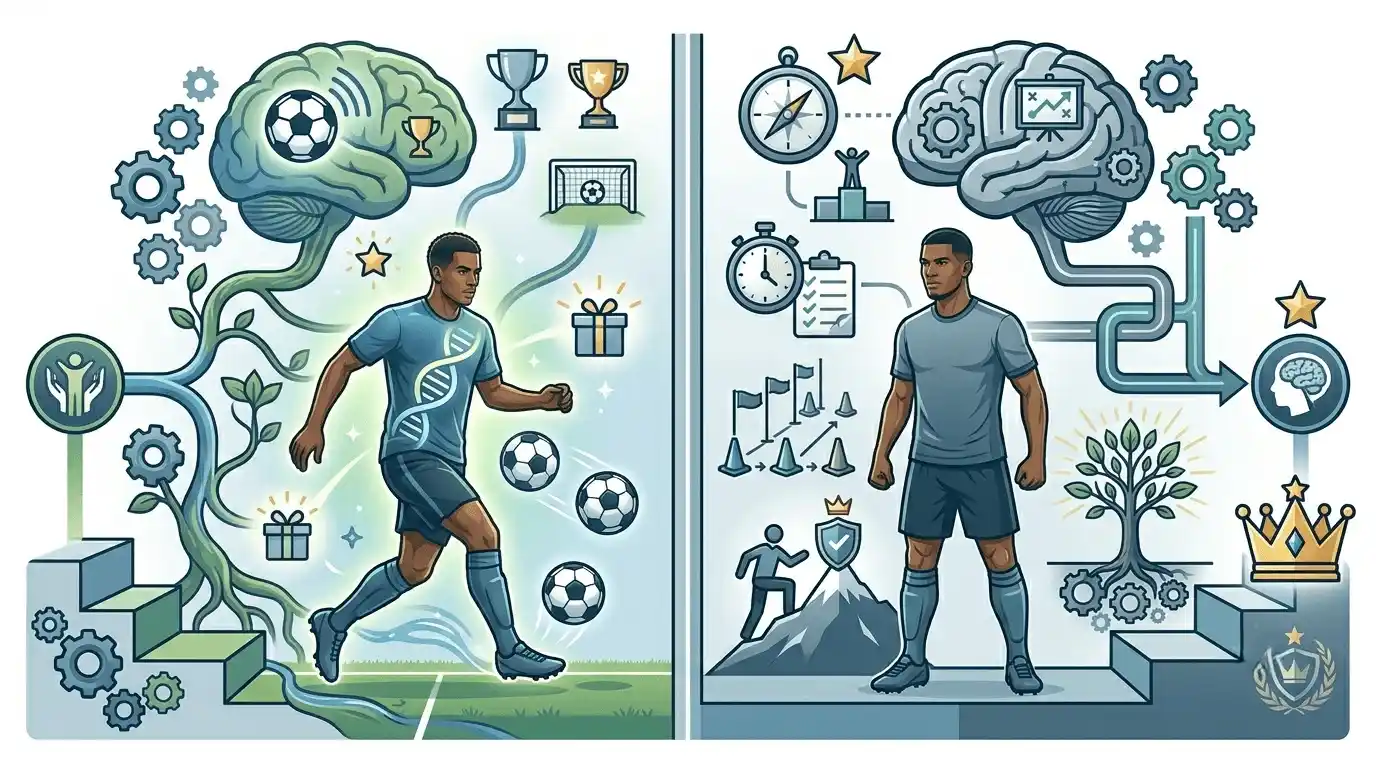
Soccer Mindset vs Natural Talent
Why Talent Alone Is Not Enough
Natural talent can provide an early advantage, but it rarely guarantees long-term success.
Talented players may struggle when they encounter:
- Stronger competition
- Performance setbacks
- Increased expectations
- Adversity and pressure
Without resilience and discipline, talent can stagnate.
Many elite athletes achieve success because they combine ability with strong psychological skills.
How Mindset Supports Long-Term Success
A strong soccer mindset helps players:
- Continue learning
- Adapt to challenges
- Recover from setbacks
- Maintain motivation
- Sustain high performance levels
Players with growth-oriented mental habits often outperform more naturally gifted competitors over time.
Comparison: Talent vs Soccer Mindset
| Factor | Natural Talent | Soccer Mindset |
| Development Potential | Limited without effort | Continually expandable |
| Response to Failure | May struggle | Learns and adapts |
| Consistency | Variable | More stable |
| Long-Term Growth | Uncertain | Stronger foundation |
| Pressure Handling | Not guaranteed | Can be trained |
The most successful players combine both talent and mindset rather than relying exclusively on one or the other.
Conclusion
A strong soccer mindset is one of the most important factors influencing long-term performance and development. While technical ability and physical fitness remain essential, mental skills such as confidence, resilience, discipline, focus, and emotional control often determine how effectively players perform under pressure.
Developing a positive soccer mentality requires consistent effort, reflection, and practice. Players who embrace challenges, learn from mistakes, and prioritize continuous improvement are more likely to achieve sustainable success.
The most effective approach is to view mindset as a trainable skill. Just as players improve passing, shooting, and conditioning through repetition, they can strengthen mental toughness and confidence through deliberate mental training.
The ultimate takeaway is simple: talent may create opportunities, but a strong soccer mindset helps players maximize them.
Frequently Asked Questions
How do you develop a strong soccer mindset?
Develop a strong soccer mindset by practicing confidence, resilience, focus, emotional control, and consistent self-reflection. Mental skills improve through repetition and deliberate practice.
What is mentality in soccer?
Mentality in soccer refers to a player’s psychological approach to training, competition, challenges, and improvement. It includes confidence, discipline, focus, and resilience.
How can I become mentally tougher in soccer?
Mental toughness improves through exposure to challenges, visualization, positive self-talk, reflection, and learning to recover quickly from mistakes and setbacks.
How do professional players stay confident after mistakes?
Professional players focus on the next action rather than dwelling on errors. They rely on preparation, routines, and emotional control to maintain confidence.
What are the four types of mindsets in sports?
The four commonly discussed mindsets are fixed mindset, growth mindset, performance mindset, and learning mindset. Each influences how athletes approach development and competition.
How do I mentally prepare for a soccer game?
Mental preparation includes visualization, goal setting, breathing exercises, tactical review, and maintaining a consistent pre-match routine.
Can mental training improve soccer performance?
Yes. Research in sports psychology shows that mental training can improve focus, confidence, emotional regulation, decision-making, and performance consistency.
What is the difference between soccer mentality and soccer mental toughness?
Soccer mentality is a broad term covering attitudes, beliefs, and approaches to the game. Soccer mental toughness specifically refers to performing effectively despite pressure, adversity, or setbacks.