

Introduction
Love affirmations are positive, intentional statements designed to reshape how a person thinks, feels, and behaves in relation to love and relationships. The idea behind love affirmations meaning, practice, and how they influence attraction & relationships is rooted in the belief that repeated thoughts can gradually influence emotional patterns and decision-making. These affirmations are commonly used in self-improvement, emotional healing, and mindset development to reduce negative self-talk and build healthier beliefs about love and self-worth. While they do not directly control external reality, they can significantly shape internal perception, which influences behavior, emotional responses, and relationship experiences over time.
Quick Summary
- Love affirmations are structured statements that influence beliefs about love and relationships
- They work through repetition, emotional conditioning, and mindset shifts
- Self-love affirmations build emotional stability and identity strength
- Attraction-based affirmations increase emotional openness but require balance
- Consistency and belief are more important than repetition alone
What Are Love Affirmations?
Love affirmations are repetition-based psychological tools used to reinforce positive beliefs about love, emotional connection, and self-worth. They work by replacing negative internal dialogue with structured positive statements.
From a cognitive-behavioral perspective, thoughts influence emotions, and emotions influence actions. When someone repeatedly says affirmations like “I am worthy of love”, they gradually weaken limiting beliefs such as rejection fear or emotional insecurity.
Over time, this shift can lead to improved confidence, healthier boundaries, and more conscious relationship choices.
Psychological Basis of Love Affirmations
The effectiveness of love affirmations is often explained through behavioral psychology and cognitive science.
Key principles include:
- Cognitive restructuring: replacing negative beliefs with positive ones
- Neuroplasticity: repeated thoughts strengthen neural pathways
- Self-perception theory: behavior and repeated thoughts shape identity
When affirmations are repeated consistently, the brain begins to accept them as familiar information, reducing emotional resistance and internal conflict.
How Love Affirmations Work in Daily Life
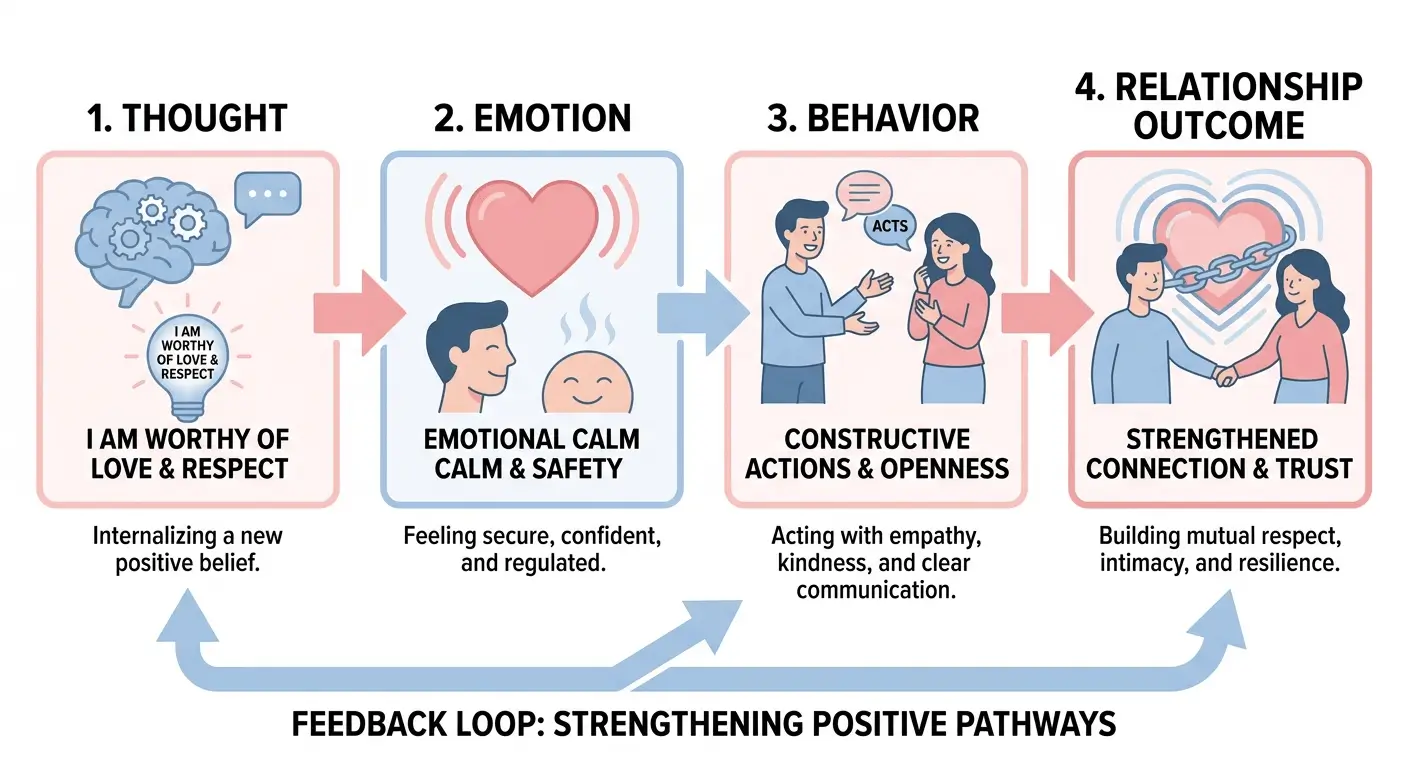
Love affirmations influence how individuals interpret emotional situations and relationships. Instead of reacting from fear or insecurity, the mind gradually shifts toward more balanced responses.
They work through:
- Mental repetition shaping subconscious beliefs
- Emotional conditioning reducing anxiety responses
- Perception filtering influencing how people interpret behavior
Real-life effects include:
- Increased emotional awareness
- Reduced fear of rejection
- Improved communication in relationships
- Healthier emotional decision-making
Types of Love Affirmations
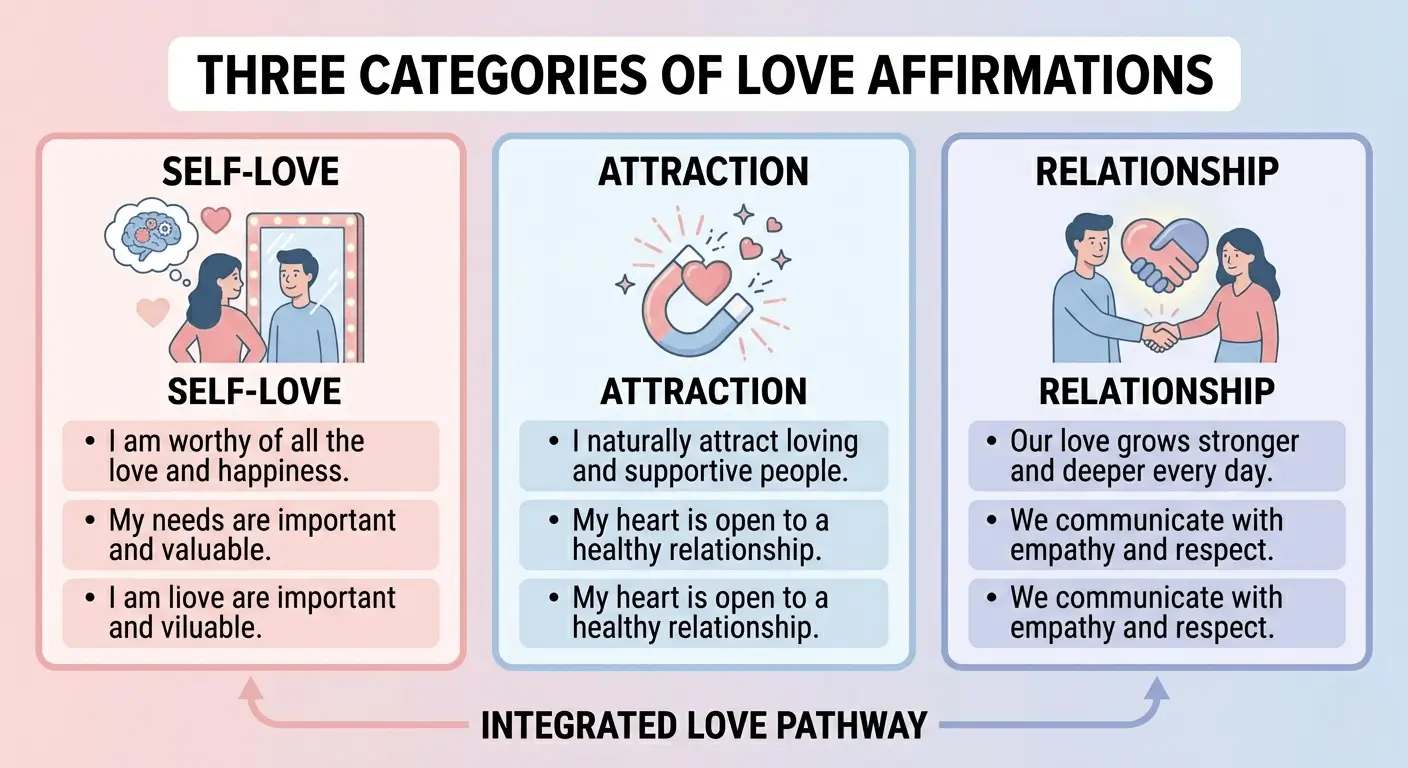
1. Self-Love Affirmations
Focus on internal healing and self-worth.
Example: “I am enough as I am.”
- Strengthens emotional independence
- Reduces validation dependency
2. Love Attraction Affirmations
Focus on attracting healthy relationships.
Example: “I attract loving and respectful relationships.”
- Encourages emotional openness
- Builds positive relationship expectations
3. Relationship Affirmations
Used within existing relationships.
Example: “My relationship is loving and supportive.”
- Improves emotional bonding
- Encourages appreciation and harmony
Self-Love Affirmations and Identity Transformation
Self-love affirmations are powerful because they directly influence identity formation. Identity determines long-term behavior more than motivation or willpower.
Effects include:
- Stronger emotional stability
- Reduced dependency on external validation
- Healthier relationship boundaries
- Increased self-acceptance
From a psychological perspective, when a person consistently repeats positive identity-based statements, they begin to align their actions with those beliefs.
Love Affirmations for Him, Her, and Specific Person Attraction
Some affirmations are personalized toward a specific romantic interest or type of partner.
However, psychological balance is important.
Key insights:
- Affirmations for “him/her” clarify emotional intention
- “Specific person” focus increases emotional attachment intensity
- Over-focus can lead to emotional dependence
Healthier approach emphasizes becoming emotionally secure rather than trying to control another person’s feelings.
Love Manifestation Affirmations: How They Are Used
In manifestation practices, love affirmations are used to align thoughts, emotions, and behavior toward desired relationship outcomes.
Core principle:
Thoughts → emotions → behavior → experiences
However, affirmations alone are not enough. They must be combined with:
- Emotional awareness
- Behavioral changes
- Healthy communication patterns
Without action, affirmations remain internal repetition rather than transformation.
What Makes Love Affirmations Effective
Not all affirmations produce results. Effectiveness depends on psychological realism.
Key factors:
- Believability of statements
- Emotional connection to words
- Daily consistency
- Alignment with real-life behavior
Affirmations that feel too unrealistic often create internal resistance rather than growth.
Self-Love vs Attraction-Based Affirmations
| Type | Focus | Outcome | Limitation |
|---|---|---|---|
| Self-love affirmations | Inner healing | Confidence, emotional stability | No direct external targeting |
| Attraction affirmations | Relationship openness | Increased availability to love | Risk of unrealistic expectations |
| Relationship affirmations | Existing partner | Emotional harmony | Requires communication effort |
Common Problems and Why Love Affirmations Fail
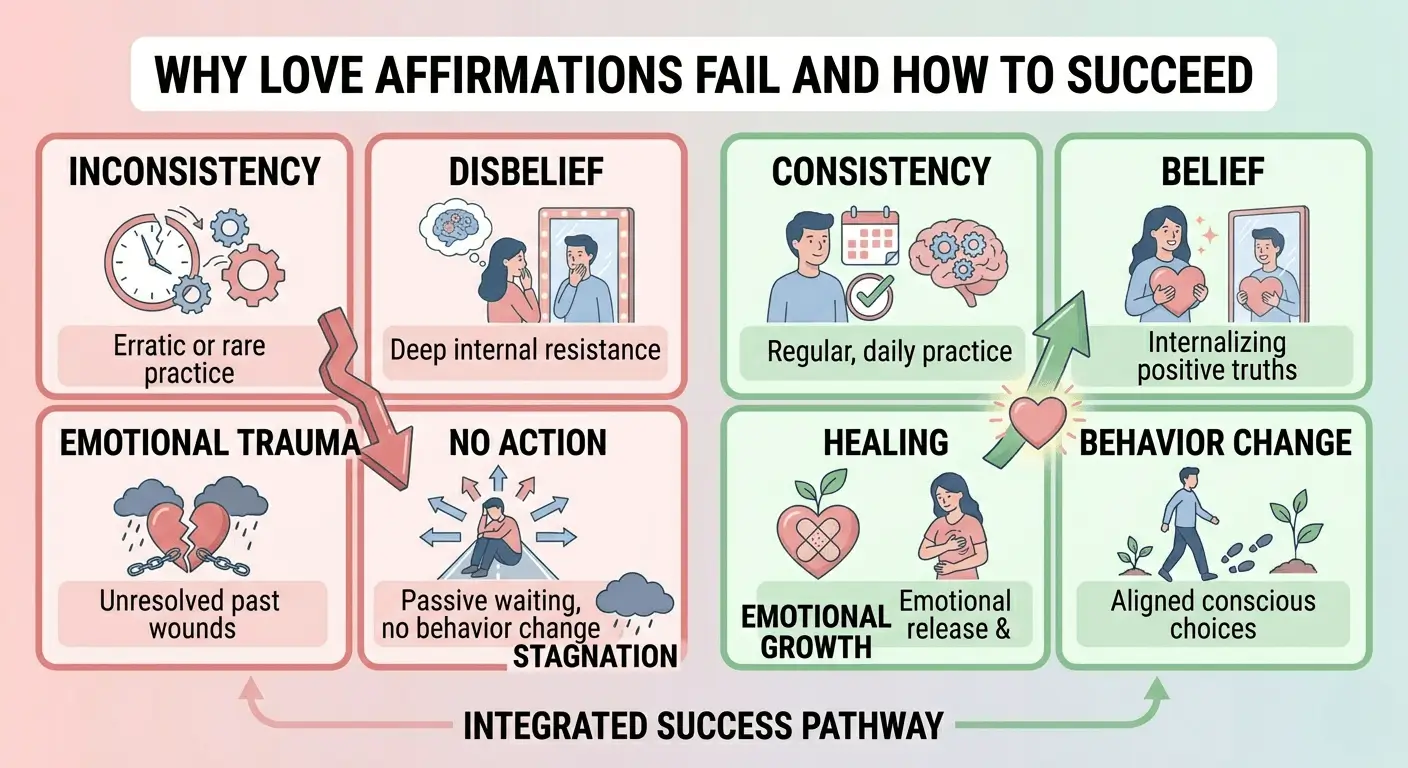
Many people fail with affirmations not because the method is ineffective, but because of how it is used.
Common issues:
- Lack of consistency
- Emotional disbelief
- Unresolved trauma or insecurity
- No real-world behavior change
- Attachment to specific outcomes
Psychologically, repetition without emotional alignment produces weak cognitive reinforcement.
How to Practice Love Affirmations Effectively
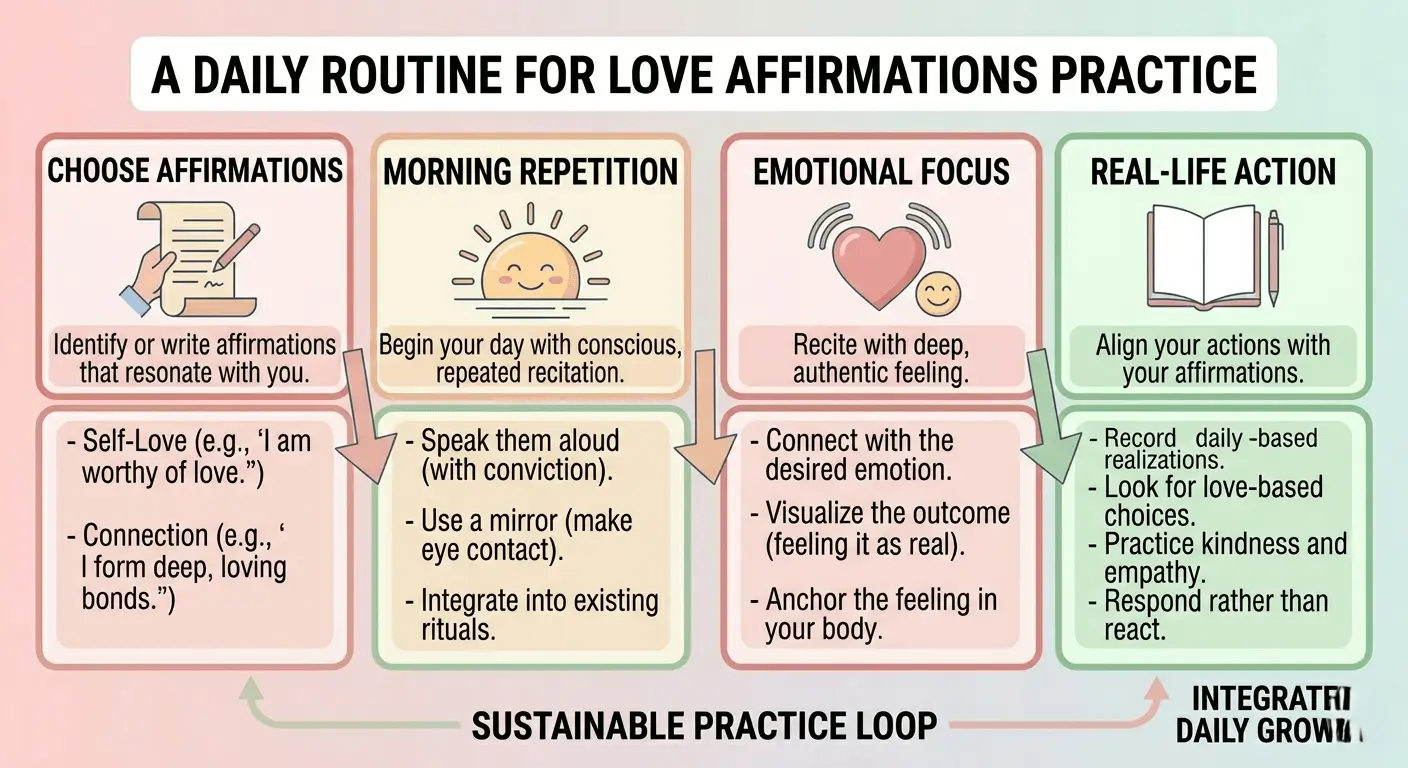
A structured approach improves results significantly.
Step-by-step method:
- Choose 3–5 meaningful affirmations
- Repeat them daily (morning and night)
- Focus on emotional meaning, not speed
- Combine with journaling or visualization
- Reinforce with real-life actions
Effective vs Ineffective Practice
| Effective Practice | Ineffective Practice |
|---|---|
| Consistent daily repetition | Occasional use |
| Emotional engagement | Mechanical repetition |
| Self-aligned beliefs | Attachment-driven statements |
| Action integration | No behavioral change |
Mental and Emotional Benefits
When practiced correctly, love affirmations support emotional development.
Benefits include:
- Reduced anxiety in relationships
- Increased confidence and self-worth
- Healthier attachment patterns
- Improved emotional regulation
- Greater resilience in emotional situations
These outcomes occur gradually through consistent cognitive and emotional conditioning.
Common Myths About Love Affirmations
There are many misunderstandings about how affirmations work.
- They produce instant results
- They can control specific people
- No action is required
- More repetition guarantees faster success
In reality, affirmations work as a mindset tool, not a replacement for real emotional and behavioral growth.
Real-Life Application Example
Beginner Level
- Repeats simple affirmations daily
- Focuses on self-worth improvement
- Gradually reduces insecurity
Advanced Level
- Combines affirmations with behavior changes
- Improves communication and boundaries
- Manages emotional triggers effectively
- Builds healthier relationship habits
This progression shows that affirmations become more powerful when integrated into daily life changes.
Conclusion
Love affirmations are a psychological and behavioral tool used to reshape beliefs about love, self-worth, and relationships through repetition and emotional conditioning. Their effectiveness depends on consistency, emotional belief, and alignment with real-life actions. While they cannot directly control external outcomes, they can significantly improve internal mindset, emotional stability, and relationship behavior. When used correctly, they become a supportive practice for building healthier, more conscious, and emotionally balanced relationships.
FAQs
1. Do love affirmations really work?
Yes, they can influence mindset and emotional patterns when practiced consistently and supported by real behavior changes.
2. How long do love affirmations take to work?
There is no fixed timeline; results depend on consistency, emotional belief, and psychological readiness.
3. Can love affirmations attract a specific person?
They may influence mindset and emotional openness, but they cannot control another person’s free will.
4. What are the best love affirmations?
Simple, believable statements like “I am worthy of love” or “I attract healthy relationships” work best.
5. Why do love affirmations fail?
They often fail due to inconsistency, emotional resistance, lack of belief, or absence of real-life behavioral change.