

Introduction
The four horsemen of relationships are four destructive communication patterns identified by relationship researcher Dr. John Gottman. These behaviors—criticism, contempt, defensiveness, and stonewalling—can slowly damage trust, emotional safety, and long-term relationship stability when left unaddressed.
Understanding these patterns helps people recognize unhealthy interaction cycles, improve emotional regulation, and build stronger communication habits in romantic relationships, marriages, friendships, and even family dynamics.
Quick Summary Block
- The four horsemen of relationships are criticism, contempt, defensiveness, and stonewalling.
- These behaviors predict relationship dissatisfaction and emotional disconnection.
- Replacing reactive communication with healthy habits improves trust and conflict resolution.
- Awareness, emotional regulation, and consistent communication patterns are key to long-term relationship health.
What Are the Four Horsemen of Relationships?
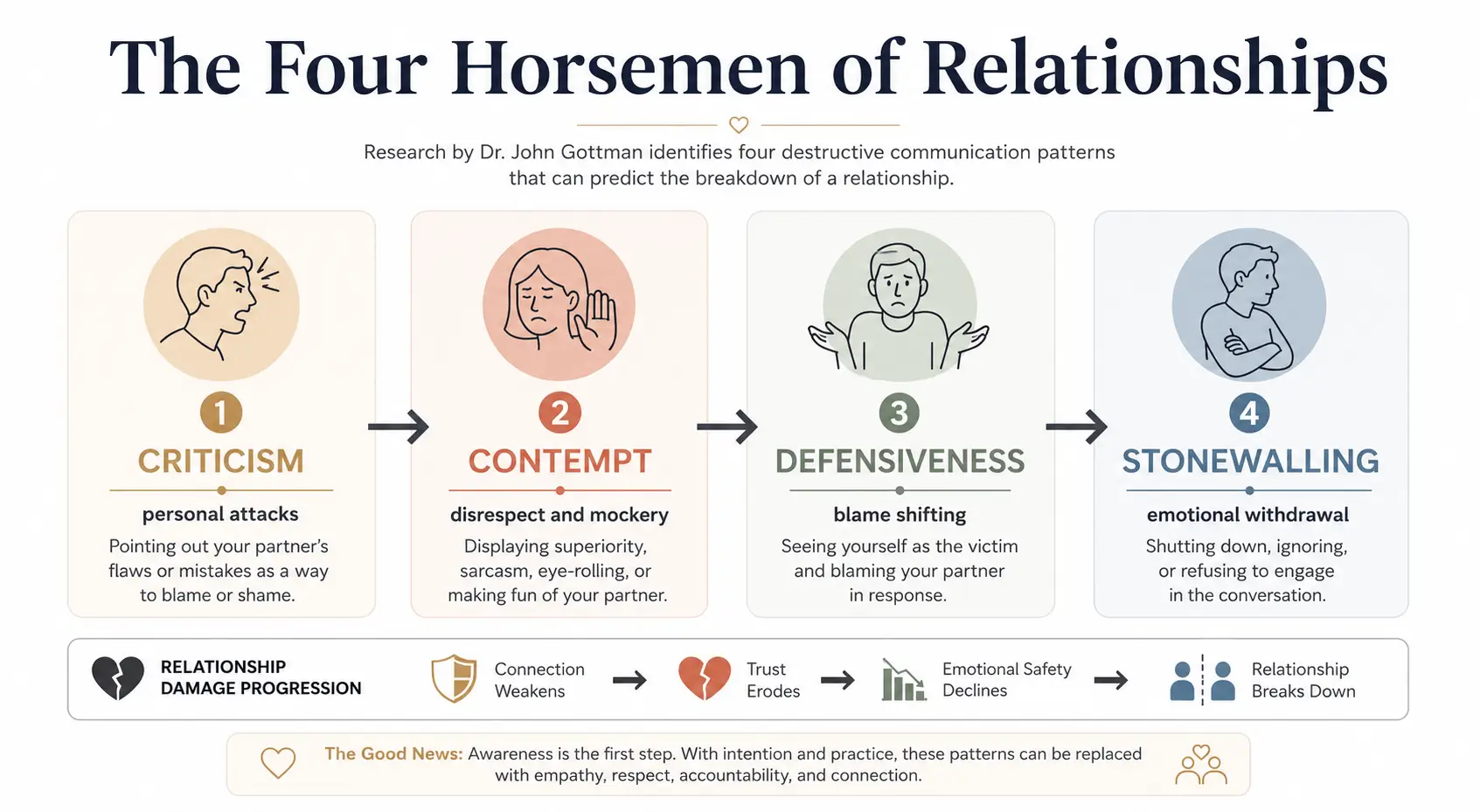
The four horsemen of relationships are four destructive communication patterns identified through the research of John Gottman. The gottman 4 horsemen framework explains how repeated negative communication habits can slowly damage emotional connection, trust, and relationship stability over time.
The four horsemen Gottman identified are criticism, contempt, defensiveness, and stonewalling. According to Gottman’s four horsemen research, communication patterns matter more than occasional arguments because repeated emotional behaviors shape long-term relationship dynamics.
Healthy relationships are not defined by the absence of conflict. Instead, they are shaped by how people manage stress, disagreement, and emotional vulnerability during difficult moments.
Why Dr. John Gottman Developed the Four Horsemen Theory
Dr. John Gottman developed the theory through decades of observational relationship research. He studied how couples communicated during conflict and identified patterns that consistently predicted relationship dissatisfaction and emotional disconnection.
His research showed that destructive interaction habits weaken emotional safety over time. Emotional safety is the feeling that both people can communicate honestly without fear of humiliation, rejection, or emotional attack.
Conflict itself is normal in relationships. Destructive conflict becomes harmful when communication repeatedly includes blame, disrespect, emotional shutdown, or defensiveness.
Healthy conflict usually includes:
- Listening
- Accountability
- Respect
- Emotional regulation
- Problem-solving
Destructive conflict often includes:
- Personal attacks
- Emotional withdrawal
- Blame shifting
- Mockery
- Escalation cycles
Over time, repeated negative communication slowly erodes trust and emotional stability.
Why Negative Communication Patterns Become Habits
Negative communication patterns often become automatic through behavioral conditioning and repeated emotional responses. Stress, frustration, and unresolved resentment train the brain to react defensively during conflict.
Many unhealthy relationship habits develop because people never learned healthy emotional communication skills.
Common factors include:
- Emotional overwhelm
- Lack of communication skills
- Childhood relationship modeling
- Chronic stress and burnout
- Fear of rejection or vulnerability
Psychologically, people often enter survival-mode responses during conflict. Some attack emotionally, some become defensive, and others emotionally shut down to avoid overwhelm.
When unhealthy reactions repeat consistently, they become normalized relationship habits.
The First Horseman — Criticism
Criticism is attacking a person’s character instead of addressing a specific behavior or issue. Unlike constructive feedback, criticism focuses on blame, judgment, and personal flaws.
Constructive feedback focuses on the problem:
- “I felt hurt when you ignored my message.”
Criticism attacks identity:
- “You never care about anyone except yourself.”
Repeated criticism creates emotional tension and weakens emotional safety.
Signs of Criticism in Relationships
- “You always…” statements
- Attacking personality instead of behavior
- Generalizations during arguments
- Bringing up unrelated past mistakes
Why Criticism Creates Emotional Distance
Criticism activates a psychological threat response. Instead of feeling understood, the other person often feels ashamed, emotionally unsafe, or attacked.
This creates a destructive emotional cycle:
- Criticism creates shame
- Shame creates defensiveness
- Defensiveness blocks connection
- Conflict escalates further
Over time, repeated criticism lowers emotional trust and increases emotional distance between people.
How to Replace Criticism With Healthy Communication
- Use “I feel” statements
- Focus on specific behaviors
- Make clear requests instead of accusations
- Practice emotional awareness before reacting
Healthy communication focuses on understanding and problem-solving rather than blame.
The Second Horseman — Contempt
Contempt is communication rooted in disrespect, superiority, disgust, or hostility. Gottman considered contempt the most damaging horseman because it directly attacks emotional dignity and mutual respect.
Contempt often appears through:
- Sarcasm
- Eye-rolling
- Mockery
- Hostile humor
- Belittling language
Unlike criticism, contempt communicates that one person sees themselves as superior to the other.
Common Examples of Contempt
- Name-calling
- Belittling comments
- Mocking emotions
- Passive-aggressive behavior
- Dismissive body language
Why Contempt Is So Harmful to Relationships
Contempt creates emotional humiliation and long-term resentment. Repeated disrespect damages trust, emotional intimacy, and relationship stability.
Psychologically, contempt increases emotional stress because it attacks self-worth instead of addressing the actual conflict.
Long-term effects may include:
- Emotional disconnection
- Loss of mutual respect
- Increased hostility
- Reduced intimacy
- Emotional burnout
Even subtle contempt, such as sarcasm or dismissive facial expressions, can slowly weaken emotional safety over time.
How to Replace Contempt With Respect and Appreciation
- Practice gratitude habits
- Acknowledge positive behaviors regularly
- Pause before reacting emotionally
- Build empathy during disagreements
Appreciation and emotional respect help rebuild emotional trust and connection.
The Third Horseman — Defensiveness
Defensiveness is a self-protective reaction during conflict. Instead of listening openly, the person focuses on avoiding blame, protecting their ego, or shifting responsibility.
Although defensiveness may feel protective in the moment, it usually escalates conflict because it prevents accountability and emotional understanding.
Signs of Defensive Communication
- Making excuses immediately
- Counterattacking during feedback
- Playing the victim
- Refusing accountability
- Ignoring a partner’s emotional experience
Why People Become Defensive
People often become defensive because they feel emotionally threatened, criticized, or misunderstood.
Common psychological causes include:
- Fear of criticism or rejection
- Emotional insecurity and shame
- Learned conflict-avoidance behaviors
- Ego protection during vulnerability
Defensiveness often develops in environments where mistakes felt emotionally unsafe or heavily judged.
How to Reduce Defensiveness
- Listen fully before responding
- Validate emotions even when disagreeing
- Accept partial responsibility
- Focus on understanding instead of winning
Healthy accountability improves emotional connection because it reduces emotional resistance during difficult conversations.
The Fourth Horseman — Stonewalling
Stonewalling is emotional withdrawal or shutdown during conflict. Instead of engaging emotionally, the person disconnects physically or emotionally from the conversation.
Stonewalling often happens because the nervous system becomes overwhelmed during emotional stress.
Signs of Stonewalling
- Avoiding eye contact
- Giving one-word responses
- Leaving conversations abruptly
- Emotional disengagement
- Ignoring attempts to reconnect
Why Stonewalling Happens
Stonewalling usually happens when emotional flooding becomes too intense. Emotional flooding occurs when stress levels become so high that productive communication feels impossible.
Common causes include:
- Emotional overload
- Fear of conflict escalation
- Emotional exhaustion and burnout
- Fight-flight-freeze responses in relationships
Some people emotionally shut down because they associate conflict with danger, rejection, or overwhelming stress.
Healthy Alternatives to Stonewalling
- Taking structured breaks
- Returning to conversations calmly
- Using self-soothing techniques
- Setting communication boundaries respectfully
Healthy breaks are different from emotional avoidance because both people agree to reconnect later.
How the Four Horsemen Create Toxic Relationship Cycles
The four horsemen often reinforce one another through repeated emotional escalation loops. One negative behavior triggers another, creating destructive relationship cycles over time.
Without awareness, these communication patterns become automatic habits.
The Conflict Escalation Pattern
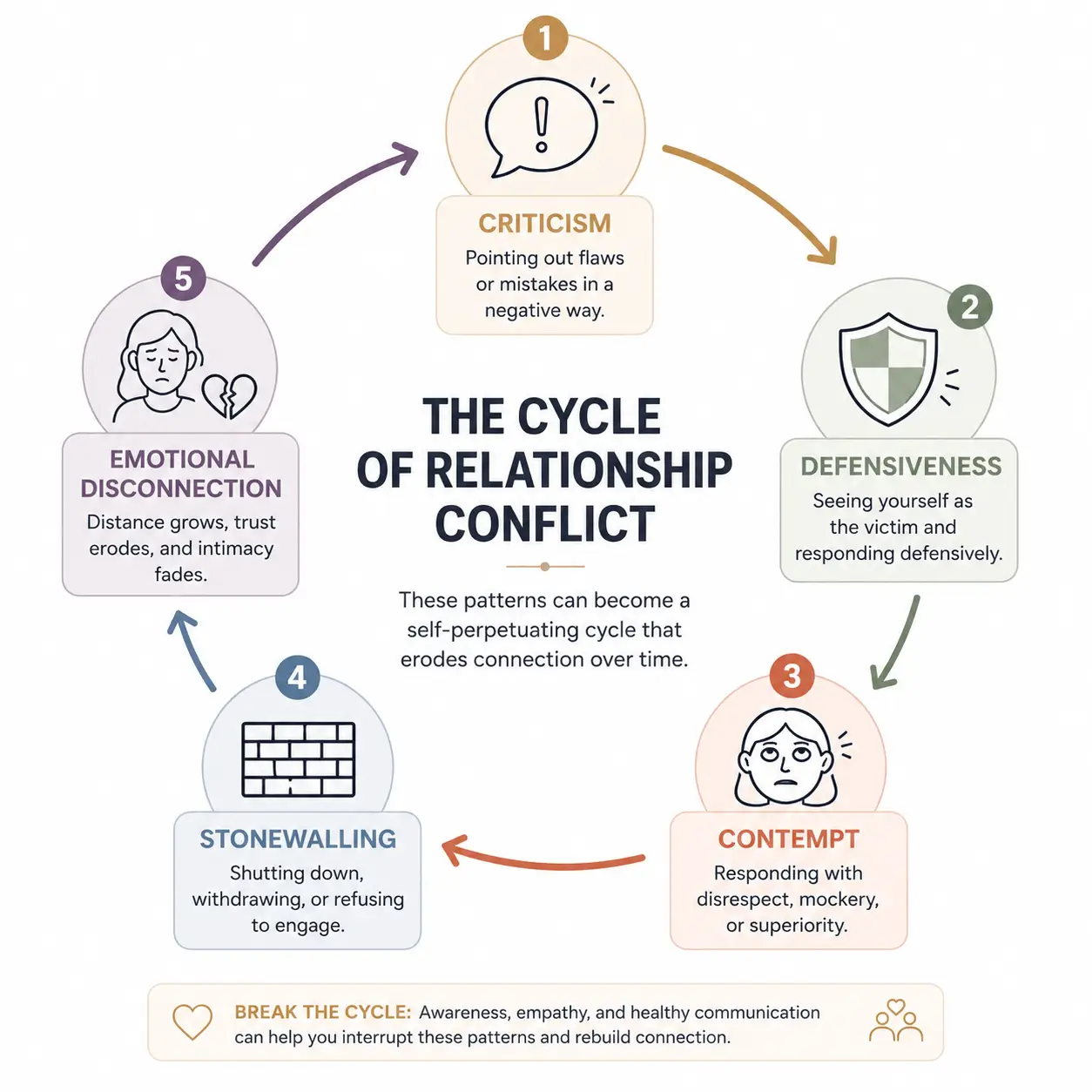
A common unhealthy sequence looks like this:
Criticism → Defensiveness → Contempt → Stonewalling
For example:
- One person criticizes
- The other becomes defensive
- Frustration escalates into contempt
- One person emotionally shuts down
Over time, repeated cycles increase emotional disconnection and resentment.
Why Couples Get Stuck in Negative Cycles
Many couples become trapped in unhealthy conflict patterns because emotional reactions become habitual.
Common causes include:
- Habitual emotional reactions
- Lack of emotional regulation
- Unresolved resentment
- Chronic stress and unmet emotional needs
Without intentional change, destructive communication patterns continue repeating automatically.
Four Horsemen vs Healthy Communication Habits
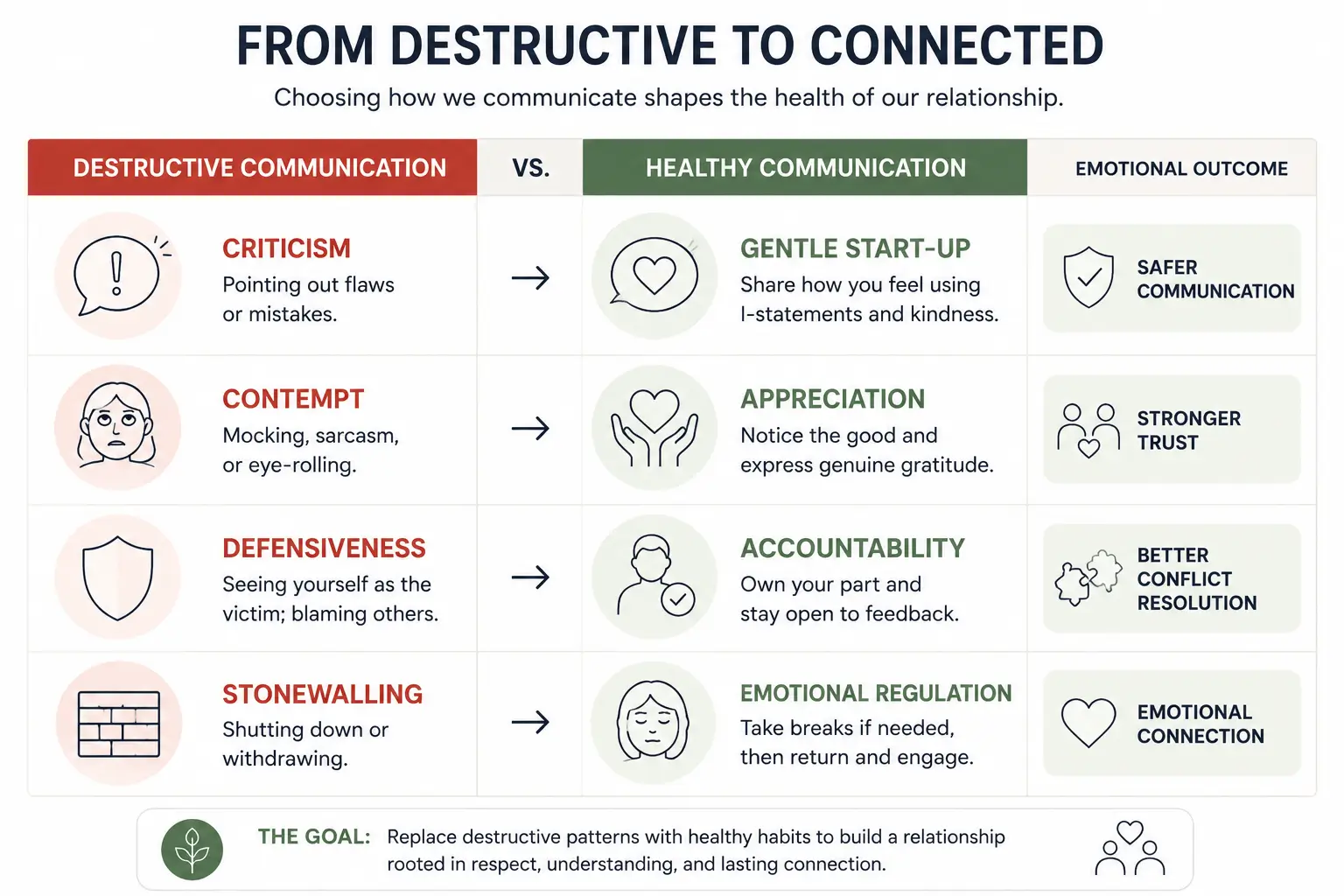
Healthy communication habits reduce emotional threat responses and improve long-term relationship stability.
| Destructive Pattern | Healthy Alternative | Long-Term Effect |
|---|---|---|
| Criticism | Gentle start-up | Safer communication |
| Contempt | Appreciation and respect | Stronger trust |
| Defensiveness | Accountability | Better conflict resolution |
| Stonewalling | Emotional regulation | Emotional connection |
Replacing unhealthy habits with emotionally safe communication improves trust, cooperation, and emotional intimacy over time.
Why People Struggle to Change Relationship Habits
Changing relationship habits is difficult because emotional behaviors are often automatic and emotionally conditioned.
Behavioral psychology shows that repeated reactions become deeply wired patterns, especially under stress.
People may intellectually understand healthy communication while still reacting emotionally during conflict.
Emotional Triggers and Automatic Reactions
- Fear of abandonment
- Stress overload
- Feeling misunderstood
- Childhood attachment patterns
- Poor emotional regulation skills
Strong emotional triggers often override logical thinking during stressful conversations.
Motivation vs Consistency in Relationship Growth
| Motivation | Consistency |
|---|---|
| Temporary emotional state | Long-term behavioral habit |
| Depends on mood | Depends on systems and awareness |
| Fluctuates under stress | Builds trust over time |
| Feels intense initially | Creates sustainable improvement |
Consistency matters more than temporary motivation because trust develops through repeated emotional reliability.
Practical Ways to Stop the Four Horsemen in Daily Life
Improving communication requires daily behavioral practice and emotional awareness. Small changes repeated consistently often create the biggest long-term relationship improvements.
Daily Relationship Habits That Improve Communication
- Active listening practice
- Daily appreciation rituals
- Weekly emotional check-ins
- Conflict cooldown routines
- Device-free conversations
These habits improve emotional connection because they increase emotional presence and reduce reactive communication.
How to Pause Before Reacting Emotionally
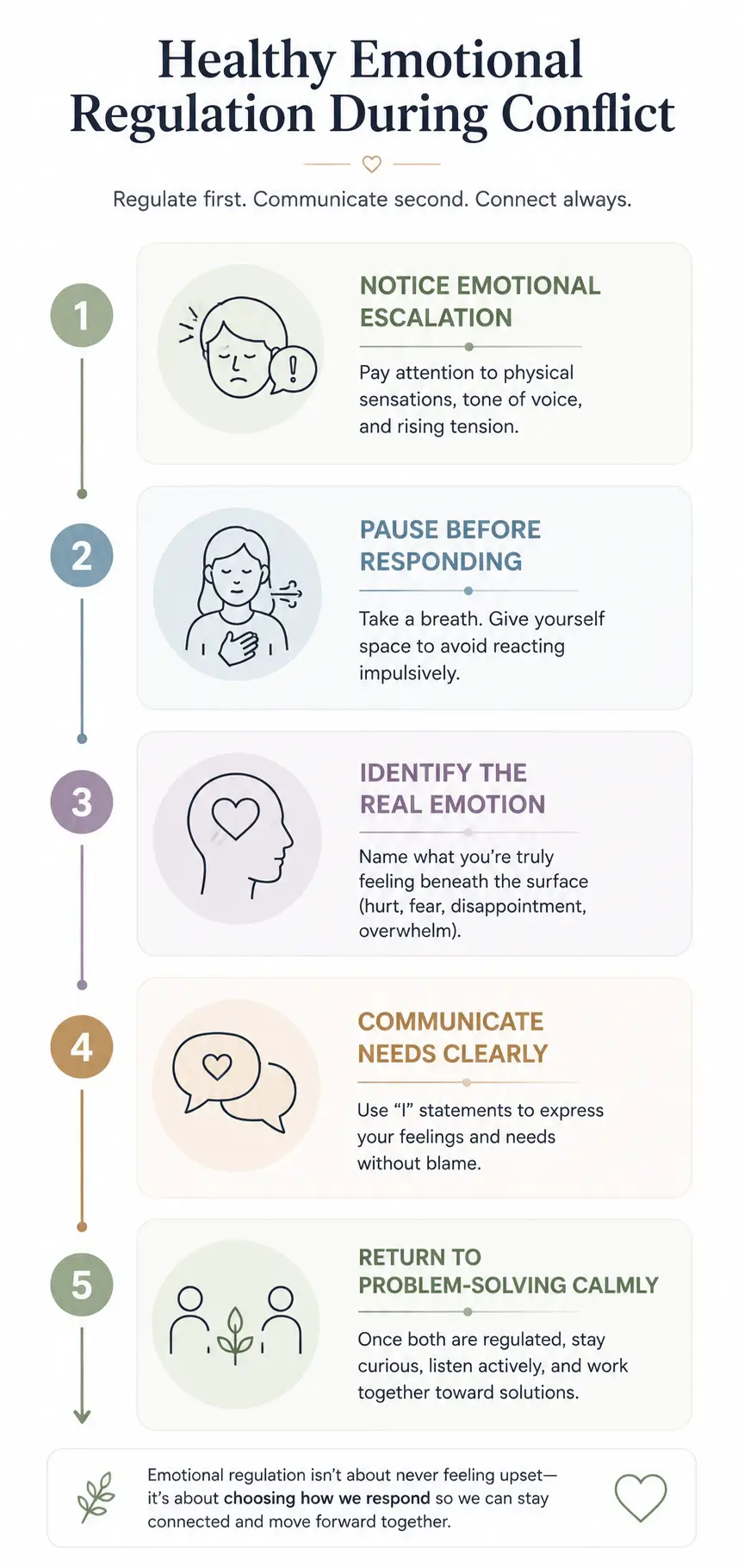
Step-by-Step Framework
- Notice emotional escalation
- Pause before responding
- Identify the real emotion underneath anger
- Communicate needs clearly
- Return to problem-solving calmly
This process improves emotional regulation and reduces impulsive reactions during conflict.
Building Emotional Safety Over Time
Emotional safety develops through consistency rather than perfection. Repeated small moments of respect, listening, and accountability strengthen trust gradually.
Important principles include:
- Consistency over perfection
- Small positive interactions compound
- Trust rebuilding through predictable behavior
- Emotional reliability strengthens connection
Healthy relationships improve through repeated emotionally safe interactions over time.
Common Myths About the Four Horsemen of Relationships
“Healthy Couples Never Fight”
Healthy couples absolutely experience conflict. Conflict is normal in all close relationships.
The difference is that healthy couples communicate with emotional respect, accountability, and emotional regulation during disagreements.
Communication quality matters more than conflict frequency.
“One Bad Argument Ruins a Relationship”
One argument rarely destroys a relationship by itself. Repeated communication patterns matter far more than isolated moments.
Repair attempts, accountability, and emotional awareness often help relationships recover from difficult conflicts.
“Love Alone Fixes Communication Problems”
Love alone does not automatically create healthy communication skills.
Strong relationships also require:
- Emotional intelligence
- Self-awareness
- Accountability
- Communication habits
- Emotional regulation skills
Long-term compatibility improves when people consistently practice emotionally healthy behaviors.
When the Four Horsemen Become Serious Warning Signs
The four horsemen become more serious when negative communication patterns become constant, emotionally exhausting, or psychologically harmful.
In some cases, outside support may help interrupt deeply unhealthy conflict cycles.
Signs the Relationship Needs Outside Support
- Constant contempt or hostility
- Repeated emotional shutdown
- Fear during communication
- Unresolved resentment for long periods
- Emotional exhaustion after every conflict
Professional counseling may help when communication patterns repeatedly damage emotional safety and connection.
Conclusion
The four horsemen of relationships represent destructive communication habits that slowly weaken emotional connection, trust, and long-term relationship stability. Criticism, contempt, defensiveness, and stonewalling often develop through stress, emotional triggers, and repeated unhealthy conflict patterns.
The good news is that relationship habits can change. By building emotional awareness, practicing healthier communication skills, and focusing on consistency instead of perfection, people can create stronger emotional safety and more resilient relationships over time.
Small daily changes in communication often create the biggest long-term improvements.
FAQ Section
What are the four horsemen of relationships?
The four horsemen are criticism, contempt, defensiveness, and stonewalling—four destructive communication patterns identified by John Gottman that can damage relationships over time.
Why is contempt considered the worst horseman?
Contempt involves disrespect, mockery, and superiority, which can deeply damage emotional safety, trust, and long-term emotional connection.
Can relationships recover from the four horsemen?
Yes. Relationships can improve when both people develop healthier communication habits, emotional regulation skills, and consistent repair behaviors.
Why do I become defensive during arguments?
Defensiveness often comes from feeling attacked, misunderstood, ashamed, or emotionally unsafe during conflict.
How do I stop stonewalling in relationships?
Take short breaks to calm down emotionally, communicate openly about needing space, and return to conversations when calmer.
Do healthy couples still argue?
Yes. Healthy couples experience conflict, but they handle disagreements with respect, accountability, and emotional awareness.
How long does it take to improve unhealthy communication habits?
Relationship habits improve gradually through consistent practice, emotional awareness, and repeated healthy interactions over time.











2 Responses