

Introduction
Personal betterment is the ongoing process of improving your habits, mindset, skills, behavior, health, relationships, and daily decisions. The personal betterment meaning is not perfection, constant self-criticism, or comparing yourself to others. It is a practical approach to becoming more capable, disciplined, emotionally stable, and aligned with your goals. Self betterment, self-betterment, personal growth, and self growth all describe the process of bettering yourself through intentional choices. Real progress comes from small actions repeated consistently, not from extreme motivation or unrealistic pressure.
Quick Summary
- Personal betterment means improving yourself through small, consistent actions.
- It includes habits, mindset, emotional control, discipline, skills, and goals.
- The best results come from systems, self-awareness, and realistic routines.
- Long-term growth depends on consistency, not extreme motivation.
What Is Personal Betterment?
Personal betterment is the intentional process of becoming more capable, self-aware, responsible, and effective in important areas of life. It includes improving your health, mindset, work habits, relationships, emotional maturity, skills, and daily choices.
The personal betterment meaning is closely related to self betterment, self-betterment, self growth, and personal growth. A personal betterment synonym may be self-improvement, self-development, or personal development. However, personal betterment often refers to broader life improvement, including character, behavior, discipline, and emotional awareness.
Personal betterment is not about becoming perfect. It is not about comparing yourself to others or criticizing yourself every day. It focuses on progress, responsibility, better choices, and long-term development.
| Term | Meaning | Example |
|---|---|---|
| Personal betterment | Improving your overall life and character | Building discipline and emotional control |
| Self-betterment | Intentional self-improvement | Creating better routines |
| Personal growth | Developing skills, mindset, and maturity | Learning from mistakes |
| Self growth | Inner development and self-awareness | Managing emotions better |
Why Personal Betterment Matters
Personal betterment matters because better habits and mindset improve decision-making, confidence, relationships, productivity, and emotional stability. When you become more aware of your thoughts and behavior, you can respond with intention instead of reacting automatically.
The best ways to achieve personal growth are often simple but consistent. Personal growth strategies such as planning your day, improving sleep, practicing emotional control, learning from feedback, and building better routines create practical improvements in everyday life.
Self-improvement tips for success and self improvement tips for success work best when they are connected to real behavior. For example, planning your priorities reduces confusion. Practicing patience improves relationships. Learning one useful skill can support career growth.
When you improve your habits and mindset, your daily actions become more consistent. Consistent actions create better outcomes, and better outcomes reinforce confidence. This builds self-trust because you begin to see proof that your actions can improve your life.
The Core Areas of Personal Betterment
Personal betterment is multidimensional. It is not limited to motivation, productivity, or goal setting. Real self growth includes mental, emotional, physical, professional, social, and financial development.
Core areas include:
- Mental betterment: clearer thinking, focus, self-awareness, and better decision-making.
- Emotional betterment: patience, resilience, emotional regulation, and self-control.
- Habit betterment: routines, discipline, consistency, and daily behavior.
- Physical betterment: sleep, movement, nutrition, and energy.
- Professional betterment: work habits, communication, and skill development.
- Social betterment: boundaries, empathy, trust, and relationship skills.
- Financial betterment: budgeting, planning, and responsible decisions.
Self improvement skills and self-improvement skills include time management, communication, emotional control, planning, focus, problem-solving, and reflection.
| Growth Area | What It Improves | Practical Example |
|---|---|---|
| Mindset | Self-awareness and thinking patterns | Reframing negative thoughts |
| Habits | Daily behavior | Planning tomorrow before bed |
| Health | Energy and discipline | Walking 20 minutes daily |
| Career | Professional growth | Learning one job-related skill |
| Relationships | Communication and trust | Listening before reacting |
| Emotions | Stability and resilience | Pausing before responding |
How to Start Personal Betterment Without Feeling Overwhelmed
To start personal betterment without feeling overwhelmed, choose one area to improve and one small behavior to practice daily. Trying to change everything at once creates pressure, confusion, and burnout.
People often ask how to improve yourself, how can I improve myself, how improve myself, how improve your self, how to improve on yourself, or how to develop yourself. The practical answer is to start smaller than you think you need to.
Key steps:
- Identify one area that needs improvement.
Choose the area causing the most stress or limiting your progress. - Choose one small behavior to practice daily.
Small actions are easier to repeat than major life changes. - Make the action specific and measurable.
“Walk for 10 minutes” is clearer than “get healthier.” - Remove one obstacle.
If your phone distracts you, place it away during focused work. - Review progress weekly instead of judging yourself daily.
One bad day does not mean failure. Look for patterns over time.
People often fail because they try to redesign their entire life at once. Starting small reduces resistance and makes progress easier to repeat.
Best Ways to Achieve Personal Growth
The best ways to achieve personal growth are habits, clear goals, supportive routines, feedback, emotional regulation, and environment design. Personal growth becomes easier when your goals are supported by daily systems.
Useful personal growth strategies include:
- Build one habit at a time.
- Set clear short-term goals.
- Track behavior, not just results.
- Learn from feedback instead of avoiding it.
- Create routines that support your goals.
- Practice emotional regulation.
- Improve your environment.
- Read, reflect, and apply what you learn.
- Spend time with people who support growth.
Personal growth tips are effective only when they become action. Reading about discipline can help, but practicing one focused work block creates real behavior change.
Self-improvement tips for success and self improvement tips for success work because they reduce friction. A clear routine reduces the need for constant motivation because you already know what to do next.
How to Improve Yourself Every Day
To improve yourself every day, practice small repeatable actions that support your health, focus, emotional control, relationships, and goals. Daily improvement works best when actions are simple enough to repeat on busy or stressful days.
If you ask how to improve yourself everyday, how to improve myself everyday, or how can I improve myself everyday, start with practical daily behaviors.
Daily improvement ideas include:
- Wake up at a consistent time.
- Move your body for 10–20 minutes.
- Read or learn for 10 minutes.
- Complete one important task before distractions.
- Practice one communication skill.
- Write down one lesson from the day.
- Clean or reset one small space.
- Prepare tomorrow’s priorities before bed.
To improve self and continue bettering yourself, focus on actions that compound. One day may feel small, but repeated behavior changes identity, confidence, and results.
Personal Betterment Through Habits and Daily Routines
Personal betterment becomes easier when self growth is supported by habits and routines. Habits reduce reliance on willpower because repeated actions become more automatic over time.
Self betterment and self-betterment often fail when people depend only on motivation. Routines make improvement predictable. A clear routine tells you what to do, when to do it, and how to begin.
Key points:
- Habits reduce reliance on willpower.
- Routines make improvement predictable.
- Clear cues make habits easier to start.
- Rewards help reinforce behavior.
- Environment design reduces friction.
Routine examples:
- Morning routine: wake, hydrate, plan, move.
- Work routine: focus block, task list, break schedule.
- Evening routine: clean, reflect, prepare tomorrow.
- Weekly routine: review goals, money, habits, and schedule.
| Routine Type | Purpose | Example |
|---|---|---|
| Morning routine | Creates clarity | Review top three priorities |
| Work routine | Improves productivity | Time-block focused work |
| Evening routine | Reduces stress | Prepare for tomorrow |
| Weekly review | Tracks progress | Adjust goals every Sunday |
Motivation vs Discipline in Personal Betterment
Motivation helps you start personal betterment, but discipline and systems help you continue when motivation drops. Long-term growth depends on repeatable structures, not only emotional inspiration.
| Concept | What It Means | Strength | Limitation |
|---|---|---|---|
| Motivation | Feeling inspired to act | Helps you begin | Changes with mood |
| Discipline | Acting even when motivation is low | Builds self-trust | Can weaken under stress |
| Systems | Routines and structures that support action | Makes consistency easier | Requires setup |
| Identity | Seeing yourself as someone who improves | Supports long-term growth | Develops slowly |
Self-improvement tips for success and self improvement tips for success should not depend on feeling motivated every day. Strong personal growth strategies make action easier when energy is low.
Motivation can start personal betterment, but discipline and systems sustain it.
Consistency vs Intensity: What Creates Real Growth?
Consistency creates more real growth than intensity because small repeatable actions are easier to maintain. Intensity can create short-term progress, but it often leads to burnout, resistance, and quitting.
| Approach | Example | Likely Result |
|---|---|---|
| Intensity | Trying to change every habit in one week | Burnout and quitting |
| Consistency | Improving one habit for 30 days | Sustainable progress |
| Intensity | Working nonstop for a short period | Exhaustion |
| Consistency | Daily focused work blocks | Better long-term output |
| Intensity | Extreme fitness routine | High dropout risk |
| Consistency | Daily walking or basic exercise | Easier habit formation |
If your goal is self growth, ask how to improve yourself everyday in a realistic way. Small actions lower emotional resistance. When improvement feels manageable, the brain is more likely to repeat it.
Common Barriers to Personal Betterment
Common barriers to personal betterment include procrastination, lack of motivation, inconsistency, overthinking, burnout, fear of failure, unrealistic expectations, poor time management, negative self-talk, and an unsupportive environment.
People often ask how can I improve myself or how to develop yourself because they know what they want but struggle to act consistently. The problem is often not a lack of information. It is friction, emotional resistance, unclear goals, or unrealistic expectations.
Common barriers include:
- Procrastination.
- Lack of motivation.
- Inconsistency.
- Overthinking.
- Burnout.
- Fear of failure.
- Unreasonable expectations.
- Poor time management.
- Negative self-talk.
- Unsupportive environment.
When improvement feels emotionally uncomfortable, the brain often chooses short-term relief over long-term growth. This can lead to avoidance, distraction, and giving up too early.
Problem-Solution Guide for Personal Betterment
Procrastination
Procrastination often happens when a task feels unclear, boring, difficult, or emotionally uncomfortable. The brain avoids the task because avoidance gives immediate relief.
Why it happens:
The task feels too large, vague, unpleasant, or stressful.
How to fix it:
- Break tasks into two-minute steps.
- Start with the easiest visible action.
- Use a timer.
- Remove distractions.
- Define the task clearly.
How to prevent it:
Make tasks smaller before you begin. Replace “work on project” with “write the first five bullet points.”
Lack of Motivation
Lack of motivation happens when goals feel disconnected, too large, or unrewarding. Motivation also drops when progress is hard to see.
Why it happens:
The goal does not feel meaningful, the next step is too difficult, or the reward feels too far away.
How to fix it:
- Reconnect the goal to personal values.
- Make the next step smaller.
- Track small wins.
- Build routines that do not depend on mood.
How to prevent it:
Use systems instead of waiting to feel ready. Make the action easy enough to begin even with low energy.
Inconsistency
Inconsistency usually comes from unrealistic habits, unclear cues, or all-or-nothing thinking. People often stop after missing one day because they believe progress is ruined.
Why it happens:
The habit is too difficult, the trigger is unclear, or the standard is too rigid.
How to fix it:
- Lower the difficulty.
- Attach habits to existing routines.
- Use a “never miss twice” rule.
- Create minimum versions of habits.
How to prevent it:
Plan for low-energy days. A two-minute version of a habit keeps the pattern alive.
Overthinking
Overthinking is often an attempt to avoid uncertainty, mistakes, or emotional discomfort. It can feel productive, but it delays action.
Why it happens:
The mind tries to create certainty before acting.
How to fix it:
- Set decision deadlines.
- Limit research time.
- Take imperfect action.
- Measure progress by behavior, not certainty.
How to prevent it:
Decide what enough information looks like before researching. Action creates feedback faster than endless thinking.
Burnout
Burnout is the result of too much pressure, too little recovery, and unrealistic expectations. It can make even simple tasks feel exhausting.
Why it happens:
Energy is spent faster than it is restored.
How to fix it:
- Reduce nonessential commitments.
- Restore sleep and downtime.
- Focus on maintenance before growth.
- Schedule recovery as part of the system.
How to prevent it:
Do not treat rest as optional. Recovery supports consistency.
Fear of Failure
Fear of failure often comes from linking mistakes with shame or identity. A person may avoid action because failure feels like proof they are not capable.
Why it happens:
The outcome feels connected to self-worth.
How to fix it:
- Treat failure as feedback.
- Start with low-risk actions.
- Set effort-based goals.
- Separate identity from outcomes.
How to prevent it:
Measure success by learning, effort, and repetition rather than perfect results.
Science-Backed Insights About Self-Betterment
Self-betterment works better when it follows practical behavioral principles. These principles explain why some personal growth strategies are easier to maintain than others.
Key insights include:
- Habits form more easily with clear cues and rewards.
A cue tells your brain when to start. A reward reinforces the behavior. - Environment design reduces reliance on willpower.
If distractions are harder to reach, focus becomes easier. - Small wins build confidence and momentum.
Completing small actions creates evidence that change is possible. - Stress reduces planning ability and increases avoidance.
When stress is high, simple routines work better than complex plans. - Identity-based habits support long-term repetition.
When you see yourself as someone who follows through, consistent action becomes part of your self-image. - Feedback loops improve learning and adjustment.
Weekly reviews help you notice what works and what needs to change.
Practical applications:
- Put important tools where you can see them.
- Keep distractions away during focus time.
- Use reminders and calendars.
- Track habits visually.
- Review mistakes without self-criticism.
These self improvement skills support self growth because they make behavior easier to repeat.
Self-Improvement Examples for Real Life
Self-improvement examples show how personal betterment applies to everyday situations. The goal is not to make life perfect, but to improve specific behaviors that affect your results.
Practical self improvement examples include:
- Improving health by walking daily and sleeping consistently.
- Improving productivity by planning three tasks each morning.
- Improving emotional control by pausing before reacting.
- Improving relationships by listening without interrupting.
- Improving confidence by keeping small promises.
- Improving professionally by learning a new skill each month.
- Improving focus by removing phone distractions during work.
Self-improvement ideas for work and self improvement ideas for work should be practical, measurable, and connected to real responsibilities.
| Situation | Betterment Action | Expected Benefit |
|---|---|---|
| Feeling unfocused | Use a daily top-three task list | Better clarity |
| Poor work performance | Learn one professional skill | Career growth |
| Low confidence | Keep small daily promises | More self-trust |
| Emotional reactions | Pause before responding | Better control |
| Messy routine | Create morning and evening resets | More stability |
How to Improve Yourself Professionally
To improve yourself professionally, focus on communication, time management, feedback, skill-building, reliability, and emotional control at work. Professional betterment is part of personal betterment because workplace behavior reflects discipline, responsibility, and self-awareness.
Important professional improvement areas include:
- Communication.
- Time management.
- Problem-solving.
- Reliability.
- Emotional control.
- Technical skills.
- Leadership habits.
- Feedback acceptance.
Practical self-improvement ideas for work and self improvement ideas for work include:
- Ask for specific feedback.
- Improve one work skill each month.
- Create a focused work routine.
- Document important tasks.
- Learn to prioritize high-value work.
- Practice clear written communication.
- Follow through on commitments.
Self improvement skills and self-improvement skills become visible at work when your behavior is consistent, useful, and measurable. Professional growth improves when people can trust your communication, reliability, and quality of work.
What Actually Works vs What Sounds Good in Personal Growth
Some personal growth tips sound inspiring but fail in real life because they ignore time, stress, energy, and personal circumstances. Effective personal growth strategies are realistic, repeatable, and flexible.
| What Sounds Good | Why It Often Fails | What Actually Works |
|---|---|---|
| “Change your whole life overnight” | Creates pressure and burnout | Improve one area at a time |
| “Just be more motivated” | Motivation changes daily | Build routines and systems |
| “Plan every minute” | Becomes rigid and unrealistic | Plan priorities with flexibility |
| “Wait for the right time” | Delays action | Start with a small step today |
| “Copy someone else’s routine” | May not fit your life | Build a routine around your needs |
The best personal betterment strategy is one you can repeat consistently in real life.
A Simple Personal Betterment Plan for 30 Days
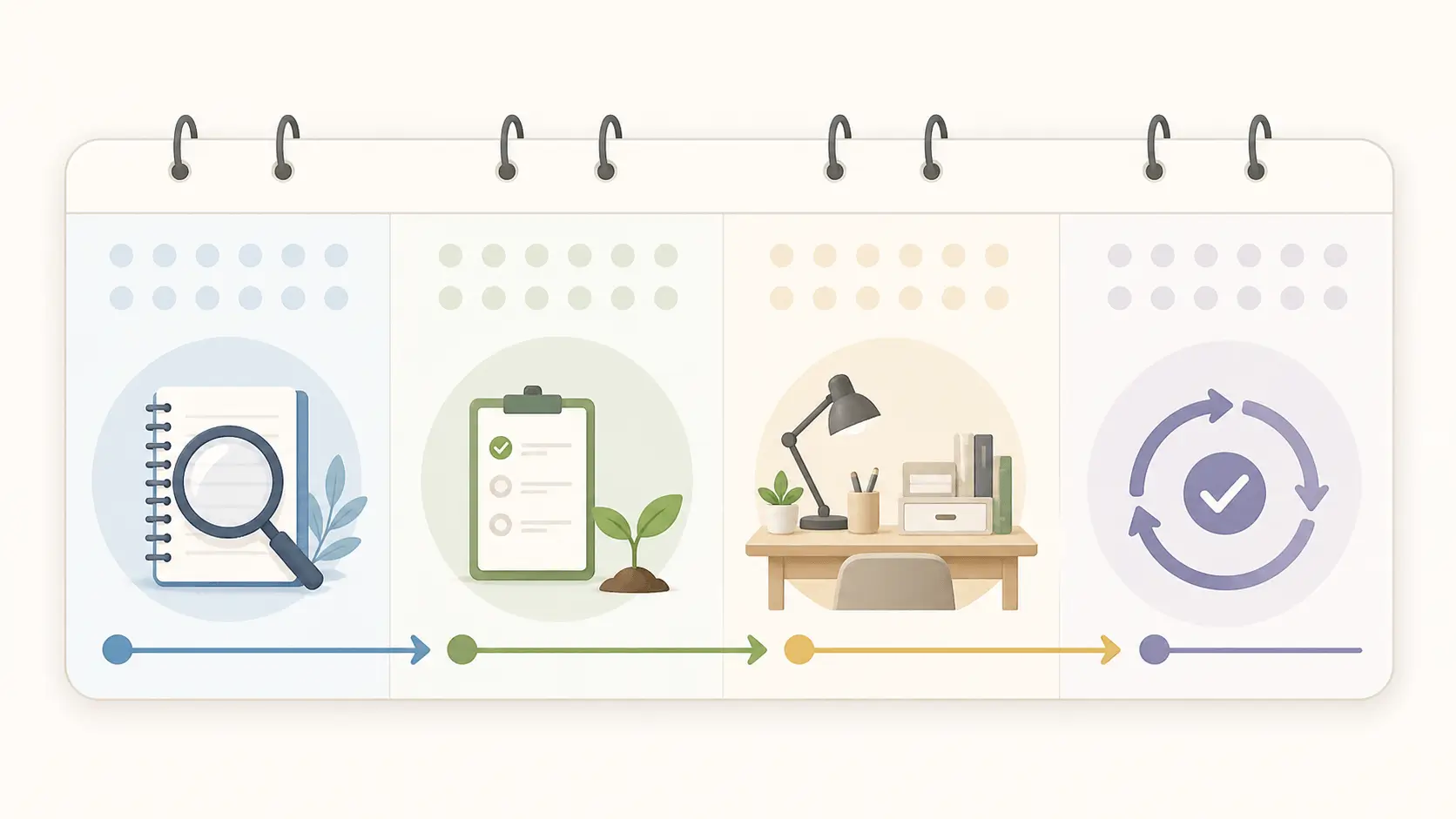
A 30-day personal betterment plan works best when it focuses on awareness, one small habit, environment design, and review. This makes bettering yourself practical instead of overwhelming.
Week 1: Awareness and Life Audit
Use the first week to understand your current habits, problems, and priorities.
Actions:
- Write down areas you want to improve.
- Choose one main growth area.
- Track current behavior without judgment.
This step helps you see where your time, energy, and attention are going.
Week 2: Build One Small Habit
Start with one low-friction habit that supports your chosen area.
Actions:
- Choose one daily habit.
- Attach it to an existing routine.
- Make it easy enough to repeat.
For example, if your goal is health, start with a 10-minute walk after lunch.
Week 3: Improve Your Environment
Make good habits easier and distractions harder.
Actions:
- Remove one distraction.
- Prepare tools in advance.
- Create reminders or visual cues.
Environment matters because your surroundings influence your choices before willpower does.
Week 4: Review and Adjust
Use the final week to evaluate what worked, what failed, and what needs to change.
Actions:
- Review progress.
- Keep what worked.
- Reduce what felt unrealistic.
- Choose the next habit or skill.
This approach answers how to improve yourself everyday, how to improve myself everyday, and how can I improve myself everyday through simple repeatable action.
How to Make Personal Betterment Sustainable
To make personal betterment sustainable, keep habits realistic, build recovery into your routine, and focus on identity instead of perfection. Sustainable growth works because it reduces resistance.
Sustainability principles include:
- Improve one area at a time.
- Keep habits small enough for bad days.
- Schedule rest and recovery.
- Track behavior, not perfection.
- Use weekly reviews.
- Adapt routines when life changes.
- Focus on identity, not just outcomes.
Personal growth and self growth require patience. Self betterment becomes easier when habits fit your real life. When routines are realistic, you are more likely to continue them long enough to see results.
Conclusion
Personal betterment is a lifelong process of improving your habits, mindset, skills, behavior, emotional control, health, relationships, and daily choices. It is not about perfection or harsh self-criticism. It is about steady progress.
Small consistent actions matter more than extreme change. Habits, routines, discipline, self-awareness, feedback, and practical systems create long-term growth. The best way to begin is to choose one area, select one repeatable action, and practice it consistently.
The goal is progress, not perfection. Start with one area and one action you can repeat.
FAQs
What does personal betterment mean?
Personal betterment means improving your habits, mindset, skills, behavior, and life choices over time. It includes becoming more disciplined, self-aware, emotionally stable, responsible, and aligned with your goals.
How can I improve myself every day?
You can improve yourself every day by practicing small actions such as planning priorities, moving your body, learning something useful, practicing emotional control, completing one important task, and reviewing your progress.
What are the best ways to achieve personal growth?
The best ways to achieve personal growth include building habits, setting clear goals, creating routines, learning from feedback, practicing emotional regulation, improving your environment, and taking consistent action.
Why do I struggle with self-betterment?
You may struggle with self-betterment because of unrealistic expectations, procrastination, lack of motivation, burnout, overthinking, unclear goals, poor time management, or negative self-talk. Growth becomes easier when actions are smaller and clearer.
Is personal betterment the same as self-improvement?
Personal betterment and self-improvement are closely related. Personal betterment often refers to broader life and character development, while self-improvement may focus on specific habits, skills, routines, or goals.
How do I improve myself professionally?
You can improve yourself professionally by improving communication, time management, feedback acceptance, skill-building, reliability, and emotional control. Start with one work skill or habit that can create visible improvement.
How long does personal betterment take?
Small improvements can happen quickly, but deeper personal betterment takes weeks, months, or years of consistent practice. Long-term growth depends on repeated actions, realistic routines, and regular adjustment.
What should I improve first?
Start with the area that creates the most daily stress or supports other areas of life. Common starting points include sleep, health, focus, emotional control, work habits, or time management.









One Response