
Introduction
Mindful Mindset Wellness Center is a name that brings together three closely related ideas: mindfulness, mindset, and overall wellness. For readers researching this term, questions typically fall into two categories — understanding what the concepts behind the name actually mean, and finding accurate, verifiable information about the organization itself, including entities such as Mindful Mindset Wellness Center PLLC and its association with Hickory Hills. This article addresses both. It explains mindfulness and mindset as standalone concepts, describes what a wellness center generally does, and outlines how to responsibly research a specific organization rather than relying on assumptions.
Quick Summary
- Mindful Mindset Wellness Center can be understood through the connected concepts of mindfulness, mindset, and overall wellness.
- Mindfulness focuses on present-moment awareness, while mindset generally refers to patterns of thinking, beliefs, and attitudes.
- Understanding these concepts helps readers evaluate how a wellness approach may support emotional awareness, stress management, and personal well-being.
- Questions about a specific center, including its location, reviews, or organizational identity, should be considered separately from the general meaning of mindfulness and wellness.
What Is Mindful Mindset Wellness Center?
The name Mindful Mindset Wellness Center reflects two foundational self-improvement concepts — mindfulness and mindset — applied within the broader framework of mental wellness. In general terms, “mindful” points to present-moment awareness, and “mindset” points to the underlying patterns of thought that shape how a person interprets situations and responds to them. When combined in an organizational name, these terms typically signal an approach oriented around emotional awareness, thought patterns, and holistic well-being rather than a single narrow service.
It is important to distinguish between understanding the wellness concept behind a name and evaluating the specific services, credentials, or location of an organization such as Mindful Mindset Wellness Center PLLC. The word “mindful” and the word “mindset” both carry established meanings independent of any single business, and readers researching a specific center should verify entity-level details — such as its connection to Hickory Hills — through direct, current sources rather than assuming they match generic definitions.
This article is structured around the informational questions readers commonly have: What do mindfulness and mindset mean? How might a wellness center support well-being? And what should someone verify before drawing conclusions about a specific organization?
Understanding the Mindfulness and Mindset Concepts Behind the Name
Before discussing any organization, it helps to define the foundational concepts clearly. Mindfulness, mindset, and mind wellness are related but distinct ideas, and understanding each one separately creates a clearer picture of what a mindfulness-oriented wellness approach generally involves.
What Does Mindfulness Mean?
Mindfulness means paying deliberate, nonjudgmental attention to the present moment — including thoughts, physical sensations, and surroundings — as they arise. It involves observing experience without immediately reacting to or evaluating it. Mindfulness is not the same as simply relaxing or trying to stop thinking altogether; thoughts continue to arise during mindfulness practice, but the goal is to notice them rather than suppress them.
What Does Mindset Mean?
Mindset refers to the patterns of belief, interpretation, and habitual thinking that shape how a person perceives events and responds to them. A person’s mindset influences emotional reactions, behavior, motivation, and decision-making. Mindset is closely connected to broader self-improvement concepts such as resilience, adaptability, and goal setting, since the way someone interprets a setback often determines how they respond to it. Because mindset shapes how situations are interpreted, learning how to change your thoughts is often a practical starting point for shifting long-standing thought patterns.
What Does Mind Wellness Mean?
Mind wellness is a broader concept that encompasses mental, emotional, behavioral, and social dimensions of well-being. Unlike a single technique or practice, mind wellness reflects an overall state of functioning — how a person manages stress, regulates emotions, maintains relationships, and pursues personal goals. The specific meaning of “wellness” can vary depending on the individual or organization using the term, which is why it is useful to look at how a particular approach defines and applies the concept.
Mindset vs. Mindfulness: What Is the Difference?
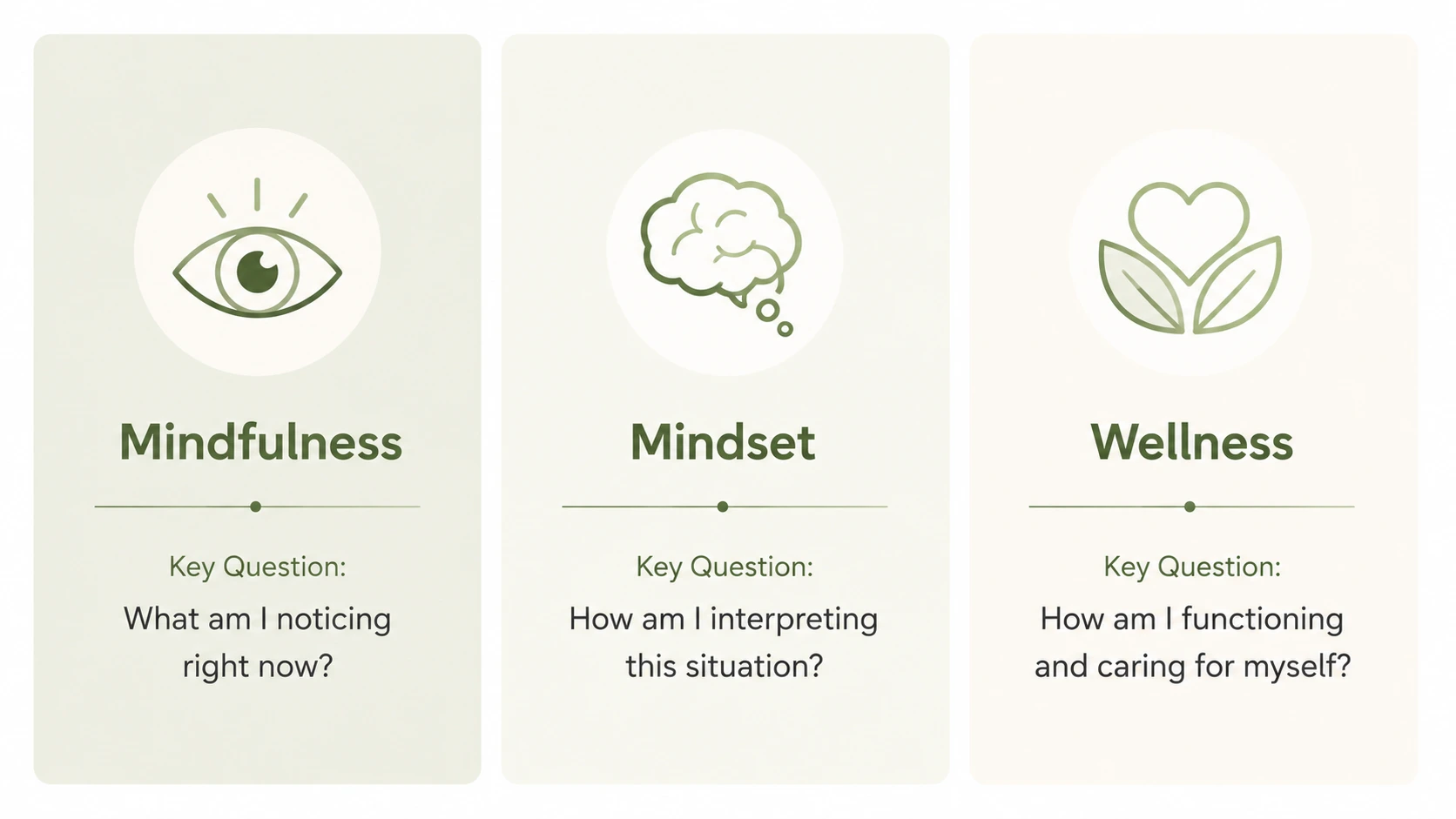
Mindfulness and mindset are related but answer different questions. Mindfulness is about present-moment awareness — noticing what is happening right now. Mindset is about the patterns of thinking and belief that shape how situations are interpreted over time.
| Concept | Core Focus | Key Question |
|---|---|---|
| Mindfulness | Present-moment awareness | “What am I noticing right now?” |
| Mindset | Patterns of thinking and beliefs | “How am I interpreting this situation?” |
| Wellness | Overall state of well-being | “How am I functioning and caring for myself?” |
How Mindfulness and Mindset Can Work Together
Mindfulness can help a person notice habitual thought patterns as they occur, rather than reacting to them automatically. Once a thought pattern is recognized, there is an opportunity to respond more intentionally instead of on autopilot. Over time, this relationship between awareness and intentional response supports emotional regulation, resilience, and more sustainable behavior change.
How a Wellness Center Can Support Mind and Emotional Well-Being
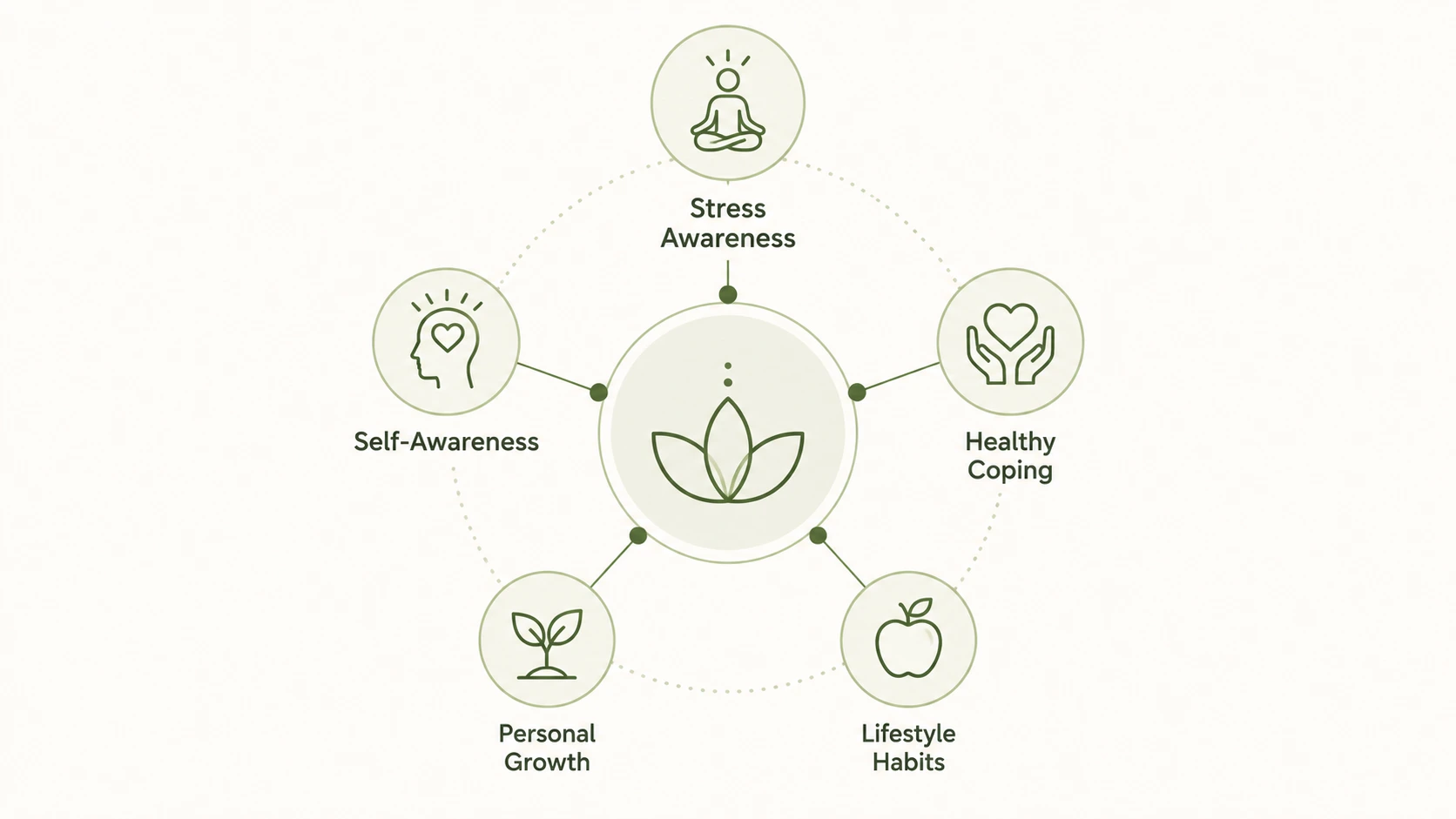
Wellness centers generally aim to support one or more dimensions of well-being, though the specific scope varies by organization. The following reflects common areas a wellness-oriented approach may address, without asserting that any particular center provides all of them.
Common Areas a Wellness Approach May Address
- Stress and emotional awareness
- Mindfulness and self-awareness
- Healthy coping strategies
- Personal growth and resilience
- Lifestyle and wellness habits
Why an Individualized Approach Can Matter
Wellness needs differ significantly from person to person based on goals, lifestyle, existing support systems, and personal circumstances. A practice or program that works well for one person may not be appropriate for another. Because of this variation, readers should verify the actual services offered and the professional credentials of a specific center rather than assuming that all wellness centers provide identical care or follow identical methods.
What to Consider When Learning About Mindful Mindset Wellness Center
Once the underlying concepts are clear, the next step is entity-level research — confirming factual, organization-specific details.
Location and Organizational Identity
Correctly identifying an organization matters because similar or identical names can sometimes apply to different entities in different locations. If Hickory Hills is confirmed as the organization’s verified location, that detail is useful context for anyone searching specifically for Mindful Mindset Wellness Center Hickory Hills. Similarly, a designation such as PLLC (Professional Limited Liability Company) commonly appears in the legal names of licensed professional practices; in general terms, it indicates a business structure used by certain licensed professionals rather than describing the services themselves.
What Information Is Useful to Verify?
- Official organization name
- Location and service area
- Professional credentials
- Types of services or programs offered
- Accessibility and appointment information
- Publicly available policies or qualifications
| Information Type | Why It Matters | Where to Typically Verify |
|---|---|---|
| Official name and structure | Confirms you’re researching the correct entity | Official website, business registries |
| Location and service area | Ensures relevance to your search | Official website, mapping services |
| Professional credentials | Confirms qualifications of staff | Licensing boards, official site |
| Services or programs offered | Clarifies scope of support | Official website, direct inquiry |
| Accessibility and appointments | Practical planning information | Official website, phone contact |
| Public policies or qualifications | Supports informed decision-making | Official documentation |
How to Interpret Wellness Center Reviews and Other Public Information
Reviews can offer useful insight, but they have limitations that are important to understand before drawing conclusions.
What Wellness Center Reviews Can Tell You
- Patterns in customer or client experiences
- Communication and administrative experiences
- Commonly mentioned strengths or concerns
- Recency and consistency of feedback
What Reviews Cannot Establish on Their Own
- Professional effectiveness for every individual
- Clinical outcomes
- Whether a service is appropriate for a particular person’s circumstances
- Whether older reviews accurately represent current operations
How to Evaluate Conflicting Reviews
Look for recurring themes across multiple reviews rather than basing a conclusion on a single extreme review. Consider both the date and the volume of feedback, since older reviews may not reflect current operations. It also helps to separate opinions about customer service from claims about professional outcomes, and to cross-check any important factual claims with authoritative, independent sources.
What Does “Mindful” Mean in Everyday Life?
Beyond any single organization, “mindful” is a widely used term in everyday language and self-improvement contexts.
Mindful vs. “Mind Full”
The phrase “mindful” is sometimes informally contrasted with “mind full” as a play on words. While “mindful” has an established meaning tied to present-moment awareness and attention, “mind full” is commonly used informally to describe a state of mental overload or distraction — the opposite of the intentional attention that mindfulness practice cultivates.
Why Mindfulness Is Associated With Mental Clarity
Mindfulness is associated with mental clarity because it involves deliberately directing attention rather than attempting to eliminate thoughts altogether. In our experience helping readers build better habits, this distinction is one of the most commonly misunderstood aspects of mindfulness. Practicing mindfulness means noticing thoughts, emotions, and surroundings as they occur, rather than expecting the mind to become empty. Mindfulness is not presented here as a guaranteed treatment or a universal solution for every mental or emotional concern.
Practical Ways to Apply Mindfulness and a Healthier Mindset
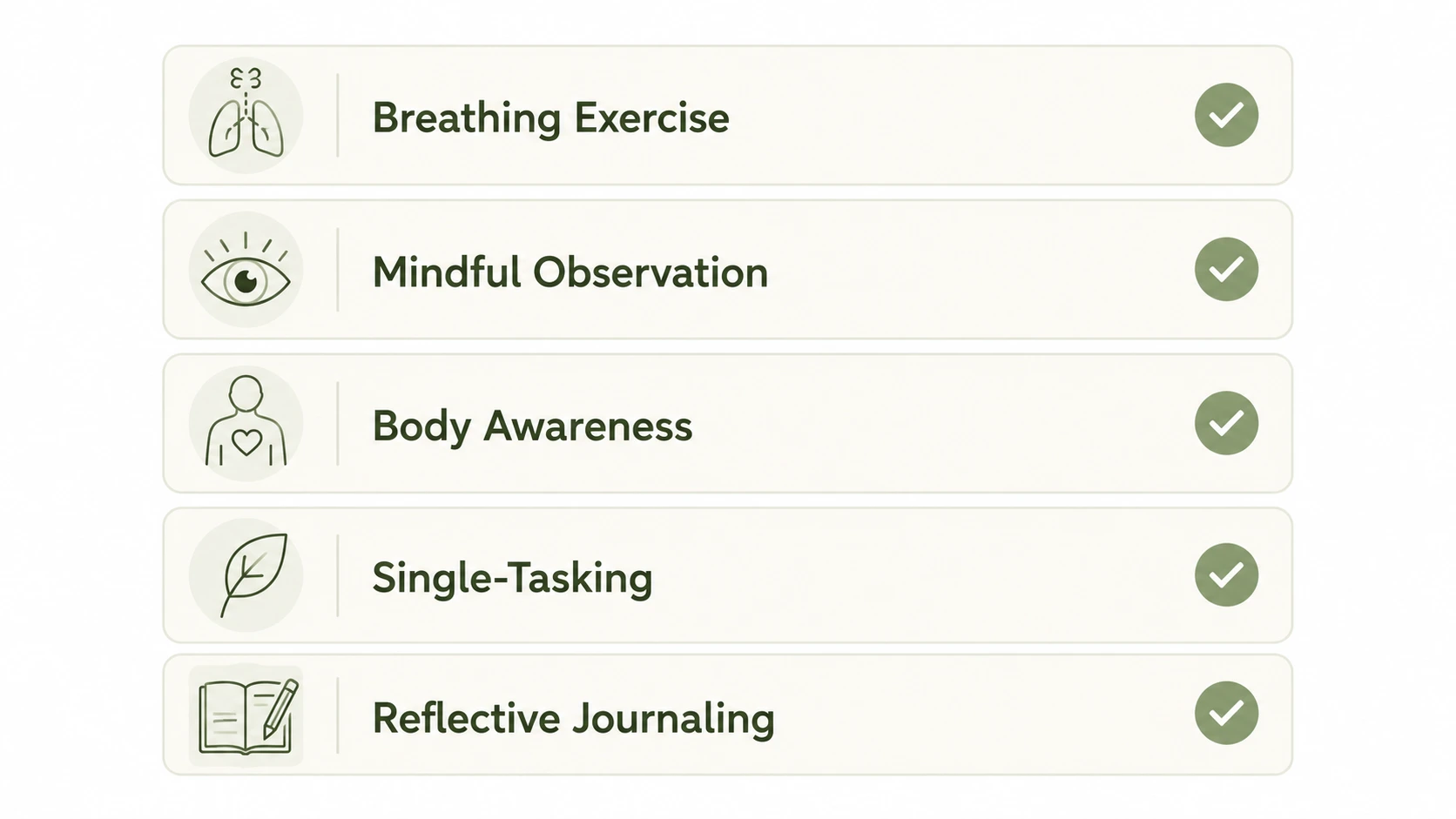
Mindfulness and intentional thinking can be developed through consistent, general practices.
Simple Mindfulness Practices
- Brief breathing or attention exercises
- Mindful observation of surroundings
- Body-awareness practices
- Single-tasking during everyday activities
- Reflective journaling. For readers new to this practice, journaling prompts for self growth can offer a structured way to begin.
Ways to Develop More Intentional Thinking
- Identify recurring thought patterns
- Separate observations from assumptions
- Reframe unhelpful interpretations
- Set realistic goals
- Review progress without excessive self-criticism
How to Make These Practices Sustainable
Your Daily Thrive recommends starting with manageable practices rather than attempting a complete routine overhaul at once. Connecting new practices to existing daily routines — such as a few mindful breaths before a regular activity — can improve consistency. Tracking consistency, rather than aiming for perfection, and adjusting expectations based on lifestyle and circumstances both support long-term sustainability.
Common Mistakes When Practicing Mindfulness or Working on Mindset
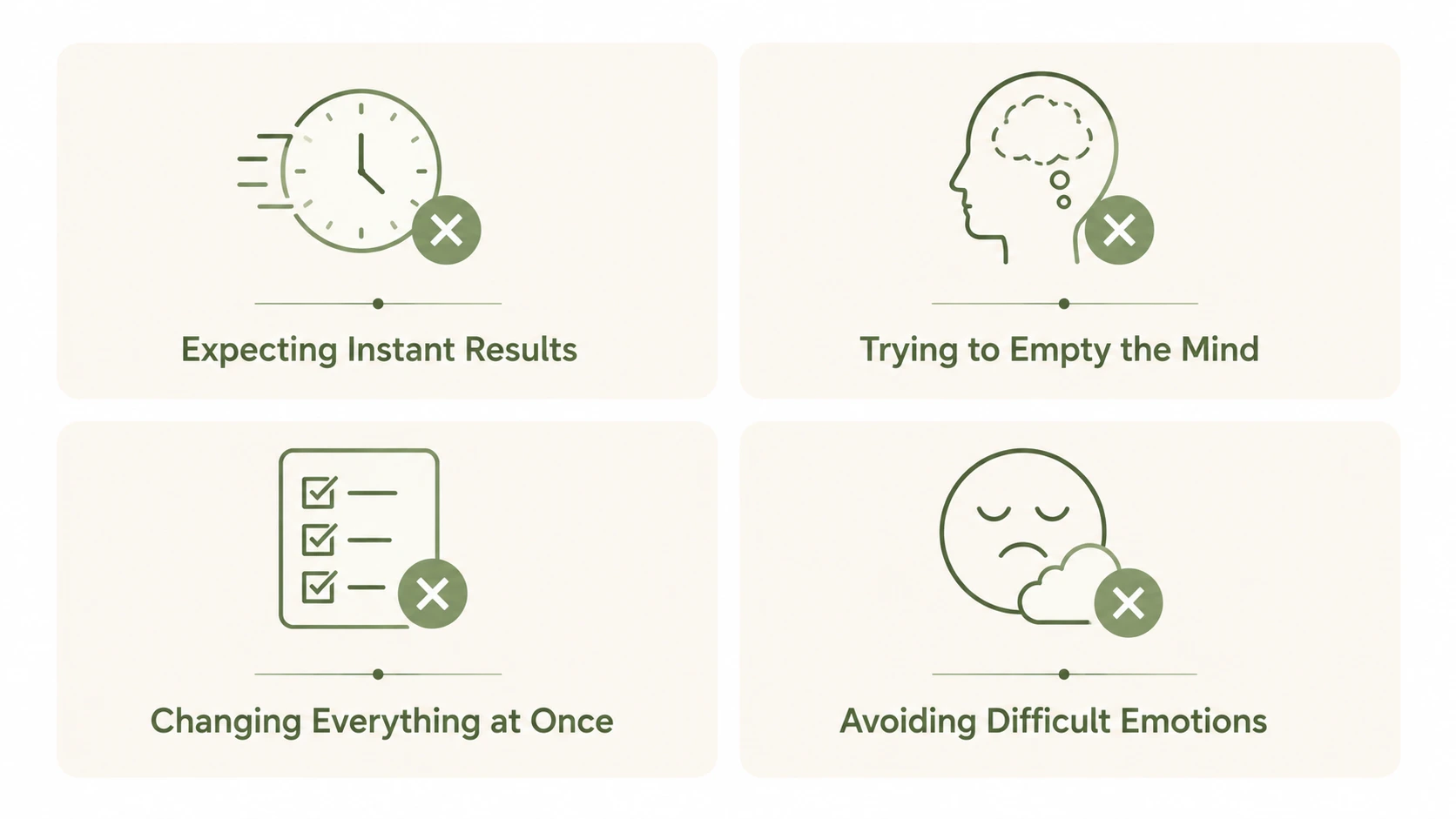
Beginners often encounter predictable obstacles when starting mindfulness or mindset-focused practices.
Expecting Immediate Results
Awareness and behavioral change typically develop gradually rather than instantly. Setting realistic expectations for gradual progress helps prevent early discouragement.
Treating Mindfulness as “Emptying the Mind”
Thoughts naturally arise during mindfulness practice; this is a normal part of the process, not a failure. Reframing mindfulness as noticing thoughts — rather than suppressing them — supports a more sustainable practice.
Trying to Change Everything at Once
Attempting to overhaul multiple habits simultaneously can undermine consistency. Focusing on one manageable practice or behavior at a time tends to produce more durable results.
Using Positive Thinking to Avoid Difficult Emotions
Constructive reframing differs from emotional avoidance. Acknowledging difficult emotions, rather than bypassing them with forced positivity, is generally considered part of healthy self-awareness in behavioral science.
Choosing the Right Wellness Approach for Different Needs
Mindfulness-based practices are not identical to every form of wellness support or mental-health care, and recognizing the difference helps readers choose an appropriate approach.
| Approach | Primary Purpose | Typical Focus | When Additional Support May Be Appropriate |
|---|---|---|---|
| Mindfulness practices | Present-moment awareness | Attention, observation, stress reduction | Symptoms persist or worsen despite practice |
| General wellness programs | Overall well-being habits | Lifestyle, stress management, self-awareness | Needs extend beyond general habit-building |
| Coaching-oriented approaches | Goal achievement and accountability | Personal or professional development | Underlying emotional or clinical concerns emerge |
| Professional mental-health care | Assessment and treatment | Diagnosis, therapy, clinical support | Persistent, severe, or functionally disruptive symptoms |
When General Wellness Practices May Be Appropriate
- Everyday stress management
- Self-awareness
- Personal development
- Building healthy routines
When Professional Mental-Health Support May Be More Appropriate
- Persistent or severe distress
- Significant disruption to daily functioning
- Symptoms requiring assessment or treatment
- Situations where specialized professional care is needed
Why Personal Context Matters
Factors such as age, lifestyle, goals, available support systems, and individual circumstances all influence how useful a particular wellness approach will be. No single method works equally well for everyone, which is why matching an approach to personal context is an important part of making an informed choice.
How Mindfulness Fits Into Broader Self-Improvement
Mindfulness connects to several other areas of personal development, including habit formation, productivity, and resilience.
Mindfulness and Habit Formation
Awareness can help people notice the cues and automatic reactions that drive habitual behavior. Consistent small practices, applied repeatedly, tend to support more sustainable routines over time. Those looking for a structured approach can also explore how to build good habits in 30 days alongside mindfulness-based awareness.
Mindfulness, Goals, and Productivity
Present-moment awareness may support sustained attention and more intentional prioritization of tasks. Mindful productivity is distinct from simply trying to complete more tasks; it emphasizes deliberate focus over constant busyness.
Mindfulness and Resilience
Resilience involves responding adaptively to challenges rather than avoiding them. Awareness, emotional regulation, and reflection work together to support this kind of adaptive response, connecting mindfulness practice to broader resilience-building.
Questions to Ask Before Choosing or Evaluating a Wellness Center
- What type of wellness support does the organization provide?
- Who provides the services, and what are their qualifications?
- Is the approach appropriate for the individual’s goals?
- What information is publicly available about the organization?
- How current are its location, services, and policies?
- What do multiple independent sources say?
- When is another type of professional support more appropriate?
Conclusion
Mindful Mindset Wellness Center brings together the concepts of mindfulness, mindset, and overall wellness — each with a distinct meaning that contributes to a fuller picture of personal well-being. Mindfulness centers on present-moment awareness, mindset centers on patterns of thinking, and wellness reflects the broader state of how a person is functioning and caring for themselves. Understanding these concepts gives readers a foundation for evaluating any mindfulness-oriented approach. At the same time, entity-specific questions — including an organization’s location, credentials, and current services, such as those associated with Mindful Mindset Wellness Center PLLC in Hickory Hills — should always be verified through current, independent sources rather than assumed. Combining a clear understanding of mindfulness and mindset with careful, fact-based research supports more informed decisions about personal wellness.
Frequently Asked Questions
What is Mindful Mindset Wellness Center? Mindful Mindset Wellness Center is an organization whose name reflects the concepts of mindfulness, mindset, and overall wellness. Entity-specific details, such as exact services, credentials, and location, are separate from the general meaning of these terms and should be verified directly with the organization or through current, independent sources.
What does mindfulness mean in simple terms? Mindfulness means paying intentional, nonjudgmental attention to the present moment, including thoughts and sensations, without requiring those thoughts or emotions to disappear.
What is the difference between mindset and mindfulness? Mindfulness primarily concerns present-moment awareness, while mindset concerns the patterns of thinking, beliefs, and interpretations that shape how a person responds to situations over time.
What does mind wellness mean? Mind wellness is a broad concept involving mental and emotional well-being, along with the habits and behaviors that support overall functioning and quality of life.
What does PLLC mean in a wellness center’s name? PLLC stands for Professional Limited Liability Company, a business structure commonly used by licensed professionals. In general terms, it appears in a legal name to indicate this organizational structure rather than describing specific services offered.
How should I evaluate wellness center reviews? Look for recurring themes across multiple reviews, prioritize recent feedback, consult multiple independent sources, and cross-check factual claims rather than relying on a single review.
Is mindfulness the same as positive thinking? No. Mindfulness involves awareness and observation of thoughts and experiences as they are, while positive thinking generally involves deliberately shifting thoughts toward more constructive interpretations.
Can mindfulness replace professional mental-health care? No. Mindfulness practices and professional mental-health care serve different purposes. People experiencing significant or persistent distress may need qualified professional support in addition to, or instead of, general mindfulness practices.