
Introduction
MK Magic Mindset is a personal development and manifestation-focused educational platform founded by Mary Kate, a mindset coach who teaches Law of Attraction principles, subconscious reprogramming, and goal-setting frameworks. People commonly search for MK Magic Mindset to learn about its subliminal audio content, guided meditations, goal-setting resources, and the community discussions surrounding these methods. This article provides an informational overview of what MK Magic Mindset offers and how its core concepts work — it does not evaluate, endorse, or promote any specific product.
Quick Summary
- MK Magic Mindset centers on mindset development, manifestation principles, goal clarity, and personal growth practices.
- The platform combines educational resources such as subliminal audio, guided meditations, goal-setting frameworks, and abundance-focused teachings.
- Individual outcomes vary widely because mindset practices depend on consistency, expectations, and personal circumstances.
- Understanding the underlying concepts — rather than the marketing language around them — helps people evaluate whether these methods fit their goals.
What Is MK Magic Mindset?
Background and Purpose
MK Magic Mindset is an online personal development brand built around manifestation and mindset coaching. Mary Kate MK Magic Mindset content typically covers topics like belief reprogramming, visualization, and intentional goal-setting, delivered through a website, podcast, YouTube channel, and social media platforms. The platform’s stated focus is educational: helping followers understand and apply Law of Attraction concepts alongside more conventional personal development practices like habit formation and goal tracking.
Core Philosophy
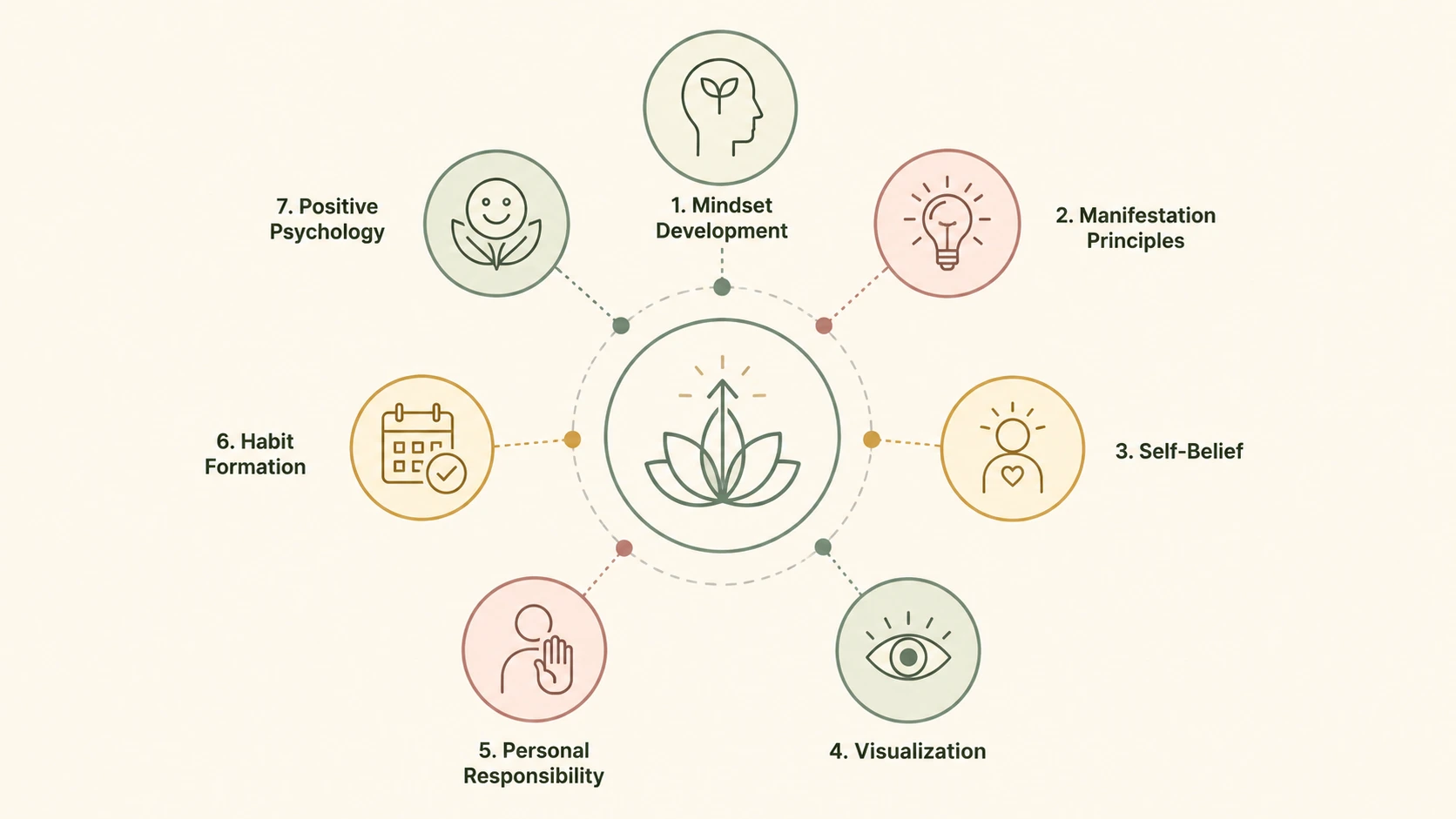
The philosophy behind MK Magic Mindset blends manifestation principles with recognizable personal development concepts, including:
- Mindset development — the idea that thought patterns shape behavior and outcomes
- Manifestation principles — using focused intention and visualization to work toward goals
- Self-belief — addressing limiting beliefs that may hold someone back
- Visualization — mentally rehearsing desired outcomes
- Personal responsibility — framing results as connected to one’s own actions and mindset
- Habit formation — building consistent daily routines
- Positive psychology concepts — themes like gratitude, optimism, and self-efficacy that overlap with established behavioral science
Who Is Mary Kate Behind MK Magic Mindset?
Creator Background
Mary Kate is the founder of MKmagicmindset.com and describes herself across her platforms as a mindset coach and manifestation expert. According to her own public bio, she began exploring these concepts after encountering Law of Attraction material and has since built an online presence spanning a website, podcast, YouTube channel, and social media accounts with a following in the tens of thousands. Her content is presented as personal branding built around manifestation teaching rather than clinical or licensed therapeutic services. “Confidence-building work in this space often overlaps with resources like self love affirmations.
Areas of Focus
Mary Kate’s content generally covers:
- Manifestation techniques
- Abundance and money mindset
- Subconscious programming
- Confidence-building
- Visualization practices
- Emotional regulation
- Broader personal growth topics
How Does the MK Magic Mindset Approach Work?
Mindset Development
The approach frames mindset change as a process involving beliefs, identity, habits, emotional awareness, and consistency. In practice, this typically means identifying limiting beliefs, replacing them with more empowering ones, and reinforcing new beliefs through repeated practice — a structure that echoes cognitive-behavioral concepts, even though it is presented through a manifestation lens rather than a clinical one. This mirrors trends like lucky girl affirmations, which follow a similar logic of using repeated positive statements to shape expectation and behavior.
Manifestation Practices
Common practices associated with this approach include visualization, affirmations, meditation, journaling, gratitude exercises, and intentional action. These practices are often described as ways to align thoughts and behavior with a desired goal, rather than as a guarantee that a goal will occur without effort.
Goal-Oriented Thinking
Structured goal-setting is presented as a way to support long-term behavior change by turning abstract intentions into measurable steps. The MK Magic Mindset Goal Guide is one resource built around this idea, combining planning tools with reflection prompts intended to keep users accountable to specific goals over time.
Main Resources Available Within MK Magic Mindset
Goal Guide
The MK Magic Mindset Goal Guide is described as a planning tool that combines goal clarity, structured planning, accountability, reflection, and measurable milestones. It functions similarly to a guided planner, aiming to move users from vague aspirations toward specific, trackable objectives.
Subliminal Audio
Mary Kate Subliminals are audio tracks that embed affirmations at a volume below normal conscious perception, layered under music or ambient sound. The stated claim behind subliminal audio is that repeated exposure to these embedded affirmations can influence subconscious beliefs over time. Current scientific evidence on subliminal messaging affecting belief or behavior change in a meaningful, lasting way is limited and mixed; most established research on belief change points instead to conscious practices like cognitive reframing, repetition, and behavioral reinforcement. Realistic expectations suggest subliminal audio may work best as a complementary relaxation or focus tool rather than a stand-alone method for achieving specific outcomes.
Manifesting Meditation
Mary Kate Manifesting Meditation content typically combines guided meditation, visualization, relaxation techniques, and intention-setting. Guided meditation has broader evidentiary support for benefits such as reduced stress and improved focus, which can indirectly support mindset work even where the specific “manifestation” framing has less direct research backing.
Money and Abundance Resources
Resources like the MK Magic Mindset Money Workbook and Mary Kate Abundance Academy focus on financial mindset topics, including identifying limiting beliefs about money, abundance-oriented thinking exercises, budgeting mindset shifts, and habit-based approaches to building wealth-related behaviors. These resources generally frame financial change as a combination of mindset shifts and practical action steps.
Subliminals, Meditation, and Visualization: How They Compare
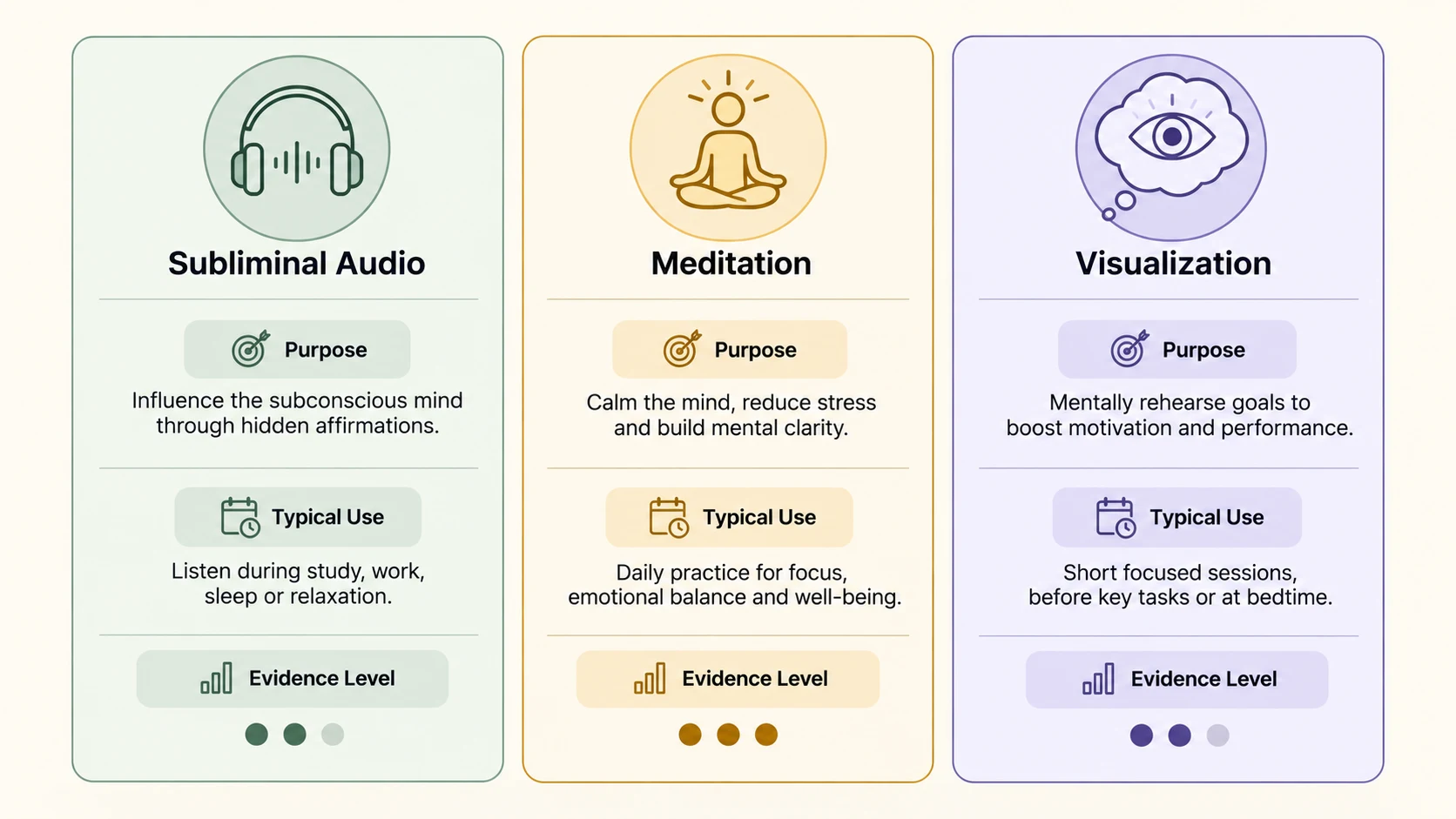
| Practice | Primary Purpose | Typical Use | Scientific Support |
|---|---|---|---|
| Subliminal audio | Influence subconscious beliefs passively | Background listening during rest or sleep | Limited and mixed evidence |
| Guided meditation | Reduce stress, build focus and awareness | Daily or several times weekly practice | Well-supported for stress and focus benefits |
| Affirmations | Reinforce chosen beliefs consciously | Spoken or written repetition | Mixed; most effective when paired with action |
| Visualization | Mentally rehearse desired outcomes | Short daily sessions | Some support, especially for skill and goal rehearsal |
| Journaling | Process thoughts, track progress | Daily or weekly writing | Well-supported for reflection and self-awareness |
Common Questions About Manifestation and Mindset Practices
Can Mindset Alone Change Outcomes?
Mindset alone does not guarantee specific outcomes; it primarily influences behavior, decision-making, and how opportunities are recognized and acted on. A more realistic framing is that mindset work shapes the actions someone is likely to take, and those actions — not belief alone — drive most measurable results.
Why Do Results Differ Between People?
Results vary due to consistency, existing habits, environment, access to opportunity, personal expectations, and individual psychological factors. Two people using identical resources can see very different outcomes because these underlying variables differ significantly from person to person.
Community Discussions and User Experiences
What Reviews Commonly Discuss
Searches for an MK Magic Mindset Review or Mary Kate Subliminal Reviews commonly reflect discussion of usability, teaching style, perceived consistency of results, and how well the content matched personal expectations. As with most personal development content, experiences described in reviews are individual and anecdotal rather than measured outcomes.
Reddit Discussions
People search terms like Mary Kate Manifesting Reddit or MK Magic Mindset Reddit because community platforms offer unfiltered, first-person accounts that feel more relatable than marketing material. It’s worth distinguishing between anecdotal experience — one person’s individual story — and evidence-based claims, which require broader, controlled research. When evaluating online discussions, it helps to look for patterns across many accounts rather than relying on any single post, and to notice whether reviewers describe specific actions taken alongside the program, not just the program itself.
Frequently Discussed Topics and Misconceptions
Is Manifestation the Same as Goal Setting?
Manifestation and goal setting overlap but are not identical. Goal setting is a structured, action-based process supported by extensive behavioral research. Manifestation incorporates goal-oriented thinking but adds a belief-based framework suggesting that focused intention itself contributes to outcomes, which is a claim not established by mainstream psychological research.
Are Subliminals Scientifically Proven?
Subliminal audio is not conclusively proven to reliably change beliefs or behavior. Some early studies suggested minor, short-term effects on mood or perception under specific laboratory conditions, but robust evidence for lasting personal transformation from subliminal listening alone is lacking.
Can Meditation Improve Mindset?
Meditation has well-documented, evidence-supported psychological benefits, including reduced stress, improved attention, and greater emotional regulation. These benefits can genuinely support mindset work, separate from any additional manifestation-specific claims attached to a particular meditation product.
Comparing Mindset Techniques
| Technique | Main Focus | Best For | Limitations |
|---|---|---|---|
| Visualization | Mental rehearsal of goals | Building motivation and clarity | Doesn’t replace concrete action |
| Affirmations | Reinforcing chosen beliefs | Shifting self-talk over time | Effects are modest without behavior change |
| Journaling | Reflection and tracking | Self-awareness, processing emotions | Requires consistent habit to be useful |
| Meditation | Stress reduction, focus | Emotional regulation | Takes practice to build proficiency |
| Habit tracking | Behavior consistency | Building routines | Can feel tedious without clear “why” |
| Goal planning | Structured progress | Long-term achievement | Needs regular review to stay relevant |
Beginner Mistakes When Exploring Mindset Programs
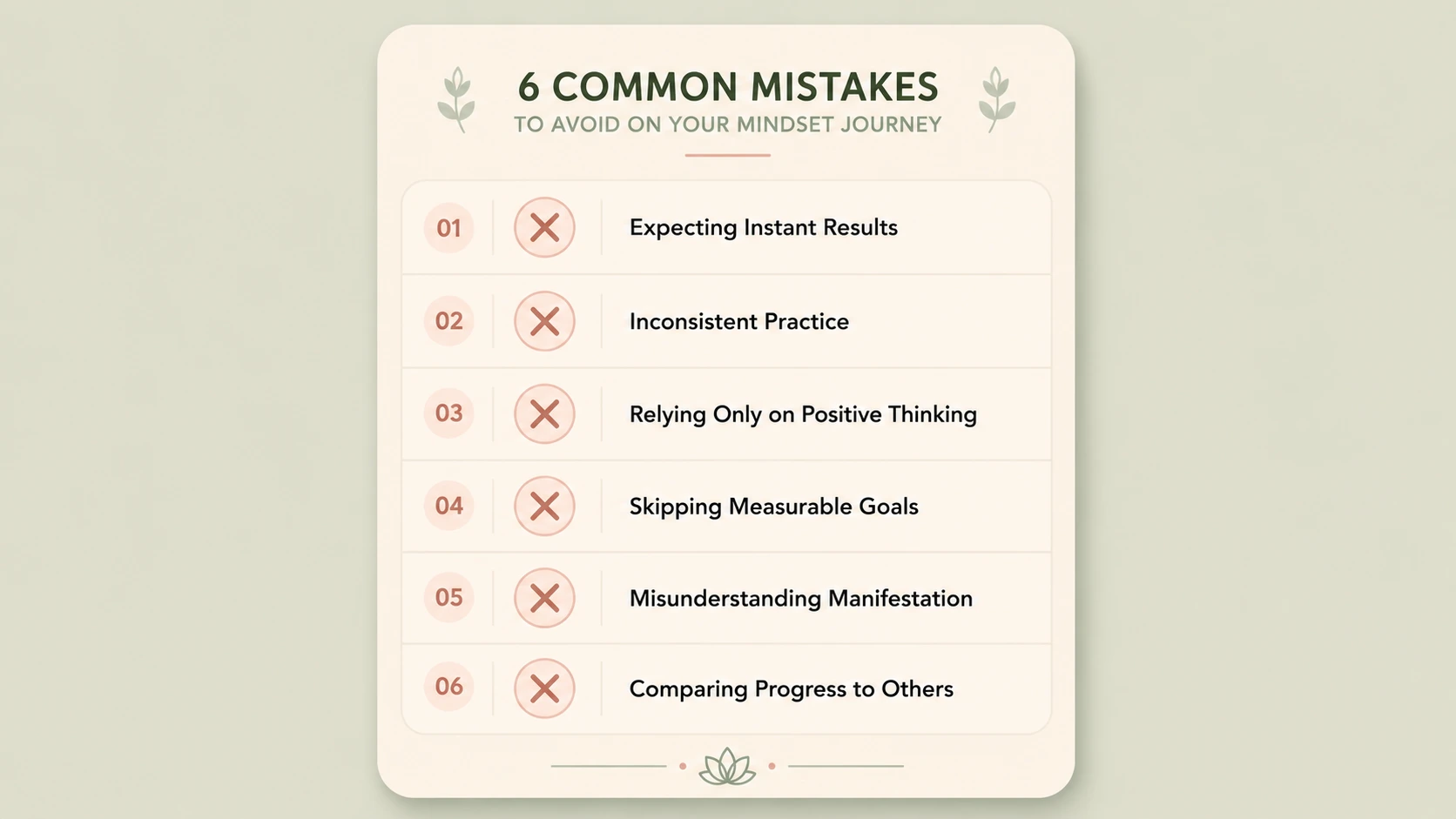
New participants in mindset or manifestation programs commonly run into a few avoidable pitfalls:
- Expecting instant results rather than gradual change
- Practicing inconsistently and then concluding the method “doesn’t work”
- Relying only on positive thinking without pairing it with concrete action
- Skipping measurable goals in favor of vague intentions
- Misunderstanding manifestation as guaranteed outcomes rather than a mindset-and-action framework
- Comparing personal progress to others’ curated online experiences
Practical Tips for Applying Mindset Techniques
In our experience helping readers build better habits, the techniques that tend to stick share a few common traits. Practical steps include:
- Setting realistic, specific goals instead of broad aspirations
- Building a simple daily routine rather than an overly complex one
- Pairing mindset practices with concrete action steps
- Measuring progress with something trackable, even informally
- Reflecting weekly on what’s working and what isn’t
- Adjusting strategies as circumstances change rather than abandoning the practice entirely
Difficulty and Time Investment
Most mindset practices are beginner-friendly and require no special equipment or training. A typical starting commitment is 10–20 minutes daily for practices like meditation, journaling, or visualization. Difficulty tends to increase not with the techniques themselves, but with maintaining consistency over weeks and months. Personal factors — such as schedule flexibility, existing stress levels, and prior familiarity with reflective practices — influence how challenging the process feels for a given individual.
Beginner-Friendly vs. Advanced Variations
Beginners often start with short, guided sessions (audio meditations, simple daily affirmations), while more advanced practitioners may incorporate longer visualization sessions, detailed journaling systems, or structured goal frameworks like the Goal Guide.
Results Timeline
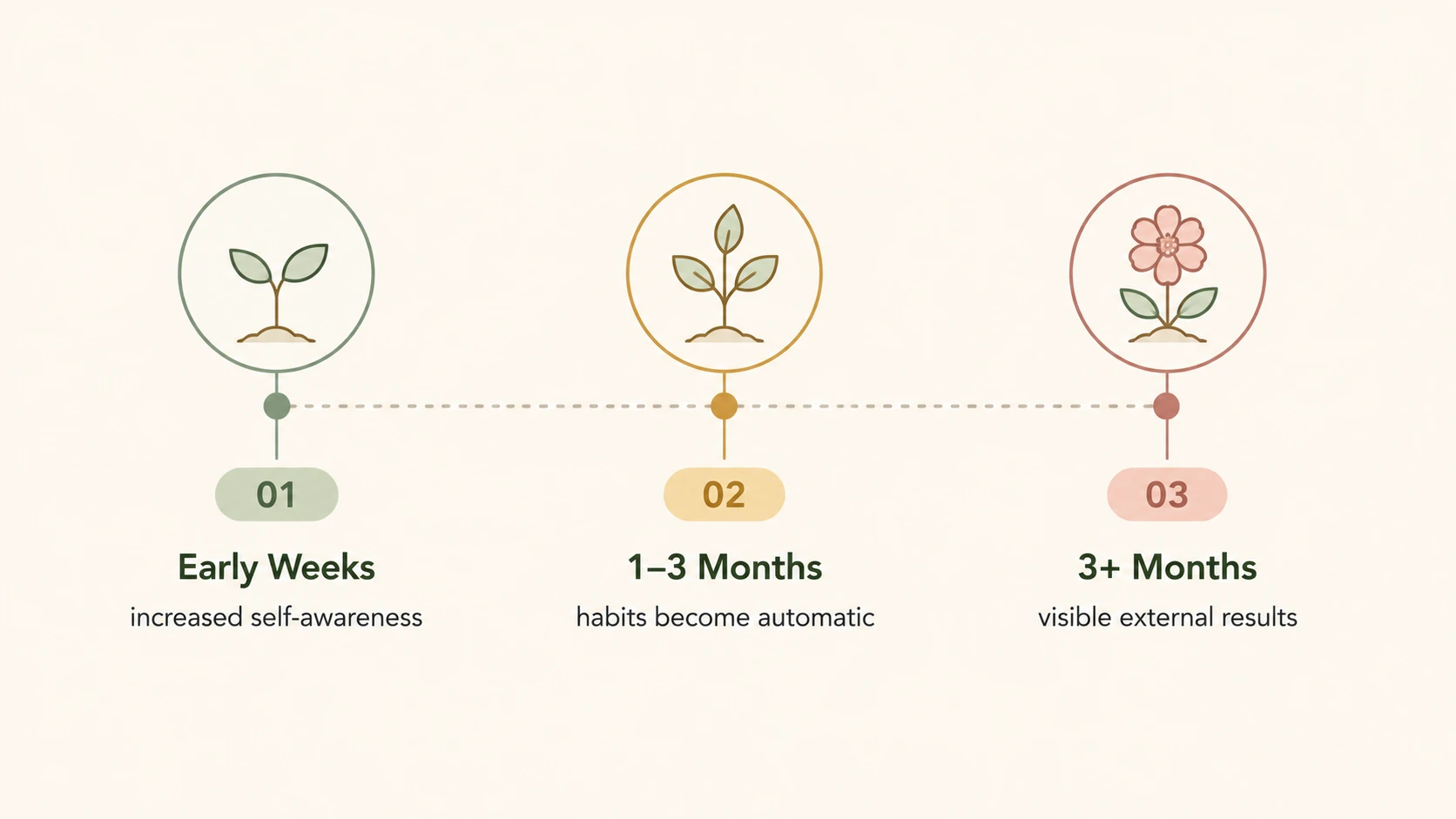
Mindset changes typically develop gradually rather than instantly. Your Daily Thrive recommends thinking in terms of weeks and months, not days. Common patterns include:
- Early weeks: increased self-awareness and small shifts in daily thinking patterns
- One to three months: habits become more automatic, and consistency improves
- Three months and beyond: external results (if pursued through consistent action) become more visible, though this depends heavily on the specific goal and effort involved
External outcomes ultimately depend on the actions taken alongside the mindset work, not the mindset work alone. Individual experiences vary considerably based on starting point, consistency, and circumstances.
Practice Guide
Daily Routine
A sustainable daily routine might include a short guided meditation, a few minutes of journaling, one or two affirmations tied to a specific goal, brief visualization of a desired outcome, and a short weekly planning session to review progress.
Staying Consistent
Consistency is supported by clear motivation (understanding why the goal matters), some form of accountability (tracking progress or checking in with someone), realistic expectations about pace, and awareness of burnout signs. As of 2026, many personal development platforms — including manifestation-focused ones — have shifted toward shorter, more flexible daily practices, reflecting broader recognition that sustainability matters more than intensity.
Common Challenges and How to Overcome Them
- Lack of motivation — often occurs when goals feel disconnected from personal values; reconnecting practices to a specific, meaningful “why” can help.
- Impatience — commonly arises from expecting fast results; setting milestone check-ins rather than daily judgment can reduce this.
- Self-doubt — frequently tied to past setbacks; tracking small wins can build evidence against limiting beliefs over time.
- Inconsistent habits — usually a design problem, not a willpower problem; simplifying the routine tends to help more than adding intensity.
- Unrealistic expectations — often stems from marketing language promising fast, guaranteed outcomes; reframing goals around effort and process, not just results, helps sustain motivation.
How MK Magic Mindset Compares with General Mindset Frameworks
Compared to broader personal development approaches, MK Magic Mindset places heavier emphasis on manifestation and Law of Attraction concepts, whereas frameworks like cognitive-behavioral approaches focus more on identifying and restructuring thought patterns without a metaphysical framing. Productivity-focused systems (such as habit-stacking or goal-tracking methods) emphasize measurable action over belief work, while mindfulness-based methods center on present-moment awareness rather than future-outcome visualization. MK Magic Mindset sits at an intersection of these — incorporating habit formation and goal structure alongside manifestation-specific practices like subliminal audio and Law of Attraction visualization.
Conclusion
MK Magic Mindset is an educational, manifestation-focused personal development platform founded by Mary Kate, offering resources such as the Goal Guide, subliminal audio, guided meditations, and abundance-focused workbooks. Its core teachings blend recognizable mindset and habit-formation concepts with manifestation principles rooted in the Law of Attraction. As with most personal development approaches, results depend heavily on consistency, realistic expectations, and pairing mindset work with concrete action — mindset alone is unlikely to produce outcomes without follow-through. Readers exploring MK Magic Mindset or similar programs benefit from evaluating claims with evidence-informed thinking, focusing on techniques with independent psychological support (like meditation and journaling) while treating less-established claims (like subliminal messaging) with appropriately tempered expectations.
Frequently Asked Questions
What is MK Magic Mindset? MK Magic Mindset is an online personal development platform founded by Mary Kate that teaches manifestation, mindset development, and goal-setting through resources like guided meditations, subliminal audio, and planning tools.
Who created MK Magic Mindset? MK Magic Mindset was founded by Mary Kate, a self-described mindset coach and manifestation expert who built the platform around Law of Attraction and personal development content.
What is the MK Magic Mindset Goal Guide? The Goal Guide is a planning resource combining structured goal-setting, accountability tools, and reflection prompts designed to help users turn intentions into measurable action steps.
What are Mary Kate subliminals used for? Mary Kate’s subliminal audio tracks embed affirmations below normal listening perception, with the stated goal of influencing subconscious beliefs over repeated listening sessions.
How is manifestation different from positive thinking? Manifestation incorporates positive thinking but adds a belief-based framework suggesting focused intention itself contributes to outcomes, whereas positive thinking alone typically refers to optimistic framing without that added causal claim.
Can meditation improve mindset? Yes — meditation has well-documented benefits for stress reduction, focus, and emotional regulation, which can support broader mindset work independent of manifestation-specific claims.
Are subliminal audios scientifically supported? Evidence for subliminal audio producing lasting belief or behavior change is limited and mixed; current research does not conclusively support strong, lasting effects from passive subliminal listening alone.
Why do people search for MK Magic Mindset reviews? People search for reviews to find first-hand accounts of usability, teaching style, and personal outcomes, which can offer relatable context alongside the platform’s own marketing material.
What is Mary Kate’s Abundance Academy? Abundance Academy is a program associated with MK Magic Mindset focused on financial mindset work, including identifying limiting beliefs about money and building abundance-oriented thinking habits.
How can beginners start practicing mindset techniques? Beginners can start with short daily practices — such as a brief guided meditation, simple journaling, and one specific goal — and build consistency gradually rather than adopting an intensive routine all at once.