

Introduction
Lucky Girl Affirmations: Meaning, Practice, and Manifestation Guide for Love, Luck, and Abundance refers to a structured mindset technique where individuals use present-tense statements to reinforce the belief that they are naturally lucky and supported by positive outcomes. This practice is closely associated with “lucky girl syndrome,” a belief-based framework where expectation of good outcomes influences attention, emotional response, and behavior patterns over time.
In self-improvement and behavioral psychology terms, these affirmations function as cognitive conditioning tools that reshape internal dialogue and influence decision-making. When practiced consistently, they can shift perception toward opportunity recognition, emotional confidence, and reduced scarcity thinking.
Quick Summary
- Lucky girl affirmations reinforce a positive identity of being “lucky” and supported by life
- They work through attention bias, repetition, and behavioral conditioning
- Commonly used for love attraction, confidence, and abundance mindset
- Effectiveness depends on emotional belief plus consistent practice
- Works best when aligned with real-world actions and behavior change
What Are Lucky Girl Affirmations?
Lucky girl affirmations are identity-based statements used to reinforce the belief that positive outcomes are normal and expected. Instead of focusing on hoping for luck, they train the mind to operate from the assumption of already being lucky.
Core functions include:
- Rewriting self-talk patterns from doubt to confidence
- Strengthening expectation of positive outcomes
- Reducing scarcity-based thinking
- Building a stable identity of optimism and openness
These affirmations are typically used in self-improvement routines, journaling, or spoken repetition.
How Lucky Girl Syndrome Works
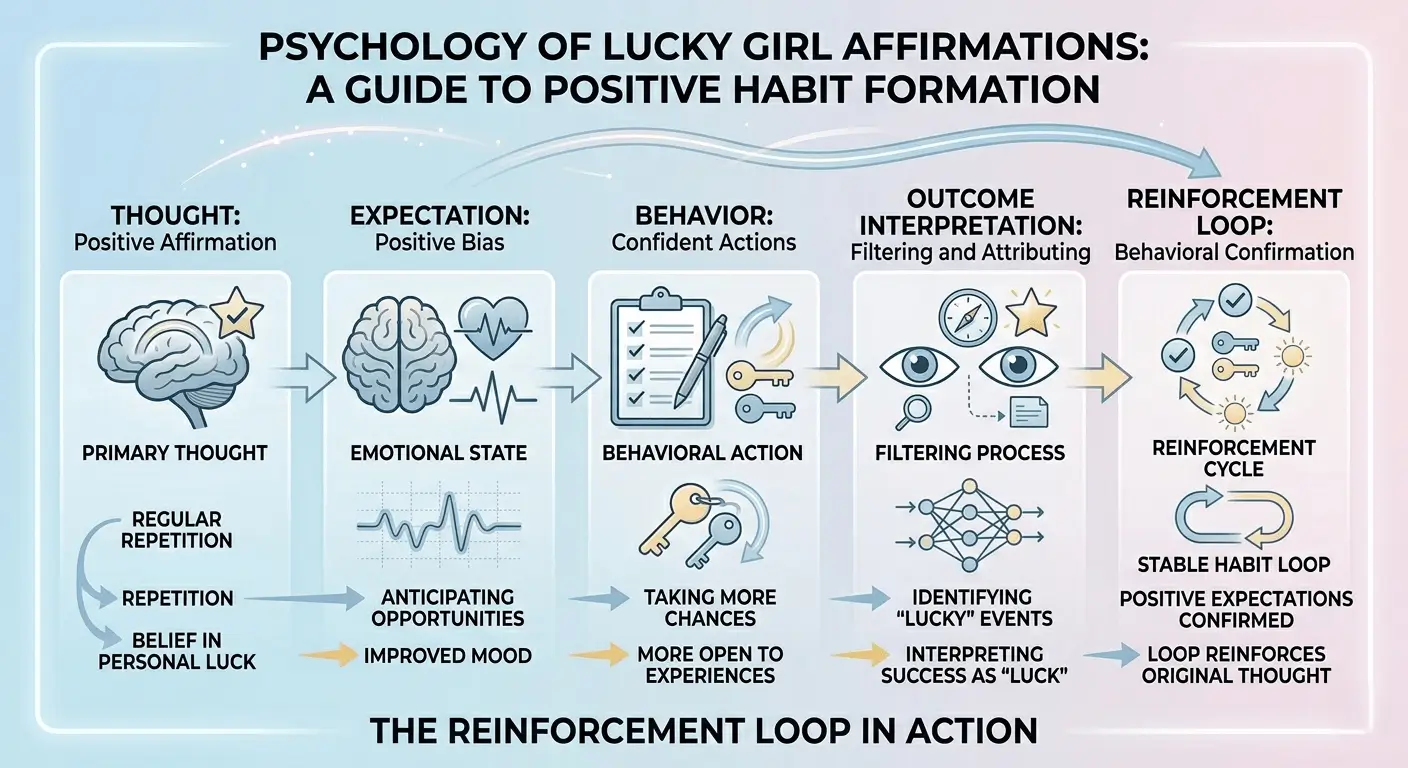
Lucky girl syndrome describes a cognitive mindset where belief in personal luck shapes perception and behavior.
This happens through known psychological mechanisms:
- Selective attention: Positive events become more noticeable
- Confirmation bias: Successful outcomes are remembered more strongly
- Behavioral activation: Confidence increases action-taking and social engagement
- Emotional regulation: Reduced fear leads to more consistent decisions
The result is a reinforcement loop where belief influences behavior, and behavior reinforces belief.
Manifestation Mechanism Behind Affirmations
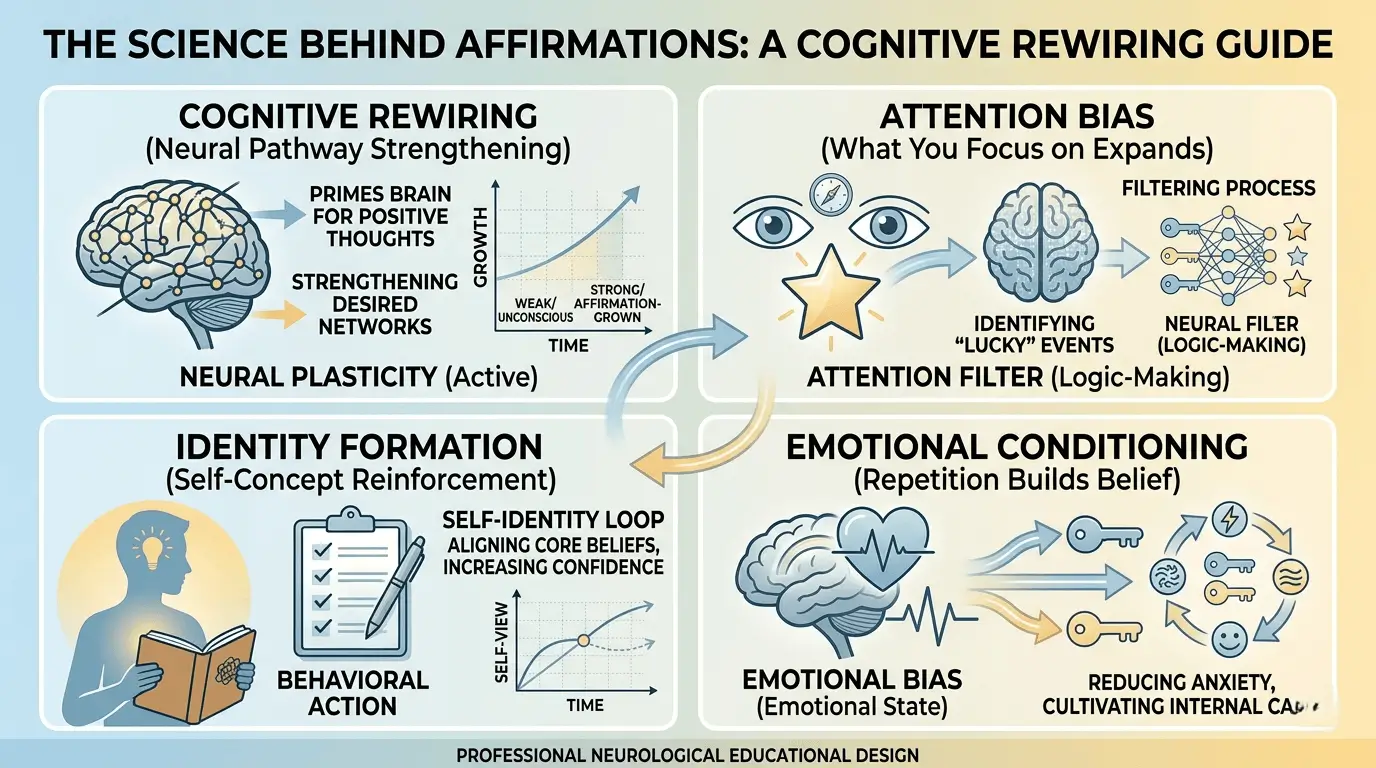
Lucky girl affirmations work through repetition-based cognitive conditioning.
Key mechanisms include:
- Repeated thoughts strengthen neural pathways linked to self-belief
- Present-tense phrasing creates identity consistency
- Emotional engagement increases memory encoding
- Visualization strengthens mental simulation of outcomes
From a psychological perspective, affirmations influence interpretation of events rather than directly changing external reality.
Lucky Girl Affirmations for Love Attraction
In relationships, lucky girl affirmations focus on improving emotional openness and reducing fear-based thinking patterns.
Common effects:
- Increased self-worth and confidence
- Reduced rejection sensitivity
- Greater emotional availability
- Healthier relationship expectations
Example affirmations:
- “I am naturally worthy of love and connection.”
- “Healthy and supportive relationships come to me easily.”
- “I am open to receiving love in all forms.”
These statements shift internal emotional state, which can influence social behavior and relationship outcomes.
Identity-Based “I Attract” Affirmations
“I attract” affirmations focus on identity rather than external results, making them more psychologically stable.
Examples:
- “I attract positive and supportive people.”
- “I attract opportunities that align with my goals.”
- “I attract abundance effortlessly.”
Why this works:
- Strengthens self-concept consistency
- Reduces emotional dependency on specific outcomes
- Encourages long-term behavioral alignment
Identity-based framing is more effective for habit formation and mindset stability.
Lucky Girl Mantra vs Affirmations
| Aspect | Affirmations | Mantra |
|---|---|---|
| Structure | Full sentences | Short repeated phrases |
| Purpose | Cognitive restructuring | Emotional focus |
| Usage | Speaking/writing | Meditation/repetition |
| Example | “I am lucky in life.” | “I am lucky.” |
Mantras are simpler and often used for emotional grounding, while affirmations are more structured for belief change.
Daily Practice System
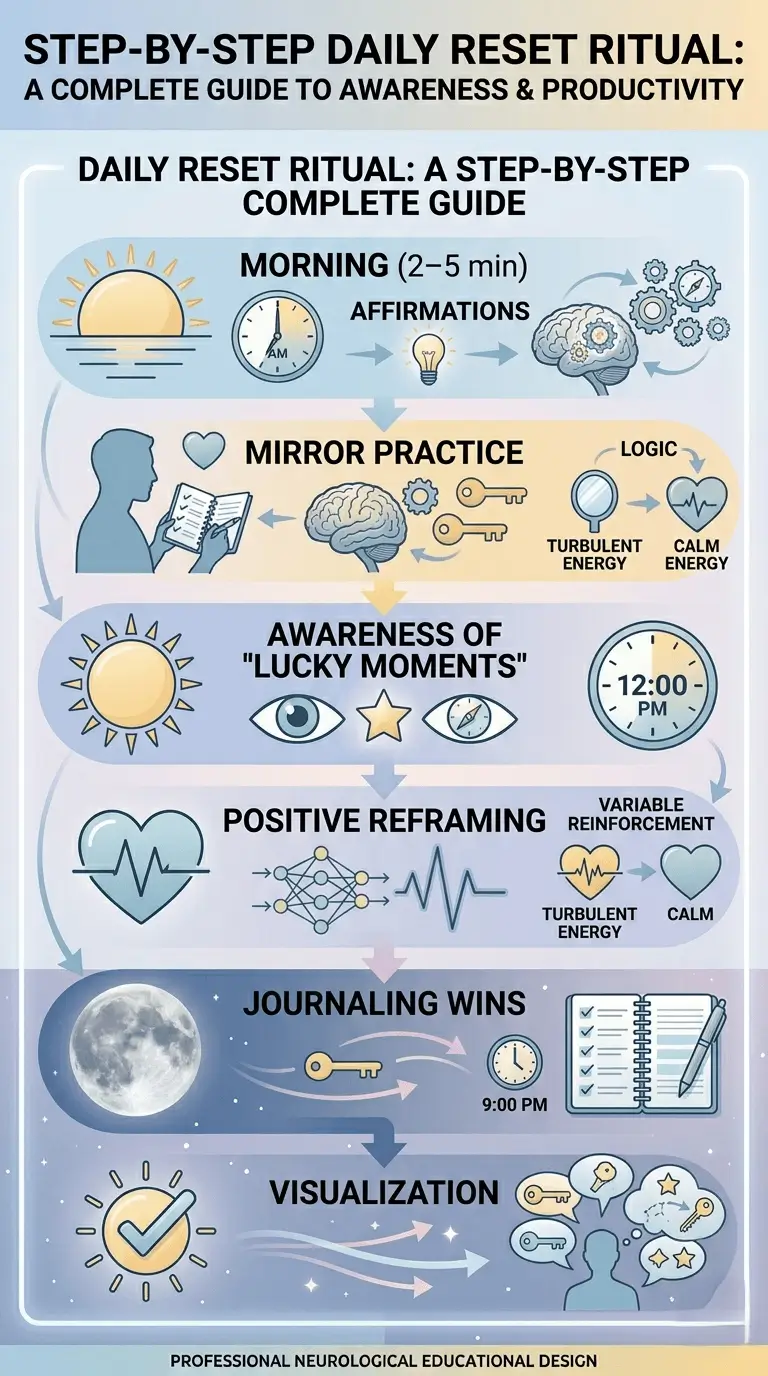
A consistent routine is essential for reinforcement.
Recommended structure:
- Morning repetition (sets mindset tone for the day)
- Mirror practice (reinforces identity expression)
- Journaling positive or “lucky” experiences
- Visualization of desired outcomes
- Evening reflection to reinforce belief patterns
Consistency strengthens cognitive conditioning over time, while irregular practice weakens effects.
Common Mistakes
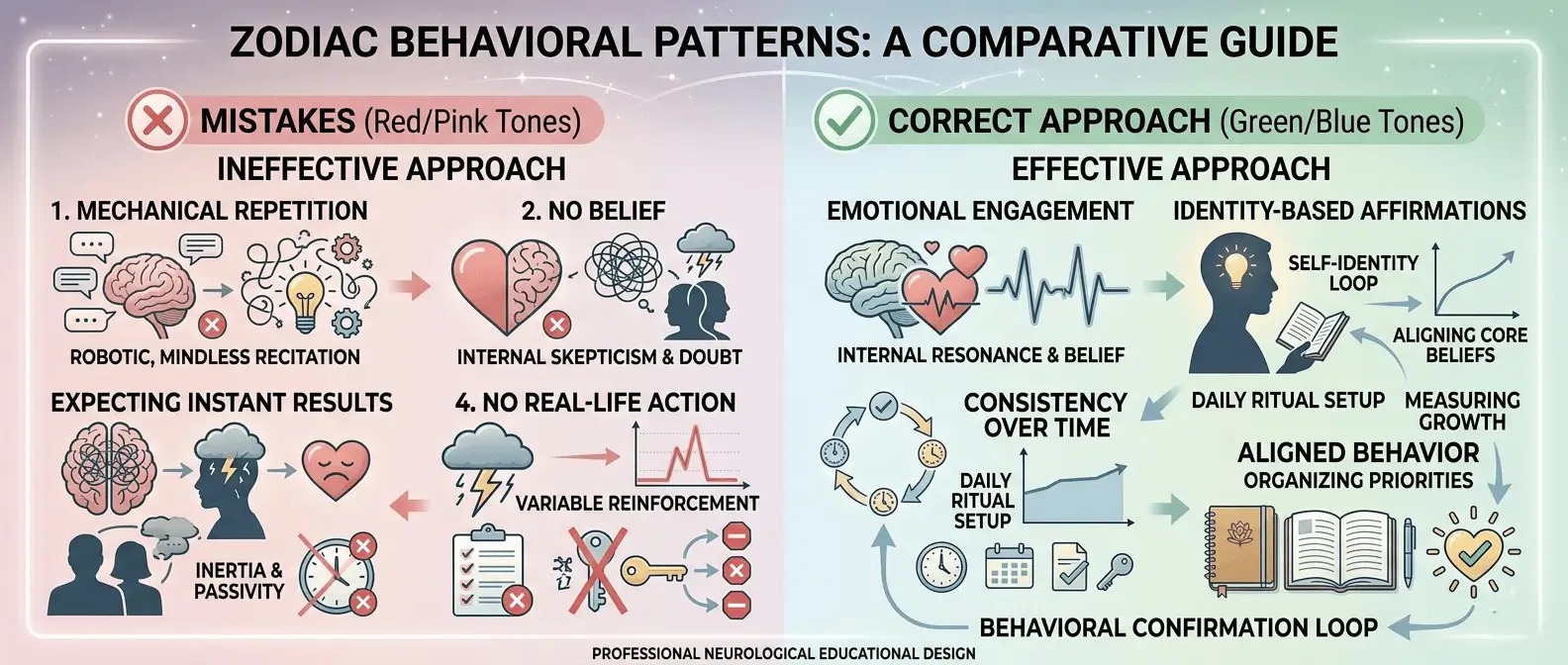
Many people experience limited results due to incorrect application.
Frequent issues:
- Repeating affirmations without emotional belief
- Expecting immediate external changes
- Ignoring negative self-talk patterns
- Lack of real-life behavioral alignment
Correct approach:
- Start with believable statements
- Combine affirmations with action
- Focus on identity shift rather than outcomes
Practical Application Examples
Beginner level:
- “I am becoming more lucky each day.”
- 2–3 minutes of daily repetition
Intermediate level:
- Affirmations + journaling
- Visualization of specific life areas (love, career)
Advanced level:
- Identity immersion (“I already live a lucky life”)
- Behavior alignment with goals and opportunities
Behavioral Psychology Insight
Lucky girl affirmations are most effective when they influence behavioral patterns, not just thoughts.
Relevant psychological principles:
- Cognitive restructuring (changing thought patterns)
- Attention bias modification (what the brain notices)
- Self-fulfilling prophecy effects
- Emotional priming (mood influences decisions)
Sustainable change occurs when thoughts, emotions, and actions align consistently.
Conclusion
Lucky girl affirmations are a structured self-improvement tool designed to reinforce a mindset of luck, confidence, and openness to positive outcomes. Their effectiveness depends on consistent repetition, emotional engagement, and alignment with real-world behavior. When applied correctly, they can shift perception, improve decision-making, and support more positive life experiences through identity transformation rather than passive thinking.
FAQs
1. Why don’t lucky girl affirmations work for everyone?
They require emotional belief and consistent behavior change, not just repetition.
2. How long do they take to work?
Most people notice mindset shifts within a few weeks of daily practice.
3. Can they help attract love?
They can improve confidence and openness, which may positively influence relationships.
4. What if I don’t believe the affirmations?
Start with neutral statements and gradually build stronger identity-based beliefs.
5. Do affirmations change real-life outcomes?
They influence perception and behavior, which indirectly shape external results over time.